Psalm 36:5-10 – Steadfast Love

Your steadfast love, O Lord, extends to the heavens,
    your faithfulness to the clouds.
Your righteousness is like the mighty mountains,
    your judgments are like the great deep;
    you save humans and animals alike, O Lord.

How precious is your steadfast love, O God!
    All people may take refuge in the shadow of your wings.
They feast on the abundance of your house,
    and you give them drink from the river of your delights.
For with you is the fountain of life;
    in your light we see light.

O continue your steadfast love to those who know you,
    and your salvation to the upright of heart! (New Revised Standard Version)

Love suffers. Every parent knows this. Because of a parent’s committed and faithful love toward a child, they feel not only the joys but also the sorrows and pain of their children. I can say that this feeling does not go away, even with adult children. And it is compounded with grandchildren. Just as our love is big enough to hold multiple children and grandchildren, so our capacity for experiencing deep emotion for their welfare is equally large.

True love is sacrificial. It is willing to suffer anything on behalf of the beloved. God’s steadfast love is immensely large, holding both the joy of witnessing our lives as well as the pain of watching us make unhealthy decisions which damage us and each other.

God’s people, walking in the way of love, quickly discover that it is simultaneously walking in the way of suffering. From Old Testament times through the New Testament and into the present day, the faithful have always experienced suffering as a central part of their piety and devotion in showing steadfast love. 

The medieval mystics of the Church understood well the connection between suffering and love. They could not imagine a Christian life without hardship, difficulty, and persecution. Thomas à Kempis, a sort of pastor to pastors, wrote in the fifteenth century these words:

“Sometimes it is to our advantage to endure misfortunes and adversities, for they make us enter into our inner selves and acknowledge that we are in a place of exile and that we ought not to rely on anything in this world.  And sometimes it is good for us to suffer contradictions and know that there are those who think ill and badly of us, even though we do our best and act with every good intention….  When men ridicule and belittle us, we should turn to God, who sees our innermost thoughts, and seek His judgment….  It is when a man of good will is distressed, or tempted, or afflicted with evil that he best understands the overwhelming need he has for God, without whom he can do nothing….  It is in such times of trial that he realizes that perfect security and full peace are not to be found in this world.”

Thomas à Kempis, The Imitation of Christ

And yet, it is because of love that suffering is transformed and endured as something wholly other than sheer pain or hurt. Thomas à Kempis went on to say:

“Love is a mighty power, a great and complete good; Love alone lightens every burden and makes the rough places smooth. It bears every hardship as though it were nothing and renders all bitterness sweet and acceptable. The love of Jesus is noble and inspires us to great deeds; it moves us always to desire perfection. Love aspires to high things and is held back by nothing base. Love longs to be free, a stranger to every worldly desire, lest its inner vision become dimmed, and lest worldly self-interest hinder it, or ill-fortune cast it down…. Love knows no limits, but ardently transcends all bounds. Love feels no burden, takes no account of toil, attempts things beyond its strength; love sees nothing as impossible, for it feels able to achieve all things. Love therefore does great things; it is strange and effective; while he who lacks love faints and fails.”

Thomas à Kempis, The Imitation of Christ

In this season of Epiphany, we remember that Jesus is the light of the world. God became flesh and blood to experience the full range of the human condition – both joys and sorrows in a love so committed to us that it led to a cruel cross of suffering.

Salvation has come to all peoples because of God’s steadfast love – a love that never lets go no matter the circumstances.

Almighty God, whose Son our Savior Jesus Christ is the light of the world: Grant that your people, illumined by your Word and Sacrament, may shine with the radiance of Christ’s glory, that he may be known, worshiped, and obeyed to the ends of the earth; through Jesus Christ our Lord, who with you and the Holy Spirit lives and reigns, one God, now and forever. Amen.

Jeremiah 3:1-5 – Spiritual Adultery

“If a man divorces a woman
    and she goes and marries someone else,
he will not take her back again,
    for that would surely corrupt the land.
But you have prostituted yourself with many lovers,
    so why are you trying to come back to me?”
    says the Lord.
“Look at the shrines on every hilltop.
    Is there any place you have not been defiled
    by your adultery with other gods?
You sit like a prostitute beside the road waiting for a customer.
    You sit alone like a nomad in the desert.
You have polluted the land with your prostitution
    and your wickedness.
That’s why even the spring rains have failed.
    For you are a brazen prostitute and completely shameless.
Yet you say to me,
    ‘Father, you have been my guide since my youth.
Surely you won’t be angry forever!
    Surely you can forget about it!’
So you talk,
    but you keep on doing all the evil you can.” (New Living Translation)

We all have needs. 

As humans, each one of us has a deep hunger for love, intimacy, attention, affirmation, and encouragement. When these needs are met within gracious and loving relationships, especially in the marital bond, then there is genuine happiness and flourishing. 

But when our deep wants go unmet over a stretch of time, smiles are replaced with furrowed brows and confident strides give way to slumped shoulders.

We feel deeply and are moved at a visceral level because we are made in the image and likeness of G-d – a G-d who feels and has great emotion. 

Perhaps we too often think of G-d as some disembodied ethereal brain without any feelings. I hope today’s Old Testament lesson puts a collar on such notions. G-d entered into a loving covenant relationship with Israel. Yet, over time, the people looked for their relational, emotional, and spiritual needs to be met in other gods rather than the One true G-d. 

And it pained G-d’s heart.

G-d felt deeply about the people turning away to pursue other gods. The Lord responded to the people like a jilted lover, agonized by their acting like a prostitute – looking for their intimate needs to be satisfied elsewhere. 

It seems to me G-d was so profoundly hurt because the Lord knows that our deepest and greatest needs can only really be met through the divine covenant relationship. People need G-d.

To put it in the stark terms of Jeremiah’s prophecy: 

  • Are we playing the part of a harlot, running after all kinds of other relationships and things that we wrongheadedly believe will meet the needs of our lives? 
  • Do we sell ourselves to others in the misguided belief that we will find true happiness? 
  • Have we sought other lovers and forsaken our first love of the Divine? 

Everyone has a legitimate need for attention, love, and relational connection. The problem arises whenever we seek to meet those needs in illegitimate ways. That’s what we call “sin.”

The most important thing in life is not our job position, our social status, or even whether we are married with family. What matters most is the kind of person you are – it’s all about who you become. Because that’s what you will take into eternity. You and I are unceasing spiritual beings with an eternal destiny in G-d’s great universe.

Spiritual prostitution – and faith communities acting like spiritual brothels – are far beneath who we are and how we were designed by our Creator.

The pathos of G-d calls us to better than hanging out in a dark emotional shame lounge of sordid characters drinking cheap dandelion wine and smoking nasty cut-rate cigars in smelly old leisure suits.

We belong to G-d.

Our place is in the wide-open sunlit rooms of G-d’s kingdom. We have been adopted into G-d’s family and there is no longer any need for walking the streets and going into dive bars, looking for a quick fix of some damning elixir which promises life.

It behooves us all to become aware and connect with our longings and needs, and thereby allowing the G-d who delights to meet those needs into the core of our being.

Know who you really are. Because in that knowing, there is eternal life.

Jealous God, you are zealous for your presence to be known in the lives of all your creatures. Help me to be aware of the deepest needs of my life. May I find in you the desire of my heart and let you fill me with your infinite grace, love, mercy, and attention so that I will know true peace and joy. Amen.

Luke 11:33-36 – Life Goals

Photo by Taryn Elliott on Pexels.com

“No one lights a lamp and puts it in a place where it will be hidden, or under a bowl. Instead, they put it on its stand, so that those who come in may see the light. Your eye is the lamp of your body. When your eyes are healthy, your whole body also is full of light. But when they are unhealthy, your body also is full of darkness. See to it, then, that the light within you is not darkness. Therefore, if your whole body is full of light, and no part of it dark, it will be just as full of light as when a lamp shines its light on you.” (New International Version)

We don’t typically frame our words in a phrase like, “Your eye is the lamp of the body.” The idea of healthy or unhealthy eyes as determining how well we are doing might seem weird or awkward to us. We need to keep in mind that Jesus the Jew communicated in distinctly Jewish ways. Speech was often expressed in metaphors and word pictures. 

The word “body” serves as a way of saying “life” and the word “eye” represents our contemporary word “goal.” So, then, let’s restate the verse: “Your goals determine the direction of your life. When your goals are good, your entire life is healthy, but when your goals are bad, it messes up your life.”

Our goals, whether stated or unstated, set the focus and direction of our lives. If the orientation of our lives is the pursuit of selfish gain and temporary satisfaction, then we will move in that direction, and it will not end well. However, if our goals are toward God and the accomplishment of God’s will, then we will be light for the world. It’s all a matter of focus and where we set our attention.

But more than anything else, put God’s work first and do what he wants. Then the other things will be yours as well.

Jesus (Matthew 6:33, CEV)

In our goal setting, we are to be careful, deliberate, and sensitive to the ways of Jesus. That means Christians will focus on the kind of people they want to be, that is, like Jesus Christ. Instead of simply making big resolutions, we can implement small decisions, practiced every day, which will help us grow spiritually.

For example, if we have some besetting sin which tends to dog us, we might try to summon the willpower and energy to take it on. On some days, that works. On most days, it doesn’t. That’s because if we maintain the same daily habits that led to being ensnared in sin, we’ll continually be looking for that unusual burst of energy to overcome that sin.

We need a new system of living. If we imagine our lives as a house, and a room in your house needs a complete restoration and makeover, it won’t do to enthusiastically rearrange the furniture. It’s a superficial goal which doesn’t address the systemic change of habits needed to thoroughly reform that area of your life.

And if we try and change our results, our sinful actions, chronic failure is likely in our future. What we really need to change are the systems that cause those results. When we solve problems at the results level, it’s only a temporary fix.

In order to have some permanent improvement, we need to solve problems at the systems level. That’s why problems like racism, poverty, hunger, and a thousand other issues will never be truly solved unless there is a complete transformation of the systems which keep people locked into those tragic situations.

We need some good healthy biblical goals. And we equally need a reformation of habits to actually realize those worthy goals.

Our goals need not be big and audacious; they just need to be consistent with living the Christian life according to the words and ways of Jesus. That means choosing one thing and ruthlessly eliminating everything else. We don’t really need more time to accomplish the will of God; we simply need to decide that we are following Jesus. Spiritual growth and maturity happen not with more but with less.

Jesus said, “I am the true grapevine, and my Father is the gardener. He cuts off every branch of mine that doesn’t produce fruit, and he prunes the branches that do bear fruit so they will produce even more.” (John 15:1-2, NLT)

Proper goals bring us into the light. And when we establish a routine rule of daily life – small practices of faith done every day – then our light can shine in the darkness of the world.

Loving Lord Jesus, help me to set my life’s gaze on the living and doing of your teaching. Enable me to set godly and worthy goals and grant me the power to see them realized through your Holy Spirit.  Amen.

1 John 5:13-21 – We Know

I write these things to you who believe in the name of the Son of God so that you may know that you have eternal life. This is the confidence we have in approaching God: that if we ask anything according to his will, he hears us. And if we know that he hears us—whatever we ask—we know that we have what we asked of him.

If you see any brother or sister commit a sin that does not lead to death, you should pray, and God will give them life. I refer to those whose sin does not lead to death. There is a sin that leads to death. I am not saying that you should pray about that. All wrongdoing is sin, and there is sin that does not lead to death.

We know that anyone born of God does not continue to sin; the One who was born of God keeps them safe, and the evil one cannot harm them. We know that we are children of God, and that the whole world is under the control of the evil one. We know also that the Son of God has come and has given us understanding, so that we may know him who is true. And we are in him who is true by being in his Son Jesus Christ. He is the true God and eternal life.

Dear children, keep yourselves from idols. (New International Version)

In a world of constant change, the need for people to experience meaning and stability in their lives is more pronounced than ever. 

COVID-19 currently grips the world in a terrible reality of disease, death, and disruption. Just when we think there might be a light at the end of the tunnel, new strains of the virus arise. Meanwhile, life goes on with all it’s typical changes, losses, and devastating natural disasters.

There are people wondering if they will have a job tomorrow – or if they will ever get called back to one. Many parents are anxious about what kind of world their kids will have when they become adults. Others feel adrift in a fast-paced society, glutted with so much news and information that they have little sense of what is real or true. Discouragement and/or depression may seem to never end.

Whenever there are uncertainties all around us, it’s necessary to return to the knowable, to hang our hat on some solid bedrock certainties we are convinced are always there. That’s why the Apostle John wrote his letter, to remind the church of the known and the knowable:

  • “I write these things to you who believe in the name of the Son of God so that you may know that you have eternal life.”
  • “If we know that he hears us—whatever we ask—we know that we have what we asked of him.
  • “We know that anyone born of God does not continue to sin.”
  • “We know that we are children of God.”
  • “We know also that the Son of God has come and has given us understanding, so that we may know him who is true.” 

In English, we have only one word for “know.” Yet, in the ancient Greek of the New Testament there are two different words for “know.” Throughout today’s lesson, the Apostle consistently uses one of those words, then shifts to another at the end. 

All of the “knows” John used refer to an objective knowledge – an information-based understanding which anyone could discover, learn, or know. Then, the Apostle switched to a different word at the end – to know him (Christ) who is true. That particular word has to do with a subjective or experiential knowledge. In other words, it is an inner witness and knowing of objective knowledge.

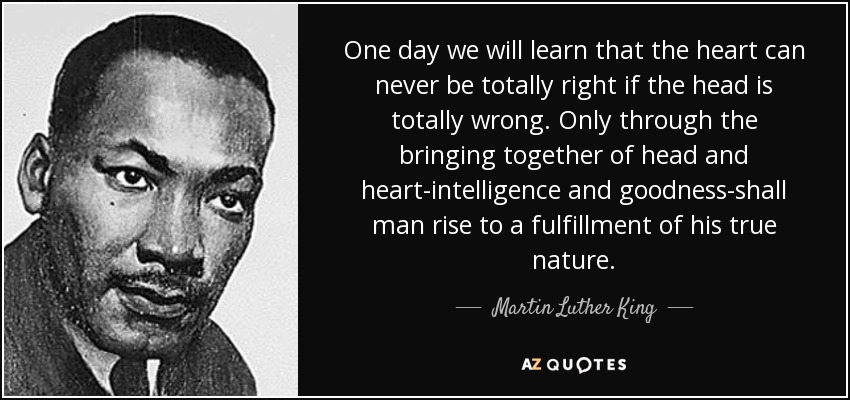
In American society, we frame the distinction between the two words by saying we need to know something in our heart (subjective knowledge) and not only in our head (objective knowledge).

Cerebral understanding, combined with heartfelt experience, results in a new confidence in prayer, a new attitude toward the world, and a new awareness of God. These are the impact of knowing Jesus Christ, and him crucified, risen, ascended, and coming again.

Knowing God takes both the head and the heart. Only being concerned for sound doctrine creates theological eggheads who dispassionately connect with God and others as if they were merely brains on a stick figure. Conversely, only being concerned for how religion makes us feel causes a kind of spiritual schizophrenia which is unstable and constantly seeks for a new or better experience in worship.

Love and obedience are the sacred pathways to personal and corporate knowledge and peace. Whenever the supreme ethic of love takes place in the believer’s life, through receiving it from God and giving it to others, it brings a sense of divine assurance in a sea of worldly uncertainty. 

Security in God will always outdo the insecurities of life.

Loving God, I know that you listen to me. I pray your love and assurance will fill me to such a place that I have peace amidst the vicissitudes of this life. May I rest in Jesus Christ through the work of your Holy Spirit. Amen.