Psalm 71:1-6 – How to Cope with Change and Loss

I run to you, Lord,
for protection.
    Don’t disappoint me.
You do what is right,
    so come to my rescue.
    Listen to my prayer
    and keep me safe.
Be my mighty rock,
    the place
where I can always run
    for protection.
Save me by your command!
    You are my mighty rock
    and my fortress.

Come and save me, Lord God,
    from vicious and cruel
    and brutal enemies!
I depend on you,
    and I have trusted you
    since I was young.
I have relied on you
    from the day I was born.
You brought me safely
through birth,
    and I always praise you. (Contemporary English Version)

No one gets off this planet without experiencing several events of change and loss, resulting in grief and the need to lament. Because of this reality, you would think we all acknowledge this great need of lamenting our significant losses. Yet, we don’t.

Many Christians avoid grief work. The following are just a few of the statements I’ve heard over the decades from parishioners when they experience loss:

  • “Christ is resurrected and alive. There’s victory in Jesus. No need to grieve like unbelievers.”
  • “My loved one is in heaven. No more suffering or pain. It would be selfish of me to be sad.”
  • “It’s a sin to be depressed.”
  • “I can’t let myself cry and fall apart. I need to be strong for my family.”

Those statements are very far from what we find in the biblical psalms and throughout the entirety of Holy Scripture. Consider these realities in the Bible:

  • 62 out of the 150 Psalms in the Old Testament are laments; some are communal, many are individual expressions of grief.
  • God laments. And God grieves with us. (Genesis 6:5-6; Isaiah 53:4; John 11:1-44)
  • An extended time and process of grieving was practiced by biblical characters when loss occurred. It was a normal emotional, spiritual, physical, and relational reaction to that loss. (e.g., Genesis 50:1-3)
  • Lament is an intentional process of letting go of relationships and dreams and discovering how to live into a new identity after the loss or change. There’s even an entire book of the Bible given to lamenting: Lamentations.
  • Everyone’s grief is personal; there is no one size fits all.
  • Avoiding grief, mourning, lament, and loss is totally foreign to the Bible.

Psalms of lament have a characteristic structure, distinct from psalms of praise, trust, or wisdom, like today’s psalm:

  1. Address to God: The address is usually a brief cry for help; and is occasionally expanded to include a statement of praise or a recollection of God’s intervention in the past (Psalm 71:1-3).
  2. Complaint: God is informed about the problem or experience through a range and depth of emotional, relational, and spiritual reactions to change (Psalm 71:4).
  3. Confession of Trust: The psalmist remains confident in God despite the circumstances and begins to see his or her problems differently (Psalm 71:5-8).
  4. Petition: Filled with confidence in God, the psalmist appeals to God for deliverance and intervention.  Petitioning is not bargaining with God or a refusal to accept loss; it is a legitimate seeking of help (Psalm 71:9-13).
  5. Words of Assurance: The psalmist expresses certainty that the petition will be heard by God (Psalm 71:14a).
  6. Vow of Praise: The lament concludes with the psalmist’s vow to testify to what God will do or has done through praise (Psalm 71:14b-24).

The biblical psalms do two wonderful services for us as God’s people: First, a constant stream of reading, quoting, memorizing, and meditating on them actually shapes our faith into a full-orbed, mature, and robust belief. Second, the psalms provide us with a healthy means of expressing the complete range of our human experience. 

So, then, the psalms both reflect our feelings, and, at the same time, form those feelings to know God better, cope with situations, and relate appropriately with others. 

The fourth-century Bishop of Alexandria, Athanasius, had it right about the psalms when he said: 

“Whatever your particular need or trouble, from this same book [the Psalms] you can select a form of words to fit it, so that you not merely hear and pass on, but learn the way to remedy your ill.”

St. Athanasius (297-373 C.E.), Bishop of Alexandria

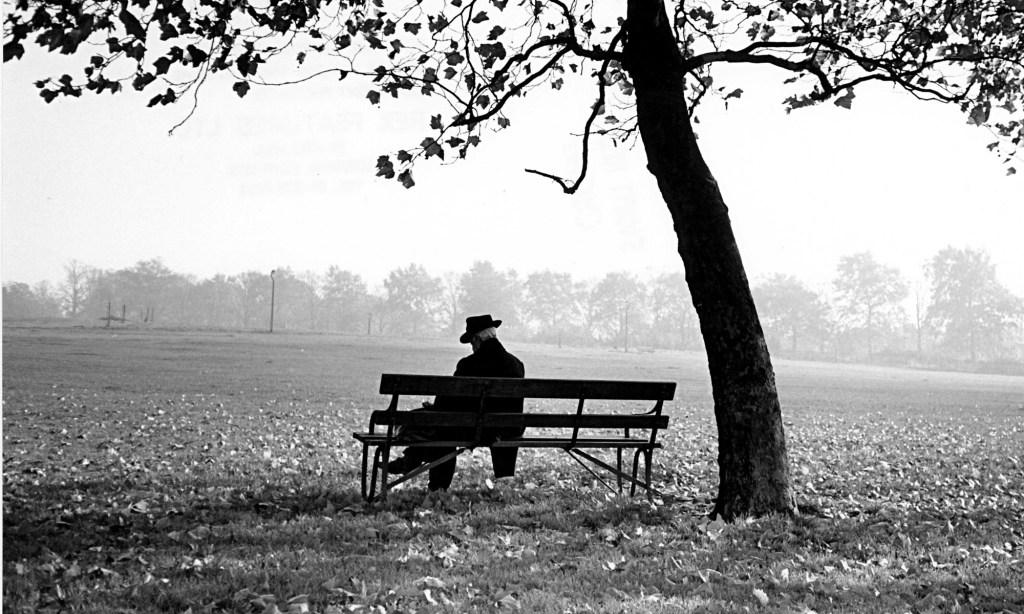
Today’s psalm of lament is the expression of a person getting along in years and discovering all the limitations and weaknesses that go along with aging. It is a plea for help. Whereas in younger days the psalmist had the vigor to engage problems and enemies, now he has the realization that he must increasingly depend upon God (and others).  

Far too many people hitting the aging process do not deal with it well. The change to their bodies, even their minds, is so unwelcome that they do not cope quickly, or, sometimes, at all. They believe it silly to lament such a natural occurrence, even though those physical changes dog them day after day.

Based upon the psalms, I insist that lament is a powerful and necessary form of coming to grips with change. God has not promised us life-long health and constant energy. Rather, the Lord has promised to be with us as our refuge and help through all the vicissitudes of changing health and altered situations. 

Let praying the psalms, then, be a regimen as familiar and daily as your using your pill planner and taking your meds.

Ever-watchful God, you are a rock of refuge, a never changing reality in a world of constant change. You are my hope, Lord, and my faith has been in you all my life. I lament all the difficult changes I encounter. I can never go back to the way things were. So, please open to me a new reality where fresh hope and life can be found, through Jesus Christ my Savior. Amen.

2 Chronicles 34:1-7 – Getting Rid of Idolatry

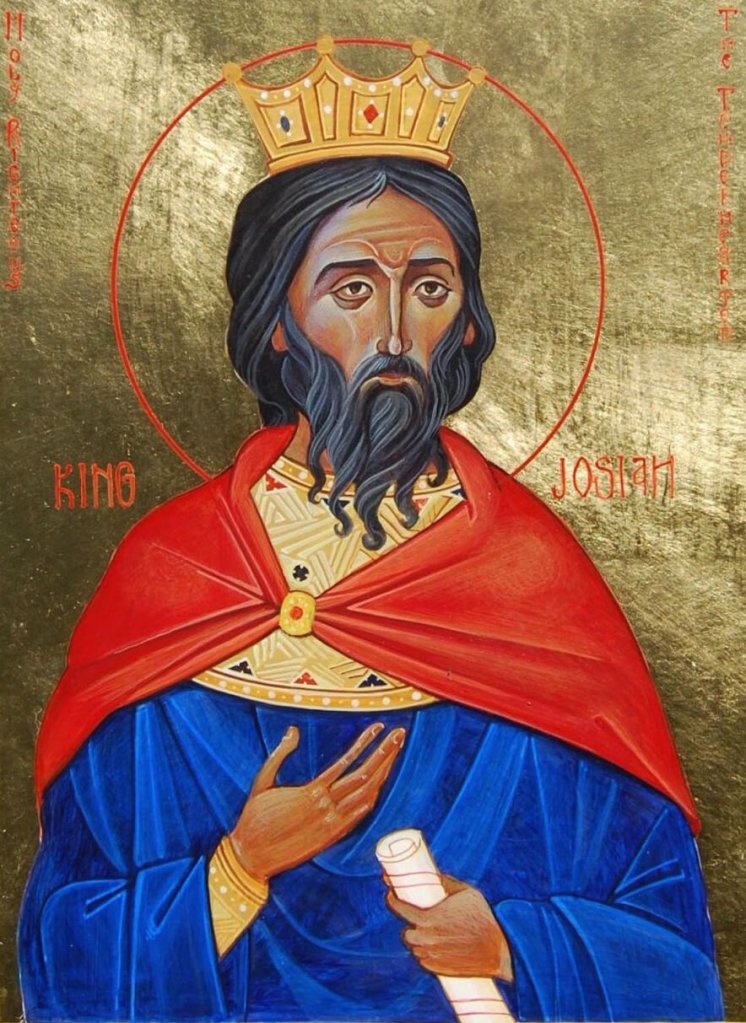
Russian Orthodox icon of Judah’s King Josiah (640-609 B.C.E.)

Josiah was eight years old when he became king of Judah, and he ruled thirty-one years from Jerusalem. He followed the example of his ancestor David and always obeyed the Lord.

When Josiah was only sixteen years old he began worshiping God, just as his ancestor David had done. Then, four years later, he decided to destroy the local shrines in Judah and Jerusalem, as well as the sacred poles for worshiping the goddess Asherah and the idols of foreign gods.He watched as the altars for the worship of the god Baal were torn down, and as the nearby incense altars were smashed. The Asherah poles, the idols, and the stone images were also smashed, and the pieces were scattered over the graves of their worshipers. Josiah then had the bones of the pagan priests burned on the altars.

And so, Josiah got rid of the worship of foreign gods in Judah and Jerusalem. He did the same things in the towns and ruined villages in the territories of West Manasseh, Ephraim, and Simeon, as far as the border of Naphtali. Everywhere in the northern kingdom of Israel, Josiah tore down pagan altars and Asherah poles; he crushed idols to dust and smashed incense altars.

Then Josiah went back to Jerusalem. (Contemporary English Version)

Josiah started out as a boy king. Evidently, he had some good training because by the time he became a teenager, Josiah was raring and ready to exercise his kingship in the best sense of leadership. 

After generations of kings before him who followed other gods and gave the stiff-arm to the Lord, as well as to justice and righteousness, Josiah committed himself fully to Israel’s one true God.  And, as a twenty-year old king, he showed the real muster of his reign.

Josiah took responsibility and initiative to do what was right in the eyes of God – no matter the consequences. 

King Josiah continually performed the dual action of worshiping God and aggressively taking active steps to rid the kingdom of all the ubiquitous false gods. 

The king did much more than simply stick his toe in the water to test what the response might be to removing a high place of Baal worship or an Asherah pole. Instead, Josiah jumped right in and put his entire kingship on the line. 

All of the power brokers who were dealing in false gods could not have been happy about this turn of events in Judah. But any kind of pushback did nothing to prevent Josiah from doing what was right in the eyes of the Lord by thoroughly eradicating idol worship.

“Let us all be the leaders we wish we had.”

Simon Sinek

Josiah had a clear sense of purpose. That sense of vocational direction ordered his kingly steps. It led him to do the things he did. Josiah was determined and devoted to leading the people back to God. 

This desire and determination for spiritual revival directed toward the worship of the Lord is not limited to the ancient world. God is still in the kingdom business of bringing all creation under a divine and benevolent rule. 

Therefore, there still remains an abiding purpose to lead others, caught in a web of unhealthy routines and habits of living through idolatrous practices, back to the one true God. 

Like the ancients before us, there is still a need to exercise courage and confidence in following the Lord by making disciples who will worship God with all their heart, soul, mind, and strength. 

So, reconnecting with our overarching purpose in life is imperative for taking bold steps of faith in this idolatrous world which worships at the altar of exorbitant eating, shopping, and drinking.

It is no wonder the current zeitgeist of so many of our communities is full of anxiety, discouragement, and anger. There is no justice in the public square. Competing voices, other than the merciful words and ways of Jesus, drown the divine regulations for living a good life of integrity, wholeness, peace, and joy in the Holy Spirit.

It is almost as if the collective efforts of idolatrous people have surgically removed the spiritual spine of society. We are now bereft of genuine support, spineless and unable to move toward a life of truth, justice, and a courageous concern for the common good of all persons.

King Josiah shows us a better way. We must radically remove all that is toxic and damaging to our souls. We need a clear purpose in life, to go hard after God and rediscover how the Divine fits into all of life and gives us meaning.

Any old fool can complain about how bad things are in the world. But the one determined to make a difference amidst all the surrounding crud and helps to make things better – that is the wise person who is in touch with their own spirit, who is able to see the spiritual within others.

So, how then will you live?

May your living be in a healthy spiritual groove of loving God and loving neighbor so that worshiping the banal becomes a thing of the past.

Holy God, you are the Sovereign of the universe. Expose the things in my life that I might be trusting in, other than you. Wean me away from evil and bend my heart and mind to truth, justice, and goodness. Help me to be aggressive in my Christian walk so that I steadfastly follow Jesus Christ in the power of the Holy Spirit, leading others to faith along the way. Amen.

Luke 4:38-44 – Every One of Them

“Healing” by Ivan Filichev, 2014

After leaving the synagogue he entered Simon’s house. Now Simon’s mother-in-law was suffering from a high fever, and they asked him about her. Then he stood over her and rebuked the fever, and it left her. Immediately she got up and began to serve them.

As the sun was setting, all those who had any who were sick with various kinds of diseases brought them to him; and he laid his hands on each of them and cured them. Demons also came out of many, shouting, “You are the Son of God!” But he rebuked them and would not allow them to speak, because they knew that he was the Messiah.

At daybreak he departed and went into a deserted place. And the crowds were looking for him; and when they reached him, they wanted to prevent him from leaving them. But he said to them, “I must proclaim the good news of the kingdom of God to the other cities also; for I was sent for this purpose.” So, he continued proclaiming the message in the synagogues of Judea. (New Revised Standard Version)

One of the most fundamental truths about the person of Jesus is that he heals all kinds of people. 

Even people who know very little about the historical Jesus know that he was a guy who brought healing to people while he was here on this earth.  For many Christians, the fact that Christ healed people is almost a “ho-hum” moment because we are so familiar with the Gospel stories about him doing the supernatural. 

Observation: Christ Healed Every One of Them

Yet, as with most Scripture stories we encounter, we really need to slow down a bit and let the story sink in. Then, we are likely to make simple but profound observations of the text. One of those observations is this: When people brought the sick and infirmed to Jesus, he healed every one of them. Christ laid his hands on each and every one of them and cured them.

Every one of them, Jesus healed. There is apparently no disease, no infirmity, no sickness, no malady, and no situation too much for Jesus to heal. Without exception, no matter the problem, every individual who came to Jesus was healed by Jesus. 

Observation: Every One of Them Were Healed Through Others

Here’s another simple but profound observation of the story: All those who had any who were sick brought them to Jesus. In other words, those needy folks didn’t come to Jesus on their own. It was their family, friends, and neighbors of the sick persons who brought them to Jesus for healing.

It is good to care for the sick. It is also good to encourage them to look to Jesus for their help and healing. Yet, it is also very good when we bring them to Jesus ourselves. 

Perhaps one of the main reasons we are not seeing more healing and new life in the Western church is because we are not bringing the needy to Jesus. Maybe it is our lack of faith and action, and not the sick person’s, that prevents healing from being realized. 

Methinks that a profound dearth and lack of prayer for others might be at the core of all the physical, mental, and spiritual sickness that abounds in this world. So, let us bring people to Jesus so that he will heal and cure every one of them.

A mosaic of Jesus healing Peter’s mother-in-law, from a Byzantine Church, c.1100 C.E.

Observation: Christ Cares about Every One of Them

Jesus accepts, heals, and cures those at the margins of society. The sick, infirmed, and demon-possessed were the most marginalized people in the ancient world. They were at the mercy of a caring relative, that is, if they had one. If not, the only way of making it was to beg and rely on public charity. Yet, that was difficult because, in many cases, depending upon the illness, they were considered impure. No one would get near them. They couldn’t participate in the community.

But Jesus welcomed them. He took the time and attention to place his hands on each one of them. Their divine healing was much more than physical; being cured meant they no longer needed to be at the margins, unaccepted and unwanted. Jesus was giving them full inclusion to society.

The good news of Jesus Christ consists of meeting the holistic needs of people for health and community. Our Lord desires to integrate excluded people into society. If that takes the miraculous healing of sickness to do it, then Jesus will make it happen.

Observation: Christ Looks to Heal and Care for Every One of Them, Besides Just Us

It can be a real temptation to believe that our little group has the corner on Jesus. We don’t. Jesus was given for the life of the world – not just a few people who look, think, and act like you and me. In today’s story, the people didn’t want Jesus to go. That’s understandable. Yet, Christ left them because there were others in need of healing of both body and soul.

Christ’s mission is so much broader than we sometimes see or expect. Evangelical Christians camp on saving the soul. Progressive Christians hang their hat on social justice and the real physical needs of people. In reality, the gospel involves both body and soul. To only focus on one aspect is to truncate the gospel as only okay news, not good news.

I would argue there is far too much proclaiming of okay news today. Christianity needs a full-orbed gospel that addresses the holistic needs of people, just like Jesus did. It needs a robust Trinitarian theology with the love of God the Father, the grace of Jesus Christ, and the empowerment of the Holy Spirit delivering souls from spiritual death and saving bodies from worldly injustice.

Anything less is simply picking and choosing what we want and trying to keep Jesus to ourselves. Let’s not do that. Instead, let’s preach the gospel, a kingdom message in which the power of God comes upon people – transforming them from the inside-out and bringing them from the outside-in.

Healing God, we bring to you all those who are discouraged, depressed, diseased, disordered, and damaged in some way by the sin of this world. Cure them by your mighty power so that they will be included into our communities, as well as your heavenly kingdom. Amen.

Psalm 119:89-96 – Relying on the Eternal

Your word, O Lord, will last forever;
    it is eternal in heaven.
Your faithfulness endures through all the ages;
    you have set the earth in place, and it remains.
All things remain to this day because of your command,
    because they are all your servants.
If your law had not been the source of my joy,
    I would have died from my sufferings.
I will never neglect your instructions,
    because by them you have kept me alive.
I am yours—save me!
    I have tried to obey your commands.
The wicked are waiting to kill me,
    but I will meditate on your laws.
I have learned that everything has limits;
    but your commandment is perfect. (Good News Translation)

Our present life, currently in the here and now, is characterized by limitations and continual change. Whatever is up today can be down tomorrow, and vice versa. The people around us, as well as our own emotions, can be often frustratingly fickle. And our circumstances are constantly changing, not to mention our bodies and minds. For some, even their very life hangs in the balance due to either a personal enemy or the enemy of disease, disaster, or death.

In this orbit of revolving change, we are limited in our choices. We can make changes to our lifestyle that will hopefully extend the quality and quantity of life, yet every one of us will eventually die. There is decision-making we can make with our resources and finances, yet if a company closes and jobs are lost, or the market plunges and our investments tank, there is no nice seamless transition to getting back on our feet.

It might be easy to slide into discouragement, if we all we know is a domino effect of change, revolving circumstances, and an inability to influence very little of it all. Yet, there is hope because there is another side to the coin.

Although life situations change, and we experience limitations in both our choices and our abilities, there are some bedrock realities which will never change that we can bank and build our lives upon. God’s Word and God’s faithfulness are eternal; they will last forever.

Whenever it feels as if nothing is on solid ground, it is necessary to come back to the things we know which are permanent and reliable. Notice some of the unchangeable elements of God’s Word….

Love never dies. Inspired speech will be over some day; praying in tongues will end; understanding will reach its limit. We know only a portion of the truth, and what we say about God is always incomplete. But when the Complete arrives, our incompletes will be canceled.

When I was an infant at my mother’s breast, I gurgled and cooed like any infant. When I grew up, I left those infant ways for good.

We don’t yet see things clearly. We’re squinting in a fog, peering through a mist. But it won’t be long before the weather clears, and the sun shines bright! We’ll see it all then, see it all as clearly as God sees us, knowing him directly just as he knows us!

But for right now, until that completeness, we have three things to do to lead us toward that consummation: Trust steadily in God, hope unswervingly, love extravagantly. And the best of the three is love. (1 Corinthians 13:8-13, MSG)

Jesus Christ is the same yesterday, today, and forever! (Hebrews 13:8, CEB)

Notice the unchangeable nature of God’s faithfulness….

Your steadfast love, O Lord, extends to the heavens,
    your faithfulness to the clouds.
Your righteousness is like the mighty mountains,
    your judgments are like the great deep;
    you save humans and animals alike, O Lord. (Psalm 35:5-6, NRSV)

This saying is reliable:

“If we have died together, we will also live together.
        If we endure, we will also rule together.
        If we deny him, he will also deny us.
If we are disloyal, he stays faithful”
    because he can’t be anything else than what he is. (2 Timothy 2:11-13, CEB)

It is possible to have peace smack in the middle of hardship and adversity. Racing thoughts do not need to be a given experience whenever there are those who oppose us or give us grief. Relying upon God’s Holy Word is the very ballast and rock we need. It will never fail nor pass away….

Just thinking of my troubles
and my lonely wandering
    makes me miserable.
That’s all I ever think about,
    and I am depressed.
Then I remember something
    that fills me with hope.
The Lord’s kindness never fails!
If he had not been merciful,
    we would have been destroyed.
The Lord can always be trusted
    to show mercy each morning.
Deep in my heart I say,
“The Lord is all I need;
    I can depend on him!”

The Lord is kind to everyone
    who trusts and obeys him.
It is good to wait patiently
    for the Lord to save us. (Lamentations 3:19-26, CEV)

This present life with all its change, limitations, and transience can and will give way to that which is permanent, unending, timeless, immortal, imperishable, and indestructible.

Praise be to the God and Father of our Lord Jesus Christ! In his great mercy he has given us new birth into a living hope through the resurrection of Jesus Christ from the dead, and into an inheritance that can never perish, spoil or fade. (1 Peter 1:3-4, NIV)

May you know the joy and peace of relying upon the eternal and changeless reality of God.

Our God and Father, thank you that in a world of despair that you are our hope. In a world of darkness, you are our light. In a world of sorrow, you are our joy. Help us to strengthen and encourage one another with your eternal faithfulness and steadfast love, through Jesus Christ our Lord. Amen.