
Romans 10:8b-13 – Believe and Confess

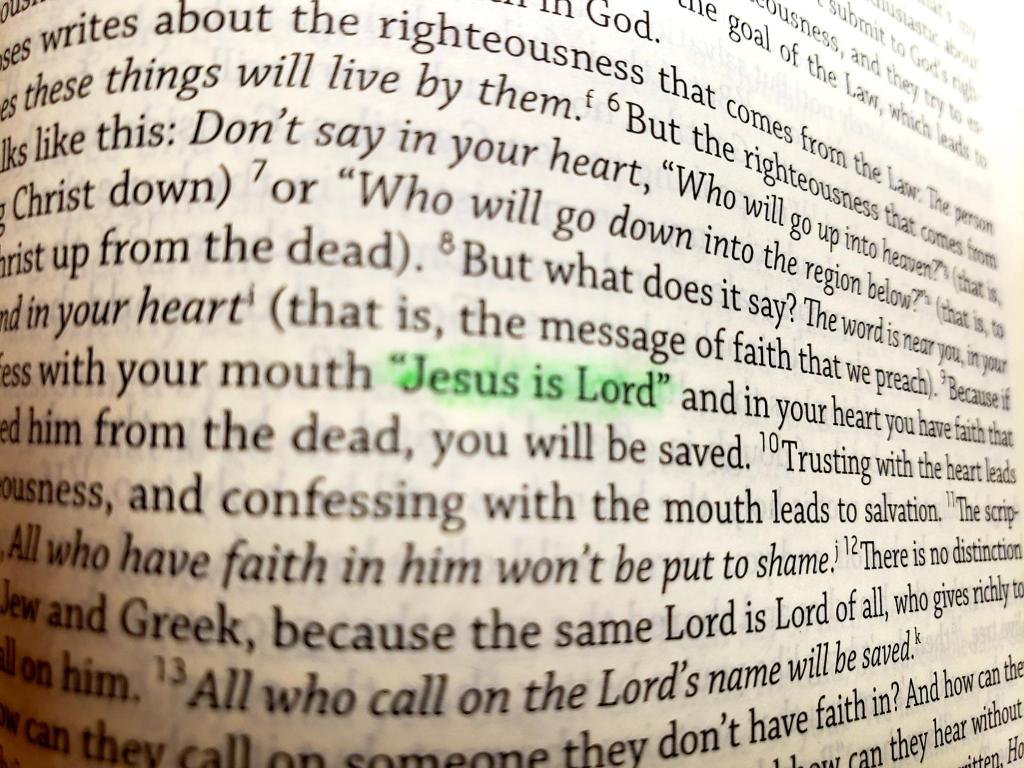
“The word is near you; it is in your mouth and in your heart,” that is, the message concerning faith that we proclaim: If you declare with your mouth, “Jesus is Lord,” and believe in your heart that God raised him from the dead, you will be saved. For it is with your heart that you believe and are justified, and it is with your mouth that you profess your faith and are saved. As Scripture says, “Anyone who believes in him will never be put to shame. ”For there is no difference between Jew and Gentile—the same Lord is Lord of all and richly blesses all who call on him, for, “Everyone who calls on the name of the Lord will be saved.” (New International Version)

Confess with the Mouth

John Wesley (1703-1791) was an Oxford don who became an Anglican priest. He had all the intellectual tools to rightly handle the intricacies of theology and teach the Bible. Yet, when he first started out, there was no heart behind it. 

On a voyage across the Atlantic to America, Wesley spent much of the time on the ship with a group of German pietists – men and women who had a heart behind their practice of Christianity. The Germans deeply impressed Wesley, and he realized there was something important missing from his own religion. 

The ship encountered a storm and Wesley was afraid for his life. But the German believers seemed unfazed, having a heart-faith that John could not explain. He wanted what they had. Wesley was fearful and found little comfort in his religion. So, he confessed to one of them his growing misery and decision to give up the ministry. One of the Pietists advised, “Preach faith till you have it. And then, because you have it, you will preach faith.”

John Wesley acted on the advice. He led a prisoner to Christ by preaching faith in Christ alone for forgiveness of sins. He was astonished. Here was a man transformed instantly. Wesley cried out, “Lord, help my unbelief!” However, he still felt dull inside and little motivation even to pray for his own salvation. 
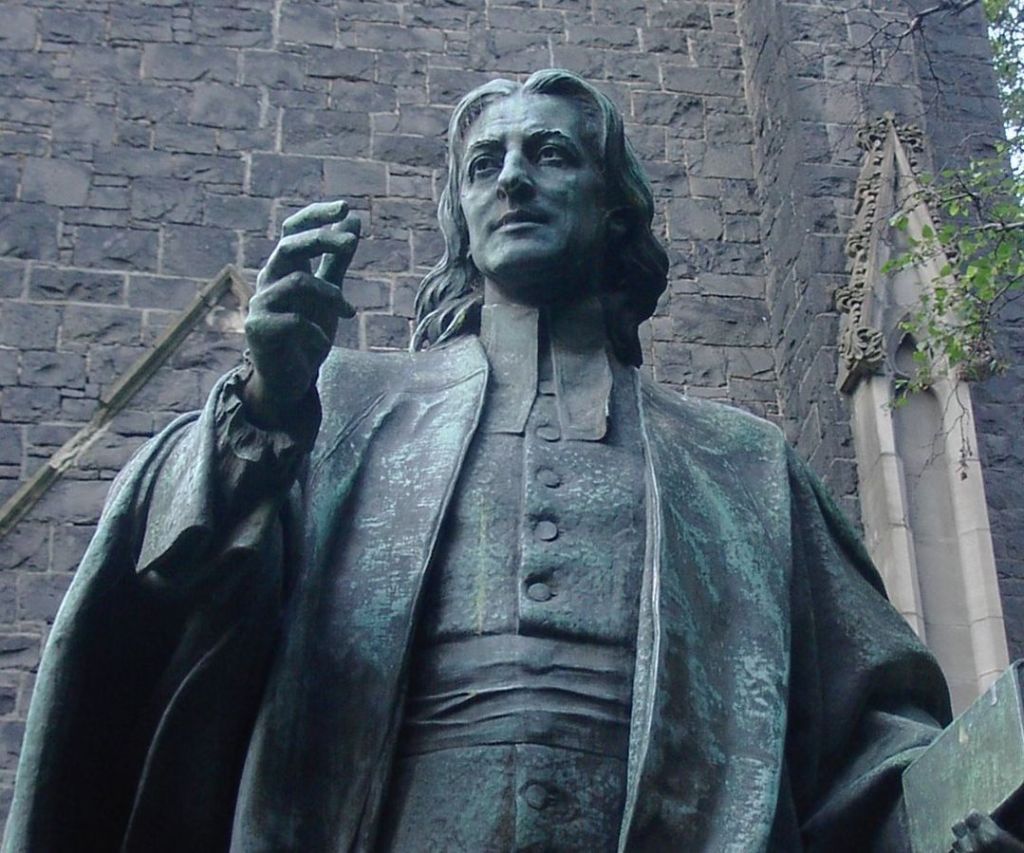
Statue of John Wesley as a young preacher, by Adam Carr, located in Melbourne, Australia

Having returned back to England, Wesley was in a church service listening to Romans expounded by the preacher. He recalled the experience years later: “While he was describing the change which God works in the heart through faith in Christ, I felt my heart strangely warmed. I felt I did trust in Christ, Christ alone for salvation; and an assurance was given me that He had taken away my sins, even mine, and saved me from the law of sin and death.”

Believe with the Heart

Simply uttering the words with our mouths, “Jesus is Lord,” by itself does not create deliverance and salvation. The heart needs to be involved. Yet, we must also consider the reality that only focusing on the heart, without having the mouth involved, is an insufficient faith. Christian belief has a solid objective real historical base from which our hearts can tether themselves. Christian confession affirms that Jesus is, indeed, risen from death and is Lord of all, having secured salvation for us through his shed blood on the cross.

Consider two hypothetical men at the time of the Passover in Egypt: Eleazar Ben Macaroni and Yakov Yarmulke. Eleazar and Yakov are talking together on the night the angel of death is about to pass through Egypt and the firstborn son in every family would be killed – that is, unless the blood from a sacrificial lamb was over the door of the house so that the angel would “pass over” the house and no one would be killed. 

Passover Angel of Death, by Arthur Hacker (1858-1919)

Yakov says to Eleazar, “Can you believe all that has been happening around here?  It’s all very scary!  All of those plagues, the disaster around us, and now this night!”  Eleazar asks, “Well, haven’t you put the blood over the door?”  “Yes, I’ve done all that – but it all is still disturbing.  My heart is troubled.  What do think will happen?” “Will we be okay?” asks Yakov nervously.  Eleazar responds, “I trust in the promises of God; let the angel come!”

So, when the angel of death came, which house do you suppose lost his firstborn son: Eleazar ben Macaroni, or Yakov Yarmulke?  The answer: neither of them. The angel of death did not come to either man’s house because deliverance is determined by the blood of the lamb and not by the quality or intensity of faith of the person. 

“For me His precious blood he shed – for me His life He gave. I need no other argument, I need no other plea; it is enough that Jesus died, and that he died for me.”

My Faith Has Found a Resting Place, hymn by Eliza Edmunds Hewitt (1851-1920)

If we only focus on the heart, our hearts will condemn us. We need to say the words of our faith, to confess them with our mouths, repeatedly, again and again, until we believe them. We are not to wait for our hearts to feel like having faith and living for God, because our hearts can be desperately wicked, and they will keep deceiving us. The heart needs to be informed by God’s Word and accept the words of Holy Scripture by faith:

“If we confess our sins, he is faithful and just to forgive us our sins, and to purify us from all unrighteousness.” (1 John 1:9, NIV)

Have the Heart and Mouth Work Together

We need both a right confession with our mouths and a right confession in our hearts for saving faith. When the heart receives grace, and the mouth expresses the beauty of faith – when heart and mouth work in concert with each other – something beautiful and gracious happens: 

“Everyone who calls on the name of the Lord will be saved.”

Romans 10:13

When Holy Scripture says “everyone,” it means “everyone.” All who cry out to God with their mouths, from a heart desiring God, will be saved. It does not matter whether that call is melodious, sweet, and in tune; or whether the call is a jumbled off-key joyful noise. It makes no difference; both will be saved. 

Only uttering the right words like some magical incantation does not save us. Only sincerity of heart does not save us. One does not achieve salvation through self-effort or trying to be worthy. No one is saved by finding the right combination of words in prayer or having a nice feeling.

Calling on the name of the Lord with both mouth and heart, trusting in the redemptive events of Jesus Christ, is what saves us.

Whether Jew or Gentile, rich or poor, American or Arab, famous or infamous, it is no matter – because salvation isn’t dependent on our looks, our past, or our zeal in doing good works. Salvation is completely from God and freely given to all who call upon the name of the Lord.

Make No Room for Shame

What’s more, all who trust in Jesus Christ will never be put to shame. In ancient Roman society, nearly three-fourths of all the people in the Empire were slaves to the other one-fourth. It was a culture built around the concept of honor and shame. It was shameful to be a slave, and honorable to be privileged, wealthy, and influential with a good Roman pedigree and citizenship. It was beneath such people to interact with those who served them because dealing with shameful people would make them shameful, as well.

Jesus forsook his honorable position in order to hob-nob with us rabble. He became one of us to save us and lift us up with him.

“For you know the grace of our Lord Jesus Christ, that though he was rich, yet for your sakes he became poor, so that you, through his poverty, might become rich.” 

2 Corinthians 8:9, NIV

Jesus embraced the shame of the cross. Therefore, we need never live in a state of shame ever again. Our hearts need not condemn us. Jesus has already taken care of shame, once for all.

“Let us fix our eyes on Jesus, the author and perfecter of our faith, who for the joy set before him endured the cross, scorning its shame, and sat down at the right hand of the throne of God.  Consider him who endured such opposition from sinful men, so that you will not grow weary and lose heart.” (Hebrews 12:2-3, NIV)

Put a Focus on Lent

The season of Lent lets us know we are neither brains-on-a-stick nor walking-headless-hearts. We have both heart and mouth, both deep feeling and real intellectual knowledge. Together, they form belief and confession. Lent is an invitation to prepare our hearts for Christ’s passion and resurrection. It includes an examination of our hearts so that we can deepen our piety and devotion to Jesus. And it incorporates confession of Jesus with the mouth.

The good news is this: Jesus is Savior and Lord; he has risen from death; and there is forgiveness of sins and deliverance from guilt and shame through is cross. When all is said and done, people need the Lord.

“I have not come to call the righteous, but sinners,” said Jesus. (Matthew 9:13)

Repentance involves both heart and mouth. And Lent is just the season for it, to turn from everything we have previously been living for other than Jesus. It’s an opportunity to start afresh with new life in Christ. It’s enough to make old John Wesley smile from the grave.

Have mercy on me, O God, according to your unfailing love; according to your great compassion blot out my transgressions. Wash away all my iniquity and cleanse me from my sin. 

Create in me a pure heart, O God, and renew a steadfast spirit within me. Restore to me the joy of your salvation and grant me a willing spirit, to sustain me.

Save me from guilt and shame and my tongue will sing of your righteousness. Open my lips, and my mouth will declare your praise. You do not delight in sacrifice, or I would bring it; you do not take pleasure in burnt offerings. The sacrifices of God are a broken spirit; a broken a contrite heart, O God, you will not despise. Amen.


Psalm 91:1-2, 9-16 – The Lord Watches Over You

photo by Tom Clark

Live under the protection
    of God Most High
    and stay in the shadow
    of God All-Powerful.
Then you will say to the Lord,
“You are my fortress,
    my place of safety;
    you are my God,
    and I trust you….

The Lord Most High
    is your fortress.
Run to him for safety,
    and no terrible disasters
    will strike you
    or your home.

God will command his angels
to protect you
    wherever you go.
They will carry you
    in their arms,
    and you won’t hurt your feet
    on the stones.
You will overpower
the strongest lions
    and the most deadly snakes.

The Lord says,
“If you love me
    and truly know who I am,
    I will rescue you
    and keep you safe.
When you are in trouble,
    call out to me.
I will answer and be there
    to protect and honor you.
    You will live a long life
    and see my saving power.” (Contemporary English Version)

I had a flashback in reading today’s psalm. My wife’s paternal grandmother was a godly woman. She raised five children in depression-era America, and it was not an easy life. She saw her share of hardship and difficulty. By the time I met Grandma she was elderly and in the twilight of life. Yet, none of those many difficult years she experienced had hardened her – she had an unmistakable sweet spirit. 

In my first meeting with Grandma, I read her this very psalm, since I knew it was her favorite. As I carefully went through the beautiful poetic lines of the psalm – words of God’s protection and watch-care over people –the look on Grandma’s face was as if I was reading it to her for the first time. She drank in its message and savored every word.

This dear woman of God has been gone now for decades, but her legacy lives on. My wife, to put it delicately, was something of a precocious child. Grandma prayed for her, along with her other grandchildren, every day. This was no small feat, considering that she had eighteen grandchildren and then many great grandchildren late in life. Today my wife is a godly woman, just like her grandmother. And it is no surprise to me that her favorite psalm is Psalm 91.  

What kind of spiritual legacy are we leaving for our kids, grandchildren, friends, and others? 

The times of testing, danger, risk, and hardship are the opportunities to put a trust in God into practice. It is in such seasons that we can run to the Lord as our refuge and fortress, our shelter and our shade. In doing so, the impact is not only personal, but points to and brightly illumines the way for others, as well.

Watchful God, you are my protection and my strength. I run to you because you are able to deliver and to secure. I pray for all those who need your special help and protection today. May they know that you are able to save through Jesus Christ our Lord.  Amen.

Exodus 6:1-13 – Our Own Worst Enemy

Moses and the Burning Bush by Marc Chagall

Then the Lord told Moses, “Now you will see what I will do to Pharaoh. When he feels the force of my strong hand, he will let the people go. In fact, he will force them to leave his land!”

And God said to Moses, “I am Yahweh— ‘the Lord.’I appeared to Abraham, to Isaac, and to Jacob as El-Shaddai—‘God Almighty’—but I did not reveal my name, Yahweh, to them. And I reaffirmed my covenant with them. Under its terms, I promised to give them the land of Canaan, where they were living as foreigners. You can be sure that I have heard the groans of the people of Israel, who are now slaves to the Egyptians. And I am well aware of my covenant with them.

“Therefore, say to the people of Israel: ‘I am the Lord. I will free you from your oppression and will rescue you from your slavery in Egypt. I will redeem you with a powerful arm and great acts of judgment.I will claim you as my own people, and I will be your God. Then you will know that I am the Lord your God who has freed you from your oppression in Egypt. I will bring you into the land I swore to give to Abraham, Isaac, and Jacob. I will give it to you as your very own possession. I am the Lord!’”

So, Moses told the people of Israel what the Lord had said, but they refused to listen anymore. They had become too discouraged by the brutality of their slavery.

Then the Lord said to Moses, “Go back to Pharaoh, the king of Egypt, and tell him to let the people of Israel leave his country.”

“But Lord!” Moses objected. “My own people won’t listen to me anymore. How can I expect Pharaoh to listen? I’m such a clumsy speaker!”

But the Lord spoke to Moses and Aaron and gave them orders for the Israelites and for Pharaoh, the king of Egypt. The Lord commanded Moses and Aaron to lead the people of Israel out of Egypt. (New Living Translation)

We can become our own worst enemy.

In Lodi, California, in March of 2006, a city dump truck backed into a car belonging to a man named Curtis Gokey. The car was damaged badly. So, Gokey sued the city of Lodi for $3,600. There is, however, a catch to the story: Curtis Gokey was driving the city dump truck that crunched his personal car. And he admitted it was his fault. The city dropped the lawsuit, stating that Gokey could not sue himself. 

Like Curtis Gokey, we are often our own worst enemies. We might get down on ourselves or on God. There are times when it’s easy for us to either justify ourselves or blame ourselves, while wondering why God and/or others keep doing things we don’t like. 

When life is not going so well, it’s possible to slide into a private belief system that thinks God is not good for his promises (James 1:16-17). At worst, one can start to think that God is the problem and the source of the trouble. 

To be self-deceived is to go astray and slowly drift from the truth…. It can happen to anybody. The first step is having expectations that go unmet. An expected answer to prayer goes unanswered. Somebody lashes out and there seems to be no protection from it. Some anticipated blessing does not come to pass….

Moses was downright confused. He was confident and convinced God had called him to free the Israelites from their cruel bondage in Egypt. But nothing was going right. And the people were upset with Moses for making things worse, not better.

Trusting God and not becoming discouraged when we don’t understand everything that’s happening can be a big challenge. We might wonder if we really have what it takes to do anything well. We may wonder if God is even listening, or if God is paying any attention, at all, to our terrible plight….

  • “Why, God, did you let my son or daughter die? How in the hell am I supposed to keep going!?” 
  • “Why, God, did you give me a gaslighting boss to deal with? I get tongue-tied around her. How is she ever going to listen to me?”
  • “Why won’t people get vaccinated for COVID-19? How am I supposed to talk to the anti-vaxers?”
  • “Why, God, is everything changing? How am I going to speak up?”

Questioning can help us make sense of our situations. However, questioning may also cause us to doubt that God is there and will act on our behalf. In such times, it might be tempting to blame God for a broken relationship, a terrible event, a dysfunctional family, or an adverse situation. 

Yet, God has chosen to give us birth through the word of truth (not a word of deception and lies) so that we might have new life with fresh eyes of faith to see our situations as God sees them (James 1:18).  That is what wisdom is – the ability to see all of life from God’s perspective. 

If any of us lacks wisdom, we should ask God, who gives generously without finding fault, and it will be given to us (James 1:5).  This is a promise from a good God who knows how to give good gifts.

None of us are above falling into misinterpretations that lead to the self-deceptions of questioning God’s goodness and our own God-given personhood. We need to be vigilant in watching for the false stories we might tell ourselves such as: 

  • “This wouldn’t have happened, if I just would’ve been better.”
  • “There’s nothing I can do about it.”
  • “I’m just a big screw-up. I can’t do anything right.”
  • “God messed-up when he made me.” 
  • “I don’t know what to say. I’m not good with words.”

We are all to take charge of our lives through having a robust theology of God that discerns the Lord is always good, all the time, without exception; and that we are called by a good God to do good work.

The good news is that a good God has taken care of the sin issue once for all through the cross of Christ. The Lord has brought us the good gifts of forgiveness and grace. God has given us the Holy Spirit to help us and guide us into all truth so that we will have wisdom and humility to live the Christian life as it is meant to be lived. 

For the Christian, the key to it all is faith – genuine authentic faith that places head, heart, and hands completely in Jesus Christ so that we have right belief, right motives, and right actions all rightly working together in a full-orbed Christianity that glorifies the triune God, encourages Christ’s church, and blesses God’s big world. 

Don’t be your own worst enemy by sabotaging your thoughts with the double-mindedness of wondering about the true nature of God. 

Explore the depths of God in Christ and discover the goodness that can result even in life’s most difficult experiences.

Lord God almighty, Creator of heaven and earth:

When evil darkens our world, give us light.

When despair numbs our souls, give us hope.

When we stumble and fall, lift us up.

When doubts assail us, give us faith.

When nothing seems sure, give us trust.

When ideals fade, give us vision.

When we lose our way, be our guide!

That we may find serenity in Your presence, and purpose in doing Your will.

Through Jesus Christ, our Savior, Lord, Brother, and Friend. Amen.

Exodus 5:10-23 – More Bricks, Less Straw “Why, God!?”

A brick making scene from an ancient the ancient Egyptian tomb of Rekhmire, c.1400 B.C.E.

So, the slave drivers and foremen went out and told the people: “This is what Pharaoh says: I will not provide any more straw for you. Go and get it yourselves. Find it wherever you can. But you must produce just as many bricks as before!” So, the people scattered throughout the land of Egypt in search of stubble to use as straw.

Meanwhile, the Egyptian slave drivers continued to push hard. “Meet your daily quota of bricks, just as you did when we provided you with straw!” they demanded. Then they whipped the Israelite foremen they had put in charge of the work crews. “Why haven’t you met your quotas either yesterday or today?” they demanded.

So the Israelite foremen went to Pharaoh and pleaded with him. “Please don’t treat your servants like this,” they begged. “We are given no straw, but the slave drivers still demand, ‘Make bricks!’ We are being beaten, but it isn’t our fault! Your own people are to blame!”

But Pharaoh shouted, “You’re just lazy! Lazy! That’s why you’re saying, ‘Let us go and offer sacrifices to the Lord.’ Now get back to work! No straw will be given to you, but you must still produce the full quota of bricks.”

The Israelite foremen could see that they were in serious trouble when they were told, “You must not reduce the number of bricks you make each day.” As they left Pharaoh’s court, they confronted Moses and Aaron, who were waiting outside for them. The foremen said to them, “May the Lord judge and punish you for making us stink before Pharaoh and his officials. You have put a sword into their hands, an excuse to kill us!”

Then Moses went back to the Lord and protested, “Why have you brought all this trouble on your own people, Lord? Why did you send me? Ever since I came to Pharaoh as your spokesman, he has been even more brutal to your people. And you have done nothing to rescue them!” (New Living Translation)

It was God – Yahweh, the great I AM – who called to Moses from the burning bush. It was God who told Moses to go to Egypt because of the groaning of the Israelites in their slavery. It was also God who promised Moses that Divine help would deliver the people from their awful bondage. 

But the promised vision of release and rescue from captivity ran into the harsh buzz-saw of reality. 

Moses did exactly what God told him to do. He was completely attentive and obedient to God’s revealed will. And the result? Pharaoh forced the Israelite slaves to make bricks without being supplied with the straw to do it. Now, the people’s situation is even worse than it was before Moses showed up on the scene. What’s up with that!?

Since we know the end to the story, we understand where all of this is going. However, when we put ourselves in the sandals of Moses, it’s anything but clear about what was happening.

“Confusion is a sign of intelligence; only fools are crystal clear.”

Haresh Sippy

None of us gets off this planet without facing some hard things. We may even face those difficulties when we’re just trying to do the right thing. We’re simply trying to help, do our best, obey God, and then we get in trouble. In those situations, we can empathize with Moses getting testy with God and expressing his complaint.

The God of the universe is big enough to handle our protests in the midst of trouble – even when those complaints are directly pointed toward him. God gets it.

There is an appropriate place for us to freely express our abject disbelief, our painful wonderings, and our outright anger toward God. We won’t get a lightning bolt from heaven if we ask and cry out, “Why, God? What the **** are you doing!?”

There have been many times in my life when I questioned whether I was really sent by God to be in a certain place or to do a certain thing. I seriously wondered whether I really heard God, or not. Maybe it was my own voice in my head. Perhaps it was an emotional decision. 

The incongruence between what we believe and how things are actually turning out can be maddening.

But there is something we must all realize: Just because things go from bad to worse does not necessarily mean God isn’t in the thing. 

We are not always, even usually, privy to the mind of God in the big picture of what the Lord is doing. 

In the middle of trouble, we might think God is not at work, not paying attention, or slow to act. Yet, God knows exactly what’s going on and what the plan is. Sometimes, we need to discern and know that things will get worse before they will get better – and that God has not abandoned us.

Wise God, I trust you that you know what you are doing, even though I don’t see what in the world is going on. Help me to see all things from your perspective so that I might have the wisdom to move forward in faith and patience. I’m out on a limb for you! Please don’t let it break! Amen.