Revelation 3:1-6 – Remember, Hold On, and Change

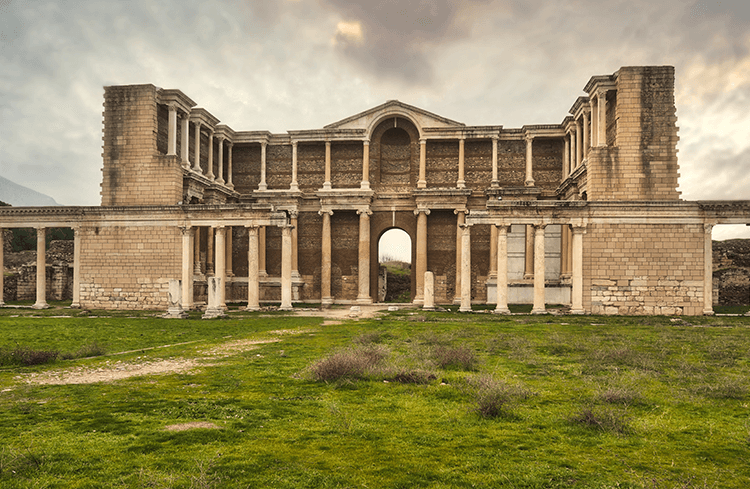
Ruins in the ancient city of Sardis (present day Sart, Turkey)

Write this to the angel of the church in Sardis:

These are the words of the one who holds God’s seven spirits and the seven stars: I know your works. You have the reputation of being alive, and you are in fact dead. Wake up and strengthen whatever you have left, teetering on the brink of death, for I’ve found that your works are far from complete in the eyes of my God. So, remember what you received and heard. Hold on to it and change your hearts and lives. If you don’t wake up, I will come like a thief, and you won’t know what time I will come upon you. But you do have a few people in Sardis who haven’t stained their clothing. They will walk with me clothed in white because they are worthy. Those who emerge victorious will wear white clothing like this. I won’t scratch out their names from the scroll of life but will declare their names in the presence of my Father and his angels. If you can hear, listen to what the Spirit is saying to the churches. (Common English Bible)

Many Christians reflexively think of good old Apostle Paul when it comes to biblical epistles (letters) to churches. Yet, contained within the first three chapters of Revelation are seven succinct letters to seven different churches. These letters are short and packed with a punch – and they don’t come from Paul.

What makes these short bursts of exhortation so powerful is that they come from Jesus himself. Yes, that Jesus – the Lord Jesus Christ, the head of the church. So, it seems to me that Christ’s observations about the church ought to carry more weight than anybody else’s thoughts.  

Christ was concerned about how far the church was from completing the work of God. So, he gave a pointed admonition, almost like a parent trying to awaken a teenager in the morning. “Wake up!” said Jesus because he found the church’s obedience incomplete and lacking strength. If this were the Apostle Paul talking, he would likely have framed it this way: “You have sinned and fallen short of the glory of God.” (Romans 3:23)

Our Lord went directly to the heart of the church’s life… and it’s death. The stark reality is that these statements from Jesus remain penetrating and relevant for today’s church.

So, what is to be done about the situation of spiritual deadness in the church? 

Jesus did not leave the church hanging but in a few compact words let them know exactly what they are to do to remedy their spiritual malady: Remember. Hold on. Change. Keep the memory of sound instruction alive, always adjusting the life of the church to it. The Christian term for this is “repentance.”

Sometimes, if not many times, we may tend to forget the things we need to remember and remember the things we must forget. We are to follow God in a pattern of remembering and forgetting. God has said:

I wipe away your sins because of who I am. And so, I will forget the wrongs you have done. (Isaiah 43:25, CEV)

I will forgive their wrongdoing and never again remember their sins. (Jeremiah 31:34, CEB)

I will forget their sins and never again remember the evil they have done. (Hebrews 10:17, ERV)

Concerning those who have wronged us, we are to emulate God’s grace, mercy, and kindness through forgiveness. To “forget” does not mean performing a personal lobotomy but simply not to hold an offense against another by continually bringing it to mind. On the other hand, God remembers divine promises made to people. Likewise, we are to constantly bear in mind what God has put before us to remember:

For I received from the Lord what I also handed on to you, that the Lord Jesus on the night when he was betrayed took a loaf of bread, and when he had given thanks, he broke it and said, “This is my body that is for you. Do this in remembrance of me.” In the same way he took the cup also, after supper, saying, “This cup is the new covenant in my blood. Do this, as often as you drink it, in remembrance of me.” For as often as you eat this bread and drink the cup, you proclaim the Lord’s death until he comes. (1 Corinthians 11:23-26, NRSV)

We need an abiding remembrance of the Lord Jesus, the very person who spoke to the church hundreds of years ago. It is in those times when we become distressed that we must center our memory on Christ:

We must focus on Jesus, the source and goal of our faith. He saw the joy ahead of him, so he endured death on the cross and ignored the disgrace it brought him. (Hebrews 12:2, GW)

Remembering Jesus Christ sets us on the path to fulfilling the work of God and completing that which has been given us to do. This is precisely why I choose to follow the Christian Year and remember time by having it centered around the life and ministry of Jesus.

Always think about Jesus Christ. He was brought back to life and is a descendant of David. This is the Good News that I tell others. (2 Timothy 2:8, GW)

I have been a constant example of how you can help those in need by working hard. You should remember the words of the Lord Jesus: “It is more blessed to give than to receive.” (Acts 20:35, NLT)

Let us remember together in prayer:

Awesome Lord Jesus, your words penetrate to the core my being. Strengthen me by the continuing presence of yourself through the Holy Spirit so that my every thought, word, and deed is done in your holy Name. Kindle in my heart a vision of your love and shine the light of your victory over sin, death, and hell over this dark world. Continually take me to yourself. Keep me in your wounds and mindful of your presence so that I shall fulfill all the will of God for my life through your divine enablement. Amen.

Revelation 2:8-11 – Spiritual Endurance

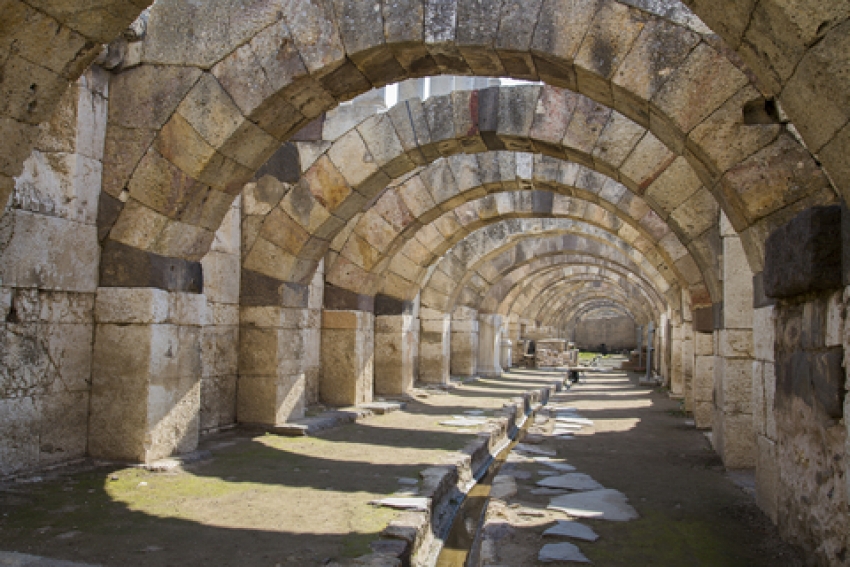
The remains of ancient Smyrna in Izmir, Turkey

This is what you must write to the angel of the church in Smyrna:

I am the first and the last. I died, but now I am alive! Listen to what I say.

I know how much you suffer and how poor you are, but you are rich. I also know the cruel things being said about you by people who claim to be Jews. But they are not really Jews. They are a group that belongs to Satan.

Don’t worry about what you will suffer. The devil will throw some of you into jail, and you will be tested and made to suffer for ten days. But if you are faithful until you die, I will reward you with a glorious life.

If you have ears, listen to what the Spirit says to the churches. Whoever wins the victory will not be hurt by the second death. (Contemporary English Version)

Jesus not only speaks in the four Gospels of the New Testament; Christ also speaks in the final biblical book of Revelation to seven different churches.

In today’s New Testament lesson, Jesus addresses the church at Smyrna – a large and beautiful port city in the ancient world, on the eastern coast of the Aegean Sea (present day Turkey). 

Jesus was letting the believers in Smyrna know they were about to experience severe persecution. However, they need not be fearful and can remain faithful because their Lord knows all about suffering. 

The church’s perseverance under such trouble would result in the crown of life, given to them by Jesus himself. Words coming directly from their Lord and Savior must surely have been an encouragement to the believers as they underwent extreme difficulty.

The congregation at Smyrna was facing imprisonment and, for some, even death for their faith. The heart of the message by Jesus is to remain faithful. 

The seven churches of Revelation which Jesus addressed

There will always be those who are faint of heart with weak faith, giving up when the going gets tough. Yet, persecution and hardship have a way of purging the soul, as well as the church, of its dross. Suffering is inevitable; how we handle adversity when it comes is completely under our own control.

Few of us will likely never face a hardship that could result in martyrdom. Knowing there are brothers and sisters in the faith throughout the world who do face daily hardship for devotion and beliefs puts our own troubles in a different light.

The daily irritations and trials that God puts in our way to refine us and shape our faith certainly seem small compared to imprisonment and martyrdom. Yet, no matter who we are and where we are located on this earth – whether facing uncommon hardship or banal difficulty – the afflictions of both body and soul come to us as opportunities to lean into faith and love Jesus to the end.

Jesus is not looking for perfect people – just faithful followers willing to endure suffering with the truth that our Lord stands with us. 

Whatever our current circumstances may be, Jesus offers us his perspective on it. He knows precisely what is going on and understands the spiritual resources you and I possess for each adverse situation we encounter.

In fact, few of us really discern the largess of internal resources within us because of Christ’s redemptive work and the Spirit’s abiding presence – not to mention the very personhood God graciously gave us in the womb before we were even born.

Even though it seems, at times, we lack the strength, wisdom, and courage for what is ahead – Jesus has supreme confidence in us to maintain faith and endure through our afflictions.

Life is not a sprint; life is a marathon. And to finish the race we need to be in good spiritual health. The perseverance of the saints will happen as we run – step by step, stride by stride – with boldness, despite fear of the unknown future around the bend.

Spiritual endurance requires becoming comfortable with risk, vulnerability, accountability, and the steadfast love which is both received and given.

Perhaps, most of all, it requires keeping our heads up and running toward the promise of reward at the finish. The crown of life is an image of both congratulation and celebration of a race well-run and the enjoyment of unending fellowship with our Lord for whom we have endured so much.

After all is said and done, and the end of the age has occurred, we will be able to look back in hindsight and see that it was really Jesus who all along was fortifying us to keep standing and keep going. Christ is so vested in us that he continually ensures our ultimate victory through a constant presence of help and encouragement. The heritage of both the Reformation and Holy Scripture testify to this truth:

“All our progress and perseverance are from God.”

John Calvin (1509-1564)

“I’m sure about this: the one who started a good work in you will stay with you to complete the job by the day of Christ Jesus.” (Philippians 1:6, CEB)

May the grace of Jesus sustain you; the love of God surround you; and the encouragement of the Spirit surprise you, today and every day. Amen.

Grant, O God, That we may never lose the way through our self-will, and so end up in the far countries of the soul; that we may never abandon the struggle, but that we may endure to the end, and so be saved; that we may never drop out of the race, but that we may ever press forward to the goal of our high calling; that we may never choose the cheap and passing things, and let go the precious things that last forever; that we may never take the easy way, and so leave the right way; that we may never forget that sweat is the price of all things, and that without the cross, there cannot be the crown.

So keep us and strengthen us by your grace that no disobedience and no weakness and no failure may stop us from entering into the blessedness which awaits those who are faithful in all the changes and chances of life down even to the gates of death; through Jesus Christ our Lord. Amen

William Barclay, Prayers for the Christian Year

2 Chronicles 20:1-22 – Praying in Desperate Times

Photo by cottonbro on Pexels.com

The armies of Moab and Ammon, together with the Meunites, went to war against Jehoshaphat. Messengers told Jehoshaphat, “A large army from Edom east of the Dead Sea has invaded our country. They have already reached En-Gedi.”

Jehoshaphat was afraid, so he asked the Lord what to do. He then told the people of Judah to go without eating to show their sorrow. They immediately left for Jerusalem to ask for the Lord’s help.

After everyone from Judah and Jerusalem had come together at the Lord’s temple, Jehoshaphat stood in front of the new courtyard and prayed:

You, Lord, are the God our ancestors worshiped, and from heaven you rule every nation in the world. You are so powerful that no one can defeat you. Our God, you forced out the nations who lived in this land before your people Israel came here, and you gave it to the descendants of your friend Abraham forever. Our ancestors lived in this land and built a temple to honor you. They believed that whenever this land is struck by war or disease or famine, your people can pray to you at the temple, and you will hear their prayer and save them.

You can see that the armies of Ammon, Moab, and Edom are attacking us! Those are the nations you would not let our ancestors invade on their way from Egypt, so these nations were not destroyed. Now they are coming to take back the land you gave us. Aren’t you going to punish them? We won’t stand a chance when this army attacks. We don’t know what to do—we are begging for your help.

While every man, woman, and child of Judah was standing there at the temple, the Lord’s Spirit suddenly spoke to Jahaziel, a Levite from the Asaph clan. Then Jahaziel said:

Your Majesty and everyone from Judah and Jerusalem, the Lord says that you don’t need to be afraid or let this powerful army discourage you. God will fight on your side! So, here’s what you must do. Tomorrow the enemy armies will march through the desert around the town of Jeruel. March down and meet them at the town of Ziz as they come up the valley. You won’t even have to fight. Just take your positions and watch the Lord rescue you from your enemy. Don’t be afraid. Just do as you’re told. And as you march out tomorrow, the Lord will be there with you.

Jehoshaphat bowed low to the ground, and everyone worshiped the Lord. Then some Levites from the Kohath and Korah clans stood up and shouted praises to the Lord God of Israel.

Early the next morning, as everyone got ready to leave for the desert near Tekoa, Jehoshaphat stood up and said, “Listen my friends, if we trust the Lord God and believe what these prophets have told us, the Lord will help us, and we will be successful.” Then he explained his plan and appointed men to march in front of the army and praise the Lord for his holy power by singing:

“Praise the Lord!
    His love never ends.”

As soon as they began singing, the Lord confused the enemy camp. (Contemporary English Version)

King Jehoshaphat and Judah were about to be attacked. War was imminent. Anxiety was high. The people were on edge. What were they going to do in the face of a combined army that seemed as if they’d steamroll over the nation of Judah? 

Here’s what Jehoshaphat did: He admitted his fear, sought the Lord for help, and proclaimed a national fast for everyone in Judah. Then, the king prayed, and God responded.

A most unconventional method of defeating the enemy was put into motion. The king and the people of Judah put together a praise team and a worship gathering to go before the army; they believed God was good for divine promises and would deliver them.

The king’s prayer was a deeply felt and sincere belief that God could and would answer, according to ancient promises to the people. The meat of the prayer affirmed both the powerlessness of their situation and the power of God to transcend even the most difficult of circumstances. They didn’t know how deliverance was going to come; they simply believed it was going to happen. 

This is, indeed, the kind of prayer God delights to answer! It was a prayer born of great need and desperation – a prayer upholding the name of God and discerning that unless the Lord showed up, all would be lost.

The foundational basis of all prayer to God is the recognition that we do not know what to do, other than look to the Lord. 

We pray because we desperately need God to show up and do for us what we cannot do for ourselves. 

We cry out to God in our affliction and believe that the gracious ears of the Lord will hear and save us from our terrible plight. 

And once we pray, we are to stand firm, hold our position, and see the salvation from God on our behalf. 

If we need some inspiration for prayer and find ourselves in need of faith to believe what God can do, then take the time to read carefully and prayerfully over today’s Old Testament lesson several times. 

Then, let the prayers arise to the God of deliverance so that our stressful and worrisome pressure is transformed into praise for the Lord’s steadfast love.

Almighty God, you rule over all the nations of the earth. In your hand are power and might, so that none are able to withstand you. My eyes are fixed on looking for you to act on my behalf so that I might declare that your steadfast love endures forever, through Jesus Christ, my Savior. Amen.

Psalm 105:1-42 – Getting Rid of the “Meh”

Praise the Lord
    and pray in his name!
    Tell everyone
    what he has done.
Sing praises to the Lord!
    Tell about his miracles.
Celebrate and worship
his holy name
    with all your heart.

Trust the Lord
    and his mighty power.
Remember his miracles
and all his wonders
    and his fair decisions.
You belong to the family
    of Abraham, his servant;
    you are his chosen ones,
    the descendants of Jacob.

The Lord is our God,
    bringing justice
    everywhere on earth.
He will never forget
his agreement or his promises,
    not in thousands of years.
God made an eternal promise
    to Abraham, Isaac, and Jacob,
    when he said, “I’ll give you
    the land of Canaan.”

At the time there were
only a few of us,
    and we were homeless.
We wandered from nation
to nation,
    from one country
    to another.
God did not let anyone
    mistreat our people.
Instead he protected us
    by punishing rulers
    and telling them,
“Don’t touch my chosen leaders
    or harm my prophets!”

God kept crops from growing
    until food was scarce
    everywhere in the land.
But he had already sent Joseph,
    sold as a slave into Egypt,
    with chains of iron
    around his legs and neck.

Joseph remained a slave
until his own words
    had come true,
    and the Lord had finished
    testing him.
Then the king of Egypt
    set Joseph free
    and put him in charge
    of everything he owned.
Joseph was in command
    of the officials,
    and he taught the leaders
    how to use wisdom.

Jacob and his family
came
    and settled in Egypt
    as foreigners.
They were the Lord’s people,
    so he let them grow stronger
    than their enemies.
They served the Lord,
and he made the Egyptians plan
    hateful things against them.
God sent his servant Moses.
He also chose and sent Aaron
    to his people in Egypt,
    and they worked miracles
    and wonders there.
Moses and Aaron obeyed God,
    and he sent darkness
    to cover Egypt.
God turned their rivers
into streams of blood,
    and the fish all died.
Frogs were everywhere,
    even in the royal palace.
When God gave the command,
    flies and gnats
    swarmed all around.

In place of rain,
God sent hailstones
    and flashes of lightning.
He destroyed their grapevines
    and their fig trees,
    and he made splinters
    of all the other trees.
God gave the command,
and more grasshoppers came
    than could be counted.
They ate every green plant
    and all the crops that grew
    in the land of Egypt.
Then God took the life
    of every first-born son.

When God led Israel from Egypt,
    they took silver and gold,
    and no one was left behind.
The Egyptians were afraid
    and gladly let them go.
God hid them under a cloud
    and guided them by fire
    during the night.

When they asked for food,
    he sent more birds
    than they could eat.
God even split open a rock,
    and streams of water
    gushed into the desert.
God never forgot
his sacred promise
    to his servant Abraham. (Contemporary English Version)

This morning, did you get up on the wrong side of the bed? Or did you awake feeling refreshed and ready to seize the day?

Maybe it was neither. Seems like, most days, we are neither energized nor grumpy. We are somewhere in the middle, feeling something like “meh.” 

Just as the importance of a decent breakfast is necessary to get a good start on the day, so beginning the day with some good spiritual food is a must to fortify our lives and set them on a solid trajectory for personal happiness and blessing the world. 

We cannot simply rely on feeding upon God when we feel like it, for then we will succumb to all the vicissitudes and variegations of life, becoming a slave to the almighty “meh.” 

As we get out of bed and orient ourselves from sleep to work, we need to tend to our spiritual selves and prepare for the day, just as we need to daily clean up our bodies and begin focusing our minds on our future tasks.

One way of taking charge of our spiritual lives is beginning the day with some vitamin-packed whole grain goodness of the biblical psalms. 

Today’s psalm calls on us to:

  • Give thanks to God
  • Call upon the name of the Lord
  • Make known the mighty deeds of God
  • Sing to the Lord
  • Glory in God’s name
  • Seek the Lord
  • Remember God’s wondrous works 

Feeding upon the psalms will help shoo the “meh” away.

God faithfully keeps all divine promises. As we recall and remember those promises, realizing that God remembers us, praise, singing, and thanksgiving arise along with our bodies. The Lord never has a “meh” response to us.

Perhaps before even getting out of bed in the morning, we can reach over, grab our Bible, tablet, or smartphone and read these words of Psalm 105 so that our day is formed around the positive promises of God and not the negative thoughts of our minds. 

And at night, the same ritual could be done before falling asleep so that our day is bookended with remembering God’s works. For the Bible is not simply some old book to adore from afar, but a living word from God to shape our minds and form our hearts.

The “meh” comes when there is a famine of God’s Word. Whenever we find ourselves saying things like, “Not my circus, not my monkeys,” or “I’m sleeping until I feel better,” then its time to cozy up to the psalmist and have a heart-to-heart.

You’ll be glad you did.

God almighty, you have remembered your people throughout the millennia with wondrous works and powerful deeds. Today I give thanks to you for giving your Son, the Lord Jesus, and accomplishing the mightiest work of all: securing my deliverance from sin, death, and hell. May the Name of Jesus be praised! Amen.