Acts 5:17-26 – How to Handle Jealousy

Then the high priest and all his associates, who were members of the party of the Sadducees, were filled with jealousy. They arrested the apostles and put them in the public jail. But during the night an angel of the Lord opened the doors of the jail and brought them out. “Go, stand in the temple courts,” he said, “and tell the people all about this new life.”

At daybreak they entered the temple courts, as they had been told, and began to teach the people.

When the high priest and his associates arrived, they called together the Sanhedrin—the full assembly of the elders of Israel—and sent to the jail for the apostles. But on arriving at the jail, the officers did not find them there. So, they went back and reported, “We found the jail securely locked, with the guards standing at the doors; but when we opened them, we found no one inside.” On hearing this report, the captain of the temple guard and the chief priests were at a loss, wondering what this might lead to.

Then someone came and said, “Look! The men you put in jail are standing in the temple courts teaching the people.” At that, the captain went with his officers and brought the apostles. They did not use force, because they feared that the people would stone them. (New International Version)

Celebration and success have their own challenges. Whenever things are going well, there are inevitably others who become jealous. And when jealousy takes root in a person or a group of people, it can result in harming and hurting others.

Indeed, persecution broke out against the apostles. Their ministry was flourishing. Thousands of people were being added to the Church. Miraculous healings abounded. And, standing in the shadows, were a group of jealous religious leaders. Since their power was diminishing, the ruling council had the apostles arrested – seeking to contain their influence and stop the spread of the Church.

Jealousy is one of the places we go whenever we play the comparison game with others. Whereas envy is wanting something that someone else has, jealousy is a deep-seated fear of losing someone or a group of people.

The reason jealousy can be so damaging and insidious is because of the anger and sadness behind it. In the case of the religious leaders, they saw the success of the apostles, the popularity of the burgeoning church, and the attention being diverted from themselves onto the apostles – and they were angry. The loss of religious power was just too much for them, so they became jealous.

Jealousy, much like anger, is neither good nor bad. It is an emotion. It’s what we do with the feeling that matters. In our anger we might turn it inward on ourselves, direct it onto another with verbal or even physical violence, or just get downright snarky and passive-aggressive. Also, with jealousy, it too often gets worked out on others by attacking them in some way.

God feels both anger and jealousy. Yet, those divine emotions are used to bring justice, establish what is right, and help the disadvantaged. God as a jealous God means that the Lord is saddened and hurt by people trying to find satisfaction in all the wrong places through idolatry.

Israel soon became fat and unruly;
    the people grew heavy, plump, and stuffed!
Then they abandoned the God who had made them;
    they made light of the Rock of their salvation.
They stirred up his jealousy by worshiping foreign gods;
    they provoked his fury with detestable deeds.
They offered sacrifices to demons, which are not God,
    to gods they had not known before,
to new gods only recently arrived,
    to gods their ancestors had never feared. (Deuteronomy 32:15-17, NLT)

God desires that people discover healthy ways of coping and acknowledge their jealous feelings. The Apostle Paul did just that:

I hope you will put up with me in a little foolishness. Yes, please put up with me! I am jealous for you with a godly jealousy. I promised you to one husband, to Christ, so that I might present you as a pure virgin to him. But I am afraid that just as Eve was deceived by the serpent’s cunning, your minds may somehow be led astray from your sincere and pure devotion to Christ. (2 Corinthians 11:1-3, NIV)

The feeling of jealousy is meant to tell us something. Instead of pushing it aside, listen to what it has to say. Perhaps it is leading us to acknowledge our grief and lament our loss. It could be alerting us to our great loneliness or deep sadness.

For whatever reason the jealousy arises, stuffing it or pushing it aside may cause harm to ourselves or others. A profound lack of self-awareness will always come back to bite us in the behind.

So, how do I handle those feelings of jealousy when they come?

  • Seek to understand. Trace the feeling back to its true source. Whether the jealousy stems from insecurity, fear, or past relationship patterns, knowing more about the causes can help us figure out how to confront it and deal with it.

An understanding heart seeks knowledge; but fools feed on folly. (Proverbs 15:14, CEB)

  • Talk to someone. Give voice to your concern. Discuss the feelings of jealousy with a trusted friend, family member, or faith leader.

Carry one another’s burdens, and in this way you will fulfill the law of Christ. (Galatians 6:2, NET)

  • Express your grief. With jealousy there is a loss or a worry of losing someone or something. Prayer is a good idea when we are losing someone.

God, listen! Listen to my prayer, listen to the pain in my cries. (Psalm 102:1, MSG)

  • View another perspective. Try and take a big picture approach and consider other angles to the situation which is producing the jealousy.

“My thoughts are nothing like your thoughts,” says the Lord. “And my ways are far beyond anything you could imagine. (Isaiah 55:8, NLT)

  • Practice gratitude. Be thankful for the people, circumstances, and things you have in your life right now. Thankfulness is often a powerful antidote to strong feelings of jealousy.

Tell the Lord how thankful you are, because he is kind and always merciful. (Psalm 118:29, CEV)

  • Explore underlying issues. Sometimes jealousy has to do with insecurity or low self-worth. Addressing your value as a person and the unique contribution to others you bring to the world has the effect of kicking jealousy to the curb.

God created humanity in God’s own image, in the divine image God created them, male and female God created them. (Genesis 1:27, CEB)

  • Be patient. Give it time. Most people don’t get over their jealous feelings overnight. It’s a process. So be kind to yourself and stick with acknowledging and discovering what jealousy has to teach you.

Be patient when you have troubles. (Romans 12:12, ERV)

May you find satisfaction, peace, and joy in the Holy Spirit. Amen.

Acts 5:12-16 – Healing For All

The apostles performed many signs and wonders among the people. And all the believers used to meet together in Solomon’s Colonnade. No one else dared join them, even though they were highly regarded by the people. Nevertheless, more and more men and women believed in the Lord and were added to their number. 

As a result, people brought the sick into the streets and laid them on beds and mats so that at least Peter’s shadow might fall on some of them as he passed by. Crowds gathered also from the towns around Jerusalem, bringing their sick and those tormented by impure spirits, and all of them were healed. (New International Version)

Healing is a universal longing.

To long for healing, of course, presupposes that something or someone is broken.

Those with bodily ills and infirmities; the ones carrying diseased and disordered minds; those with deep emotional wounds; and tortured souls with broken hearts and damaged spirits are all intimately familiar with pain – not to mention their friends and loved ones who observe their suffering day after day.

How will the healing ever come? When will it ever be realized? Dare I hope for a miracle?

There is a reason the ancient apostles were able to be agents of healing. There was something happening privately which worked itself out in miraculous public healing. Within the believing community, earnest prayers were being offered:

Stretch out your hand to heal and perform signs and wonders through the name of your holy servant Jesus. (Acts 4:30, NIV)

Just as all were healed when brought to Jesus, so the same happened with his followers.

The natural world, along with the most modern medical practices and interventions, has its limitations. Yet, the supernatural realm is unlimited in its power and scope to bring thorough and complete healing.

Prayer discerns and understands that humanity is limited in its abilities to transform and heal. There is no magical incantation to access such power. There isn’t any specific formula to achieve results. There is only the simple prayers and faithful ministry of believing persons who know that healing can come in many forms and in various ways.

In many cases, I have witnessed my hospital patients improve without any specific medical interventions – decades of intestinal issues gone; heart and brain function restored (which, biologically, doesn’t return when lost); and even the paralyzed walking again.

A miracle isn’t finding an open spot in a busy parking lot. Miracles don’t occur by sending in $19.95 to a “faith healer” who will pray and rid you of your gout.

Bona fide miracles have no natural, medical, or biological explanation. They aren’t tied to money. They only have divine explanations.

Prayers offered daily, and for years, are still effective prayers. That’s because the miraculous occurs irrespective of time.

There shall be healing. It just might not be today. We may have to wait.

Whenever God heals, there is complete healing. The physical trauma of an accident or disease isn’t confined to the body. It also traumatizes the person mentally, emotionally, and even spiritually. This is why faithful believers who come out of a major surgery may feel estranged from God. It’s not that God is absent, or that the individual did something wrong. The spirit just needs to heal along with the body.

The Lord wants to heal the whole person. Whenever a person has been emotionally abused, that abuse is experienced throughout the entirety of personhood. It is common for such persons to have a bevy of physical health issues in their lives. As the individual is healed from their damaged emotions, the body follows.

In this era of religious, church, and clergy abuse, the broken spirits left in its wake need healing. Victims may find themselves with chronic depression, anxiety, or other mental and emotional disorders. The spiritual healing which the Lord carefully provides will also effect the mind and the feelings.

The deepest need of healing is holistic – to impact the breadth and depth of a person’s life. The myriad diseases, disorders, and depressions of humanity are devastating enough, in and of themselves. Yet, they also create social separation, economic challenges, emotional distress, spiritual wondering, relational disconnection, terrible grief, and grinding loneliness.

God seeks to restore a life, and not just a malady.

Restoration to a family, a community, a workplace, a position of respect and responsibility, and to God is the Lord’s goal for all humanity.

The Lord your God will restore your fortunes and have compassion on you and gather you again from all the nations where he scattered you. Even if you have been banished to the most distant land under the heavens, from there the Lord your God will gather you and bring you back. (Deuteronomy 30:3-4, NIV)

Your righteousness, God, reaches to the heavens,
    you who have done great things.
    Who is like you, God?
Though you have made me see troubles,
    many and bitter,
    you will restore my life again;
from the depths of the earth
    you will again bring me up.
You will increase my honor
    and comfort me once more. (Psalm 71:19-21, NIV)

After you have suffered for a little while, the God of all grace, who has called you to his eternal glory in Christ, will himself restore, support, strengthen, and establish you. To him be the power forever and ever. Amen. (1 Peter 5:10-11, NRSV)

Our simple prayers focused on the restorative healing of a person, are what God has chosen to use to mend the broken. Prayer is not a last resort; it is always the believer’s first order of business.

O God, you made us in your own image and redeemed us through Jesus your Son: Look with compassion on the whole human family; take away the arrogance and hatred which infect our hearts; break down the walls that separate us; unite us in bonds of love; and work through our struggle and confusion to accomplish your purposes on earth; that, in your good time, all nations and races may serve you in harmony around your heavenly throne; through Jesus Christ our Lord. Amen.

2 Samuel 6:1-15 – Be Careful How You Celebrate

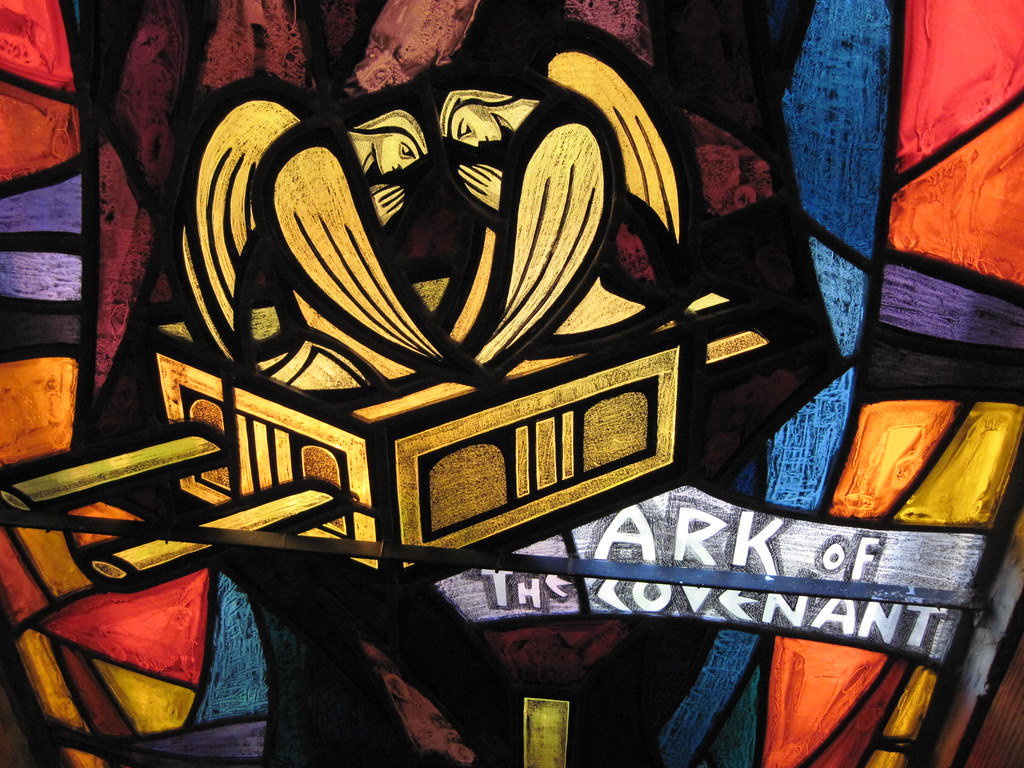
Ark of the Covenant by Isabel Piczek 1982, St. Norbert Catholic Church, Orange, California

David again assembled all the best men in Israel, 30,000 in number. David and all the men who were with him traveled to Baalah in Judah to bring up from there the ark of God which is called by the name of the Lord of Heaven’s Armies, who sits enthroned between the cherubim that are on it. They loaded the ark of God on a new cart and carried it from the house of Abinadab, which was on the hill. Uzzah and Ahio, the sons of Abinadab, were guiding the new cart. They brought it with the ark of God from the house of Abinadab on the hill. Ahio was walking in front of the ark, while David and all Israel were energetically celebrating before the Lord, singing and playing various stringed instruments, tambourines, rattles, and cymbals.

When they arrived at the threshing floor of Nacon, Uzzah reached out and grabbed hold of the ark of God, because the oxen stumbled. The Lord was so furious with Uzzah, he killed him on the spot for his negligence. He died right there beside the ark of God.

David was angry because the Lord attacked Uzzah; so, he called that place Perez Uzzah, which remains its name to this very day. David was afraid of the Lord that day and said, “How will the ark of the Lord ever come to me?” So, David was no longer willing to bring the ark of the Lord to be with him in the City of David. David left it in the house of Obed-Edom the Gittite. The ark of the Lord remained in the house of Obed-Edom the Gittite for three months.

The Lord blessed Obed-Edom and all his family.King David was told, “The Lord has blessed the family of Obed-Edom and everything he owns because of the ark of God.” So, David went and joyfully brought the ark of God from the house of Obed-Edom to the City of David. Those who carried the ark of the Lord took six steps and then David sacrificed an ox and a fatling calf. Now David, wearing a linen ephod, was dancing with all his strength before the Lord. David and all Israel were bringing up the ark of the Lord, shouting and blowing trumpets. (New English Translation)

The Christian season of Eastertide is a grand celebration of Christ’s resurrection and the new life we enjoy in Jesus Christ. Since God is the center of all things, celebrations need to be mindful. Nothing in life is a matter of doing whatever the heck we want to do.

Even celebration has its boundaries and limits.

The narrator who originally compiled, told, and wrote the today’s Old Testament lesson wanted to communicate something significant about God and how to relate to the Lord.

God put the big kibosh on David’s hoedown. At that time in the history of Israel, the ark was the foremost symbol of God’s presence with the people. Within the ark contained the tablets of the Ten Commandments (the symbol of God’s Word); the staff of the first priest, Aaron, (the symbol of God’s choice); and a pot of manna (the symbol of God’s provision). Thus, the ark was a holy object, pointing to a holy God.

The ark of the Lord was built during the time of Moses, when the ritual laws were established concerning offerings and how to approach God in worship. There were detailed prescriptions for how to construct all the sacred articles for worship. (Exodus 35:30-40:33) 

The ark was at the center of worship, representing the presence of God among the people. For nearly five-hundred years before David, the ark had become a familiar object in the life of Israel, always there, continually the symbol of God to the people.

I’ve been a Christian for many decades. One reason I refer to the seasons of the Christian Year in the present tense, is so that it doesn’t become old hat to me. Although I just presided over yet another Easter Sunday in my long tenure as a pastor, I am still in awe of Christ’s resurrection and am eternally grateful and full of joy over new life in Jesus Christ. I always want it to be fresh, as if I’m stepping up to the empty tomb for the first time.

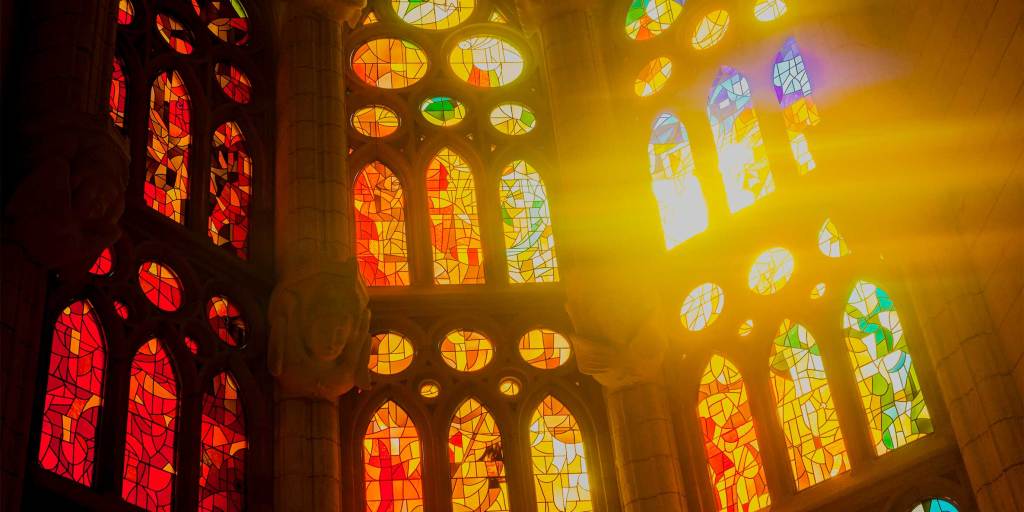
Stained glass in the First Lutheran Church of
Washburn, North Dakota

Yet, we have all likely had the experience of something becoming so familiar, that we begin to lose sight of how important and valuable it really is. Not until we lose it, or something traumatic happens, do we wake up and take stock of its true significance. 

The Israelites had become lethargic and apathetic toward the worship of God, and it led to some disheartening and tragic circumstances. The people of God throughout the ages have always needed to be vigilant against the opiate of familiarity, dulling the senses to the importance of worship.

Moving the ark of the Lord to Jerusalem was one of the first acts David did as the king of Israel and Judah.  God was with David and brought him success against his enemies. David enjoyed a close relationship with God.  Even though David’s heart was in the right place, he made a huge miscalculation, which ended up offending God. 

David had the best of intentions in bringing the ark to Jerusalem and giving it a prominent place in the center of Jewish life. This was an exceptionally good plan. The problem, however, came in the manner the ark was carried from one place to another. 

God’s law laid out in careful detail how the ark was to be transported. Uzzah and Ahio were Levites charged with the ark’s care. Only the Levites could handle the ark and the holy objects of worship that went along with it.

Since it was the job of the Levites for hundreds of years, they knew better than to carry the ark of the Lord on a cart. God clearly told Moses that the ark was to have two long poles of acacia wood overlaid with gold inserted into four gold rings of the ark. The ark was to always be carried on the shoulders of the Levites with the two poles.

We are not told why Uzzah and Ahio were pulling the ark on a cart with oxen instead of carrying it in the prescribed way. Perhaps it was because the ark was incredibly heavy and no easy task to carry.  Maybe they decided it would be easier and more expedient to have the much stronger oxen pull the ark on a nice new cart; it would save a lot of energy transporting it over a long distance.

Or it could be that they were tired of moving the ark in the same old way they had always done it. Maybe it was old hat to them, and they were ready for something different.

For pragmatic people, Uzzah and Ahio’s approach makes a lot of sense. However, God was not okay with this arrangement. When the oxen stumbled and the ark was in danger of falling off the cart, Uzzah reflexively reached out to steady it.  That was the last act Uzzah ever did on this earth. God immediately put him down for his “irreverent act.”

So, here is the not so good idea: Evaluating the worship of God by common sense pragmatism, what we think will work best, and how we feel it ought to be done. Everything about worship is to pay attention to the holiness of God through our obedience. 

Whenever we avoid the prescriptions of Holy Scripture, however best the intentions might be, is not a good thing and people will get hurt. One can never justify an action that goes against God’s Word because people are praising God. Just because the heart is in the right place does not mean what is being done is okay.

David’s first response was anger, then fear. He gave his best effort, and it resulted in God’s disfavor. Perhaps David took for granted that the ark could be moved any old way he wanted to move it. 

Trouble with God happens whenever we value efficiency and expediency over obedience and submission.

The great error of Uzzah, resulting in his death, was trying to manage God. We do not take care of God; God takes care of us. God does not bow to us. The Lord doesn’t allow the creature to manage the Creator.

God wants a pure, unadulterated, and obedient worship celebration from people in the way God wants it to be done, period. It is not up for negotiation.

Holy God, we confess that we have too often forgotten we are yours. Sometimes we carry on our lives as if there was no God and we fall short of being a credible witness to you. For these things we ask your forgiveness and for your strength. Give us clear minds and open hearts so we may bear witness to you in our world. Remind us to be who you would have us to be regardless of what we are doing or who we are with. Hold us close and build our relationship with you and with those you have given us on earth, through Jesus Christ our Lord. Amen.

Psalm 118:1-2, 14-24 – Jesus Is the Cornerstone

Jesus the Cornerstone by Gloria Ssali

O give thanks to the Lord, for he is good;
    his steadfast love endures forever!

Let Israel say,
    “His steadfast love endures forever….”

The Lord is my strength and my might;
    he has become my salvation.

There are glad songs of victory in the tents of the righteous:
“The right hand of the Lord does valiantly;
    the right hand of the Lord is exalted;
    the right hand of the Lord does valiantly.”
I shall not die, but I shall live,
    and recount the deeds of the Lord.
The Lord has punished me severely,
    but he did not give me over to death.

Open to me the gates of righteousness,
    that I may enter through them
    and give thanks to the Lord.

This is the gate of the Lord;
    the righteous shall enter through it.

I thank you that you have answered me
    and have become my salvation.
The stone that the builders rejected
    has become the chief cornerstone.
This is the Lord’s doing;
    it is marvelous in our eyes.
This is the day that the Lord has made;
    let us rejoice and be glad in it. (New Revised Standard Version)

God is the expert on turning our song of lament into a song of victory.

From the Christian perspective of the Lord’s resurrection from death, it is a great song of celebration. The horrid torture and death of Christ on Friday turned to wonderful rejoicing on Sunday with a risen Lord. Life is now different with an empty tomb. The stone the builders rejected is now the head cornerstone.

Our worship is transformed. Instead of offering the blood of bulls and goats, like the select group of the Old Testament priests did, we are now all priests who now offer spiritual sacrifices because Jesus took care of the sin issue once for all. 

Christians continually offer to God their worship of Christ and live a holy life in grateful response to Christ’s death and resurrection.

Jesus is our cornerstone, the center of life and worship. Priority for the Christian faithful is allowing God to build us into a community of faith that worships Jesus with lives dedicated to knowing him and making him known.

Christian worship is the expression of a relationship in which God the Father reveals himself and his love in Christ, and by his Holy Spirit gives grace, to which we respond in faith, gratitude, and obedience. 

That means all of life (and not just a Sunday morning worship service) is to be a daily rhythm of God’s revelation to us, and our response to God in faith, thanksgiving, and an obedient life.

People, at their core, exists for worship. For the Christian, worship is grounded in the triune God and centered in Christ. Worship is the heart and life response to the revelation of God in Christ. Encounters and experiences of God’s revelation to humanity, and our response, form us into faithful disciples.

Author and Pastor Emeritus, Stuart Briscoe, once told the following story: 

“Many years ago, during the Cold War, I traveled to Poland for several weeks of itinerant ministry. One winter day my sponsors drove me in the dead of night to the middle of nowhere. I walked into a dilapidated building crammed with one hundred young people. I realized it was a unique opportunity. Through an interpreter I preached on maintaining Christ as the center of our lives as Christians.

Ten minutes into my message, the lights went out. Pitch black. My interpreter urged me to keep talking. Unable to see my notes or read my Bible, I continued. After I had preached in the dark for twenty minutes, the lights suddenly blinked on, and what I saw startled me: Everyone was on their knees, and they remained there for the rest of my message. The next day I commented on this to one man, and he said, ‘After you left, we stayed on our knees most of the night. We wanted to make sure we were remaining in Christ and centering our lives in him.’”

Since Jesus is the cornerstone, the center of our devotion, worship does not center in a style or an outcome. We may too often evaluate worship on whether or not it works, or if it emotionally moves us because of a particular musical or liturgical style. Whenever worship is designed for our tastes and preferences, Jesus Christ, as the center of worship, can easily be lost. 

With Christ as the chief cornerstone, the true object of worship, all kinds of differing styles can be pleasing to God. Worship itself is to be evaluated not by the satisfaction of personal preference, but by its acceptance by God.

Firmly built on Christ the cornerstone, worship becomes less about gaining truth, and more about letting truth gain us and capture us. The more we pay attention to the presence of Jesus Christ through song, prayer, Scripture, and sacrament, the more we will experience the centrality and power of God. True worship captures God’s heart and passion for the world. Jesus becomes very precious to us when we align ourselves to him as the cornerstone of our faith and worship.

So, brothers and sisters, because of God’s mercies, I encourage you to present your bodies as a living sacrifice that is holy and pleasing to God. This is your appropriate priestly service.

Romans 12:1, CEB

We build our lives on Jesus, the cornerstone of our faith, every day. Pleasing worship is both the responsibility and the privilege of every believer. We are embodied beings; we speak through vocal chords; we move with our legs; we act with our arms; we cannot communicate nor do the will of God apart from our bodies. 

Jesus, as the cornerstone upon which all is supported, means that acceptable worship can happen anywhere. Everywhere can become a sanctuary and a sacred space – home, neighborhood, and marketplace – as well as church. In all these locations, Christian discipleship will prove itself.

So then you are no longer strangers and aliens, but you are citizens with the saints and also members of the household of God, built upon the foundation of the apostles and prophets, with Christ Jesus himself as the cornerstone. In him the whole structure is joined together and grows into a holy temple in the Lord; in whom you also are built together spiritually into a dwelling place for God.

Ephesians 2:19-22, NRSV

Several years ago, a man named Matt had an aunt who had struggled for years to make ends meet. When her health started to decline, she was forced to sell her fifty acres of property to pay for health care. As an act of kindness, Matt traveled to Massachusetts and bought the land from his aunt for the appraised value of $50,000. While exploring the land to see about building a house, he discovered outcroppings of stone ledges.

Matt contracted a geologist, who surveyed the land and informed him the stone was actually Goshen stone, a type of mica used for sidewalks, patios, and landscapes. At the time, it sold for $100 a ton – and Matt had about 24 million tons on the land. The appraised value on the surface was $50,000, but some experts estimated that the land was possibly worth up to $2 billion.

Jesus is the precious cornerstone. He is much too valuable to be left in a church building. And there is so much more to him than surface appearances. Let God drill deep into your life and show you the infinite worth of Jesus Christ. Explore him. Worship him. Offer your very life to him. Shape yourself around him. Center all things completely in and around Jesus. Discover just how precious he is. Let your love be long for Christ.

Lord Jesus, Son of God, Son of Humanity, have mercy upon us.