Revelation 7:9-17 – Enduring Love

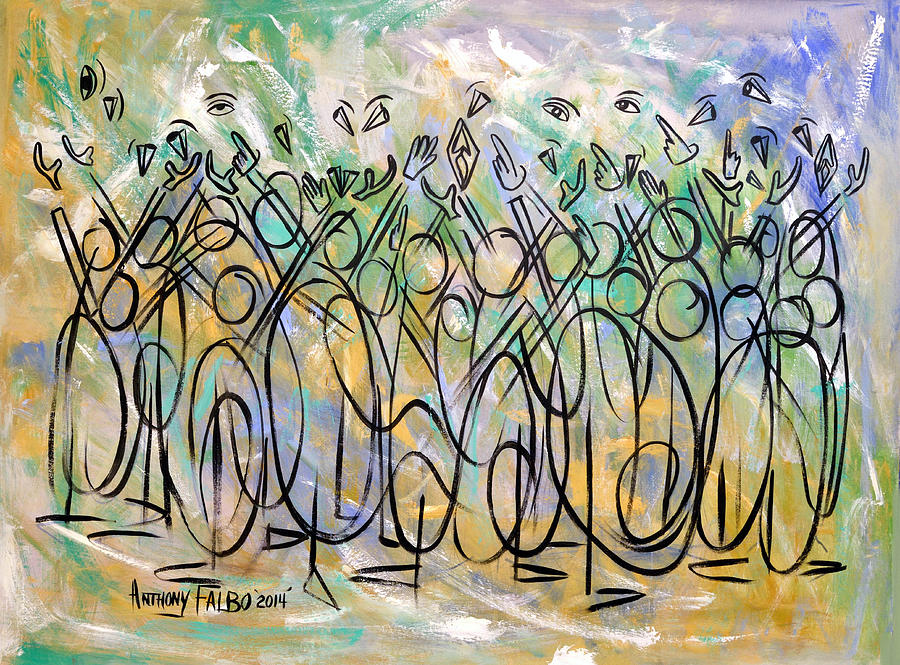
Look He’s Coming with the Clouds by Anthony Falbo, 2014

After this I looked, and there before me was a great multitude that no one could count, from every nation, tribe, people and language, standing before the throne and before the Lamb. They were wearing white robes and were holding palm branches in their hands. And they cried out in a loud voice:

“Salvation belongs to our God,
who sits on the throne,
and to the Lamb.”

All the angels were standing around the throne and around the elders and the four living creatures. They fell down on their faces before the throne and worshiped God, saying:

“Amen!
Praise and glory
and wisdom and thanks and honor
and power and strength
be to our God for ever and ever.
Amen!”

Then one of the elders asked me, “These in white robes—who are they, and where did they come from?”

I answered, “Sir, you know.”

And he said, “These are they who have come out of the great tribulation; they have washed their robes and made them white in the blood of the Lamb. Therefore,

“they are before the throne of God
    and serve him day and night in his temple;
and he who sits on the throne
    will shelter them with his presence.
‘Never again will they hunger;
    never again will they thirst.
The sun will not beat down on them,’
    nor any scorching heat.
For the Lamb at the center of the throne
    will be their shepherd;
‘he will lead them to springs of living water.’
    ‘And God will wipe away every tear from their eyes.’” (New International Version)

A simple observation of today’s text: There can only be a great multitude of people if there are a great multitude of mothers. The great multitude in the Apostle John’s vision of the end of time, had just come out of the great tribulation. And God does for them what any good mother would do: Never lets any of their children go hungry or thirsty; gets them out of harm’s way and protects them; and bends down to wipe their tears away and let them know that everything is going to be okay.

There is a day coming when followers of Jesus will see him face to face. Believers will serve the Lord continually. God’s very presence will be their permanent shelter. It will be a glorious time of unending peace, harmony, and rest.

There shall be no more worrying about how to make ends meet, no more wondering where we are going to get our needs met, and no more anxiety about the future. Injustice will be a thing of the past. Unending love and light will replace it.

First, however, before this permanent Sabbath, there will be trouble, hardship, trial, and even martyrdom. There is presently pain and suffering. Like a woman in labor, this must take place before there is the glory of new life. 

Sometimes the difficult circumstances of life seem to have no end. Yet, they will eventually pass, and we must continually keep this in mind. Christians have the hope of God’s pastoral presence forever guarding and keeping our lives if we endure to the end.

Perseverance, endurance, and pushing through hard situations are necessary to realize new and eternal life. We are not meant to just sit here on earth in some sort of holding pattern, waiting for the end to occur. Just as a pregnant woman changes her lifestyle to carry the child within, so we as Christians need to carry our souls, utilizing all kinds of spiritual practices that will help us do that well, until Jesus returns.

The Apostle John’s vision was given to believers in hardship who needed to persevere when things were tough. Giving them a glimpse of the glorious ending was one way of helping them in the present to live for Jesus Christ, despite the pain.

There’s nothing quite like a mother’s love. With the security of that love, we can live in healthy ways, enduring and persevering through difficulty and adversity. God’s love enables us to live securely in five ways:

  1. Not being afraid to fail.

That’s because, for the believer, we know the ending. We may, at times, feel like colossal failures, yet because the Lord is with us, we have nothing to fear. Being secure in our identity as God’s people enables us to step out and engage the world.

“It is not the critic who counts; not the man who points out how the strong man stumbles, or where the doer of deeds could have done them better. The credit belongs to the man who is actually in the arena, whose face is marred by dust and sweat and blood; who strives valiantly; who errs, who comes up short again and again, because there is no effort without error and shortcoming; but who does actually strive to do the deeds; who knows great enthusiasms, the great devotions; who spends himself in a worthy cause; who at the best knows in the end the triumph of high achievement, and who at the worst, if he fails, at least fails while daring greatly, so that his place shall never be with those cold and timid souls who neither know victory nor defeat.”

Theodore Roosevelt

When I am afraid,
    I put my trust in you.
I trust God, so I am not afraid of what people can do to me!
    I praise God for his promise to me. (Psalm 56:3-4, ERV)

2. Taking small steps of faith.

We can incrementally improve ourselves daily through our growth in grace. We don’t need to always do big things for God. We can do small acts of kindness with big love. That is likely what your own mother modeled for you. All big things come from small beginnings. The seed of every habit is a single, tiny decision. As that decision is repeated, over and over, a habit sprouts and grows stronger.

Continue to grow in the grace and knowledge of our Lord and Savior Jesus Christ. To him be the glory, now and forever! Amen. (2 Peter 3:18, GNT)

Love the Lord your God with all your heart, all your soul, all your mind, and all your strength. ’The second most important command is this: ‘Love your neighbor the same as you love yourself.’ These two commands are the most important. (Mark 12:30-31, ERV)

3. Being able to identify resistance.

With an awareness of God with us, we are able to name the obstacles, impediments, and challenges to perseverance. Acknowledging what hinders us, gives us the power to choose how to handle it. Our very survival depends on our ability to stay awake, to adjust to new ideas, to remain vigilant and to face the challenge of change.

We should remove from our lives anything that would slow us down and the sin that so often makes us fall. We must never stop looking to Jesus. He is the leader of our faith, and he is the one who makes our faith complete. (Hebrews 12:1-2, ERV)

4. Practicing good self-care.

The body, mind, emotions, and spirit are our vehicles to doing the will of God. So, it is imperative we steward these precious gifts of humanity with care. The only way we will make it over the long haul of our lives is through paying attention to how we carry stress in our bodies, learn to listen to it’s message, and following what we hear. Nearly everything works again if we unplug it for a few minutes… including us!

God has made us what we are. In Christ Jesus, God made us new people so that we would spend our lives doing the good things he had already planned for us to do. (Ephesians 2:10, ERV)

Surely you know that you are God’s temple and that God’s Spirit lives in you! (1 Corinthians 3:16, GNT)

5. Connecting with why you are persevering.

Losing connection with why we do what we do leads to dropping out and giving up. Yet, when we can remain vigilant to what is most important to us, it helps us push through all the sticky points of our lives. We all get stuck. And love is always the answer to getting unstuck. People don’t care what we believe; they care about why we believe it.

So, if you eat, or if you drink, or if you do anything, do it for the glory of God. (1 Corinthians 10:31, ERV)

Whatever you do, whether in speech or action, do it all in the name of the Lord Jesus and give thanks to God the Father through him. (Colossians 3:17, CEB)

Persevering and enduring throughout our lives can only be done with a great deal of encouragement – which means generous rhythms of giving love and receiving love. It’s what God does. It’s what our mothers taught and modeled for us. It’s enduring love.

Patient God, you tediously work until your plans and purposes are accomplished. As you are slowly bringing your kingdom to the world, strengthen me so that I do not give up. Help me to persevere, living and loving like Jesus, to his glory. Amen.

Luke 12:29-32 – Be Content

And do not set your heart on what you will eat or drink; do not worry about it. For the pagan world runs after all such things, and your Father knows that you need them. But seek his kingdom, and these things will be given to you as well.

“Do not be afraid, little flock, for your Father has been pleased to give you the kingdom. (New International Version)

If we’re honest with God, we acknowledge that we often worry a lot about tomorrow and how our needs will be met. 

Every day we send God moribund signals that our heads are not in the moment, and that our hearts are not into today. We fret about the future, leaving us profoundly discontent. So, we do busywork, distract ourselves with social media, and numb ourselves with spirits rather than turn to the Holy Spirit – all in the futile attempt to reduce the racing thoughts in our heads.

Far too many of us fail to enjoy the present moment. Our minds are someplace else. 

Contented people do not find their happiness in far-off places, in someday being able to acquire the things they desire, or in having a laser-like orientation to achieving a future goal. Instead, they find contentment in their present circumstances. 

Those living without fear and eschewing worry have discovered that happiness is not found in a new job, a new car, a new spouse, or a new anything.

“If I ever go looking for my heart’s desire again, I won’t look any further than my own backyard because if it isn’t there, I never really lost it to begin with.”

Dorothy, The Wizard of Oz

Focusing on the present does not mean ignoring the past or neglecting the future; it just means we are to put our primary attention on living in the here and now rather than on a romanticized future free of doubt, insecurity, and uncertainty. 

If we are not present to the here and now, we either get stuck in the past or continually worry about the future.  Everything then becomes either about recapturing some bygone era or of dreaming about some idyllic future state – buying into the wrongheaded notion that whenever I get out of school, or get married, or have kids, or get the job I want, or the kids leave home, or I retire, then all will be good, and I shall finally have contentment. 

Planning for the future is wise, good, and necessary; worrying about it and neglecting the present is bad.

Whenever we rush through the present to get to the future, we lose what God wants to do for us now.  It takes flow, mindfulness, and savor to fully engage the present.

“Flow” is a psychological term that means “being in the zone,” that is, to be actively involved in the present situation with focused attention. 

“Mindfulness” means to be aware of your present surroundings, and to especially be aware of your present state of mind and emotions; it is to pay attention to all that is within you and around you. 

To “savor” something is to enjoy it so much that you want it to last forever. It is to be slow, deliberate, and enjoyable. It’s about the journey, not just the destination.

Flow, mindfulness, and savor are what Jesus asked us to do. Christ wants us to stop and smell the roses. He wants us to give focused attention to what is currently in front of us; to be mindful of all the wonder of creation that presently surrounds us; and, to take the time to simply savor and enjoy it all. 

Once I was in a bible study with a group of people and the family’s dog kept licking a particular person to the point of distraction. Finally, I said to the group: “What do you think God is trying to tell us through the dog?”  We ended up having a very enlightening conversation on our own relationships with God and one another.

We are to be present to today. 

This is the day that the Lord has made;
    let us rejoice and be glad in it.

Psalm 118:24, NRSV

When we realize life is short, we will not waste it on worrying about the future. Although we don’t know about tomorrow, we do know about today. And today we are to enjoy God’s good gifts to us in the here and now.

So, teach us to consider our mortality,
so that we might live wisely. (Psalm 90:12, NET)

The wise way to live is one day at a time. That was God’s message through the prophet Jeremiah to the exiled Israelites. The ancient Jews kept spending their time reminiscing about the past and wishing for a better future.  So, God told them what to do in their exile:

“Build homes, and plan to stay. Plant gardens and eat the food they produce. Marry and have children. Then find spouses for them so that you may have many grandchildren. Multiply! Do not dwindle away! And work for the peace and prosperity of the city where I sent you into exile. Pray to the Lord for it, for its welfare will determine your welfare.” (Jeremiah 29:5-7, NLT)

Being content means to enjoy today, to savor the present moment God has you in, even if you don’t like where you are right now.

So go eat your food and enjoy it;
    drink your wine and be happy,
because that is what God wants you to do.
Put on nice clothes
    and make yourself look good.

Enjoy life with the wife you love. Enjoy all the useless days of this useless life God has given you here on earth, because it is all you have. So, enjoy the work you do here on earth. Whatever work you do, do your best, because you are going to the grave, where there is no working, no planning, no knowledge, and no wisdom. (Ecclesiastes 9:7-10, NCV)

Appreciate God’s simple gifts

Sometimes we look so hard for a future miracle, and want out from the circumstance we are in, that we fail to experience contentment in the present time. We are to enjoy the simple pleasures of life which God gives to us, even within our adversity.

I know what it is to be in need, and I know what it is to have plenty. I have learned the secret of being content in any and every situation, whether well fed or hungry, whether living in plenty or in want. (Philippians 4:12, NIV)

No matter what is going on in our lives, whether good or not, we can still appreciate a beautiful sunset, a good book, a walk on the beach, time with friends, good food, and a host of other simple gifts which God provides for us on a daily basis. Yet, we must stop long enough to experience and enjoy them.

Remember to celebrate

We are meant to celebrate life. The genuineness of Christianity is seen whenever Christians throw the best parties and have the most fun.

Someday we are all going to die. Rather than this being a downer, it is an opportunity to ponder an important question: Will you celebrate the time you have here on this earth and enjoy it? 

It’s not hedonistic (living for pleasure) to enjoy life and have a party. It’s actually a biblical thing to do. A spirit of celebration is a Christian spirit.

Work with enthusiasm

Dive in and enjoy your work. We end up worrying whenever our focus is on the destination. However, the real point of life is to enjoy the journey and the process. Be present to your work now and enjoy a job well done for the day, instead of looking forward to a fatter paycheck and a better job in the future.

My God will meet all your needs according to the riches of his glory in Christ Jesus.

Philippians 4:19, NIV

Engage in work with joyful abandon, and not with compulsive perfectionism (which is joyless and life-draining). Find ways of enjoyment within the kind of work that may be draining and not very exciting. Every job has mundane repetitive work to it. Yet, how we go about that work is significant.

If the here-and-now is not the best time of your life, then you and I need to be mindful to the words of Jesus because our focus is somehow misplaced. Contented people focus on the present, what is happening now, today, and they do not worry about tomorrow because that future state is the responsibility of God. 

Ever-present God, enlarge my heart to receive more of your grace and contentment. Rescue me from my small thoughts of your love and goodness. Free me from any unbelief and uncover my many fears. May I rest secure in the knowledge that you are good and everything you do is right, just, and fair. Amen. 

Psalm 23 – I Have Everything I Need

Psalm 23 by John August Swanson, 2010

The Lord is my shepherd;
    I have everything I need.
He lets me rest in fields of green grass
    and leads me to quiet pools of fresh water.
He gives me new strength.
He guides me in the right paths,
    as he has promised.
Even if I go through the deepest darkness,
    I will not be afraid, Lord,
    for you are with me.
Your shepherd’s rod and staff protect me.

You prepare a banquet for me,
    where all my enemies can see me;
you welcome me as an honored guest
    and fill my cup to the brim.
I know that your goodness and love will be with me all my life;
    and your house will be my home as long as I live. (Good News Translation)

I once had a neighbor named Art. Art was a shepherd. He spent a good chunk of his day, every day, leading his sheep around his five acres of property across the road from me. On occasion, Art would politely ask if some of his sheep could come to my backyard and feed on some of the wild plants that were in abundance. I was amazed how “artfully” he cared for his sheep.

Sheep get a bad rap, in my opinion. I have often heard others refer to them as stupid. Having grown up on a farm, I realize there are animals that are not so bright. Sheep aren’t one of them. Cows, however, are. I think when God created cows the raccoons came along and stole some of their brains. 

There’s a reason sheep possess the reputation of lacking smarts – they are prone to being afraid. Sheep get spooked and upset easily. And, when they are skittish and scared, sheep tend to panic.

More than once I’ve seen a flock of sheep run full-steam head-first into a stone wall. If you don’t know much about sheep and come along and see this, they most certainly appear to be downright stupid. Yet, sheep are really, quite intelligent.  It’s just when fear overcomes them, they can do some nonsensical things.

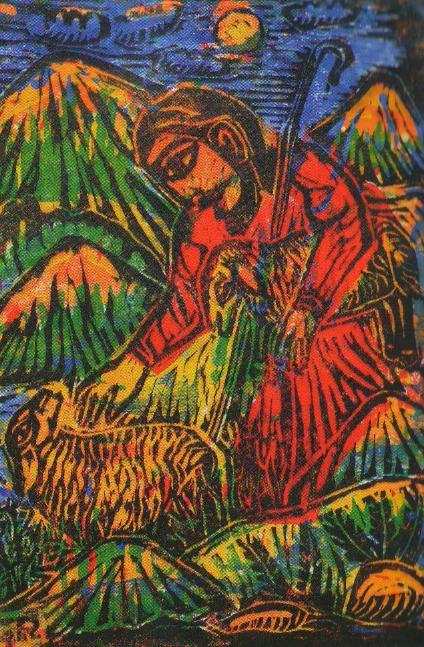
Jesus the Good Shepherd by Solomon Raj

The presence of a faithful shepherd makes all the difference.

Sheep become familiar with their shepherd and learn to depend on them. There were times that Art had to leave the sheep alone and I would do a sort of babysit with them. Around me the sheep were cautious and had their guard up. The presence of anxiety was clear. But when Art showed up, he didn’t have to say a word. I could feel and observe the flock collectively relaxing.

God Pastors

God is the ultimate shepherd of the sheep. Jesus is the Good Shepherd. When we sense the presence of God’s Spirit, there is faith, trust, and confidence. This, then, brings a settled conviction of calm and comfort. Whenever that sense is absent, we do things like buy two pallets of toilet paper and try to bring it home in a compact car. It’s non-sense.

Psalm 23 is a beloved portion of Holy Scripture for a reason; it helps us as sheep to settle down and trust, even in the middle of uncertainty and anxiety. 

God’s presence + God’s provision + God’s protection = God’s providential care. God’s presence is constant, not sporadic; his provision is enough, not stingy; and his protection is total, not partial.

To know and feel God’s presence watching over us and giving generously to us is the very balm we need. It melts our fear in the face of adversity and opposition; it helps us relax in tough economic times; and it inoculates us from believing the sky is falling. 

Our courage and confidence cannot be ginned-up through sheer willpower; it comes as we get to know the great shepherd of the sheep standing there watching over us with compassionate and competent care.

God Provides

God is personal, not generic. God is the great “I AM,” the God who is. The Lord is my shepherd – not was or will be – is. God is not just somebody else’s God and shepherd, but my shepherd. 

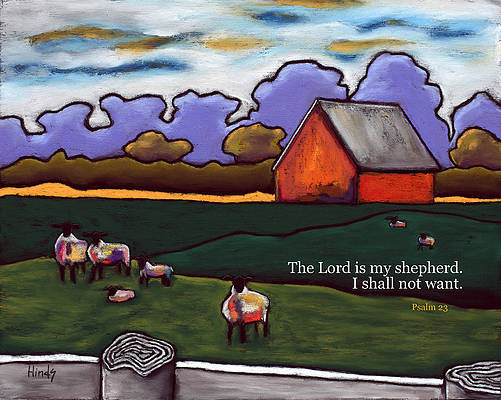
The Lord is My Shepherd by David Hinds

Shepherd is an apt term because a shepherd cares for the sheep – watches over them, is present with them, protects them, and provides whatever they need to both survive and thrive.

God benevolently leads us; and does not act outside of his character and attributes. If we believe this about the great “I AM,” then worry and anxiety begins to diminish. Too many of us suffer from the heebie-jeebies because we don’t see the shepherd standing in the field watching over us.

The answer to our worry is not to keep telling ourselves to stop being anxious. With God on the job as shepherd, I shall not be in want; I have everything I need. 

Troubled times will always be with us, this side of heaven. Fear can grab hold and prevent us from living with settled intentions and reasonable plans toward the future. Every day we see folks running headlong into a stone wall. 

It’s okay to be afraid; it is not okay to let fear rule our lives. The solution is to speak, despite your fear; to act, despite your worry; to live, knowing God has your back.

God Is Present

Within much of Hebrew poetry, the focus of the writing is found smack in the middle. Everything before it builds toward it; everything after it points back. Smack in the middle of Psalm 23 is that God is with us. 

Even though I walk through the valley of the shadow of death, even though it may seem that everything is bleak and that all things are against me – God is with me, which is why I do not succumb to fear. 

We walk through the valley, not around it. God does not cause us to avoid difficult circumstances. Instead, God promises to be with us through them. The way to deliverance is to confront our fears and walk with God, rather than expecting God to take away everything unpleasant that we don’t like.

My neighbor Art had a shepherd’s crook. He mostly used it as a walking stick. Yet, I did see times when he fended-off predators seeking to get to the sheep. More often, Art used his shepherd’s crook as a way of guiding the sheep where they could feed and be protected. 

The discovery of God’s guidance comes from movement and creativity. We aren’t going to experience the leading we want apart from embracing the uncomfortable in the confidence that God provides and protects through the trouble, and not apart from it.

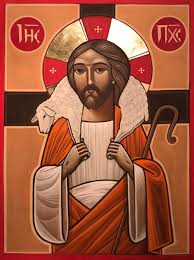
Coptic Church icon of Jesus the Good Shepherd

God Protects

Even with enemies of disease, death, and disorder surrounding us, God’s presence is such that his protection and provision are providentially working to create blessing in the middle of trouble. Whereas fear and panic believe in a culture of scarcity, a culture of abundance discerns that there is plenty for all – and will thus work toward equitable distribution and fostering an egalitarian spirit.

God refreshes, encourages, and restores. There are abundant blessings – even within troubled times. God’s provision is right here, amidst the worst of circumstances. We don’t have to pick a fight with someone in the Costco parking lot, who has what I want, to get the things we need.

It’s easy to believe that God’s goodness and love will follow me when my health is good, my income is solid, and I have plenty of friends around me. It is another thing to have an awareness of that goodness in dark days.  Yet, God’s love and goodness hasn’t sequestered itself.  God providentially uses each life situation and bends it to redemptive purposes.

Experientially knowing God brings contentment and confidence. The radical nature of Psalm 23 is that peace is realized while chaos and uncertainty is all around. Establishing spiritual practices that reinforce our sense of security can aid us through difficulty and hardship.

With a settled conviction that God indeed has our backs and stands as the divine sentinel watching over the beloved sheep, we find the ability to relax and trust that all is well with my soul.

Lord, help me to relax.

Take from me the tension
that makes peace impossible.
Take from me the fears
that do not allow me to venture.
Take from me the worries
that blind my sight.
Take from me the distress
that hides your joy.

Help me to know
that I am with you,
that I am in your care,
that I am in your love,
that you and I are one,

Through the mighty name of Jesus,

In the power of the Holy Spirit. 

Amen.

Ezekiel 11:1-25 – A New Heart

Then the Spirit lifted me up and brought me to the gate of the house of the Lord that faces east. There at the entrance of the gate were twenty-five men, and I saw among them Jaazaniah son of Azzur and Pelatiah son of Benaiah, leaders of the people. The Lord said to me, “Son of man, these are the men who are plotting evil and giving wicked advice in this city. They say, ‘Haven’t our houses been recently rebuilt? This city is a pot, and we are the meat in it.’ Therefore, prophesy against them; prophesy, son of man.”

Then the Spirit of the Lord came on me, and he told me to say: “This is what the Lord says: That is what you are saying, you leaders in Israel, but I know what is going through your mind. You have killed many people in this city and filled its streets with the dead.

“Therefore, this is what the Sovereign Lord says: The bodies you have thrown there are the meat, and this city is the pot, but I will drive you out of it. You fear the sword, and the sword is what I will bring against you, declares the Sovereign Lord. I will drive you out of the city and deliver you into the hands of foreigners and inflict punishment on you. You will fall by the sword, and I will execute judgment on you at the borders of Israel. Then you will know that I am the Lord. This city will not be a pot for you, nor will you be the meat in it; I will execute judgment on you at the borders of Israel. And you will know that I am the Lord, for you have not followed my decrees or kept my laws but have conformed to the standards of the nations around you.”

Now as I was prophesying, Pelatiah son of Benaiah died. Then I fell face down and cried out in a loud voice, “Alas, Sovereign Lord! Will you completely destroy the remnant of Israel?”

The word of the Lord came to me: “Son of man, the people of Jerusalem have said of your fellow exiles and all the other Israelites, ‘They are far away from the Lord; this land was given to us as our possession.’

“Therefore say: ‘This is what the Sovereign Lord says: Although I sent them far away among the nations and scattered them among the countries, yet for a little while I have been a sanctuary for them in the countries where they have gone.’

“Therefore say: ‘This is what the Sovereign Lord says: I will gather you from the nations and bring you back from the countries where you have been scattered, and I will give you back the land of Israel again.’

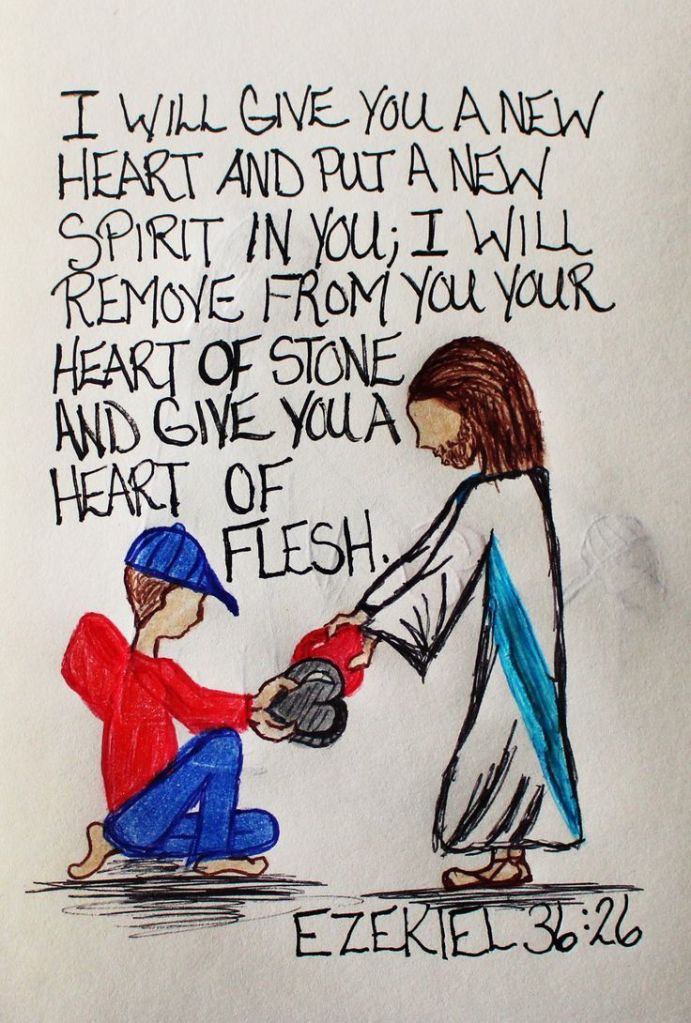
“They will return to it and remove all its vile images and detestable idols. I will give them an undivided heart and put a new spirit in them; I will remove from them their heart of stone and give them a heart of flesh. Then they will follow my decrees and be careful to keep my laws. They will be my people, and I will be their God. But as for those whose hearts are devoted to their vile images and detestable idols, I will bring down on their own heads what they have done, declares the Sovereign Lord.”

Then the cherubim, with the wheels beside them, spread their wings, and the glory of the God of Israel was above them. The glory of the Lord went up from within the city and stopped above the mountain east of it. The Spirit lifted me up and brought me to the exiles in Babylonia in the vision given by the Spirit of God.

Then the vision I had seen went up from me, and I told the exiles everything the Lord had shown me. (New International Version)

God’s heart is a heart of justice. The Lord abhors unrighteousness, injustice, and oppression. Thankfully, God will not sit idle and put up with systemic evil for long.

Ezekiel is one of those Old Testament prophets that thoroughly uncovered the true state things, especially of the human heart. Through a series of visions given to Ezekiel for the Israelite exiles, one of the main messages of the prophet is that God would give them a new heart. 

There is hope for the exile, for the one in captivity because of sin’s destructive, demeaning, and deluding power. Conversely, for those conforming to such ways, for the ones who caused the exile of others, the high Judge of the universe will deal with them according to their errant and rascally ways.

Dark shadows exist within the human heart. Although humanity has a great potential for altruistic good, people also have a large capacity for evil. Arrogant pride, self-centered behavior, and sheer ignorance can take such root within a person’s heart, as well as the heart of an organization or institution, that oppression becomes the norm, with fat cats ruling over an indigent people.

At best, the heart apart from God contains a miniscule vestige of its ancient Creator’s image; at worst, the heart is desperately wicked and on a highway to hell. 

The issue, then, is whether the heart only needs to be modified, or whether there is needed a complete heart transplant. The prophet makes it quite clear which option must be done.

Jesus Christ sacrificed himself on the cross so that we could be transformed into new people. He did not come to tweak a few things in life and improve upon it – he came to bring wholesale change and transform the heart. 

If all we needed was a motivational speaker who would inspire our hearts to live better and reach our personal goals, then we would have not needed an incarnation, a crucifixion, a resurrection and ascension. Jesus is the risen Lord and Savior who replaces our hard stubborn hearts with a soft new heart of flesh. 

We need transformation of life, not life modification.

Awesome God, you have graciously and surgically removed my old heart, which was bound for destruction, and replaced it with a new heart, oriented toward living and loving like the Lord Jesus. May my heart always be inclined to the doing of your will, in the power of your Holy Spirit. Amen.