Psalm 97 – Celebrate the Lord

The Lord rules! Let the earth rejoice!
    Let all the islands celebrate!
Clouds and thick darkness surround God.
    His throne is built on righteousness and justice.
Fire proceeds before him,
    burning up his enemies on every side.
His lightning lights up the world;
    the earth sees it and trembles!
The mountains melt like wax before the Lord,
    before the Lord of the whole world!

Heaven has proclaimed God’s righteousness,
    and all nations have seen his glory.
All those who worship images,
    those who are proud of idols,
    are put to shame.
    All gods bow down to the Lord!
Zion has heard and celebrates,
    the towns of Judah rejoice,
    because of your acts of justice, Lord,
    because you, Lord, are the Most High
        over all the earth,
    because you are so superior to all other gods.

Those of you who love the Lord, hate evil!
    God guards the lives of his faithful ones,
    delivering them from the power of the wicked.
Light is planted like seed for the righteous person;
    joy too for those whose heart is right.
Rejoice in the Lord, righteous ones!
    Give thanks to his holy name! (Common English Bible)

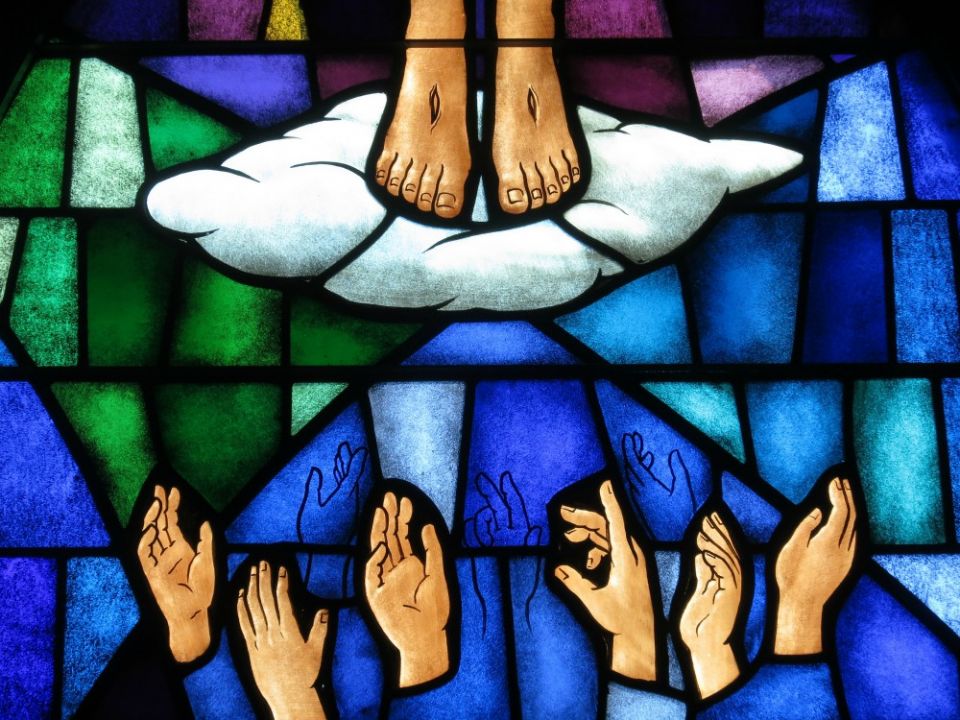
Being overwhelmed with a tremendous sense of majesty for King Jesus is an appropriate response, especially in the wake of Ascension Day – the Christian holiday celebrating Christ’s return to heaven.

Today’s psalm portrays the Lord as a huge God whose presence impacts the world in cataclysmic glory. God is truly large and in charge. 

Nothing moves God; but God moves mountains. 

This is no wimpy deity who needs creatures to sustain him and his memory. Conversely, all of creation is dependent upon God for life, sustenance, and flourishing.

Our view of God deeply impacts how we think, feel, and live. Whenever people catch a mere glimpse of God’s glory, it causes them to renounce useless idol worship, and brings forth humble celebration from the penitent. 

The sheer dearth of penitence and praise to God in today’s world ought to clue us to the reality that we are not seeing God for how God truly is. And what is the God of Holy Scripture? The Lord is the great and glorious king who is so immense and so concerned for justice that just a snort of his nostrils could thoroughly lay waste to the earth.

Confronted with such a majestic and awesome Being, the ultimate conclusion in how to order our lives is this: Love the Lord. Hate evil. Why? Because we are God’s people. 

Therefore, celebration and praise to God are in order. So, let us collectively make a simple choice to celebrate and praise God in some simple ways:  

  • Acknowledge God in both the big and the small things of life
  • Talk about God’s grace in your everyday conversations– we don’t have to be preachy, just real, genuine, and authentic
  • Praise God in public as well as in private
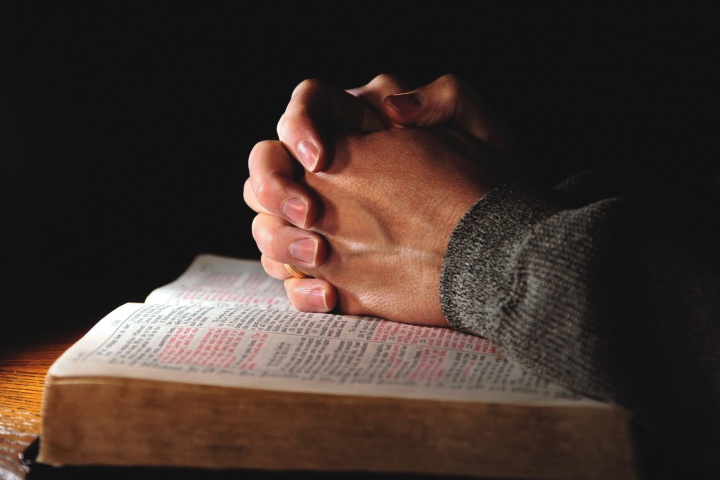
  • Pray to God with simple heartfelt prayers – they don’t need to be eloquent, because God simply wants to hear the voice we have been given
  • Be generous toward others through forgiveness and tangible help because the Lord is a generous God
  • Read God’s Word because it honors the Lord
  • Give thanks to God and have a predetermined mindset to find gratitude in all things God has put in your life
  • Count your blessings today, and then again, tomorrow, so that it eventually becomes a spiritual habit
  • Sing to God with the joyful noise you are able to make

The power of God is more than enough to bring effective and lasting transformation of body, mind, emotions, and spirit. The might of God is unlimited, able to establish social change, economic uplift, physical healing, relational peace, spiritual hope, mental rest, and so much more.

Celebrating the sovereignty of God is downright good for us. It releases our stress, energizes us, provides a positive way of reflection, challenges evil, and acknowledges realities which we might have forgotten – especially that God is with us, loves us, and has only good plans for us.

Praise and celebration are both organic acts on our part and need to be intentionally planned. That is, celebrating the Lord ought to be both spontaneous and prepared. Liturgical rhythms of worship to God need to be both formulaic and free.

The shape of our worship can remind us that we are in continuity with believers throughout history and in all places on earth. We are not alone. We are joined by the entire community of worshipers, offering our celebration – both old and new.

Having both fixed forms of worship and free expressions of worship enable us to tap into the full dimension of faith. Practicing both personal prayers in our secluded closet and corporate prayers together with others strengthens our faith, makes more sure our hope, and connects us with the God who is Love.

A big God ought to be worshiped with all the means available to us.

Mighty God, you are worthy of all the praise, honor, and glory I can give you. May my life be a simple offering to you, so that your kingdom comes not only in my own life but impacts the lives of others; through Jesus, my King. Amen.

Acts 1:1-11 – Ascension of the Lord

In my first book I told you, Theophilus, about everything Jesus began to do and teach until the day he was taken up to heaven after giving his chosen apostles further instructions through the Holy Spirit. During the forty days after he suffered and died, he appeared to the apostles from time to time, and he proved to them in many ways that he was actually alive. And he talked to them about the Kingdom of God.

Once when he was eating with them, he commanded them, “Do not leave Jerusalem until the Father sends you the gift he promised, as I told you before. John baptized with water, but in just a few days you will be baptized with the Holy Spirit.”

So, when the apostles were with Jesus, they kept asking him, “Lord, has the time come for you to free Israel and restore our kingdom?”

He replied, “The Father alone has the authority to set those dates and times, and they are not for you to know. But you will receive power when the Holy Spirit comes upon you. And you will be my witnesses, telling people about me everywhere—in Jerusalem, throughout Judea, in Samaria, and to the ends of the earth.”

After saying this, he was taken up into a cloud while they were watching, and they could no longer see him. As they strained to see him rising into heaven, two white-robed men suddenly stood among them. “Men of Galilee,” they said, “why are you standing here staring into heaven? Jesus has been taken from you into heaven, but someday he will return from heaven in the same way you saw him go!” (New Living Translation)

“At his Ascension, our Lord entered Heaven, and he keeps the door open for humanity to enter.”

Oswald Chambers

Jesus was taken up to heaven in what Christians celebrate as the “Ascension of the Lord.” This is a hugely important event for followers of Jesus.

The Ascension means that Christ is now presently sitting at God’s right hand, offering continual prayers on our behalf to the Father. We have an advocate, a champion, who has gone before us and secured deliverance from sin, death, and hell.

On top of it all, Christ’s ascension means that Jesus is the universal ruler; he commands a kingdom that will never end. Yes, the Ascension of the Lord is a big deal.

So, why does a day set aside on the Christian Calendar celebrating the Lord’s mighty and redemptive ascension over all creation garner such scant attention from many churches?

Maybe the church has A.D.D. (Ascension Deficit Disorder).

Our clue to the inability to focus on such a grand redemptive event is the disciples’ response when Jesus ascended.

The picture St. Luke paints for us in the account of our Lord’s ascension, is a group of guys looking up into the sky slack-jawed and shoulders hunched.

It took a couple of angels to come along and ask them what in the world they were doing just standing there. Now is not the time to stand and gawk at the clouds, the angels insisted. Jesus will come back when he comes back. You aren’t going to know when. So, now is the time to get busy with what Jesus just told you to do two minutes ago: Tell everyone about me.

Christ’s ascension to heaven is a deeply theological event. It’s freighted with major implications for our prayer lives. And it means Christ is the King to whom we must obey.

Jesus is coming again. In the meantime, there’s to be no cloud-gawking. Instead, there is to be a well-developed and well-cultivated connection with Jesus which proclaims the good news that Christ died, rose from death, and ascended to heaven for mine and your forgiveness of sins and a new clean slate on life.

Trying to peer into the future about how the end of history will shake-out is, frankly, not the job we are called to do. Believers in Jesus aren’t supposed to stand and gawk at the clouds waiting for the Lord’s return, as if we are in some earthly holding tank until heaven. 

Rather, we are to bear witness about the person and work of Jesus. The Ascension of the Lord means we are God’s people blessed with deliverance from the realm of sin, and the hope of Christ’s coming again. The Church everywhere recognizes together the rule and reign of the Lord Jesus.

The world, as we know it, shall eventually come to an end. Until that time, Christians since the time of the ascension have been proclaiming Christ crucified, died, risen, ascended, and coming again.

This is a day of joy and celebration for us. Jesus is our ascended and glorified king! The fate of the earth is with the benevolent and mighty Ruler of all. Jesus is Lord, and no other human leader is. Thank you, Jesus.

The great Reformed Confession, the Heidelberg Catechism, question and answer 49, states:

Q: How does Christ’s ascension to heaven benefit us?

A: First, he is our advocate

            in heaven

            in the presence of his Father.

Second, we have our own flesh in heaven

            as a sure pledge that Christ our head

            will also take us, his members,

            up to himself.

Third, he sends his Spirit to us on earth

            as a corresponding pledge.

            By the Spirit’s power

                        we seek not earthly things

                        but the things above, where Christ is,

                                    sitting at God’s right hand.

Amen.

2 Chronicles 34:20-33 – Renew Your Faith

He [King Josiah] gave these orders to Hilkiah, Ahikam son of Shaphan, Abdon son of Micah, Shaphan the secretary and Asaiah the king’s attendant:“Go and inquire of the Lord for me and for the remnant in Israel and Judah about what is written in this book that has been found. Great is the Lord’s anger that is poured out on us because those who have gone before us have not kept the word of the Lord; they have not acted in accordance with all that is written in this book.”

Hilkiah and those the king had sent with him went to speak to the prophet Huldah, who was the wife of Shallum son of Tokhath, the son of Hasrah, keeper of the wardrobe. She lived in Jerusalem, in the New Quarter.

She said to them, “This is what the Lord, the God of Israel, says: Tell the man who sent you to me, ‘This is what the Lord says: I am going to bring disaster on this place and its people—all the curses written in the book that has been read in the presence of the king of Judah. Because they have forsaken me and burned incense to other gods and aroused my anger by all that their hands have made, my anger will be poured out on this place and will not be quenched.’ 

Tell the king of Judah, who sent you to inquire of the Lord, ‘This is what the Lord, the God of Israel, says concerning the words you heard: Because your heart was responsive and you humbled yourself before God when you heard what he spoke against this place and its people, and because you humbled yourself before me and tore your robes and wept in my presence, I have heard you, declares the Lord. Now I will gather you to your ancestors, and you will be buried in peace. Your eyes will not see all the disaster I am going to bring on this place and on those who live here.’”

So, they took her answer back to the king.

Then the king called together all the elders of Judah and Jerusalem. He went up to the temple of the Lord with the people of Judah, the inhabitants of Jerusalem, the priests and the Levites—all the people from the least to the greatest. He read in their hearing all the words of the Book of the Covenant, which had been found in the temple of the Lord. The king stood by his pillar and renewed the covenant in the presence of the Lord—to follow the Lord and keep his commands, statutes and decrees with all his heart and all his soul, and to obey the words of the covenant written in this book.

Then he had everyone in Jerusalem and Benjamin pledge themselves to it; the people of Jerusalem did this in accordance with the covenant of God, the God of their ancestors.

Josiah removed all the detestable idols from all the territory belonging to the Israelites, and he had all who were present in Israel serve the Lord their God. As long as he lived, they did not fail to follow the Lord, the God of their ancestors. (New International Version)

Sadness transformed to joy is a beautiful thing. However, joy that turns into an “Uh, oh!” is an altogether different thing.

Today’s Old Testament lesson has both sadness and joy, at the same time. God’s temple was undergoing repairs. And the Book of the Law was found. It’s sad that the Law was even lost, at all. Somewhere along the line a king, a priest, some people, they all just plain forgot about God’s Word to them. 

Yet, what’s joyful is that King Josiah had God’s Word read to him. He and his officials responded with promising to be faithful to what they heard, and to carefully follow God and God’s instructions for them as God’s people. What’s more, Josiah asked the Israelites to make that same promise.

It’s likely that you are reading this because you are a person committed to listening to God’s Word. Also, it’s likely you don’t need to go on an archaeological dig inside your own house, just to find an old dusty Bible to read. 

Maybe, however, you need to take the next step, like Josiah of old, to not only listen and obey yourself, but to ask and invite others to make the same promise.

You and I know that straightforward Bible reading often does not take place within the homes and even the churches of many confessing believers in Jesus. So, take the next step. Invite others to read with you. Ask fellow Christians to read Scripture, make observations about it, apply it to their lives, and base prayers upon it. 

Ask them to make the same promise that you have made to God: To listen to God’s Word, and then, do what it says.

This is how renewal happens.

Patient God, you continue to wait for people to read your Word and obey it. May I not simply attend to your laws in isolation from others, but freely ask others to make the same promise I have: To obey Jesus Christ, my Lord, by living and loving like him, in the power of the Holy Spirit. Amen.

2 Chronicles 15:1-15 – Revive Us Again

The Spirit of God came on Azariah son of Oded. He went out to meet Asa and said to him, “Listen to me, Asa and all Judah and Benjamin. The Lord is with you when you are with him. If you seek him, he will be found by you, but if you forsake him, he will forsake you. For a long time, Israel was without the true God, without a priest to teach and without the law. 

But in their distress they turned to the Lord, the God of Israel, and sought him, and he was found by them. In those days it was not safe to travel about, for all the inhabitants of the lands were in great turmoil. One nation was being crushed by another and one city by another, because God was troubling them with every kind of distress. But as for you, be strong and do not give up, for your work will be rewarded.”

When Asa heard these words and the prophecy of Azariah son of Oded the prophet, he took courage. He removed the detestable idols from the whole land of Judah and Benjamin and from the towns he had captured in the hills of Ephraim. He repaired the altar of the Lord that was in front of the portico of the Lord’s temple.

Then he assembled all Judah and Benjamin and the people from Ephraim, Manasseh and Simeon who had settled among them, for large numbers had come over to him from Israel when they saw that the Lord his God was with him.

They assembled at Jerusalem in the third month of the fifteenth year of Asa’s reign. At that time, they sacrificed to the Lord seven hundred head of cattle and seven thousand sheep and goats from the plunder they had brought back. They entered into a covenant to seek the Lord, the God of their ancestors, with all their heart and soul. All who would not seek the Lord, the God of Israel, were to be put to death, whether small or great, man or woman. They took an oath to the Lord with loud acclamation, with shouting and with trumpets and horns. All Judah rejoiced about the oath because they had sworn it wholeheartedly. They sought God eagerly, and he was found by them. So, the Lord gave them rest on every side. (New International Version)

God’s people had drifted. Times of seeking the Lord became few and far between – until it rarely happened, at all. They were spiritually dry with seemingly no hope. How did they get to the point of being so far from God that they needed a spiritual revival?

After God brought Israel out of hundreds of years of slavery in Egypt, they were led to the Promised Land with Moses as leader. Moses died, and his young protégé Joshua took over and led Israel in her military campaigns to take the land that God had promised them. 

God kept the divine promises. However, although Israel had geographically taken the land, they did not completely dislodge all the peoples living there, as God had told them to do. God’s people only partially obeyed. They were content to be in the land without dealing with all the remaining people.

Israel and Judah’s relationship to the land also serves as a metaphor for the church and her faith. Israel saw the land as a possession, as something to have, rather than as something to be used and developed for the glory of God. 

If and when God’s people, in any age, look upon their faith as merely a possession, instead of a dynamic relationship between themselves and the Lord, then the beginnings of spiritual rigor mortis begin to settle in. 

We get a haunting narrative in the book of Judges, after the people took the land, and Joshua died: 

“After that whole generation had been gathered to their ancestors, another generation grew up who knew neither the Lord nor what he had done for Israel… They forsook the Lord, the God of their ancestors, who had brought them out of Egypt. They followed and worshiped various gods of the peoples around them. They aroused the Lord’s anger.” (Judges 2:10-12)

The land became something not to lose, instead of something God wanted to use to grow them into faithful people.

The day God’s people took the land was the day they rejoiced in victory, and also the day their faith began to die. The Old Testament is a long drawn out story of a disobedient and obstinate people who continually forsake their God and live like the nations for whom they did not overcome. 

The Lord, ever the longsuffering and patient God, went century after century sending prophets to call them back to a living faith. Yet, with each passing year, they’d die a little bit more.

The promise, however, was always there: Seek God, and you will find him. Whenever the people were reminded of that reality and took it to heart by going after the Lord, there was revival in the land.

Restore us, Lord God Almighty;
    make your face shine on us,
    that we may be saved.

Psalm 80:19, NIV

God’s people, in every age, must look upon faith as a wonderful opportunity to spiritually engage the world – to explore all the dimensions of knowing God. That requires putting unhealthy stuff aside and taking up healthy practices. The word for that action is “repentance.” And the result is revival, or new life.

For the Christian, if the goal is to just keep some semblance of looking like a real follower of Jesus, then there is probably some inner distress which no one sees. If we become more afraid of making mistakes than we are of missing God-given opportunities, then the time is ripe for a revival. 

God does not send us to safe places to do easy things; the Lord sends prophets to remind us of our true calling, to revive us again.

The need for resurrection presupposes that there is death. Praying for revival, renewal, and reawakening means that something needs life. With God, nothing is impossible – even the deadest and driest of people and situations.

God specializes in both giving and restoring life. The Lord does more than help; God finds us and changes us. reanimates us from spiritual rigor mortis to lively resurrection through breathing on us. Jesus came to his disciples after the resurrection and said:

“Peace be with you! As the Father has sent me, I am sending you.” And with that he breathed on them and said, “Receive the Holy Spirit. ” (John 20:21-22, NIV)

Faith is more than a possession; it is also a gift to be used to glorify God in loving one another and loving the world as Jesus did.

You live where you live because God wants you to bring life to your neighborhood. 

Who will pray for your neighbors, if not you? 

Who will be concerned for our communities, if not us? 

You work at your workplace because God wants to bring life to it.

Who will make a difference at your workplace, if not you? 

You are in your family, your school, or your church because God wants to bring life to all those spaces and places.

Who will bring a vigorous spiritual life everywhere they are, if not you? 

We are to seek the Lord. It isn’t a game of hide-and-seek. It is an act of faith, believing that God can and will be found by those who seek after him. And wherever God is found, there you will find abundant life.

Perhaps, just maybe, what is needed is some heartfelt, sustained, and focused prayer to God.

Ask and it will be given to you.

Seek and you will find.

Knock and the door will be opened to you. 

For everyone who asks receives; the one who seeks finds; and to the one who knocks, the door will be opened. (Matthew 7:7-8)

Revive us again, fill each heart with thy love.
May each soul be rekindled with fire from above.

Hallelujah! Thine the glory, hallelujah! Amen!
Hallelujah! Thine the glory, revive us again. – W.P. Mackay, 1863