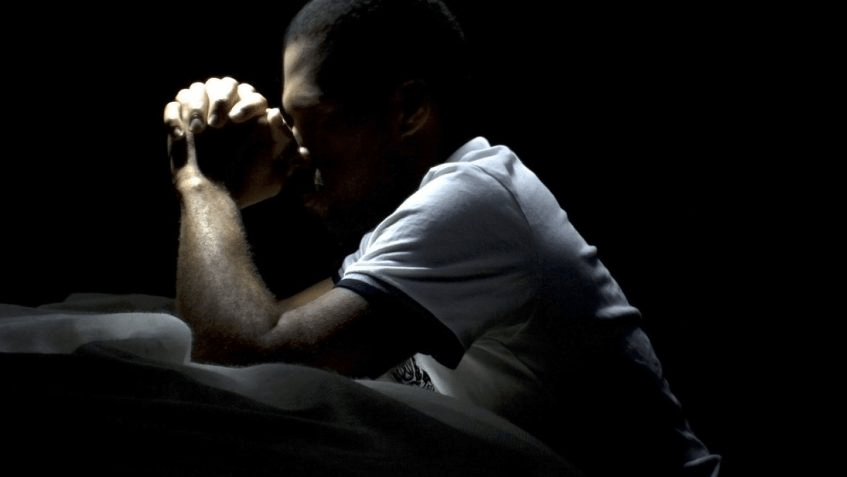
From Desolation to Restoration (Jeremiah 33:1-13)

While Jeremiah was still locked up in jail, a second Message from God was given to him:

“This is God’s Message, the God who made earth, made it livable and lasting, known everywhere as God: ‘Call to me and I will answer you. I’ll tell you marvelous and wondrous things that you could never figure out on your own.’

“This is what God, the God of Israel, has to say about what’s going on in this city, about the homes of both people and kings that have been demolished, about all the ravages of war and the killing by the Chaldeans, and about the streets littered with the dead bodies of those killed because of my raging anger—about all that’s happened because the evil actions in this city have turned my stomach in disgust.

“But now take another look. I’m going to give this city a thorough renovation, working a true healing inside and out. I’m going to show them life whole, life brimming with blessings. I’ll restore everything that was lost to Judah and Jerusalem. I’ll build everything back as good as new. I’ll scrub them clean from the dirt they’ve done against me. I’ll forgive everything they’ve done wrong, forgive all their rebellions. And Jerusalem will be a center of joy and praise and glory for all the countries on earth. They’ll get reports on all the good I’m doing for her. They’ll be in awe of the blessings I am pouring on her.

“Yes, God’s Message: ‘You’re going to look at this place, these empty and desolate towns of Judah and streets of Jerusalem, and say, “A wasteland. Unlivable. Not even a dog could live here.” But the time is coming when you’re going to hear laughter and celebration, marriage festivities, people exclaiming, “Thank God-of-the-Angel-Armies. He’s so good! His love never quits,” as they bring thank offerings into God’s Temple. I’ll restore everything that was lost in this land. I’ll make everything as good as new.’ I, God, say so.

“God-of-the-Angel-Armies says: ‘This coming desolation, unfit for even a stray dog, is once again going to become a pasture for shepherds who care for their flocks. You’ll see flocks everywhere—in the mountains around the towns of the Shephelah and Negev, all over the territory of Benjamin, around Jerusalem and the towns of Judah—flocks under the care of shepherds who keep track of each sheep.’ God says so. (The Message)

The prophecy of Jeremiah is a large and rather difficult biblical book to read – not because it’s hard to understand, but for the continual words of divine judgment. Jerusalem, the center of the world and the jewel of Judaism, would be destroyed by a pagan army.

This was a very unpopular message in the city of Jerusalem. It was the sort of message which landed Jeremiah in prison, more than once. No one, in any age, wants to hear a steady stream of how their society will be crushed by enemies they despise.

Yet, consistent with all the prophetic books of the Old Testament, judgment and destruction never have the last word. There are rhythms of grace and restoration that move imperceptibly underneath the black crud of worldly injustice. And those movements will eventually create a wave of renewal which can wash away the apathy, anger, and avarice around us.

We, as readers examining the prophecy a millennia and half later, may fail to notice that God’s judgment is no spur of the moment thing. The destruction of Jerusalem by the Babylonians was centuries in the making.

The patience and continual wooing of the Lord for the people to return to fidelity of worship and practice of justice is what dominates the prophecy – and not some capricious deity who spontaneously flares in anger and scorches the earth.

All we have is now. This present moment is the one we are living. So, instead of worrying about the future – either of getting to heaven, or of avoiding hell – we are to love and serve the Lord in the now, and love our neighbor, in this present time we have to do it.

God will take care of the future. We can trust God to do what is right, just, and fair for ourselves and everyone else.

For the Christian, the gospel of Jesus Christ is a life to be lived, not just a set of rules or rituals to observe or doctrines to believe.

Every spiritual person since the dawn of time has struggled with the temptation to bifurcate the inner and outer self. That is a path of disintegration. It ends in destruction.

Jeremiah’s prophecy is an acknowledgment and naming of doing outward religious practices, while possessing an inward disposition which is very far from God.

The people were practicing “rabbit’s foot” religion, that is, believing that as long as they kept certain observances in place, then that would inoculate them from any harm – and they could do whatever they wanted.

Indeed, their hearts became hardened to the voice of the Lord and the cries of the oppressed. Yet, judgment never has the final say; grace and mercy do.

As bad as things may get, our circumstances are never too deep for God to turn them around. Restoration and renewal are divine specialties. And if a heart becomes so hard as to be petrified, the Lord is able to replace the heart of stone for a heart of flesh.

A dry and inhabitable soul can turn to a lush garden. A desolate life can be transformed to a habitation of justice, righteousness, and peace. The ire and irk of God can change to divine blessing and holy joy.

All spiritual restoration begins with silence… humility… repentance… return….

Renewal is a process, not an event. It is slow and tedious, pedantic and pedestrian. Restoration takes time. It is living one day at a time, putting one foot in front of the other, making daily choices of trust and faith which eventually add up to a beautiful life.

And along the way, the steadfast love of God never fails – always there, always supportive. Like earthly gravity, heavenly love is constant, continually keeping us grounded, even when we don’t acknowledge or understand it.

So, may today, and every day, be for you a walk of faith, trusting in the restorative presence of God to heal and transform pain and hopelessness to peace and well-being. May all desolate souls be restored. Amen.

A Warning about Wealth (James 5:1-6)

Pay attention, you wealthy people! Weep and moan over the miseries coming upon you. Your riches have rotted. Moths have destroyed your clothes. Your gold and silver have rusted, and their rust will be evidence against you. It will eat your flesh like fire. Consider the treasure you have hoarded in the last days. 

Listen! Hear the cries of the wages of your field hands. These are the wages you stole from those who harvested your fields. The cries of the harvesters have reached the ears of the Lord of heavenly forces. You have lived a self-satisfying life on this earth, a life of luxury. You have stuffed your hearts in preparation for the day of slaughter. You have condemned and murdered the righteous one, who doesn’t oppose you. (Common English Bible)

Everyone’s station in life has its own particular temptations.

In the church for which the Apostle James wrote his letter, the rich had completely succumbed to the temptation of using their wealth to build more wealth on the backs of the poor. And the Apostle called them out on it.

Just because you nor I might not be rich in assets and wealth, doesn’t mean today’s New Testament lesson has nothing to do with us. We all inhabit some position of influence or authority, as well as own something, even if it is not much. So, how we use what has been given to us by God is of utmost importance for everyone.

The poor are tempted to envy the rich. And the rich are tempted to trust in their money, resources, and business acumen with no thought to God. Both rich and poor can identify so closely with their respective situations that their primary identity is defined by wealth, or the lack thereof.

Hoarding Wealth

It’s not unusual for a person who appears middle or lower class to have hundreds of thousands of dollars stashed away. I have met more than a few of them in my life. Some people die millionaires, having been penny pinchers their entire lives.

Stockpiling wealth, whether hiding it or flaunting it, without the intention of using it for godly purposes, is tragic. No one is blessed by it. Money is temporary; but relationships are permanent. A wise Christian focuses on storing heavenly treasure and taking an eternal view of their resources.

Don’t hoard treasure down here where it gets eaten by moths and corroded by rust or—worse! —stolen by burglars. Stockpile treasure in heaven, where it’s safe from moth and rust and burglars. It’s obvious, isn’t it? The place where your treasure is, is the place you will most want to be, and end up being. (Matthew 6:19-21, MSG)

Fraudulent Wealth

A person can become addicted to wealth. People can also desire to be wealthy to the degree that they use illegal and dishonest ways of obtaining it and holding on to it.

Withholding wages from workers is a crime, both legally and biblically. In the ancient world, and still in many places around the globe today, workers are paid daily, at the end of the workday. To not receive their pay means their families will go hungry that night.

Don’t take advantage of poor or needy workers, whether they are fellow Israelites or immigrants who live in your land or your cities. Pay them their salary the same day, before the sun sets, because they are poor, and their very life depends on that pay, and so they don’t cry out against you to the Lord. That would make you guilty. (Deuteronomy 24:14-15, CEB)

Self-Indulgent Wealth

The person who lives completely for self is only building wealth in vain, like a hog being fattened for the slaughter. Daydreaming and fantasizing about possessing money for personal indulgence, at the expense of others, will not end well.

Jesus said, “Be careful and guard against all kinds of greed. People do not get life from the many things they own.”

Then Jesus used this story: “There was a rich man who had some land. His land grew a very good crop of food. He thought to himself, ‘What will I do? I have no place to keep all my crops.’

“Then he said, ‘I know what I will do. I will tear down my barns and build bigger barns! I will put all my wheat and good things together in my new barns. Then I can say to myself, I have many good things stored. I have saved enough for many years. Rest, eat, drink, and enjoy life!’

“But God said to that man, ‘Foolish man! Tonight, you will die. So, what about the things you prepared for yourself? Who will get those things now?’ (Luke 12:15-20, ERV)

Murderous Wealth

Whenever the rich and powerful are bent on accumulating and hoarding wealth, they step all over workers to get what they want. And the poor laborers possess neither the ability nor the authority to handle the injustice. They are helpless.

By withholding wages and resources, or purposefully paying a non-living wage, the neglect puts people in poverty. Then, the poor struggle to survive. They may starve, even die, through no fault of their own. And the ones who put them in such a position will have to answer to a higher authority – God. (1 Kings 21)

Stewarding Wealth

The Lord gives us money, resources, even wealth, for us to enjoy and give to others. We are stewards, accountable for the time, assets, and relationships, given us by God in this life. So, then, we must emulate godly models of asset allocation and thoughtful stewardship.

Command those who are rich in this present world not to be arrogant nor to put their hope in wealth, which is so uncertain, but to put their hope in God, who richly provides us with everything for our enjoyment. 

Command them to do good, to be rich in good deeds, and to be generous and willing to share. In this way they will lay up treasure for themselves as a firm foundation for the coming age, so that they may take hold of the life that is truly life. (1 Timothy 6:17-19)

May we all use whatever resources, gifts, abilities, and time we have to bless others and contribute to the common good of all persons. Amen.

Night Prayer (Psalm 119:49-56)

Remember your promise to me, your servant;
    it has given me hope.
Even in my suffering I was comforted
    because your promise gave me life.
The proud are always scornful of me,
    but I have not departed from your law.
I remember your judgments of long ago,
    and they bring me comfort, O Lord.
When I see the wicked breaking your law,
    I am filled with anger.
During my brief earthly life
    I compose songs about your commands.
In the night I remember you, Lord,
    and I think about your law.
I find my happiness
    in obeying your commands. (Good News Translation)

During a typical day, I keep busy and am engaged with applying an understanding of the spiritual life to my work. At bedtime, sometimes the job goes with me.

Stillness and silence can sometimes, ironically, become an alchemy of restlessness and noise. I toss and turn, the racing thoughts in my head refusing to slow down and rest.

Insomnia happens to everyone, some more than others. We all have experienced the inability to sleep. 

There are some who choose not to sleep. They arise in the middle of the night – not because of insomnia or sleep disorders – but because they intentionally wake for prayer. 

Yes, many monastics routinely pray in the night. Yet, there are many lay people who do so, as well. 

In my own times of trying to sleep, I often think about those persons who are purposefully trying to stay awake and deliberately keeping watch in prayer during the night. I, then, reflexively go to the biblical psalms.

Along with the psalmist, and in solidarity with my Christian brothers and sisters in this hemisphere who are maintaining a prayerful spirit, I reflect at night on the character and nature of the Lord who created both the sun to govern the day and the moon as a faithful witness in the dark.

The psalmist seems to be awake at night because he is frustrated and upset. It irks him that there are people who spurn wise instruction and aim their contempt at those trying to live according to God’s Law.

Although insomnia can certainly be the result of angry or unwanted feelings, maybe it is something else altogether. Perhaps the psalmist simply chose to be awake at night and do some theological reflection on God, others, and himself.

At various times in my life, I have decided to set my alarm for two o’clock in the morning to pray. I know it may sound crazy to some. Yet, this discipline has taught me something valuable: God is Lord over all chronological time and every season. I am a servant. I am neither lord nor master. 

This nightly exercise of weaving my life around a set time of prayer has caused me to learn that I have spent far too much of my life trying to make time bend to my wishes. 

It’s actually delusional for me to believe that I somehow control time – that I can cause the relationship between events to be fast or slow. It is all really an illusion – that I can control the clock. Time marches forward, seasons come and go, and we are a vapor which lasts only a moment.

The only control I possess is self-control. Anything beyond this is nothing but a pathetic attempt at manipulation.

Whether we find ourselves awake in the night because we cannot sleep, or intentionally choose to use the night for connecting with God, the wee hours of darkness afford us a unique opportunity to ponder the Lord’s promises, commands, attributes, and works. 

The next time you find yourself awake at night, try avoiding the television and a zombie-like state of hoping for sleep. Try using the night-time for reflecting on the Lord in ways you might not have considered during the day. Pray. Reflect. Consider. In doing so, you may find a blessing of light within the dark.

Keep watch, dear Lord, with those who work, or watch, or weep this night, and give your angels charge over those who sleep. Tend the sick, Lord Christ; give rest to the weary, bless the dying, soothe the suffering, pity the afflicted, shield the joyous; and all for your love’s sake. Amen.

How, Then, Shall We Live? (Luke 16:19-31)

The Rich Man and the Poor Man by Laura Jeanne Grimes, 2005

“There was a rich man who was dressed in purple and fine linen and lived in luxury every day. At his gate was laid a beggar named Lazarus, covered with sores and longing to eat what fell from the rich man’s table. Even the dogs came and licked his sores.

 “The time came when the beggar died, and the angels carried him to Abraham’s side. The rich man also died and was buried.In Hades, where he was in torment, he looked up and saw Abraham far away, with Lazarus by his side. So, he called to him, ‘Father Abraham, have pity on me and send Lazarus to dip the tip of his finger in water and cool my tongue, because I am in agony in this fire.’

 “But Abraham replied, ‘Son, remember that in your lifetime you received your good things, while Lazarus received bad things, but now he is comforted here, and you are in agony. And besides all this, between us and you a great chasm has been set in place, so that those who want to go from here to you cannot, nor can anyone cross over from there to us.’

 “He answered, ‘Then I beg you, father, send Lazarus to my family, for I have five brothers. Let him warn them, so that they will not also come to this place of torment.’

 “Abraham replied, ‘They have Moses and the Prophets; let them listen to them.’

 “‘No, Father Abraham,’ he said, ‘but if someone from the dead goes to them, they will repent.’

 “He said to him, ‘If they do not listen to Moses and the Prophets, they will not be convinced even if someone rises from the dead.’” (New International Version)

Many people look for a miracle at some point in life, especially for family. Whenever we see relatives walking far from God or siblings living without much thought to the words and ways of Jesus, it can be disconcerting. We may reason that if they could just experience or see some great miracle, then they will surely believe and embrace Jesus as Savior and Lord. 

Yet, Christ’s parable to us of the rich man and Lazarus graphically depicts an important message: God has already revealed divinity to humanity through Moses and the Prophets (the Old Testament). 

If people are not convinced by what already exists and what has existed for a long time, they likely will not respond when the miraculous slaps them in the face.

Maybe we too often look for the dramatic because the mundane typically rules the day. Perhaps what we are really looking for is already present in God’s revelation to us. It could be that the greatest task we have is not to beg for a miracle (even though there is nothing wrong with that!) but first to be quiet and listen to the Spirit of God speak through the Word of God so that our prayers to God arise in God’s way and God’s time.

Today’s Gospel story gets at the heart of where we immediately and reflexively turn when in dire straits. There is nothing wrong with turning to others, consulting trusted resources, or even Google. Yet, Holy Scripture is timeless. It contains everything we need for life and godliness in this present age. And I believe it has the answers to life’s most pressing questions.

Everyone has their trusted sources, as well as sources we don’t trust. If a person has a pattern of not consulting or investigating Holy Scripture, then it doesn’t matter who encourages them, even if it is a trusted person who shows up from the grave, to look into the Bible’s contents and believe it’s message.

If we look closely at the story, we are told the poor man’s name: Lazarus. And we are not told the rich man’s name. You see, the poor man, Lazarus, had his name written in the Book of Life. The rich man’s name cannot be spoken because it is not found there.

There are two choices in life, two opposing paths we can take. One is to choose pleasure and overlook the great needs of the earth. Like old Jacob Marley in the Christmas Carol, it is to forge a chain, link by link, day after day, which will eventually leave one in bondage and regret.

The other choice is hope. To look ahead by faith and see the eternal things which are coming, then shaping our existence to act in sync with permanent values, is to choose life. Although this may bring deprivation, even suffering, in this present existence, the decision to forego temporary pleasure for eternal glory shall be rewarded. It is to live for future prosperity through present affliction.

So, how shall we then live?

  • Will we anchor our souls in the good bosom of bettering our fellow humanity?
  • Is there an acknowledgment that the measure we give to others shall eventually be given to us?
  • Do we seek to hold faith with a neighbor in their poverty?
  • Are we trusting so much in our five senses – sight, smell, taste, hearing, touch – that we either cannot or will not trust in the sixth sense of the spirit which tells us to believe Moses and the prophets?

Christ has risen. Christ is coming again. If we align our lives with spiritual truth, we shall find our names written in the Book of Life. Let us actively look for Lazarus in our lives, so that we don’t carelessly step over him day after day while selfishly indulging in the good things of this life.

Mighty God, you have done miraculous things. Help me see what you have already done and teach me to listen so that your revelation becomes alive to me. Holy Spirit, impress the redemptive event of Christ’s resurrection on the hearts of all who do not know you so that they might know your amazing grace. Amen.