Psalm 92:1-4, 12-15 – Just Like a Cedar of Lebanon

It is good to give thanks to the Lord,
    to sing praises to your name, O Most High;
to declare your steadfast love in the morning,
    and your faithfulness by night,
to the music of the lute and the harp,
    to the melody of the lyre.
For you, O Lord, have made me glad by your work;
    at the works of your hands I sing for joy….

The righteous flourish like the palm tree,
    and grow like a cedar in Lebanon.
They are planted in the house of the Lord;
    they flourish in the courts of our God.
In old age they still produce fruit;
    they are always green and full of sap,
showing that the Lord is upright;
    he is my rock, and there is no unrighteousness in him.
(New Revised Standard Version)

The Lebanon Cedar tree is the national symbol of the nation of Lebanon, displayed on their national flag. Throughout history, this massive tree has served as a positive image of strength, stability, and uprightness.

Although the tree grows to about eighty feet, what is most impressive about the Lebanon Cedar is it’s large canopy, with branches stretching out to fifty feet. Thus, we have an apt metaphor for the spiritual life.

Whenever we engage in consistent rhythms of giving thanks for God’s steadfast love in the morning and expressing gratitude for the Lord’s great faithfulness at night, we not only grow up in our faith – stretching vertically toward God – we also grow horizontally, reaching out and being a canopy of righteousness for those who need safety, security, and sameness.

Human flourishing occurs deliberately, not by happenstance. It takes intentional work in attending to the development of the soul, the needs of the body, educating the mind, and feeling deeply about things so that the whole person thrives and enjoys life.

Yes, the body grows old and we all must die. Yet, although we might physically waste away, our inner selves can continue growing strong and spreading a wide canopy of righteousness that branches out with grace.

Unfortunately, the great forests of cedars in Lebanon have dwindled over the centuries to 13% of what they once were, due to over-harvesting its wood for shipbuilding, furniture making, and other uses. Even old King Solomon used Lebanon Cedars as the timber for the original Temple to God. Today, the oldest trees still surviving are 3,000 years old – which makes them truly biblical trees.

Indeed, in old age they are still producing cones and sap. The cedars are a testament to strength, resilience, and staying power. And that is exactly what the Lord wants to produce in us – a massive testimony of faith and patience, rooted in the soil of God’s grace, slowly but surely growing for the benefit of others.

This growth is a direct result of God’s activity. The Lord nourishes and sustains humanity, providing the right conditions of righteous soil, living water from heaven, and the warm sun of grace and mercy. We are then able to stretch both tall and wide, becoming an earthly manifestation of God’s goodness.

The Lord doesn’t keep us down but extends abundant grace so that we can extend to others that which has been extended to us. And if we keep maintaining this divine/human rhythm of grace, there is an ongoing and seemingly endless process of growth, even across three millennia.

The Lebanon Cedar is one of the most hardy trees on the planet. It’s thick trunk, expansive branches, resistance to worms and insects, and fragrance make it an apt emblem for the spiritual life. The righteous person is like this majestic unwavering tree, standing as a testimony to longevity, strength, beauty, and usefulness in the world.

I pray that out of his glorious riches he may strengthen you with power through his Spirit in your inner being, so that Christ may dwell in your hearts through faith. And I pray that you, being rooted and established in love, may have power, together with all the Lord’s holy people, to grasp how wide and long and high and deep is the love of Christ, and to know this love that surpasses knowledge—that you may be filled to the measure of all the fullness of God.

Now to him who is able to do immeasurably more than all we ask or imagine, according to his power that is at work within us, to him be glory in the church and in Christ Jesus throughout all generations, for ever and ever! Amen. (Ephesians 3:16-21, NIV)

Hebrews 11:4-7 – Let the Future Shape Your Present

By faith Abel brought God a better offering than Cain did. By faith he was commended as righteous when God spoke well of his offerings. And by faith Abel still speaks, even though he is dead.

By faith Enoch was taken from this life, so that he did not experience death: “He could not be found, because God had taken him away.” For before he was taken, he was commended as one who pleased God. And without faith it is impossible to please God because anyone who comes to him must believe that he exists and that he rewards those who earnestly seek him.

By faith Noah, when warned about things not yet seen, in holy fear built an ark to save his family. By his faith he condemned the world and became heir of the righteousness that is in keeping with faith. (New International Version)

Faith is important. It’s part of us. We are all people of faith – maybe not sharing the same faith – but it is faith, none-the-less.

Belief transcends time. Faith is rooted in the past, experienced in the present, and future-oriented. In Christianity, faith is historically moored to the redemptive events of Christ’s incarnation, life, death, resurrection, and ascension. This historic faith has continuing ramifications into the present time. And it is a faith which believes Christ is coming again to judge the living and the dead.

All of this means our salvation encompasses past, present, and future. So, it is appropriate and accurate to say the Christian has been saved, is being saved, and will be saved. Deliverance from sin, death, and hell was achieved on the cross. We are presently in the process of being delivered from our sinful nature and the effects of a fallen world. And we will be completely delivered at the end of the age when there will be no more disease, death, or grief-stricken crying.

The New Testament brings out all these dimensions of time. Whereas the Apostle Paul tended to continually look back to the past of God’s action in history, the author of Hebrews consistently looks ahead and brings out the future orientation of our faith.

And that is what the great Hall of Faith in chapter eleven of Hebrews is about – giving repeated examples of individuals who transcended their present hard circumstances through realizing what will be eventually coming. All of them acted particular ways in the present time because of what they believed would happen in the future. In other words, people of faith allow their belief in what is coming to shape how they live now in daily life.

Abel took the absolute best of his flock and made it an offering, with the intent of giving God an appropriate gift. Whereas his brother Cain cobbled together some of the leftovers from his vegetable harvest and gave them a nonchalant toss to God. Then, he got upset when God looked with disfavor on it.

Abel’s actions demonstrated the attitude of his heart. His belief and his practice worked together. And the gift he gave to God cost him his life, as Cain was inflamed with anger and killed his brother. Only by looking ahead and seeing that God’s reward is better than anything this world can offer, can we endure hardship.

Enoch focused on pleasing God through his three-hundred year life, knowing he would then enjoy an eternity with the Lord who provides good rewards. Enoch displayed his faith through obedience to God. He believed God existed and that God is good.

Noah, despite the jeering of his neighbors, took one-hundred years of his life to build a big ark, believing without a doubt that God’s judgment was coming. The daily grind of constructing an ark for such a long time was made possible because Noah was looking ahead. His present actions were shaped by his forward thinking faith.

In each individual’s life, their daily actions were a result of their unshakable belief in what was to come.

Faith enables us to persevere patiently through any kind of adversity. Knowing we have a better reward ahead; realizing our present trouble will not last forever; and believing Christ will eventually make all things right in this world which has so much wrong – forms the foundation of our faith in such a way as to buoy us so that we do not drown in a sea of injustice, microaggressions, unhealthy power dynamics, as well as plain old meanness and insensitivity from others.

So, when we face those times which tempt us to get lost or stuck in an ever-enclosing existential angst, take a pause, back up the truck, and see a more expansive big picture view of yourself, your situation, and others. You’ll be glad you did.

Christ be with me, Christ within me,

Christ behind me, Christ before me,

Christ beside me, Christ to win me,

Christ to comfort and restore me.

Christ beneath me, Christ above me,

Christ in quiet, Christ in danger,

Christ in hearts of all that love me,

Christ in mouth of friend and stranger.

Amen.

-Prayer of St. Patrick

Hebrews 2:5-9 – Christ is Qualified

It is not to angels that God has subjected the world to come, about which we are speaking. But there is a place where someone has testified:

“What is mankind that you are mindful of them,
    a son of man that you care for him?
You made them a little lower than the angels;
    you crowned them with glory and honor
    and put everything under their feet.”

In putting everything under them, God left nothing that is not subject to them. Yet at present we do not see everything subject to them. But we do see Jesus, who was made lower than the angels for a little while, now crowned with glory and honor because he suffered death, so that by the grace of God he might taste death for everyone. (New International Version)

Christ’s suffering qualified him to unite people.

By Christmas eve of 1914, World War I had come to the point of trench warfare. On one point along the miles of trenches, on one side were the allied troops of French and Scots, and on the other side, Germans. That night, a Frenchman began singing Silent Night. Eventually his comrades joined in. Much to their surprise, the Germans on the other side of the trench, recognizing the familiar tune, began singing the song in their native tongue, along with them. The Scots then joined in with their bagpipes.

After the song, heads began to stick out from the trenches. Both sides realized they had a common celebration in song. This led to white flags going up on both sides, and then the unthinkable happened. Both trenches, allied and axis powers, enemies of one another, left their holes in the ground and met in the middle, exchanging pictures, and communicating with each other. The evening was capped off with the Scottish chaplain leading all the men together in a celebration of communion. The 2005 movie, Joyeux Noel, recounts the actual events.

Whenever we come together, expressed for the Christian through the sacrament of communion, it puts our differences in their proper perspective – we all come together as one, not seeing each other as rich or poor, black or white, American or Asian, or anything else.

The events of that Christmas eve in 1914, however, did not have a happy ending. The two sides found that, once the holiday passed, they did not have the will to fight their new brothers. The top brass on each side were upset and sent the Germans to the Russian front (and certain death); and the Scottish chaplain was defrocked for his actions and sent home never to pastor again, letting us see in dramatic fashion that unity has a price.

The book of Hebrews was originally written (or preached) to encourage and exhort struggling Jewish Christians. The author pointed them squarely at Jesus. The people were in danger of forgetting what the pioneer and champion of their salvation had done for them.

What’s more, they were in danger of reneging on their commitment to Christ. So, the entire book is dedicated to demonstrating and reminding discouraged believers that Jesus Christ is superior to everything, both in heaven and on earth.  Because of that truth, Jesus is worthy of our eternal devotion and remembrance.

Jesus is qualified to be our Savior and Lord. Every day and each minute of our lives are an opportunity for a fresh commitment to Jesus.

The regular practice of Christian communion and consistent spiritual practices are meant to lead us into celebrating our Savior’s work. The worldwide communion of saints is celebrating with us in remembering and committing ourselves afresh to the lordship of Jesus Christ.

A great victory has been won, not just in the trenches of human wars, but on the cross of Christ. This singular death on our behalf qualified Jesus to be our Savior from sin, once and for all.

Christ’s suffering qualified him to be our Savior.

Jesus suffered an inglorious and ignominious death. Yet, paradoxically, glory came through suffering. Jesus did not only suffer at his crucifixion; he experienced the full range of human suffering throughout his life.  He knew what it was like to face adversity and hardship. It is Christ’s suffering that helps us make sense of our own suffering.

We can only truly be free from all that binds us by embracing that which makes us suffer. And because we live in a fallen world, we all personally suffer in some way. In addition, entire groups of people suffer – whether it is religious persecution, racial profiling, class warfare, or government oppression. This suffering is very real, damaging, and dehumanizing, resulting in terrible living conditions and even death.

Maybe because of this reality, some tend to minimize their own suffering. After all, what is a harshly worded e-mail, trying to lose a few extra pounds, or an unexpected car repair compared to families devastated by COVID-19? It is all suffering none-the-less.

It is good to keep our life situations in proper perspective; and we must be careful to not tell God what he should and shouldn’t care about in this world. If the only things that matter and qualify as hardship and difficulty is human trafficking, the terrors of war, or grinding poverty, then you will soon find yourself plastering a smile on your face and nodding over-enthusiastically whenever someone asks you how you are doing. Happy with-it Christians are insufferable, (pun intended).

We must find commonality and solidarity with Jesus in our own personal and corporate suffering. An admission of weakness, trouble, hardship, or suffering is neither a lack of faith nor the unpardonable sin. Identifying with the adversity of our brothers and sisters in Christ throughout the world can be transformed into suffering that has meaning and significance. Our temporary sufferings now will someday result in the glory of being with Christ forever.

Christ’s suffering qualified him to be our compassionate helper.

Through the death of Jesus on the cross we have victory over Satan and all his wicked spirits.

I have heard more than one motivational speaker say: “If you could do one thing in your life and not be able to fail, what would it be?” The truth is, because of Christ’s atoning sacrifice, we have victory and can live our lives in confidence and commitment to Jesus.

Temporary failures and failings are not the end of the story. We possess a union with Christ because of the cross. Jesus is our champion. He stands with us in our suffering and temptations. 

In solidarity with all who suffer, along with brothers and sisters who agonize throughout the world, we have the blessed opportunity of bringing our troubles to a gracious God – thus finding forgiveness and hope. 

May your burdens be lifted, and may you know Christ, and him crucified, died, buried, risen, ascended, and coming again. Jesus knows you because he tasted death for you – and for everyone.

Merciful Lord help me to remember in these troubled times the cross you carried for my sake so that I may better carry mine and help others do the same. Since you tasted death that I might taste life, I forever belong to you and offer up all that I am and all I hope to be to the glory of Jesus Christ through the power of the Holy Spirit. Amen.

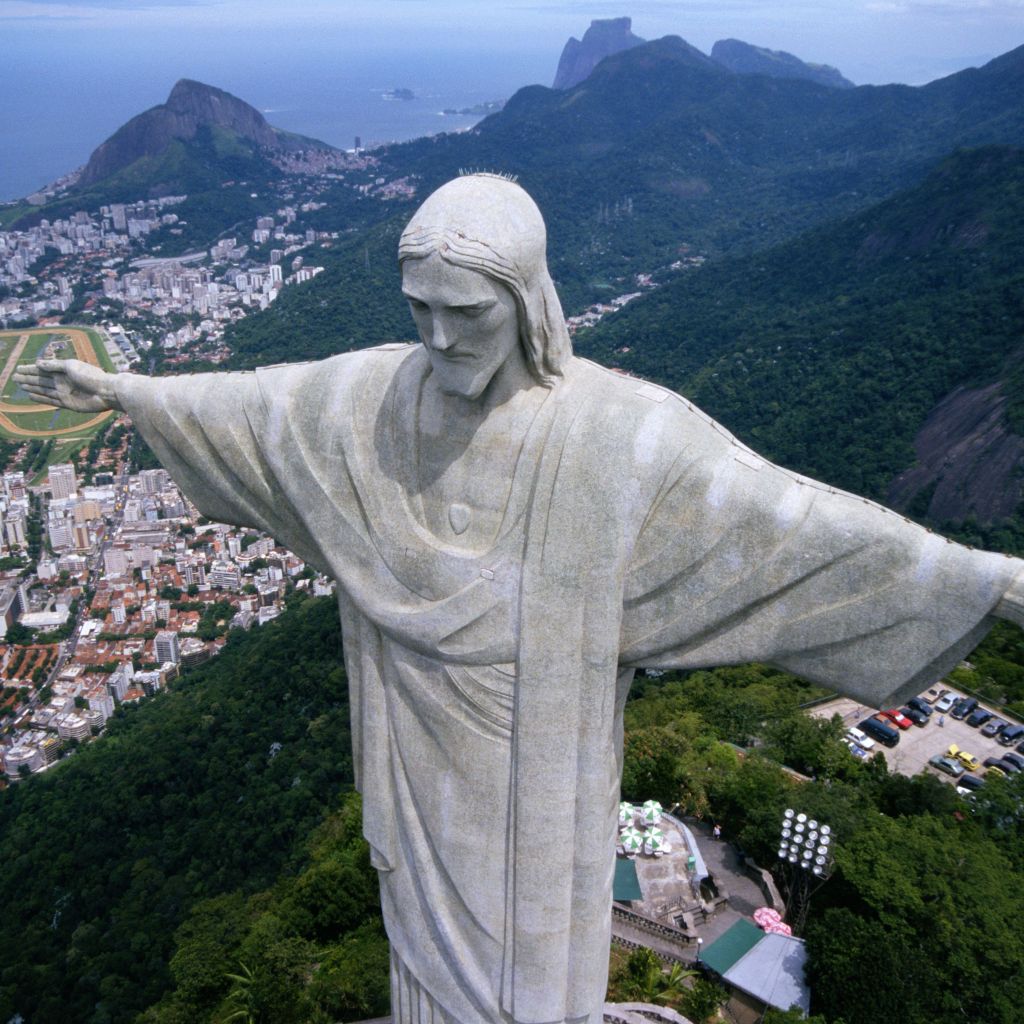
**Above picture: Christ the Redeemer statue in Rio de Janeiro, Brazil

Luke 11:14-28 – Replace the Bad with the Good

Jesus was driving out a demon that was mute. When the demon left, the man who had been mute spoke, and the crowd was amazed. But some of them said, “By Beelzebub, the prince of demons, he is driving out demons.” Others tested him by asking for a sign from heaven.

Jesus knew their thoughts and said to them: “Any kingdom divided against itself will be ruined, and a house divided against itself will fall. If Satan is divided against himself, how can his kingdom stand? I say this because you claim that I drive out demons by Beelzebub. Now if I drive out demons by Beelzebub, by whom do your followers drive them out? So then, they will be your judges. But if I drive out demons by the finger of God, then the kingdom of God has come upon you.

“When a strong man, fully armed, guards his own house, his possessions are safe. But when someone stronger attacks and overpowers him, he takes away the armor in which the man trusted and divides up his plunder.

“Whoever is not with me is against me, and whoever does not gather with me scatters.

“When an impure spirit comes out of a person, it goes through arid places seeking rest and does not find it. Then it says, ‘I will return to the house I left.’ When it arrives, it finds the house swept clean and put in order. Then it goes and takes seven other spirits more wicked than itself, and they go in and live there. And the final condition of that person is worse than the first.”

As Jesus was saying these things, a woman in the crowd called out, “Blessed is the mother who gave you birth and nursed you.”

He replied, “Blessed rather are those who hear the word of God and obey it.” (New International Version)

You have likely heard the old adage that nature abhors a vacuum. That is, when a loss or change leaves a hole in something, that hole will quickly get filled with something else.

To stop doing one thing is only half of a necessary process. To start doing another thing is crucial.

In our Gospel lesson for today, Jesus tells a story about a demon-possessed man. He was delivered of his oppression. However, a problem arose because the man had no replacement for the demon. He simply did nothing after the demonic expulsion.

It didn’t take long for a group of demons, seemingly seeking such a situation as this man, and took full advantage of his vulnerability. In the end, the man was worse off than before – all because of the vacuum created without the hole being filled.

We are meant to hear God’s Word and obey. Both are necessary to the process of deliverance, growth, and spiritual development.

Whenever the process is only half-baked, we have double-minded people, divided in their loyalties between God and money/power or something else.

Getting rid of judgmental spirits is important but it’s only half the process. The other half is to intentionally make space for genuine inquiry, listening, and dialogue. Without the focus on helping one another through mutual discussion, a group of folks will inevitably degenerate into discouragement, even despair, as the demons of judgmentalism come back in full force.

Kicking hate to the curb only truly works if it is replaced with a spirit of love, concern, and compassion for one’s fellow human. An environment in which people feel free to share of themselves and their feelings is the result of deliberately seeking to do so. Simply policing hate in others eventually causes the demons of hate to establish themselves even deeper than before.

Attempting to eliminate a culture of secrecy and shame can only really come through courageous acts and words of creating a climate of openness which carefully and compassionately enables individuals to boldly name their shame and destroy the blood-sucking vampire feeding on them in the demonic shadows of night once-and-for-all.

A zombie apocalypse won’t happen, that is, unless the only thing we’re concerned about is getting rid of zombies. If our end game isn’t the thriving and flourishing of real live people, our planet will be overtaken with the living dead.

“We look forward to the time when the Power of Love will replace the Love of Power. Then will our world know the blessings of peace.”

William Gladstone

We live in a divided world, polarized chiefly around things we are against, rather than crafting a vision together of what we are for. It does little good to kick people out of power either through force or elections, only to have no collective and compelling cause to rally around and place our efforts.

I’m all in for the cause of living Christ’s Great Commission through making disciples, embodying the Great Commandment of loving God and neighbor, and taking up the Great Challenge to act justly, love mercy, and walk humbly. It is these activities which motivate me to put away hate, hubris, and half-baked ideas so that a healthy process of spiritual formation can happen.

If our lives are already filled with a good spirit, there will be no room for any bad spirit to enter. And if we’ve picked up one, let’s make sure to not only expel it but occupy the space with the grace and goodness which comes from knowing a good and gracious God.

Be intentional about replacing the bad with the good. If a hole is created, fill it with mercy.

O God, the source of all health: Fill my heart with faith in your love, that with calm expectancy I may make room for your power to possess me, and gracefully accept your healing; through Jesus Christ our Lord. Amen.

**Above engraving of Jesus healing a demon possessed man, by an Italian artist, 1591.