James 5:7-12 – Hang in There!

Be patient, then, brothers and sisters, until the Lord’s coming. See how the farmer waits for the land to yield its valuable crop, patiently waiting for the autumn and spring rains. You too, be patient and stand firm, because the Lord’s coming is near. Don’t grumble against one another, brothers and sisters, or you will be judged. The Judge is standing at the door!

Brothers and sisters, as an example of patience in the face of suffering, take the prophets who spoke in the name of the Lord. As you know, we count as blessed those who have persevered. You have heard of Job’s perseverance and have seen what the Lord finally brought about. The Lord is full of compassion and mercy.

Above all, my brothers and sisters, do not swear—not by heaven or by earth or by anything else. All you need to say is a simple “Yes” or “No.” Otherwise you will be condemned. (New International Version)

In 1952, a woman named Florence Chadwick attempted to become the first female to swim the twenty-one miles from Catalina Island to the California coast. Less than a half-mile from her destination she gave up. It wasn’t because of fatigue, but because of the thick fog. Florence simply could not see how close she was to her goal. Two months later she did it, also in the fog, but had learned her lesson and persevered even though she couldn’t see the coast in front of her.

Everyone who has faced adversity knows how hard it is to keep going without seeing the goal. It is important to be patient and to persevere knowing that the Lord’s coming is near. Like the farmer, we must expectantly wait till the harvest. There is nothing we can do to speed up the process and go straight from planting to harvest. It takes time and plenty of patience. Grumbling and complaining about how long it is taking will not make it go any faster.

Although the Christian’s salvation is free, the process of sanctification takes a great deal of blood, sweat, and tears. Perseverance in the face of hardship is a major pathway to realizing a holy life. To do that, the Apostle James encourages us to consider the ancient prophets and the Old Testament character Job:

  • The prophet Jeremiah was faithful to proclaim God’s message yet was thrown into a cistern and left for dead. (Jeremiah 38:1-28)
  • The prophet Micaiah was faithful to declare truth to King Zedekiah, who then promptly imprisoned him, even though the king asked for God’s message. (1 Kings 22:24-27)
  • The prophet Daniel was faithful to pray consistently to the one true God and was thrown into the lion’s den to be killed. (Daniel 6:1-28)

The prophets all suffered for doing the right thing and did not waver in their commitment to the Lord. Through their troubles they learned to trust and draw near to God. The adversity strengthened, not weakened, their faith.

As for Job, he had it all, along with constant faithfulness. And he lost it all… except his faith. Job tenaciously held onto righteousness, despite his grinding physical, mental, emotional, and spiritual pain. Although Job’s God was agonizingly silent for a long time, and Job’s friends were despairingly talkative for much too long, the flame of Job’s faith was never extinguished in his heart.

We are to keep going in our faith and not give up. There are forces and processes at work behind the scenes of our lives that we might never know, this side of heaven. Yet, God is moving a good and divine agenda to its climax.

The soul would have no rainbow if the eyes had no tears. We live in a time when we will either sink or swim – there is no in-between. God’s celestial shore is within sight; don’t miss it by getting discouraged by all the fog. Hang in there, my friend.

Patient God, you endure through all of my ignorance and impatience and just keep growing me by your grace. Thank you for working me as a farmer works the soil. May there be a great harvest of righteousness in my life as I allow your faithful work to be done in me. Amen.

2 Samuel 5:1-10 – Living into a Purpose

All the tribes of Israel came to David at Hebron and said, “We are your own flesh and blood. In the past, while Saul was king over us, you were the one who led Israel on their military campaigns. And the Lord said to you, ‘You will shepherd my people Israel, and you will become their ruler.’”

When all the elders of Israel had come to King David at Hebron, the king made a covenant with them at Hebron before the Lord, and they anointed David king over Israel.

David was thirty years old when he became king, and he reigned forty years. In Hebron he reigned over Judah seven years and six months, and in Jerusalem he reigned over all Israel and Judah thirty-three years.

The king and his men marched to Jerusalem to attack the Jebusites, who lived there. The Jebusites said to David, “You will not get in here; even the blind and the lame can ward you off.” They thought, “David cannot get in here.” Nevertheless, David captured the fortress of Zion—which is the City of David.

On that day David had said, “Anyone who conquers the Jebusites will have to use the water shaft to reach those ‘lame and blind’ who are David’s enemies.” That is why they say, “The ‘blind and lame’ will not enter the palace.”

David then took up residence in the fortress and called it the City of David. He built up the area around it, from the terraces inward. And he became more and more powerful because the Lord God Almighty was with him. (New International Version)

“The purpose of life is to contribute in some way to making things better.”

Robert F. Kennedy

A sense of satisfaction and gratification comes with a job well done. Whenever we have an inner sense of accomplishing something important or fulfilling a purpose which was long in the planning, there is a settled feeling we have lived into God’s intentions for us.

David experienced success because the Lord was with him. He was careful to do all that God intended for him to do. King David lived into his anointing and demonstrated that he was of a different cut than the previous king, Saul. David was the person equipped by God to lead all Israel and Judah.

Using his newfound position and authority, David took the initiative to do the Lord’s will. This was a long time in coming. David had a sense, because of close walk with God, of when to be patient and wait, and when to take charge and act.

There was an extended patient wait for the Lord’s timing in David becoming king. Although anointed by the prophet Samuel as king while Saul was still in his reign, it took years for David to be enthroned as the actual king. David had several opportunities to make himself king by killing Saul (who was trying to kill David) but he allowed God to enthrone him in God’s own good time.

In fact, rarely does anything the Lord promise come to fruition immediately. We must wait patiently for deliverance from painful trials of faith and the return of Christ. God makes promises. Then we persevere until those promises are fulfilled.

All of David’s waiting finally dissipated into kingly action. Before there were kings, judges ruled in Israel. And before that, Joshua led the people into the Promised Land. They had a mandate to expel the Canaanites. Those instructions from God only partially happened. There were still remnants and pockets of resistance. The Jebusites, ensconced in the city of Jebus (Jerusalem) were the most stubborn.

Part of the reason there were Canaanites still living in the land was the former King Saul’s failure to take up the Lord’s plan. One of the first acts of King David was to finish and fulfill the complete takeover of the land.

David was willing to attempt something nobody else could do, and that no one believed could be done. If we were a fly on the wall during discussions about this, I can imagine a coterie of people saying to the king, “We tried that before. It won’t work. You cannot get rid of the Jebusites. This is a fool’s errand.”

Pessimism and passivity certainly do not dislodge anything, and the people had fallen into a cynicism that believed they needed to put up with the current situation. Whenever a group of people fall into this kind of thinking, criticism is rife because folks are not working together toward shared goals and solutions. Instead of addressing problems, there is merely complaining about the problems.

On the other side of it, the Jebusites were smug in their self-confidence, showing their bravado through being blowhards. However, they had not yet faced David. If they thought another king like Saul was coming along, they were in for a big wake up call.

The Lord almighty was with David. And that is what made all the difference. King David did not accept the status quo. He worked toward accomplishing the Lord’s will, as he understood it. And his faith always led to effective action.

God almighty, ruler of heaven and earth, may we your people never lose the way through our self-will, and so end up stuck in our souls with nowhere to go. Help us to never abandon the struggle so that we may endure to the end, and so be saved. May we never drop out of life with you but press forward to the goal of our high calling. May we not choose the cheap and easy way of getting things done but always remember that sweat is the price of all things, and that without the cross, there cannot be the crown. So, keep us and strengthen us by your grace. Let no disobedience nor weakness or failure stop us from being faithful in all the changes and chances of life, through Jesus Christ our Lord. Amen

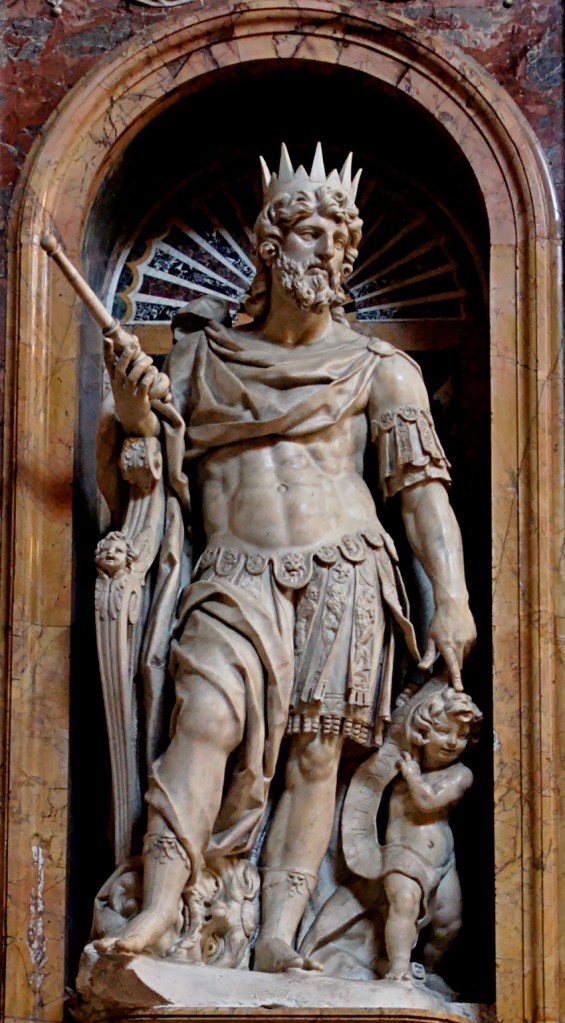
*Above statue of King David, outside his tomb in Jerusalem

Matthew 8:18-22 – The Path of Christian Discipleship

When Jesus saw that a curious crowd was growing by the minute, he told his disciples to get him out of there to the other side of the lake. As they left, a religion scholar asked if he could go along. “I’ll go with you, wherever,” he said.

Jesus was curt: “Are you ready to rough it? We’re not staying in the best inns, you know.”

Another follower said, “Master, excuse me for a couple of days, please. I have my father’s funeral to take care of.”

Jesus refused. “First things first. Your business is life, not death. Follow me. Pursue life.” (The Message)

Count the cost. Realize what it will take. Have some understanding of the time, energy, and resources needed. Discern the kind of commitment which is before you. It’s a matter of life and death, of spiritual survival.

If you had to carry everything you needed in a backpack, what would you put into it?

First off, for me and most people, that means identifying the barest essentials. It would likely take a long time to think simplistically about what is most important for survival. A lot of things would get left behind. And many items would gain greater attention and appreciation.

We would need some small basic tools including: a multi-tool with a knife and pliers; a source of illumination, like a flashlight and extra batteries; duct tape; rope; fishing line; a way of starting fire; a pot, pan, and mug; first-aid kit; emergency poncho; and just a few extra items of clothing.

If we were to live out of a backpack, it would very much change our lifestyle. And that is the point Jesus was trying to get across to some individuals who seemed like they couldn’t do that.

Trying to fit an existing life into a brand new life won’t work. It will not fit into the backpack of Christian discipleship.

Instead, we must adjust to a new reality, a completely different way of being.

When my wife and I were raising our girls, those precocious little females brought lots of life to the dinner table each night. There was never a dull moment with them. Today, however, they are all grown with their own families – which means we are empty-nesters.

It would be weird if my wife and I continued to live as if they were home – making large meals, dirtying lots of dishes, and engaging in mock conversations. Rather, although it took a while to get used to, we eventually came to grips with the new reality that our precious girls were grown and no longer living under our roof. And that meant a complete change of lifestyle for us.

A full-orbed Christian spirituality includes both the comfort of Christ to others, and the rugged responsibility to obey the words and ways of Jesus. In other words, the love of Jesus Christ is both tender and tough, at the same time, all the time.

Hurting and healing are both necessary for the follower of Jesus. Hard teachings and uncompromising commands for discipleship from Christ become the pathways of healing.

So, then, to go all out for Christ will involve much difficulty.

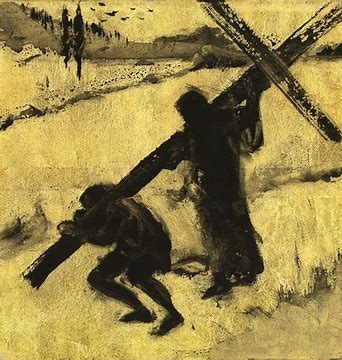
Jesus said to his followers, “If any of you want to be my follower, you must stop thinking about yourself and what you want. You must be willing to carry the cross that is given to you for following me. Any of you who try to save the life you have will lose it. But you who give up your life for me will find true life.”

Matthew 16:24-25, ERV

In today’s New Testament lesson, Jesus rather rudely rejected two would-be followers. When it comes to God’s upside-down kingdom, the eager beavers are turned away, and the half-hearted are called.

Jesus wants us, all of us, and not just our dedication. That is the demand of Christian discipleship. Anyone who believes they can remain the same person and simply fit a bit of Jesus into their lives, does not understand the cost of following Christ. The person who thinks it is Christianity’s lucky day when they decide to follow Jesus has not yet grasped what it means to be a Christian.

Whereas the religious scholar’s head was too big to fit through the narrow hole of Christian discipleship, the man who wanted to bury his father was too fainthearted and timid. He wanted to dip his toe in the water, and really had no intention of taking the all out plunge into the pool.

Nobody needs to do something “first” before following Jesus. Essentially, Jesus was neither invited nor welcome to the funeral. And Christ will have nothing to do with people picking and choosing which areas of their lives he will be invited into. It’s either a wholesale welcome or no welcome, at all.

When Jesus knocks on the door, he wants to be invited into the entire house, not just the foyer.

For Jesus, following him isn’t easy. The world is full of spiritual zombies, the walking dead. This old fallen world needs Christian disciples who will follow Jesus anywhere – into the hard places and rough terrain of engaging the sinful world.

We are meant to wholeheartedly follow Jesus, neither flippantly without counting the cost, nor procrastinating the hard road of Christian discipleship. Christians are to accept and maintain orders of first importance – which means full submission and obedience to Jesus Christ. Anything less is merely a cheap form of following.

When I Survey the Wondrous Cross by Isaac Watts

When I survey the wondrous cross
On which the Prince of glory died
My richest gain I count but loss
And pour contempt on all my pride.

Where every realm of nature mine
My gift was still be far too small
Love so amazing, so divine
Demands my soul, my life, my all.

Lord, you are all-knowing and full of wisdom. Your plan is masterful. Help me as your disciple to follow you in every thought, word, and deed. Give me a heart of obedience and trust so that I do not get wrapped up in my doubt or what I think is the right choice.

Help me to recognize that your good will does not always look the way I think it should, but that doesn’t make it any less good. I desire to be your disciple and follow you all the days of my life. Please give me the strength to do that. Amen.

2 Samuel 3:1-12 – Which One Would You Follow?

The war between the house of Saul and the house of David lasted a long time. David grew stronger and stronger, while the house of Saul grew weaker and weaker.

Sons were born to David in Hebron: His firstborn was Amnon the son of Ahinoam of Jezreel; his second, Kileab the son of Abigail the widow of Nabal of Carmel; the third, Absalom the son of Maakah daughter of Talmai king of Geshur; the fourth, Adonijah the son of Haggith; the fifth, Shephatiah the son of Abital; and the sixth, Ithream the son of David’s wife Eglah. These were born to David in Hebron.

During the war between the house of Saul and the house of David, Abner had been strengthening his own position in the house of Saul. Now Saul had had a concubine named Rizpah daughter of Aiah. And Ish-Bosheth said to Abner, “Why did you sleep with my father’s concubine?”

Abner was incredibly angry because of what Ish-Bosheth said. So, he answered, “Am I a dog’s head—on Judah’s side? This very day I am loyal to the house of your father Saul and to his family and friends. I haven’t handed you over to David. Yet now you accuse me of an offense involving this woman! May God deal with Abner, be it ever so severely, if I do not do for David what the Lord promised him on oathand transfer the kingdom from the house of Saul and establish David’s throne over Israel and Judah from Dan to Beersheba.” Ish-Bosheth did not dare to say another word to Abner, because he was afraid of him.

Then Abner sent messengers on his behalf to say to David, “Whose land, is it? Make an agreement with me, and I will help you bring all Israel over to you.” (New International Version)

“Leadership is the capacity and will to rally men and women to a common purpose and the character which inspires confidence.”

World War II British Field Marshall Bernard Montgomery (1887-1976)

Our inner character is a combination of what we do, why we do it, and how we go about it. Personal character is seen in the reactions and responses of life events and situations. And Holy Scripture is concerned and attentive to all our attitudes and actions in the world.

Stories in the Old Testament are largely designed to help us, as readers and listeners, to compare and contrast the mindsets, motivations, and morals of the principal actors in those narratives. We are meant to understand the difference between godly and ungodly people through how the story shakes out.

Three leaders are paraded before us in today’s Old Testament lesson. The story is arranged so that we will take a look at their manner of life. The lesson begs us to implicitly ask: Which of the three characters would you follow?

David

King David was a true leader, having G-d’s calling, inquiring to G-d continually, and using his ruling authority to extend kindness, like G-d does. Because of David’s character, his reign became stronger and stronger. David neither planned to annihilate all of Saul’s heirs as rivals to this throne, nor did he set out to make their lives miserable – despite the fact that most people of the time would actually expect him to do that.

Ish-Bosheth

Whereas David was initially ruling only Judah, Ish-Bosheth was a son of Saul and king of Israel. He was a mere figurehead. Abner, the army’s general, was really calling the political shots in Israel. Ish-Bosheth was too fearful to challenge Abner, and so, never exerted a significant influence. Instructive for us as readers is the absence of this king’s prayers or efforts to do anything helpful or constructive for his people.

Ish-Bosheth’s name essentially means “Master,” a dignified word which is meant to communicate respect. The incongruence between Ish-Bosheth’s ascribed name, and his actual attitudes and lack of action, betrays a double-minded person, divided in decision-making, not knowing quite what to do, so doing nothing of substance which helps anyone.

Contrasting Ish-Bosheth with David, we clearly see that David is no figurehead but the leader of his people. Unlike Ish-Bosheth, David is no washrag and is no one’s puppet but takes charge of situations by inquiring of G-d, then acting.

Confidence comes from knowing the Lord and stepping out in faith, which is precisely what David’s pattern of kingship was like.

“God grant that men of principle shall be our principal men.”

Thomas Jefferson, 3rd President of the United States of America (1743-1826)

Abner

Israel’s general, Abner, was neither like David nor Ish-Bosheth. Although Abner had the qualities of confidence and taking charge, unlike David, he was a self-serving leader.

Abner used his position to gain for himself power and prestige. He was willing to quickly switch his loyalties when it was no longer helpful for him, personally. Although Abner did right by working toward uniting the kingdoms of Israel and Judah (a good thing) he did it for all the wrong reasons (a bad thing).

Compared to David, Abner has only self-interest, not the common interest of all citizens. He acts for what he can personally get out of it – which is just the opposite of David, who has an eye which scans the horizon to do what is best for the common good of all the kingdom’s subjects.

Conclusion

When we read today’s story, the guided narrative wants us to arrive at the conclusion of saying, “I don’t want to become or follow somebody like Ish-Bosheth or Abner. I want to become and follow someone like King David.”

David listened to G-d, prayed to G-d, and acted with justice and kindness because of G-d. There’s likely no better approach to the spiritual life than that.

Grant us, Lord G-d, a vision of our world as your love would make it: a world where the weak are protected, and none go hungry or poor; a world where the benefits of abundant life are shared, and everyone can enjoy them; a world where different races and cultures live in tolerance and mutual respect; a world where peace is built with justice, and justice is guided by love. And give us the inspiration and courage to build it, through Jesus Christ our Lord. Amen.

*Above statue of King David by French artist Nicolas Cordier, c.1610