Perfect Peace (Isaiah 26:1-9)

In that day, everyone in the land of Judah will sing this song:

Our city is strong!
    We are surrounded by the walls of God’s salvation.
Open the gates to all who are righteous;
    allow the faithful to enter.
You will keep in perfect peace
    all who trust in you,
    all whose thoughts are fixed on you!
Trust in the Lord always,
    for the Lord God is the eternal Rock.
He humbles the proud
    and brings down the arrogant city.
    He brings it down to the dust.
The poor and oppressed trample it underfoot,
    and the needy walk all over it.

But for those who are righteous,
    the way is not steep and rough.
You are a God who does what is right,
    and you smooth out the path ahead of them.
Lord, we show our trust in you by obeying your laws;
    our heart’s desire is to glorify your name.
In the night I search for you;
    in the morning I earnestly seek you.
For only when you come to judge the earth
    will people learn what is right. (New Living Translation)

Peace comes through trust; faith is the smooth path to settled rest and wholeness of being.

We all, of course, want peace. Personal peace. Family peace. National peace. World peace. And yet, so many of us lack peace to the degree that we have to medicate ourselves to get any sleep.

Avoiding family seems normal, just to keep the peace. National peace almost sounds oxymoronic. World peace is merely wishful thinking for far too many people. Perhaps we are in such a befuddled conundrum because of this reason:

We already possess what we so desperately want. The search for peace is really the search within.

“I am leaving you with a gift—peace of mind and heart. And the peace I give is a gift the world cannot give. So don’t be troubled or afraid.”

Jesus (John 14:27, NLT)

The Christian needs to understand that Jesus has left us his peace. He gave it to us. We have it. Perhaps we have misplaced it? Maybe its lost in that huge stack on the desk?  Most likely, we plain old forgot about it.

God’s peace is here with us. Right now. This very minute. We have exactly what we want.

This peace is about far more than the absence of war, conflict, and/or infighting. Perfect peace is the settled and restful calm and confidence of being with God, of an intimate union with the divine.

Peace neither occurs by happenstance nor magically appears. Peace was achieved for us; it’s a gift which needs to be unpacked, used, and enjoyed. Practices of peace and peacemaking must be acknowledged and engrafted into our lives if we are going to experience it on the daily practical level (Romans 14:13-15:7).  

Like the delivery guy who leaves a package in an odd place, we could be searching for the ongoing gift of peace somewhere on our property. It’s there – it just seems so darned elusive. Yet, peace, the perfect peace that is harmony and unity, can neither be found in perfect circumstances nor in idyllic families and faith communities. Divine peace is the security of relationship with God, smack in the middle of life’s crud.

As the divine life takes root and grows within us, our hearts are healed with that presence, and we experience peace. It’s the kind of peace which drives fear and anxiety away; the kind of peace which only comes through trusting God.

Therefore, there’s no need to try and miraculously conjure up peace with positive thoughts.

It is the glorious, gracious, and mystical union between the divine and the human which creates peace. All obstacles have been surmounted and tossed into the trash for the garbage guy to haul away. And, no, you did not accidentally throw your peace in the dumpster. There really is no need for any dumpster diving. God’s already done that work for you and me.

In such topsy-turvy times as these, I come back again and again to deep spiritual convictions which inform what I do each day. One of those underlying creeds is this:

The Lord is trustworthy, no matter whether my faith or the faith of others is small or great. It isn’t faith itself that heals, saves, or grants peace – it is God.

It isn’t about the level of faith, but about where the faith is placed.

For the Christian, faith itself doesn’t mean much if it isn’t in Jesus. If I place a large and sincere faith in an inanimate object such as money; in a position of power; or, even in my own independence, my faith isn’t worth much. 

If I have a huge faith in a doctor or a psychiatrist to heal my body or my mind, I will quickly discover there are limits to their abilities. 

If I have a confident faith that my family will meet all my needs, my faith will eventually run into failure when they let me down. 

If all my faith eggs are in the church basket, my faith will eventually face a crisis because it is a misplaced faith.  Furthermore, the answer I provide for others is not simply getting them to attend church or to adopt my moral code.

God’s love remains continually steadfast, even if my trust is fickle and inconsistent.

We know with certainty that circumstances change; everyday seems to bring new levels and permutations of unprecedented alterations to our lives – and through it all, the Lord remains as the ever-present Sovereign, responding to even the slightest mustard seed of faith.

A woman in the crowd had suffered for twelve years with constant bleeding. She had suffered a great deal from many doctors, and over the years she had spent everything she had to pay them, but she had gotten no better. In fact, she had gotten worse. She had heard about Jesus, so she came up behind him through the crowd and touched his robe. For she thought to herself, “If I can just touch his robe, I will be healed.” Immediately the bleeding stopped, and she could feel in her body that she had been healed of her terrible condition.

Jesus realized at once that healing power had gone out from him, so he turned around in the crowd and asked, “Who touched my robe?”

His disciples said to him, “Look at this crowd pressing around you. How can you ask, ‘Who touched me?’”

But he kept on looking around to see who had done it. Then the frightened woman, trembling at the realization of what had happened to her, came and fell to her knees in front of him and told him what she had done. And he said to her: 

“Daughter, your faith has made you well. Go in peace. Your suffering is over.”

(Mark 5:24-34, NLT)

May your trust in the Lord open the way of perfect peace for you, now and always. Amen.

Hope for the Grieving (Jeremiah 31:15-22)

Orthodox icon of Rachel weeping for the children

This is what the Lord says:

“A voice is heard in Ramah,
    mourning and great weeping,
Rachel weeping for her children
    and refusing to be comforted,
    because they are no more.”

This is what the Lord says:

“Restrain your voice from weeping
    and your eyes from tears,
for your work will be rewarded,”
declares the Lord.
    “They will return from the land of the enemy.
So there is hope for your descendants,”
declares the Lord.
    “Your children will return to their own land.

“I have surely heard Ephraim’s moaning:
    ‘You disciplined me like an unruly calf,
    and I have been disciplined.
Restore me, and I will return,
    because you are the Lord my God.
After I strayed,
    I repented;
after I came to understand,
    I beat my breast.
I was ashamed and humiliated
    because I bore the disgrace of my youth.’
Is not Ephraim my dear son,
    the child in whom I delight?
Though I often speak against him,
    I still remember him.
Therefore my heart yearns for him;
    I have great compassion for him,”
declares the Lord.

“Set up road signs;
    put up guideposts.
Take note of the highway,
    the road that you take.
Return, Virgin Israel,
    return to your towns.
How long will you wander,
    unfaithful Daughter Israel?
The Lord will create a new thing on earth—
    the woman will return to the man.” (New International Version)

The bereavement of losing someone you care about is awful. A parent experiencing the death of a child is next level grief. There is no bereavement like it.

As a hospital chaplain, I occasionally attend to a grieving mother who just lost her baby. I have shown up for premature and stillborn deaths, full term births, then death, sudden infant death, and more. The grief is indescribable.

On some level, there is no comfort – and never will be. I know that, for me, providing grief support to mothers who are enduring the death of a baby or young child has profoundly changed me and forever impacted my soul. So, I can only imagine what it’s like for a mother.

Many Christians will recognize the verse of Rachel weeping for her children as part of the early story surrounding Jesus:

An angel of the Lord appeared to Joseph in a dream. “Get up,” he said, “take the child and his mother and escape to Egypt. Stay there until I tell you, for Herod is going to search for the child to kill him.”

So he got up, took the child and his mother during the night and left for Egypt,where he stayed until the death of Herod. And so was fulfilled what the Lord had said through the prophet: “Out of Egypt I called my son.”

When Herod realized that he had been outwitted by the Magi, he was furious, and he gave orders to kill all the boys in Bethlehem and its vicinity who were two years old and under, in accordance with the time he had learned from the Magi. Then what was said through the prophet Jeremiah was fulfilled:

“A voice is heard in Ramah,
    weeping and great mourning,
Rachel weeping for her children
    and refusing to be comforted,
    because they are no more.”(Matthew 2:13-18, NIV)

It’s really hard to have hope when you’re in the throes of lamenting the death of children. We need hope. It’s necessary to life. We cannot survive, let alone thrive, without it.

It is possible to simultaneously experience hopelessness and hope. At the same time, we hold both despair and desire, anguish and anticipation, in our hearts. While we may never forget who we have lost, we make it through our days believing that another child can change the world for the better. We place our faith in the Christ child, in Jesus.

Wily old King Herod massacred innocent toddlers in order to ensure the destruction of Jesus. Behind his atrocity was the devil himself who knew that Jesus was the coming King who would one day bring salvation. But the old King’s sinister plan didn’t work. 

Reflecting on a vision of Christ’s birth, the Apostle John stated:

The dragon stood in front of the woman who was about to give birth, so that it might devour her child the moment he was born. She gave birth to a son, a male child, who “will rule all the nations with an iron scepter.” And her child was snatched up to God and to his throne. (Revelation 12:4-5, NIV)

Satan wars against God’s Son and God’s people, whose roots go all the way back to the first prophecy of Christ:

And I will put enmity
    between you and the woman,
    and between your offspring and hers;
he will crush your head,
    and you will strike his heel.” (Genesis 3:15, NIV)

There has been bad blood, ever since the Fall of humanity, between the serpent and the seed of the woman. The Old Testament Israelites were continually being threatened with extermination; they were constantly tempted to conform to pagan ways for handling their suffering and grief. 

Herod was just another in a long line of demonically animated men trying to perpetuate the kingdom of darkness. The devil knows that his time is short; and he uses twisted persons like Herod for his insidious schemes.

Many people experience hell on earth because Satan is on a rampage; mothers and their children are often the collateral damage.

The holiday season is a hard time of year for many people, filled with depression instead of joy, grieving over lost loved ones for whom you will not spend another Christmas with. And yet, there is a reunion coming, the hope of a bodily resurrection in which we will be with Jesus and God’s people forever.

Satan’s most powerful weapon, death, has lost its sting because of Jesus. Death does not have the last word; resurrection does. And this hope for the future helps us in the present to keep going and not give up.

The prophet Jeremiah was dealing with children lost in war to the invading Babylonians. His words are a lament in the context of the hope that captivity and exile will not be forever. 

Matthew wants us to see that the exile is over for us; Jesus has arrived, and the tears that were shed will shortly dry up. There may be a time of suffering that we must endure, but there is glory ahead.

Jesus is the Great Deliverer who brings us out of the grip of death, grief, and lament and into the promises of God. Christ is our hope. Amen, and amen.

Seek the Least and the Lost (Matthew 18:1-14)

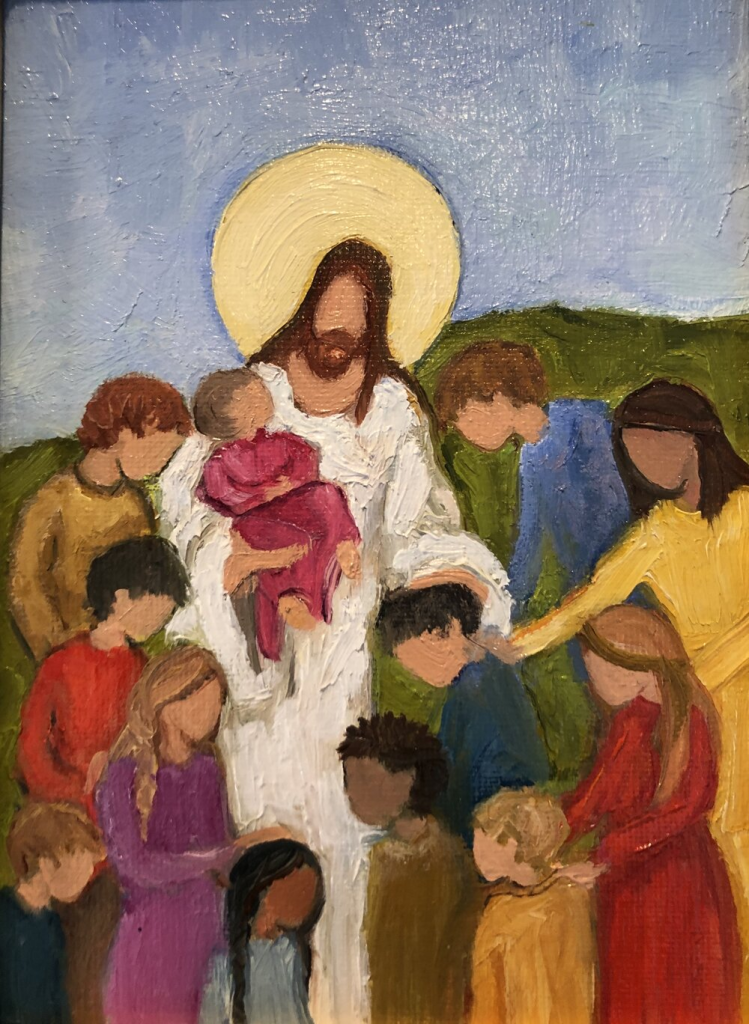
Child of God by Suzi Olson

At that time the disciples came to Jesus and asked, “Who, then, is the greatest in the kingdom of heaven?”

He called a little child to him and placed the child among them. And he said: “Truly I tell you, unless you change and become like little children, you will never enter the kingdom of heaven. Therefore, whoever takes the lowly position of this child is the greatest in the kingdom of heaven. And whoever welcomes one such child in my name welcomes me.

“If anyone causes one of these little ones—those who believe in me—to stumble, it would be better for them to have a large millstone hung around their neck and to be drowned in the depths of the sea. Woe to the world because of the things that cause people to stumble! Such things must come, but woe to the person through whom they come! If your hand or your foot causes you to stumble, cut it off and throw it away. It is better for you to enter life maimed or crippled than to have two hands or two feet and be thrown into eternal fire. And if your eye causes you to stumble, gouge it out and throw it away. It is better for you to enter life with one eye than to have two eyes and be thrown into the fire of hell.

“See that you do not despise one of these little ones. For I tell you that their angels in heaven always see the face of my Father in heaven.

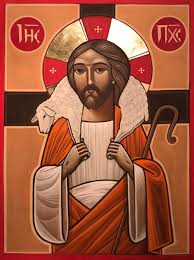
“What do you think? If a man owns a hundred sheep, and one of them wanders away, will he not leave the ninety-nine on the hills and go to look for the one that wandered off? And if he finds it, truly I tell you, he is happier about that one sheep than about the ninety-nine that did not wander off. In the same way your Father in heaven is not willing that any of these little ones should perish. (New International Version)

“A person’s a person no matter how small.”

Horton Hears a Who! By Dr. Seuss

Jesus sees, honors, and protects little people. 

Horton the elephant spoke to people completely unconcerned for all the residents of Who Ville that lived on a clover. Dr. Seuss chose to make Horton an elephant, a large creature able to hear with big ears and be attentive to the small. Bigness can only come from becoming small.

Little people, the ones others fail to notice, matter to Jesus. And so, they ought to matter to us, too. Since Jesus sees and hears them, we should, too. 

Jesus often mingled with little people – children, women who had no rights, social misfits like lepers, the chronically ill, religious outsiders, tax collectors, and prostitutes. 

Our world is filled with similar people – angry adolescents, unwanted babies, forgotten old people, the mentally ill, moral failures, immigrants and refugees. If we have eyes to see and big ears to hear, we will notice the poor whom no one else hears. They are around us, even if they are invisible to us.

We’re all just little people before God. So, let’s be humble enough to see the little people around us. 

Who’s the greatest in the kingdom of heaven?

That question drips with a desire to position and posture oneself in a place of prominence and power. In other words, the questions really is, “How do I climb the ladder in God’s kingdom to be the most important person?”

In response, Jesus graciously and calmly called a child to him and answered that unless we become like a little child, we have no future with God. There’s only one way to have what you want, and it’s through humility.

Children had no status or rights in the ancient world. Ancient culture was not remotely youth or kid oriented. Kids were generally viewed as just potential adults. They were seen as weak, small, and unable to contribute much of anything until they grew up. 

Disciples of Jesus are to become like children, that is, lowly. Followers of Christ must give up their status and desire to be important. They can only be big if they become small.

Only by getting on the same level as little people can we ever welcome Jesus.

Why become like a little child?

Because a person who is attentive to the lowly is actually attentive to Jesus himself. 

We are not to welcome people because they are great, wise, rich, powerful, good-looking, and just like you and me – but because they are noticed by Jesus.

The proud person who seeks prominence is always looking for greener pastures and things to do that will impress people who will help advance them up the ladder of success. They do not care who gets stepped on along the way. 

The Christian, however, is to give all people, including the little ones and the marginal ones, the time of day and treat them as important.

How does one become humble and avoid sin?

Those who receive these little ones receive Jesus; those who reject these little ones reject Jesus, and by their lack of loving them cause them to sin. This, according to Jesus, is damnable behavior, and, so, must be dealt with in a radical manner because hell is worth avoiding at any cost. 

So then, the proud person must hack off part of themselves because it is better to be maimed for the rest of your life than enter hell. This is just one reason why a lot of folks stopped following Jesus.

Yet, Jesus insists that if, for example, your pursuit of money consumes you and you hold onto it and avoid the poor, give it away! If you hold onto your time like a clock miser and let it become your “precious” then you must get rid of it, you must give it away! It is better for you to have nothing than to have plenty of time and money and be thrown into hell fire!

In short, we should seek the lost.  

Instead of waiting for them to show up, or to seek us out, we must go get them.

The lost matter to God.

Those who are on the fence and are half-hearted in their devotion to Jesus and the mission of the church, matter to God. So are the spiritually indifferent and the not very committed. 

Coptic Church icon of Jesus the Good Shepherd

The temptation for spiritually serious persons is to look down on these lukewarm people. Jesus knew how easy it is to berate and despise such persons in our hearts:

To some who were confident of their own righteousness and looked down on everyone else, Jesus told this parable: “Two men went up to the temple to pray, one a Pharisee and the other a tax collector. The Pharisee stood by himself and prayed: ‘God, I thank you that I am not like other people—robbers, evildoers, adulterers—or even like this tax collector. I fast twice a week and give a tenth of all I get.’

“But the tax collector stood at a distance. He would not even look up to heaven, but beat his breast and said, ‘God, have mercy on me, a sinner.’

“I tell you that this man, rather than the other, went home justified before God. For all those who exalt themselves will be humbled, and those who humble themselves will be exalted.” (Luke 18:9-14, NIV)

If we are willing to humble ourselves, we can learn the hard practice of not hating others for what we hate in ourselves. 

We hate it when we are lax in our devotion to Christ; fail to accomplish what we want; miss opportunities to do good; and neglect to pray, give, or serve. So, when we see this as a pattern in someone else’s life, we may easily despise them in our hearts.

Turns out that many serious Christians must be converted as well – to seeing God’s heart for these despised little people.

What should be done about lost people?

Human reasoning might say, “Ah, let that one go; we have 99.” But God’s reasoning is, “I really care for that one.” Jesus wants to convert us to the statistically unimportant. 

If a person does not contribute to the life of the flock, do we care?

The parable contained within today’s Gospel lesson has become so familiar that it no longer shocks us. What kind of shepherd would be so stupid to abandon the entire flock and expose them to the dangers of wild animals and the harsh environment in order to search, maybe even unsuccessfully for one stinky, messed up, knurly, ugly, eats-too-much, sheep? 

And then, what’s more, when finding such a sheep, that shepherd rejoices more about this one sheep found than over the more dependable and attractive members of the flock? 

Only such a “foolish” shepherd can represent God’s concern for each one straying child.

Our Father in heaven is not willing that any of these little people should be lost. Therefore, we are to seek the lost.

Conclusion

Antonio Stradivarius (1644-1737) was an Italian violin maker. His violins are now the most prized violins ever made because of the rich and resonating sound they produce. The unique sound of a Stradivarius violin cannot be duplicated.

Surprisingly, these prized violins were not made from treasured pieces of wood, but instead were carved from discarded lumber. Stradivarius, who was very poor and could not afford fine materials like his contemporaries, got much of his wood from the dirty harbors where he lived. He would take those waterlogged pieces of wood to his shop, clean them up, and from those pieces of trashed lumber, he created instruments of rare beauty.

It has since been discovered that while the wood floated in those dirty harbors, microbes went into the wood and ate out the center of those cells. This left just the fibrous infrastructure of the wood that created resonating chambers for the music. From wood that nobody wanted, Stradivarius produced violins that everybody wants.

God has a plan. It is a plan to build a benevolent realm using not just the big and important, but the lowly and despised. 

May we all participate with the Lord and humble ourselves for kingdom purposes.

Believe, Love, and Obey (1 John 5:1-12)

Everyone who believes that Jesus is the Christ is born of God, and everyone who loves the father loves his child as well. This is how we know that we love the children of God: by loving God and carrying out his commands. In fact, this is love for God: to keep his commands. And his commands are not burdensome, for everyone born of God overcomes the world. This is the victory that has overcome the world, even our faith. Who is it that overcomes the world? Only the one who believes that Jesus is the Son of God.

This is the one who came by water and blood—Jesus Christ. He did not come by water only, but by water and blood. And it is the Spirit who testifies because the Spirit is the truth. For there are three that testify: the Spirit, the water and the blood; and the three agree. We accept human testimony, but God’s testimony is greater because it is the testimony of God, which he has given about his Son. 

Whoever believes in the Son of God accepts this testimony. Whoever does not believe God has made him out to be a liar, because they have not believed the testimony God has given about his Son. And this is the testimony: God has given us eternal life, and this life is in his Son. Whoever has the Son has life; whoever does not have the Son of God does not have life. (New International Version)

Faith, love, and obedience are words so tightly woven together, that to pull one of them out, is to unravel the whole bunch. 

To believe, love, and obey are the true marks of a Christian; and they are vital to living the Christian life and overcoming the dark forces of the world.

Let’s talk some grammar – because it will help us better understand the Apostle John’s message….

The main verb is the main thing

One of the dominant main verbs throughout these verses: “is.” And the verb tense is key, grammatically describing a past action of God which people need to receive. In other words, the grammar dictates that God has given us new birth. 

We do not give ourselves spiritual birth any more than we can tell our mothers that it was us who gave birth to ourselves.

The participles describe the main thing

God saves us from sin and grants us forgiveness. The action is from God to us; we are recipients of God’s good grace toward us.

There are three participles connected to the main verb, “is:”

  1. Believe
  2. Love
  3. Obey

A participle is a word which is connected to the verb’s action. 

Our actions are a result of God’s action toward us.

Simply put, a person born from God will believe, love, and obey.

Just as a newborn baby first breathes, then learns to eat, sleeps, grows-up, learns to walk, and over time develops into an adult just like their mother and father, so the Christian who is born again from God exhibits faith, learns to love, and grows up developing the skills of obeying Jesus and following him, learning to walk in his ways, becoming just like him.

Overcoming the world

In the same way a child must grow and mature to have the necessary skills for facing the world in all its trials and temptations, so the Christian must develop the requisite abilities of faith, love, and obedience, to overcome the world.

To “overcome” is to experience the victory the Lord Jesus has achieved on the cross. 

Through being spiritually born again by God, it sets us on a course requiring faith, love, and obedience in overcoming the world. As we learn to apply these three spiritual characteristics to our lives, we experience practical victory over the world.

The term “world” is used by the Apostle John as the patterns, systems, and operations of the world, which are in direct contrast to how God operates. For example:

  • The world engages in revenge and payback when wronged, whereas the Christian learns to believe God will be the Judge, loves the person who has offended them through prayer for their enemy, and obeys God through good works that seeks the welfare of the other. 
  • The world uses other people as either objects of their pleasure or to get ahead in life, whereas the Christian believes God will take care of their needs, will seek to love the other person instead of use them, and would rather obey God by cutting off their right hand off than being selfish. 
  • The world thinks nothing of lying, cheating, and stealing, if they can get away with it, whereas the Christian believes Jesus is the way, the truth, and the life, loves being a person of integrity, and obeys God even when it hurts.

This in no way suggests we avoid or belittle the world. In overcoming the world, we must have principled civility. Using faith, love, and obedience, we respect another’s viewpoint through allowing our spirits to grow in faith, expanding our hearts in love, and learning obedience through interaction with others for whom we disagree.

Faith, love, and obedience

We need faith in God:

Trust in the Lord with all your heart,
    and do not rely on your own insight.
In all your ways acknowledge him,
    and he will make straight your paths. (Proverbs 3:5-6, NRSV)

We need love for God and others:

Don’t love the world’s ways. Don’t love the world’s goods. Love of the world squeezes out love for the Father. Practically everything that goes on in the world—wanting your own way, wanting everything for yourself, wanting to appear important—has nothing to do with the Father. It just isolates you from him. The world and all its wanting, wanting, wanting is on the way out—but whoever does what God wants is set for eternity. (1 John 2:15-17, MSG)

We need obedience to the call of God:

The commandment that God has given us is: “Love God and love each other!” (1 John 4:21, CEV)

When faith, love, and obedience are working together, as intended, we overcome the world and all its crud; and keep ourselves from being polluted and stained by it.

Overcoming the world is a high calling from God. 

Faith means putting aside fear and taking the kind of risk God wants you to take.

Love means putting aside hate and serving others, even when it hurts.

Obedience means putting aside selfishness and choosing to do what is best for another person’s welfare.

Being characterized by these three Christian virtues will have the effect of overcoming the world. It is not a burdensome or heavy way to live. It’s the way of Jesus.

Blessed God – Father, Son, and Spirit – the Lord whom we serve: Sometimes our hearts and minds are flooded with fears. Sometimes we are paralyzed and overwhelmed and feel unable to go on. Yet, we hold onto the victory you have accomplished through the cross of Jesus Christ. You have told us not to fear, for you have overcome the world. In moments of crippling fear, we choose to hold your hand and believe; to love as we have been loved; and, to obey even in the most fearful places because we know that you have risen again.

Holy Spirit, we invite you and all your ministry within us. Holy God of all, we offer you our heart, mind, body, soul, spirit, hopes, plans and dreams. We surrender to you our past, present and future problems, habits, character defects, attitudes, livelihood, resources, finances, medical coverage, occupation and all relationships. We give you our health, physical appearance, disabilities, disorders, family, marriage, children, grandchildren, and friendships.

Loving Lord Jesus, we surrender to you all our hurt, pain, worry, doubt, fear and anxiety, and ask you to wash us clean. We release everything into your compassionate care. Open our ears to hear your voice. Open our hearts to commune with you more deeply. Open the doors that need to be opened and close the doors that need to be closed. Set our feet upon the straight and narrow road that leads to everlasting life. Amen.