Jacob’s Dream (Genesis 28:10-22)

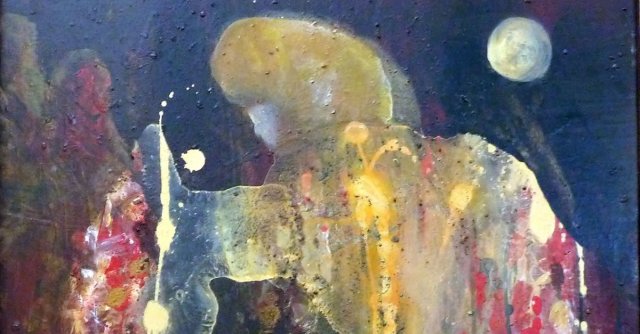
Jacob’s Ladder by Darius Gilmont

Jacob left the town of Beersheba and started out for Haran. At sunset he stopped for the night and went to sleep, resting his head on a large rock. In a dream he saw a ladder that reached from earth to heaven, and God’s angels were going up and down on it.

The Lord was standing beside the ladder and said:

I am the Lord God who was worshiped by Abraham and Isaac. I will give to you and your family the land on which you are now sleeping. Your descendants will spread over the earth in all directions and will become as numerous as the specks of dust. Your family will be a blessing to all people. Wherever you go, I will watch over you, then later I will bring you back to this land. I won’t leave you—I will do all I have promised.

Jacob woke up suddenly and thought, “The Lord is in this place, and I didn’t even know it.” Then Jacob became frightened and said, “What a frightening place! It must be the house of God and the gateway to heaven.”

When Jacob got up early the next morning, he took the rock that he had used for a pillow and stood it up as a place of worship. Then he poured olive oil on the rock to dedicate it to God, and he named the place Bethel. Before that it had been named Luz.

Jacob solemnly promised God, “If you go with me and watch over me as I travel, and if you give me food and clothesand bring me safely home again, you will be my God. This rock will be your house, and I will give back to you a tenth of everything you give me.” (Contemporary English Version)

“Dreams are impartial, spontaneous products of the unconscious psyche, outside the control of the will. They are pure nature; they show us the unvarnished, natural truth, and are therefore fitted, as nothing else is, to give us back an attitude that accords with our basic human nature when our consciousness has strayed too far from its foundations and run into an impasse.

Carl Jung, Collected Works, Vol. 10

Not all unconscious dreams are the same, any more than all conscious experiences are alike.

Some dreams are not much more than a thing which occurs while we’re sleeping; they’re akin to the tedious or pedantic things we do while awake. Yet, other dreams are loaded with symbolic significance and have complex patterns of organization and relating.

However, all dreams which we carry with us into conscious waking – no matter whether mundane or extraordinary – are telling us a similar message: “Hey! Pay attention to this!”

In other words, our unconscious brains are usually aware of what we need more than our conscious minds; and dreams become the vehicle by which our unconscious alerts our conscious selves of something we need to focus upon.

Jacob’s Ladder by Ben Avram

Jacob needed to pay attention to something that he was not consciously aware of. Before his dream, Jacob had left home at the behest of his aging father. Mom and Dad wanted Jacob to have a good wife, so they sent him off to a specific place to find one.

Now, mind you, Jacob was a mama’s boy; he stuck close to home and was attached to his mother. Off on his first outing away from familiar confines, Jacob would have been understandably anxious and fearful. Although he had the blessing of his parents, Jacob’s unconscious self knew he also needed the blessing of almighty God.

So, the Lord showed up in a dream. To Jacob’s credit, he paid attention by acknowledging the importance of the dream. Jacob also made the Lord a promise that he would give back a tenth of anything and everything he acquired because of God’s blessing.

I wonder: How many times do you and I fail to acknowledge that the Lord’s presence is in the very place we are? Maybe our dreams are trying to tell us something – that the God of all things, including dreams, is with us in our own particular place and situation.

It can be frightening to be in a new place or new situation that you’ve never been in before. Yet, there is no place any of us can go where God is not already there.

You have looked deep
into my heart, Lord,
    and you know all about me.
You know when I am resting
    or when I am working,
and from heaven
    you discover my thoughts.

You notice everything I do
    and everywhere I go.
Before I even speak a word,
    you know what I will say,
and with your powerful arm
you protect me
    from every side.
I can’t understand all of this!
Such wonderful knowledge
    is far above me.

Where could I go to escape
from your Spirit
    or from your sight?
If I were to climb up
to the highest heavens,
    you would be there.
If I were to dig down
to the world of the dead
    you would also be there.

Suppose I had wings
like the dawning day
    and flew across the ocean.
Even then your powerful arm
    would guide and protect me.
Or suppose I said, “I’ll hide
in the dark until night comes
    to cover me over.”
But you see in the dark
because daylight and dark
    are all the same to you. (Psalm 139:1-12, CEV)

The Lord is with you. Your dreams have already confirmed it.

O God, give me strength for this day, and not to turn coward in the face of difficulty or duty. Let me not lose faith in other people. Keep my heart pure and caring, free from all ingratitude or meanness. Open wide the eyes of my soul so that I may see the good in all things. Grant me today a new vision of your truth; and for tonight, may the Lord Jesus be in my dreams so that I might awake again and serve him in joy and gladness, in the power of the Holy Spirit. Amen.

Promise and Pilgrimage (Genesis 12:1-7)

The Lord said to Abram,

“Leave your land,
your relatives,
and your father’s home.
Go to the land that I will show you.
I will make you a great nation,
I will bless you.
I will make your name great,
and you will be a blessing.
I will bless those who bless you,
and whoever curses you, I will curse.
Through you every family on earth will be blessed.”

So Abram left, as the Lord had told him, and Lot went with him. Abram was 75 years old when he left Haran. Abram set out for Canaan. He took along his wife Sarai, his nephew Lot, and all the possessions they had accumulated and the servants they had acquired in Haran.

They arrived in Canaan, and Abram traveled through the land to the oak tree belonging to Moreh at Shechem. At that time the Canaanites were in the land. Then the Lord appeared to Abram and said, “I’m going to give this land to your descendants.” So he built an altar there to the Lord, who had appeared to him. (God’s Word Translation)

Abram (later having a name change to “Abraham”) knew quite a lot about new beginnings.

It isn’t every day that the Lord comes along and completely upends a person’s life. Abram had lived his entire life in the same city, Ur, in Chaldea (present day Iraq). By all accounts, Abram was completely fine living where he was living. He had neither the ambition nor need to leave his home city.

The Lord, however, had other plans for Abram. And they were radical plans. This was no rearranging of the furniture; it was a wholesale life-altering change. Ur was an important cosmopolitan city, a trade center, located at a pivotal point where the Tigris and Euphrates Rivers run into the Persian Gulf. Thus, Ur was a wealthy city, the citizens enjoying a level of comfort unknown in other parts of Mesopotamia.

Actor Eddie Albert as the out of place city lawyer trying to make it in the country on “Green Acres” which aired on CBS from 1965-1971

So, Abram being called to move from the city and go to some unknown place in the west would be something like growing up in Manhattan, New York and being called by God to head for Brewster, Nebraska – which is pretty much in the middle of nothing. It makes “Green Acres” look like a night out at the opera.

The Lord’s First Promise to Abram

It wasn’t all unknown change; there was a promise attached to the call. Having every family on earth blessed through you is a really big promise. There was a lot riding on Abram’s response.

Perhaps there was some pushback on Abram’s end of things. But we don’t have any record of it if it even happened. Instead, we get a simple statement telling us that he left, just as the Lord told him to do.

Lest we think Abram had some incredible relationship with the Lord before this call came, we need to think again:

“This is what the Lord God of Israel says: Long ago your ancestors, Terah and his sons Abraham and Nahor, lived on the other side of the Euphrates River and served other gods. But I took your ancestor Abraham from the other side of the Euphrates River. I led him through all of Canaan and gave him many descendants.” (Joshua 24:2-3, GW)

The One true God wasn’t even on Abram’s radar. He was merrily serving the pagan gods of Sumer, seemingly without a care in the world. It wasn’t as if Abram was bored watching old reruns of “Green Acres” and wishing for a change. And it sure wasn’t because he was attuned to knowing anything about Yahweh.

Whatever went down between Abram and the Lord was likely so compelling that Abram left willingly and without any pushback.

The Lord’s Second Promise to Abram

To travel from Ur of the Chaldees to the land of Canaan is an approximate distance of 800 miles. That’s slow going when you’re traveling in a caravan by donkey and camel. It took a while to get to the land that the Lord had in mind for Abram.

Once there, God gave Abram another promise: The land that he reached will be his home, the new land, the Promised Land. It would be yet another 500+ years before Abram’s descendants took full possession of that land and the promise realized.

Abram had a lot of time to consider and reflect on the Lord’s calling and promises. And that is precisely why pilgrimage is so very important. Yes, the destination is significant; yet it is the journey itself that really matters.

Pilgrimage

Those who put their strength in you are truly happy;
    pilgrimage is in their hearts. (Psalm 84:5, CEB)

Abram journeys into the unknown by Yoram Raanan

The way of pilgrimage is for all, like Abram, who walk in faith and patience, awaiting the fulfillment of God’s promises.

By faith Abraham obeyed when he was called to go out to the place which he would receive as an inheritance. And he went out, not knowing where he was going. 

By faith he dwelt in the land of promise as in a foreign country… for he waited for the city which has foundations, whose builder and maker is God…. Therefore from one man, and him as good as dead, were born as many as the stars of the sky — innumerable as the sand which is by the seashore.

These all died in faith, not having received the promises, but having seen them afar off were assured of them, embraced them and confessed that they were strangers and pilgrims on the earth. 

For those who say such things declare plainly that they seek a homeland. And truly if they had called to mind that country from which they had come out, they would have had opportunity to return. But now they desire a better, that is, a heavenly country. Therefore God is not ashamed to be called their God, for He has prepared a city for them. (Hebrews 11:8-16, NKJV)

Each day, we have the opportunity to be pilgrims, walking by faith, exercising patient hope, persevering in love for one’s fellow humanity.

Just because we live in a microwave society which values speed and customer service above all else, doesn’t mean our religion has to follow suit. The best things in life are slow in coming; they require a great deal of blood, sweat, and tears.

Go ahead and enjoy an episode or two of “Green Acres;” just remember to listen when the Lord calls and go to make disciples of all nations.

All-powerful God, you always show mercy toward those who you love, and you are never far away for those who seek you. Be with your servants on this pilgrimage and guide their way in accord with your will. Amen.

Jesus of Nazareth (Matthew 2:13-23)

Nazareth Village, Israel

When they had gone, an angel of the Lord appeared to Joseph in a dream. “Get up,” he said, “take the child and his mother and escape to Egypt. Stay there until I tell you, for Herod is going to search for the child to kill him.”

So he got up, took the child and his mother during the night and left for Egypt, where he stayed until the death of Herod. And so was fulfilled what the Lord had said through the prophet: “Out of Egypt I called my son.”

When Herod realized that he had been outwitted by the Magi, he was furious, and he gave orders to kill all the boys in Bethlehem and its vicinity who were two years old and under, in accordance with the time he had learned from the Magi. Then what was said through the prophet Jeremiah was fulfilled:

“A voice is heard in Ramah,
    weeping and great mourning,
Rachel weeping for her children
    and refusing to be comforted,
    because they are no more.”

After Herod died, an angel of the Lord appeared in a dream to Joseph in Egypt and said, “Get up, take the child and his mother and go to the land of Israel, for those who were trying to take the child’s life are dead.”

So he got up, took the child and his mother and went to the land of Israel. But when he heard that Archelaus was reigning in Judea in place of his father Herod, he was afraid to go there. Having been warned in a dream, he withdrew to the district of Galilee, and he went and lived in a town called Nazareth. So was fulfilled what was said through the prophets, that he would be called a Nazarene. (New International Version)

Jesus is the New Exodus

Joseph was told to take Jesus to Egypt. He obeyed the Lord and assumed the role of protecting the child Jesus, unlike King Herod’s demented attempt to murder Jesus. Whereas Herod sought only his own personal agenda, Jesus identified with the people of God and sought their best interests.

Just as God brought the Israelites out of Egypt through a great deliverance, so God brought up Jesus, the Great Deliverer, out of Egypt as the unique Son of God. Jesus is God’s divine Son, and so is the rightful Ruler in God’s kingdom.

In Christianity, Jesus is the special God Man who secures salvation for us. God preserved Israel from Pharaoh’s wrath; God protected Jesus from Herod’s wrath.

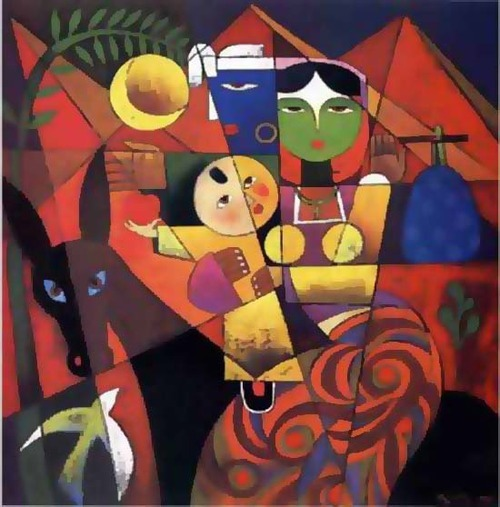
Flight to Egypt by He Qi

God’s kindness and loyalty preserves us from the wrath of the devil who seeks to keep as many people as possible in the realm of darkness. 

Our hope is in the Lord, specifically, in Jesus who has conquered the devil; and he did it by first establishing a beachhead on this earth through his incarnation as the Son of God.

Just as Hosea’s prophecy was an appeal to turn from other gods to the true and living God of mercy and grace, so Matthew calls us to turn from idolatry, from anything that would displace Jesus as the rightful Ruler of our lives.

Jesus brought us out of exile

King Herod massacred innocent toddlers in order to ensure the destruction of Jesus. Behind his atrocity was the devil himself who knew that Jesus was the coming King who would one day bring salvation, and the satanic agenda was set in place.

However, nothing can thwart the fulfillment of God’s promises – including Satan, whose most powerful weapon, death, has now lost its sting because of Jesus.

Just as the prophet Jeremiah spoke hope to the people that exile will not be forever, so Matthew speaks the fulfillment of that hope. The incarnation is here. Jesus has arrived. Salvation has come in the form of a child. He is the Deliverer, the Savior. Christ brings us from captivity into the promises of God.

Jesus came to save the littlest, the lowly, the least, the lost, the lonely, and the last. God demonstrated the commitment to deliver such persons through a humble existence in a backwater town called Nazareth.

Jesus is the new Moses

Joseph is, again, unexpectedly visited by an angel with instructions concerning Jesus. Herod, after all his sinister shenanigans, finally dies. The ancient Jewish historian, Josephus, described Herod’s death: 

He had a terrible craving to scratch himself, his bowels were ulcerated, and his privates were full of gangrene and worms. At Jericho he assembled the men of distinction from all parts of the nation and ordered them shut inside the hippodrome. He told his sister, Salome, that as soon as he died, all these men were to be killed, so that there would be grief throughout the country at his death rather than joy. (Paul Maier, Josephus: The Essential Works, 252)

The contrast between King Herod and King Jesus could not be any more pronounced; Jesus said in a clear demonstration of his humility and grace at his death:

“Father, forgive them, for they do not know what they are doing.” (Luke 23:24, NIV)

With Herod dead, it was safe to return to Israel. Matthew links Jesus to the exodus and deliverance of the Israelites as the new Moses. Just as Moses was by God to go back to Egypt because all the men who wanted to kill him were dead (Exodus 4:19) so Jesus is also told to return from Egypt because he will save the people from their sins.

Everything in Holy Scripture points to Jesus, in one way or another, on purpose, as the center from which all things hinge and revolve. 

Christ the Deliverer, Rio De Janeiro, Brazil

At the beginning of this New Year, in the middle of Christmastide, it is good to remember the incarnation of Jesus to help set the tone for the entire year.

Christ came to us so that he might set apart a holy people, dedicated to doing his will, and living according to the ethics of God’s kingdom. 

God doesn’t determine who is a good follow through the metrics of perfect attendance to church services, but in how we interact with people while we are there, and how we live our lives when we are outside the four walls of a church building. 

God has found us, and the purpose of our existence is to know God and enjoy the Lord forever.

Jesus of Nazareth

Nazareth was an obscure village, not a likely place for a king to settle down and live. Yet, this is in line with what the prophet said would occur:

Nevertheless, there will be no more gloom for those who were in distress. In the past he humbled the land of Zebulun and the land of Naphtali, but in the future he will honor Galilee of the nations, by the Way of the Sea, beyond the Jordan—

The people walking in darkness
    have seen a great light;
on those living in the land of deep darkness
    a light has dawned. (Isaiah 9:1-2, NIV)

The choice of settling in Nazareth underlines that the gospel is not only for particular people, not just for Jews, the wealthy, or the influential; the gospel is for everyone, especially for the lost, the least, and the lowly. 

Describing Christ as “Jesus of Nazareth” means we are expressing an important theological truth that God is with us, that the Lord identifies with us, that the universal Sovereign of all is concerned for the common person, the poor, needy, and powerless among humanity.

The settling in Nazareth also underscores that Jesus is a different kind of king – he rules over God’s kingdom as a servant leader, using his power to dispense grace. Christ shares that power by giving it away, and together with the Father, gives the Holy Spirit. 

Unlike earthly political kings who demanded outward allegiance, Jesus gains followers through touching the heart by means of grace and love. Christ doesn’t coerce and cajole but serves others. He is patient, not wanting any to perish but all to come to eternal life.

Jesus is the culmination and climax of history. Hope is not found in electing the right politicians or having the right boss at a workplace; hope is not in attending church services and doing all the acceptable Christian activities.

Rather, hope resides in the child Jesus who was born to die so that we might live. We aren’t saved by the right people in the right positions, or in doing the right things, or having the right ideas – because Jesus is the Savior; he is our hope.

Almighty Lord God, give us true faith, and make that faith grow in us day by day. Also give us hope and love, so that we may serve our neighbors according to your will; through your Son, Jesus Christ our Lord, who lives and reigns with you and the Holy Spirit, one God, now and forever. Amen.

The Light of the World (John 8:12-19)

Jesus spoke to the Pharisees again. “I am the light of the world,” he said. “Whoever follows me will have the light of life and will never walk in darkness.”

The Pharisees said to him, “Now you are testifying on your own behalf; what you say proves nothing.”

“No,” Jesus answered, “even though I do testify on my own behalf, what I say is true, because I know where I came from and where I am going. You do not know where I came from or where I am going. You make judgments in a purely human way; I pass judgment on no one. But if I were to do so, my judgment would be true, because I am not alone in this; the Father who sent me is with me. It is written in your Law that when two witnesses agree, what they say is true. I testify on my own behalf, and the Father who sent me also testifies on my behalf.”

 “Where is your father?” they asked him.

“You know neither me nor my Father,” Jesus answered. “If you knew me, you would know my Father also.” (Good News Translation)

Light has many uses and a lot of facets to it. The sun’s light gives life; without it we wouldn’t survive. In the form of a fixture or flashlight, it illumines the way so that we can function. The gift of light allows us not to remain in darkness.

The Son, Jesus, is also the Light which gives life. Throughout Holy Scripture, light represents awareness and deliverance; it represents God’s ability to guide us and save us. Jesus helps us find our way in this world.

The Apostle John talked a great deal about light in his Gospel and Epistles:

The Word was the source of life, and this life brought light to people. The light shines in the darkness, and the darkness has never put it out. (John 1:4-5, GNT)

Jesus said, “The light will be among you a little longer. Continue on your way while you have the light, so that the darkness will not come upon you; for the one who walks in the dark does not know where he is going. (John 12:35, GNT)

Now the message that we have heard from his Son and announce is this: God is light, and there is no darkness at all in him. If then, we say that we have fellowship with him, yet at the same time live in the darkness, we are lying both in our words and in our actions. But if we live in the light—just as he is in the light—then we have fellowship with one another, and the blood of Jesus, his Son, purifies us from every sin. (1 John 1:5-7, GNT)

Light is life, and Jesus, as the Light of the World, is eternal life.

As our Light and our Life, Jesus fulfills the prophetic role, as described by the prophet Isaiah:

“I, the Lord, have called you and given you power
    to see that justice is done on earth.
Through you I will make a covenant with all peoples;
    through you I will bring light to the nations.” (Isaiah 42:6, GNT)

As people of the Light, we are to let that light shine in the darkness so that others can also find direction and deliverance:

“You are like light for the whole world. A city built on a hill cannot be hid. No one lights a lamp and puts it under a bowl; instead it is put on the lampstand, where it gives light for everyone in the house. In the same way your light must shine before people, so that they will see the good things you do and praise your Father in heaven.” (Matthew 5:14-16, GNT)

Not everyone, of course, buys into this distinctively Christian way of seeing things – which is why it’s important for all Christians and Churches everywhere to be characterized by the Light and not by the darkness.

Humanity is a strange alchemy of both light and dark, hopefulness and hopelessness, awareness and ignorance, love and hate. We must acknowledge the light, bring it out, let it shine. Hiding the light only gives the dark forces of this world an opportunity to grip people in the shadows of guilt and shame.

Light must be respected. Long exposure to the sun brings a nasty sunburn to the skin. Being drawn to the fire’s light will also get you burnt if you get too close. And some light masquerades as good when it really isn’t.

False apostles lie about their work and disguise themselves to look like real apostles of Christ. Well, no wonder! Even Satan can disguise himself to look like an angel of light! So it is no great thing if his servants disguise themselves to look like servants of righteousness. In the end they will get exactly what their actions deserve. (2 Corinthians 11:13-15, GNT)

The deception typically happens whenever one lacks awareness of their own light, or forgotten, like a misplaced sock under the bed. Then, there’s no means by which to discern the bogus righteousness.

There are many ways of becoming more self-aware and recognizing the light of Christ, such as:

  • Keep a daily journal. Answer for yourself questions like, “What did you do well today?” “What didn’t go so well?” “Why?” and “How will you be and do things differently next time?”

“If I don’t write to empty my mind, I go mad.” Lord Byron (1788-1824)

  • Debrief with others about your experiences. Merely interrogating yourself all the time leads to twisted thinking.

“We do not learn from experience…we learn from reflecting on experience.” John Dewey (1859-1952)

  • Fight evil. Read books. Meditatively read Scripture. Reading not only helps one to become more knowledgeable and well-rounded, but it also builds empathy and emotional intelligence.

“To read without reflecting is like eating without digesting.” Edmund Burke (1729-1797)

  • Practice gratitude. Giving thanks illumines the path. A critical spirit makes others small and limits your own spiritual eyesight. So, be gracious, all the time, every day, no matter what.

“Gratitude, like faith, is a muscle. The more you use it, the stronger it grows.” Alan Cohen

O Lord, your Word is a lamp to our feet and a light to our path. Give us grace to receive your truth in faith and love, and strength to follow on the path you set before us; through Jesus Christ, Amen.