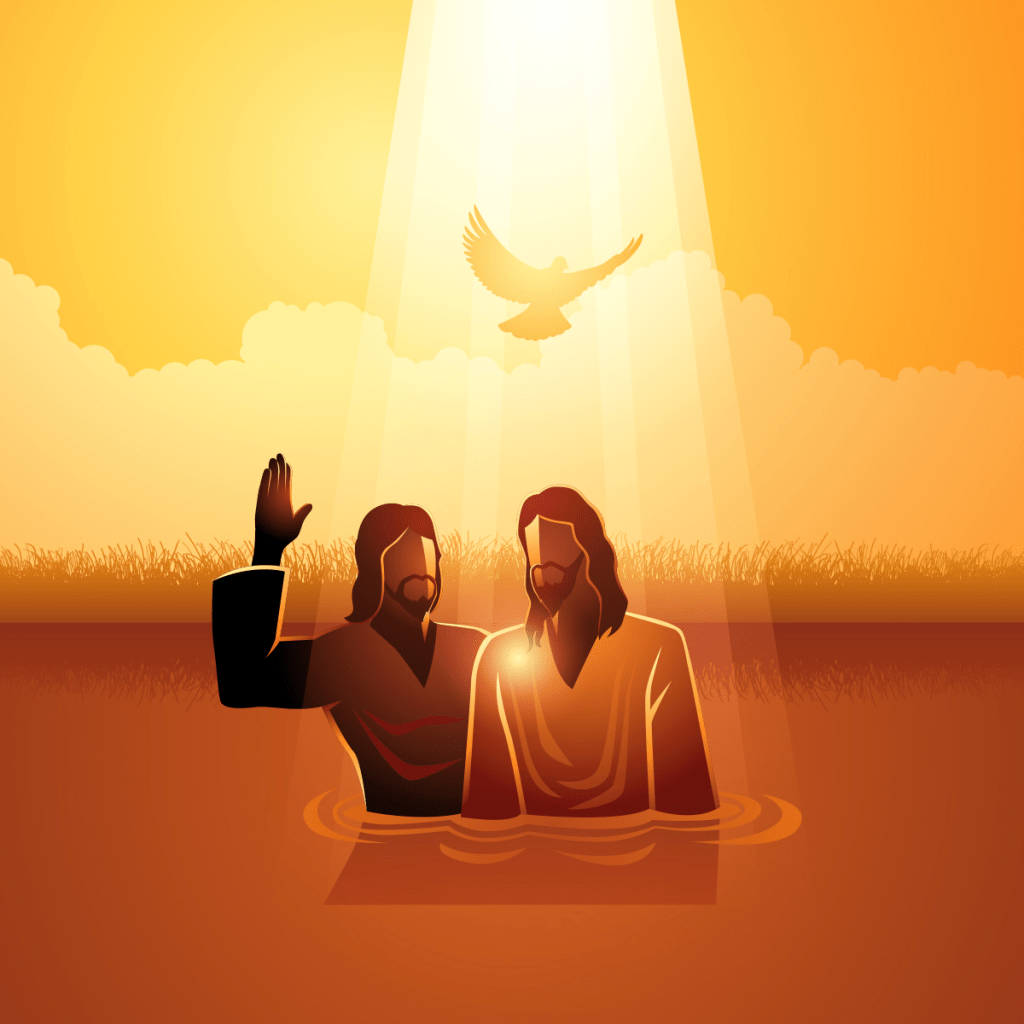
Let It Out (Isaiah 51:1-16)

If you want to do right
and obey the Lord,
    follow Abraham’s example.
He was the rock from which
    you were chipped.
God chose Abraham and Sarah
    to be your ancestors.
The Lord blessed Abraham,
and from that one man
    came many descendants.

Though Zion is in ruins,
    the Lord will bring comfort,
and the city will be as lovely
as the garden of Eden
    that he provided.
Then Zion will celebrate;
it will be thankful
    and sing joyful songs.

The Lord says:
You are my people and nation!
    So pay attention to me.
My teaching will cause justice
to shine like a light
    for every nation.
Those who live across the sea
are eagerly waiting
    for me to rescue them.
I am strong and ready;
soon I will come to save
    and to rule all nations.

Look closely at the sky!
    Stare at the earth.
The sky will vanish like smoke;
the earth will wear out
    like clothes.
Everyone on this earth
    will die like flies.
But my victory will last;
my saving power never ends.

If you want to do right
    and obey my teaching
with all your heart,
    then pay close attention.
Don’t be discouraged
when others insult you
    and say hurtful things.
They will be eaten away
    like a moth-eaten coat.
But my victory will last;
my saving power
    will never end.

Wake up! Do something, Lord.
    Be strong and ready.
Wake up! Do what you did
    for our people long ago.
Didn’t you chop up
    Rahab the monster?
Didn’t you dry up the deep sea
and make a road for your people
    to follow safely across?
Now those you have rescued
will return to Jerusalem,
    singing on their way.
They will be crowned
    with great happiness,
never again to be burdened
    with sadness and sorrow.

I am the Lord, the one
    who encourages you.
Why are you afraid
    of mere humans?
They dry up and die like grass.

I spread out the heavens
and laid foundations
    for the earth.
But you have forgotten me,
    your Lord and Creator.
All day long you were afraid
of those who were angry
    and hoped to oppress you.
Where are they now?

Everyone crying out in pain
    will be quickly set free;
they will be rescued
from the power of death
    and never go hungry.
I will help them
    because I am your God,
the Lord All-Powerful,
    who makes the ocean roar.

I have told you what to say,
and I will keep you safe
    in the palm of my hand.
I spread out the heavens
and laid foundations
    for the earth.
Now I say, “Jerusalem,
    your people are mine.” (Contemporary English Version)

“There will always be fear; do it anyway. Let your courage inspire the world around you.”

Steve Maraboli

Courageous, brave, bold, and strong – it seems most people do not characterize themselves this way. I suppose it makes some kind of sense in our minds as to why this is: Every one of us can readily recall a time or several events in which we wilted with fear; did not speak up; or were not assertive. 

The many conversations we will never have that take place in our heads are testament to our supposed withdrawal in the face of adversity. In other words, we have far too many discussions with ourselves of how something should have gone and way too many brave retorts for someone whom we really have no intention of saying those words toward.

If this all sounds like the convoluted musings of a wimpy kid, that’s not far off the mark. Getting bullied, even as adults, may easily cause us to wilt, or to take it, or to simply find a way to avoid the bully. With some folks, we even create elaborate internal reasons why it’s our fault someone is upset with us. In such times, bravery and courage seem a long way from our true selves.

Faced with a daunting task at work, at home, or at school, we may wonder if we really have the internal stuff to pull it off.  We feel that maybe someone else would be better suited to do it. When given an unwanted medical diagnosis, it might feel as if it is way above our emotional pay grade. It’s not only the added hard situations of life that make us look fearful; it is the crippling losses that can leave us feeling anything but strong and brave.

Yet, what if I told you that you are, indeed, brave, strong, and confident? 

What if I insisted that courage resides within you, even if you yourself cannot see it right now? 

And, what if I told you that bravery isn’t something you must go on a quest to find, but that it’s been in you all along? 

You only need to let it out. You must release the words and resilience already given to you by the One who holds you in the hollow of his hand.

You intuitively know I’m on to something here. After all, the most common exhortation and assurance in the entirety of Holy Scripture is to not be afraid because God is with us.

“Be strong and courageous. Do not be afraid or terrified because of them, for the Lord your God goes with you; he will never leave you nor forsake you.”

Deuteronomy 31:6, NIV

“God has said, ‘Never will I leave you;
    never will I forsake you.” So we say with confidence, ‘The Lord is my helper; I will not be afraid.
    What can mere mortals do to me?’” (Hebrews 13:5-6, NIV)

Believe it, or not, the Bible tells us 365 times to not be afraid. Maybe that’s not a coincidence that we can quote a verse every day of the year about our own fearfulness in the face of so much of life’s cruel junk.

Yet, the tack I want you to take in the great litany of fear we daily face is that bravery is not something that is so much commanded as it is a calling forth of something which is already within you.

Now, before you go thinking I’m some strange spiritual huckster, hear me out. From the beginning of the world, God created by calling forth from within himself. What I mean is this: God did not simply command everything into being; instead, God said, “Let there be…”  Thus, letting out what was already there within God’s very Being.
I also find it interesting that when it comes to fear and bravery God does not so much command us to be courageous, as calls us to draw from the great reservoir within. The Lord has already created us strong, as creatures in the divine image. We just need to get in touch with what is already there. 

“Do not let your hearts be troubled,” said Jesus to his disciples because he knew his followers had it in them to walk in his way without fear. (John 14:6, NRSV)

“Let not your heart faint, and be not fearful,” said God to the prophet Jeremiah in the face of a terrible destruction that was about to unfold against Jerusalem because the Lord knew that Jeremiah could face what was going to happen. (Jeremiah 51:46, ESV)

Christians can act with boldness because Jesus is the pioneer of our salvation. He is the One who enables us to draw from the deep well of courage:

“So then, since we have a great High Priest who has entered heaven, Jesus the Son of God, let us hold firmly to what we believe. This High Priest of ours understands our weaknesses, for he faced all of the same testing we do, yet he did not sin. So let us come boldly to the throne of our gracious God. There we will receive his mercy, and we will find grace to help us when we need it most.” (Hebrews 4:14-16, NLT)

When I say that you are brave, you are strong, you are good – those are not words meant to make you believe something which may or may not be true, as if I were trying to convince you to take some panacea to feel better. No, I say it because it is true. 

You really can face the immense mountain in front of you and climb it. You can actually surmount the adversity you are in the middle of – not because of some words I say, but because you were created for courage.

So, how do you let out the bravery and let the boldness shine? 

That seems to be the million dollar question. I’m going to go out on a limb here and say that you already know the answer to this. Yes, you possess the answers to your own questions. You have all the knowledge you need to face your problems.  The real question is:

Will you let your bravery come out to play, or will you keep it hidden beneath layers of insecurity?

It’s a whole lot easier to let me tell you what to do than to draw from what you already know deep down how to handle that troublesome something. 

So, I’m not going to give you a simple three-step process out of fear and into courage because you already have been endowed with the process. 

This certainly isn’t a sexy way to end a blog post, but it just might be the most effective and lasting.

A Divine Calling (Jeremiah 1:4-10)

The Prophet Jeremiah by Marc Chagall, 1960

The Lord gave me this message:

“I knew you before I formed you in your mother’s womb.
    Before you were born I set you apart
    and appointed you as my prophet to the nations.”

“O Sovereign Lord,” I said, “I can’t speak for you! I’m too young!”

The Lord replied, “Don’t say, ‘I’m too young,’ for you must go wherever I send you and say whatever I tell you. And don’t be afraid of the people, for I will be with you and will protect you. I, the Lord, have spoken!” Then the Lord reached out and touched my mouth and said,

“Look, I have put my words in your mouth!

Today I appoint you to stand up
    against nations and kingdoms.
Some you must uproot and tear down,
    destroy and overthrow.
Others you must build up
    and plant.” (New Living Translation)

“Don’t let anyone think less of you because you are young. Be an example to all believers in what you say, in the way you live, in your love, your faith, and your purity.”

St. Paul to St. Timothy (1 Timothy 4:12, NLT)

I write to you, young people,
    because you are strong
    and the word of God abides in you,
        and you have overcome the evil one. (1 John 2:14, NRSV)

Young Jeremiah had an unusual calling from the Lord. It wasn’t to reach thousands with a life-giving message of hope and encouragement; the call was to declare destruction to an unjust people who believed they were fine, thank you very much.

It was a calling that would have been a huge challenge for the most seasoned of veteran prophets. But God called the young Jeremiah. This was his first crack at being a prophet of the Lord; and it was a doozy of a call!

Yet, when it comes to God’s call, age really means nothing. That’s because the Lord equips whomever the Lord wants to empower. Young or old makes no difference. All that’s needed is a willingness to submit to the voice of divine calling.

And to Jeremiah’s credit, the lengthy prophecy bearing his name in the Bible is a testament to his sense of call and straightforward obedience to it.

There is, and always has been, a divine/human cooperative in the world. God, of course, could do everything without humanity’s assistance. But it’s never been that way. Throughout the entirety of Holy Scripture, the Lord calls and empowers people for service.

On the one hand, this may seem like some strange convergence which, on the surface, is sure to end in some screw-ups and failure. Yet, on the other hand, this cooperation between Creator and creature gives people, at the least, a sense of ownership in the world; and, at the most, a powerful opportunity to bless the world with divine gifts of speaking and service.

Although Jeremiah was called to (mostly) pronounce doom, it’s first and foremost a message of justice. The Lord is concerned for the common good of all persons, not just some. Yahweh is not about to be forever idle whenever certain segments of humanity go rogue and harm their fellow sisters and brothers with unjust ways.

The Prophet Jeremiah by Marc Chagall, 1968

What’s more, the Lord delights in using people whom society at large might deem less than usable.

Now remember what you were, my friends, when God called you. From the human point of view few of you were wise or powerful or of high social standing. God purposely chose what the world considers nonsense in order to shame the wise, and he chose what the world considers weak in order to shame the powerful. He chose what the world looks down on and despises and thinks is nothing, in order to destroy what the world thinks is important. (1 Corinthians 1:26-28, GNT)

If God can use a donkey to communicate a message, then it’s likely that the Lord can enable any person on earth to speak words of justice – no matter if they’re young, uneducated, or underprivileged – and make the older, educated, and privileged look like jack asses. (Numbers 22:22-35)

For Christians everywhere, every believer has been called by God to proclaim the gospel of grace. The Word has come to us in Christ, in the flesh (John 1:14). Jesus is the primary and ultimate revelation of God’s Word to us.

God has also set the Church apart to serve as proclaimers of God’s Word to the nations. The Great Commission and the Great Commandment summarize our call to ministry. (Matthew 22:37-40; 28:19-20)

Yahweh’s intentional purpose was for Jeremiah to proclaim God’s word. That’s also God’s intentional purpose for the Church; the Lord puts God’s words in the church’s mouth. Christians proclaim the Word, which we know most fully and experience most personally in Jesus Christ.

With our words, perspectives, attitudes, relationships, and actions, God’s Word flows through us to the world. As believers, we know that gospel proclamation will accomplish God’s purposes.

We trust that God is empowering us to effectively proclaim God’s words with effectiveness so that all the earth may be renewed and blessed.

Most High God, you knew each of us before we were ever born. And so, you know us better than we know ourselves. Your divine power is already there, deep within us. As you call forth that power, enable us to respond with submission, obedience, and willingness to speak words of justice, love, and grace to a world in need of hope and betterment, through Jesus Christ, the Word made flesh, in the strength of the Holy Spirit. Amen.

A God Worth Exploring (Psalm 89:5-37)

God! Let the cosmos praise your wonderful ways,
    the choir of holy angels sing anthems to your faithful ways!
Search high and low, scan skies and land,
    you’ll find nothing and no one quite like God.
The holy angels are in awe before him;
    he looms immense and august over everyone around him.
God-of-the-Angel-Armies, who is like you,
    powerful and faithful from every angle?
You put the arrogant ocean in its place
    and calm its waves when they turn unruly.
You gave that old hag Egypt the back of your hand,
    you brushed off your enemies with a flick of your wrist.
You own the cosmos—you made everything in it,
    everything from atom to archangel.
You positioned the North and South Poles;
    the mountains Tabor and Hermon sing duets to you.
With your well-muscled arm and your grip of steel—
    nobody messes with you!
The Right and Justice are the roots of your rule;
    Love and Truth are its fruits.
Blessed are the people who know the passwords of praise,
    who shout on parade in the bright presence of God.
Delighted, they dance all day long; they know
    who you are, what you do—they can’t keep it quiet!
Your vibrant beauty has gotten inside us—
    you’ve been so good to us! We’re walking on air!
All we are and have we owe to God,
    Holy God of Israel, our King!

A long time ago you spoke in a vision,
    you spoke to your faithful beloved:
“I’ve crowned a hero,
    I chose the best I could find;
I found David, my servant,
    poured holy oil on his head,
And I’ll keep my hand steadily on him,
    yes, I’ll stick with him through thick and thin.
No enemy will get the best of him,
    no scoundrel will do him in.
I’ll weed out all who oppose him,
    I’ll clean out all who hate him.
I’m with him for good and I’ll love him forever;
    I’ve set him on high—he’s riding high!
I’ve put Ocean in his one hand, River in the other;
    he’ll call out, ‘Oh, my Father—my God, my Rock of Salvation!’
Yes, I’m setting him apart as the First of the royal line,
    High King over all of earth’s kings.
I’ll preserve him eternally in my love,
    I’ll faithfully do all I so solemnly promised.
I’ll guarantee his family tree
    and underwrite his rule.
If his children refuse to do what I tell them,
    if they refuse to walk in the way I show them,
If they spit on the directions I give them
    and tear up the rules I post for them—
I’ll rub their faces in the dirt of their rebellion
    and make them face the music.
But I’ll never throw them out,
    never abandon or disown them.
Do you think I’d withdraw my holy promise?
    or take back words I’d already spoken?
I’ve given my word, my whole and holy word;
    do you think I would lie to David?
His family tree is here for good,
    his sovereignty as sure as the sun,
Dependable as the phases of the moon,
    inescapable as weather.” (The Message)

Christ the Redeemer photo by John Dalkin

The Lord’s in it for the long haul.

Yahweh’s faithfulness never wavers nor diminishes over time; it’s always there, always operative.

The angels in heaven know it. All creation knows it.

Sometimes, perhaps oftentimes, and most certainly ironically, much of humanity doesn’t know it. They’re late to the celebration party. Like clueless ants on the sidewalk of life, they fail to look up and observe the big picture of the universe – as if the busywork they’re doing is all there is to living.

Silly us.

When push comes to shove, the only thing we puny people really want is someone who will love us for who we are. We just need someone who will have our back, all the time, and always be there for us, no matter what.

So (in the face of a faithful, loving, and caring holy Being) why do we act as if there’s no one home in heaven? Why does such a large chunk of humanity simply dismiss God as some antiquated idea from pre-modern people who didn’t understand the things we now know?

Aside from those questions being not much more than hubris, it assumes ancient people were downright stupid – except for maybe Plato or Cicero, bless their hearts. Yet even those guys knew better than to ground their ethics – not to mention their lives – in something and someone higher and bigger than themselves.

I tend to think that it all comes down to a matter of listening – of which we people have proven to be, at best, rather dull about; and, at worst, completely tone deaf to the continual voice of the universe.

Because if we would but just stop our ant-like busy-bodying for but a minute and listen, we would discover a constant cacophony of voices lifting praises to a Creator for whom they owe their very existence to.

The bald fact of the matter is that there are presently, right now this very moment, and every minute 24/7, a vast choir of angels offering praise to their Sovereign.

We would hear the ocean churning it’s affirmation that there is One greater than it’s own mighty waves; and the mountains and volcanoes rumbling their collective recognition that someone greater than their great chains of rock makes their very presence possible.

We could begin to hear the voices of history proclaim that there is an invisible force much stronger than the visible forces we believe to be so powerful.

Most important, we can hear the voice of the Lord – not with our actual physical ears – but with the spiritual ears which so many forget they even possess.

If we would get our heads out of the metaphorical sands of skepticism, we might begin to acknowledge and appreciate the voices of others for whom we have suppressed for too long: Native Americans; Australian Aboriginals; indigenous African spirituality; and any society with an historic and robust theology different from our own.

Both the cosmos way out there, as well as the children next door, discern and know what others do not: There is a God in heaven; and that God is deserving of praise – not the weird God you might think you know who is capricious and fickle – but the Lord who is more dependable than the most faithful friend you’ve ever had.

That’s a God worth exploring.

Remember Your Baptism (Matthew 3:13-17)

John baptizing Jesus with the Holy Spirit’s affirmation

Then Jesus came from Galilee to the Jordan to be baptized by John. But John tried to deter him, saying, “I need to be baptized by you, and do you come to me?”

Jesus replied, “Let it be so now; it is proper for us to do this to fulfill all righteousness.” Then John consented.

As soon as Jesus was baptized, he went up out of the water. At that moment heaven was opened, and he saw the Spirit of God descending like a dove and alighting on him. And a voice from heaven said, “This is my Son, whom I love; with him I am well pleased.” (New International Version)

Baptism is important. Remembering is important. Put together, remembering our baptism is highly important. Here’s why….

Baptism is important to Jesus

Baptism is the distinguishing mark or symbol of being a Christian. 

The New Testament actually knows nothing of an unbaptized Christian. That’s because the practice is tied to our identity as believers. Our baptisms are based in the baptism of the Lord who, in his Great Commission, told us to baptize in the name of the Father, Son, and Spirit (who were all present at Christ’s baptism). 

The absence of baptism is like a bride without a wedding ring; a football player not wearing a uniform; a motorcycle gang without tattoos; or like an Iowa farmer without a Pioneer seed corn hat!

Baptism is the outward sign that we belong to God. It is the distinguishing symbol that we have been adopted by God and will receive all the promises of salvation in Christ.

Christ’s baptism fulfilled all righteousness through identification with repentant people

John the Baptist was understandably hesitant to baptize Jesus; he knew Jesus had no need of repentance. Although Jesus had no sin to confess, his baptism is a powerful symbol of his humility. It anticipates his ministry to people who recognize their need for God. 

It was necessary for Jesus to be baptized in order to communicate solidarity with people who are coming to God. “Righteousness” means having a right relationship with both God and other people. By being baptized, Jesus is proclaiming that a renewed and right relationship with God will become a reality through himself. Baptism is the sign that we belong to God and that our righteousness is tied to our union with Jesus.

It was important for Jesus to identify with sinners; it is important for us, as well. We remember our baptism – that we belong to God – by identifying with “sinners.” Here are 7 ways of doing it:

  1. Practicing hospitality (love of strangers)
  2. Using our spiritual gifts of speaking and serving on their behalf
  3. Getting to know people very different from ourselves
  4. Meeting people on their turf (not just ours)
  5. Showing respect and upholding dignity
  6. Asking thoughtful and caring questions
  7. Listening with focused attention

It isn’t what we “do” for people that’s as important as affirming our shared humanity with them; thus leading folks to the ultimate person who can address the needs of their heart:  Jesus.

Christ’s baptism fulfilled all righteousness through the affirmation of witnesses

Before Jesus began his ministry, it was necessary to receive validation of what he was about to teach and do. In ancient Judaism, one of the protections guaranteeing that Scripture would be taught according to the way of God, was through an ordination, of sorts. In order for a new rabbi to become a new rabbi, he needed the laying on of hands from two other rabbis who had authority to do so. 

That’s why Christ’s baptism is important. John the Baptist was a powerful teacher and prophet who was recognized by the people as such. John publicly said he wasn’t worthy to carry Jesus’s sandals, that Jesus is the Lamb of God that takes away the sin of the world. So, a baptism by John validated Jesus and inaugurated his ministry. 

Baptism of Christ by Dave Zelenka

A second voice – another witness from heaven – affirmed Jesus: “This is my Son, the one I love. I am very pleased with him.” And then, the Holy Spirit, in the form of a dove, came upon Jesus. This further affirmed that Jesus would save people, not through arm-twisting and great shows of power, but through humility and gentleness.

Baptism was Christ’s first recorded act as an adult. In some ways, it was his first miracle – the miracle of humility in identifying with sinners.

Remember your baptism

Baptism is a sign and seal of God’s grace. Just as Christ’s baptism focused all the promises of God in salvation as being fulfilled in one person, so in our baptism we claim all the promises of God as found in Jesus. Water symbolizes new life, God identifying with us – Immanuel, God with us.

In baptism, God promises and seals to us our union with Jesus so that identity is not found in my past and my profession of faith, but in Christ’s past of bringing redemption to us.  Baptism does not so much express faith as call one to a life of faith and sets us apart as belonging to God.

Baptism is a visible declaration of an invisible reality: union with Christ. Just as circumcision was the outward visible sign of the old covenant, so baptism is the sign of the new covenant in Christ – available to both male and female – thus opening the way for women to participate fully in the ministry of the gospel.

In particular, infant baptism confirms that salvation is not initiated by us, but by God. It affirms that one is betrothed to God. As a child, then an adult, grows into the faith, it is our task to remember our baptism, to be reminded that God’s mark is upon us, that we belong to the Lord. 

God has set us apart to be a holy people, given to Jesus to live as he did. We must never forget that baptism is God’s identifying mark upon us; that our union and solidarity with Jesus is affirmed through this practice.

We are not solitary Christians; we belong Christ and to one another. Baptism is the initiation rite that takes a lifetime to complete. Therefore, we must struggle together in working out our salvation.

Because of our union with Jesus Christ, we must remember:

  • I do not belong to the world. So, I will not live selfishly, only seeking my own comfort agenda. Instead, I will give and serve others from a pure and humble heart.
  • I do not belong to sin. So, I will not give myself over to shameful words or actions, to bullying or manipulating people, to throwing fits and pity parties to get my way, nor using my tongue to speak gossip, slander, or suck-up to others. Instead, I will use my speech wisely, building up others through thoughtful and heartfelt encouragement.
  • I do not belong to the devil. So, I will not seek his agenda of lying, cheating, stealing, and being bitter. 

I belong to Jesus, so therefore:

  • I will uphold biblical justice by championing the cause of the fatherless and the widow, the poor and the needy, the least and the lost among us.
  • I will love others with all the grace God gives me.
  • I will forgive others because Christ has forgiven me.
  • I will consider others better than myself by embracing the humility of Christ.
  • I will hunger and thirst for righteousness.
  • I will seek peace and pursue it.
  • I will, give myself to my Lord and Savior Jesus Christ my Savior and Lord – completely and thoroughly, unabashedly and unreservedly.
  • I will live into my baptism and remember it always because I belong to Jesus!