Clap and Shout! (Psalm 47)

Clap your hands, all you people!
    Shout joyfully to God with a joyous shout!
Because the Lord Most High is awesome,
    he is the great king of the whole world.
He subdues the nations under us,
    subdues all people beneath our feet.
He chooses our inheritance for us:
    the heights of Jacob, which he loves.

God has gone up with a joyous shout—
    the Lord with the blast of the ram’s horn.
Sing praises to God! Sing praises!
    Sing praises to our king! Sing praises
    because God is king of the whole world!
    Sing praises with a song of instruction!

God is king over the nations.
    God sits on his holy throne.
The leaders of all people are gathered
    with the people of Abraham’s God
    because the earth’s guardians belong to God;
        God is exalted beyond all. (Common English Bible)

God is King, the Supreme Sovereign over all creation and the entire universe.

In the Christian tradition specifically, Jesus is King. Christ is the One who gives shape, form, and substance to the reign of God over the earth. This is what the Lord’s ascension to heaven communicates – that Jesus sits at the right hand of God the Father, exercising a benevolent rule as the rightful monarch over all creation.

This redemptive reality of the Lord’s good reign is a cause for praise. And this is what today’s psalm is all about. We, as the subjects of God’s kingdom, are called to praise the Lord.

The psalm tells us exactly how to praise the Lord because of God’s powerful and compassionate authority: Clap your hands and shout!

For worshipers who believe acknowledgment of God is most appropriate with silence and contemplation, even a cursory reading of the psalms will inform them differently. Although it seems to me most worship experiences need more familiarity with silence, I also passionately believe they could use a whole lot more enthusiasm with clapping and shouting.

Depending upon where you fit in the spectrum of Christianity’s tradition of worship, high church or low church, very liturgical, or not, it behooves all churches to incorporate the full range of human expression to God – including both silence and shout, hands clasped reverently in prayer as well as exuberantly clapping in praise.

It’s biblical to applaud God! And it’s healthy, too – both spiritually and physically.

Whenever we fail to pause in our feelings of happiness and enjoy the moment, it’s more than a missed opportunity. Unacknowledged and unexpressed joy trains us to depress our feelings, eventually leading to depression itself. Yet, whenever we pause to outwardly demonstrate gratitude through the exuberance of shouting and clapping, it benefits everyone – God, others, and self.

Physically clapping and shouting helps keep the heart and lungs healthy, even playing a curative role with pulmonary problems. It gives relief to joint pain, gout, headaches, insomnia, and digestion. Shouting and clapping even sharpens the intellect and increases the brain’s ability. And, of course, applause is a social phenomenon which binds folks together in community.

For the psalmist, applause to the Lord is the appropriate response to God’s power and victory in the world. Since the Divine presence is everywhere – and that presence is merciful, just, and kind – we ought to take the time to acknowledge and celebrate a loving God watching over us with tender care and concern.

No matter the circumstance, God is with us. That reality alone is enough cause for exuberance and celebration. Even though evil still resides in this old fallen world, God is King, and still sits on the throne. The pastor and hymnwriter, Maltbie Davenport Babcock (1858-1901), had it right:

This is my Father’s world:
O let me ne’er forget
That though the wrong seems oft so strong,
God is the Ruler yet.
This is my Father’s world:
Why should my heart be sad?
The Lord is King: let the heavens ring!
God reigns; let earth be glad! 

It isn’t the attempt to rouse human and personal confidence which enables us to face the foulness and degradation of this world. Rather, it’s the spiritual awareness of God’s presence and power which resides around us and within us. This is the basis of our confidence, and the ground of our peace. It’s the reason for the believer’s joy, even amidst awful circumstances.

Our connection with one another as worshipers is the common acknowledgment of God’s rule and reign over all creation. And our link as followers of Jesus is the collective conviction that Christ is King, we are his subjects, and all things belong to God, including us.

Whenever we connect with this basic theology, spontaneous and joyous praise is the result. So, if we lack the joy of the Lord in our lives, the place to go is to use today’s psalm. Read it several times over, out loud. Shout the psalm! Clap while shouting the psalm! Sing the psalm aloud! Praise the risen and ascended Lord!

Just try and be morose after doing that!

Both Body and Soul (1 John 4:1-6)

Dear friends, don’t believe everyone who claims to have the Spirit of God. Test them all to find out if they really do come from God. Many false prophets have already gone out into the world, and you can know which ones come from God. His Spirit says that Jesus Christ had a truly human body. But when someone doesn’t say this about Jesus, you know this person has a spirit that doesn’t come from God and is the enemy of Christ. You knew this enemy was coming into the world and now is already here.

Children, you belong to God, and you have defeated these enemies. God’s Spirit is in you and is more powerful than the one who is in the world. These enemies belong to this world, and the world listens to them, because they speak its language. We belong to God, and everyone who knows God will listen to us. But the people who don’t know God won’t listen to us. This is how we can tell the Spirit that speaks the truth from the one that tells lies. (Contemporary English Version)

Sometimes, it’s not what in someone says, but in what they don’t say.

The Apostle John gave some spiritually sage advice to a group of his disciples. They were being influenced by people who claimed Christian faith yet were not the real deal. Lots of people make claims, but the real muster of a Christian is in embracing an embodied spirituality that truly meets the holistic needs of others.

For John, affirming Christ’s deity, while denying Christ’s humanity, is unacceptable; he had no room for the Platonic Greek dualism of body and spirit. 

Jesus was a real man with a very real body. To deny this was to deny the faith. Ethereal musings about the insignificance of the body were flatly rejected by John. The apostle was concerned that the supreme Christian ethic of love be practiced through attention to both body and soul. 

Words are important; they’re also insufficient. Actual demonstrations of love are needed, as well. To downgrade or deny a bodily Jesus is to pay little attention to the real bodily needs of people. Christianity is a religion of both body and soul; it’s not a Greek philosophy of life.

I will be the first guy to insist on some deep theological reflection on the great spiritual, cultural, and social issues of our day. Yet, if our theology does not lead to tangible acts of love based on that reflection, then we have not yet been called God’s friend. 

Correct doctrine – embracing body and soul – leads to loving actions of faith. Ideally, we glorify God with both speech and service, physically and spiritually. Words and actions, heart and hands, must work together for an authentic Christian ministry.

The Word became a human being and lived here with us. (John 1:14)

The early church councils condemned the denigration of Christ’s full humanity for good reason. Not only did Jesus have a real flesh and body experience while on this earth, but Jesus also healed actual bodies and performed real physical miracles.

Jesus Christ met both the spiritual needs of forgiveness and reconciliation, and the needs of the body. What’s more, Jesus had no ranking system, as if the spiritual needs were the real commitments whereas tangible needs were just a means to the end of meeting intangible obligations.

The Gospel involves both body and soul; they are equally significant. To exalt one above the other is, frankly, heresy. So, let’s put this in more practical terms: Love is more than an expression of good feelings and goodwill toward others; love has skin on, using both physical actions and words formed from our vocal chords to bring goodness to others.

Jesus has always maintained the connection between spiritual and physical needs; it’s us who separate them. It’s the spiritual charlatan, and the huckster preacher, who speak out of one side of their mouth about spiritual salvation with no bodily human help or uplift.

Those who are against Jesus, the spirit of the antichrist, talk a good line but when push comes to shove, they have no intention of paying attention to both body and soul.

Our gut knows that feeling we cannot quite shake when we are around someone. It has real meaning. The spirit within us is greater than the spirit of the world. Just because we may not be able to respond very well to another, or give clear voice to what is inside us, does not necessarily mean that the other person is okay or right.

A proper Christian response to others incorporates head, heart, and gut. The interaction and alignment of all our faculties is needed. If we draw upon our entire selves, both body and soul, we will overcome the spirit of the antichrist through loving words and actions toward those who need it most.

The Antichrist wants us to get caught up in putting all our focus fighting theological battles and debating philosophical ideas – while our neighbor next door is dying of cancer; our co-worker is experiencing covert racism; and, our friend is stuck in poverty.

Since Jesus is fully human, that fact alone ought to impel us toward meeting the needs of the body – without wondering if it is the spiritual thing to do, or not. You already know this to be true. So, don’t let some esoteric preacher or teacher tell you otherwise.

Almighty God, Creator and Preserver of all humanity, I humbly ask: Make your ways known to everyone, and your saving health to all nations. May your church everywhere be guided and governed by your good spirit, so that all who profess and call themselves Christians may be led into the way of truth, and hold the faith in unity of spirit, in the bond of peace, and in righteousness of life.

Caring God, in your parental goodness, lift up those who are afflicted or distressed, in mind, body, or spirit. Comfort them and meet their every need, giving them patience under their sufferings, and a good outcome of all their afflictions. This we ask for the sake Jesus Christ your Son, our Lord, who with you and the Holy Spirit reign forever. Amen.

The Connection of Faith, Obedience, and Blessing (Genesis 22:15-18)

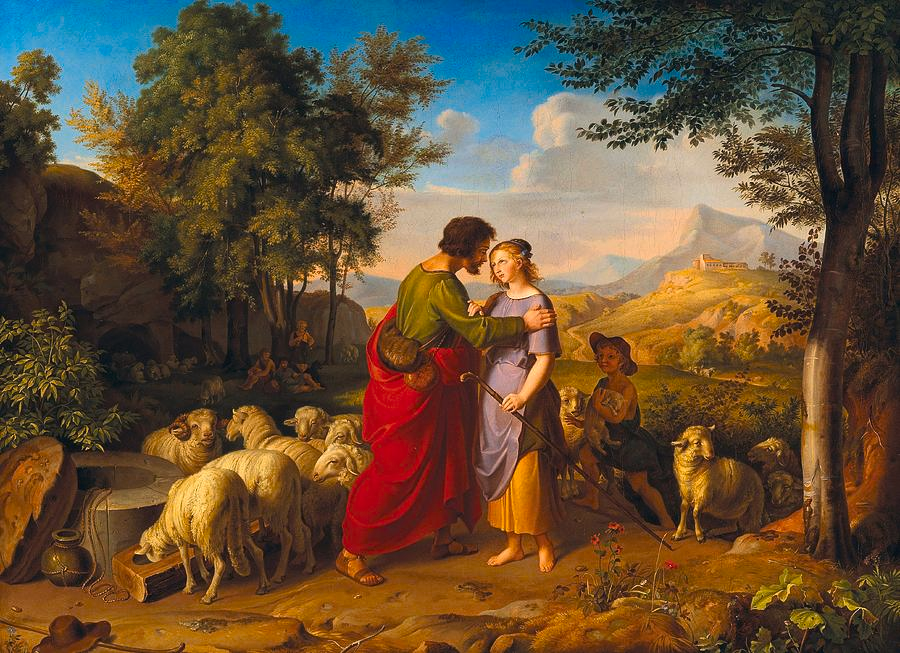
The angel of the Lord called to Abraham a second time from heaven and said, “By myself I have sworn, says the Lord: Because you have done this, and have not withheld your son, your only son, I will indeed bless you, and I will make your offspring as numerous as the stars of heaven and as the sand that is on the seashore. And your offspring shall possess the gate of their enemies, and by your offspring shall all the nations of the earth gain blessing for themselves, because you have obeyed my voice.” (New Revised Standard Version)

Faith

The biblical character of Abraham is synonymous with faith. And for good reason.

God had told Abraham that he would have a son with his wife Sarah. This was especially unusual because the couple were well advanced in age, and Sarah was incapable of having children. Infertility is not just a modern problem; it has always existed. 

Yet, despite all the contrary evidence of age and ability, Abraham believed God. Years later, and with a mix of patience and impatience from the would-be parents, the promise from God was realized.  Abraham and Sarah had a son, Isaac.

“The child of the promise.” This was Isaac’s moniker – which made the command from God so perplexing: “Take your son, your only son, whom you love—Isaac—and go to the region of Moriah. Sacrifice him there as a burnt offering on a mountain I will show you.” (Genesis 22:2) Huh?

I can easily imagine Abraham saying to himself, perhaps not out loud, “What the [insert favorite expletive]!”  But it only seems strange and super-weird to us. We get no reaction from Abraham, no questioning, no talk back. He just goes about the business of saddling up the donkey, chopping some wood for the sacrifice, and takes his only son with him on the journey to the mountain.

While you and I might try and figure out if we really heard God or not, Abraham had a history of talking with God. He knew God’s voice as well as he knew his own.

Abraham was well down the road of relationship with the God he served. We get an insight from the author of Hebrews into Abraham’s thought process, a line of thinking that is consistent with a person who has a regular habit of talking with God:

Abraham had been promised that Isaac, his only son, would continue his family. But when Abraham was tested, he had faith and was willing to sacrifice Isaac, because he was sure that God could raise people to life. This was just like getting Isaac back from death. (Hebrews 11:17-18, CEV)

Obedience

Abraham did not try and figure out God’s mind. He picked no fights and chose not to debate with God about the contradiction of ethics he was being asked to do.

Abraham simply obeyed. He reasoned that it did not matter if Isaac were killed, because God could raise him from death.

This, of course, is not what happened. It was all a test of faith. Abraham knew beyond a shadow of a doubt that God is the Lord who provides. After God stepped in and provided a ram for the sacrifice instead of Isaac, Abraham named that place “The Lord Will Provide.” (Genesis 22:14)

You and I most certainly do not always know why we are facing the circumstances we must endure. We are rarely privy to know what in the world God is thinking. Yet, like Abraham, if we have a spiritual history of walking with God and hearing God’s voice, there is no hesitation; we respond with obedience. We are convinced that God will provide. Obedience for the follower of Christ is not a burden; it is a privilege, even when we are being tested beyond our seeming emotional ability to do it.

Blessing

Blessings come through obedience. They are not willy-nilly thrown into a crowd like some cheap stadium trinket between innings of a baseball game. When the Israelites were about to enter the Promised Land, the connection between obedience and blessing was re-emphasized:

If you fully obey the Lord your God and carefully follow all his commands I give you today, the Lord your God will set you high above all the nations on earth. All these blessings will come on you and accompany you if you obey the Lord your God…. The Lord will establish you as his holy people, as he promised you on oath, if you keep the commands of the Lord your God and walk in obedience to him. (Deuteronomy 28:1-2, 9, NIV)

Here’s a simple observation about the blessing of Abraham: It took nearly five-hundred years before that blessing was realized. Furthermore, in the Christian tradition, it then took another fifteen-hundred years before the blessing was fulfilled in the person of Jesus.

And, I might add, all the promises of God to the people will be fully consummated at the end of the age when Christ returns. For a contemporary society which prides itself on timeliness, speed, and efficiency, taking the much broader scope of all history might seem unacceptable.

So, we come back around again to trust. Just as Abraham trusted God, even when it seemed like nonsense fraught with major moral implications, so we are to exhibit patient and persevering faith.

Although the scope of history is massively large, the only moment we have is the now. It is now, today, in which we put one foot in front of the other and toddle forward into the next moment – by faith.

We simply obey. Then, we obey again… and, again. It is in these continual small steps of faith and obedience that we discover the blessings of God in the middle of our path.

Sovereign Lord, your ways are sometimes strange. Yet, I know that everything you do is always right, just, and good. It is to your gracious and merciful character that I know you will guide and provide. My allegiance is to you as I anticipate divine blessings in my life through the Name of Jesus Christ, in the power of the Holy Spirit. Amen.

Freedom from Sin (Romans 6:12-23)

Therefore do not let sin reign in your mortal body so that you obey its evil desires. Do not offer any part of yourself to sin as an instrument of wickedness, but rather offer yourselves to God as those who have been brought from death to life; and offer every part of yourself to him as an instrument of righteousness. For sin shall no longer be your master because you are not under the law, but under grace.

What then? Shall we sin because we are not under the law but under grace? By no means! Don’t you know that when you offer yourselves to someone as obedient slaves, you are slaves of the one you obey—whether you are slaves to sin, which leads to death, or to obedience, which leads to righteousness? But thanks be to God that, though you used to be slaves to sin, you have come to obey from your heart the pattern of teaching that has now claimed your allegiance. You have been set free from sin and have become slaves to righteousness.

I am using an example from everyday life because of your human limitations. Just as you used to offer yourselves as slaves to impurity and to ever-increasing wickedness, so now offer yourselves as slaves to righteousness leading to holiness. When you were slaves to sin, you were free from the control of righteousness. What benefit did you reap at that time from the things you are now ashamed of? Those things result in death! But now that you have been set free from sin and have become slaves of God, the benefit you reap leads to holiness, and the result is eternal life. For the wages of sin is death, but the gift of God is eternal life in Christ Jesus our Lord. (New International Version)

The word “sin” is mentioned 10 times in these 12 verses of Scripture. It’s an important word, and so, we need to understand something of it. Discerning the concept of sin in the Bible is crucial to our spiritual growth and development as believers in Jesus. A better grasp of sin’s nature and power will help us to better understand and appreciate God’s grace and how to live the Christian life.

Sin Is Everywhere

We see the evidence of living in a broken world every day. Disaster, disease, and death are realities we all must deal with. The presence and power of sin is everywhere – in our hearts, our world, our institutions, and our families. It’s on television, the internet, social media, and moves in-and-out of smartphones. If it takes one to know one, we are all experts on being sinners.

Definitions of Sin

From the Bible’s vantage, sin is things we do (1 John 3:4) as well as things we leave undone (James 4:17). Sin is both actively breaking of God’s commands, and passively avoiding them. 

Christians throughout the ages have generally understood that the Ten Commandments (Exodus 20:1-17) and Christ’s law of love (Luke 10:27) constitute a brief summary of God’s holy and moral instruction for humanity.  These laws are based in the character of God as a holy and loving Being.

Sin, then, may be defined as anything in a person, group of people, an institution or a system, which does not express, or is contrary to, the basic character of God. In short, sin is a pervasive force which exists everywhere, defined in the following acrostics:

Sinful actionsSinful thoughtsSinful inaction
StressStupidSpiritual
InducedInwardInsidious
NarcissismNoodlingNarcolepsy

Sin Is Contrary to God’s Character      

All sin, whether active or passive, is self-centered and lacks self-awareness. Sin exists wherever a person, group, or organization thinks more about itself than of God and God’s love and justice. Sinful attitudes bring consequences such as:

  • Obsession with lust (1 John 8:34; Galatians 5:16) Lust is the stance of having to possess something, instead of appreciating it without ownership.
  • Broken relationships (Romans 3:23; Galatians 5:17) Wanting something without any concern for it’s cost leaves a trail of broken relationships with God and others.
  • Bondage to Satan (1 Timothy 3:6-7; 2 Timothy 2:26) Obtaining the object of our lust brings slavery, not freedom
  • Spiritual death (Romans 6:23; 8:6) Death is separation from God and estrangement from others
  • Hardening of the heart (Hebrews 3:13) A hard heart happens by stubbornly holding on to what we want, irrespective of what God wants
  • Deception (1 Corinthians 3:18; James 1:22, 26) To be deceived is to believe that other people, even God, are the problem whenever things go sideways

This may all sound like a total Debbie-Downer. Actually, it’s total depravity. Being depraved does not mean we are never capable of doing good; it means that sin has profoundly touched everything in our lives, without exception.

Sin Is Not the Last Word

Paradoxically, experiencing true joy and comfort comes through knowing how great our sin is. We live above sin by being set free from it by the grace of God in Jesus Christ. To be redeemed from sin, a provision is needed. In Christianity, sin has been dealt with once and for all through the person and work of Jesus. Christ is our representative, taking our place and delivering us from sin (Galatians 4:4-5; Ephesians 2:5-6; Colossians 2:9-15; Hebrews 2:17-18; 1 John 2:1).

Jesus Christ is our ultimate substitute (Romans 5:8)…

Which resulted in our redemption (Galatians 5:13)…

Leading to a satisfaction of all justice (Romans 3:25)…

Bringing reconciliation with God (Romans 5:10)… 

And putting sin to death, making us complete in Christ (Colossians 2:10).      

Although sin destroys everything it touches and leaves terrible consequences in its wake, sin does not have the last word: grace does.

Words for Sin

There are 33 different words for “sin” in the original Greek language of the New Testament. Only one of them is used in the verses from Romans: ἁμαρτία (“HA-mar-tee-ah”) literally means “to miss the mark,” or to “fall short.” (Romans 5:12-21; 1 John 1:8-10; 2 Corinthians 5:21)

The concept of missing the mark gets to the heart of why persons, groups, institutions, and systems fall short of God’s standard. We fail to see who we truly are and what God has truly done for us in Christ. And so, sin deceives us into believing that our needs can be met outside of God.

Metaphors for Sin

  • Obstacle. Sin obstructs a truly good and beautiful life. It’s like a blockade that prevents us from entering the kingdom of God; or like large hurdles we have to jump to move forward. Sin is like a bear on our back which slows us down to a crawl.

Let us rid ourselves of everything that gets in the way, and of the sin which holds on to us so tightly, and let us run with determination the race that lies before us. (Hebrews 12:1, GNT)

  • Addiction. The word “sin” is an attempt to meet a legitimate need in an illegitimate way. Sin is an energy which we become fixated on in order to meet our needs for love and acceptance. If unchecked, the sinful method for meeting the need becomes the need itself.

We are tempted by our own desires that drag us off and trap us. Our desires make us sin, and when sin is finished with us, it leaves us dead. (James 1:14-15, CEV)

“Seek what you are seeking – but don’t seek it where you are seeking it!”

St. Augustine
  • Marketing scam. Sin is misleading. It’s a scam or a branding which looks good but the product is all wrong. Sin is a deception, and it leads us to deceive others in order to make ourselves look better than we really are.

When you give to the poor, don’t blow a loud horn. That’s what show-offs do in the synagogues and on the street corners because they are always looking for praise. I can assure you that they already have their reward. (Matthew 6:2, CEV)

Overcoming Sin

Victory over sin and the dark force of this world comes through faith. Believe that you have been set free from sin.

For everyone born of God overcomes the world. This is the victory that has overcome the world, even our faith. Who is it that overcomes the world? Only the one who believes that Jesus is the Son of God. (1 John 5:4-5, NIV)

We need our ultimate faith to rest in God, and not in anyone or anything else. The Scripture says:

Trust in the Lord with all your heart,
    and do not rely on your own insight.
In all your ways acknowledge him,
    and he will make straight your paths. (Proverbs 3:5-6, NRSV)

Eternal God, in whom we live and move and have our being, whose face is hidden from us by our sins, and whose mercy we forget in the blindness of our hearts: cleanse us from all our offenses, and deliver us from proud thoughts and vain desires, that with reverent and humble hearts we may draw near to you, confessing our faults, confiding in your grace, and finding in you our refuge and strength; through Jesus Christ your Son. Amen.