Exodus 15:22-27 – On Grumbling

Then Moses led Israel from the Red Sea and they went into the Desert of Shur. For three days they traveled in the desert without finding water. When they came to Marah, they could not drink its water because it was bitter. (That is why the place is called Marah.) So, the people grumbled against Moses, saying, “What are we to drink?”

Then Moses cried out to the Lord, and the Lord showed him a piece of wood. He threw it into the water, and the water became fit to drink.

There the Lord issued a ruling and instruction for them and put them to the test. He said, “If you listen carefully to the Lord your God and do what is right in his eyes, if you pay attention to his commands and keep all his decrees, I will not bring on you any of the diseases I brought on the Egyptians, for I am the Lord, who heals you.”

Then they came to Elim, where there were twelve springs and seventy palm trees, and they camped there near the water. (NIV)

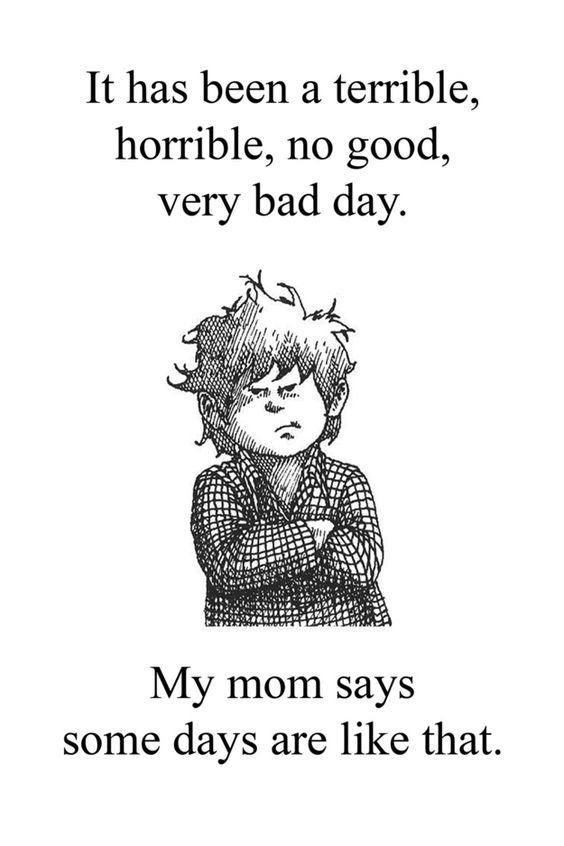
I like children’s books. I suppose its because I’m still a kid at heart. It’s fun to read to my grandchildren. One of the books I read to them is “Alexander and the Terrible, Horrible, No Good, Very Bad Day.” The book begins with Alexander recounting when he awoke one morning:

“I went to sleep with gum in my mouth and now there’s gum in my hair and when I got out of bed this morning, I tripped on the skateboard and by mistake I dropped my sweater in the sink while the water was running and I could tell it was going to be a terrible, horrible, no good, very bad day…. I think I’ll move to Australia.”

For the remainder of the story, Alexander’s day was a mishap of messes. Nothing seemed to go his way, and no one appeared to notice or even to care.

One of the reasons the book has been read so many times by so many children (and obviously adults, like me) is because we can all relate to the feelings of having a day where nothing seems to go right. In the middle of it we just feel like being somewhere else, like Australia.

In such times, when life is topsy-turvy and upside-down, it is so amazingly easy to grumble and complain. The ancient Israelites were having an Alexander-like day. Unlike having gum in your hair, not having water to drink is a big deal, a vital problem. So, we might understand why there was so much grumbling going on among the people. I am sure they were anxious, nervous, and scared.

Yet, complaining, unlike our emotions, is a volitional response. We choose to grumble. The problem with gripes and complaints is that it sets a person down a dark path. Oh, the criticisms and grievances begin easily and are seemingly harmless, at first. They are, however, anything but innocuous.
A mere grumble under the breath did not stop with finally getting water to drink. If we look ahead in the story of God’s people in the exodus event, the moaning and complaining quickly returned the minute something did not go their way. Then, the people became so disillusioned with their circumstances that they began longing for the “good old days” back in Egypt when they had plenty to eat and drink, forgetting about their cruel bondage in slavery. (Exodus 16:1-3)

The psychological progression continued with beginning to blame their situation on God, as if he were some mean malevolent deity. From that point, it was inevitable that the people would disobey God and eventually succumb to the idolatry of the golden calf. (Exodus 32:1-8)

Despite the grand celebration of leaving Egypt and experiencing a miraculous deliverance through the Red Sea, the people quickly forgot because of their present circumstance of lacking water. It is only logical and makes sense that the mighty God who saved them with incredible acts of power would care for the people in a desert. Yet, for many, there was no faith to be found in a new situation they had not faced before.

Failure of faith begins neither with ignorance nor an egregious sin. It begins with grumbling and complaining. And if allowed to run amok, complaints will bear the fruit of discouragement, disobedience, and eventually a disavowal of God.

The author of the New Testament letter to the Hebrews reflected on the grumbling of their forebears and had this to say in response:

See to it, brothers and sisters, that none of you has a sinful, unbelieving heart that turns away from the living God. But encourage one another daily, as long as it is called “Today,” so that none of you may be hardened by sin’s deceitfulness. We have come to share in Christ, if indeed we hold our original conviction firmly to the very end. As has just been said:

“Today, if you hear his voice,
    do not harden your hearts
    as you did in the rebellion.” (Hebrews 3:12-15, NIV)

Encouragement is the insecticide which eliminates the worm of complaints. If left alone, we stew in our own bitterness over missed expectations. Grumbling bores its way into our soul and eats away at our faith. We need the continual encouragement of one another to remember our collective deliverance and express gratitude for our salvation.

May it be so to the glory of God.

We give you thanks, Lord God, because you give food and drink to all, heal all, create wonders in this world, forge wisdom within us, and give refuge beneath the shadow of your wings. From your wisdom grant us wisdom, from your love grant us love, from your understanding grant us understanding. Feed us when we are hungry, give us strength when we are weak, raise us up when we are bent over, set us free when we are enslaved. Just as our spiritual ancestors were blessed – may you grant us the blessing of peace, strength, and gratitude. Amen.


Mark 11:20-25 – Forgiveness

In the morning, as they went along, they saw the fig tree withered from the roots.Peter remembered and said to Jesus, “Rabbi, look! The fig tree you cursed has withered!”

“Have faith in God,” Jesus answered.“Truly I tell you, if anyone says to this mountain, ‘Go, throw yourself into the sea,’ and does not doubt in their heart but believes that what they say will happen, it will be done for them. Therefore, I tell you, whatever you ask for in prayer, believe that you have received it, and it will be yours. And when you stand praying, if you hold anything against anyone, forgive them, so that your Father in heaven may forgive you your sins.” (NIV)

Sometimes forgiveness seems about as possible as moving a mountain or withering a fig tree. Yet, it can be done. It needs to be done. An unforgiving spirit only causes gangrene of the soul and rots a person on the inside.

The heart of the good news in the Bible is forgiveness of sins. It comes through the person and work of Jesus Christ. Forgiveness is both an event, and a process. Forgiveness is to be a constant dynamic within our relationships because we live in a fallen world. People sin against us, and others hurt us. We sin against other people and hurt them, too. Relational pain is a reality this side of heaven. Revenge and/or passive-aggressive behavior are neither biblical nor healthy ways of handling our hurt. So, what is a person to do?

We practice forgiveness. The following is some biblical guidance as to what forgiveness is, and is not:

Forgiveness is hard work.

God did not promise forgiveness would be easy. He knows exactly the kind of cost it brings. Through the death of Jesus there can be and is forgiveness. The price of forgiveness for Jesus was not cheap.

“The blood of bulls and goats and the ashes of a heifer sprinkled on those who are ceremonially unclean sanctify them so that they are outwardly clean.  How much more, then, will the blood of Christ, who through the eternal Spirit offered himself unblemished to God, cleanse our consciences from acts that lead to death, so that we may serve the living God!” (Hebrews 9:13-14, NIV)

Forgiveness is a process.

Forgiveness is an ongoing process of putting off bad relational habits and putting on good ones. It takes time and cannot be hasty. Forgiveness must be deliberate with no shortcuts to it, otherwise it will not stick. 

“Get rid of all bitterness, rage and anger, brawling, and slander, along with every form of malice.  Be kind and compassionate to one another, forgiving each other, just as in Christ God forgave you.” (Ephesians 4:21-32, NIV)

Forgiveness does not mean we condone bad behavior.

Forgiveness is not blanket amnesty. It does not simply give another person a “pass” on their hurtful words or actions. Forgiveness means we do not hold the offense over the other person’s head.  Dr. Fred Luskin from Stanford University, an academic researcher of forgiveness, states, “Forgiveness is giving up all hope of a better past.”  We cannot undo the past. Yet, we have control of the present, and can choose to forgive. True forgiveness calls a spade a spade and names the specific offense in all its ugliness, and lets it go.

“You’re an evil man! When you begged for mercy, I said you did not have to pay back a cent.  Don’t you think you should show pity to someone else, as I did to you?” (Matthew 18:32-33, CEV)

Forgiveness does not always result in reconciliation.

It takes two to reconcile. It only takes one to forgive. I have often been told that it will not do any good to forgive another person because it would not change them. I respectfully retort: That is not the point. We forgive because it is our responsibility to work through our forgiveness issues and do it. We are not in control of whether another person will feel sorry for what they did, or not.  We regulate our own decision to forgive, no matter what the other person does or does not do, or whether they feel the gravity of their sin, or not.

“If possible, to the best of your ability, live at peace with all people.” (Romans 12:18, CEB)

“I [Jesus] say to you, love your enemies and pray for those who persecute you.” (Matthew 5:44, NRSV)

Jesus said [on the cross], “Father, forgive them, because they do not know what they are doing.” (Luke 23:34, CSB)

Forgiveness is primarily for our benefit.

If we hold on to bitterness toward another for their offense, we only hurt ourselves. Drinking the poison of bitterness will kill you, not the other person. Avoid the magical thinking that they are going to come to you all slobbery sorry for what they said or did. That often does not happen. When it does, it is a beautiful thing. Regardless, of another’s decisions, we are to forgive everyone who sins against us just as God has forgiven us.

“Forgive us our sins, as we have forgiven those who sin against us…. If you forgive those who sin against you, your heavenly Father will forgive you. But if you refuse to forgive others, your Father will not forgive your sins.” (Matthew 6:12, 14-15, NLT)

Forgiveness is to be frequent and generous.

The relational currency in God’s kingdom is forgiveness. Without it, we can neither operate well together, nor can we enjoy a satisfying life. However, with forgiveness, there is a demonstration of the practical effects of Christ’s crucifixion to life, not to mention a good witness to a watching world.  

“Peter got up the nerve to ask, ‘Master, how many times do I forgive a brother or sister who hurts me? Seven?’ Jesus replied, ‘Seven! Hardly. Try seventy times seven.’” (Matthew 18:21-22, MSG)

Forgiveness is an act of faith.

To forgive is risky business. If we have taken on a grudge like a warm security blanket, to toss aside the odd comfort of unforgiveness will seem strange, even fearful. When we are hunkered down in bitterness, we rarely see how it causes faith to weaken. The longer the lack of forgiving goes on, the harder it will be to give it up. Faith steps out and acts, believing that God is in it. On the other side is the hope of freedom and peace. Besides, the consequences of unforgiveness are downright unpleasant.

Keep us forgiven with you and forgiving others. Keep us safe from ourselves and the Devil. (Matthew 6:13-14, MSG)

Forgiveness is a blessing.

The end of the matter for many people comes down to the intensely practical. So, here it is: Do you want to be happy or miserable? I am not familiar with anyone who wakes up in the morning and says to themselves, “Mmm, I think I will be miserable today.” No, we want to be happy and blessed. Forgiving others is the path to blessing.

It is a great blessing when people are forgiven for the wrongs they have done, when their sins are erased. (Psalm 32:1, ERV)

May you know the blessing of being forgiven and forgiving others. May this freedom allow you to enjoy the peace of God the fellowship of others. Amen.

Nehemiah 9:9-15 – Memory and Confession

“You saw the suffering of our ancestors in Egypt; you heard their cry at the Red Sea. You sent signs and wonders against Pharaoh, against all his officials and all the people of his land, for you knew how arrogantly the Egyptians treated them. You made a name for yourself, which remains to this day. You divided the sea before them, so that they passed through it on dry ground, but you hurled their pursuers into the depths, like a stone into mighty waters. By day you led them with a pillar of cloud, and by night with a pillar of fire to give them light on the way they were to take.

“You came down on Mount Sinai; you spoke to them from heaven. You gave them regulations and laws that are just and right, and decrees and commands that are good. You made known to them your holy Sabbath and gave them commands, decrees, and laws through your servant Moses. In their hunger you gave them bread from heaven and in their thirst you brought them water from the rock; you told them to go in and take possession of the land you had sworn with uplifted hand to give them. (NIV)

Memory is precious and valuable. Having once worked as a chaplain in a memory care unit, I can testify that Alzheimer’s and dementia are tragic. The residents and patients for whom I interacted with were wonderful people. They just did not remember much – even their own names, sometimes. It is especially hard for family members. Spouses, children, grandchildren, and friends still remember – and, at times, not being remembered by this person they love is a deep sadness.

I wonder if this is the same kind of sadness which God felt. Having delivered his people from Egyptian bondage and sending them to the Promised Land, over the generations the people of God eventually forgot. With their memories far from them, the people lapsed into living as if they no longer knew who they were anymore.

To make a long biblical story short, God’s people were taken from their homes and exiled to Babylon. Yet, God still remembered them even though many of them forgot him. God sent Ezra the teacher and Nehemiah the leader to remind the people and help make the memories stick.

In today’s Old Testament lesson, we pick up Ezra and Nehemiah’s teaching and leading of the people in a collective and prayerful confession of their sins. At the heart of it all was a failed memory of God’s deliverance. Unlike Alzheimer’s and dementia folks who do not choose their condition, and who experience memory issues through no fault of their own, God’s people allowed themselves to forget.

The people needed to come back to remembrance and recall the mighty acts of God on their behalf in history. Those memories were meant to serve the people well, to enable them to always live by faith and trust in a benevolent God’s all-seeing care.

The path to renewal always begins with awareness and memory.

So, then, that is why Jews remember the Sabbath and the Passover. That is why Christians memorialize the death of Jesus through Holy Communion. We are to always remember the redemptive events of God in bringing us from bondage to liberation.

We can only know where we are going if we are served with full cognitive abilities of memory and history. For the Christian, a failure to remember inevitably leads to a failure of faith. And an ignorance of history will only lead us to an exile of the soul, putting us at risk of listening to hucksters who claim knowledge, but who themselves suffer from major memory issues.

Memory and remembrance are beautiful things, that is, when we have wonderful things to remember. Even traumatic events need to be remembered – not for experiencing re-traumatization – but to unburden the spirit of its heavy weight, and to bring a loving God’s healing power to bear on those memories.

Confessional prayer helps us to do just that: Acknowledge the past, receive grace in the present, and have direction and hope for the future. God still desires to take us from cruel bondage and bring us to a land flowing with milk and honey.

Recollection brings awareness; and awareness allows us the power to make choices of faith, hope, and love.

Blessed heavenly Father, we come to you in remembrance that our Lord Jesus Christ was sent from you into the world to assume our flesh and blood and to fulfill for us all obedience to the divine law, even to the bitter and shameful death of the cross. By Christ’s death, resurrection, and ascension he established a new and eternal covenant of grace and reconciliation that we might be accepted and never forsaken nor forgotten by you. Most righteous God, we remember the perfect sacrifice offered once on the cross by our Lord Jesus for the sin of the whole world. In the joy of his resurrection and in expectation of his coming again, we offer ourselves to you as holy and living sacrifices. Amen.

Hebrews 11:23-29 – Taking the Long View

Enslavement of the Israelites

By faith Moses’ parents hid him for three months after he was born, because they saw he was no ordinary child, and they were not afraid of the king’s edict.

By faith Moses, when he had grown up, refused to be known as the son of Pharaoh’s daughter. He chose to be mistreated along with the people of God rather than to enjoy the fleeting pleasures of sin. He regarded disgrace for the sake of Christ as of greater value than the treasures of Egypt because he was looking ahead to his reward. By faith he left Egypt, not fearing the king’s anger; he persevered because he saw him who is invisible. By faith he kept the Passover and the application of blood, so that the destroyer of the firstborn would not touch the firstborn of Israel.

By faith the people passed through the Red Sea as on dry land; but when the Egyptians tried to do so, they were drowned. (NIV)

Faith looks ahead and sees as clearly as is right now in front of your face. Taking the long view of life, the mature person of faith can set aside temporary pleasure to attain a future hope. Moses, held up as such an example, refused to identify himself as the daughter of Pharaoh. He chose to be mistreated in solidarity with his fellow Israelites, instead of having a good time with his high position in the most powerful empire of its day. Moses knew that the treasures of Egypt were not as wonderful as what he would receive from suffering for the Messiah, and he looked forward to his reward.

It is an understatement to say that our contemporary society assumes practicing instant gratification. We want to feel good, and we want it now. Impulse control may just be one of the best life skills that kids (and adults!) need to learn today. A Psychology Today article effectively demonstrates through some classic and current research that “one of the most effective ways to distract ourselves from a tempting pleasure we don’t want to indulge is by focusing on another pleasure.”

For the Christian who desires to follow Jesus in all things, looking ahead to a future heavenly reward which will be shared along with all God’s people needs to be kept at the forefront of our thinking. If we only consider today, there are scant resources for responding to the temptations and fluctuations of life. However, if we will put some energy into clarifying and embracing our most cherished values, we will then let those values inform everything we do, or not do. In the scope of eternity, suffering a bit now is nothing compared to what Christ has yet in store for his people.

Deferred gratification causes us to live differently. In a twist of irony, folks who orient themselves toward the next world are able to effectively impact and change the world they currently reside within – whereas those who focus solely on this present world find themselves falling woefully short with their short view of life. We need the wisdom which faith provides us:

We are always confident, because we know that while we are living in the body, we are away from our home with the Lord. We live by faith and not by sight. We are confident, and we would prefer to leave the body and to be at home with the Lord. So, our goal is to be acceptable to him, whether we are at home or away from home. We all must appear before Christ in court so that each person can be paid back for the things that were done while in the body, whether they were good or bad. (2 Corinthians 5:6-10, CEB)

Future hope, fueled by faith, gives shape to how we live today. It enables us to live in solidarity with those who suffer and are mistreated. It ennobles us to live above short-sighted desires and act on behalf of the common good of all persons in the here-and-now.

Lord God Almighty, the One who is and was and is to come, may we, along with your servant Moses, see the plight of all those who suffer in our midst. Give us courage and compassion to live in solidarity with the poor, the oppressed, the forgotten, and all who live with misfortune and misery. May our hearts, burning with love, bear the burdens of all in our care. And may our loving example ignite the hearts of others to accompany the vulnerable in their affliction. We ask this in the gracious name of Jesus through the power of your Holy Spirit. Amen.