Philippians 1:15-21 – On Living with Purpose

St. Paul in Prison by Rembrandt, 1627

It is true that some preach Christ out of envy and rivalry, but others out of goodwill. The latter do so out of love, knowing that I am put here for the defense of the gospel. The former preaches Christ out of selfish ambition, not sincerely, supposing that they can stir up trouble for me while I am in chains. But what does it matter? The important thing is that in every way, whether from false motives or true, Christ is preached. And because of this I rejoice.

Yes, and I will continue to rejoice, for I know that through your prayers and God’s provision of the Spirit of Jesus Christ what has happened to me will turn out for my deliverance. I eagerly expect and hope that I will in no way be ashamed but will have sufficient courage so that now as always Christ will be exalted in my body, whether by life or by death. For to me, to live is Christ and to die is gain. (NIV)

 It was the late U.S. President Ronald Reagan who said, “There is no limit to the amount of good you can do if you don’t care who gets the credit.” The ability to have disinterested attention from others and freedom from selfishness comes from a place of humility and strength – the power to know oneself well and be secure in that knowledge, as well as the humility to care more about an important cause than self.

The Apostle Paul had so learned humility from his Lord and was so thoroughly convinced of the gospel’s centrality that he did not care who got the credit when it came to proclaiming Jesus. Paul was quite aware of the varied motives of preachers other than himself. And much to the astonishment of many, he cared little about receiving personal credit even though recognition went to others who likely did not deserve it.

Paul had such a disinterested stance toward receiving accolades from his preaching because his burning, driving, constant, and passionate pursuit was the proclamation of Christ – and he cared little who did it, so long as it got done. He wanted the entire world to know Jesus Christ crucified, risen from death, ascended, and coming again. It seems Paul would have done anything toward this overarching purpose and dream, draining himself of every drop of self-centeredness in order to champion the cause of seeing people repent and believe the gospel of forgiveness and realize new life in Christ.

I freely admit that my own heart resonates deeply with Paul’s – I am absolutely enamored with the person and work of Jesus. Along with Paul, my desire is ardent to see God’s grace in Christ transform the world with a collective and miraculous enlargement of heart toward our fellow humanity. In fact, my longings for this are such that I sometimes lay awake at night wondering how to introduce Jesus to others through basic kindness and altruism. I want the great cause of my life to meet the world’s deep need with the deep love of Jesus Christ. 

From decades of personal and anecdotal experience, I can say that attention and recognition are far too overrated – and giving up one’s life for a cause greater than oneself is much too underrated. If you and I really want to find our lives, we must give them up. For to live is Christ, and to die is gain. Thus, we have nothing to lose.

 Gracious God, thank you for the example of your servant Paul.  I rejoice in what you did in and through his life.  I am available for your purposes.  Use me in the advance of your gospel of grace so that I might fully participate in your grand forgiveness mission.  Amen.

Philippians 1:3-14 – Unity Through Shared Purpose

I thank my God every time I remember you. In all my prayers for all of you, I always pray with joy because of your partnership in the gospel from the first day until now, being confident of this, that he who began a good work in you will carry it on to completion until the day of Christ Jesus.

It is right for me to feel this way about all of you, since I have you in my heart and, whether I am in chains or defending and confirming the gospel, all of you share in God’s grace with me. God can testify how I long for all of you with the affection of Christ Jesus.

And this is my prayer: that your love may abound more and more in knowledge and depth of insight, so that you may be able to discern what is best and may be pure and blameless for the day of Christ,filled with the fruit of righteousness that comes through Jesus Christ—to the glory and praise of God.

Now I want you to know, brothers and sisters, that what has happened to me has served to advance the gospel. As a result, it has become clear throughout the whole palace guard and to everyone else that I am in chains for Christ. And because of my chains, most of the brothers and sisters have become confident in the Lord and dare even more to proclaim the gospel without fear. (NIV)

Physical health does not just happen. Care of the body is necessary through eating well, exercising, and coping adequately with stress. In the same way, spiritual health and care for the Body of Christ occurs when we put every effort to keep the unity of the Spirit through the bond of peace (Ephesians 4:3).

When spiritual health breaks down in the Body of Christ there are divided loyalties, unhappiness, and disunity. And this is precisely what happened in the ancient Philippian Church. They were spiritually sick and relationally fragmented through inattention to one another.

Unity is much more than the absence of division. It is a common community, sharing life together, working on supporting one another and reaching out to others. In our New Testament lesson for today, the Apostle Paul begins his letter with emphasizing that the Body of Christ realizes unity through a shared purpose of embracing the good news of Jesus Christ and proclaiming it to others.

Every pronoun, each “you” used in these verses is not singular but plural. We are meant to establish our common life together around a shared mission of gospel proclamation: The kingdom of God is near. Through repentance and faith in the person and work of Jesus there is forgiveness of sins, new life, and participation in the life of God. The mission is not for larger church attendance, although that is nice and may happen; it isn’t to do more, or to get other people to stop swearing or avoid tattoos.

The Apostle Paul knew that without a focus on mission, on sharing the good news with each other and proclaiming the gospel to others, that the lack of purpose would create spiritual sickness. Apart from a deliberate focus on centering life and mission around the person and work of Christ, a group of people just nit-pick one another to death with all their various opinions and wants.

Wherever there is an absence of shared purpose, there you will find constant complaining, endless arguing, and a bunch of crotchety curmudgeons who nobody wants to be around.

Conversely, with a polestar on mission, the community of the redeemed work together in close fellowship with the result being joy. Happy people are a breath of fresh air to be around. A good healthy spirit is a delight to others. In fact, folks will find hope and healing through a common purpose of life together which imbibes liberally from the redemptive events of Jesus.

Good news is fun to share. It is joyful. The gospel of Jesus Christ is wonderful news, worthy of exuberant celebration. The Apostle Paul had fond memories of his partnership in the gospel with the Philippian believers. Although he had been jailed and beaten, Paul joyously sang in the prison – to the point where the jailer took notice and listened to the good news of new life in Christ. The jailer and his entire family became followers of Jesus. (Acts 16:16-34)

The Philippians were Paul’s spiritual children. They had sacrificed with Paul toward the shared vision of proclaiming good news. So, Paul wanted them to remember their own significant events of coming to faith, enjoying fellowship together, and working toward common objectives. In reminding the Philippian believers, Paul hoped to help get their heads screwed on straight again. He was confident this would happen, having an unshakable belief that God would continue the good work started within them.

This confidence was the basis of Paul’s prayers for the church. He beseeched God to unleash the Philippians’ collective love in a grand experiential knowledge of the divine so that they might discern well, making solid decisions which place the gospel as central to all of life.

There is an incredible depth to human need – a deep spiritual longing for what is good and beautiful. Relational unity brings out the beauty and majesty of humanity. Sometimes we just need to recall past days when this was true of us when we are facing animosity and acrimony.

In times of frustration, anger, demonstrations, riots, violence (both physical and verbal) and injustice, we desperately need a vision of humanity which locks arms in unity without vilifying one another.

When we place priority on the good news, I believe we will again discover the joy of life, of knowing Christ. Perhaps, with a watching world observing basic human kindness and joyful relations, we will find ways of being better together and working toward the common good of all persons. And methinks, Jesus wants to help with this, if we will only let him.

May the risen and ascended Lord strengthen our efforts to mend the ruptures of the past and to meet the challenges of the present with hope in the future. May we embrace the grace which a sovereign God holds out to us and to our world. Amen.

Philippians 2:1-13 – Pass It On

Welcome, friends! Click the video below and let us participate together in the life of our God…

You may also view this video at TimEhrhardtYouTube: https://www.youtube.com/watch?v=NLw1vnnbHWE&t=60s

And, let us sing the oldie but goody Christian chorus…

May the Lord bless you, protect you, sustain you, and guard you;
May the Lord shine upon you with favor, and surround you with love and kindness;
May the Lord look upon you with divine approval, and give you the peace of a tranquil heart and life. Amen.

Mark 11:27-33 – Dueling Authorities

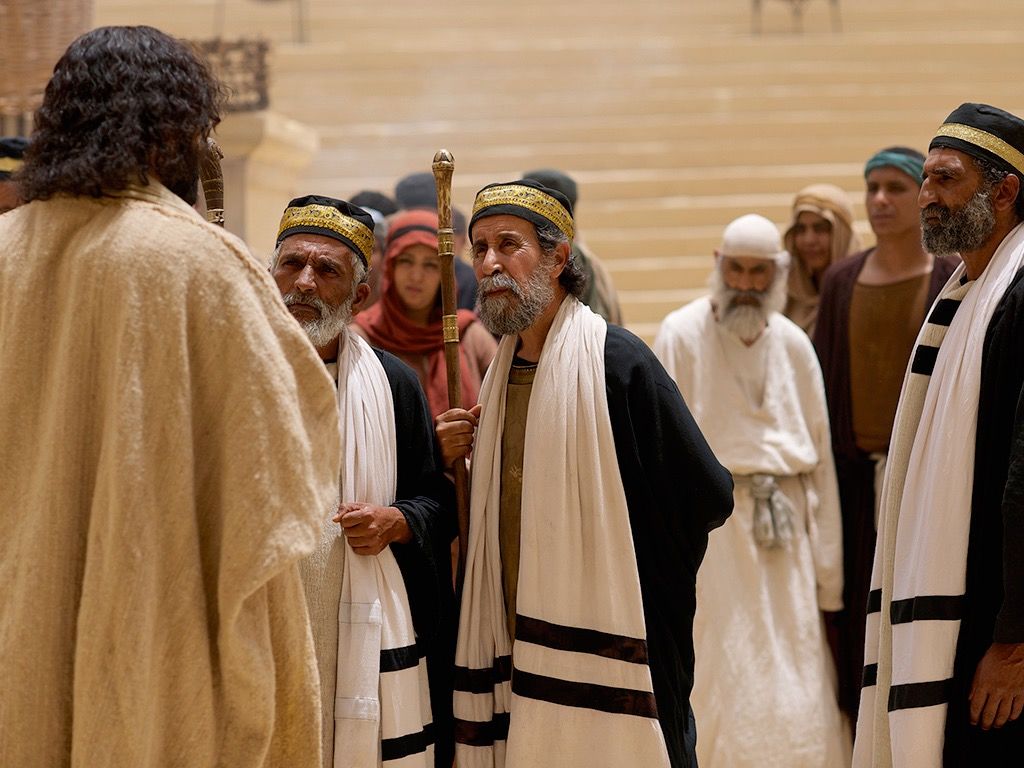
They arrived again in Jerusalem, and while Jesus was walking in the temple courts, the chief priests, the teachers of the law and the elders came to him. “By what authority are you doing these things?” they asked. “And who gave you authority to do this?”

Jesus replied, “I will ask you one question. Answer me, and I will tell you by what authority I am doing these things. John’s baptism—was it from heaven, or of human origin? Tell me!”

They discussed it among themselves and said, “If we say, ‘From heaven,’ he will ask, ‘Then why didn’t you believe him?’ But if we say, ‘Of human origin’ …” (They feared the people, for everyone held that John really was a prophet.)

So, they answered Jesus, “We don’t know.”

Jesus said, “Neither will I tell you by what authority I am doing these things.” (NIV)

Because Christ is Lord, we might overlook that Jesus, in his earthly ministry, was an outsider. Although a teacher, a rabbi, Jesus was neither a priest nor a member of any Jewish religious sect. He walked around as if he owned the place (which he did) and this gave no end of consternation from the established status quo religious leadership.

Jesus made significant inroads into people’s lives, especially with outsiders like himself, and this created anger and jealousy with many of the religious ruling class. Since Jesus was not a card-carrying member, the leaders wanted to hear from him why he kept acting confidently and deliberately on their religious turf, as if he had authority to do so.

The established authorities are depicted in today’s Gospel lesson as a craven bunch who did not want to alienate the crowds yet were eager to get the upstart Jesus out the way. This appears to be an age-old situation of leaders putting their fingers to the wind to go with whatever will keep them popular and in power. Since Jesus consistently refused to play such games, the authorities believed he needed to go. They, however, had no intention of risking an outright confrontation and showing their shadow motives.

Jesus clearly connected himself with John the Baptist, both coming from the same authority. John was yet another figure for whom the established leaders could not control. We ought never to underestimate that threats to status quo leadership who have no inkling of being public servants when true moral authority comes along. The lack of conformity from both John and Jesus would cost them their very lives.

Speaking truth to power while not becoming defensive is a tricky art. Yet, Jesus did it. Continual challenges to his authority left him unfazed as to his mission and purpose on this earth. Christ was assertive without becoming despotic; forward without taking the bait of useless arguments; confident with no hint of arrogance.

For me, the contrast between Jesus and the religious authorities is trenchant. The confident, wise, and calm authority of Christ is in direct opposition to the fear, anxiety, and worry of the ruling leaders. Whereas they kept anxiously ruminating about what to do about this threat to their established authority, Jesus exhibited a non-anxious presence which maintained a steadfast focus on God’s righteous, holy, and benevolent rule and reign.

Sometimes, continual fear is a clue that one is so worried about losing the person, place, or position they possess that the divine gets pushed aside.

Questioning Christ’s credentials was the giveaway that the existing religious authorities were concerned about their power and privilege, and not the people. The wise person will see such queries for what they are.

Wherever we observe those who refuse to share power, have a xenophobic bent toward outsiders, and will seem to do just about anything to maintain the status quo, there we will find the abuse of authority. Conversely, where we observe a deep concern for equity, justice, and the common good of all persons, there we see compassionate leadership who will champion ethical leadership and espouse moral authority.

In any democratic society, we must choose our leaders wisely.

Great God of hope, in these times of change and uncertainty, unite your people and guide our leaders with your wisdom. Give us courage to overcome our fears and help us to build a future in which all may prosper and share together through Jesus Christ our Lord in the strength of your Holy Spirit. Amen.