Nehemiah 9:26-31 – Judgment and Grace

“Repentance of the People” by German painter Julius Schnoor von Carolsfeld (1794-1872)

But despite all this [God’s blessings] they were disobedient and rebelled against you. They turned their backs on your Law, they killed your prophets who warned them to return to you, and they committed terrible blasphemies. So, you handed them over to their enemies, who made them suffer. But in their time of trouble, they cried to you, and you heard them from heaven. In your great mercy, you sent them liberators who rescued them from their enemies.

But as soon as they were at peace, your people again committed evil in your sight, and once more you let their enemies conquer them. Yet whenever your people turned and cried to you again for help, you listened once more from heaven. In your wonderful mercy, you rescued them many times!

You warned them to return to your Law, but they became proud and obstinate and disobeyed your commands. They did not follow your regulations, by which people will find life if only they obey. They stubbornly turned their backs on you and refused to listen. In your love, you were patient with them for many years. You sent your Spirit, who warned them through the prophets. But still, they wouldn’t listen! So once again you allowed the peoples of the land to conquer them. But in your great mercy, you did not destroy them completely or abandon them forever. What a gracious and merciful God you are! (New Living Translation)

Much of the Old Testament is a rhythmic pattern of God’s judgment and grace. The storyline often goes something like this: 

God makes promises and gives commands. 

People get stubborn, refuse to listen, and disobey. 

God responds with judgment. 

People cry out in their distress.

God gives grace and fulfills divine promises. 

People enjoy, then get stubborn again…. 

The promise of God always involves judgment and grace. Proclaiming only a message of judgment without grace brings despair, death, and hell; there is no hope. Speaking only of grace apart from judgment is oxymoronic – it doesn’t exist because there is no need for grace if there is no judgment; grace is an undeserved mercy given freely by God in the face of our stubborn obstinate selves.

Nehemiah chapter nine is a beautiful prayer of confession. Having heard the Word of God proclaimed, the people released their obstinacy; they realized exile occurred because of their own stubborn refusal to listen to God. So, they repented. 

“Fallen man is not simply an imperfect creature who needs improvement: he is a rebel who must lay down his arms.”

C.S. Lewis

The ancient Jewish people acknowledged their checkered past of ignoring God’s prophets, and they bellied-up and took ownership of their past choices. And God was faithful. Even though the city of Jerusalem had been overtaken and the people sent into exile, God brought them back and the broken wall was rebuilt.

It’s never too late to turn from a past filled with poor decisions, broken relationships, and spiritual disobedience. The time of confession is available, and the time is now. God’s grace always overwhelms our dubious past. 

The appropriate response to today’s Old Testament lesson is to spend some time in confession to God. This chapter, along with Nehemiah chapter one, are good places to begin with understanding just what to say to God. 

For the Christian, confession ought always to conclude with accepting the grace available to us in Christ. 

Today is a new day and a new Christian Year. Let it be a life with the love of Jesus implanted in your heart. As we enter the Advent season, allow that love of Christ to gestate within your soul. Anticipate the birth. Look forward to the Nativity. Long for Christmas and the inbreaking of God to this earth.

Holy Lord, in this time of Advent, we confess we often are distracted by the season’s busyness, by the stress of commitment, and even by putting our own traditions ahead of the true meaning of Christmas. We confess we also often prefer being sentimental to being sacrificial.

Forgive us for all the times we have missed seeing You in our midst, for all the times we have doubted Your presence, and for all the times we have failed to hold the holidays as holy days. Pour peace into our lives and let us be bearers of Your peace to others. Remind us that this is a season of waiting and preparation for the greatest Gift of all. In the holy Name of our Savior, Jesus, we pray. Amen.

1 Thessalonians 5:12-22 – Give Thanks

Brothers and sisters, we ask you to respect those who are working with you, leading you, and instructing you. Think of them highly with love because of their work. Live in peace with each other. Brothers and sisters, we urge you to warn those who are disorderly. Comfort the discouraged. Help the weak. Be patient with everyone. Make sure no one repays a wrong with a wrong, but always pursue the good for each other and everyone else. Rejoice always. Pray continually. Give thanks in every situation because this is God’s will for you in Christ Jesus. Don’t suppress the Spirit. Don’t brush off Spirit-inspired messages but examine everything carefully and hang on to what is good. Avoid every kind of evil. (Common English Bible)

A lot of problems would resolve themselves if gratitude was a default way of life. Giving thanks in all circumstances creates peace; causes encouragement to flow freely; warns those who are busybodies; builds patience; and spreads goodness.

It can be easy to give thanks when things go our way. It’s another matter when circumstances are difficult, and we experience missed expectations. The Apostle Paul’s letter to the church at Thessalonica was written to people caught between a rock and a hard place. In fact, it was so hard that the believers focused completely on the return of the Lord. 

When times are tough, Christ’s second coming comes bursting from the recesses of our minds and straightaway to the forefront of our thinking. Gratitude is typically not a first response to trouble and hardship. Instead, we may look to escape. We long for Christ’s return as a way out of trouble.

Although we know we should be thankful, we often are not.  Envy and resentment are the twin enemies continually looking to subvert our gratitude. In our frustration of disappointments and unwanted situations, ingratitude may easily slip into our spirits.

A life of unhappiness awaits those who are resentful of what they do not possess. Those who envy shall never be satisfied because they are always dreaming about how much better life would be without their troubles.

No matter how good we have it, someone else has it better. To envy is to be overly future-oriented, like the Thessalonians, always thinking about how the grass is greener on the other side of the fence. And it squelches gratitude.

For example, according to a study by the Templeton Foundation, only 39% of people are grateful for their current employment; 74% of employees have rarely or never expressed gratitude to their bosses; and 60% have rarely or never expressed gratitude to anyone of their fellow employees. Workplace dissatisfaction is nearly a guarantee apart from gratitude.

If we desire happy contented lives, then observe the biblical exhortation to give thanks in any kind of circumstance. It can be challenging to give thanks during hard times. Yet, that might be best time to do it.

In her book, The Hiding Place, the late Corrie ten Boom tells about an incident that taught her the principle of giving thanks in all things. It was during World War II. Corrie and her sister, Betsy, had been harboring Jewish people in their home, so they were arrested and imprisoned at a concentration camp. The barracks was extremely crowded and infested with fleas.

One morning they read in their tattered Bible the reminder to give thanks in all things. Betsy said, “Corrie, we’ve got to give thanks for this barracks and even for these fleas.” Corrie replied, “No way am I going to thank God for fleas.” But Betsy was persistent and persuasive, and they did thank God even for the fleas.  During the months that followed, they found that their barracks was left relatively free, and they could do Bible study, talk openly, and even pray in the barracks. It was their only place of refuge. Several months later they learned that the reason the guards never entered their barracks was because of those blasted fleas.

Sometimes we neither understand what God is doing nor perceive that the Lord is up to anything. You may feel as if you are sitting still right now, yet, planet Earth is spinning around its axis at a speed of 1,000 miles per hour. We are also hurtling through space at an average velocity of 67,108 miles per hour. Even on a day when you feel like you did not get much done, remember you traveled 1,599,793 miles through space!

Although amazing, we do not feel it. So, it’s off our spiritual radars. When was the last time you thanked God for keeping us in orbit? I am guessing you likely never prayed, “Lord, I wasn’t sure we’d make the full rotation today, but you did it again!”

We must learn to thank God in every circumstance, both big and small. If we can trust God to keep our feet on the ground with a big thing like gravity, then we can have faith in any and every situation we experience.

Here are three simple ways of being intentional about gratitude:

  • Pray with prayers of thanksgiving. 

I am a believer in using biblical prayers for ourselves rather than just saying what is always on our minds and hearts – because we might never get around to gratitude. Scripture, however, does. The Apostle Paul typically began every discussion with gratitude. For example, when beginning his letter to the problem filled church at Philippi, he said: 

I thank my God every time I remember you.  In all my prayers for all of you, I always pray with joy because of your partnership in the gospel from the first day until now, being confident of this, that he who began a good work in you will carry it on to completion until the day of Christ Jesus….  And this is my prayer:  that your love may abound more and more in knowledge of depth of insight, so that you may be able to discern what is best and may be pure and blameless until the day of Christ, filled with the fruit of righteousness that comes through Jesus Christ – to the glory and praise of God.” (Philippians 1:3-4, 9-11, NIV)

  • Write your thanksgiving.

Cards, letters, emails, social media messages, and whatever other ways are available, use them to express thanksgiving to God and others. Again, Paul ended his letter to the Philippians just as he began it, with gratitude:

It was good of you to share in my troubles.  Moreover, as you Philippians know, in the early days of your acquaintance with the gospel, when I set out from Macedonia, not one church shared with me in the matter of giving and receiving, except you only; for even when I was in Thessalonica, you sent me aid again and again when I was in need.” (Philippians 4:14-16, NIV)

  • Keep a gratitude journal.

Identifying and writing down at least three things you are thankful for everyday has healing power. Any common fool can bellyache about how bad things are and play armchair Deity about how to fix all the world’s ills. However, it takes a wise person to find gratitude and choose to give thanks for all the good things God has done and is doing, being careful to give thanks in all circumstances for this is God’s will in Christ Jesus.

Almighty God, we give you humble thanks for all your goodness and kindness to us and to all whom you have made. We bless you for our creation, preservation, and all the blessings of this life. Above all, we are grateful for your immeasurable love in the redemption of the world by our Lord Jesus Christ, for grace and the hope of glory.

Give us such an awareness of your mercies, that with truly thankful hearts we may show forth your praise, not only with our lips, but in our lives, by giving ourselves to your service, and by walking before you in holiness and righteousness all our days. We pray with thanksgiving through Jesus Christ our Lord, to whom, with you and the Holy Spirit, be honor and glory throughout all ages. Amen.

The Christian Year

There are, in reality, two reasons to celebrate today. Not only is it right to say, “Happy Thanksgiving,” it’s also appropriate to say, “Happy New (Christian) Year!” That’s because, for the past two-thousand years, Christians have marked time differently than their secular culture.

The “Christian Year” (or “Church Calendar”) refers to a yearlong calendar that marks time according to God’s activities rather than ours. It is to live life in a rhythm with Christ at the center of worship.

Time is referenced in the Bible as both chronological (Chronos) and seasonal (Kairos). The Christian Year is a co-mingling of both these kinds of time. Liturgical Christians celebrate events in which God acted in history for the benefit of his people. In order to remember those moments, dates have been assigned on the Christian Calendar so that we will not forget these significant events and praise God for what he has done.

So, then, to observe The Christian Year helps Christians as God’s people to recall and retell the story of God, especially the redemptive events of Jesus. In doing so, it provides a guide for spiritual growth. The Christian Calendar is arranged in such a way as to proclaim the gospel of Jesus Christ over the course of a year. 

One of the ways this helps followers of Christ to remember distinct seasons is through the liturgical colors: 

  • Purple signifies a time for preparation and penitence.
  • White represents celebration, joy, and victory.
  • Green lets us know it is time to focus on spiritual growth and mission.
  • Red helps us recall the Passion of Christ and the fire of the Holy Spirit.

The Christian Year is organized and arranged with these seasons:

Advent The Christian Year begins not on January 1, but four Sundays before Christmas Day and up to Christmas Eve.  The purpose of Advent is to anticipate Christ’s incarnation and prepare Christians to celebrate the coming of Jesus.  We are also reminded that Jesus will return again at the end of the age.

Christmas Yes, Christmas is more than just a day on the Church Calendar and encompasses the twelve days from December 25 to January 5 (you may recognize the “12 Days of Christmas”).  Christmas is a celebration of the birth of Christ.

EpiphanyEpiphany follows Christmas from January 6 to the day before Ash Wednesday.  The term Epiphany means “manifestation.”  This is a celebration of God’s revelation, his manifestation to the entire world, not just to the Jews, but to the Gentiles, as well.  Epiphany emphasizes Jesus Christ’s earthly ministry of teaching, healing, and preaching.

Lent There are forty days in the season of Lent, from Ash Wednesday to Holy Saturday.  Lent is a time to recall Christ’s temptation, conflict, suffering, and death.  It is a season to contemplate Christian discipleship through the light of Christ’s Passion, engage in repentance, and put deliberate focus on spiritual disciplines that connect the penitent with Jesus.

EasterAs with Christmas, Easter is not just one Sunday; it is a season of fifty days up to the day of Pentecost.  Easter celebrates the resurrection of Jesus; helps believers recognize new life in Christ; and includes celebrating the Ascension of the Lord.

Pentecost This season runs from Eastertide to the Sunday before Advent.  Pentecost celebrates the gift of the Holy Spirit, the birth of the church, acknowledges personal and communal spiritual power, and calls Christians to rejoice in receiving God’s power.

Ordinary TimeThis is the same season as Pentecost.  Ordinary time (also known as Proper Time) refers to the ongoing work of the church to spread the gospel of Jesus Christ, which is the typical, expected, proper and ordinary work of ministry that Christ’s followers are to do.

God of all time, you make all things new, bring hope alive in our hearts, and cause us to be born again. Thank you for this new Christian Year of following Jesus and all the potential it holds. Come and kindle in us a mighty flame so that in our time, many will see the wonders of God and live forever to praise your glorious name. Amen.

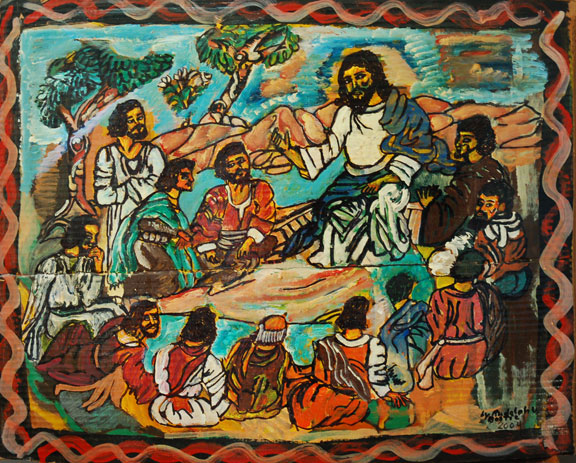
Matthew 6:25-33 – Do Not Worry

“Therefore, I tell you, do not worry about your life, what you will eat or drink; or about your body, what you will wear. Is not life more than food, and the body more than clothes? Look at the birds of the air; they do not sow or reap or store away in barns, and yet your heavenly Father feeds them. Are you not much more valuable than they? Can any one of you by worrying add a single hour to your life?

“And why do you worry about clothes? See how the flowers of the field grow. They do not labor or spin. Yet I tell you that not even Solomon in all his splendor was dressed like one of these. If that is how God clothes the grass of the field, which is here today and tomorrow is thrown into the fire, will he not much more clothe you—you of little faith? So do not worry, saying, ‘What shall we eat?’ or ‘What shall we drink?’ or ‘What shall we wear?’ For the pagans run after all these things, and your heavenly Father knows that you need them. But seek first his kingdom and his righteousness, and all these things will be given to you as well.” (New International Version)

Jesus cares both about what we do, and why we do it. That’s because he cares about our whole selves – our physical needs and our emotional/spiritual needs. In our anxiety about the future, Jesus guides us toward a non-anxious presence for our daily lives.

We all know what worry is. It’s that unsettling feeling in the pit of your gut about what’s going to happen tomorrow. Whenever we worry, we display an inability to see beyond our own little world. Worry bogs us down and saps our faith. Our worry is significant enough to warrant Jesus repeating the command to not worry six times. And he gives six reasons why:

Life is more than food and clothes.

When we are beset with worry, we need a big picture view of what’s going on. Being overly concerned about how the necessities of life are going to be met, we need a reminder that God cares for life itself, including us. If God cares about life, which is so valuable, he will sustain us with what we need to live that life.

God cares for the birds in creation. 

People are the apex of God’s creation. And, since God cares for every other creature on this earth, and sustains their lives, God will certainly care for us, as well.

Worry begins to melt and be replaced by faith, not when we try and work up feelings of trust, but when we take the time to observe creation – watching the birds and seeing how God takes care of them. Birds don’t worry; they just enjoy God’s providence. Birds work hard, but they aren’t farmers who plant and harvest. Yet, God sustains them. So, if God will provide for small creatures that don’t plan to avoid starvation, how much more will God sustain you!?

Worry accomplishes nothing. 

Worry is like a rocking chair; it gives you something to do but doesn’t get you anywhere. Worry is simply unhelpful.

Don’t worry about the world coming to an end today. It is already tomorrow in Australia.

Charles M. Schulz

God cares for the flowers and grass in creation. 

God clothes the flowers better than we ever could dress ourselves (which is what my daughters have told me for years). Jesus specifically identifies flowers and grass because they illustrate a short and precarious lifespan. Christ’s logic is from the lesser to the greater: If God cares for something as fragile and temporary as flowers and grass, how much more will God care for you?

Jesus links worry with a small faith. We have expectations in life about how things ought to go. If those expectations are grounded in God’s promises, then whenever adverse circumstances come, we will likely respond with peace and trust. However, if we are anticipating the future to turn out a particular way, then the worry sets in. 

While we worry, we begin taking matters into our own hands. If the situation goes against our expectations, then we start to question if God is good or not, or if the Lord really has our best interests at mind. We must not tether ourselves to a specific outcome, rather, we need to rely on God’s care for us, no matter what the outcome will be.

Your heavenly Father knows your needs. 

Unlike the ancient pagan deities who were aloof, fickle, and did not pay much attention to people, God is always watching us, always attentive, always knowing our every need. Pagan worshipers keep worrying about whether the gods will really care, or not.

However, with God there is no need for worry because we know the Lord has our backs and is trustworthy. Just as my girls used to jump from the stairway in a leap of faith because they knew for sure Dad was going to catch them, so also your heavenly Father is a reliable God.

The necessities of life will be given to you. 

God’s business is to provide for our necessities; our business is to seek first God’s kingdom and God’s righteousness. 

The verb form of “seek” is a continuous action of seeking. We are to daily seek God’s kingdom and submit to Christ’s lordship. We are to continually pray for God’s kingdom to come and bring all the world under the gracious authority of Christ.

We need to keep seeking social, political, cultural, institutional, and ecclesiastical reform because God cares about it all coming under Christ’s lordship. Continually seeking God’s kingdom means we dethrone wealth and possessions as our first pursuits, and instead seek heavenly treasure as defined by Jesus.

We are to continually seek God’s righteousness by seeking peace where there is discord; forgiveness when others sin against us; mercy instead of judgment; right relations with people in our family, at work, in the neighborhood, and in the church. 

The will of God is clearly stated: Seek first the kingdom of God and God’s righteousness.

Conclusion

If we are busy with kingdom business, there is then no room for worry. Anxious fretting sets in whenever we are diverted from seeking the kingdom. There’s no need for worry about tomorrow because I am busy today doing God’s will.

So, how then do we overcome worry?

  1. Confess and renounce worry. Call worry for what it is: a lack of faith.
  2. Observe creation. Take regular walks in nature. See all the flora and fauna around you. Perceive how God cares for all of it – and you.
  3. Get to know the God of the Bible. Spending time with God increases our faith and reliance upon the Lord. Knowing that he is trustworthy, increases our faith. Engaging in the spiritual practices of prayer, giving, and fasting build our trust in God.
  4. Seek first God’s kingdom and righteousness. Busy yourself with kingdom pursuits, instead of worry.

May God’s blessing rest on you, as you value what Jesus values, and as you seek the Lord with all your heart, soul, mind, and strength.