1 Corinthians 3:10-17 – Being a Holy Temple

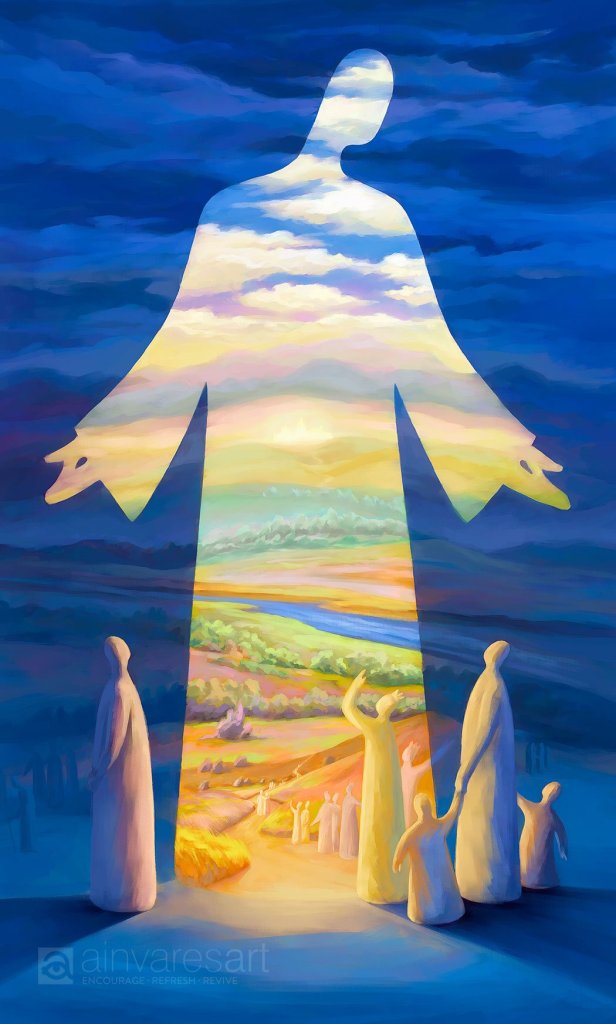
Albi Cathedral in Sainte-Chapelle, France

By the grace God has given me, I laid a foundation as a wise builder, and someone else is building on it. But each one should build with care. For no one can lay any foundation other than the one already laid, which is Jesus Christ. If anyone builds on this foundation using gold, silver, costly stones, wood, hay or straw, their work will be shown for what it is, because the Day will bring it to light. It will be revealed with fire, and the fire will test the quality of each person’s work. If what has been built survives, the builder will receive a reward. If it is burned up, the builder will suffer loss but yet will be saved—even though only as one escaping through the flames.

Don’t you know that you yourselves are God’s temple and that God’s Spirit dwells in your midst? If anyone destroys God’s temple, God will destroy that person; for God’s temple is sacred, and you together are that temple. (New International Version)

God is holy, pure, beautiful, and completely separated from all that is evil. 

However, there is a problem; but it isn’t with God. 

Ever since the fall of humanity into guilt, shame, and impurity, people cannot be near or approach a perfect Being. Just as we will surely go blind by looking directly at the sun – or be totally disintegrated by getting too close to it – so humans cannot be with such a holy God.

In the Old Testament, God graciously devised a system whereby people could approach the divine. A temple was built. It had very detailed and strict prescriptions about how it was to be built. There needed to be curtains, walls, and borders everywhere to shield the people from being destroyed by the sheer holiness of God.

Entering the New Testament, Jesus is the exact representation of God’s holy being and presence. In Christ, God became intimately close to people. Through the redemptive events of Jesus, humanity is delivered from the vexing problem of being far away from God. 

If that were not enough, God the Father and Son sent God the Holy Spirit to be the continuing presence of Jesus on this earth. 

In today’s New Testament lesson, the Apostle Paul tells us that, as the church, we are a holy temple which is graciously, patiently, and with great care being built into a spiritual house that can be the place where God meets with humanity.

The triune God has conspired and gone out of the way to be with us. The Lord has bended the arc of history for good purposes to be with us. Like a lover separated from his beloved, God has pulled out all the stops to make us holy so that we can abide with him in divine holiness.

From the solid foundation of Jesus Christ as the chief cornerstone, we take care to build a spiritual infrastructure worthy of holiness.

As he who called you is holy, be holy yourselves in all your conduct;for it is written, “You shall be holy, for I am holy.” (1 Peter 1:15-16, NRSV)

God’s will is for you to be holy… God has called us to live holy lives, not impure lives. (1 Thessalonians 4:3, 7, NLT)

Some Christians mistakenly believe that holiness means to exclusively separate as far from everything and everyone who is impure. Any hint or smell of unsound dogma or nonconformity with established rules results in separation. Yet, this predilection for separation is really a form of division – which is contrary to the holiness of God. Because the Lord bends over backwards to accommodate the sinner’s ability to approach the divine presence.

Indeed, holiness involves a separation from all that is evil so that we can attach ourselves to God and others. Holiness isn’t simply an end in itself. To be holy means we are prepared and ready to engage in the highest of aims: Love.

Now that you have purified yourselves by obeying the truth so that you have sincere love for each other, love one another deeply, from the heart. For you have been born again, not of perishable seed, but of imperishable, through the living and enduring word of God. (1 Peter 1:22-23, NIV)

Holiness without a clear trajectory toward love is like putting a new collar on a dead dog. It just doesn’t make any sense.

Yet, too many folks have put a leash on that shiny new collar and are dragging the deceased around – much to the chagrin and revulsion of the world – who rightly sees this behavior as both downright crazy and plain stupid.

Paul would say that kind of behavior will be shown for what it is: Building on the wrong spiritual foundation.

It’s really all about Jesus. Christians bear the name of Christ because we (ideally) center our entire existence – past, present, and future – on the redemption provided through Jesus.

And that’s what this Christian season of the year is about: We celebrate the birth of Christ, God’s breaking into this world, to bridge the great divide between divinity and humanity.

The incarnation of Jesus Christ is our foundation.

Being a holy temple means being a sacred space large enough to hold love for all people.

From that strong support, there is no limit to the breadth and height of God’s kingdom. So, may you, along with the Apostle Paul pray:

I’m asking God to give you a gift from the wealth of his glory. I pray that he would give you inner strength and power through his Spirit. Then Christ will live in you through faith. I also pray that love may be the ground into which you sink your roots and on which you have your foundation. This way, with all of God’s people you will be able to understand how wide, long, high, and deep his love is. You will know Christ’s love, which goes far beyond any knowledge. I am praying this so that you may be completely filled with God. (Ephesians 3:16-19, GW)

Amen.

Revelation 21:1-7 – Making Everything New

Making All Things New by James Janknegt

Then I saw a new heaven and a new earth; for the first heaven and the first earth had passed away, and the sea was no more. And I saw the holy city, the new Jerusalem, coming down out of heaven from God, prepared as a bride adorned for her husband. And I heard a loud voice from the throne saying,

“See, the home of God is among mortals.
He will dwell with them;
they will be his peoples,
and God himself will be with them;
he will wipe every tear from their eyes.
Death will be no more;
mourning and crying and pain will be no more,
for the first things have passed away.”

And the one who was seated on the throne said, “See, I am making all things new.” Also, he said, “Write this, for these words are trustworthy and true.” Then he said to me, “It is done! I am the Alpha and the Omega, the beginning and the end. To the thirsty I will give water as a gift from the spring of the water of life. Those who conquer will inherit these things, and I will be their God and they will be my children. (New Revised Standard Version)

The world as we now know it will someday pass away. 

We have a future hope – and it will literally be heaven on earth.

God will descend to dwell with us, and, so, will bring us to humanity’s original design God in the Garden – an unhindered relationship between God and people in which we are no longer dogged by a sinful nature, a sinful world system, and all the temptations a sinful devil uses to exploit for malevolent purposes. 

Tears, death, sorrow and pain will be a thing of the past. Our struggle with sin will be over.

The Apostle John’s revelation to the early church was a very encouraging message. The believers faced all kinds of trouble and persecution due to their commitment to Christ. To know that these problems are temporary, and that Christ’s changes are permanent, was a great comfort and boon to their faith.

One of the problems we experience in this present age is our chronic impatience. We want what we want, and we want it now! 

Throughout history God’s people have looked ahead in hope for the ultimate fulfillment of divine promises. John did not really give a brand new revelation to the church but upheld and anticipated, for Christians, what was true for Israel.   

“Look! I am creating new heavens and a new earth,
    and no one will even think about the old ones anymore.
Be glad; rejoice forever in my creation!
    And look! I will create Jerusalem as a place of happiness.
    Her people will be a source of joy.
I will rejoice over Jerusalem
    and delight in my people.
And the sound of weeping and crying
    will be heard in it no more.” (Isaiah 65:17-19, NLT)
     

In Christ’s first advent, God’s people believed all these promises would be fully and finally realized. But, like a young couple in their engagement period, the promises of God were initiated but not yet realized or consummated. 

People throughout the centuries have struggled with patience, wondering if all this talk of renewal, restoration, and revival would ever happen.

“Where is this ‘coming’ he promised? Ever since our ancestors died, everything goes on as it has since the beginning of creation….”  But do not forget this one thing, dear friends: With the Lord a day is like a thousand years, and a thousand years are like a day. The Lord is not slow in keeping his promise, as some understand slowness. Instead, he is patient with you, not wanting anyone to perish, but everyone to come to repentance. (2 Peter 3:4, 8-9, NIV)

God is even now in the process of moving history to its final stage. Can we be patient, letting God work until that final day comes? 

We live in an amazing time. Although the earth is a big place, we can traverse it by plane in less than two days. It used to be that a ship going across the Atlantic Ocean took three months from Europe to America. Now, we fly across the ocean in a matter of hours. Yet, we freak out whenever we have to be to the airport two hours before a flight and grump about standing in a twenty minute line to board a plane.

It used to be that communication moved at the same pace as a ship. Knowing about a significant event that happened in Europe took months to find out. Now we can know what kind of bread some Frenchman ate for breakfast almost instantly after he eats it because he posted it on social media. Yet, we complain about waiting a few extra seconds for something to load on our computers or smartphones, as if the world were about to end. 

Well, actually, the world is about to end.

Until that day comes, we are not to spend our remaining time trying to figure out exactly the day and hour of Christ’s second advent. We properly anticipate Jesus coming again when we let God change our hearts and lives, our neighborhoods and workplaces, our families and churches, to be like Christ.

God is presently preparing for Christ’s return by doing away with the old to make room for the new. With every changed life, there is the reminder that God is not slow in keeping promises but is active in transforming lives for good.

If anyone belongs to Christ, there is a new creation. The old things have gone; everything is made new!

2 Corinthians 5:17, NCV

The New Testament book of Revelation helps us break our fixation with the past and holding onto the ways we have always done things. We are reminded of God’s capacity and action for renewal. We can walk, right now, in newness of life. 

So, what do we do? Keep on sinning so God can keep on forgiving? I should hope not! If we’ve left the country where sin is sovereign, how can we still live in our old house there? Or didn’t you realize we packed up and left there for good? That is what happened in baptism. When we went under the water, we left the old country of sin behind; when we came up out of the water, we entered into the new country of grace—a new life in a new land!

That’s what baptism into the life of Jesus means. When we are lowered into the water, it is like the burial of Jesus; when we are raised up out of the water, it is like the resurrection of Jesus. Each of us is raised into a light-filled world by our Father so that we can see where we’re going in our new grace-sovereign country. (Romans 6:1-5, MSG)

To overcome impatience and embrace perseverance, we need a better perspective.

In the fall of 1991, a car driven by a drunk driver jumped its lane and smashed headfirst into a minivan driven by a man named Jerry Sittser. Sittser and three of his children survived, but Sittser’s wife, four-year-old child, and mother died in the crash.

In his book, A Grace Revealed, Sittser shares the following interaction some months after the accident with his son, David, who was one of the children who survived:

“Do you think Mom sees us right now?” he suddenly asked.

I paused to ponder. “I don’t know, David. I think maybe she does see us. Why do you ask?”

“I don’t see how she could, Dad. I thought Heaven was full of happiness. How could she bear to see us so sad?”

Could Lynda, my wife, witness our pain in Heaven? How could that be possible? How could she bear it?

“I think she does see us,” I finally said. “But she sees the whole story, including how it all turns out, which is beautiful to her. It’s going to be a good story, David.”

When all is stripped from our lives, and the world as we know it is done away with, what are we left with? 

We are left with God. And a participation with Christ in the renewal of all things. We do that through alleviating and doing away with the evils and troubles of this world. Whenever we seek to eradicate things like global poverty and sex-trafficking; help others come to grips with the evil of this world; change old devilish ways of living; or come alongside others in their trouble; then, God is using us to make everything new.

The end is coming.

But it’s not yet here. 

What’s here right now is God patiently bringing salvation to all kinds of people. 

So, let’s allow God to be God. And let’s allow the Lord to use us in proclaiming the good news that all things are being made new.

Amen.

Psalm 148 – Praise the Lord!

Praise the Lord!

Praise the Lord from heaven!
    Praise God on the heights!
Praise God, all of you who are his messengers!
    Praise God, all of you who comprise his heavenly forces!
Sun and moon, praise God!
    All of you bright stars, praise God!
You highest heaven, praise God!
    Do the same, you waters that are above the sky!
Let all of these praise the Lord’s name
    because God gave the command and they were created!
God set them in place always and forever.
    God made a law that will not be broken.

Praise the Lord from the earth,
    you sea monsters and all you ocean depths!
Do the same, fire and hail, snow and smoke,
    stormy wind that does what God says!
Do the same, you mountains, every single hill,
    fruit trees, and every single cedar!
Do the same, you animals—wild or tame—
    you creatures that creep along and you birds that fly!
Do the same, you kings of the earth and every single person,
    you princes and every single ruler on earth!
Do the same, you young men—young women too!—
    you who are old together with you who are young!

Let all of these praise the Lord’s name
    because only God’s name is high over all.
    Only God’s majesty is over earth and heaven.
God raised the strength of his people,
    the praise of all his faithful ones—
        that’s the Israelites,
        the people who are close to him.

Praise the Lord! (Common English Bible)

This is the Christmas season. We are in the third day of the twelve days of Christmas. This time on the Church Calendar gives focus to declare, along with the angels and all of God’s creation, Glory to God in the highest! Praise the Lord! 

Everything in all creation points to a Creator who cares for us. These days between December 25 and January 5 are to be a great celebration because King Jesus has come and is the rightful Sovereign over all creation. We are meant to grasp the meaning of Christ’s incarnation – affirming the identity of Jesus as both full human and fully divine. 

Beginning with Christ’s birth, we enter a reflection on the meaning of Christ’s life and prepare for the journey toward the cross and the empty tomb.

Today, however, we simply praise the Lord along with all creation – which is what the psalmist calls us to do.  The entire universe is called to praise the Lord. Everything points to a God who is worthy to be praised.

Let’s assume the distance between the earth and the sun (92 million miles) was reduced to the thickness of a sheet of paper. If that’s the case, then the distance between the earth and the nearest star would be a stack of papers 70 feet high. And the diameter of the galaxy would be a stack of papers 310 miles high. Our galaxy is just a speck of dust in the universe, yet Jesus holds the universe together by the word of his power.

We serve a big God who is worthy to be praised, not only out there in the universe but here on earth. The psalmist calls the earth to echo the adoration of God – fish, animals, birds, even trees, as well as people. Indeed, even the rocks will cry out if people fail to.

Research in the field of bioacoustics has revealed that every day we are surrounded by millions of ultrasonic songs. For example, the electron shell of the carbon atom produces the same harmonic scale as a Gregorian chant. Whale songs can travel thousands of miles underwater. Meadowlarks have a range of three hundred notes. Supersensitive sound instruments have discovered that even earthworms make faint staccato sounds!

Arnold Summerfield, a German physicist, and pianist observed that a single hydrogen atom, which emits one hundred frequencies, is more musical than a grand piano, which only emits eighty-eight frequencies.

“If we had better hearing, and could discern the singing of sea birds, the rhythmic drumming of schools of mollusks, or even the distant harmonics of flies hanging over meadows in the sun, the combined sound might lift us off our feet.”

Lewis Thomas

Praise the Lord. We have a vision in today’s psalm of all creation praising God as one great big choir. Praise is to occur with both words and actions. With words, praise is an expression of gratitude for God’s attributes.  With actions, praise is a posture of submission and an acknowledgement of dependence. Therefore, through testimony, we declare what God has done in our lives and how the Lord is worthy to be praised and obeyed.

With an emphasis on praise in a season dedicated to joy, it is compassionate to also recognize that for many people Christmas is difficult.  Loneliness, thin finances, unemployment, illness, strained relationships, and bittersweet memories can all be a discouraging contrast to the celebration going on around them.

Praise, however, is not just for the joyful; it can happen no matter the circumstances because the Christian’s happiness is not dependent upon positive situations but rather upon the person and work of Jesus. It may not be easy to find our voice of praise along with everyone else, but we are not alone. We can choose to join with all creation to praise the name of the Lord. 

One woman shared this during a Christmas season, six weeks after a spine surgery:

“I am thankful for a chance to get out of the house. Of course, my walker was with me.  I am amazed how quickly folks move over, slow down, and give me space when I am out with that thing….  At church it feels like I am parting the Red Sea! The reason I hate the walker is because it says to the whole world, ‘Hey, I’m broken!’  I realize we all have areas that we are broken, most of them we can hide or cover up. Why are we so ashamed to confess the truth? Who really has it all together? I know we love our privacy and shun pity. However, I have been shown so much grace, kindness, and compassion as I push this piece of aluminum around that I hope this experience continues to change me for the better. I hope in the future I will be sensitive to those who are broken on the inside as well as the outside. May the love of Christ give me eyes to see people as he does, precious and accepted, just as they are.”

That, my friends, is the reasonable and logical end of praising the Lord – to connect what God has done and is doing with what God can do through us with praise. By simply being who we are created to be, we praise the Lord along with all creation. When people in God’s image, reflect that image in how we talk and how we live, we participate with the universe in declaring God is good. 

Praise is the glue that binds us together. Let us praise the name of the Lord.

Let the church praise the Lord! 

Let leaders everywhere praise the Lord! 

Let healthcare workers and first responders praise the Lord! 

Let salespersons and factory workers praise the Lord!  

Let law enforcement, lawyers, and judges praise the Lord!

Let the trees, mountains, and all living things praise the Lord!  

Let engineers and educators praise the Lord!  

Let the little children praise the Lord! 

Let clerks and cashiers, waiters and waitresses, janitors and housekeepers praise the Lord! 

Let the lost and the lonely praise the Lord along with the happy and satisfied!

Let everything that has breath praise the Lord!

Whether you are bursting to proclaim it, or struggle to say it and live it, praise the Lord along with everything in the universe because we serve a God who keeps us close to heart.

So, what do you have to praise the Lord for today? How do you express your praise, both personally and publicly? Where is your favorite place to praise the Lord? When does praise to God come easily for you, and when it is difficult? Who do you like praising the Lord with?

May your life become an embodiment of praise to the God who is worthy to receive all glory, honor, and praise. Amen.

Luke 2:41-52 – We Lost God

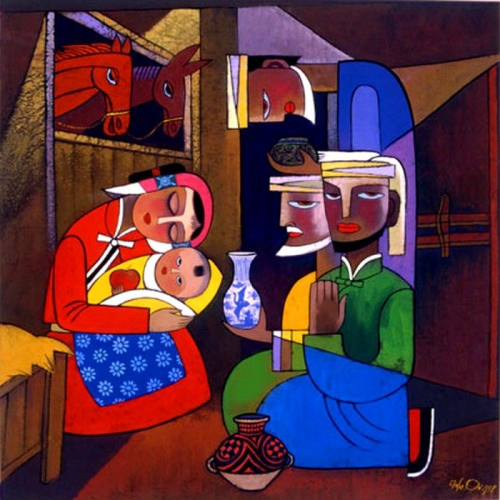
The Boy Jesus in the Temple by He Qi

Every year Jesus’ parents went to Jerusalem for the Festival of the Passover. When he was twelve years old, they went up to the festival, according to the custom. After the festival was over, while his parents were returning home, the boy Jesus stayed behind in Jerusalem, but they were unaware of it. Thinking he was in their company, they traveled on for a day. Then they began looking for him among their relatives and friends. When they did not find him, they went back to Jerusalem to look for him. After three days they found him in the temple courts, sitting among the teachers, listening to them and asking them questions. Everyone who heard him was amazed at his understanding and his answers. When his parents saw him, they were astonished. His mother said to him, “Son, why have you treated us like this? Your father and I have been anxiously searching for you.”

“Why were you searching for me?” he asked. “Didn’t you know I had to be in my Father’s house?” But they did not understand what he was saying to them.

Then he went down to Nazareth with them and was obedient to them. But his mother treasured all these things in her heart. And Jesus grew in wisdom and stature, and in favor with God and man. (New International Version)

It’s a terrible sinking feeling to lose a kid. Unfortunately, I’ve done it with all three of mine – and multiple times with the youngest. I’ve even lost other people’s kids. Oy. Yet, I can say that I’ve never had the dubious distinction of losing God.

We have come through the season of Advent and anticipated the birth of Christ. We have celebrated Jesus on Christmas Day. Now, we’re looking to perhaps settle back into a more normal routine of life. Joseph and Mary were trying to do the same, too.

One year, when Jesus was young, they were traveling back to Nazareth – only to discover Jesus was not with them! They lost God.

They aren’t the only ones to search for Jesus. A lot of other people are searching for him, too. They’ve traveled throughout their lives thinking Jesus was with them – only to find he isn’t with them. They lost God. 

Too many people go about their daily lives without realizing Jesus is even missing. They simply assume he’s here. But he isn’t. So, let’s search for him. And in finding him, may we see Jesus as we have never saw him before, so that our faith in God might be strengthened and we do not end up losing him yet again.

Joseph and his family traveled in a large caravan, which was common for that day. They were on their camels an entire day before they discovered Jesus was missing. Mary likely assumed Jesus was riding on the other camel with Uncle Zechariah. 

But he was neither with him nor with cousin John or Aunt Elizabeth. So, the second day Joseph and Mary traveled back, hoping and praying they wouldn’t find Jesus in the ditch, like in the story of the Good Samaritan. Having not found him along the road, they spent the third day scouring Jerusalem in search of Jesus. 

Young Jesus in the Temple by Haitian artist Jean-Baptiste Bottex

Turns out, this whole time, Jesus was at the temple. A parent myself, I’m not a bit surprised that a twelve-year-old stayed behind and thought nothing of it. 

Jesus was curious and inquisitive with the rabbis at the temple. Those ancient teachers taught in a different way than we do today. They gave instruction more like a modern day counselor or therapist. The rabbis didn’t just impart information; they asked questions to help people discover truth for themselves. And the rabbis were amazed at Jesus’ ability to discover truth.

Keep in mind that Jesus was not a thirty-year-old adult in a twelve-year-old body. Christ was sinless but still immature. The human experience involves growth and maturation. Jesus shared fully in our humanity, not partially. When Christ was born, he was not a fully aware adult looking through baby eyes.

Because Jesus is fully human, he had to grow up just like us and learn in every way, just like us. Staying in Jerusalem was not a rebellious act by Jesus. It was typical. Twelve-year-old’s do all kinds of things without saying anything to their parents. There’s a world of difference between being rebellious and plain old garden variety immaturity. It’s unwise for adults to expect adult behavior from adolescent kids.

Jesus felt a deep need to stay and talk with the rabbis. As a human boy, he had to go through the process of self-discovery… of discovering he was the Son of God… of reading the scriptures for himself and learning… and finding he was reading about himself! 

We believe in one Lord, Jesus Christ, the only Son of God,
eternally begotten of the Father,
God from God, Light from Light,
true God from true God,
begotten, not made,
of one being with the Father;
through him all things were made.
For us and for our salvation
he came down from heaven:
was incarnate of the Holy Spirit and the Virgin Mary,
and became truly human.

Nicene Creed, 325 C.E.

To say that Jesus simply knew everything because he was God is to fall into a heresy the early church condemned at the Council of Nicaea called Docetism. It is the belief that Jesus is fully God and only appeared to be human. No, the Council said, Jesus was really a human being and didn’t just appear to be one. He is like us, in every way, except sin.

Well, of course, Joseph and Mary finally found Jesus. It seems Jesus got the third degree from his mother: “What do you mean putting your father and I through this? I gave you birth, and you treat us like this?  What were you thinking?  What part of meeting at the two-humped camel at 9:00 don’t you understand?”

Since Jesus grew in wisdom and stature and in favor with God and others, how much more do we need to put ourselves in a position to grow and learn and develop and mature? 

There is no spiritual zap machine in which God miraculously imparts into our brains all the wisdom and knowledge we need. Rather, emulating our Lord, we must learn, grow, read, pray, ask questions, struggle, and dialogue about the good news of Jesus Christ with each other. In short, we must discover the truth of God.

Perhaps Jesus is asking us, as he did to Mary and Joseph, “Why were you searching for me?  Didn’t you know that I had to be in my Father’s house?” 

One person tells the following story: 

“Back when my wife and I were dating, she worked as a temp at a bank. In the first two weeks of that job, she noticed some very unprofessional behavior among the team and their supervisor. The supervisor took long coffee breaks with the employees, sitting and gossiping with them.”

“A new employee, a woman in her thirties who came on staff a week before my wife, was shunned. If she walked up and tried to join the conversation during a coffee break, the conversation ended. The group, including the supervisor, made jokes about her behind her back and laughed at the way she dressed. They rolled their eyes and winked at each other when she was present. It was obvious this newbie worker was perceived as an unnecessary intrusion.”

“Two weeks into the temp job, my wife walked into the office on a Monday morning and was surprised to find a much different scenario. No gossiping, no kidding around, no long coffee breaks. All the employees were diligently working. The previous supervisor had been replaced. The cliquish team addressed the new supervisor with formal, businesslike respect. The new supervisor was not a stranger. It was the 30-something woman who had been shunned and mocked.”

“It turned out the bank had hired her to be the new supervisor from the first day she came on the job three weeks before, but the bank had concealed her true identity so she could observe the work style of the team.”

In some ways, this resembles the coming of Christ to earth. In his first coming, Jesus Christ revealed his true identity and glory to his true followers, but to those who did not believe, his glory was largely hidden by his humanity. Following his resurrection, Christ ascended to the right hand of God, where he rules all things. One day he is coming again to the earth to establish his glorious kingdom over everything. At that time there will be no mistaking who is in charge. 

Let us not lose our way and lose God in our every-day life.  Let us be with Jesus and with him grow in wisdom and stature, and in favor with God and others.