Psalm 29 – The Power of Words

thunderstorm church

Ascribe to the Lord, O heavenly beings,
ascribe to the Lord glory and strength.
Ascribe to the Lord the glory of his name;
worship the Lord in holy splendor.

The voice of the Lord is over the waters;
the God of glory thunders,
the Lord, over mighty waters.
The voice of the Lord is powerful;
the voice of the Lord is full of majesty.

The voice of the Lord breaks the cedars;
the Lord breaks the cedars of Lebanon.
He makes Lebanon skip like a calf,
and Sirion like a young wild ox.

The voice of the Lord flashes forth flames of fire.
The voice of the Lord shakes the wilderness;
the Lord shakes the wilderness of Kadesh.

The voice of the Lord causes the oaks to whirl,
and strips the forest bare;
and in his temple all say, “Glory!”

The Lord sits enthroned over the flood;
the Lord sits enthroned as king forever.
May the Lord give strength to his people!
May the Lord bless his people with peace! (NRSV)

I have always felt comforted during thunderstorms. Having grown up in the Midwest of America, strong thunderstorms are a given every summer. When my daughters were small children and frightened by the loud clap of thunder, I would say to them, “That’s just God letting us know he is powerful and watching over us.” Indeed, he is.

God spoke and stirred up a storm… So, they cried out to the Lord in their distress, and God brought them out safe from their desperate circumstances. God quieted the storm to a whisper; the sea’s waves were hushed. (Psalm 107:25, 29-30, CEB)

Yet, there is even more going on in today’s psalm than a reminder of God’s glory and power over all creation. God’s very voice is the source of all the power. In the beginning God created the heavens and the earth – with words. The Lord Almighty spoke the entire world into existence. God’s words are generative, that is, the speech of God creates and gives life. When God’s voice goes forth, things happen.

God said, “Let the waters under the sky come together into one place so that the dry land can appear.” And that’s what happened. (Genesis 1:9, CEB)

The way God gives is through speech. Yes, the mechanism of God’s provision for us is words. This means language is vitally important. The Lord creates, gives, sustains, and blesses his creatures through language. Out of all creation, humans are the only creatures formed in the image and likeness of God.

God said, “Now we will make humans, and they will be like us. (Genesis 1:26, CEV)

People, then, are capable of speech. What is more, we as people with the ability of language have the capacity to form generative words. We have the God-given means to give life with our speech.

“Life and death lie in the power of language” –Helen Keller

I believe we all intuitively know this is true. As we reminisce the history of our lives, we can observe events where another’s words impacted us so significantly that it was as if they gave us the gift of life. We never forget those words. We also have had times when another’s words cut us emotionally and it felt as if a part of us died. We tend to remember those as well, and they hold us back in our own life-giving speech to ourselves and others.

“The godless destroy their neighbors by their words, but the righteous are saved by their knowledge.” (Proverbs 11:9, CEB)

So, it is quite necessary for us to listen to the voice of the Lord. God’s speech does not disappoint or destroy. God’s Word is eternal life. The better we listen to God, the better we can have the generative power of words to provide life for others. It only takes a cursory look at Holy Scripture to realize that words are powerful and are to be used with great care. We are all to continually develop the craft of “wordsmithing” so that we might ascribe to the Lord the glory due his name as well as bless the world.

“As a tree gives fruit, healing words give life, but dishonest words crush the spirit.” (Proverbs 15:4, NCV)

The language we use—spoken and written words, sign language, facial expressions, bodily gestures, singing—helps us understand ourselves and lets us create relationships with others. Our words give us the power to describe our past, define our present, and dream of our future.

“Words from wise people are like water bubbling up from a deep well—the well of wisdom.” (Proverbs 18:4, ERV)

We adults may balk at the notion that words are anything more than a creative expression. Yet, as I believe is typical with most things, children are closer to the kingdom of God. They effortlessly make connections between words and reality whereas us older folks barely have an idea this even occurs. My grandson once remarked when I was talking to him about being cautious at the playground, “How am I supposed to meet new people if I can’t talk to strangers?”

“When I asked my son (5 years old) how his day was, he said it was awesome. I asked him what made it so awesome – his response was ‘because I wanted it to be.’” – Tanya Niedzwiecki (Huffington Post, November 2015)

The voice of Lord exhibits a mighty God who has the power to create and recreate with but a word. As people in God’s likeness, our words are powerful tools to be used with wisdom and care. Our speech allows us to praise God and encourage one another. Even more, the use of language enables us to speak into existence new realities for ourselves and others. May those words bring forth hope and blessing to a world in need of healing.

Mighty God, King all powerful, I am overwhelmed before such awesome majesty, and my response to your voice is reverent worship through Jesus Christ, your Son, my Lord, who lives and reigns with you and the Holy Spirit, one God, now and forever. Amen.

Trinity Sunday – The God of Wholeness

oak tree 2

We live in a fundamentally broken world. Systemic racism, political gridlock, social stratification, hate crimes, alcohol and domestic abuse, ageism, disease, malpractice, terrorism, and xenophobia barely scratch the surface of sad societal ills and we face living in this old fallen world. Indeed, it is all quite distressing. To realize wholeness and integrity will require operating the mechanism of blessing.

“May the grace of the Lord Jesus Christ, the love of God, and the fellowship of the Holy Spirit be with you all.” (2 Corinthians 13:14)

This is the blessing I leave with my congregation each Sunday. A divine blessing involves the wholeness and integrity of the triune God given to us through grace, love, and fellowship. Holding each facet of that blessing together can sometimes be a challenge.

There was a time in my life when I golfed every day. Even though I played a lot of golf, it was rare for me to have an entire round where my driving, approach shots, chipping, and putting all worked nicely together. My typical experience was that when my driving was superb, my chipping and putting was awful; or, that when my putting was amazing, my approach shots were atrocious. Rarely did I have the whole package of a solid golf game put together in one seamless round. Instead, my game, along with most amateur golfers, is typically disjointed with a combination of brilliant shots and ugly shanks.

The Christian life can seem the same way – with the ability to show love and grace, be open and caring on some days, and not so much on other days. We need God – the triune God. Within God there is complete wholeness, a total well-rounded divine Being.  As we connect with this Being, then we can experience God’s wholeness and integrity, which leads to our own consistent daily wholeness, with no divided herky-jerky self.

The Trinity – Father, Son, and Spirit – provides us with a model of wholeness and displays how it all comes together in a solid consistent life of blessing. There is a beautiful connection between the Trinity and our lives.  It is a path to wholeness that involves healing, hope, and spiritual health based in the triune God.

Healing

The grace of Jesus enables us to pull ourselves together. Jesus is the one who has brought reconciliation and restoration – he has made the bridge and connection to God. In response to this grace we aim for perfection (not perfectionism) pull ourselves together” and restore and heal ourselves. Since Jesus is the Reconciler, the one who restores and heals, we are to allow that grace to wash over us and seep deep into our souls so that we experience reconciliation, restoration, and healing.  When we are broken and disjointed, the grace of Jesus sets us back in place again.

Tim Hansel

The late Tim Hansel was a teacher and mountain climber. He wrote a book many years ago entitled, You Gotta Keep Dancin’: In the Midst of Life’s Hurts, You Can Choose Joy! Hansel lived with chronic debilitating pain for thirty-five years after a climbing accident where he literally fell off a mountain and shattered most of the vertebrae in his back. In his long journey of coming to grips with his painful existence, Tim Hansel discovered that wholeness can certainly come through brokenness. Healing can happen with pain still present. Maturity can occur through painful growth of the human spirit. He constantly said to people, “Pain is inevitable; but misery is optional.” He explained to others, “Character is developed through adversity and pain. That adversity can either destroy us or build us up, but it will not leave us the same, depending upon our chosen response to it.  Pain can either make us better or bitter.”

Even if you do not experience the kind of healing and restoration of body or soul you are looking for, maybe, like Tim Hansel, you will receive grace and freedom that the loving triune God gives. God himself lives with observing the terrible pain of humanity’s hurts every day. The more we participate in the life of God, the greater is our ability to deal with pain – our own as well as the pain of others.

Hope

The fellowship of the Holy Spirit enables us to receive comfort. The Spirit is the Paraclete, the one who encourages by coming alongside and helping. The Spirit works with us, intimately participating in our lived everyday experiences. The Spirit is God’s means of experiencing wholeness. The Holy Spirit lovingly appeals to us in ways we can understand and act – speaking words of comfort and exhortation with the commitment to a faithful presence. Since the Spirit is committed to helping us, thus, we are to help others through living in fellowship with them.

John-Wesley

When John Wesley was a young Christian, a seasoned saint advised him, “Do you wish to serve God and go to heaven? Remember you cannot serve him alone. You must therefore find companions or make them. The Bible knows nothing of solitary religion.” Wesley took that advice to heart. Convinced that the pursuit of personal holiness was impossible apart from Christian community, he carefully organized the Methodist movement (a reaction against solitary religion) into societies (congregations), classes (small groups of eight to twelve), and bands (accountability groups of three to five).

We are meant to receive the encouragement of the Spirit. The Holy Spirit does not hold back in providing us with the help we need to live the Christian life in the form of other believers. We are all important. If we are not healed, we hurt and then hurt others. However, with healing comes hope, and hope encourages us that it will not always be this way – there are better days ahead.

Hope helps us to see beyond the immediate pain, hard circumstance, or adversity to what God can do through the help and power of the Holy Spirit. Just as there is complete and whole fellowship within the triune God, so there can be wholeness of fellowship with us. Christianity is not a solitary religion; it involves companions and fellow disciples for the journey.

Health

The love of God the Father is our peace. God’s unconditional love brings spiritual health to the Body of Christ and to the world. Within God there is complete and total love – a wholeness in which everything God does expresses loving-kindness.

Unity and peace happen when there is health in the church and the world. It is the fruit of love. Love for one another brings unity of prayer and purpose. It is love that brings about peace and harmony. It is love which solidifies compassion in circumstances of adversity.

We are meant to receive the Father’s love. Love brings people together and enables them to become conduits of the loving nature of God to others. There is no other path to spiritual health and sanity than the journey of love.  And love most often gets messy because we get into the muck of people’s lives with all their needs and hurts. Sometimes it takes a tragedy before some folks show love. So, live each day with no regrets as if it were your last and Jesus was coming today.

The Trinity

God the Son, Jesus Christ, brings healing because of his grace.

God the Holy Spirit brings hope because of his encouragement.

God the Father brings health because of his love.

Because of the Trinity, our work is clear:

The Body of Christ brings healing to the world because it bestows grace.

The Body of Christ brings hope to the world because of its encouragement.

The Body of Christ brings health to the world because of its love.

May the grace of the Lord Jesus Christ, and the love of God, and the fellowship of the Holy Spirit be with you all, now and forever. Amen.

John 14:15-17 – Love and the Trinity

Trinity Love

[Jesus said] “If you love me, keep my commands. And I will ask the Father, and he will give you another advocate to help you and be with you forever— the Spirit of truth. The world cannot accept him because it neither sees him nor knows him. But you know him, for he lives with you and will be in you.” (NIV)

“The best love is the kind that awakens the soul and makes us reach for more, that plants a fire in our hearts and brings peace to our minds.”–Noah, from the movie, The Notebook

“Dear friends, let us love one another, for love comes from God. Everyone who loves has been born of God and knows God.” (1 John 4:7)

Love makes the world go around. Love is the invisible spiritual and emotional atom giving our lives substance, energy, and meaning. God is that atom, constantly creating love within himself in an explosion of attentive fatherly protons, gracious messianic neutrons, and active Spirit electrons.

In this post Day of Pentecost time, as well as the anticipation of Trinity Sunday, we are reminded of the connection between God the Son, God the Father, and God the Spirit. Yes, as today’s Gospel lesson demonstrates to us, Christians serve a triune God – one God in three persons. Many metaphors have been attempted (attempt is the right term for my atom analogy) to try and explain the Trinity. The truth is, although some images are helpful, they all fall short. That is because I can no more explain God than I can explain my wife and daughters. Just as females are an enigma to males, so God moves, acts, and speaks in ways that are ofttimes puzzling to humanity. Maybe that is why Jesus said the world does not discern or accept the Holy Spirit. Far too many folks like nice tidy answers to clear questions. Jesus babbling about some person living in us appears highly nonsensical to a chunk of humanity.

So, for me, I continually come back to what I know and understand about the Trinity: It is an intimate fellowship of love. In love, the Father and the Son have sent the Spirit to be with us forever – the Spirit of truth. In a world where evidence-based reasoning typically eschews any sort of intuitive knowledge, there are many learned people who believe spiritual matters are best left to guys like me. Yet, we severely truncate our ability to know anything if our epistemic presuppositions are bereft of knowledge beyond our five senses. For Christians and many other spiritually sensitive people, we discern there are senses beyond taste, touch, sight, smell, and hearing. Indeed, for those with spiritual eyes to see and ears to hear, there is a vast multi-dimensional world far above and beyond the habitation of our three-dimensional space. And love binds it all together.

I once asked an extremely secular-minded friend about love. He talked of loving words and actions that are derived from biological instinct and well-developed brain chemistry. After he spoke at some length about this, I simply asked him, “Does that kind of understanding about love help you in your relationships, especially with your girlfriend?” He looked at me like I had caught him with his hand in the cookie jar. “It doesn’t – and we are not doing so well in our relationship.”

I am not here to make digs at secular thinkers. In fact, I deeply appreciate the many friends I have whose worldviews are quite different than mine. I just have personally discovered that the Bible rings true for me (and it did not for many years when I was younger) and that the Trinity is a reality because of the Holy Spirit’s witness of truth in me.

Trinity Love 2

Love is a matter of the gut and the head as well as the heart. Love can no more be relegated to limited spheres of being than a mule can be tamed with nicely asking him to settle down. Love is much too big, expansive, and powerful to be contained. So, it resides within God because God is the only Being which can hold it. God’s words and actions are not merely loving – God himself is love. And God lovingly bestows that love to us in measures and in ways we can absorb it and know it. Just as people can die of a broken heart, so their hearts can burst if filled with such overwhelming love. The Father and the Son have graciously given the Spirit to be a kind of steward of love within us – dispensing love with great care and attention in ways we feel it and may not be able to explain it with words.

I take great solace in the fact that the Holy Spirit is my Advocate. We all have times in our lives when we just cannot seem to get anywhere – or do not have the ability to express what we want. In such times, we need an advocate, someone who has the weight to be heard by others – someone who has our back when we are experiencing limitations. The Spirit is such a person. And the Spirit advocates for us in loving ways for all parties involved. The only thing impossible for God is to be unloving and unkind; it is not in his nature. Because of divine love, God sent the Son, then the Spirit, to be with us forever so that we would never be alone and always have someone to champion our well-being.

Living in obedience to the God of Love is sheer joy and delight. Laboring for the Lord seems almost effortless when we have a true vision of God high above, surveying all creation with eyes of love for his people – as well as a vision of God below and right next to us, listening with rapt attention to our every word and himself delighted with each movement we make.

Look upon us, O Lord, and let all the darkness of our souls vanish before the beams of your brightness. Fill us with holy love, and open to us the treasures of your wisdom. All our desires are known to you, therefore, perfect what you have begun and what your Spirit has awakened us to ask in prayer. Turn your face toward us and show us your great love and glory. Then shall our longings be satisfied, and our peace shall be perfect.

–A Prayer of St. Augustine, 354–430 CE

Job 38:12-21 – So You Think You Know?

storm

“Have you commanded the morning since your days began, 
    and caused the dawn to know its place, 
so that it might take hold of the skirts of the earth, 
    and the wicked be shaken out of it? 
It is changed like clay under the seal, 
    and it is dyed like a garment. 
Light is withheld from the wicked, 
    and their uplifted arm is broken. 

“Have you entered into the springs of the sea, 
    or walked in the recesses of the deep? 
Have the gates of death been revealed to you, 
    or have you seen the gates of deep darkness? 
Have you comprehended the expanse of the earth? 
    Declare, if you know all this. 

“Where is the way to the dwelling of light, 
    and where is the place of darkness, 
that you may take it to its territory 
    and that you may discern the paths to its home? 
Surely you know, for you were born then, 
    and the number of your days is great! (NRSV) 

The older I get, and the more understanding I gain, the more I realize how little knowledge I truly possess. When I was eighteen years old, I thought I had the world pretty much figured out. Since then, it has all been downhill. With each passing year, my ignorance seems to grow exponentially. I suppose this all really makes some sense when talking about God’s upside-down kingdom. So much more of life is a mystery to us than we realize. 

The more discernment I get, the less, I discover, I know. 

Seems like the biblical character of Job found this out the hard way. If there is any person in Holy Scripture that would be wise and understanding, its him. God speaks highly of Job in the Bible. Regarding the upcoming destruction of Jerusalem, God said, “even if these three men—Noah, Daniel and Job—were in it, they could save only themselves by their righteousness, declares the Sovereign Lord” (Ezekiel 14:14). Job is held up as the model of patience under suffering: “As you know, we count as blessed those who have persevered. You have heard of Job’s perseverance and have seen what the Lord finally brought about. The Lord is full of compassion and mercy” (James 5:11).  

Yet, with all of Job’s integrity, patience, and righteousness his understanding can barely get a movement on the Richter Scale of God’s expansive knowledge. We likely are somewhat familiar with the story of Job. Being a conscientious follower of God, Job is careful to live uprightly. He acknowledges God in all things and worships him alone. Yet, suffering befell him – for no other reason than that God allowed it. Job knew fully well that there was no personal sin behind his awful ordeal of grief and grinding pain. 

So, Job contended with God. For an agonizing thirty-five chapters (Job 3:1-37:24) Job questions God and respectfully takes him to task – as Job’s supposed friends questioned him and assume his guilt. Through it all God is there silent… saying nothing. Then, just when we think God is paying no attention, he suddenly speaks. What is so remarkable about God’s speech is that for the next four chapters (Job 38:1-41:34) he gives no answers. It is all questions. God said,

“Brace yourself like a man; I will question you and you shall answer me” (Job 38:3). 

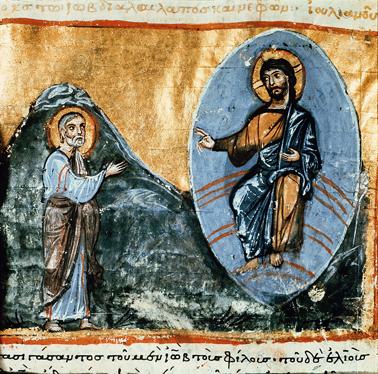
God Questions Job
God questions Job. From a 12th century Byzantine text.

It becomes abundantly clear after just a few questions that it would be impossible for any human being to even come close to having the understanding to answer anything God asks. And that was the whole point. God is God, and we are not. Our questions, however legitimate, real, and raw they are, come from a very puny perspective. In other words, we just don’t know as much as we think we do. 

To Job’s great credit, he keeps his mouth shut and listens. At the end of the questioning, Job responds in the only wise way one could after such an encounter:

“Surely I spoke of things I did not understand, things too wonderful for me to know” (Job 42:3). 

None of this means that, for us, we need to face our hardships and our sufferings with a stoic keep-a-stiff-upper-lip approach. Trapped grief will inevitably come out sideways and only cause more hurt. I believe God allowed Job to express his terrible physical, emotional, and spiritual pain for chapter after chapter because he needed to. Only when God sensed it was the proper timing did he jump in and bring the perspective Job then needed. And even after being challenged by God about his vantage point, Job still did not receive answers as to why he had to endure the awfulness of loss beyond what most of us could comprehend. 

Maybe we lack being able to understand even if God directly answered all our questions. Most likely, God protects us from knowing things that might bring irreparable damage to our human psyches. Again, this is all pure conjecture. Which leaves us with perhaps one of our greatest challenges as human beings: We must eventually come to the place of being comfortable with mystery – and even embracing it.

We simply will not have all things revealed to us that we want to know. And that’s okay.  

There is yet one more comment to observe about God’s questioning of Job. God is sarcastic. Sarcasm often gets a bad rap, much like anger does, because it is so often associated with unacknowledged emotions and/or expressing our feelings in an unhelpful way. Yet, there the sarcasm is, with the God of the universe. I must admit, I take some odd comfort in knowing that God can be snarky at times – in a good way. Anytime we try to pin God down to nice neat understandable categories, he typically colors outside our human contrived lines and demonstrates to us that he cannot be contained in our ramshackle box. I like it that God is playful, wild, and free to be himself – even if there are times it may bug me. 

God is unbound by any human knowledge, understanding, ideas, or plans. God will do what God will do. God will be who he will be. “I AM who I AM,” he once said. Now that’s a God I can put my trust in. 

O Lamb of God that takes away the sins of the world, have mercy upon me. 

O Lamb of God that takes away the sins of the world, have mercy upon me. 

O Lamb of God that takes away the sins of the world, grant me your peace. Amen.