2 Samuel 15:13-31 – Unflagging Trust

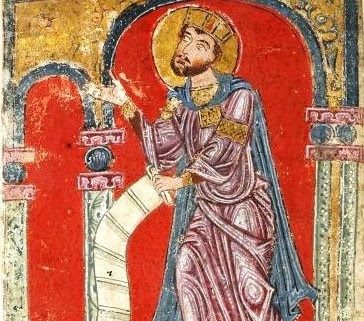
Stained glass of King David, Fringford, England church

A messenger came and told David, “The hearts of the people of Israel are with Absalom.”

Then David said to all his officials who were with him in Jerusalem, “Come! We must flee, or none of us will escape from Absalom. We must leave immediately, or he will move quickly to overtake us and bring ruin on us and put the city to the sword.”

The king’s officials answered him, “Your servants are ready to do whatever our lord the king chooses.”

The king set out, with his entire household following him; but he left ten concubines to take care of the palace. So, the king set out, with all the people following him, and they halted at the edge of the city. All his men marched past him, along with all the Kerethites and Pelethites; and all the six hundred Gittites who had accompanied him from Gath marched before the king.

The king said to Ittai the Gittite, “Why should you come along with us? Go back and stay with King Absalom. You are a foreigner, an exile from your homeland. You came only yesterday. And today shall I make you wander about with us when I do not know where I am going? Go back and take your people with you. May the Lord show you kindness and faithfulness.”

But Ittai replied to the king, “As surely as the Lord lives, and as my lord the king lives, wherever my lord the king may be, whether it means life or death, there will your servant be.”

David said to Ittai, “Go ahead, march on.” So Ittai the Gittite marched on with all his men and the families that were with him.

The whole countryside wept aloud as all the people passed by. The king also crossed the Kidron Valley, and all the people moved on toward the wilderness.

Zadok was there, too, and all the Levites who were with him were carrying the ark of the covenant of God. They set down the ark of God, and Abiathar offered sacrifices until all the people had finished leaving the city.

Then the king said to Zadok, “Take the ark of God back into the city. If I find favor in the Lord’s eyes, he will bring me back and let me see it and his dwelling place again. But if he says, ‘I am not pleased with you,’ then I am ready; let him do to me whatever seems good to him.”

The king also said to Zadok the priest, “Do you understand? Go back to the city with my blessing. Take your son Ahimaaz with you, and also Abiathar’s son Jonathan. You and Abiathar return with your two sons. I will wait at the fords in the wilderness until word comes from you to inform me.” So Zadok and Abiathar took the ark of God back to Jerusalem and stayed there.

But David continued up the Mount of Olives, weeping as he went; his head was covered, and he was barefoot. All the people with him covered their heads too and were weeping as they went up. Now David had been told, “Ahithophel is among the conspirators with Absalom.” So, David prayed, “Lord, turn Ahithophel’s counsel into foolishness.” (New International Version)

“Faith is taking the first step even when you don’t see the whole staircase.”

Martin Luther King, Jr.

It’s an understatement to say that King David had family drama.

Maybe that’s because he had a lot of wives and even more kids. Or it could be that being a king didn’t transfer well to being a father. And it just might be that his experience was mostly about simply living in a fallen world, full of icky relational dynamics and human conflict.

David seemed to be at his best when at his lowest. His son, Absalom, carefully designed a conspiracy to take over the kingdom. And it was looking as though he might just do it. David, and those loyal to him, fled Jerusalem to avoid being overthrown and killed. They were between a rock and a hard place, to put it mildly. David was literally running for his life.

If we put ourselves in David’s sandals, how would we respond? 

I suppose, at the least, we would likely complain. Who is Absalom that he should dishonor his father in such a way as this? Then, we may try and find ways to maintain power, and get back at Absalom for being a rebellious and destructive son. 

I am humbled by David’s unflagging trust in God. Like the suffering Job centuries before him, David was willing to receive anything from the hand of God, whether for good or evil. He wholesale accepted whatever seemed good to God, without attempting to force anything on the Lord. “Let God do to me what seems good to him,” was the faith affirmation of David.

Yet, at the same time, David was aware and in touch with his emotions as he left the city and ascended the Mount of Olives. He wept and lamented over the situation he and all those with him had to experience. 

A thousand years later, Jesus took the same trek out of the city in great sorrow because of people who conspired against him. Christ faced the agony of the cross through the machinations of sinful humanity who did not want him as Lord over their lives.

Our confidence must rest in the God who is never caught unaware of our situations and always knows how to respond. We must rely on our prayers to the Lord as we navigate the difficulties of this life. 

Humility goes a long way toward letting the will of God rule the day.

O Lord, please turn the plans and the counsel of evil persons into foolishness. Do not let the sinfulness of people have its way and run roughshod over my life.  I trust in you to bend a bad situation toward your own good purpose through Jesus Christ my Lord.  Amen.

Matthew 5:8 – Blessed Are the Pure in Heart

“Blessed are the pure in heart,
    for they will see God.” (NIV)

“You’re blessed when you get your inside world—your mind and heart—put right. Then you can see God in the outside world.” (MSG)

“What bliss you experience when your heart is pure. For then your eyes will open to see more and more of God.(TPT)

“A pure heart means a single heart, a heart in which only one desire lives: love.”

Peter Kreeft

An Impure Scenario

Suppose a young man courts a young woman. They get to know one another, fall in love, and get married. On their wedding day, as they leave the church building and speed away, the young couple reminisce about love and life.

But when the groom begins to speak about a future together, the bride, with a smile on her face says, “Okay, you can pull over now.” The groom, completely smitten with his new bride, does exactly what she asks. The young woman gets out of the car and, blowing a kiss, says, “This was fun. Maybe I’ll see you around sometime.”

“I don’t think this is funny,” says the groom. “Hey, we had a great time, right!?” the perky bride says. “Yes, responds the groom, “and it will last forever.” “Oh, you are such a darling,” the bride says, and with a wry smile, “but I’ll be in touch.”

“Huh, what!?” the confused groom says. “Yeah, I’ll call. We’ll get together,” says the bride without flinching. The groom, now also feeling heartsick says, “I don’t understand. What’s going on?”

“Dear, I just need my space. It’s not like I don’t care! I have other things to do. Other men to see….”

Yes, a ridiculous and improbable scenario. Yet one which is repeated every day, multiple times a day. For the groom is the Lord God almighty; and the bride is the church….

Purity and God

Purity is a big deal to God. The phrase, “pure in heart,” is Christ’s way of upholding the biblical call to holiness. To be pure is to have no mixed motives, no hidden agendas, and no side job of moonlighting with the world while being an upstanding kingdom citizen during the day. It isn’t letting Jesus court us and marry us, only to have us walk away and do whatever the heck we want. It’s not only impure and unholy. It’s plain wrong and messed up.

Through blessing the pure in heart, Jesus was connecting us to the Old Testament ethic of being holy. The book of Leviticus, rarely the focus of any preacher or parishioner alike, is completely given to the topic of holiness. The detailed laws about daily life, including what to wear and not wear, what to eat and not eat, even who to marry and not marry, were given for a reason.

God wanted the ancient Israelites to have daily reminders that they are a holy people. So, there was to be no mixing of fabrics, no meat and cheese together, no impurities introduced into any part of life. Everything about the Jewish lifestyle was to be holy, set apart to God, reminding the people that God is their husband, committed to them with responsibilities on the part of both. It was called a “covenant.”

Leviticus 19 leaves no stone unturned on the activities of life:

The Lord said to Moses, “Speak to the entire assembly of Israel and say to them: ‘Be holy because I, the Lord your God, am holy’….

Do not steal. Do not lie. Do not deceive one another. Do not swear falsely by my name and so profane the name of your God. I am the Lord. Do not defraud or rob your neighbor….

Do not pervert justice; do not show partiality to the poor or favoritism to the great but judge your neighbor fairly….

Do not go about spreading slander among your people. Do not do anything that endangers your neighbor’s life. I am the Lord. Do not hate a fellow Israelite in your heart. Rebuke your neighbor frankly so you will not share in their guilt. Do not seek revenge or bear a grudge against anyone among your people but love your neighbor as yourself. I am the Lord.

Do not mate different kinds of animals. Do not plant your field with two kinds of seed. Do not wear clothing woven of two kinds of material.” (Leviticus 19:1-2, 11-13, 15-19, NIV)

Yes, indeed, purity is a big deal to God. The “Holy” Spirit is the Divine Person completely devoted to doing only the will of the Father and Son – never going rogue. The Spirit is the One who effects sanctification, becoming holy, within the life of the believer. Each year we celebrate “Holy” Week, a stretch of days designed to be different than the rest – devoted to journeying with Jesus and not mixing with the fickle crowd who would scream at the end of the week, “Crucify him! Crucify him!”

Purity and Us

To follow Jesus in true righteousness is to be pure in heart, that is, set apart wholly and completely for him. Purity of heart is a fruit from the trunk of righteousness, which grew up in the soil of God’s grace, with roots of humility and meekness – all watered by the tears of godly mourning.

The pure in heart are those who acknowledge their sin, deal with it, and live with a clear and clean conscience before God and the world. They have an awareness of their wrongs and shortcomings without succumbing to self-criticism because of an equal awareness of God’s grace. They keep short accounts with others concerning what they have done or what they should have done. They are holy. They are sanctified. They are pure in heart.

The pure in heart will see God. They know they cannot make themselves pure, so they keep looking to Jesus for their forgiveness because they hunger for righteousness.

One cannot whitewash a wishy-washy commitment with Jesus and be pure. This blessed Beatitude has to do with our motives and what takes place in our thinking and in our hearts.  What do you think about when your mind slips into neutral?  Is it coveting after things or people, or does thinking go toward what is true, noble, right, pure, lovely, and admirable?  Sometimes we struggle with purity of heart because we are focused not on Jesus, but on our own performance and perfection instead of letting God fill our hungry hearts.

Purity results from true righteousness.  A stalk of corn might look good, but if you shuck it and it’s filled with worms, it isn’t going to be worth much. Legalistic righteousness and empty promises of doing better are concerned to look good, not to mention they are obsessed with performance, perfection, and possessions. 

But the righteousness of God fills our hungry hearts and makes us pure and holy, set apart for divine use and divine purposes. How, then, shall we live? What will we do?

The earth is the Lord’s, and everything in it,
    the world, and all who live in it;
for he founded it on the seas
    and established it on the waters.

Who may ascend the mountain of the Lord?
    Who may stand in his holy place?
The one who has clean hands and a pure heart,
    who does not trust in an idol
    or swear by a false god.

They will receive blessing from the Lord
    and vindication from God their Savior.
Such is the generation of those who seek him,
    who seek your face, God of Jacob. (Psalm 24:1-6, NIV)

The person with integrity shall see God. Those made pure with the cleansing blood of Jesus Christ will someday stand before God at the Last Judgment and there find mercy and acceptance.

So, for now, until that time, we daily have the opportunity to focus on our one true love with loyalty and commitment, enjoying God’s presence continually. Because the Lord will never leave us, nor forsake us, even when we sometimes forsake him.

Almighty God, to you all hearts are open, all desires known, and from you no secrets are hidden. Cleanse the thoughts of our hearts by the inspiration of your Holy Spirit, that we may perfectly love you, and worthily magnify your holy name, through Christ our Lord. Amen.

Matthew 7:7-11 – Ask. Seek. Knock.

“Keep on asking, and you will receive what you ask for. Keep on seeking, and you will find. Keep on knocking, and the door will be opened to you. For everyone who asks, receives. Everyone who seeks, finds. And to everyone who knocks, the door will be opened.

“You parents—if your children ask for a loaf of bread, do you give them a stone instead? Or if they ask for a fish, do you give them a snake? Of course not! So, if you sinful people know how to give good gifts to your children, how much more will your heavenly Father give good gifts to those who ask him. (New Living Translation)

In the dog days of summer, and the long season of Ordinary Time in the Church Calendar, it is good to be reminded of what it is we need to keep doing without giving up.

At the conclusion of his Sermon on the Mount, Jesus issued a warning about the pitfall of failing to persist in a trusting relationship with God. We are to have an ongoing dynamic of asking, seeking, and knocking.

We might too often neglect to ask, seek, and knock because we rely on our own determination, abilities, education, or observations. The action of the three action words is a reference to prayer. The idea is that it is difficult to live a virtuous life, so we must continually ask, seek, and knock to receive an answer.

The demands of Christian discipleship are significant. Throughout Christ’s Sermon, he not only dealt with the outward actions of a follower but also the inward state of the heart.

Humility, meekness, mercy, purity, and peace characterize the inner person who walks in the way of Christ. Not only is murder wrong, but the bitter anger which it produces is to be dealt with. Adultery is also a violation of God’s law, along with the impure thoughts and intents of the heart which bring it about. Love for enemies, giving from the heart, praying with appropriate motives, fasting in secret, and building treasure in heaven are all expectations of the devout Christian believer.

These are inner attitudes and outward behaviors which require a constant stream of asking, seeking, and knocking on the door of heaven. They are more than natural abilities; what Jesus is looking for is to live a supernatural life. This, then, requires supernatural resources.

“I am the door, and the person who enters through me will be saved and will be able to come in and go out and find pasture.”

Jesus (John 10:9, NCV)

No one enters God’s realm because of sheer determination. God’s kingdom is only accessed through humble prayer. God is the One with the supernatural resources to help us live the Christian life.

And God is pleased to provide what we need to live that life. The Lord answers in love and not begrudgingly. Out of the infinite storehouse of grace, God delights in hearing our asking’s, responding to our seeking’s, and answering our knocking’s. With God, there is no daydreaming while we ask, no avoiding us when we seek, and no pulling the shades as the door is being knocked.

In love, God looks forward to our asking, seeking, and knocking.

The key takeaway from today’s Gospel lesson is repetition – not vain repetition which believes that the more prayer is repeated, the greater possibility of the answer we want – but a routine lifestyle of persistently and consistently praying.

Ask

You want things, but you don’t get them. So, you kill and are jealous of others. But you still cannot get what you want. So, you argue and fight. You don’t get what you want because you don’t ask God. Or when you ask, you don’t receive anything, because the reason you ask is wrong. You only want to use it for your own pleasure. (James 4:2-3, ERV)

James, learning from his brother, Jesus, gets behind the asking to the heart of why we ask and why we do not ask. This, in no way, is to discourage us from asking or to be doubtful whether God cares about our asking, or not. James also said:

But anyone who needs wisdom should ask God, whose very nature is to give to everyone without a second thought, without keeping score. Wisdom will certainly be given to those who ask. Whoever asks shouldn’t hesitate. They should ask in faith, without doubting. Whoever doubts is like the surf of the sea, tossed and turned by the wind. People like that should never imagine that they will receive anything from the Lord. They are double-minded, unstable in all their ways. (James 1:5-8, CEB)

Seek

If you seek the Lord your God, you will find him if you seek him with all your heart and with all your soul. (Deuteronomy 4:29, NIV)

Seek the Lord while he may be found, call upon him while he is near. (Isaiah 55:6, NRSV)

Prayer is much like a wrestling match. It requires a great deal of effort. In fact, every good thing in life demands blood, sweat, and tears. We are to keep on seeking, to continue searching and looking for God amid our life circumstances. The Lord will be found.

Knock

God has said, “When you pray, I will answer you. When you call to me, I will respond.” (Isaiah 58:9, GNT)

The balance to the continual searching and diligently seeking is the immediate answer to our knocking on heaven’s door.

And God has also said, “I will answer their prayers before they finish praying.” (Isaiah 65:24, CEV)

It is to God’s glory whether our prayers are answered quickly, or not. It is to our glory that we exercise our own ability to enter God’s throne room and ask, seek, and knock. We have the assurance that whatever the answer is from God, it will always be a merciful response.

For God mercifully gives us what we ask for, and also mercifully does not give us what we ask for.

We do not know what tomorrow may hold for us. All we know for certain is that we are known by a God who hears when we ask, is worth seeking, and answers when we knock.

O God, you are my God, early and often I will seek you. New are your mercies every morning, O Lord; and great is your faithfulness. Pour out on all who desire it the spirit of grace. Deliver us, when we draw near to you, from coldness of heart and wanderings of mind, that with steadfast thoughts and affections we may worship you in spirit and in truth, through Jesus Christ our Lord. Amen.

Galatians 6:1-10 – Fulfill the Law of Christ

Brothers and sisters, if someone is caught in a sin, you who live by the Spirit should restore that person gently. But watch yourselves, or you also may be tempted. Carry each other’s burdens, and in this way you will fulfill the law of Christ. If anyone thinks they are something when they are not, they deceive themselves. Each one should test their own actions. Then they can take pride in themselves alone, without comparing themselves to someone else, for each one should carry their own load. Nevertheless, the one who receives instruction in the word should share all good things with their instructor.

Do not be deceived: God cannot be mocked. A man reaps what he sows. Whoever sows to please their flesh, from the flesh will reap destruction; whoever sows to please the Spirit, from the Spirit will reap eternal life. Let us not become weary in doing good, for at the proper time we will reap a harvest if we do not give up. Therefore, as we have opportunity, let us do good to all people, especially to those who belong to the family of believers. (New International Version)

Its all about grace. God’s grace. In Christ, lived by means of the Holy Spirit. Its not about hard black-and-white lists of rules or principles to live by. The Law of Christ is to help each other in our troubles, no matter what.

Overwhelming physical, mental, emotional, and/or spiritual burdens can become even more heavy through failing to live up to someone’s or some group’s or a church’s unwritten list of rules. “Keep a stiff upper lip.” “Everything is possible for those who love God.” “Stay positive.” “Just have faith and trust God.” Or worse, silence…. These and hundred other phrases communicate to people with crushing loads that they will have to carry them alone.

The letter to the Galatian believers spells out what is to truly characterize Christian interactions, and what it means to walk in the Spirit. Believers in Jesus are to emulate the behavior of Christ, the ultimate burden-bearer, who came to restore sinners, not condemn them.

We have a responsibility to rescue, renew, and revitalize persons who have lost their way. We are our brother’s and our sister’s keeper.

Someone caught in the crosshairs of a bad decision, or ensnared by making a wrong step, who is now in over their heads, needs help. In such a case, we are to restore, not punish. The person’s wound needs spiritual cauterizing. The broken spirit needs to be set back into place to heal properly.

The tone and the attitude which we do this important work of restoring people is through gentleness (meekness). We are to have a mindset and heart stance which understands there is no moral superiority with me. I could easily be the person in need of restoration.

When we have a gentle spirit, then we discern we are not above falling into the same trouble. We, too, are ethically and morally vulnerable. So, the church has a corporate responsibility to bear one another’s burdens.

There are other people who, through no fault of their own, find themselves in over their heads, too. Their health and mental health challenges, the emotional weight of hard circumstances, and their broken spirits require others to help shoulder the load so that the weighted-down person is not crushed.

Nobody in any faith community is above doing this work of burden-bearing. And it isn’t appropriate for an individual to boast about the burden-bearing work of others, as if it were theirs. You and I are to take responsibility for our own actions and attitudes without taking credit for someone else’s efforts.

A mature spiritual community of people are able to distinguish those loads which individuals must bear for themselves, and those burdens where help is sorely needed. We are accountable to carry our own backpack. And we are also accountable before Christ to share our load with others when it becomes too heavy for us.

If we choose not to allow others to assist us when we need it, then we will reap what we sow – we’ll feel the full weight and consequences of our silence. The planting and harvesting metaphor isn’t just for those who have engaged in wrongdoing. It is also for those who don’t put any seeds in the ground to begin with. They shouldn’t expect a harvest, at all.

Grace lived out in real experiences knows when to get under a load and help carry it. And grace also knows when to be kind to self and share the heavy burden with others who can help shoulder it for a bit. This is Christianity which relies on the enablement of the Spirit, made possible by Christ, who carried our crushing weight of guilt and shame for us.

Our Christian freedom in Jesus is to be stewarded wisely through carrying one another’s burdens, and so, fulfilling the Law of Christ.

God of all comfort, our help in time of need: We humbly pray to relieve and restore persons in need, people for whom are tired, sick, weary, or unable to continue as they are. Look upon them with the eyes of your mercy; comfort them with a sense of your goodness; preserve them from the temptations of the enemy; and give them patience under their affliction. In your good time, restore them to holistic health, and enable them to live their lives to your glory; and may they dwell with you in life everlasting; through Jesus Christ our Lord. Amen.