Love Never Fails

“When we ask whether someone is a good man, we are not asking what he believes, or hopes, but what he loves.” St. Augustine

I believe there are few things in life which have sustainability and permanence, things which make the world go ‘round. Love is one of them; maybe even the greatest of them.

Love Language

And yet, in the English language, we really only have one word for “love.” That strikes me as curious and interesting.

I enjoy language and languages, as well as the use and smithing of words. One observation I’ve made about language is that any particular society, culture, or nation has several words for whatever is important or valuable to them.

For example, Indonesia has seven different words for the one English word “rice.” Since rice is so vital to the life of the people, it makes sense that they have several words to bring out all of the various nuances of “rice.”

By contrast, the West simply places adjectives in front of “rice” when needed (i.e. white or brown or jasmine). So, what does it say about us, about me and my fellow Americans, when we have only one word for “love?”

We certainly have plenty of words for “money.” It does little good to even use the word “money” unless one is speaking in very general terms. Americans make liberal use of words like “stocks and bonds,” “cash,” “checking and savings accounts,” etc. We even have several words for institutions which handle money: banks, savings and loans, credit unions, and mutual organizations.

Indeed, what does it say about us that we have a plethora of words for money? What’s more, in contrast to our one word for “love,” what does this tell us about Western society in general?

No wonder that American society has a love problem. Even when we borrow words for love from other languages, we seem to transform it into something else.

The Greek word “phileo” is engrafted into many of our English words such as philosophy (love of wisdom); philanthropy (love of humanity); or Philadelphia (brotherly love).

Often the last thing on our minds about the city of Philadelphia is an association with love; philanthropy is widely understood as being generous with one’s money (there it is again!); and few people think of love when describing philosophy.

Please know that it’s not my purpose to rant about American culture. I just want us to think about how we tend to use the word, and the implications of that use.

Oftentimes, I find that my own understanding of the word tends to be in contrast with so many other uses of “love.”

St. Augustine and Love

I admit to being influenced most heavily by St. Augustine and Holy Scripture. Augustine was enamored with love. That’s likely because he knew what it felt like to be on the outside of God’s redeeming love in Christ. For Augustine, love explains everything. Love is to be our true nature, and the proper direction of everything we say and do in this world, insisted Augustine.

Augustine, of course, derived his understanding from Jesus – especially from the New Testament Gospels:

“Love the Lord your God with all your heart and with all your soul and with all your mind.’ This is the first and greatest commandment. And the second is like it: ‘Love your neighbor as yourself.”

Matthew 22:37-39, NIV

Unless there is love, we go nowhere – which is precisely what seems to be happening in our world today. Apart from love, there are no social problems which can be alleviated; no wars which will stop; and no rights and respect extended to particular people. Without love, peace and happiness are nothing but a pipe dream.

It is imperative that we have a robust understanding and practice of love. If we don’t, I believe that we are ruined, no matter how savvy or powerful we are.

Designed For Love

People are designed for love; it is our very purpose. And if we go against our basic inherent design, it will be like disrespecting gravity itself by walking off the roof of the house in the wrongheaded belief that I won’t get hurt.

Fullness of life (and fullness of any religious practice) comes only through love. In Christianity, it is clearly understood that God is Love with a capital “L.” Thus, we were created in love, stamped with the image of God’s love, and expected to love one another.

Love is so ubiquitous throughout the Bible that listening to a biblical sermon on love every day for the rest of your life would not exhaust love’s height, depth, breadth, and width within Scripture.

It is an understatement to say that love is the goal of religion, the purpose for being, and the best expression of human community.

For in Christ Jesus neither circumcision nor uncircumcision has any value. The only thing that counts is faith expressing itself through love. (Galatians 5:6, NIV)

For the entire law is fulfilled in keeping this one command: “Love your neighbor as yourself.” (Galatians 5:14, NIV)

Love does no harm to a neighbor. Therefore love is the fulfillment of the law. (Romans 13:10)

Love never fails. (1 Corinthians 13:8, NIV)

And this is my prayer: that your love may abound more and more in knowledge and depth of insight… (Philippians 1:9, NIV)

The thing about love is that it can either get choked-out, or it can flourish. Love gets suppressed by attaching ourselves to things rather than people. This is a gross misuse of our capacity for love. A radical detachment from stuff may be necessary in order to gain relational connection.

On the other hand, by learning to direct our love toward God and neighbor (and, by the way, our neighbor is everyone we encounter) we begin to discover the peace of being in sync with the way the universe is wired.

We need salvation from our own worldly self. For it is this false self which the devil can so easily deceive and woo us from attachments to God and neighbor. In other words, we must be saved from ourselves, because left to ourselves, there is no hope for us.

To be lost is to be fooled by my own ego that the false self is the true self. To live and love in God is the essence of the true self.

That means humility, gentleness, peaceful relations, mercy, and purity characterize us. If it doesn’t, we’ve been fooling ourselves by believing that peace can only be achieved through unconditional winning; and that I am not responsible for my neighbor’s welfare and well-being.

Here’s a little test of where you might be in your false self/true self, and in your actual ability to love: The more importance you attach to your own ideas, your own abilities, and your own work, the more you will find yourself building up the very idea of you. This inevitably comes out by condemning other people and becoming judgmental of most things they do. If we are continually critical of others, we have lost sight of love.

The true self, however, recognizes and remembers that I am made in the image and likeness of God; that God is my very reason for existence; and that, therefore, love is my true identity because God is Love.

That’s right. Love is your genuine true character, deep down. The late Trappist monk, Thomas Merton, got it right when he said:

“If I do anything or think anything or say anything or know anything that is not purely for the love of God, it cannot give me peace, or rest, or fulfillment, or joy.” Thomas Merton, Seeds of Contemplation

This is one reason why it’s so important to love my neighbor. Since God’s love is truly within me, hardwired into my very existence, this love can come to you and me from any person, any direction, any time.

Love comes not only directly from God, but also indirectly by means of the jewel of love placed within the other person I am encountering.

For it is only in love that we at last can become real. If we feel unworthy of love, we will probably feel that other persons are not worthy of it either. This is where hate is born, and why it manifests itself so hideously in a politics of hate where large groups of people are simply labeled as “monsters” or “evil.”

But that’s really only a projection of how the person feels about themselves. And the only way out of it for the hateful person is to know that they are loved – irrespective of one’s worth.

If and when we become out of sorts, it is best to come back to love. Which means returning to my first and original love, God; and to the love that I actually have for the people in my family and my life.

Maybe it’s high time we start inventing all sorts of new words for love in the English language. Because, after all is said and done, Love never fails.

“Your Faith Has Made You Well” (Luke 17:11-19)

Jesus heals ten lepers, with one returning to give him thanks

On the way to Jerusalem Jesus was going through the region between Samaria and Galilee. As he entered a village, ten men with a skin disease approached him. Keeping their distance, they called out, saying, “Jesus, Master, have mercy on us!” When he saw them, he said to them, “Go and show yourselves to the priests.” And as they went, they were made clean. Then one of them, when he saw that he was healed, turned back, praising God with a loud voice. He prostrated himself at Jesus’s feet and thanked him. And he was a Samaritan. Then Jesus asked, “Were not ten made clean? So where are the other nine? Did none of them return to give glory to God except this foreigner?” Then he said to him, “Get up and go on your way; your faith has made you well.” (New Revised Standard Version)

Ten persons seeking healing called out to Jesus. And they got it. Yet, those persons were much more than passive receivers of healing. And Jesus was more than simply a giver.

Even though the lepers had heard about Jesus, they did not personally know him. It seems that – from their perspective – they had a chance encounter with Jesus. When they least expected a healing, a healing happened.

They called out to Christ, recognizing who it was that had entered their village. There was enough faith present for the diseased persons to make themselves known to Jesus – to expectantly put themselves out there and cry out for a healing to happen.

If you think about it, the power of any healing is really in the connection of being seen and heard in crying out to Jesus.

Although the healing of a person can come through a wondrous miracle, healing most often happens by the beautiful act of mutuality and participation. That is, the healer and the one in need of healing encounter each other with the willingness to both give and receive.

It’s in real human connection that healing happens. And it’s more than a physical cure; it’s also a healing reconnection of persons who were once isolated from the community. In other words, the healed person no longer needs to be on the outside of society, but can once again be a full participant in neighborhood and community.

Faith is central to what happens in the healing process. We all have some agency in realizing our own healing. We need not be passive spectators just wishing for things to be different.

Our anxiety and/or discouragement of present circumstances can move to a different place. We can discover relief through participating in social activities, taking walks in nature, and other modes requiring us to actively make a meaningful connection.

It requires faith.

Where faith is present, relational interaction and participation happens. In this context, a healing can occur. Rarely, if ever, does healing happen in complete isolation from others.

The fact that Jesus declared to the cleansed leper, “your faith has made you well,” indicates the mutuality of the healing encounter.

Let’s keep in mind that it takes at least two in order to have a healing: the healer and the healed one. Both participate together in the healing.

What’s more, when Christ heals, he heals without prejudice or favoritism.

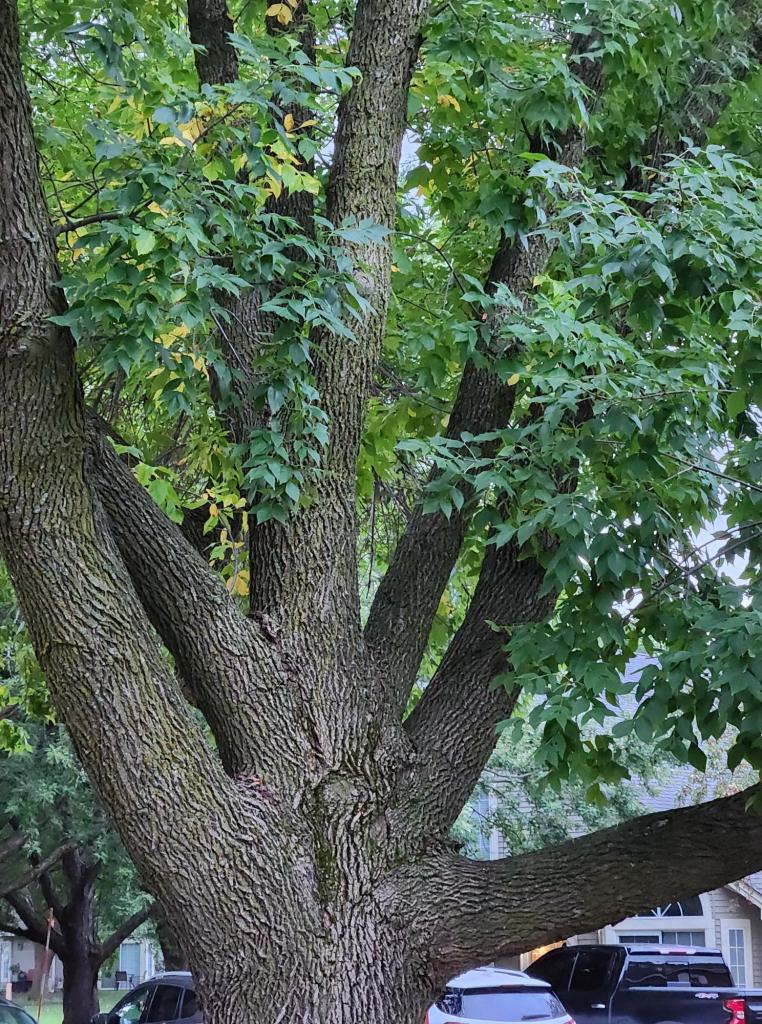
In my front yard is a large ash tree with broad and expansive boughs. It is the ultimate shade tree. The tree’s name is Bob (I have a tendency to name trees, especially the ones I enjoy daily). Bob and I share the similarity of being created by the same Creator; and we both glorify God by simply being who we are created to be.

For Bob, he provides shade to people and animals without prejudice or favoritism. Anyone who comes under his great limbs can enjoy his shade. All that is needed for the protective and enjoyable experience of Bob’s boughs is a person under him.

Although it is appropriate to highlight the need for gratitude and praise in today’s story, the narrative itself builds to the climax of faith, of a participatory experience between Jesus and the leper(s).

And it did not matter if the persons healed were lepers, Samaritans, or even miscreants. What mattered was the faith-dialectic of the healer Jesus and the ones to be healed. All may enjoy the grace of divine shade if they move to becoming participants together with Christ by merely coming under his mercy.

I find that many people get hung-up about faith. We often make faith either too simple or too difficult. We create an overly simplistic faith when it becomes a completely passive affair of just waiting on God, or expecting someone else to heal me. We make faith a great difficulty whenever it becomes all about our level or amount of faith through the strenuous effort of intense prayer and contacting umpteen prayer chains.

But more or less prayer, more or less work, more or less of anything misses the point – because even a puny amount of faith will do, if it moves toward Jesus and seeks the participatory experience of a divine/human relation.

There is a cost to healing. It requires participation, relationship, and most of all, the humility to be seen and heard, instead of trying to control some sort of process to get the healing I want.

We call this genuine participation faith.

When the Son of Man comes, will he find faith on the earth? (Luke 18:8)

The only thing that counts is faith expressing itself through love. (Galatians 5:6)

Your faith has made you well. (Luke 17:19)

In your love, O God of all, your people find healing. Grant that the pains of our journey may not obscure the presence of Christ among us, but that we may always give thanks for your healing power as we travel on the way to your kingdom; through Jesus Christ, your Son, our Lord, who with you and the Holy Spirit are one God, now and forever. Amen.

Increase Our Faith? (Luke 17:5-10)

The apostles said to the Lord, “Increase our faith!” The Lord replied, “If you had faith the size of a mustard seed, you could say to this mulberry tree, ‘Be uprooted and planted in the sea,’ and it would obey you.

“Who among you would say to your slave who has just come in from plowing or tending sheep in the field, ‘Come here at once and take your place at the table’? Would you not rather say to him, ‘Prepare supper for me; put on your apron and serve me while I eat and drink; later you may eat and drink’? Do you thank the slave for doing what was commanded? So you also, when you have done all that you were ordered to do, say, ‘We are worthless slaves; we have done only what we ought to have done!’ ” (New Revised Standard Version)

Here’s a simple observation of today’s Gospel text: Because Christ’s apostles said to the Lord, “Increase our faith!” they were acknowledging that they did not have enough faith.

But is that really true? Did the apostles – or do any of us – lack the faith we need to live the sort of life Jesus wants us to live?

I know that I sometimes feel like I have such little faith that it prevents me from being the person I want to be, and to do the good things I want to do. Yet, if I’m honest with myself, I truly don’t lack for anything in living out my faith. For God has already given me what I need.

God is good, all the time. Divine resources are always present. The Spirit dwells within us.

I’m reminded of Peter’s encouragement:

His divine power has given us everything we need for a godly life through our knowledge of him who called us by his own glory and goodness. (2 Peter 1:3, NIV)

Jesus gave his disciples a hard answer to their request for faith. Perhaps hearing a bit of exasperation in the Lord’s voice, Christ communicated to them that they already have all the faith they need.

It’s never about the amount of faith. That’s because we already have enough faith. It doesn’t take much faith to radically change things. It’s much more an issue of accessing the faith which has already been provided for us.

Indeed, even if we have faith the size of a tiny little mustard seed, we could command a tree to be uprooted and throw itself into the sea. (Matthew 17:20; Mark 11:20-25)

Therefore, the apparently weakest of people in the world actually have the power to move mountains and uproot trees.

For example, when a sinful woman poured out expensive ointment on Jesus and applied it with her hair, Christ responded with a resounding “Your faith has saved you.” (Luke 7:50)

Furthermore, when a blind beggar longed to see again…

When a Samaritan leper looked for healing…

When a woman reached out and touched a tassel of the Lord’s garment…

When and a Gentile Roman Centurion came to Jesus on behalf of his ailing servant…

Christ affirmed the existing faith which was present with them – and each one of them therefore experienced the healing they so expected to realize. (Luke 3:48; 7:9; 18:42; 17:19)

In God’s economy, there is no distinction between basic trust in God and the faith that uproots trees. There is absolutely no need to try and manipulate spiritual forces in order to access a special kind of supernatural power. That’s what the pagans of old were always trying to do with their religion.

Getting a right or particular formula for a healing or a miracle is the stuff of other religions, not Christianity. For the Christian, something else is going on with faith.

What is impossible for us is possible with God. The issue with faith is where it is placed, and not with how much or how little you have. Any amount of faith that is directed to Jesus is more than enough. Even a mustard-seed-sized faith.

When participating in the sacrament of communion, you may wonder why a quarter-sized communion wafer is supposed to feed you anything. But this is communicating something important about our faith: Even a tiny portion of bread can fill and satiate the Christian’s need for spiritual sustenance.

A little bit of Jesus goes a very long way, no matter how many are gathered around the Table.

Having faith involves possessing thoughts, feelings, and actions which are thoroughly transformed by God. In other words, it involves being a “slave” of God, being a person who is devoted to engaging in God’s purposes for this world.

Whenever we engage in our work as servants of God, there’s no need for medals and accolades; we are simply doing what is expected of us. Our faith is quite enough to sustain us in doing our normal work in the world. Nothing added or unique is needed.

So, how do we access the faith needed to live the Christian life, in order to please God and bless the world? We do the work which is expected of us.

Then, we will find and see that the faith is there to do and to say what is needed. We need not wait for it; the faith is already there. But we will have to act if we want to see faith in action.

God of all ages, you have revealed your grace to us in the Savior, Jesus Christ our Lord. As we actively live into your mercy, strengthen us to do justice, to love mercy, and to walk humbly with You. May we accomplish Your divine will and live by the faith You have so graciously provided for us; through Christ, who lights the way to everlasting life. Amen.

Learn To Do Good (Isaiah 1:1, 10-20)

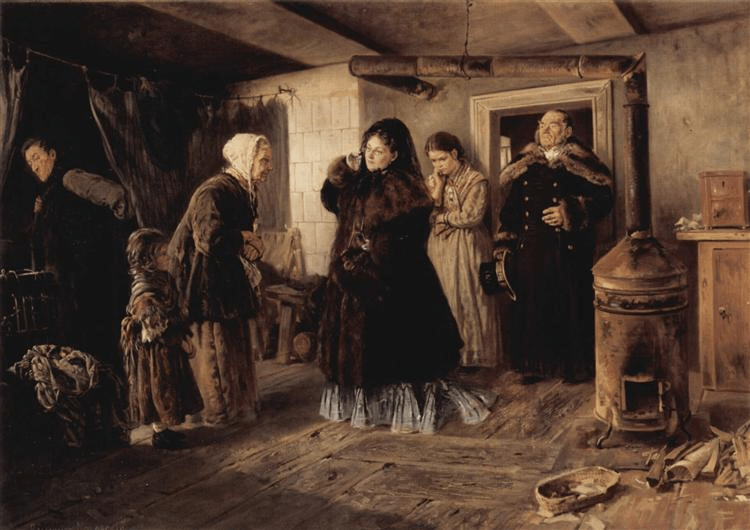
Visiting a Poor People, by Vladimir Makovsky, 1874

The vision of Isaiah son of Amoz, which he saw concerning Judah and Jerusalem in the days of Uzziah, Jotham, Ahaz, and Hezekiah, kings of Judah…

Hear the word of the Lord,
    you rulers of Sodom!
Listen to the teaching of our God,
    you people of Gomorrah!
What to me is the multitude of your sacrifices?
    says the Lord;
I have had enough of burnt offerings of rams
    and the fat of fed beasts;
I do not delight in the blood of bulls
    or of lambs or of goats.

When you come to appear before me,
    who asked this from your hand?
    Trample my courts no more!
Bringing offerings is futile;
    incense is an abomination to me.
New moon and Sabbath and calling of convocation—
    I cannot endure solemn assemblies with iniquity.
Your new moons and your appointed festivals
    my soul hates;
they have become a burden to me;
    I am weary of bearing them.
When you stretch out your hands,
    I will hide my eyes from you;
even though you make many prayers,
    I will not listen;
    your hands are full of blood.
Wash yourselves; make yourselves clean;
    remove your evil deeds
    from before my eyes;
cease to do evil;
    learn to do good;
seek justice;
    rescue the oppressed;
defend the orphan;
    plead for the widow.

Come now, let us argue it out,
    says the Lord:
If your sins are like scarlet,
    will they become like snow?
If they are red like crimson,
    will they become like wool?
If you are willing and obedient,
    you shall eat the good of the land,
but if you refuse and rebel,
    you shall be devoured by the sword,
    for the mouth of the Lord has spoken. (New Revised Standard Version)

Today’s Old Testament lesson is a stout and ancient warning against an age-old problem: Worshiping properly on a high holy day, yet living an evil and unjust life the rest of the days. It’s the mentality of “I give to God what’s required on the Sabbaths and festivals, so I can therefore do what I want the rest of the time, because that’s my stuff and my time.”

Just to be clear: That sort of evil thinking and behavior will raise the ire of the Lord every time. It’s dichotomous messed-up thinking. It’s the wrongheaded notion of believing that my financial and professional success is obviously a validation of God’s blessing upon me.

However, motives of gaining more wealth, rather than being motivated by humility, meekness, righteousness, purity, mercy, and peacemaking, will end badly, no matter who we are.

One of the problems here is an arrogant assumption that we’re right in what we are doing. We feel justified in living a duplicitous life. I have power, authority, and wealth; you do not. Thus, I’m right; you’re wrong; and I can do whatever the heck I want because God is on my side, not yours.

In terms of contemporary Christianity, this is the megachurch mentality: Since there are so many church attenders and money being placed in the offering plates, this is an unquestioned sanction from God of our rightness.

Then, when Sunday passes and Monday comes, both parishioner and pastor feel justified in using their wealth in ways that are inconsistent with the ways and words of Jesus.

Indeed, many times the name of Jesus is rarely (if ever) used in justifications of living the rich life. A blind eye is turned away from the poor and needy. When pressed, far too many parishioners admit to the belief that the poor are underprivileged because of their own personal sin.

Such “Christians” get away with their injustice before God, largely because there is a mass of churchgoers who honor the wealthy and give them places of authority and power.

They think God has shown favor by “blessing” particular people and communities with wealth (because God would never bless someone with poverty!). This can even go so far as to elect a leader of a nation because he is exorbitantly rich. Never mind his daily immorality, meanness, and lying; God has blessed him, right?

Wrong! So says the prophet Isaiah. Judah and Jerusalem, in their hubris, claimed special status. They are God’s people; others are not. They believed they had divine immunity from judgment. After all, only the Judeans worshiped the Lord; all other nations were pagan worshipers.

But their worship and sacrifices, in Isaiah’s day, were offered with no concern for justice and righteousness. So, God called them to repent; and gave them a chance to learn how to please the Lord.

And what pleases God is removing evil and learning to do good.

“Good” is defined by God as seeking to meet the needs of the common people; rescuing those who are oppressed; defending the cause of the orphan, and pleading the case of the widow. There’s no mention of wealth as a sign of divine blessing.

In reality, Judah’s situation before God was pitiful. They failed, even refused, to do justice, love mercy, and walk humbly. Therefore, the Lord called them to repentance and reformation.

Just because Jerusalem had the temple, this sacred space didn’t inoculate the people from judgment. The bald fact of the matter is that the people were living with self-destructive habits of stupidity. And God had enough of it.

In essence, the Lord said to Judah, “Let’s get serious about this.” Despite all the disobedience, God was willing to entertain the people’s change of heart and life – that is, if they themselves were willing to do so.

It’s important for all of us to “have it out with God,” to engage the Lord forthrightly, passionately, intelligently, and realistically.

There are really only two choices: Choose life or choose death. Choose to connect in meaningful, right, good, and just ways with God and neighbor; or choose to disconnect from others and do whatever the heck you want.

Each of our choices impacts what will happen tomorrow and into the future.

Decisions consistent with justice, righteousness, and goodness will ultimately go well for us. Decision-making borne of selfishness, a lack of mercy, and callousness toward others will create all sorts of problems.

Judah’s practical and existential decision came down to whether they wanted a just and productive society, or an invading Assyrian army. Which would you rather have?

To have a public daily life of disrespect and disregard for the needs of others (and of God!) is to invite being up a stinking creek without a paddle, and no one around to hear the yells for help.

Nothing can ever replace good old-fashioned turning away from hate, unforgiveness, bitterness, and pride; and turning toward what is good, right, just, and godly – and then ordering our collective public life around caring for the least and the lost among us.

May it be so, to the glory of God.

God of judgment and grace, you ask not for sacrifices but lives of trusting faith that acknowledge Your power and mercy. Give us a deep belief in Your sovereign goodness, so that we may follow You all the days of our lives, as did Jesus Christ our Savior and Lord. Amen.