Psalm 14

            George Washington, in his farewell address to the nation in 1796, constructed his encouragements to the American people on the basis of virtue.  Only a virtuous people, Washington believed, could cause the American experiment to succeed among the family of nations.  Virtue, for Washington, could only occur through the twin pillars of religion and morality.  He stated:
 
“Observe good faith and justice towards all nations; cultivate peace and harmony with all. Religion and morality enjoin this conduct; and can it be, that good policy does not equally enjoin it – It will be worthy of a free, enlightened, and at no distant period, a great nation, to give to mankind the magnanimous and too novel example of a people always guided by an exalted justice and benevolence. Who can doubt that, in the course of time and things, the fruits of such a plan would richly repay any temporary advantages which might be lost by a steady adherence to it? Can it be that Providence has not connected the permanent felicity of a nation with its virtue? The experiment, at least, is recommended by every sentiment which ennobles human nature. Alas! is it rendered impossible by its vices?”
 
Washington was no fool.  He understood that the guiding hand of Providence [God] was necessary to the flourishing of a free and happy people.  Indeed, as the ancient psalmist said, “Only a fool would say, ‘There is no God!’  People like that are worthless; they are heartless and cruel and never do right.”  Whatever Washington’s true personal sensibilities were about theology, he did believe that belief in God along with the Scripture’s moral guidance were needed for a fledgling nation.  The people’s ability to recognize and engraft religion into their lives would be a must for America.
 
Becoming untethered from God leads to vice; enjoining God and following him leads to virtue.  It is not wise to ignore the God of all creation.  But through daily attentiveness and devotion to the Lord, moral and ethical ways can take root and produce justice, reconciliation, and peace.


Sovereign God, you rule the nations through your wise and benevolent reign.  Help me to participate with you in your grand kingdom enterprise so that I can make decisions consistent with true morality, for the sake of Jesus.  Amen.

Luke 18:18-30

            One way of looking at this Gospel story of the rich young ruler is that Jesus did an intervention.  The rich man was addicted to wealth and money, but he didn’t see it.  In fact, he thinks he is quite godly and spiritual.  After all, he’s an upstanding citizen, a religious man, and attentive to God’s law.  It’s a sad story because the man walks away un-transformed by his encounter with Jesus and refused to follow him.  He didn’t see himself as hopeless and desperately needing to change.  He held to his denial.
 
            We are all addicted to sin.  If you want to push back on that statement and are thinking, “Well, I don’t have as much money as _____” or, “So-and-so really has a problem with this…” then you are practicing what we call, in terms of addiction, denial.  Truth be told, all of us are in some sort of denial about how much we really trust in paychecks, bank accounts, investments, and a wealth of stuff.  Even people who truly do not have much money can have an addiction by always thinking about money and wishing for it as the answer to their problems, as if wealth is the highest good to attain in life.
 
            Jesus puts the problem of sin out there for us all to see by communicating to us that sin cannot be managed – sin needs to die.  The good news is that through sheer honesty and facing up to our own addiction to things we can find grace.  Grace always has the last word.  Grace trumps addiction to money, stuff, and anything else.  God’s love and acceptance is not based on our screw-ups, but on Christ’s forgiveness through the cross.  Jesus put sin to death.  We are simply invited to bring it out in the open, confess it, and follow Jesus.


            Gracious Lord Jesus, you invite me to follow you.  All I need do is to let go of everything and do it.  That is exactly what I choose to do.  My life is yours; do with it what you will.  Amen.

The Sacred Space of Prayer


“Three times a day he got down on his knees and prayed, giving thanks to his God” (Daniel 6:10).
 
            I really believe that the Old Testament character of Daniel is our best model in all the Bible of a person who exercised a planned, deliberate, and consistent prayer life no matter the situation.  There were two major characteristics of Daniel’s prayer life:  his planned approach to prayer; and, his consistent perseverance of prayer.
 
Our prayers need to be planned with deliberate practice.
 
            Daniel had an intentional plan for prayer.  Daniel did pray spontaneously in his life – all the time.  But that was not his bread-and-butter day-in-and-day-out life of prayer.  Daniel had set times in which he prayed three times a day.  I am not insisting that we all ought to pray at the set times of 6am, 12pm, and 6pm, as Daniel did every day of his life (although I think that is good biblical plan to emulate! – see Psalm 55:17).  However, there needs to be some planning and some intentional purpose behind creating and carving out time for prayer each and every day of our lives.  In other words, we need to approach prayer with the same deliberate discipline that we would approach anything else in our lives, like a person doing housework, a student writing his paper, an athlete preparing and practicing, or an employee getting her work accomplished.
 
            Prayer takes a lot of planning, energy and commitment.  On July 16, 1969 three astronauts (Neil Armstrong, Michael Collins, and Buzz Aldren) went into space aboard NASA’s Apollo 11.  The rocket they were in was carrying over 5 million pounds of fuel.  At the liftoff, it took 5 engines producing over 7 million pounds of thrust in order to reach the velocity of 17,500 miles per hour which was needed to break the earth’s gravitational pull and get them into orbit.  Here’s the deal:  Prayer is the way we escape the gravitational pull of our fleshly lives and enter into God’s orbit.  It takes planning; it takes energy; and, it takes commitment; it takes focus; it takes discipline; prayer takes a lot of fuel.
 
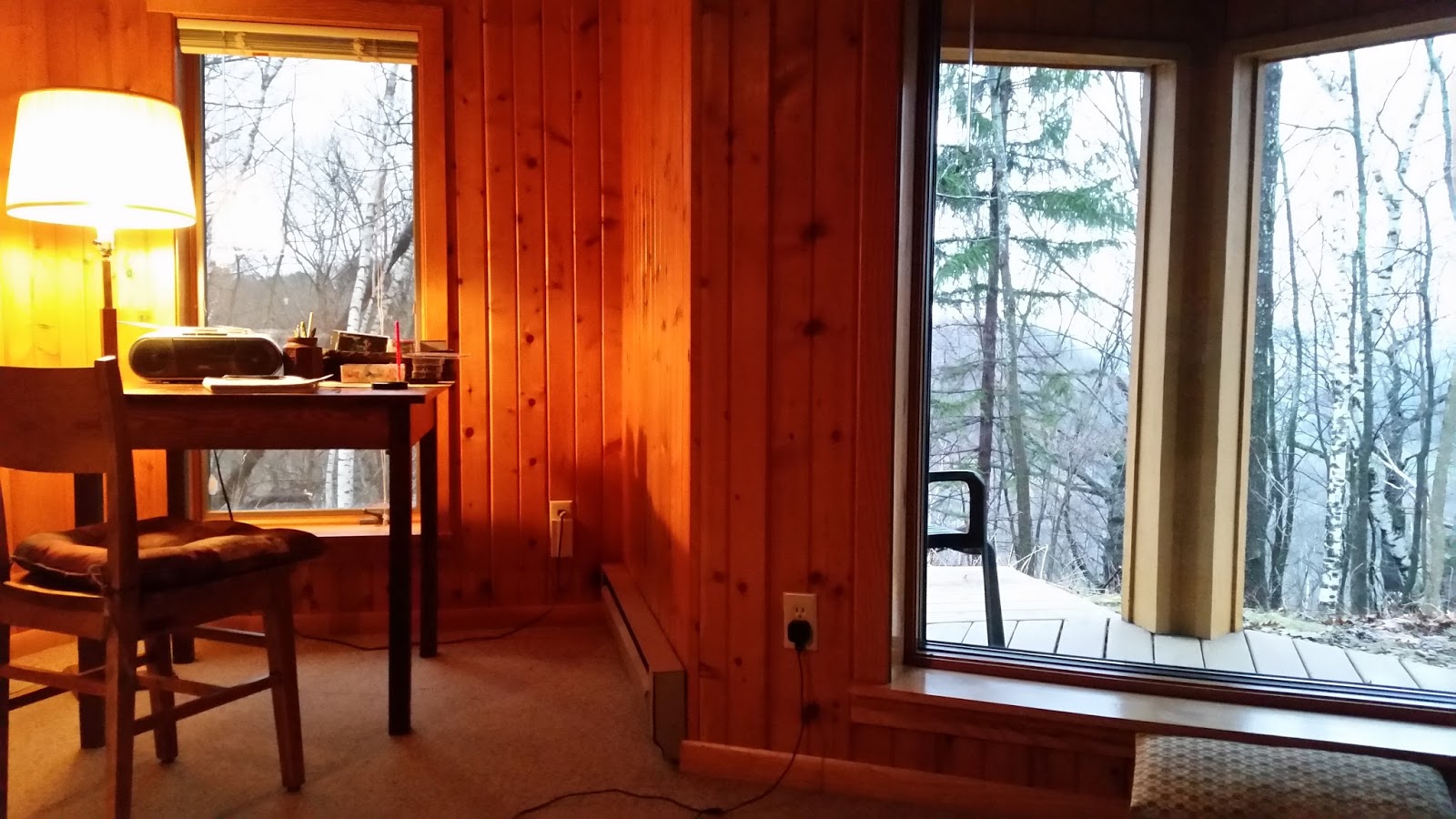
            Using the example of Daniel, we have two plans that need to be worked out in order to engage in and sustain a consistent prayer life:  We need a set time to pray; and, we need a set place to pray.  Just as we set aside a special room in our house just for sleeping (a bedroom); just as we set aside a particular place (a bed) just to sleep; so, we really need a sacred space just for prayer.  Just as we understand that a good night’s sleep will not come with a nap, but with a plan for going to bed and arising in the morning, so we need to arrange a time to get in a particular actual place of prayer and go about the effort and energy of wrestling with God.  If prayer is important, then we will demonstrate and plan for that value by setting aside a place and a time to do it. 
 
Our prayers need to persevere with consistent practice.
 
            Daniel was a teenager when the Babylonians came to Jerusalem, tore down the wall, and took the best young people of the city into captivity.  Daniel lived to be an old man well into his eighties.  For over sixty years, Daniel prayed three times a day, every day, without fail.  His prayers were consistent and sustained.  He never gave up.  The reason he always opened his window and prayed toward Jerusalem is that he was praying consistent with God’s promise that the exiles would someday return to Jerusalem.  He looked out that window every day, three times a day, praying over and over again for the return, for God’s help, and for the peace of his people.


            So you see, in light of this biblical teaching about prayer, why setting aside a special room in your church building and/or home for the expressed intention and practice of prayer is invaluable.  If you have never considered such a room, then I suggest you breach the idea with your pastor or church board.  Apart from God we can do nothing.  Therefore, prayer is not just a nice idea or optional equipment; it is vitally necessary.  So, it only makes sense to create a sacred space where prayer occurs with some planned consistency.

Psalm 2

            Our view of God determines how we live.  If our perception of God is that he is small and ineffective, or does not really see or care about everything that happens on earth, then the response of the nations in Psalm 2 is likely:  “The kings of this earth have all joined together to turn against the LORD and his chosen one.  They say, ‘Let’s cut the ropes and set ourselves free!’”  But if we rightly discern that God is far larger than we can ever imagine and sees all, then we know that “in heaven the LORD laughs as he sits on his throne, making fun of the nations.”  Any group of people who think they can distance themselves from the God of the universe are, at best, delusional, and, at worst, in danger of being swept away like an ant hill.
 
            God blesses and protects everyone who runs to him.  So, we are to be smart and show respect.  The fact of the matter is that God is bigger than anyone or anything.  That is good news for those who serve God and bad news for those who don’t.  The fact of the matter is that nothing can separate God’s people from his love; no nation has more power than God; and, no organization, institution, or government can continue unabated in their unethical ways. 
 
            So, when we face adversity, hardship, and difficulty we have a very large God who has our back.  It might seem in the short term that evil is winning and arrogant people are having their day, but ultimately God is going to deal with it.  Jesus is king, and we are not.


            Immense God, you are sovereign above all creation and everything in the earth.  I choose this day to submit to the words and ways of Jesus, who is the true ruler of all.  May all the nations come to see you for who you really are: the great and wondrous king.  Amen.