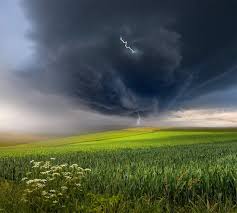
Job 38:12-21 – So You Think You Know?

storm

“Have you commanded the morning since your days began, 
    and caused the dawn to know its place, 
so that it might take hold of the skirts of the earth, 
    and the wicked be shaken out of it? 
It is changed like clay under the seal, 
    and it is dyed like a garment. 
Light is withheld from the wicked, 
    and their uplifted arm is broken. 

“Have you entered into the springs of the sea, 
    or walked in the recesses of the deep? 
Have the gates of death been revealed to you, 
    or have you seen the gates of deep darkness? 
Have you comprehended the expanse of the earth? 
    Declare, if you know all this. 

“Where is the way to the dwelling of light, 
    and where is the place of darkness, 
that you may take it to its territory 
    and that you may discern the paths to its home? 
Surely you know, for you were born then, 
    and the number of your days is great! (NRSV) 

The older I get, and the more understanding I gain, the more I realize how little knowledge I truly possess. When I was eighteen years old, I thought I had the world pretty much figured out. Since then, it has all been downhill. With each passing year, my ignorance seems to grow exponentially. I suppose this all really makes some sense when talking about God’s upside-down kingdom. So much more of life is a mystery to us than we realize. 

The more discernment I get, the less, I discover, I know. 

Seems like the biblical character of Job found this out the hard way. If there is any person in Holy Scripture that would be wise and understanding, its him. God speaks highly of Job in the Bible. Regarding the upcoming destruction of Jerusalem, God said, “even if these three men—Noah, Daniel and Job—were in it, they could save only themselves by their righteousness, declares the Sovereign Lord” (Ezekiel 14:14). Job is held up as the model of patience under suffering: “As you know, we count as blessed those who have persevered. You have heard of Job’s perseverance and have seen what the Lord finally brought about. The Lord is full of compassion and mercy” (James 5:11).  

Yet, with all of Job’s integrity, patience, and righteousness his understanding can barely get a movement on the Richter Scale of God’s expansive knowledge. We likely are somewhat familiar with the story of Job. Being a conscientious follower of God, Job is careful to live uprightly. He acknowledges God in all things and worships him alone. Yet, suffering befell him – for no other reason than that God allowed it. Job knew fully well that there was no personal sin behind his awful ordeal of grief and grinding pain. 

So, Job contended with God. For an agonizing thirty-five chapters (Job 3:1-37:24) Job questions God and respectfully takes him to task – as Job’s supposed friends questioned him and assume his guilt. Through it all God is there silent… saying nothing. Then, just when we think God is paying no attention, he suddenly speaks. What is so remarkable about God’s speech is that for the next four chapters (Job 38:1-41:34) he gives no answers. It is all questions. God said,

“Brace yourself like a man; I will question you and you shall answer me” (Job 38:3). 
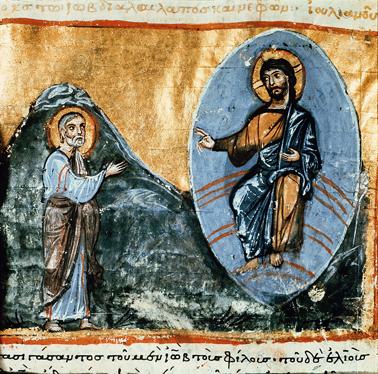
God Questions Job
God questions Job. From a 12th century Byzantine text.

It becomes abundantly clear after just a few questions that it would be impossible for any human being to even come close to having the understanding to answer anything God asks. And that was the whole point. God is God, and we are not. Our questions, however legitimate, real, and raw they are, come from a very puny perspective. In other words, we just don’t know as much as we think we do. 

To Job’s great credit, he keeps his mouth shut and listens. At the end of the questioning, Job responds in the only wise way one could after such an encounter:

“Surely I spoke of things I did not understand, things too wonderful for me to know” (Job 42:3). 

None of this means that, for us, we need to face our hardships and our sufferings with a stoic keep-a-stiff-upper-lip approach. Trapped grief will inevitably come out sideways and only cause more hurt. I believe God allowed Job to express his terrible physical, emotional, and spiritual pain for chapter after chapter because he needed to. Only when God sensed it was the proper timing did he jump in and bring the perspective Job then needed. And even after being challenged by God about his vantage point, Job still did not receive answers as to why he had to endure the awfulness of loss beyond what most of us could comprehend. 

Maybe we lack being able to understand even if God directly answered all our questions. Most likely, God protects us from knowing things that might bring irreparable damage to our human psyches. Again, this is all pure conjecture. Which leaves us with perhaps one of our greatest challenges as human beings: We must eventually come to the place of being comfortable with mystery – and even embracing it.

We simply will not have all things revealed to us that we want to know. And that’s okay.  

There is yet one more comment to observe about God’s questioning of Job. God is sarcastic. Sarcasm often gets a bad rap, much like anger does, because it is so often associated with unacknowledged emotions and/or expressing our feelings in an unhelpful way. Yet, there the sarcasm is, with the God of the universe. I must admit, I take some odd comfort in knowing that God can be snarky at times – in a good way. Anytime we try to pin God down to nice neat understandable categories, he typically colors outside our human contrived lines and demonstrates to us that he cannot be contained in our ramshackle box. I like it that God is playful, wild, and free to be himself – even if there are times it may bug me. 

God is unbound by any human knowledge, understanding, ideas, or plans. God will do what God will do. God will be who he will be. “I AM who I AM,” he once said. Now that’s a God I can put my trust in. 

O Lamb of God that takes away the sins of the world, have mercy upon me. 

O Lamb of God that takes away the sins of the world, have mercy upon me. 

O Lamb of God that takes away the sins of the world, grant me your peace. Amen. 

Psalm 8 – Our Place in the World

Milky Way

Lord, our Lord,
how majestic is your name in all the earth!

You have set your glory
in the heavens.
Through the praise of children and infants
you have established a stronghold against your enemies,
to silence the foe and the avenger.
When I consider your heavens,
the work of your fingers,
the moon and the stars,
which you have set in place,
what is mankind that you are mindful of them,
human beings that you care for them?

You have made them a little lower than the angels
and crowned them with glory and honor.
You made them rulers over the works of your hands;
you put everything under their feet:
all flocks and herds,
and the animals of the wild,
the birds in the sky,
and the fish in the sea,
all that swim the paths of the seas.

Lord, our Lord,
how majestic is your name in all the earth! (NIV)

I adore the psalms. Many years ago, it was the biblical Book of Psalms which helped me come to faith. This little psalm for today is illustrative of why I was moved toward embracing a life with God. Psalm 8 grounds us through dealing with the ultimate questions of human existence:

Who am I? Why do I exist? What is the purpose of life?

The answers to those questions are supremely important because people throughout history and now across the world are asking what meaning their lives really have. For example, depression is ubiquitous in the world as well as the church. It is a large issue. Peeling back the layers of a person’s life, many have a deep sense of not truly belonging, and of being profoundly misunderstood by others. Many depressed persons are very aware of their own mortality and have a disconnected sense of their personal role in the world. In other words, some people have lost their original purpose of being a person and that they belong to the human family in a way that makes a significant contribution to the world.

Living on such a big planet causes some people to feel quite small and wonder how they fit in. With such a large universe, which may at times seem cold and capricious, we may ask along with psalmist:

“What is humanity that you are mindful of them?”

This question forms the center of the psalm. Hebrew poetry is typically set up to have the front and the end of the poem point to the middle where the chief focus is found. So, then, the psalmist purposely wrote this psalm so we would consider this great question of what God thinks of humanity within the scope of this immense universe.

And it is a staggeringly huge universe! To put it in perspective, if our galaxy, the Milky Way, were the size of the entire continent of North America, our solar system would fit in a coffee cup. Even now, two Voyager spacecraft are hurtling toward the edge of the solar system at a rate of 100,000 miles per hour. For decades they have been speeding away from Earth, having now traveled billions of miles. When engineers beam a command to the spacecraft at the speed of light, it takes over half a day to arrive. Yet this vast neighborhood of our sun—in truth, the size of a coffee cup—fits along with several hundred billion other stars and their planets in the Milky Way, one of perhaps 100 billion such galaxies in the universe. To send a light-speed message to the edge of that universe would take 15 billion years.

Out of the billions of galaxies in the universe, what is the planet Earth that God should care about it?  Even on our planet there are billions of creatures. Yet, of all those bugs, animals, fish, and birds, God has a special relationship with us, humanity, and cares for us deeply. We know that God cares for us, according to this psalm, because he has entrusted us with the responsibility to care for creation. We are the only creatures who have the charge to steward all that God has created. To put it another way, we, as people created in the image of God, have a job that is befitting of a king. We as humans are God’s vice-regents in charge of tending and caring for all creation. This incredible job is both a duty and a delight.

creation care

God has us, his people, playing a crucial role in governing and caring for the world he created. Like a parent or grandparent patiently working with a child to teach them responsibility for all that is around them, God teaches us and has entrusted to us this large expansive world we live in. Literally everything in all creation is under our stewardship. Only we as people have the self-awareness and perspective of the world that is needed to govern the world.  So, then, we can only find our true purpose and belonging in the stewardship of creation.

Caring is at the heart of being a person.

The only glitch to all this, and why so many lose their way, is that the world is still living under a curse due to the original fall of humanity. When we allow other dominions to supersede God’s dominion, then we have issues. When the power of money or the significance of a position or job title or the ability to do certain tasks is our basic identity and place of belonging, then we will likely succumb to anxiety because other dominions cannot help us find our true God-given majesty as people created in God’s image.

Living in any other way than being a proper steward of the world is beneath us because we have inherent dignity as God’s vice-regents over creation.  Mother Teresa once said that there is no such thing as a small thing – only small things which are done with big love. Her sentiment perfectly captures the vision of the psalmist – that all people are crowned with glory and honor and rule with God to do all the small things of life with a love that comes from our Creator.

We continually have possibilities of engaging in good stewardship of all that God has given us. We have the chance to be attentive to all the little things of life, whether gardening, building a bird house, working with diligence and care at our jobs, or keeping our community clean and its citizens healthy and happy – it is all important and has a significant place. It brings meaning to our existence as human beings.

We as people, like all creation, are meant for growth. Putting effort into developing our skills and honing our craft, whatever that may be, is what helps us tap into our God-given purpose for being in this big world. So, may we, then, continually improve what we do, no matter what it is, so that it befits us as God’s people crowned with honor. May we realize joy and contentment – knowing the majesty we share with God in his wondrous world.

Lord God Almighty, Creator of the heavens and the earth, words are not enough to express your awesome majesty. My highest expressions of theology are but baby talk next to you. Grant me awareness through your Spirit that you are here with me. May this awareness lead me to approach life carefully. The words I speak, the tunes I sing, the thoughts I think, the joy and sadness I feel – may it all be pleasing to you, o Lord, my God. For, despite the inadequacy of my words and my actions, my life and my worship are addressed to you alone. May you make that life complete, whole, full to overflowing through Jesus Christ, your Son, my Lord, who with you and the Holy Spirit lives and reigns forever.  Amen.

Psalm 104:24-35 – Listening to Creation

creation beauty

O Lord, how manifold are your works! 
    In wisdom have you made them all; 
    the earth is full of your creatures. 
Here is the sea, great and wide, 
    which teems with creatures innumerable, 
    living things both small and great. 
There go the ships, 
    and Leviathan, which you formed to play in it.  

These all look to you, 
    to give them their food in due season. 
When you give it to them, they gather it up; 
    when you open your hand, they are filled with good things. 
When you hide your face, they are dismayed; 
    when you take away their breath, they die 
    and return to their dust. 
When you send forth your Spirit, they are created, 
    and you renew the face of the ground. 

May the glory of the Lord endure forever; 
    may the Lord rejoice in his works, 
who looks on the earth and it trembles, 
    who touches the mountains and they smoke! 
I will sing to the Lord as long as I live; 
    I will sing praise to my God while I have being. 
May my meditation be pleasing to him, 
    for I rejoice in the Lord. 
Let sinners be consumed from the earth, 
    and let the wicked be no more! 
Bless the Lord, O my soul! 
Praise the Lord! (ESV) 

The earth is a complex ecosystem, alive and teeming with all kinds of creatures and exuberant nature. All of creation knows and depends on its Creator. The earth bears its Creator’s fascination. The world is wonderfully intricate, its vast natural systems working in sync to flourish across the earth. All creation lives with confidence in God’s sustaining grace. Humanity, along with the rest of creation, is to sing and praise the God who has made life possible by means of his powerful Spirit. 

This same Spirit which worked in creation, animates all creatures, and has left the imprint of God’s likeness on humans, is the very same Spirit which came upon the little band of believers at Pentecost, as well as being the very same Spirit which is given to you and me as followers of Jesus. Just as we listen to the ancient voices of Holy Scripture lift up the name of Jesus; and, just as we listen for the Holy Spirit to guide us in the name of Jesus Christ, so we are to listen to the voice of creation praise God. 

In a society expectant of all things fast – fast food, fast cars, fast service, fast everything – there is something profoundly spiritual about slowing down to listen to God’s Spirit speaking through God’s creation. Even though it is a hard circumstance, recent implementations of sheltering in place and quarantines can equally be a gift to us. It affords the opportunity to slow down and listen.  

Today when you eat your meals, I invite you to take the time to chew slowly, thanking God in a rhythm of praise which is connected to the gratitude of each bite. Connect with the reality that eating comes from the earth’s generosity. When walking the dog, do it slowly, listening to the sounds of creation around you. Hear the wind blowing, the trees swaying, the water rushing, the birds singing. They all give praise and adoration to the God who is pleased to fill creation with his glory. 

The lack of listening, the refusal to truly hear, was with Adam and Eve at the fall of humanity. Ever since, people have been tainted with spiritual deafness. Opening to the sounds of creation can reopen us to our divine image, which has never been lost – perhaps just buried so deep within that we are many times not in touch with it. Listening to creation also enables us to hear how it groans under humanity’s poor stewardship of the earth. The whole of creation is always singing; it is just a matter of whether we are listening, or not. 

When spending time in nature, ask yourself: How is God’s glory and love reflected in what he has made? In what way is your hope renewed or your heart stirred in response? How might I be a proper and faithful steward of this earth around me? Do I feel a connection with the land? Why, or why not? 

sunrise prayer

Every morning for generations, the Native American Iroquois people have greeted the dawn with thanksgiving. 

“It is an honor to be a human being and to have been invited into the circle of Creation,” they say to the Creator. Beginning with the grass and the trees, the Iroquois express gratitude for the other plants, the water, the wind, the sun, the moon, and the stars.  

I myself have also found a deep connection with God in his creation in the morning. Greeting the Creator as well as the oak trees and lilac bushes near my home give me the ability to frame my upcoming day with awareness. As I am present and mindful to creation, so I find myself more present and aware to the people who need my focused attention. 

Sadly, there are people who have never known the joy of walking barefoot through the grass; the wonder of staring into the night sky full of stars; and, silence to hear the voice of God. There are whole segments of our global family who have never had clean water or enough to eat. There are people who have lost their very identity because of exploitation of resources and greed. So, we need to connect with creation. We must discern that our connection with created things fosters a stronger and deeper connection to our fellow humanity. 

For when we observe the beauty in all things, we train ourselves to see the beauty in others. And where there is beauty, there is appreciation, gratefulness, and compassionate care. God speaks to us through his creation. Nature is our teacher. Let’s make sure and treat her with the respect and care she deserves. 

He Qi St Francis
St. Francis talking to the birds. By artist He Qi

Most High, all powerful, good Lord,
Yours are the praises, the glory, the honor,
and all blessing. 

To You alone, Most High, does all creation belong. 

Be praised, my Lord, through all your creatures,
especially through Brother Sun,
bringing us the day and giving us light.
He is beautiful and radiant in all his splendor!
Most High, he bears your likeness. 

Praised be You, my Lord, through Sister Moon
and the stars, in heaven you formed them
clear and precious and beautiful. 

Praised be You, my Lord, through Brother Wind,
and through the air, cloudy and serene,
and every kind of weather through which
You give sustenance to Your creatures. 

Praised be You, my Lord, through Sister Water.
She is very useful, humble, precious, and pure. 

Praised be You, my Lord, through Brother Fire,
through whom you light the night. He is beautiful
and playful and robust and strong. 

Praised be You, my Lord, through Sister Mother Earth.
She sustains us and governs us; she produces
varied fruits with colored flowers and herbs. 

Blessed are those who endure in peace
for by You, Most High, they shall be crowned. 

Praised be You, my Lord,
through our Sister Bodily Death,
from whom no living person can escape. 

Woe to those who die in sin.
Blessed are those whom death will
find in Your most holy will,
for the second death shall do them no harm. 

Let all creation praise and bless my Lord,
and give Him thanks
and serve Him with great humility. Amen. 

–A Prayer from St. Francis of Assisi 

Romans 8:26-27 – The Prayer Helper

praying

And the Holy Spirit helps us in our weakness. For example, we don’t know what God wants us to pray for. But the Holy Spirit prays for us with groanings that cannot be expressed in words. And the Father who knows all hearts knows what the Spirit is saying, for the Spirit pleads for us believers in harmony with God’s own will. (NLT)

There are times when we are so distressed that we have difficulty forming any kind of words in prayer. There are seasons where our spirits are so sad and angry that our minds cannot focus enough for prayer. And there are events that come upon us unexpected and with such emotional impact that our souls feel pummeled and beat up to the point that all we can do is groan.

In recent days, I have found myself with just such feelings. Feeling the sheer weight of 100,000+ deaths due to COVID-19, as well as the literal weight of a Minneapolis police officer on the neck of George Floyd resulting in death have me groaning both inside and out. I am deeply concerned for my African American brothers and sisters and for the many grieving families, including my own encounters with them, who lament the loss of loved ones.

Yet, I am strangely and mystically warmed with the Holy Spirit’s abiding presence within me – because the Spirit takes my feeble sighs and silent sobs and himself groans before the Father. God feels what I feel and has both the mercy and the authority to do something about it. In my inability to voice prayer with any kind of erudition to the heavenly Father, the Spirit works with the simple grunting of my soul. Like a skillful translator of languages, the Holy Spirit effectively takes every heartfelt muttering and expresses a divine groan to the Father which perfectly expresses my raw and real intentions.

The Holy Spirit is an expert on knowing our concerns, knowing God’s will, and bringing the two in harmony with each other. 

Since the Spirit helps us in our weakness, we possess the confident expectation that we will not always be in this position. Meanwhile, we learn to slow down our breathing to receive the breath of the Spirit. We sit in silence, anticipating the gentle voice and refreshing breeze of the Spirit. We become versed in moving with new rhythms of rejoicing and groaning; praising and grieving; hope and lament; faith and agonizing patience. We discover that the Spirit is our ultimate essential service in an upside-down world. Above all, we tenaciously hold onto our imperfect prayers, confident that the Spirit will groan them in the ear of our gracious heavenly Father.

The Holy Spirit is the One who stands in the gap between where we are and where we need to be and intercedes for us, bridging the chasm and bringing us deliverance from our impatience.

One of the oldest definitions of prayer is this: Lifting mind and heart to God. Too often in our efforts to pray formally (both communally and privately) we fail to actually lift our hearts and minds to God because what is really inside us is not something we generally connect with prayer at all. Our frustrations, bitterness, jealousies, lusts, curses, sloth, and quiet despair are sometimes understood to be the opposite of prayer, as if they are things to be overcome so that we can then pray.

Prayer, however, is a conversation, a dialogue, in which we lay bare our deepest thoughts and emotions to a God who graciously receives them and responds in his good time. The great comfort of prayer is that when you cannot put words to it, God hears your heart. And with the Spirit animating those prayers, they never have an expiration date. Indeed, the Holy Spirit is our personal prayer helper.

So, may you know the merciful presence of God’s Holy Spirit this moment, throughout this day, and every day. And may that presence fulfill you, sustain you, and nurture you now and forever. Amen.