I'm just a common ordinary pastor, chaplain, father, grandfather, and dog owner who loves the smell of a genuine leather Bible and the aroma of its message. I'm on a quest to track down the best Bibles, how to best read and use them, and to discover the encouragement inside.
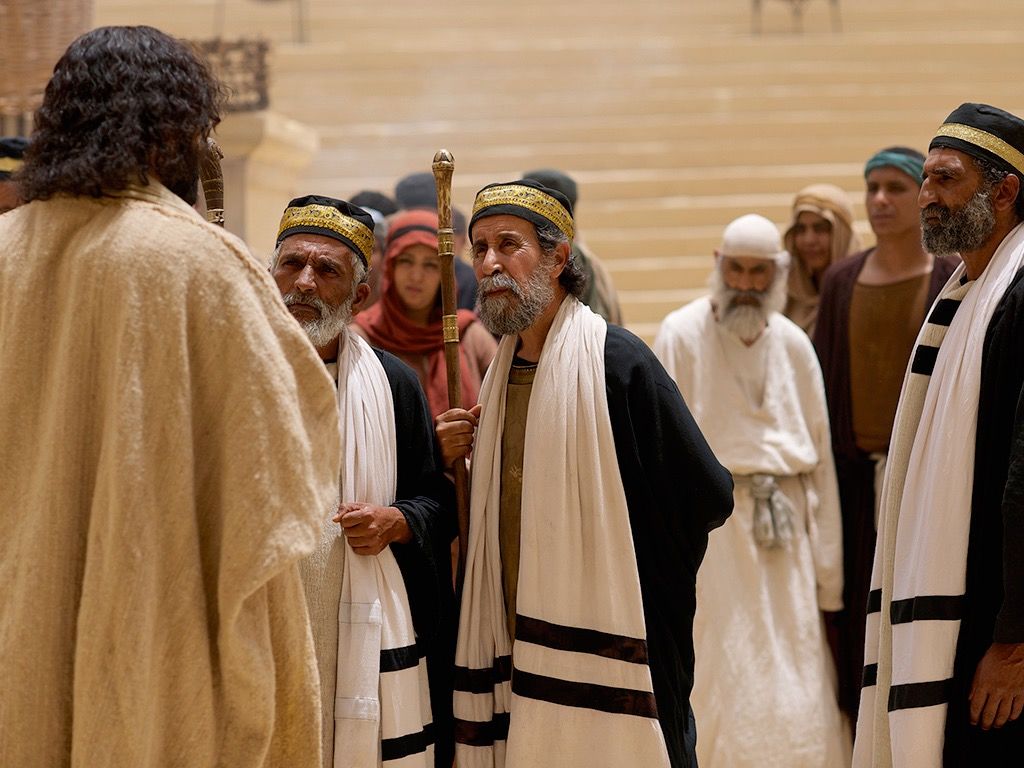
They arrived again in Jerusalem, and while Jesus was walking in the temple courts, the chief priests, the teachers of the law and the elders came to him. “By what authority are you doing these things?” they asked. “And who gave you authority to do this?”
Jesus replied, “I will ask you one question. Answer me, and I will tell you by what authority I am doing these things. John’s baptism—was it from heaven, or of human origin? Tell me!”
They discussed it among themselves and said, “If we say, ‘From heaven,’ he will ask, ‘Then why didn’t you believe him?’ But if we say, ‘Of human origin’ …” (They feared the people, for everyone held that John really was a prophet.)
So, they answered Jesus, “We don’t know.”
Jesus said, “Neither will I tell you by what authority I am doing these things.” (NIV)
Because Christ is Lord, we might overlook that Jesus, in his earthly ministry, was an outsider. Although a teacher, a rabbi, Jesus was neither a priest nor a member of any Jewish religious sect. He walked around as if he owned the place (which he did) and this gave no end of consternation from the established status quo religious leadership.
Jesus made significant inroads into people’s lives, especially with outsiders like himself, and this created anger and jealousy with many of the religious ruling class. Since Jesus was not a card-carrying member, the leaders wanted to hear from him why he kept acting confidently and deliberately on their religious turf, as if he had authority to do so.
The established authorities are depicted in today’s Gospel lesson as a craven bunch who did not want to alienate the crowds yet were eager to get the upstart Jesus out the way. This appears to be an age-old situation of leaders putting their fingers to the wind to go with whatever will keep them popular and in power. Since Jesus consistently refused to play such games, the authorities believed he needed to go. They, however, had no intention of risking an outright confrontation and showing their shadow motives.
Jesus clearly connected himself with John the Baptist, both coming from the same authority. John was yet another figure for whom the established leaders could not control. We ought never to underestimate that threats to status quo leadership who have no inkling of being public servants when true moral authority comes along. The lack of conformity from both John and Jesus would cost them their very lives.
Speaking truth to power while not becoming defensive is a tricky art. Yet, Jesus did it. Continual challenges to his authority left him unfazed as to his mission and purpose on this earth. Christ was assertive without becoming despotic; forward without taking the bait of useless arguments; confident with no hint of arrogance.
For me, the contrast between Jesus and the religious authorities is trenchant. The confident, wise, and calm authority of Christ is in direct opposition to the fear, anxiety, and worry of the ruling leaders. Whereas they kept anxiously ruminating about what to do about this threat to their established authority, Jesus exhibited a non-anxious presence which maintained a steadfast focus on God’s righteous, holy, and benevolent rule and reign.
Sometimes, continual fear is a clue that one is so worried about losing the person, place, or position they possess that the divine gets pushed aside.
Questioning Christ’s credentials was the giveaway that the existing religious authorities were concerned about their power and privilege, and not the people. The wise person will see such queries for what they are.
Wherever we observe those who refuse to share power, have a xenophobic bent toward outsiders, and will seem to do just about anything to maintain the status quo, there we will find the abuse of authority. Conversely, where we observe a deep concern for equity, justice, and the common good of all persons, there we see compassionate leadership who will champion ethical leadership and espouse moral authority.
In any democratic society, we must choose our leaders wisely.
Great God of hope, in these times of change and uncertainty, unite your people and guide our leaders with your wisdom. Give us courage to overcome our fears and help us to build a future in which all may prosper and share together through Jesus Christ our Lord in the strength of your Holy Spirit. Amen.
My friends, I beg you to listen as I teach. I will give instruction and explain the mystery of what happened long ago. These are things we learned from our ancestors, and we will tell them to the next generation. We won’t keep secret the glorious deeds and the mighty miracles of the Lord….
God made a path in the sea and piled up the water as he led them across. He guided them during the day with a cloud, and each night he led them with a flaming fire. God made water flow from rocks he split open in the desert, and his people drank freely, as though from a lake. He made streams gush out like rivers from rocks. (CEV)
This is a psalm designed to recall historical events for the theological education of ourselves and the next generation. Through passing on eventful stories from the past to future generations, God’s people continue to remember and realize robust divine action in the world. In recalling stories of care and deliverance, God’s commandments are kept. Putting trust in a powerful and benevolent deity brings assurance and encouragement.
Using the psalter as a means of recollecting past events is a sage way of edifying God’s people and living into the command of the Law, according to Moses:
These are the commands, decrees and laws the Lord your God directed me to teach you to observe in the land that you are crossing the Jordan to possess, so that you, your children and their children after them may fear the Lord your God as long as you live by keeping all his decrees and commands that I give you, and so that you may enjoy long life. Hear, Israel, and be careful to obey so that it may go well with you and that you may increase greatly in a land flowing with milk and honey, just as the Lord, the God of your ancestors, promised you.
Hear, O Israel: The Lord our God, the Lord is one. Love the Lord your God with all your heart and with all your soul and with all your strength. These commandments that I give you today are to be on your hearts. Impress them on your children. Talk about them when you sit at home and when you walk along the road, when you lie down and when you get up. Tie them as symbols on your hands and bind them on your foreheads. Write them on the doorframes of your houses and on your gates.
When the Lord your God brings you into the land he swore to your fathers, to Abraham, Isaac and Jacob, to give you—a land with large, flourishing cities you did not build, houses filled with all kinds of good things you did not provide, wells you did not dig, and vineyards and olive groves you did not plant—then when you eat and are satisfied, be careful that you do not forget the Lord, who brought you out of Egypt, out of the land of slavery. (Deuteronomy 6:1-12, NIV)
Since psalms are meant to be recited repeatedly throughout one’s spiritual life, doing so inoculates the worshiper from faithless rebellion and counteracts temptations toward trusting in idols. It is a preservative, giving life, purpose, and wholeness. Regular spiritual consumption of the psalms provides a pattern of instruction which molds and maintains the soul so that, when hard situations arise, the supports are there to hold up under the adversity.
The life that is truly life, and life for those who come after us, comes through intentional remembrance and learning. Today’s psalm is a fitting invitation to set our hope in God, remember God’s wonderful works, and keep God’s commands.
Brothers and sisters do not slander one another. Anyone who speaks against a brother or sister or judges them speaks against the law and judges it. When you judge the law, you are not keeping it, but sitting in judgment on it. There is only one Lawgiver and Judge, the one who can save and destroy. But you—who are you to judge your neighbor?
Now listen, you who say, “Today or tomorrow we will go to this or that city, spend a year there, carry on business and make money.” Why, you do not even know what will happen tomorrow. What is your life? You are a mist that appears for a little while and then vanishes. Instead, you ought to say, “If it is the Lord’s will, we will live and do this or that.” As it is, you boast in your arrogant schemes. All such boasting is evil. (NIV)
Listening is both art and hard work. A few years back I spent a week at a prayer retreat. It was time intentionally set aside to hear God. It was hard work. I stayed in a little one room hermitage in the woods surrounding by God’s creation. On the first morning, I was in bed and at dawn I heard this loud thud on one of the windows. I woke up and heard it again, and then again. Outside there was a big male robin going at the window like there was no tomorrow. He did it about a dozen times before finally flying away. I laid there a bit frustrated with this stupid bird waking me up, and yet also wondered about that robin. Since I was there to connect with God, I started asking the question: “God, what are you trying to teach me through that stupid robin?”
I did not get an answer to my question. Then, the next day it happened again. Mr. Robin came by and took about a dozen hard tries at my window before flying away. However, this time I finally realized what was going on. Mr. Robin was perching just outside the window and looking at his own reflection. All he could see was a big rival robin staring back at him, on his turf, and he was going to tear into that interloper. Little did the birdbrain know that he was fighting a losing battle, against himself.
“God, what are you trying to teach me through this robin?” Now, I had my answer. I was a Pastor tackling the issues and problems of others in the church and the world. Yet, I came to understand that I was only tackling myself, seeing my own reflection and struggling in a losing battle. I investigated the face of the enemy, and the enemy was me.
We are our own worst enemies. Much of life is determined by whether we plan for and with God. The natural temptation of us all is to view the landscape of human problems, assign enemies, and then fail to see that our greatest enemy is staring at us in the window’s reflection. Another temptation is to believe that when things are going well, it is because of our own doing – as if somehow, we can live and move and have our being independent of God in the equation. So, I ask, is God in our plans?
That is a big question. Here is just a smattering of what Jesus said about living for him:
“Any of you who does not give up everything he has cannot be my disciple.” (Luke 14:33)
“Anyone who does not carry his cross and follow me cannot be my disciple.” (Luke 14:27)
“If you hold to my teaching, you are really my disciples.” (John 8:31)
“No one who puts his hand to the plow and looks back is fit for service in the kingdom of God.” (Luke 10:62)
We are not called by God to control other people or events; we are called to practice self-control and listen to God as we determine the course of our lives in both the big and small things of life.
The Apostle James had to deal with some birdbrain robins. They were only looking at themselves and not doing the good they knew they ought to do.
The Actual Situation
Some of the people James addressed were planning and mapping out their lives without consideration of what God wanted. They neither looked to God before beginning their planning process nor intended on including him in their dealings. These certain businesspersons were independent minded. They viewed their time and money as their own. In their minds, they give God an hour on Sunday, and the rest of the time is their own; they make their own money and no one can tell them what to do with it; they make their own plans, and maybe ask God afterward to bless it all.
The actual situation was that people were holding back on God, only giving him a certain portion of their effort. And this can happen to any of us, with anything we have. We may not all have money and power, yet we all have time, and how we use our time says a lot about our faith.
One of the many things God taught me at my prayer retreat was through all my business and busy-ness that I was holding back in some ways. Yes, I could compassionately connect with people but was guarded with it. Having my armor up was coming from a fear of not doing something perfect, or at least not doing it really well; and, if I would give myself completely to compassionately connecting with others, I might get hurt (because I’ve been hurt before). I wonder if you can resonate with this.
God just wants us to show up, be present, and not be perfect. We are to do the best with the gifts and abilities given us and leave it all on the playing field so that it cannot be said of us that we did not do the good we knew we should have done. Furthermore, there is nothing wrong with being afraid. In fact, true courage involves fear because real bravery is doing what is right when it is scary to do it, no matter what the consequences might be.
The Analysis of the Situation
Life is truly short – like a mist that appears for a little while in the morning, and then vanishes. Thus, the scheming we might do to make money and guard our investments; the posturing to make ourselves look good; the power-plays we engage to get our way; and, the anxiety which prevents us from the things we know we ought to do amounts to nothing at the end of our lives.
I have talked with far too many people over the years who crucify themselves between the two thieves of regret over yesterday’s missed opportunities, and fear of what will happen tomorrow. I have observed far too many people who made lots of money, patented inventions, and won awards, yet had no one at the end of their lives to be with them. They were not there for others, and so others were not there for them.
Jesus said we cannot serve both God and money (Matthew 6:24). In God’s economy, money is simply a tool to be used to meet needs and bless others. Yet, we tend to make audacious plans with money through accumulating debt and presuming we can pay it off; encouraging our kids to get high paying jobs as their highest objective; and, putting faith in the market economy to provide for us in the end.
James was not saying money is bad and making plans is wrong; he was saying that the almighty dollar is not to be the motivating factor in our lives, and that God needs to be squarely in the middle of all that we do.
The Alternative to the Situation
The alternative to making plans independent of God is to plan carefully for God to be in everything – to find and do his will without trying to impose our will upon the divine.
This requires listening well. It is easy to rush and keep busy and then are unable to hear what God might be saying. When things are rough, we may work so we do not have to stop long enough to feel what is really going on inside of us. James encourages us to say, “If it is the Lord’s will, we will live and do this or that.” Listening well enables living well.
The Audacity of the Situation
Some people in James’ day were boasting over their accomplishments. Like Kings Nebuchadnezzar and Herod of old, they made plans and did what they wanted with delusions of grandeur. They believed they were the ultimate sovereigns of what could and should go on in the world of which they controlled. They had to learn the hard way that they were only masters of small worlds.
Boasting merely sets us up for a higher fall. We need God, and we need each other, and whenever we lose sight of that truth, we are on a one-way road to implosion. Whereas some might call it independence, God calls it evil.
The Awfulness of the Situation
The tragedy of independent planning and acting is that God is left out due to purposeful ignorance. Like the deceitful husband and wife duo, Ananias and Sapphira, there were certain persons who withheld their money and their resources so that they could look good to the rest of the community and influence happenings within the church (Acts 5:1-11). It did not end so well for them.
Conclusion
Doing more with greater efficiency may help, yet it misses the point. We are to take the time and effort to relate meaningfully with God so that we can plan with confidence and make faith-based decisions on what we believe the Lord wants us to do.
Let us not find ourselves repeatedly flying into a window. Instead, let the Lord shape life in such a way that conforms to his purposes, so that we will then know genuine lasting joy and peace.
One mark of the mature person is that he/she has the same benevolence and character whether they are rich or poor. Since we are all rich in faith, let us continually demonstrate it by living for Jesus Christ, loving one another, and planning to reach a lost and unjust world with the good news of God’s grace.
At that time, the disciples came to Jesus and asked, “Who, then, is the greatest in the kingdom of heaven?”He called a little child to him and placed the child among them. And he said: “Truly I tell you, unless you change and become like little children, you will never enter the kingdom of heaven. Therefore, whoever takes the lowly position of this child is the greatest in the kingdom of heaven. And whoever welcomes one such child in my name welcomes me. (NIV)
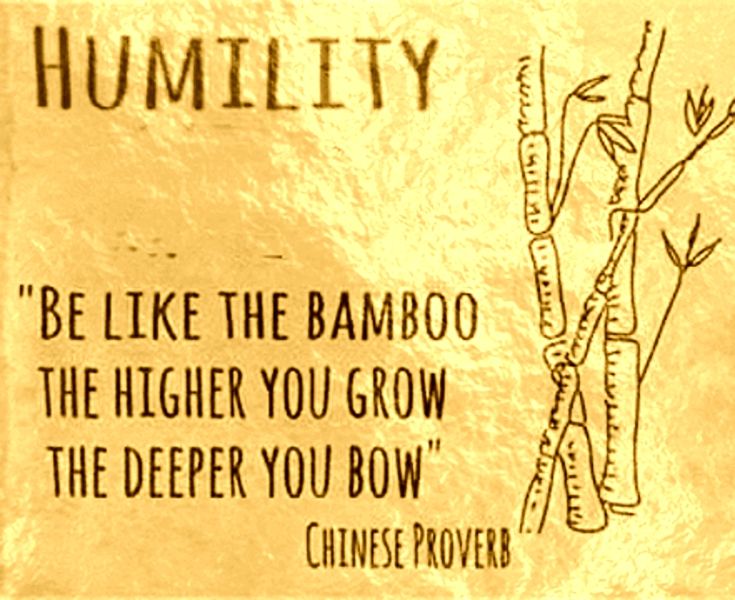
God’s benevolent, gracious, and ethical realm is accessed and rests upon humility. Wherever there are humble hearts, there is change, transformation, and new life. Where there is the presence of pride, there you will find posturing, positioning, and peacocking – nothing changes.
Humility enables a person to see beyond the end of their nose. A humble posture allows an individual to observe the wounds and pains of those with little power and low societal status. A preoccupation with being great and believing we are indispensable is to amble down a blind path.
In the ancient world, children were on the lowest rung of society’s ladder. They were mostly looked upon as potential adults – little people who would someday contribute to the welfare of the family business and the community. Until then, kids were expected to begin learning their future trade with full submission and obedience. They had no power or leverage over others.
So, when Jesus told his disciples to take the lowly position of a child, he was not talking about innocence or cuteness. Christ meant for his followers to divest themselves of prideful positioning for greatness and embrace the helplessness and vulnerability of children. For Jesus, a child was closer to God’s rule and reign because they existed in truly humble circumstances, whereas an adult had too much concern with looking good and seeking every advantage possible.
Life is more upside-down than we sometimes realize. Adults have more to learn from kids than kids do from adults. To listen to a child is about as near to hearing the voice of God as you will get.
Let us consider how pride and humility work out in our daily lives. For example, when down and hurting, maybe you have had the experience of another person trying to one-up your pain, as if what they experienced was worse than you. In their pride, they ignore that pain is personal, as if it’s a one-size-fits-all.
Invalidating a person’s state of being or feelings does no one any good. It happens because of pride and a lack of humility. Imagine going to see a doctor who turns out to be arrogant in his approach. He fails to really listen to you. He just gives a quick exam and offers his diagnosis with a regimen of more pills to take. You are left sitting there while he is off to another patient, colonizing another person’s mind and emotions with his expertise.
I am not giving doctors a hard knock. I work in a hospital and have great respect for medical professionals who provide wise care plans. Yet, it is likely that you, like me, have had that occasional experience of the doctor full of him/herself with all the right answers on your pain and situation.
You may have also had the unfortunate experience of having a pastor, therapist, or counselor assess your situation with little information and even smaller compassion. Like writing a script for pills, they give you a few Bible verses and tell you to quit sinning and live obediently.
If pride and arrogance are the original sin, then the remedy to that malady is humility. No matter who we are – whether doctors, pastors, laypersons, patients, or whomever – we are meant and designed by our Creator God to live a humble life. That means we are to both give and receive humility-based care.
Humility is the cornerstone to every good thing in this life. Jesus said:
“Blessed are the poor in spirit, for theirs is the kingdom of heaven.” (Matthew 5:3, NIV)
The door of God’s kingdom swings-open on the hinges of humility.
The Apostle Paul, seeking to follow his Master Jesus in his teaching and humility said:
“Since God chose you to be the holy people he loves, you must clothe yourselves with tenderhearted mercy, kindness, humility, gentleness, and patience.” (Colossians 3:12, NLT)
Basic human interaction with one another is grounded in humility. The old prophet made his expectations clear:
“He has told you, O mortal, what is good; and what does the Lord require of you but to do justice, and to love kindness, and to walk humbly with your God?” (Micah 6:8, NRSV)
Life is truly life when it is humility-based.
Therefore, caring for another person is not a simple linear matter of offering your opinion or expertise; it is believing that the one needing care is the expert on herself. The caregiver has as much to learn from the care-seeker. The beauty of humility-based care is that two people discover together how to grow, thrive, and flourish in a situation where it is not currently happening.
Breakthroughs occur in the soil of humility when the care-seeker comes out of the darkness and into the light through mutual discovery and insight.
We live with the confidence of the Psalmist:
“God leads humble people to do what is right and teaches them the way.” (Psalm 25:9, GW)
In the end, God saves and heals, not you or me. That God chooses to use us to bring care to others ought to elicit the utmost of humility within us.
Lord God let me have too deep a sense of humor to be proud. Let me know my absurdity before I act absurdly. Let me realize that when I am humble, I am most human, most truthful, and most worthy of your serious consideration. Amen.