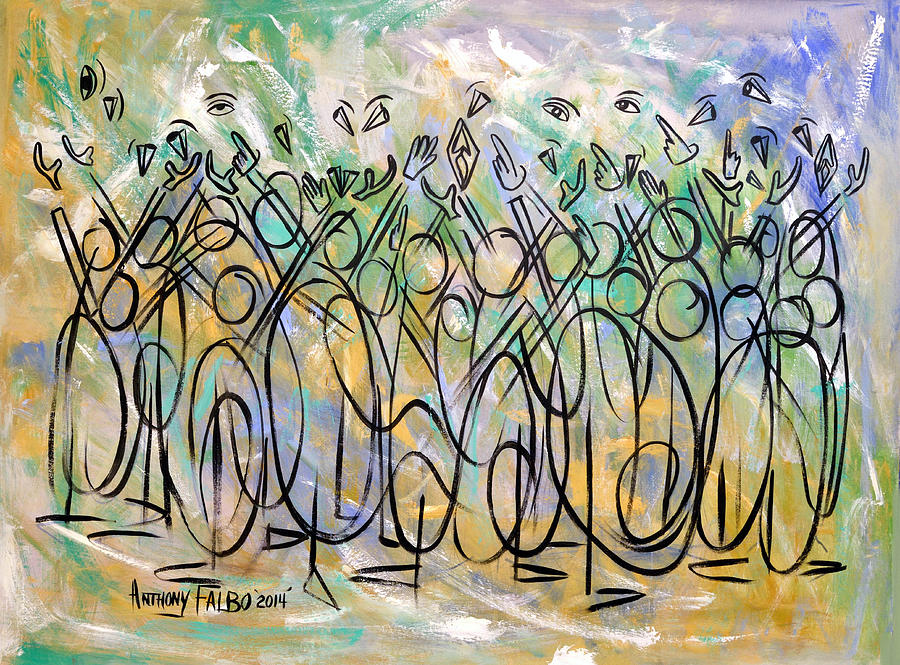
Revelation 3:14-22 – Here I Am!

To the angel of the church in Laodicea write:

“These are the words of the Amen, the faithful and true witness, the ruler of God’s creation. I know your deeds, that you are neither cold nor hot. I wish you were either one or the other! So, because you are lukewarm—neither hot nor cold—I am about to spit you out of my mouth. You say, ‘I am rich; I have acquired wealth and do not need a thing.’ But you do not realize that you are wretched, pitiful, poor, blind and naked. I counsel you to buy from me gold refined in the fire, so you can become rich; and white clothes to wear, so you can cover your shameful nakedness; and salve to put on your eyes, so you can see.

Those whom I love I rebuke and discipline. So be earnest and repent. Here I am! I stand at the door and knock. If anyone hears my voice and opens the door, I will come in and eat with that person, and they with me.

To the one who is victorious, I will give the right to sit with me on my throne, just as I was victorious and sat down with my Father on his throne. Whoever has ears, let them hear what the Spirit says to the churches.” (New International Version)

Christianity holds that the Lord Jesus is the rightful sovereign of the universe. Christ uses that power and authority to rule with justice and equity. He delivers people from guilt, shame, disobedience, and the realm of darkness. All of life hinges on God’s ability, not ours.

Yet, having said that, this does not mean we lack responsibility before God, as if whatever is going to happen is going to happen, and I’m just a passive spectator.

Today’s New Testament lesson is Christ’s words to the ancient church in the city of Laodicea. It seems the church folk in that city were less than zealous about their faith. Maybe they thought God was going to do whatever God was going to do and felt no compunction to act. Perhaps the Laodiceans believed that if they were “hot” that they’d have to go to Africa, be around snakes, and wear polyester all day.

So, likely out of some fear they might lose their wealth or livelihood, the church took a “Meh, whatever” kind of response to the Christian life. It appears the Laodiceans thought God wasn’t even noticing, resulting in a middle of the road approach of just getting by.

Well, of course, the Laodicean believers got noticed – enough to warrant a letter to them from Jesus. I’d say someone was watching! 

Whereas we might get frustrated with milquetoast responses and try to light a fire under the passive person’s behind, the response of Jesus to the Laodiceans was to calmly stand at the door and knock, waiting to be invited in. 

Jesus didn’t go full emergency response on them and break down their church door, forcefully going inside to assert his will. Rather than imposing himself on the Laodiceans, the Lord of all simply and persistently knocked, patiently waiting for a response. 

As it turns out, the ones not paying attention are us, not Jesus. Christ longs for meaningful fellowship and interaction with us. Jesus wants us to respond to divine overtures to meet with him. The Lord is at your doorstep exclaiming, “Here I am!”

Will you let him in today? Or are you afraid that he will take something away from you?

God is trying to get our attention. The Lord does it through all kinds of ways – adverse circumstances, other people (even and especially the ornery ones) – knocking on our door. Yes, God is the one knocking on our door – and not the other way around. 

This is anything but an aloof God who is unconcerned for what is going on in our lives. In fact, just the opposite is true. We seem a bit unconcerned, even “lukewarm” about God, not noticing the good purposes being worked out all around us.

Jesus stands at the door. We don’t get many post-resurrection accounts of Jesus standing. That’s because sitting is a sign and symbol that the work is finished. And, indeed, the work of the cross is done. We are the ones sitting in the recliner. We are the people who need to be standing because our work is not yet done.

So, amazingly, Jesus gets up from his throne, comes to us, standing at the door knocking, graciously meeting us when we aren’t moving.

The watershed issue of our day, from a Christian perspective, is our response, or lack thereof, to Christ’s overtures to let him in our house.

Maybe we can’t hear him because we are busy vacuuming. Perhaps we don’t hear because of the headphones we have on. It could be that we are just too deaf and dull to notice the racket going on at our front porch while we watch TV. Whatever it is, the only cure for being lukewarm is inviting Jesus into the house. 

If Jesus is on the outside, he wants to be on the inside. He could break your door down if he wanted to, but he chooses to respond to the invitation for hospitality. Jesus wants to meet with us.

For the times we neglect to care for our brothers and sisters in Christ, please forgive us, Lord. 

For the times we fail to welcome new people who look or act different from ourselves, please forgive us, Lord. 

For the times we neglect to notice and pay attention to the Spirit, please forgive us, Lord.

And for the times we pretend not to be home when you are knocking, please forgive us, Jesus.

Lord, have mercy. Christ, have mercy, Lord, have mercy upon us, and grant us your peace. Amen.

Luke 12:4-12 – Dealing with Trouble

Jesus the Teacher by J. Kirk Richards

“I tell you, my friends, do not be afraid of those who kill the body and after that can do no more. But I will show you whom you should fear: Fear him who, after your body has been killed, has authority to throw you into hell. Yes, I tell you, fear him. Are not five sparrows sold for two pennies? Yet not one of them is forgotten by God. Indeed, the very hairs of your head are all numbered. Don’t be afraid; you are worth more than many sparrows.

“I tell you, whoever publicly acknowledges me before others, the Son of Man will also acknowledge before the angels of God. But whoever disowns me before others will be disowned before the angels of God. And everyone who speaks a word against the Son of Man will be forgiven, but anyone who blasphemes against the Holy Spirit will not be forgiven.

“When you are brought before synagogues, rulers and authorities, do not worry about how you will defend yourselves or what you will say, for the Holy Spirit will teach you at that time what you should say.” (New International Version)

A new resurrected life is a beautiful thing. And it can be a hard thing, at the same time.

Decades ago, I once preached in a church for morning and evening worship services. As I entered the church building for the evening sermon, one of the deacons greeted me by saying, “Man, did you ever stir the pot this morning!”

It turns out, because I did not stay behind the pulpit when I preached, but freely roamed around the sanctuary, many parishioners believed I was not being under the authority of God’s Holy Word. They took my actions as subversive, even rebellious. Others defended the action. The entire church became divided over it.

What I found so interesting about the whole affair is that I was simply and genuinely being myself – and it caused trouble to the point of families dividing and imploding in on themselves.

Sometimes people lose sight of what’s really important, and the gospel of grace ends up bringing division. Jesus tended to cause trouble in his earthly ministry, just by being himself – and a lot of folks didn’t take kindly to him exercising authority like God does.

Trouble tends to follow Christian mission and service. That may seem odd. Yet, God’s kingdom is an upside-down one. The way of resurrection and new life comes through a cross and a death; the way to succeed is to fail; the one who loses their life will find it.

We ought to expect opposition and trouble from the world.

Fortunately, nobody ever accused me of being in cahoots with the devil. But that happened to Jesus, on more than one occasion. (Matthew 10:24-25)

Christians are not above their Master – they will be treated as he was. Jesus didn’t want his followers to be surprised whenever they face opposition.

We don’t need to be afraid of getting into trouble.

Fear has to do with the unknown and about what is going to happen to us. Since we know opposition and trouble is expected, we can avoid living in dread. Early on in the church, Christians actually rejoiced in their suffering because they considered it a privilege to be walking in the way of Jesus.

We are given a promise that we’ll receive special help in times of adversity. Believers possess the Holy Spirit, given to us to be our helper and advocate for such difficult situations.

God sees all things. The Lord isn’t surprised by your hardship and will eventually deal with all that is wrong in this old fallen world. The wrath of God is to be much more feared than the wrath of people.

God observes all the details of our lives. If God cares and is attentive to the least little things in my life, then how much more will the big issues in my life be handled!?

Blaspheming (saying hard things against) the Holy Spirit is nothing more nor less than attributing the work of Satan to God.

We aren’t doomed to hell if we are crushed under a heavy load of distress and pressure. God won’t strike us with lightning if we make mistakes, mess up, or fail to live as we ought. The Lord will likely be sad, but fire and brimstone will not be in the picture.

You might be wondering how I handled the hubbub with the church who fractured over my preaching apart from the pulpit. I came back in the evening and purposely caused trouble by preaching the Beatitudes of Jesus while walking up and down the aisle.

After all, when somebody is secure in Christ, why not say and do what needs to be said and done?

Gracious God, your love is sufficient for us. May your guidance and wisdom hold us tightly, along with our brothers and sisters in Christ around the world. Guard the hearts and minds of believers in places of hardship, war, and persecution so that your church may stand strong in faith.

Although trouble may come, neither any person nor any power on this earth can take our souls from us. We belong to you. May your church stand strong in grace and love, being assured with the reality that Jesus Christ is Lord of all.

We pray for the day when we will all be together in worship and praise at the consummation of your benevolent kingdom. Until that day, may your love flow to all our persecuted brothers and sisters. May your blessed Holy Spirit strengthen and fill them with faith, hope, and love, through Jesus Christ your Son, our Lord. Amen

Psalm 122 – A Spiritual Journey

I was glad when they said to me,
“Let’s go to the house of the Lord.”
Our feet are standing inside your gates, Jerusalem.
Jerusalem is built to be a city
where the people are united.
All of the Lord’s tribes go to that city
because it is a law in Israel
to give thanks to the name of the Lord.
The court of justice sits there.
It consists of princes who are
David’s descendants.

Pray for the peace of Jerusalem:
“May those who love you prosper.
May there be peace inside your walls
and prosperity in your palaces.”
For the sake of my relatives and friends, let me say,
“May it go well for you!”
For the sake of the house of the Lord our God,
I will seek what is good for you. (God’s Word Translation)

The spiritual life is a pilgrimage—a journey of constant growth, sacrifice, and faith in what we cannot see. As both pilgrims and disciples, we continually move and learn.

The biblical psalms of ascent (Psalms 120-134) were sung by worshipers as they made the journey to Jerusalem for the annual feasts, and up the temple mount to unite together in worship.

Many pilgrims spent hours and/or days walking to the holy city. In the great anticipation of collective worship, the people quoted and sang the several psalms of ascent together. They enjoyed the journey.

I once spent some time reading the journals of several medieval Christian pilgrims who went to various holy sites in Europe, and some who even made the trek all the way to Jerusalem – on foot. Early in their journals, they mostly wrote about the anticipation of reaching their destination. These pilgrims went into great detail about the hospitality they encountered, and friends made along the way.

I was struck, however, with the profound lack of space and detail devoted to visiting the actual holy site – especially when they returned home and reflected on their experiences. The vast majority of pilgrims had the journey itself as their most memorable time.

Of course, we all can worship individually and personally anywhere and anyplace. Yet, if we want to have worship experiences which truly shape our spiritual lives, then we will need to have plenty of corporate encounters with fellow pilgrims on the same path as us.

Within today’s psalm, we are told that part of Israel’s decree in approaching the Lord is to give thanks. The Jewish pilgrims were to have an attitude of gratitude when they came to Jerusalem and the house of God. Each pilgrimage to Jerusalem was to have a marked expression of thanksgiving to God for giving them a place to worship and a land to dwell within.

I cannot help but wonder if attending church services would be much more appreciated and impactful if we took the mental and emotional posture of gratitude when approaching worship. 

Within some church buildings and sacred spaces there is a flight of stairs that one must ascend to reach the sanctuary. Slowly going up the stairs, we can give thanks for one thing in each step. Even if you attend a church with a zero entry, you can still give thanks to God while walking from the parking lot to the building. 

The point is that the worship of God needs some thought and intent behind it. Simply showing up and flopping down in a seat – almost daring the worship leaders and/or pastor to bless them – is far from the imagination the psalmist had for approaching a sovereign God.

Pilgrimage is about more than a long walk. It’s about the soul in community with others and God.

One way of being a pilgrim close to home is through walking a Labyrinth – an ancient practice of the Church meant for spiritual centering, contemplation, and prayer.

Entering the serpentine path of a Labyrinth, one walks slowly while quieting the mind and focusing on a spiritual question or prayer. A Labyrinth is not a maze. It has only one winding path to the center and back out. 

The wisdom of the Labyrinth is that it reflects the way life actually is – that our lives are not about the destination but about the long circuitous journey. The Christian life is consistently described in the New Testament as a road or a way. We walk with Jesus.

Labyrinths can be found within some church buildings, on church grounds, in hospitals, or park spaces. There are also “finger” Labyrinths. Rather than physically walking, the pilgrim can slowly trace the path on a paper or small Labyrinth object with a finger. 

You might also get creative and make your own homemade Labyrinth within a space of your home or out in the yard. labyrinthsociety.org has free printable Labyrinths, as well as a virtual Labyrinth walk.

The Labyrinth is not meant to be a race to the center; it only “works” if we move at a pace which enables us to meditatively pray, paying attention to what God is doing within us. Generally, there are four stages to the walk:

  • Releasing on the way toward the center – letting go of all that weighs us down in the Christian life.  “Let’s throw off any extra baggage, get rid of the sin that trips us up, and fix our eyes on Jesus, faith’s pioneer and perfecter.” (Hebrews 12:1-2, CEB)
  • Receiving in the center – accepting the love God has for you. Jesus said, “Ask and you will receive, so that your joy may be complete.” (John 16:24, NRSV)
  • Returning through following the path back out – integrating what you have received for the life of the world. “I will give them a heart to know me, God. They will be my people and I will be their God, for they will have returned to me with all their hearts.” (Jeremiah 24:7, MSG)
  • Responding to the love of God through gratitude – thus finding joy, even in the most troubling of circumstances. “O give thanks to the Lord, for he is good; his steadfast love endures forever!” (Psalm 118:1, NRSV)

The penitent heart will resonate deeply with the psalms as worship liturgy. This is because liturgical practices impress the spirit and bring spiritual freedom.

Walking together in a common spiritual journey is like going through a gate into a new reality and rejoicing with all the other redeemed pilgrims who are walking the road to Jerusalem.

Lord Jesus Christ, you call me to follow you, and I choose to walk with you. Open the eyes of my heart to see my life in a new way. With each step I take, help me to be open to change. As I walk this pilgrimage, give me the grace to journey deliberately and patiently. Amen.

Revelation 1:9-20 – I Am Fully Alive

Notre Dame Cathedral Basilica in Ottawa, Canada

I, John, your brother and companion in the suffering and kingdom and patient endurance that are ours in Jesus, was on the island of Patmos because of the word of God and the testimony of Jesus. On the Lord’s Day I was in the Spirit, and I heard behind me a loud voice like a trumpet, which said: “Write on a scroll what you see and send it to the seven churches: to Ephesus, Smyrna, Pergamum, Thyatira, Sardis, Philadelphia and Laodicea.”

I turned around to see the voice that was speaking to me. And when I turned I saw seven golden lampstands, and among the lampstands was someone like a son of man, dressed in a robe reaching down to his feet and with a golden sash around his chest. The hair on his head was white like wool, as white as snow, and his eyes were like blazing fire. His feet were like bronze glowing in a furnace, and his voice was like the sound of rushing waters. In his right hand he held seven stars, and coming out of his mouth was a sharp, double-edged sword. His face was like the sun shining in all its brilliance.

When I saw him, I fell at his feet as though dead. Then he placed his right hand on me and said: “Do not be afraid. I am the First and the Last. I am the Living One; I was dead, and now look, I am alive for ever and ever! And I hold the keys of death and Hades.

“Write, therefore, what you have seen, what is now and what will take place later. The mystery of the seven stars that you saw in my right hand and of the seven golden lampstands is this: The seven stars are the angels of the seven churches, and the seven lampstands are the seven churches. (New International Version)

“Let every man and woman count himself immortal. Let him catch the revelation of Jesus in his resurrection. Let him say not merely, ‘Christ is risen,’ but ‘I shall rise.’”

Phillips Brooks (1835-1893)

Easter Sunday may have come and gone, but the church remains in the season called “Eastertide,” which extends forty days until celebrating Christ’s ascension to heaven. This means that Easter is not just a one day affair; it is a joyous time of focusing on new life and exulting in the resurrected Lord. 

The Apostle John had a vision of the resurrected Jesus in his glory. Although John was quivering in his sandals, the Lord assured him that he need not be afraid. Christ is not dead but living.

Jesus is alive! Since Christ is risen, God’s people are united with him in his resurrection. That means the church is alive. Yes, the church is a-l-i-v-e, alive! 

The term “dead church” gets bantered around quite a bit these days. But that is really an oxymoron; a genuine Christ redeemed Body of believers cannot possibly be dead; they are alive! 

If a church is dead, it is not a church. It could be a country club, a benevolent organization, and even a moral institution, but a church is not a church if it is dead because Jesus is alive, and his Body is anything but dead.

Christians have life in Jesus Christ. We are alive forevermore because Jesus will never again die. So, then, we are to live as vigorous and vibrant believers. 

What things will you do differently since you know you cannot die? 

How will the knowledge of your eternal alive-ness impact you today and every day? 

The truth is: We have been raised with Christ to new life; we cannot die because death no longer has mastery over us. We can now live by faith in the Son of God who loved us and gave himself for us.

Just as Christ was raised from the dead through the glory of the Father, we too may live a new life.

For if we have been united with him in a death like his, we will certainly also be united with him in a resurrection like his. For we know that our old self was crucified with him so that the body ruled by sin might be done away with, that we should no longer be slaves to sin—because anyone who has died has been set free from sin.

Now if we died with Christ, we believe that we will also live with him. For we know that since Christ was raised from the dead, he cannot die again; death no longer has mastery over him. The death he died, he died to sin once for all; but the life he lives, he lives to God.

In the same way, count yourselves dead to sin but alive to God in Christ Jesus. (Romans 6:4-11, NIV)

“The glory of God is a person fully alive, and the life of a person is the vision of God.”

St. Irenaeus (130-202, C.E.)

Humanity’s alive-ness is what most fully displays the glory of God on this earth. Christ living within the believer is a powerful and potent manifestation of God’s goodness.

Whereas we may think that great miracles are the best sign of God’s presence and power in the world, the truth is that being full alive, and living into the new life we possess, is a bright light which shows the way of transformation to a fallen planet in the vice grip of sin, death, and hell.

God’s generosity, wisdom, and love are supremely viewed with the changed life of an individual. Living life to the full in this post-resurrection era, influences how we treat one another because we nobly honor our fellow humanity as people bearing the divine image of God.

We, therefore, in our alive-ness, seek to understand one another because we know that each person around us is worth understanding. Our being fully alive moves us to cultivate a virtuous life, knowing that a life well-lived is the best witness to God’s glory.

Believers raised with Christ are filled with joy, realizing that living is in itself a great good. We hope to carry this joy into the world and bear witness to the beauty of each human life.

O God, as people fully alive, make us bold in love, courageous in hope, and whole in faith. May the blessing of God almighty – Father, Son, and Spirit – be upon the Church everywhere, today and always, through Christ our risen Lord. Amen.