Shining the Light on Fear (Psalm 27:1-6)

The Lord is my light and my salvation.
        Should I fear anyone?
    The Lord is a fortress protecting my life.
        Should I be frightened of anything?
When evildoers come at me trying to eat me up—
    it’s they, my foes and my enemies,
    who stumble and fall!
If an army camps against me,
        my heart won’t be afraid.
    If war comes up against me,
        I will continue to trust in this:
    I have asked one thing from the Lord—
    it’s all I seek:
        to live in the Lord’s house all the days of my life,
        seeing the Lord’s beauty
        and constantly adoring his temple.
Because he will shelter me in his own dwelling
    during troubling times;
    he will hide me in a secret place in his own tent;
        he will set me up high, safe on a rock.

Now my head is higher than the enemies surrounding me,
    and I will offer sacrifices in God’s tent—
        sacrifices with shouts of joy!
    I will sing and praise the Lord. (Common English Bible)

Being afraid of the dark is a common fear. After all, whenever we cannot see anything around us, then we don’t know what’s really there – and that’s understandably frightening for most people. Typically, it’s not what we see that’s so scary; the scary stuff is what our imagination conjures up that’s out there in the dark, which we cannot see.

Kids, with their curiously active imaginations, tend to be fearful of the dark – which is why we parents, and grandparents, ensure there’s a nightlight for them so they can sleep. The light illumines their surroundings, reminding them of where they are; the light also helps them remember that we are with them.

As children of God, we need the same reminders. We must continually check-in with our internal selves, reorienting our lives around the reality that the Lord is present, that Jesus is our Immanuel, God with us.

Having the Light of the World surrounding us provides confidence that God is watching and will save us from whatever threatens our life. Indeed, being immersed in the Lord helps us snuggle down and realize our ultimate security blanket holds us tight.

Not only do we have confidence with God’s presence, but we are also fearless in the face of the most adverse and scary of circumstances. Knowing that God has our back enables us to accept, cope, and transcend overwhelming situations.

God protects because God is present.

Admittedly, we don’t have all the answers as to why the Lord sometimes seems absent in the midst of our trouble. That’s maybe because God is a Being, a Person, and not an insurance policy. Ultimately, personal presence and protection is a whole lot better than the impersonal and legal sort.

Which is why it’s important to delight in the Lord, to enjoy being in God’s house, to bask in the beauty of divine holiness, righteousness, and justice. With this as our way of life, we tend to better understand that not everything is necessarily going to go right but that the Lord is alongside us, giving strength and hope.

It’s important to note that divergent emotions can be held together. Many folks tend to believe that if there is fear within the heart, then faith, courage, and praise cannot exist. But nothing could be further from the truth.

The more likely scenario is that trying to suppress feelings of fear only results in becoming more afraid; thus, leading to forced or manufactured praise with little to no bravery behind it.

Instead, the sage thing to do is acknowledge whatever emotions bubble up for us. That is our inner spirit’s way of alerting us that we must pay attention to something. Ignoring the fear makes the monster under the bed more fearsome.

Being aware of the emotion and acknowledging it brings options and choices. Getting it out there to actually feel it means that now we can choose what we’re going to do with the emotion. Hiding the fear only gives it power; naming the fear gives us control over it.

This is one reason why I believe it is significant to read the psalms out loud; it provides more fortitude in dealing with what’s in front of us.

Holding both our fears and our faith together enables us to face our troubles with wisdom and courage. If attacked – whether it be spiritual, emotional, mental, or physical – the worst thing to do is grin and bear it or plaster a fake smile on your face.

It’s okay to be conflicted, to wonder what the heck is going on, to not know what’s up or down, to live with the seeming incongruence of emotions.

Healing comes through feeling, speaking, and acting – and not by suppressing emotions, keeping words bottled up inside, and acting as though everything is peachy keen when it isn’t. Expressing words of trust in the Lord, without having first expressed words describing our emotions, is a fool’s errand. If we trust God to answer a prayer, then we also need to trust God in hearing our real emotions.

God encourages honesty, sincerity, and feeling; the Lord disparages ingenuine offerings of praise and inauthentic gestures merely meant to fake-it-till-you-make-it. The psalmist encourages us to express all our emotions – whether “positive” or “negative” – and find the empathy, solidarity, and healing we need.

God is our light. So, let’s not keep him in the dark about our real selves.

Keep the Main Thing the Main Thing (Galatians 2:1-10)

Fourteen years after that first visit, Barnabas and I went up to Jerusalem and took Titus with us. I went to clarify with them what had been revealed to me. At that time I placed before them exactly what I was preaching to the non-Jews. I did this in private with the leaders, those held in esteem by the church, so that our concern would not become a controversial public issue, marred by ethnic tensions, exposing my years of work to denigration and endangering my present ministry.

Significantly, Titus, non-Jewish though he was, was not required to be circumcised. While we were in conference we were infiltrated by spies pretending to be Christians, who slipped in to find out just how free true Christians are. Their ulterior motive was to reduce us to their brand of servitude. We didn’t give them the time of day. We were determined to preserve the truth of the Message for you.

As for those who were considered important in the church, their reputation doesn’t concern me. God isn’t impressed with mere appearances, and neither am I. And of course these leaders were able to add nothing to the message I had been preaching. It was soon evident that God had entrusted me with the same message to the non-Jews as Peter had been preaching to the Jews.

Recognizing that my calling had been given by God, James, Peter, and John—the pillars of the church—shook hands with me and Barnabas, assigning us to a ministry to the non-Jews, while they continued to be responsible for reaching out to the Jews. The only additional thing they asked was that we remember the poor, and I was already eager to do that. (The Message)

The former devout Jew, Saul, had become the Christian apostle and missionary, Paul. His ministry was as radical and dramatic as his conversion to Christianity was.

The Struggle

Keep in mind that the earliest church was predominantly made up of Jewish Christians. They had to struggle with the relationship between their historic Judaism and their newfound Christianity. For many of them, Paul was doing the unthinkable; he not only purposely sought to reach Gentiles (non-Jewish people) with the message of Jesus Christ, but he also did not require them to be circumcised. For Paul, one did not have to first become Jewish before becoming Christian.

Paul doggedly sought to preserve the core essence and spirit of Christ’s message, that is, to proclaim the good news of forgiveness and new life through the person and work of Jesus – and not by means of retaining Jewish customs or laws, including circumcision.

The Main Thing

Christianity is more than set of beliefs and practices; it’s a way of life which can be summed up in three important words: faith, hope, and love. 

Both new believers in Jesus and veterans in the faith know from experience how difficult it can be to live the Christian life. One reason for this difficulty, even when we want to please the Lord, is due to the confusion that occurs between our inner feelings and our outer actions.

The Confusion

The confusion starts with the creation and fall of humanity. In the beginning, God created humans as persons with a divine/human relationship as central to daily life. (Genesis 1:26; 2:16-25) 

What’s more, God created people with the capacity to receive divine revelation through our ability to think and reason. (Ephesians 4:24; Colossians 3:10) 

Before disobedience entered the world, in the original state before humanity’s fall, all human functions were under complete control with an inner experience of unity and harmony with one another and God. (Genesis 1:31; 2:7, 16-25) 

It is imperative for us to recognize the distinction between our personal being and our personal functions. (Romans 1:21-32; 6:16-22; 1 Corinthians 9:27; Ephesians 4:21-32)

If we don’t grasp how cataclysmic the fall of humanity was, we are going to have big struggles with living the Christian life – illustrated in the way that Paul needed to fend off a bunch of professing Christians who still seemed spiritually stuck. 

The Disobedience

In Adam and Eve’s original disobedience to God, the authority for life was transferred from God to us so that our sinful bent is to call our own shots without God. The source of authority also got whacky, transferred from a holistic and synergistic approach of body, mind, emotions, and spirit to a one-dimensional approach of simply how we feel at any given moment.

If we fail to understand this dynamic, we will be continually frustrated with people because they do irrational things. For example, many church pastors are flabbergasted that parishioners do not simply take what they teach them and go and do it. Yet, if it were that simple, there would be no place for the Holy Spirit!

Unfortunately, there’s more. In humanity’s fall, we lost control of our capacity to function well. We are all now vulnerable to manipulation, too easily swayed by the surrounding culture, and, of course, Satan. (Ephesians 2:2-3; Galatians 5:16-21) 

As a result, our inner conscience has become confused. We are not always certain of right and wrong. We misunderstand what life is really supposed to be all about. 

We lose sight of the main thing. And, in that state, there’s no way we can keep the main thing the main thing.

Instead, we become obsessed with feeling comfortable and secure; so, we pursue false gods – leaving usdisappointed and with a lack of fulfillment in life.

The Good News

However, the good news is that through the redeeming work of Jesus Christ, new life emerges; the bondage of sin is broken in our lives, and we are legally reinstated in a relationship with God in which the Lord is central in our daily life and the final authority. 

In this new relationship we can again receive truth through the Holy Spirit and the Holy Scriptures. We regain control of our functions. 

Yet, unless we learn the Scriptures and growin a daily walk with Jesus, the practical experience of this relationship with all its freedom, joy, assurance,  power, and fruitfulness may be greatly limited. (Romans 7:14-25; 1 Corinthians 3:1-4)

Even though we have redemption and faith, it is still possible to regress and give in to our old ways of functioning. This is a big reason why Christians can experience conflict, doubt, fear, anxiety, frustration, disappointment, and confusion.

To live keeping the main thing the main thing means to grow in the experience and application Christ’s centrality and authority in our lives. 

The Awareness

We must, therefore, make daily decisions of faith, hope, and love based in who we are in Christ and recognize his authority in our lives. The following seven recognitions and awareness may be helpful for you in experiencing Christian freedom and unity:

  1. You are a person with the ability to function in faith, hope, and love as God’s beloved child in Christ (2 Corinthians 7:1; Romans 8:14-17)
  2. There is a difference between who you are and what you do (or don’t do).  Evil thoughts and emotions do not make you evil, anymore than fantasizing about being a unicorn makes you a unicorn.
  3. You can take charge of your actions and your life (Galatians 5:22-23)
  4. The key is the use of your will through living in harmony with revealed biblical truth. In other words, you really can make choices of faith, hope, and love, no matter the situation. (Romans 4:17-21; Psalm 56:3; Psalm 43:5-11)  
  5. Reject whatever is contrary to Scripture, reason, and conscience. Listen to your whole self. Unhealthy patterns of acting and speaking must be broken in Jesus’ name. (Ephesians 4:22; Colossians 3:5-9; Titus 2:11-12)
  6. Choose to obey the Holy Spirit and the Holy Scriptures. Learn to think and act on the basis of truth. (Acts 27:25)
  7. Practicing the truth results in freedom, a re-patterning of thinking and functions, as well as the fruit of the Spirit. (John 8:32; Titus 2:11-14; Philippians 2:12-16)

The church is intended to be a supportive community of fellow redeemed people who worship and love Jesus together. 

Without sharing our collective learning of the Scriptures and daily struggles of faith, hope, and love, believers will inevitably be spiritually immature over the long haul. Instead, talk about your shared experiences of worship, Scripture reading, and Christian living. 

In doing so, God is glorified, the church is strengthened, and the cranky circumcisers are seen as the legalistic lunkheads they really are.

A Changed Life (Galatians 1:11-24)

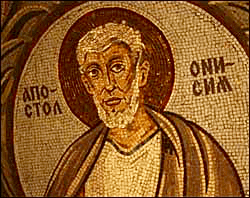
A mosaic of the Apostle Paul in St Isaac’s Cathedral, St. Petersburg, Russia

I want you to know, brothers and sisters, that the gospel I preached is not of human origin. I did not receive it from any man, nor was I taught it; rather, I received it by revelation from Jesus Christ.

For you have heard of my previous way of life in Judaism, how intensely I persecuted the church of God and tried to destroy it. I was advancing in Judaism beyond many of my own age among my people and was extremely zealous for the traditions of my fathers. But when God, who set me apart from my mother’s womb and called me by his grace, was pleased to reveal his Son in me so that I might preach him among the Gentiles, my immediate response was not to consult any human being. I did not go up to Jerusalem to see those who were apostles before I was, but I went into Arabia. Later I returned to Damascus.

Then after three years, I went up to Jerusalem to get acquainted with Cephas and stayed with him fifteen days. I saw none of the other apostles—only James, the Lord’s brother. I assure you before God that what I am writing you is no lie.

Then I went to Syria and Cilicia. I was personally unknown to the churches of Judea that are in Christ. They only heard the report: “The man who formerly persecuted us is now preaching the faith he once tried to destroy.” And they praised God because of me. (New International Version)

I didn’t ask God for this

Saul wasn’t looking to change anything – except maybe to keep those confounded Christians, the group known as “The Way,” out of his beloved religion. He didn’t wake up one morning, sit on the edge of his bed and say, “Well, now, gee-whillikers, I think I’ll become the Apostle Paul, follow Jesus, and rankle a bunch of my fellow Jews with establishing churches all over the place.”

The only well-thought out plan Saul had was to ensure that Christians stayed away by any means possible. He had quite the turn around by actually joining the Christian movement. (Acts 9:1-19)

From the very get-go of his conversion, the new Paul faced skepticism, doubts, and opposition from both church and synagogue. Christians knew how Saul breathed all kinds of threats against them; so, understandably, they were reticent to receive him, perhaps wondering if it were some sort of ruse to topple the church. If it were not for the insight and encouragement of Barnabas, Paul may not have ever entered the ranks of the church. (Acts 9:26-27)

Paul’s fellow devout Jews were so upset with him for becoming a turncoat that they sought to kill him – which became a theme of Paul’s life – getting rocks thrown at him, whipped, beaten, and left for dead more than once. (Acts 9:23-24; 2 Corinthians 11:24-29)

Although Paul never asked for a dramatic conversion to Christianity, a missionary life, and continual suffering at the hands of others, he nevertheless embraced it with all the gusto of faith God gave him.

So, the gospel that the Apostle Paul proclaimed wasn’t something he sought; it was given to him. God graciously revealed the good news to Paul. For three years, he received it. Considering Paul’s background and former life, we can see why it might not be a good idea for him to hang out in Jerusalem and learn about Jesus.

Arabia is a desert. That is precisely where Paul needed to be in his early life as a Christian. Eventually, the churches and believers came around to seeing the authenticity of Paul’s faith and embraced him as a disciple. Paul is considered an Apostle because he had direct contact with Jesus himself in the Arabian desert.

God called me through the grace of Jesus

That phrase is Paul’s spiritual autobiography in a nutshell. It represents his dramatic transformation — from persecutor to preacher — and gives evidence of the hand of God at work in his life.

The fundamental conviction of being called by God, anchors Paul’s faith story. He tells that story in order to remind the Galatian Church of their own experience of being called by God’s grace.

Paul wrote his letter to the Church to help keep them on the track of grace; they were saved by grace, so therefore, they needed to also be sanctified by grace (and not law). He feared they were being led astray by believers who twisted the gospel for their own ends in order to avoid suffering. (Galatians 6:12)

The question Paul tackled head on was: Do the Gentiles have to become Jewish in order to be Christians? “Absolutely not!” Paul insisted. Neither circumcision nor uncircumcision counts for anything; the only thing that counts is faith working through love. (Galatians 5:6)

I connected with God, and you can, too

Paul was arguably the most influential Christian who ever lived. He shared his faith story in order to encourage the Galatians to examine their own experiences for signs of God’s call.

How has God called you?

It matters little whether it’s a dramatic call, like Paul’s, or whether it seems mundane, as if you don’t remember a time that you didn’t believe. And everything in between.

The important point is that we all need moments, events, and experiences of life transformation; and God’s grace must be the defining center of our personal and collective narratives.

Grace makes all the difference and is what leads to a changed life.

Once you were separated from God. The evil things you did showed your hostile attitude. But now Christ has brought you back to God by dying in his physical body. He did this so that you could come into God’s presence without sin, fault, or blame. (Colossians 1:21-22, GW)

Almighty God, transform us – not for our benefit, but for the benefit of the world. Do your work in changing us to be the new creation you have called us to be in Jesus Christ.  

Holy Spirit of God, do your sanctifying work in the church and help us to be the Body of Christ – engaged in mission, testifying to our faith, and bearing witness to the presence of our Savior, Jesus Christ. 

Lord Jesus, enable us to surrender the church back to you. It is yours, not ours. Help us lay aside our personal agendas and preferences so we can be fully committed to your calling for us. 

Blessed Holy Trinity – Father, Son, and Spirit – the God whom we serve: Do your work in our world and give to us a vision of transformed lives, renewed neighborhoods, and restored communities – bringing blessings and redemption for the glory of God. Amen.

Why Did Jesus Come? (Matthew 9:14-17)

Then John’s disciples came and asked him, “How is it that we and the Pharisees fast often, but your disciples do not fast?”

Jesus answered, “How can the guests of the bridegroom mourn while he is with them? The time will come when the bridegroom will be taken from them; then they will fast.

“No one sews a patch of unshrunk cloth on an old garment, for the patch will pull away from the garment, making the tear worse. Neither do people pour new wine into old wineskins. If they do, the skins will burst; the wine will run out and the wineskins will be ruined. No, they pour new wine into new wineskins, and both are preserved.” (New International Version)

The late Abigail Van Buren, better known in her day as the columnist, “Dear Abby,” was the person who made famous the phrase, “The church is a hospital for sinners, not a museum of saints.”

We occasionally need words like Dear Abby’s that are reminders of why Christians and Churches exist in the first place. The Church does not remain on this earth solely for its own benefit, any more than a hospital exists for the benefit of doctors or insurance companies. 

The Church exists to extend the mission of Jesus through proclamation of the gospel, the good news of forgiveness and new life in Christ. The Church calls people who are ensnared, entrapped, and in bondage to guilt and shame, and who need the restorative touch of grace. 

Our calling is not to find out what others can do for us (e.g. tithing and attendance) but what we can do for others. That’s why we are the continuing presence of Jesus on this earth as the temple of the Holy Spirit. 

Even though I am a church pastor, it is not my church. The church is not your church. It is Christ’s Church and we are to act in accordance with that truth.

Some of you reading this blog post are unhealthy. Some of you are sick with sin; some are heart-sick; others are just plain sick and tired of being sick and tired. Jesus (nor me!) is not looking to heap on you a load of expectations and guilt for things you are not doing; but instead is pointing you to the source of healing and change and inviting you to admit your need and come to him. 

Conversely, you may be healthy, spiritually alive and well. Therefore, it’s your job to roll up your sleeves and serve, to participate fully in the mission of Jesus for the church and the world.

Why did Jesus come? 

Jesus came to set up a new structure that could embrace his mission of bringing new life to people.

Christ used the occasion of John’s disciples asking him about fasting to communicate that his mission of reaching people through mercy and forgiveness will need a significant structural change. 

The two illustrations Jesus used – cloth and wineskins – is to simply point out that old and new wineskins are incompatible; and old and new pieces of cloth don’t go together. I would put it this way: You don’t put a new collar on a dead dog.

The Lord Jesus didn’t come to this earth just to perpetuate the status quo; he didn’t enter this world through the incarnation to simply dress up the Jewish religion, or to make a few minor adjustments to what already is going on. No! Christ came to change the old and do something new so that his mission could go forward through us.

We need a structural system which can accommodate the finished work of Jesus on the cross.

The entire sacrificial system and ritual laws of the Old Testament were only a matter of food and drink and various ceremonial washings – external regulations applying until the time of the new order.(Hebrews 9:10)

Christ is the one who arranges a new covenant, so that those who have been called by God may receive the eternal blessings that God has promised. This can be done because there has been a death which sets people free from the wrongs they did while the first covenant was in effect. (Hebrews 9:15, GNT)

Jesus canceled the first covenant in order to put the second into effect; the old is obsolete and has served it’s purpose. Now, Christ’s new covenant is in effect – a system big enough to hold the mission of the Church. (Hebrews 8:13; 10:9)

I wonder:

  • Is there anything in your life or in your church that is obsolete?
  • Is there a practice, ministry, system, or structure that is ineffective and not contributing to the mission that Jesus has for us in reaching others? 
  • Are there any dead dogs you keep trying to prop up on its legs?
  • Are you focused on what is important to Jesus? Do you know what’s important to him?
  • Do you keep performing the same rituals over and over because that is what you’ve always done?
  • What needs to change in your life to accommodate the mission of Jesus?

If the mission of Jesus is to occur we must develop:

  1. A relationship with Jesus. Engaging in spiritual disciplines of prayer, giving, fasting, reading and meditating on Scripture, are activities that put us in a position to know Christ better and respond to what is important to him.
  2. Relationships with each other that are not superficial but help one another to grow in Christ. We need to hold one another accountable for how the mission of Jesus is being accomplished, or not.
  3. Relationships with those outside of the church. This world is filled with sick, needy, hurting, lonely, unhealthy people who are stuck. They need a major change of life that can come from Jesus working through his followers. 

May it be so. Soli Deo Gloria.