

So the angel swung his sickle into the earth, and cut the vineyard of the earth, and he put what he reaped into the great winepress of God’s passionate anger. (Revelation 14:19, Common English Bible)
One of the things to keep in mind about Dr. Martin Luther, King Jr., especially on this day remembering his life and work, is that he was a committed Christian clergyman who had deep theological roots in everything he said and did.
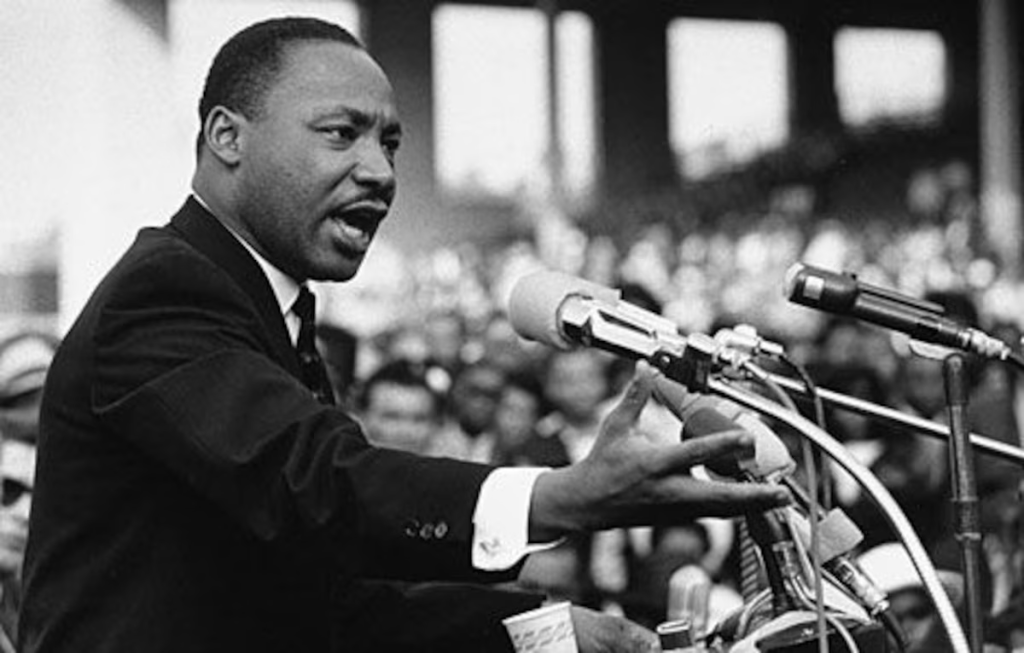
King’s public speeches were filled with biblical allusions to the Old Testament prophets, and the New Testament writers. In his address to the Selma marchers, he said:
“How long will justice be crucified, and truth bear it?… It will not be long, because truth crushed to earth will rise again. How long? Not long, because you shall reap what you sow… How long? Not long, because the arc of the moral universe is long, but it bends toward justice.
How long? Not long, because: Mine eyes have seen the glory of the coming of the Lord; He is trampling out the vintage where the grapes of wrath are stored; He has loosed the fateful lightning of His terrible swift sword; His truth is marching on. He has sounded forth the trumpet that shall never call retreat; He is sifting out the hearts of men before His judgment seat. O, be swift, my soul, to answer Him! Be jubilant my feet! Our God is marching on.”
It seems to me that Dr. King would clearly understand our present moment in the United States of America. Two months before his assassination, King preached to his Atlanta congregation, stating:
“God didn’t call America to do what she’s doing in the world now.”
Dr. King could say that because he knew the keen distinction between patriotism and nationalism. Patriotism is a critical affirmation of one’s own country with the desire and attempt to help correct it, peacefully and non-violently, when she is in error. Nationalism, however, is an uncritical support of one’s own nation, regardless of any immoral speech or unethical actions in the world.
King was able to hold a fierce patriotic spirit, while at the same time understanding a nationalistic fervor which contradicted true and real patriotism. In his “I Have a Dream” speech of 1963, Dr. King reminded his listeners:
“My dream is deeply rooted in the American dream that one day this nation will rise up and live out the true mean of its creed: ‘We hold these truths to be self-evident, that all men are created equal.’”
Along with King’s hopeful patriotism, he expressed the sad reality of what he saw. Speaking a commencement address to Lincoln University students he said:
“Since the founding fathers of our nation dreamed this noble dream, America has been something of a schizophrenic personality, tragically divided against herself.”
Dr. King warned against a selfish and arrogant nationalism that champions one’s country at the expense of the world’s common welfare. He discerned that such narrow self-interest puts morality and ethical principles on the back burner of policy and practice. And once down that road, a nation will not stop “because of our pride and arrogance as a nation.”
A year before his death, King spoke at New York’s Riverside Church and called for “a worldwide fellowship that lifts neighborly concern beyond one’s tribe, race, class and nation,” insisting that this is “in reality a call for an all-embracing and unconditional love for all men.”
On this Martin Luther King, Jr. Day, I choose to remember that King’s words came from a place of scriptural wisdom which was hewn in the crucible of dedicated study, along with decided Christian conviction and practice that placed him in a long tradition of suffering saints who upheld what is most important in this life.
God’s justice for the weak and powerless, and God’s judgment against oppressive abuse, go hand-in-hand. It behooves us all to know which side of God we are really on.

 Rev. Tim Ehrhardt