Night Prayer (Psalm 119:49-56)

Remember your promise to me, your servant;
    it has given me hope.
Even in my suffering I was comforted
    because your promise gave me life.
The proud are always scornful of me,
    but I have not departed from your law.
I remember your judgments of long ago,
    and they bring me comfort, O Lord.
When I see the wicked breaking your law,
    I am filled with anger.
During my brief earthly life
    I compose songs about your commands.
In the night I remember you, Lord,
    and I think about your law.
I find my happiness
    in obeying your commands. (Good News Translation)

During a typical day, I keep busy and am engaged with applying an understanding of the spiritual life to my work. At bedtime, sometimes the job goes with me.

Stillness and silence can sometimes, ironically, become an alchemy of restlessness and noise. I toss and turn, the racing thoughts in my head refusing to slow down and rest.

Insomnia happens to everyone, some more than others. We all have experienced the inability to sleep. 

There are some who choose not to sleep. They arise in the middle of the night – not because of insomnia or sleep disorders – but because they intentionally wake for prayer. 

Yes, many monastics routinely pray in the night. Yet, there are many lay people who do so, as well. 

In my own times of trying to sleep, I often think about those persons who are purposefully trying to stay awake and deliberately keeping watch in prayer during the night. I, then, reflexively go to the biblical psalms.
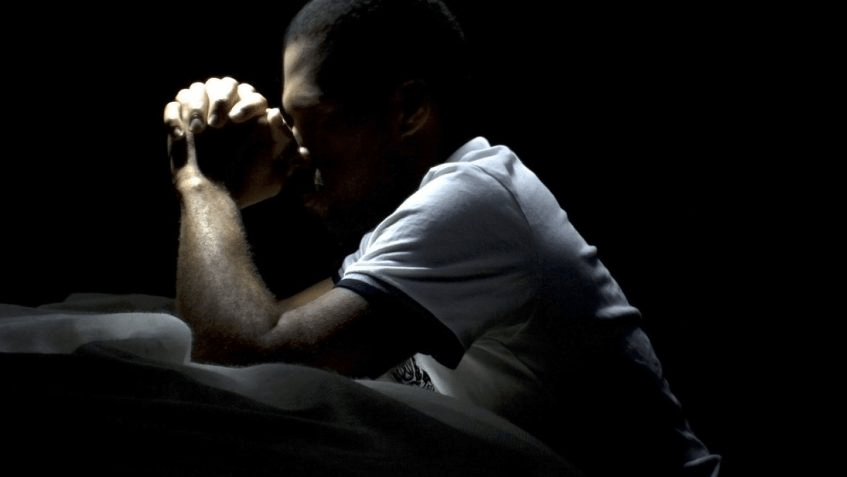
Along with the psalmist, and in solidarity with my Christian brothers and sisters in this hemisphere who are maintaining a prayerful spirit, I reflect at night on the character and nature of the Lord who created both the sun to govern the day and the moon as a faithful witness in the dark.

The psalmist seems to be awake at night because he is frustrated and upset. It irks him that there are people who spurn wise instruction and aim their contempt at those trying to live according to God’s Law.

Although insomnia can certainly be the result of angry or unwanted feelings, maybe it is something else altogether. Perhaps the psalmist simply chose to be awake at night and do some theological reflection on God, others, and himself.

At various times in my life, I have decided to set my alarm for two o’clock in the morning to pray. I know it may sound crazy to some. Yet, this discipline has taught me something valuable: God is Lord over all chronological time and every season. I am a servant. I am neither lord nor master. 

This nightly exercise of weaving my life around a set time of prayer has caused me to learn that I have spent far too much of my life trying to make time bend to my wishes. 

It’s actually delusional for me to believe that I somehow control time – that I can cause the relationship between events to be fast or slow. It is all really an illusion – that I can control the clock. Time marches forward, seasons come and go, and we are a vapor which lasts only a moment.

The only control I possess is self-control. Anything beyond this is nothing but a pathetic attempt at manipulation.

Whether we find ourselves awake in the night because we cannot sleep, or intentionally choose to use the night for connecting with God, the wee hours of darkness afford us a unique opportunity to ponder the Lord’s promises, commands, attributes, and works. 

The next time you find yourself awake at night, try avoiding the television and a zombie-like state of hoping for sleep. Try using the night-time for reflecting on the Lord in ways you might not have considered during the day. Pray. Reflect. Consider. In doing so, you may find a blessing of light within the dark.

Keep watch, dear Lord, with those who work, or watch, or weep this night, and give your angels charge over those who sleep. Tend the sick, Lord Christ; give rest to the weary, bless the dying, soothe the suffering, pity the afflicted, shield the joyous; and all for your love’s sake. Amen.


How, Then, Shall We Live? (Luke 16:19-31)

The Rich Man and the Poor Man by Laura Jeanne Grimes, 2005

“There was a rich man who was dressed in purple and fine linen and lived in luxury every day. At his gate was laid a beggar named Lazarus, covered with sores and longing to eat what fell from the rich man’s table. Even the dogs came and licked his sores.

 “The time came when the beggar died, and the angels carried him to Abraham’s side. The rich man also died and was buried.In Hades, where he was in torment, he looked up and saw Abraham far away, with Lazarus by his side. So, he called to him, ‘Father Abraham, have pity on me and send Lazarus to dip the tip of his finger in water and cool my tongue, because I am in agony in this fire.’

 “But Abraham replied, ‘Son, remember that in your lifetime you received your good things, while Lazarus received bad things, but now he is comforted here, and you are in agony. And besides all this, between us and you a great chasm has been set in place, so that those who want to go from here to you cannot, nor can anyone cross over from there to us.’

 “He answered, ‘Then I beg you, father, send Lazarus to my family, for I have five brothers. Let him warn them, so that they will not also come to this place of torment.’

 “Abraham replied, ‘They have Moses and the Prophets; let them listen to them.’

 “‘No, Father Abraham,’ he said, ‘but if someone from the dead goes to them, they will repent.’

 “He said to him, ‘If they do not listen to Moses and the Prophets, they will not be convinced even if someone rises from the dead.’” (New International Version)

Many people look for a miracle at some point in life, especially for family. Whenever we see relatives walking far from God or siblings living without much thought to the words and ways of Jesus, it can be disconcerting. We may reason that if they could just experience or see some great miracle, then they will surely believe and embrace Jesus as Savior and Lord. 

Yet, Christ’s parable to us of the rich man and Lazarus graphically depicts an important message: God has already revealed divinity to humanity through Moses and the Prophets (the Old Testament). 

If people are not convinced by what already exists and what has existed for a long time, they likely will not respond when the miraculous slaps them in the face.

Maybe we too often look for the dramatic because the mundane typically rules the day. Perhaps what we are really looking for is already present in God’s revelation to us. It could be that the greatest task we have is not to beg for a miracle (even though there is nothing wrong with that!) but first to be quiet and listen to the Spirit of God speak through the Word of God so that our prayers to God arise in God’s way and God’s time.

Today’s Gospel story gets at the heart of where we immediately and reflexively turn when in dire straits. There is nothing wrong with turning to others, consulting trusted resources, or even Google. Yet, Holy Scripture is timeless. It contains everything we need for life and godliness in this present age. And I believe it has the answers to life’s most pressing questions.

Everyone has their trusted sources, as well as sources we don’t trust. If a person has a pattern of not consulting or investigating Holy Scripture, then it doesn’t matter who encourages them, even if it is a trusted person who shows up from the grave, to look into the Bible’s contents and believe it’s message.

If we look closely at the story, we are told the poor man’s name: Lazarus. And we are not told the rich man’s name. You see, the poor man, Lazarus, had his name written in the Book of Life. The rich man’s name cannot be spoken because it is not found there.

There are two choices in life, two opposing paths we can take. One is to choose pleasure and overlook the great needs of the earth. Like old Jacob Marley in the Christmas Carol, it is to forge a chain, link by link, day after day, which will eventually leave one in bondage and regret.

The other choice is hope. To look ahead by faith and see the eternal things which are coming, then shaping our existence to act in sync with permanent values, is to choose life. Although this may bring deprivation, even suffering, in this present existence, the decision to forego temporary pleasure for eternal glory shall be rewarded. It is to live for future prosperity through present affliction.

So, how shall we then live?

  • Will we anchor our souls in the good bosom of bettering our fellow humanity?
  • Is there an acknowledgment that the measure we give to others shall eventually be given to us?
  • Do we seek to hold faith with a neighbor in their poverty?
  • Are we trusting so much in our five senses – sight, smell, taste, hearing, touch – that we either cannot or will not trust in the sixth sense of the spirit which tells us to believe Moses and the prophets?

Christ has risen. Christ is coming again. If we align our lives with spiritual truth, we shall find our names written in the Book of Life. Let us actively look for Lazarus in our lives, so that we don’t carelessly step over him day after day while selfishly indulging in the good things of this life.

Mighty God, you have done miraculous things. Help me see what you have already done and teach me to listen so that your revelation becomes alive to me. Holy Spirit, impress the redemptive event of Christ’s resurrection on the hearts of all who do not know you so that they might know your amazing grace. Amen.

Welcome Humility (Luke 9:43b-48)

While everyone was amazed at all that he was doing, he said to his disciples,“Let these words sink into your ears: The Son of Man is going to be betrayed into human hands.” But they did not understand this saying; its meaning remained concealed from them, so that they could not perceive it. And they were afraid to ask him about this saying.

An argument arose among them concerning which one of them was the greatest. But Jesus, aware of their inner thoughts, took a little child and put it by his side and said to them, “Whoever welcomes this child in my name welcomes me, and whoever welcomes me welcomes the one who sent me, for the least among all of you is the greatest.” (New Revised Standard Version)

Pride and Humility

Whenever we are not focused on what is most important, we then tend to focus on trivial matters which help no one. Another way of putting this: Getting stuck in pride makes us concerned for our position, whereas being humble creates opportunities to serve our fellow humanity.

“It was pride that changed angels into devils; it is humility that makes people as angels.”

St. Augustine

The ultimate humility was the cross of Christ. Jesus submitted himself to death, even death on a cross. He emptied himself, taking the posture of a servant. (Philippians 2:7-8) Jesus Christ did not come to be served but to serve; and to give his life as a ransom for many. (Mark 10:45)

God’s benevolent, gracious, and ethical realm is accessed and rests upon humility.

Wherever there are humble hearts, there is change, transformation, and new life. Where there is the presence of pride, there you will find posturing, positioning, and peacocking – nothing changes.

Humility enables a person to see beyond the end of their nose. A humble posture allows an individual to observe the wounds and pains of those with little power and low societal status. A preoccupation with being great and believing we are indispensable is to amble down a blind path.

Children and Humility

In the ancient world, children were on the lowest rung of society’s ladder. They were mostly looked upon as potential adults – little people who would someday contribute to the welfare of the family business and the community.

Until they became adults, kids were expected to begin learning their future trade with full submission and obedience. They had no power or leverage over others.

So, when Jesus told his disciples to take the lowly position of a child, he was not talking about innocence or cuteness. Christ meant for his followers to divest themselves of prideful positioning for greatness and to instead embrace the helplessness and vulnerability of children.

For Jesus, a child was closer to God’s rule and reign because they existed in truly humble circumstances; whereas an adult had too much concern with looking good and seeking every advantage possible.

The Upside-Down of Humility

Life is more upside-down than we sometimes realize. Adults have more to learn from kids than kids do from adults. To listen to a child is about as near to hearing the voice of God as you will get.

Let us consider how pride and humility work out in our daily lives. For example, when down and hurting, maybe you have had the experience of another person trying to one-up your pain, as if what they experienced was worse than you. In their pride, they ignore that pain is personal, as if it’s a one-size-fits-all. 

Invalidating a person’s state of being or feelings does no one any good.  It happens because of pride and a lack of humility.

“All streams flow to the ocean because it is lower than they are. Humility gives it its power.”

Lao Tzu

Imagine going to see a doctor who turns out to be arrogant in his approach. He fails to really listen to you. He just gives a quick exam and offers his diagnosis with a regimen of more pills to take. You are left sitting there while he is off to another patient, colonizing another person’s mind and emotions with his expertise.

I am not giving doctors a hard knock. I work in a hospital and have great respect for medical professionals who provide wise care plans. Yet, it is likely that you, like me, have had that occasional experience of the doctor full of themselves with all the right answers on your pain and situation.

You may have also had the unfortunate experience of having a pastor, therapist, or counselor assess your situation with little information and even smaller compassion.  Like writing a script for pills, they give you a few Bible verses and tell you to quit sinning and live obediently.

The Good Life and Humility

If pride and arrogance are the original sin, then the remedy to that malady is humility.

No matter who we are – whether doctors, pastors, laypersons, patients, or whomever – we are meant and designed by our Creator God to live a humble life. That means we are to both give and receive humility-based care.

Humility is the cornerstone to every good thing in this life.  Jesus said:

“Blessed are the poor in spirit, for theirs is the kingdom of heaven.” (Matthew 5:3, NIV)

The door of God’s kingdom swings-open on the hinges of humility.

The Apostle Paul, seeking to follow the Lord Jesus in his teaching and humility said:

“Since God chose you to be the holy people he loves, you must clothe yourselves with tenderhearted mercy, kindness, humility, gentleness, and patience.” (Colossians 3:12, NLT)

Basic human interactions with one another are to be grounded in humility. The old prophet made his expectations clear:

“He has told you, O mortal, what is good; and what does the Lord require of you but to do justice, and to love kindness, and to walk humbly with your God?” (Micah 6:8, NRSV)

Life is truly life when it is humility-based.

Care and Humility

Caring for another person is not a simple linear matter of offering opinions or expertise; it is believing that the one needing care is the expert on herself. The caregiver has as much to learn from the care-seeker.

The beauty of humility-based care is that two people discover together how to grow, thrive, and flourish in a situation where it is not currently happening.

Breakthroughs occur in the soil of humility when the care-seeker comes out of the darkness and into the light through mutual discovery and insight.

We live with the confidence of the Psalmist:

“God leads humble people to do what is right and teaches them the way.” (Psalm 25:9, GW)

In the end, God saves and heals, not you or me. That God chooses to use us to bring care to others ought to elicit the utmost of humility within us.

Welcome humility into your life and you will find a truly abundant life.

Lord God, let me have too deep a sense of humor to be proud.

Let me know my absurdity before I act absurdly.

Let me realize that when I am humble, I am most human, most truthful, and most worthy of your serious consideration.

Amen.

How To Fortify Your Faith (Psalm 91:1-6, 14-16)

He who dwells in the shelter of the Most High
    will abide in the shadow of the Almighty.
I will say to the Lord, “My refuge and my fortress,
    my God, in whom I trust.”

For he will deliver you from the snare of the fowler
    and from the deadly pestilence.
He will cover you with his pinions,
    and under his wings you will find refuge;
    his faithfulness is a shield and buckler.
You will not fear the terror of the night,
    nor the arrow that flies by day,
nor the pestilence that stalks in darkness,
    nor the destruction that wastes at noonday….

“Because he holds fast to me in love, I will deliver him;
    I will protect him, because he knows my name.
When he calls to me, I will answer him;
    I will be with him in trouble;
    I will rescue him and honor him.
With long life I will satisfy him
    and show him my salvation.” (English Standard Version)

Continual Use

Reading and praying the psalms over and over again is a major way of fortifying faith for a lifetime of handling adversity. 

Psalms are meant to be constantly viewed and used, like watching a good movie several times. Lines from the film become etched in our thinking and vocabulary, not because we sought to memorize them, but because of the many viewings. 

Psalm 91 is a good psalm – one we can read and pray so many times that its theology and message are internalized. It can serve as a rock in times of trouble. Security, safety, and confidence eventually replace fear, worry, and insecurity. Let the divine words of the psalter become part of a routine regimen of facing down the troubles of life.

The Church’s Prayer Book

Historically, the Old Testament Psalms have been the church’s prayer book. The medieval church so valued constant prayer that many people in the middle ages made substantial donations to monasteries so that monks and nuns, largely freed from manual labor, could become “professional” pray-ers on behalf of the rest of society.

Many of them lived a complete life of prayer, praying day and night. Most Benedictine monks and nuns chanted all 150 psalms once a week in a cycle of seven daily “hours.” One of the first tasks required of novices was to memorize the Psalms – all of them – which took anywhere from six months to two years.

In the New Testament book of Acts, when the original apostles needed to clarify their most sacred obligations, they decided to give their attention to prayer and the ministry of the word (Acts 6:4). The New Testament writers pray and quote the Psalms more than any other book of the Old Testament.

Praying the Psalms

The best introduction there is to the Psalms is to begin praying them because the psalms teach us how to pray. Learning the Psalms means praying the Psalms, and praying the Psalms means praying them repeatedly.

If you are not yet convinced why we ought to pray the Psalms, let me offer some more reasons:

1. We learn the promises of God and how to pray relying on those promises. It is both appropriate and necessary to acknowledge God’s promises, remind God of those promises, and look for God to fulfill them.

2. We pick up how to pray together as a community, and not just as individuals.

3. We discover that our hearts need some help with prayer.

“The richness of the Word of God ought to determine our prayer, not the poverty of our heart.” Dietrich Bonhoeffer

Our hearts can sometimes deceive us. Yet, if we can be mindful to tether our hearts to God’s Word, we can focus on what God has promised – and not simply on what we want or expect.

What’s more, by only following our hearts, we may only pray when we feel like it. 

A common temptation is to give up reading Scripture and praying whenever our enjoyment is gone. If we only do things when we feel like it, most of us would never get up in the morning. Prayer and Bible reading are important spiritual disciplines, even on the days we are not inspired to do so.

In truth, to enjoy the Word of God, we must continue to read it; and the way to obtain a spirit of prayer is to continue praying. The less we read, the less we desire to read; and the less we pray, the less we desire to pray.

4. We attain confidence and joy in speaking with God, just like a small child boldly asking for what she wants in wonderful anticipation of getting it.

5. We unearth direction and guidance for our lives; the Psalms are the GPS for our souls.

6. We join a praise and prayer team that has been going on for thousands of years by believers across the ages in all kinds of cultures. Our spiritual forebears serve as a great cloud of witnesses testifying to the power of God to sustain and grow our faith, hope, and love.

7. We realize the heart of God and adopt that heart as our own heart. In praying, we get to know who God is, and we discover the prayers the Lord delights to answer.

In summary, we bring our own situations and experiences to the Psalms and permit the psalter to reshape our thoughts and our prayers. 

This mentality and discipline forms us into God’s people by re-directing our lives with God’s promises and plans. 

The Psalms are meant to transform us. Repeated exposure to Holy Scripture and daily praying through the psalms will change the way we live our lives and our perspective on the world.

May the Lord Jesus Christ guard and deliver you from the snares of the devil, the assaults of evil spirits, the wrath of the wicked, the sinful nature, and the fear of both the known and unknown.

And may the blessing of God almighty – Father, Son, and Spirit – be upon you and remain with you always. Amen.