The Sixth Sense of Spirituality

newborn baby

There are times you have no explanation for what is happening.  There are no real words to describe the experience you went through.  That’s because your five senses (taste, sight, touch, smell, and sound), although alert and reliable with taking-in all kinds of sensory data, are simply inadequate to explain the transcendent situation.

I was once talking with an agnostic person who became a father for the first time.  He was fresh off the incredible experience of being in the room with his wife when she gave birth to their son.  Bill (not his real name) was flush with enthusiasm.  He took in the sight of his newborn baby boy, held him and touched him for the first time, and joyfully listened to his very first screams of new life in this great big world.  Bill described it all to me with such awe.  Then he said something to me that I haven’t forgotten: “I don’t know how to explain it, Tim.  Something spiritual happened when my son was born, something I can’t put into words.  All I can say is that I experienced something that was not of this world.”

Something not of this world.  That was Bill’s way of saying that he had no mental categories from which to draw from to give any kind of sensory explanation to the awesome reality of being right there in childbirth.  Our five senses do not tell the whole story.  As important as our ability to taste, see, touch, smell, and hear is, there are other ways of knowing and experiencing life.

Faith and spirituality are the sixth sense which enable us to discern and know things about ourselves, this world, and God – that we would not know with only our five senses.  There is a spiritual reality that transcends the physical.  The soul, whether we acknowledge we have one or not, is the place of communion with this unseen reality.  The inner person is where we meet-up with God and find a vast world of spiritual resources which boggle the five senses.  Somehow, we know this is true, even though we cannot explain it.

Jesus said, “The Spirit is the one who gives life! Human strength can do nothing.”  In other words, God is Spirit and he gives meaning, connection, relationship, and even physical life.  Human abilities cannot ultimately do this.  Yes, we do have biological explanations for human attraction, marriage, and where babies come from.  But this is not the whole story.  There is a transcendent reality behind it all that gives life meaning and purpose.

God reaching for humanity

There are times, once-in-awhile, when the unique, the astonishing, and the beautiful grab us.  Our souls spring to life.  We “see” the transcendent, and get an awesome glimpse of this place where the physical and the spiritual “touch.” We “taste” that the Lord is good, and “hear” the call to a deeper experience of recognizing the care and compassion of Christ.  We take in a deep breath and “smell” the aroma of him who created us in his image and likeness.

Let your senses draw in all the wonderful information it can.  But don’t stop there.  Allow your soul to drink in the spiritual, and feed your inner person with Jesus Christ, who saves us from the sinful and the mundane, and lifts us to the world of the Spirit where there is life, hope, and infinite love.

Psalm 35:1-10

            Sometimes you just have to tell it like it is.  There is a time to do your best in putting up a good face and dealing with people who don’t ever stop gossiping, slandering, and trying to get their way.  But there is also a time to call such behavior “evil” and cry out to God for help.
            Psalm 35 is a classic prayer in the category called “imprecatory psalms.”  The term “imprecatory” means to call down a curse on a person or group of people.  Maybe this surprises you that there is such language in the Bible.  In fact, there are 18 such imprecatory psalms which make a clear petition to God for him to turn the evil back on themselves that they inflict (or try to inflict) on others.
            I’m a believer in making simple observations about the biblical text.  Let’s observe a few things about such psalms:
1.      David asks God to deal with the evil behavior of powerful people.
Unlike most of us, David went through a time in is life where there were powerful people who were literally trying to hunt him down and take his life.  As much as we might speculate whether David wanted to take matters into his own hands, the fact remains that he didn’t.  David relied on God to execute judgment.
2.     David did not hold his feelings back in describing exactly what he wanted God to do.
There is nothing sanitized here in the psalm.  David was understandably upset.  He did nothing wrong, yet he was being chased like an animal.  David said it plainly to God: “attack my attackers;” “aim your spear at everyone who hunts me down;” “send your angel after them;” “surprise them with disaster;” and, “let them fall and rot in the pits they have dug.”  Whatever you might think about how a proper Christian ought to say and pray, imprecatory curses might not be your first thought.  But here they are, out there for us to read in the Holy Bible.
3.     The psalms are the prayer book of the church.
That includes the imprecatory psalms.  Yes, they ought to be prayed by us right along with psalms of praise, thanksgiving, and song.  I want you to think what might be a radical thought for you: We ought to include imprecatory prayers in our regular rhythms, routines, and rituals of prayer.
 
            Evil will not have the last word.  God opposes the proud and the arrogant who step on others to get their way.  But he gives grace to the humble, that is, those who look to him for justice and righteousness; are open about their feelings of hurt and upsetedness; and, lift-up imprecatory prayers which are biblically consistent.


Saving God, you protect the helpless from those in power and save the poor and needy who cry out to you.  Mighty God, turn back on those with slanderous tongues, gossiping words, and sinful actions the evil they intend to inflict on others.  Let them fall into a deep black hole for which they cannot get out and harm anyone again; through King Jesus, our Savior, in the assistance of the Holy Spirit.  Amen.

1 Corinthians 8

            Consider an issue you care about.  Likely, one of the big reasons you care is that you either see some abuse, neglect, inattention, or lack of love applied toward someone or a group of people.  So, you want to see it be different.  Now, here comes the interesting part: We are motivated by love, but we often end up addressing the problem or issue in the realm of thought and/or belief.  We rely on the political, theoretical, and intellectual to solve the problem.  In other words, our hearts are attuned but we turn to knowledge and rules to achieve a change.
            The Apostle Paul knew that we are primarily lovers – not thinkers or believers.  Thinkers and believers traffic in knowledge and faith in belief systems.  These are of great significance, yet they are not the primary or ultimate ends for Paul.  Instead, Paul took on a divisive issue in the Corinthian church (whether one can eat food which was originally sacrificed to idols, or not) by saying this:
“Knowledge makes us proud of ourselves, while love makes us helpful to others.”
 
Paul begins with love and ends with love.  This issue of certain kinds of food was neither an intellectual nor a faith issue – it was a love issue.  Paul’s answer to the problem dividing them on food was that food is a secondary issue.  To look at it through the lenses of love makes it clear what you ought to or ought not to do.  This doesn’t make thinking and believing irrelevant, it just places it in its proper place and supports love.
            Whenever our opinions and thoughts, and our faith and belief structures are handled without love, then special interest groups begin to form.  Then, division occurs based upon what we think and believe about certain things.  But when love is supreme, knowledge is no longer the tail wagging the dog.
            Love is meant to enlighten us not only to the problems among us; love is also the answer to those issues we care about most.  Let that statement be added to your knowledge so that you encourage and build-up others, and not discourage and tear them down.  It really is all about love.


Loving God, you demonstrated your own love for us through sending us your Son, the Lord Jesus, who is the perfect embodiment of love.  May He be so manifested within me that love becomes not only the motivator to change, but also the answer to change; through the power and help of the Holy Spirit.  Amen.

Prayer is the Heartbeat of the Church


Imagine not having to purchase what you need the most today.
 
            Maybe you are in a real pinch.  Your budget won’t budge this month.  Perhaps you’re wondering what items you need to do without for a while.  It could be that the bills aren’t all getting paid.  Or maybe you’re concerned with how in the world you’re going to pay off that credit card, after buying Christmas presents for the family.
Imagine having all the love you need today without working to earn it.
 
            Maybe you have a strained relationship.  It might be that you’re hurt from a marriage or a love that has gone sour.  Perhaps a friendship is on the rocks, or a family member won’t talk to you.  You’re wondering if it will ever be better, if love will find you again.
Imagine having the experience this week and every week of your church full of the grace of Jesus, the love of God the Father, and the power of the Holy Spirit.
 
            Maybe your church has a legalistic bent.  Perhaps the church is withdrawn into cliques and special interest groups.  It could be that the Spirit hasn’t shown up since 1959.  You’re tired, weary of the chronic sameness and status quo of a stagnant place.
            There is good news… really good news!
 
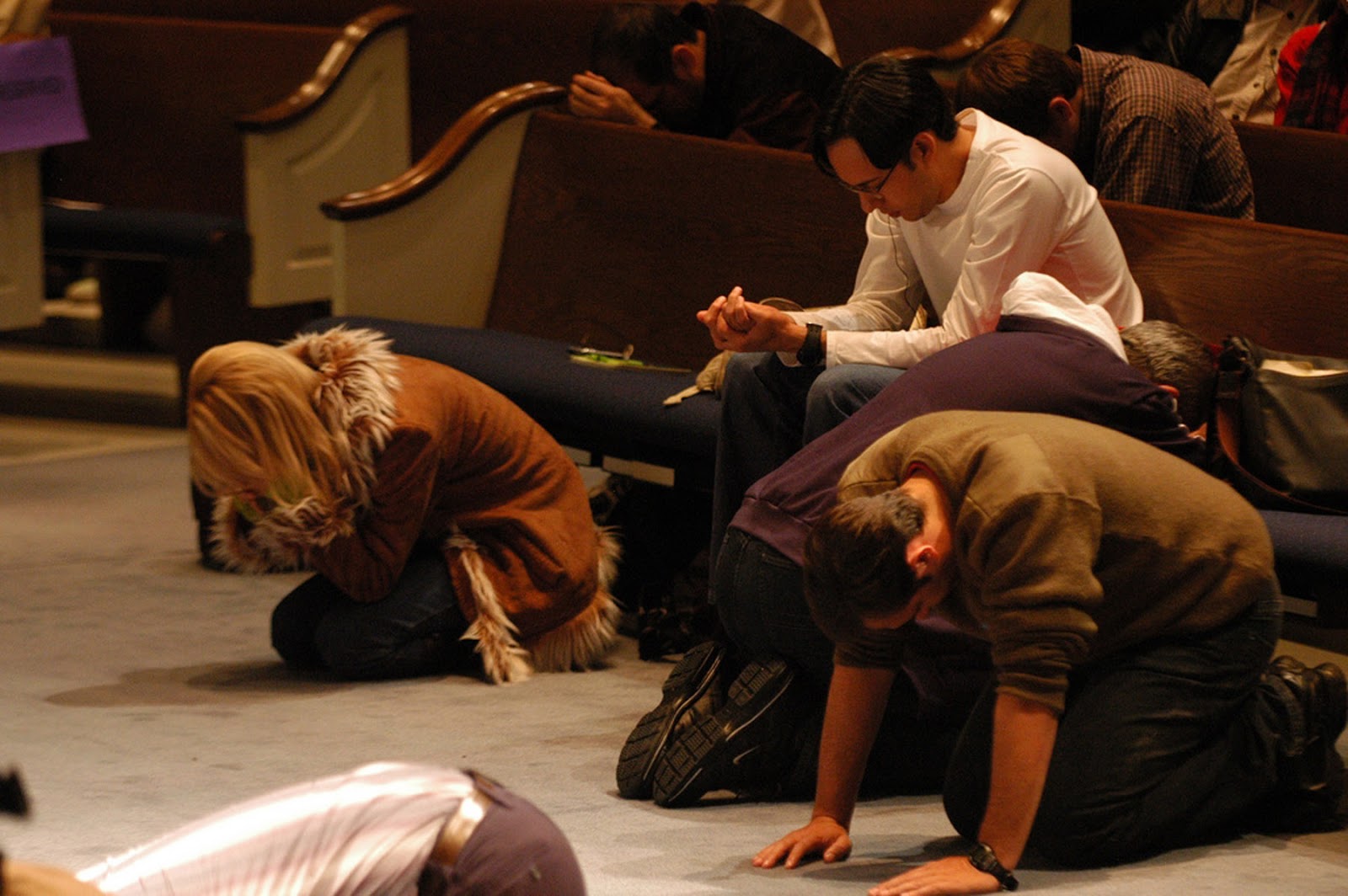
Prayer is the currency to what you need most, the means of receiving love, and the path to a gracious and powerful church.
 
Jesus Christ himself said, “My Father will give you whatever you ask for in my name.” (John 15:16).  Prayer is the heartbeat of the church.  The promise of prayer still stands.  God gives.  We receive.  But we must ask!
 
Sometimes God just gives without us asking.  That’s great.  But God wants so much more for you and me and our churches.  He longs for us to be vitally connected to him, and that connection happens through prayer.  We can bank on the answers to our prayers when we:
·         Stay joined to Jesus (John 15:4)
·         Let Christ’s teachings become part of you (John 15:7)
·         Remain faithful to Christ’s love for you (John 15:9)
·         Obey Jesus (John 15:10)
Imagine having your will align with the perfect will of God.
 
Then, “you can pray for whatever you want, and your prayer will be answered.” (John 15:7)
            Perhaps you are skeptical.  You’ve prayed a long time with nothing happening.  You are discouraged and feel like prayer doesn’t work, or that something is wrong with you.  There is a mysterious and mystical aspect to prayer that we will never quite understand.  But I do know that Jesus didn’t put a timetable on the answers – they will come when they come.  They will, however, come.  And maybe we will discover that what we want and need the most is to let God’s will and way be done in us, no matter what it is.  Perhaps the point is to change us, and not always to change our circumstances.
            We have an incredible privilege.  We simply get to ask.  We don’t buy answers to prayer.  We don’t have to do backflips to get God’s attention.  We ask.  We don’t have to try and work to earn God’s favor.  We don’t have to draw up detailed plans like some sort of architectural design to see a fruitful, loving, and powerful church.  We simply ask, and remain closely connected to Jesus.
            So, pray… about everything.  Some of the best prayers you will ever pray are the psalms.  Great prayers can be found in the church fathers from the ancient church.  Beautiful soaring prayers exist from the medieval mystics in church history.  There are also your spontaneous, specific, and special prayers offered to God.  Whatever prayers you pray, in whatever form or shape they come in, the thing to do today is to pray.  I conclude with an ancient one which I pray each week for your use now:


“O Lord, grant me to greet the coming of this day in peace.  Help me in all things to rely upon Your holy will.  In every hour of the day, reveal Your will to me.  Bless my dealings with all who surround me.  Teach me to treat all that comes to me throughout the day with peace of soul and with the firm conviction that Your will governs all.  In all my deeds and words, guide my thoughts and feelings.  In unforeseen events, let me not forget that all are sent by You.  Teach me to act firmly and wisely, without embittering and embarrassing others.  Give me the strength to bear the fatigue of the coming day with all that it shall bring.  Direct my will; teach me to pray; pray You Yourself in me.  Amen.” –St. Philaret of Moscow