2 Samuel 6:12-19 – Acceptable Worship

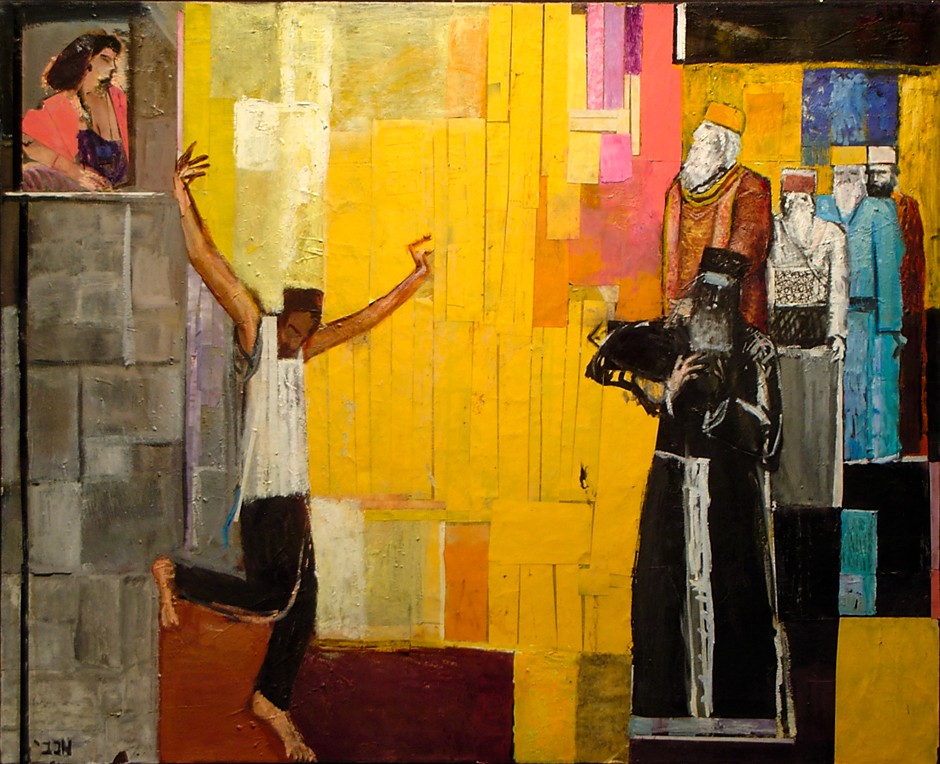
David Dancing by Richard McBee, 1998

Now King David was told, “The Lord has blessed the household of Obed-Edom and everything he has, because of the ark of God.” So, David went to bring up the ark of God from the house of Obed-Edom to the City of David with rejoicing. When those who were carrying the ark of the Lord had taken six steps, he sacrificed a bull and a fattened calf. Wearing a linen ephod, David was dancing before the Lord with all his might, while he and all Israel were bringing up the ark of the Lord with shouts and the sound of trumpets.

As the ark of the Lord was entering the City of David, Michal daughter of Saul watched from a window. And when she saw King David leaping and dancing before the Lord, she despised him in her heart.

They brought the ark of the Lord and set it in its place inside the tent that David had pitched for it, and David sacrificed burnt offerings and fellowship offerings before the Lord. After he had finished sacrificing the burnt offerings and fellowship offerings, he blessed the people in the name of the Lord Almighty. Then he gave a loaf of bread, a cake of dates and a cake of raisins to each person in the whole crowd of Israelites, both men and women. And all the people went to their homes. (NIV)

After the worship debacle earlier in which two of the Levites attending the ark of the Lord were struck down by God, King David took time to refocus and go about bringing the ark back to Jerusalem in a proper way. A true celebration was underway that enjoyed the blessing of God upon it.  The sacrifices before God were sweet smelling because they were done in a spirit of obedience and humility. 

However, David’s wife, Michal, the daughter of Saul, did not worship. She critically observed David and the others and evaluated the worship service by how it appeared to her. Michal was not with everyone else giving herself to the true worship of God. She did not like how David went about worship. The acceptable worship of God was unacceptable to her and she let David know it. Yet, David was undaunted and had his focus where it needed to be. We get a cryptic last note on Michal, describing that she was barren to the day of her death – a note meant to convey both a physical reality of her body, and a spiritual reality of her soul.

So, how are we to worship God?  Jesus commented about worship: 

“The hour is coming, and is now here, when the true worshipers will worship the Father in spirit and truth, for the Father seeks such as these to worship him. God is spirit, and those who worship him must worship in spirit and truth.” (John 4:23-24, NRSV)

Neither good intentions alone (in spirit) nor appropriate actions alone (in truth) constitute acceptable worship.  Both are necessary.  The worship Jesus mentioned is literally “to prostrate oneself before God.”  In other words, it is to have a disposition and attitude of submission and humility toward God, seeking to obey him as king rather than superimpose our desires on him. 

Furthermore, God is near to us and far away from us, at the same time.  God is close to us through the person and work of Jesus Christ, and now in the person of the Holy Spirit. God is also sovereign and far above us, orchestrating the universe. In worship, we appreciate both God’s transcendence and immanence.

The presence of God is both comforting and dangerous. Divine holiness is like a fire, giving us light and warmth; but get too close to the flame and you will get burned, even destroyed. We have collective promises and blessings given to us as God’s people; and at the same time, we have individual responsibilities to know the will of God and do it in the way prescribed for us.
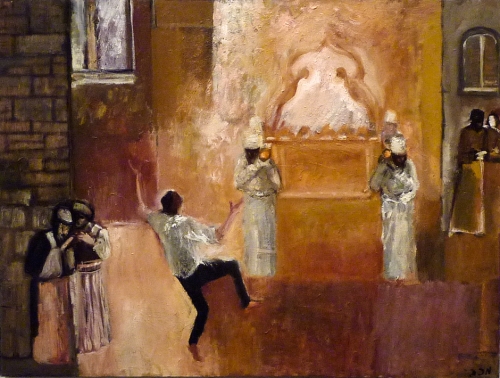
David Dancing by Richard McBee, 1986

The book of 1 Chronicles gives an additional account of David’s worship service in bringing the ark to Jerusalem, which includes a psalm of thanksgiving to God that he wrote himself to be sung by Asaph and his associates, the worship leaders.  Here is part of that psalm:

Sing to the Lord, all the earth!
    Share the news of his saving work every single day!
Declare God’s glory among the nations;
    declare his wondrous works among all people
        because the Lord is great and so worthy of praise.
He is awesome beyond all other gods
    because all the gods of the nations are just idols,
        but it is the Lord who created heaven!
Greatness and grandeur are in front of him;
    strength and joy are in his place.
Give to the Lord, all families of the nations—
    give to the Lord glory and power!
    Give to the Lord the glory due his name!
        Bring gifts! Enter his presence!
        Bow down to the Lord
        in his holy splendor! (1 Chronicles 16:23-29, CEB)

After the worship service, after the psalm had been sung by Asaph and the singers, the text goes on to say:

Then David placed Asaph and his relatives, together with Obed-edom and sixty-eight of his relatives, to minister there continually before the chest containing the Lord’s covenant, following the routines required on each day…. With them were Heman and Jeduthun and the rest of those chosen by name to give thanks to the Lord, because his faithful love lasts forever. With them were also the trumpets and the cymbals for the musicians and the instruments for God’s songs. (1 Chronicles 16:37, 41-42, CEB)

In Israel, King David instituted that the worship of God was to take place every day – not just one day a week.  What is more, David hired hundreds of musicians, singers, and worship leaders to minister before the Lord every single day, twice a day. Every conceivable instrument and voice were used to praise God in worship.  New songs were written continually by David, and arranged by Asaph, the lead worship person. 

God longs for our worship each day: to remember who we are and who God is; to sing; to confess sin; to claim forgiveness; to read the Holy Scriptures; and to pray. If we all devoted ourselves to worship in such a way, then we can begin to imagine God opening to us blessing upon blessing.

Blessed Lord, who caused all Holy Scripture to be written for our learning: Grant that we may hear it, read it, mark it, learn it, and inwardly digest it, so that we may embrace worship in body, mind, and spirit through our Savior Jesus Christ in the strength of the Holy Spirit. Amen.

2 Samuel 6:1-11 – Unacceptable Worship

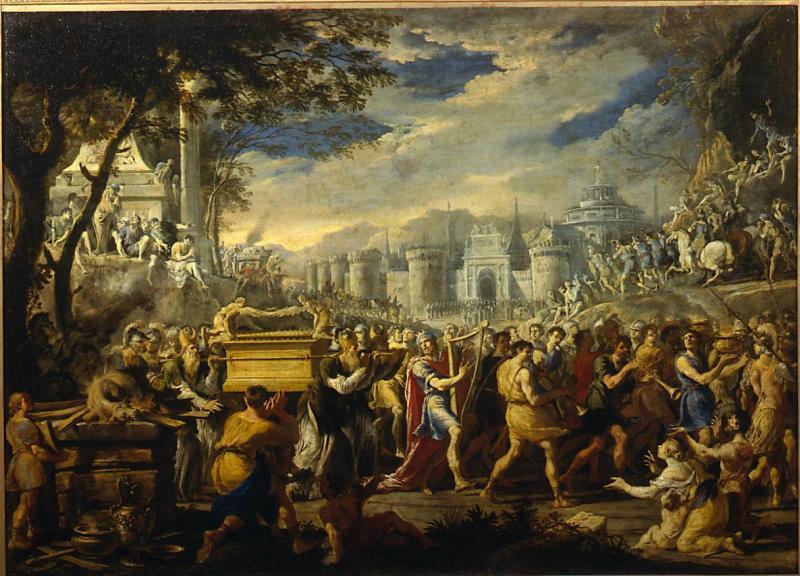
Transferring the ark of the Lord to Jerusalem by Domenico Gorgiolo (1609-1675)

David again brought together all the able young men of Israel—thirty thousand. He and all his men went to Baalah in Judah to bring up from there the ark of God, which is called by the Name, the name of the Lord Almighty, who is enthroned between the cherubim on the ark. They set the ark of God on a new cart and brought it from the house of Abinadab, which was on the hill. Uzzah and Ahio, sons of Abinadab, were guiding the new cart with the ark of God on it, and Ahio was walking in front of it. David and all Israel were celebrating with all their might before the Lord, with castanets, harps, lyres, timbrels, sistrums and cymbals.

When they came to the threshing floor of Nakon, Uzzah reached out and took hold of the ark of God, because the oxen stumbled. The Lord’s anger burned against Uzzah because of his irreverent act; therefore, God struck him down, and he died there beside the ark of God.

Then David was angry because the Lord’s wrath had broken out against Uzzah, and to this day that place is called Perez Uzzah.

David was afraid of the Lord that day and said, “How can the ark of the Lord ever come to me?” He was not willing to take the ark of the Lord to be with him in the City of David. Instead, he took it to the house of Obed-Edom the Gittite. The ark of the Lord remained in the house of Obed-Edom the Gittite for three months, and the Lord blessed him and his entire household. (NIV)

The narrator who originally compiled, told, and wrote this story wanted to communicate something significant about God and how to relate to the Lord.  God put the big kibosh on David’s hoedown. At that time in the history of Israel, the ark was the foremost symbol God was present with the people. Within the ark contained the tablets of the Ten Commandments (the symbol of God’s Word); the staff of the first priest, Aaron, (the symbol of God’s choice); and, a pot of manna (the symbol of God’s provision). 

The ark was a holy object, pointing to a holy God.

The ark of the Lord was built during the time of Moses, when the ritual laws were established concerning offerings and how to approach God in worship. There were detailed prescriptions for how to construct all the sacred articles for worship. (Exodus 35:30-40:33) 

The ark was at the center of worship, representing the presence of God among the people. For nearly five-hundred years before David, the ark had become a familiar object in the life of Israel, always there, continually being the symbol of God to the people.

We have all likely had the experience of something becoming so familiar to us that we begin to lose sight of how important and valuable it really is. Not until we lose it, or something traumatic happens, do we wake up and take stock of its true significance. 

The Israelites had become lethargic and apathetic toward the worship of God, and it led to some disheartening and tragic circumstances. The people of God throughout the ages have always needed to be vigilant against the opiate of familiarity, dulling the senses to the importance of worship.

Moving the ark of the Lord to Jerusalem was one of the first acts David did as the king of Israel and Judah.  God was with David and brought him success against his enemies. David enjoyed a close relationship with God.  Yet even though David’s heart was in the right place, he made a huge miscalculation which ended up offending God. 

David had the best of intentions in bringing the ark to Jerusalem and giving it a prominent place in the center of Jewish life. This was an exceptionally good plan. The problem, however, came in the manner the ark was carried from one place to another. 

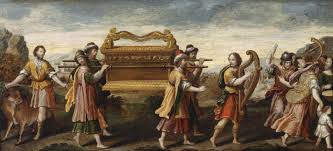
King David bringing the ark to Jerusalem by Unknown Italian artist, c.1500

God’s law laid out in careful detail how the ark was to be transported. Uzzah and Ahio were Levites charged with the ark’s care. Only the Levites could handle the ark and the holy objects of worship that went along with it. Since it was the job of the Levites for hundreds of years, they knew better than to carry the ark of the Lord on a cart. God clearly told Moses that the ark was to have two long poles of acacia wood overlaid with gold inserted into four gold rings of the ark.

The ark was to always be carried on the shoulders of the Levites with the two poles.

We are not told why Uzzah and Ahio were pulling the ark on a cart with oxen instead of carrying it in the prescribed way. Perhaps it was because the ark was incredibly heavy and no easy task to carry.  Maybe they decided it would be easier and more expedient to have the much stronger oxen pull the ark on a nice new cart; it would save a lot of energy transporting it over a long distance. 

As pragmatic people, Uzzah and Ahio’s approach makes a lot of sense. However, God was not okay with this arrangement.  When the oxen stumbled and the ark was in danger of falling off the cart, Uzzah reflexively reached out to steady it.  That was the last act Uzzah ever did on this earth. God immediately put him down for his “irreverent act.”

So, here is the not so good idea: Evaluating the worship of God by common sense pragmatism, what we think will work best, and how we feel it ought to be done.  Everything about worship is to pay attention to the holiness of God through our obedience.  Whenever we avoid the prescriptions of Holy Scripture, however best the intentions might be, is not a good thing and people will get hurt.  One can never justify an action that goes against God’s Word because people are praising God. 

Just because the heart is in the right place does not mean what is being done is okay.

David’s first response was anger, then fear.  He gave his best effort, and it resulted in God’s disfavor. Perhaps David realized that maybe he took for granted that the ark could be moved any old way he wanted to move it. 

Trouble with God happens whenever we value efficiency and expediency over obedience and submission.

The great error of Uzzah which resulted in his death was trying to manage God. We do not take care of God; God takes care of us. God does not bow to us and allow himself to be managed by creatures. The Lord wants pure unadulterated obedient worship from people in the way God wants it to be done, period. It is not up for negotiation.

So, David took some time to re-evaluate the whole approach to worship he was doing and left the ark with a Philistine. Then, he went back and did it right….

Holy God, we confess that we have too often forgotten we are yours. Sometimes we carry on our lives as if there was no God and we fall short of being a credible witness to you. For these things we ask your forgiveness and for your strength. Give us clear minds and open hearts so we may bear witness to you in our world. Remind us to be who you would have us to be regardless of what we are doing or who we are with. Hold us close and build our relationship with you and with those you have given us on earth, through Jesus Christ our Lord. Amen.

Malachi 2:10-3:1 – Remain Faithful

An Eastern Orthodox icon of the prophet Malachi

Don’t we all come from one Father? Aren’t we all created by the same God? So why can’t we get along? Why do we desecrate the covenant of our ancestors that binds us together?

Judah has cheated on God—a sickening violation of trust in Israel and Jerusalem: Judah has desecrated the holiness of God by falling in love and running off with foreign women, women who worship alien gods. God’s curse on those who do this! Drive them out of house and home! They’re no longer fit to be part of the community no matter how many offerings they bring to God-of-the-Angel-Armies.

And here’s a second offense: You fill the place of worship with your whining and sniveling because you don’t get what you want from God. Do you know why? Simple. Because God was there as a witness when you spoke your marriage vows to your young bride, and now you’ve broken those vows, broken the faith-bond with your vowed companion, your covenant wife. God, not you, made marriage. His Spirit inhabits even the smallest details of marriage. And what does he want from marriage? Children of God, that’s what. So, guard the spirit of marriage within you. Don’t cheat on your spouse.

“I hate divorce,” says the God of Israel. God-of-the-Angel-Armies says, “I hate the violent dismembering of the ‘one flesh’ of marriage.” So, watch yourselves. Don’t let your guard down. Don’t cheat.

You make God tired with all your talk.

“How do we tire him out?” you ask.

By saying, “God loves sinners and sin alike. God loves all.” And, by saying, “Judgment? God’s too nice to judge.”

“Look! I’m sending my messenger on ahead to clear the way for me. Suddenly, out of the blue, the Leader you’ve been looking for will enter his Temple—yes, the Messenger of the Covenant, the one you’ve been waiting for. Look! He’s on his way!” A Message from the mouth of God-of-the-Angel-Armies. (MSG)

Any reader of Holy Scripture must come to grips with sections of it which are difficult, harsh, and scathing. Since the Bible covers a complete range of the human condition, not all we find within it are bunnies and butterflies. The prophets of the Lord held back no punches when it came to delivering their message.

In today’s Old Testament lesson, the prophet Malachi squarely addressed the people’s issue of unfaithfulness. They were faithless to one another; faithless to their spouses; and, faithless to God.  God is described by the prophet as weary and exasperated with a lot of talk with no faithful presence and action. 

God hates divorce simply because it is so damaging for those involved. This is not a divine decree that divorce should never exist any more than God’s hatred for the people’s worship means that worship should never exist.

Both marriage and worship are to be meaningful experiences of devotion and dedication to the significant human and divine relationships in our lives.

God has no tolerance for half-hearted commitments which either opens another to violence or having verbal or physical violence perpetrated outright by the one who ought to be protecting and loving.

The solution to the two-faced problem of the people with their milquetoast obedience is that a messenger will be sent to prepare the way of the Lord.  He is coming, and it will be soon.

Keeping the end of our lives and of history in mind helps bring greater clarity and purpose to the present. The season of Advent reminds the faithful that since Jesus is coming soon, we must hold fast to our Christian allegiance. 

Faithfulness toward God also means having a faithful presence (albeit perhaps virtually) to the people close to us and near us.

Malachi exhorted the people to guard their spirits because a lack of personal awareness within causes a dearth of awareness without in simply seeing others but not really seeing them. Spousal abuse is not okay, and the God who sees all will rouse and act on behalf of the one stuck in a situation and pattern of neglect and/or exploitation.

It is necessary to monitor the condition of our souls and be in touch with the state of our spirits so that we remain faithful. We are to nurture our inner selves so that outward actions reflect faithful commitment without harming those closest to us.

Vulnerability with oneself and submission to basic accountability structures are important so that we are aware to strengthen the inner person.  Rather than embrace a rabid individualism, communal dedication is a primary way of pleasing God, serving others, and realizing divine blessing. It also is a necessary preventative to domestic abuse.

Everyone deserves healthy relationships.

If you or someone you know is the victim of spousal abuse, call the National Domestic Violence Hotline at 1-800-799-7233 or visit their website at https://www.thehotline.org/

Sovereign God, the One who sees and knows all, help me guard my spirit so that I will be faithful in all I do and in all my relationships with others, especially my own family and spouse.  Strengthen my soul to remain dedicated to seeing the coming of Jesus in all his glory.  Amen.

All I Want for Christmas Is Hope

The Presentation by John August Swanson

On the eighth day, when it was time to circumcise the child, he was named Jesus, the name the angel had given him before he was conceived.

When the time came for the purification rites required by the Law of Moses, Joseph and Mary took him to Jerusalem to present him to the Lord (as it is written in the Law of the Lord, “Every firstborn male is to be consecrated to the Lord”), and to offer a sacrifice in keeping with what is said in the Law of the Lord: “a pair of doves or two young pigeons.”

Now there was a man in Jerusalem called Simeon, who was righteous and devout. He was waiting for the consolation of Israel, and the Holy Spirit was on him. It had been revealed to him by the Holy Spirit that he would not die before he had seen the Lord’s Messiah. Moved by the Spirit, he went into the temple courts. When the parents brought in the child Jesus to do for him what the custom of the Law required, Simeon took him in his arms and praised God, saying:

“Sovereign Lord, as you have promised,
    you may now dismiss your servant in peace.
For my eyes have seen your salvation,
  which you have prepared in the sight of all nations:
a light for revelation to the Gentiles,
    and the glory of your people Israel.”

The child’s father and mother marveled at what was said about him. Then Simeon blessed them and said to Mary, his mother: “This child is destined to cause the falling and rising of many in Israel, and to be a sign that will be spoken against, so that the thoughts of many hearts will be revealed. And a sword will pierce your own soul too.”

There was also a prophet, Anna, the daughter of Penuel, of the tribe of Asher. She was incredibly old; she had lived with her husband seven years after her marriage, and then was a widow until she was eighty-four. She never left the temple but worshiped night and day, fasting and praying. Coming up to them at that very moment, she gave thanks to God and spoke about the child to all who were looking forward to the redemption of Jerusalem.

When Joseph and Mary had done everything required by the Law of the Lord, they returned to Galilee to their own town of Nazareth. And the child grew and became strong; he was filled with wisdom, and the grace of God was on him. (Luke 2:21-40, NIV)

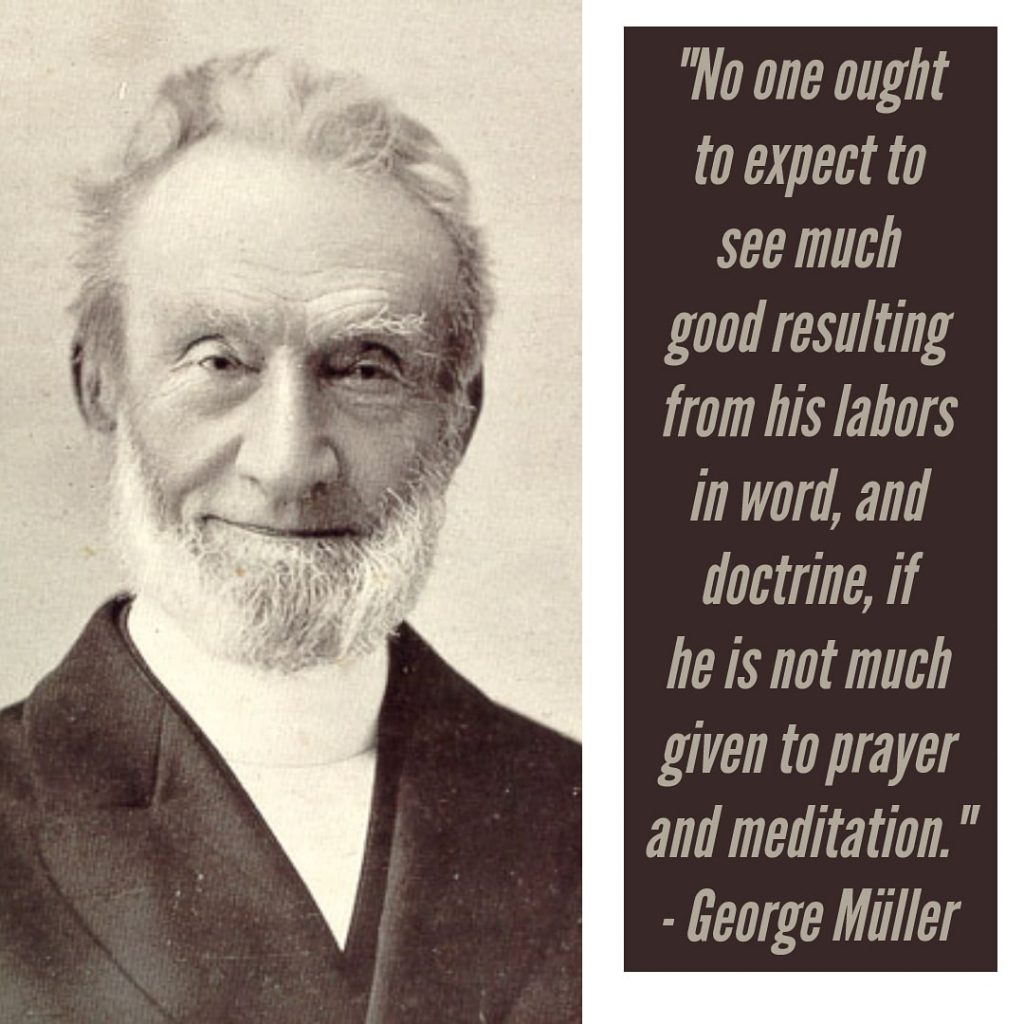
George Mueller (1805-1898) was a man full of hope in God.  For sixty-six years he preached in a small chapel in Bristol, England, yet what he is best known for is his orphanage. 

After being in ministry for a few years, Mueller became deeply concerned for the street children of the city and decided to start an orphanage.  The problem was he had no money.  So, with nothing but his hope in Christ he prayed God would provide. For the next sixty-four years, that was how George Mueller operated.

In that course of time, he built an orphanage, where he cared for and educated over eighteen-thousand children; educated over one-hundred-thousand more children in other schools at the Orphanage’s expense; distributed hundreds of thousands of Bibles and tens of millions of religious tracts; supported one-hundred-fifty missionaries; travelled over two-hundred-thousand miles as a missionary himself; and proclaimed the Gospel to over three million people around the world.

In all that time, Mueller never asked for one penny from anyone, his children never missed a meal, and he never had a debt.

We are not all called to be like George Mueller, or even like Simeon and Anna in our Gospel story.  However, all of us are called to grab hold of God’s promises with such faith and hope that, even though we may not yet see it realized, we live as though it has already happened.  This is what it means to participate with God. 

When George Mueller had a need, he pleaded to God and banked on the promise of God. Mueller prayed for more than money; he prayed for individuals, as well. Sometimes he prayed for someone for as long as fifty years. He never stopped praying for anyone or anything until he got his request. That is how convinced George Mueller was that God would answer his prayers.

All the promises of Holy Scripture revolve around Jesus Christ.  Jesus is the fulfillment of hope for persons of every nation and ethnicity. Christ is our Redeemer, and his salvation is limitless and includes all kinds of people.  Simeon and Anna, despite their age, despite the fact they lived their entire lives without seeing the Deliverer, never lost hope in the promise of God and never gave up praying and looking for the Savior.

Hope in the Bible is not wishful thinking but confident expectation which is grounded in the promises of God. Since all those promises have not yet been fully realized, we must have a quiet confidence and a patient spirit to anticipate the light at the end of the tunnel. Listen to what the Roman church needed to hear about this: 

We groan inside as we wait to be adopted and for our bodies to be set free. We were saved in hope. If we see what we hope for, that is not hope. Who hopes for what they already see? But if we hope for what we do not see, we wait for it with patience. (Romans 8:23-25, CEB)

Simeon and Anna gave testimony about the hope of all the earth.  We have a moving scene of the old man, Simeon, being led by the Spirit of God to enter the temple and take hold of the baby Jesus and cradle him in his arms.  Simeon’s hope is being realized as he declared that this little baby will be the means of salvation for all people.

This salvation comes at a great cost – and all of history hinges on this little child in Simeon’s arms.  Will people move toward or away from God?  Anna came along and, as the George Mueller of the ancient world, devoted herself constantly to prayer and anticipated the coming of the Messiah.  Anna confirmed the testimony of Simeon that this baby is the hope of Israel, the Redeemer of both Jew and Gentile.

Presentation in the Temple by British artist Sylvia Lauder

Today you decided to be here and join me; yet it was more than your own consideration.  The Holy Spirit of God, like Simeon of old, led you and I to this place of virtual meeting, perhaps because we long to see our hope realized – to find in the Christ child all we have longed for and have been waiting to see happen in our lives. 

God wants us to see Jesus. So, close your eyes, because the hope of all life cannot be seen with human eyes…

See him as a little baby…

See him as he grows with wisdom and favor with both God and others…

See him as he teaches, ministers, and heals the outcast and loves the common person…

See him as he is arrested, beaten, and taken outside of the city…

See them take the hammer and nail his hands and feet to a cross…

See him as you kneel before a terrible cross and watch him die, not for himself, not because he deserved it, but because of the world’s great sin and because humanity has lost their way…

See him as he is placed in the grave…

See him rise from death…

See him ascend to heaven…

See the Lord Jesus Christ in all his glory…

See that he has done all of this for you!  Do not lose hope!  Do not give up!  Search the Scriptures for the promises of God. Grab hold of them and rely on them as if your life depended on it – and it does!

Why did Simeon and Anna not lose hope?  How could they remain so devout?  Why, over the years and the decades when all seemed dark and despondent, did they not give up searching for the Christ of God? 

Because we become just like who we worship. 

If we spend all our time, thoughts, and energy on money, we will live and die with whatever the markets are doing… 

If we spend all our time, thoughts, energy on our job and our work, we will live and die with our ability to produce and get things done… 

If we spend all our time, thoughts, and energy on watching out for ourselves because we believe no one cares, then we will live and die lonely and dejected… 

But if we spend our time, use our thoughts, and expend our energy in the hope of all the earth, Jesus, the Savior of the world, then we will experience the deepest needs of our lives being met – we will become like Jesus, showing love, giving grace, and enjoying unhindered relationship with God.

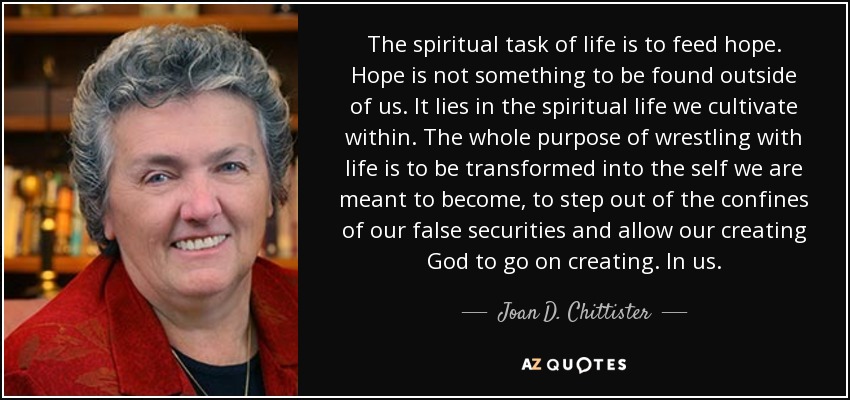
No tragedy can dim the hope that comes from knowing God will walk with you through the valley. Hope is neither cheap, nor easy. Genuine hope typically arises from the ash heap of unfulfilled dreams, messed-up plans, and broken hearts. We often need to experience hopelessness before we can realize hope itself. It is the absence of hope that holds the invitation to forsake old ways and strike out on a new path to find our heart’s truest desire. Author Joan Chittester has wisely said:

“The challenge of hopelessness is the challenge to re-enter humanity, to take our part in it knowing that the lack of hope has much within it to shape our life. Losing hope leads us to understand that misfortune is not failure. It is at most simply a digression through life intended to make us reassess our course, our goals, and our aspirations.”

Indeed, hopelessness need not lead to despair. The profound lack of hope is ironically what reawakens and rekindles hope within us. It is the process of reassessment that is the opportunity to hope again with a sharper and a greater assurance of hope – to create space in becoming fully alive to the hope that has always been there – maybe just underneath all of life’s accumulated stuff.

For me, hope rekindles when I withdraw to a quiet place, either sitting down in my favorite chair or walking along a secluded wooded path. I allow and encourage the sixth sense of faith and imagination to inform my other five senses. This helps my heart to enlarge, the empty places of my soul to be filled with the hope of Christ. It is in this inner place, where our hearts join the heart of God, that we find an alternative way to the true hope for which we have been striving for so long to realize.

For the grace of God has appeared that offers salvation to all people. It teaches us to say “No” to ungodliness and worldly passions, and to live self-controlled, upright and godly lives in this present age, while we wait for the blessed hope—the appearing of the glory of our great God and Savior, Jesus Christ, who gave himself for us to redeem us from all wickedness and to purify for himself a people that are his very own, eager to do what is good. (Titus 2:11-14, NIV)

We have a sure and certain hope which presently now shapes our lives as we wait patiently. Just as we await a coming vaccine and deliverance from COVID-19 which presently now forms our living with masking, social distancing, and sheltering in place – so we look forward to the coming of our glorious Savior and the realization of our salvation in its fullness. Meanwhile, much like Simeon and Anna, we presently now devote our lives to prayer and wait….