
Confronting Spiritual and Emotional Pain (Psalm 79)

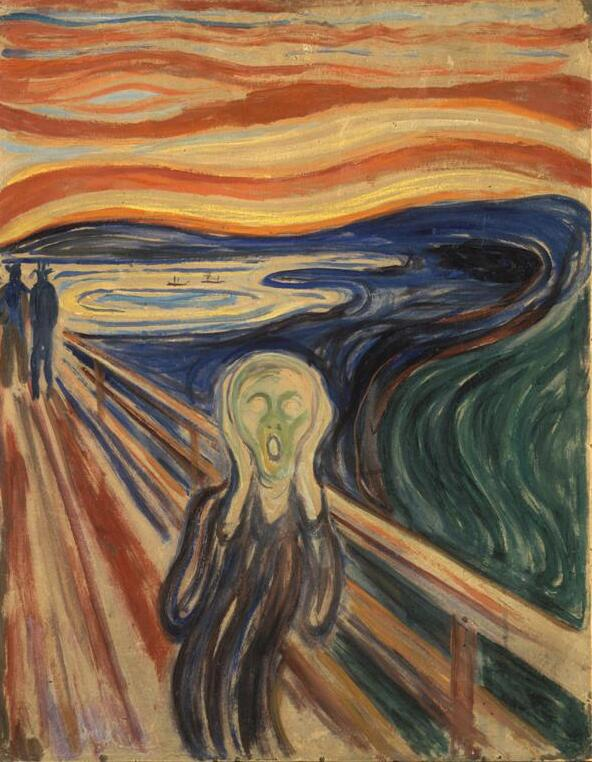
The Scream, by Edvard Munch, (1863-1944)

God! Barbarians have broken into your home,
    violated your holy temple,
    left Jerusalem a pile of rubble!
They’ve served up the corpses of your servants
    as carrion food for birds of prey,
Threw the bones of your holy people
    out to the wild animals to gnaw on.
They dumped out their blood
    like buckets of water.
All around Jerusalem, their bodies
    were left to rot, unburied.
We’re nothing but a joke to our neighbors,
    graffiti scrawled on the city walls.

How long do we have to put up with this, God?
    Do you have it in for us for good?
    Will your smoldering rage never cool down?
If you’re going to be angry, be angry
    with the pagans who care nothing about you,
    or your rival kingdoms who ignore you.
They’re the ones who ruined Jacob,
    who wrecked and looted the place where he lived.

Don’t blame us for the sins of our parents.
    Hurry up and help us; we’re at the end of our rope.
You’re famous for helping; God, give us a break.
    Your reputation is on the line.
Pull us out of this mess, forgive us our sins—
    do what you’re famous for doing!
Don’t let the heathen get by with their sneers:
    “Where’s your God? Is he out to lunch?”
Go public and show the godless world
    that they can’t kill your servants and get by with it.

Give groaning prisoners a hearing;
    pardon those on death row from their doom—you can do it!
Give our jeering neighbors what they’ve got coming to them;
    let their God-taunts boomerang and knock them flat.
Then we, your people, the ones you love and care for,
    will thank you over and over and over.
We’ll tell everyone we meet
    how wonderful you are, how praiseworthy you are! (The Message)

The temple was destroyed. The conquering army gloats over their victory. That’s the context of today’s psalm. It’s a prayer, an angry cry for God to step in and act on behalf of the humiliated people. The prayer is more than a simple plea for help; it’s a deeply passionate appeal, that says in 1960’s terms, “God, stick it to the man!”

In the face of evil, when there is destruction all around and violence everywhere, prayer does not become some sort of polite knock at the side door of God’s house. Instead, prayer is a pounding on the front door with a demand for God to do something about this terrible trouble.

For the psalmist, the incongruence between who God is and what has happened to God’s people is inconceivable and unacceptable. To profane God’s temple is to profane God; and to kill and maim God’s people is to flip the middle finger at God. The psalmist is beside himself and overwhelmed with emotion.

There is something very instructive here that we ought not miss. When we have been brutalized, victimized, and/or demoralized, we just want someone, especially the Lord we serve, to take notice and feel what we are feeling. Never underestimate the power of empathy and solidarity. To feel alone and bereft of help is an awful feeling.

Perhaps the psalmist’s prayer offends some sensibilities. I wonder, for those who find the language difficult, have ever had a daughter raped, or a house destroyed by fire, or seen a person killed without mercy in front of their own eyes. Methinks they have not. The feelings of helpless despair and sheer anger defy human words. These are not casual affronts; they are malicious destructions of property and people.

We need someone to affirm the raw ruthlessness of it all, to have some understanding of the impossible place we are in, with having to deal with such wanton cruelty. When our very support is ripped from our lives, the madness within is too much to bear. Who will rescue us from this body of death?

God is big enough to handle our rage and our hurt. The Lord is available and hears our desperate voice of prayer. Yet, God is not always going to directly and immediately answer on the terms we stipulate. God acts out of God’s own providence and justice, and not from our expectations. And that is a good thing, not a bad thing.

God sees. The Lord knows. And the Sovereign of the universe feels it all with us. The realization of this divine empathy enables us to recenter and reorient ourselves around faith, hope, and love. New life is never a gift in a vacuum; it comes out of agonizing struggle in having to reckon with the existence of evil.

So, when someone goes through a hellish experience, let us exercise our capacity to listen and witness the horrible spiritual pain of the person. Healing hurts: it is not a pleasant affair. So, hang in there and walk alongside another in their hour of need, even when their vitriol seems over the top to us. For only in telling our story to another will any of us find relief and renewed hope.

The biblical psalms permit us to use language appropriate to what has happened. They also allow us to move beyond the venom to the God who restores broken lives.

Lord Jesus Christ, by your patience in suffering you hallowed earthly pain and gave us the example of obedience to your Father’ will: Be near me in my time of weakness and pain; sustain me by your grace, that my strength and courage may not fail; heal me according to you will; and help me always to believe that what happens to me here is of little account if you hold me in eternal life.

My Lord and my God, as Jesus cried out on the cross, I cry out to you in pain, O God my Creator and Sustainer. Do not forsake me. Grant me relief from this suffering and preserve me in peace, through Jesus Christ my Savior, in the power of the Holy Spirit. Amen.

Matthew 18:6-9 – Say “No” to Temptation

“If you cause one of these little ones who trusts in me to fall into sin, it would be better for you to have a large millstone tied around your neck and be drowned in the depths of the sea.

What sorrow awaits the world because it tempts people to sin. Temptations are inevitable, but what sorrow awaits the person who does the tempting. So, if your hand or foot causes you to sin, cut it off and throw it away. It’s better to enter eternal life with only one hand or one foot than to be thrown into eternal fire with both of your hands and feet. And if your eye causes you to sin, gouge it out and throw it away. It’s better to enter eternal life with only one eye than to have two eyes and be thrown into the fire of hell.” (New Living Translation)

It’s probably a good idea not to get on the wrong side of Jesus.

Throughout the Gospels, Jesus utilized a variety of teaching methods to communicate his message. In today’s Gospel lesson, Christ used the language of hyperbole to arrest attention and get his point across.

A universal truism of this world is that sin exists. In Holy Scripture, sin is anything people do or say – or fail to do and say – which damages or destroys another’s or one self’s physical, mental, emotional, or spiritual wellbeing.

Greed, envy, gluttony, sloth, anger, lust, and pride abound no matter where one goes on this planet. Sin is downright awful. It causes people to stumble, and, when unchecked, leads to personal and corporate chaos, unrest, and destruction. 

Whenever sin is viewed merely as a character flaw, or simply part of the fabric of organizations and institutions, then hellfire is not far off. Hell exists because of sin. 

We get the flavor that Jesus took sin quite serious. Christ considers sin so terrible and heinous that he deliberately used the height of hyperbole to communicate that radical, drastic, and decisive action must unequivocally be taken to get rid of it. 

The Lord Jesus wanted there to be no mistake in his communication: Sin is not something to dabble in or take a shallow approach; rather, sin must be eradicated, at all costs. The language is severe: If your hand, foot, or eye causes you to sin, cut it off. It’s better to enter life crippled or blind rather than be thrown into a suffering hell.

Temptations will inevitably come. Yet, how we handle those temptations and what we do with them is of eternal significance. 

We must get to the root of the sin – which happens through succumbing to temptation – and re-arrange our lives, alter our schedules, and change our lives in a radical way to remove putting ourselves in a position to sin. 

Solid daily spiritual habits of Scripture reading and prayer; time for sleep and rest; attention to Sabbath; and a regular exercise regimen are all ways to help ensure that temptation will not win the day.

And God forbid that we cause another to sin because we are hangry, tired, and out of shape because we’ve neglected ourselves for far too long. Self-care isn’t a luxury; it’s a necessity. Other people get hurt when we hurt ourselves.

Your self-care is always a valid excuse to say “no.”

If we take the words of Jesus to heart, perhaps we will gain awareness of the ways we need to metaphorically cut off a hand or gouge out an eye. For many people, this means learning to say “no.”

There doesn’t always need to be an explanation for assertively and courteously saying the word “no.” If an explanation is warranted, it should be brief. The word “no” doesn’t mean we are selfish pricks trying to wriggle out of responsibility. “No” simply realizes we are finite creatures with limited time, energy, and resources. Unlike God, we cannot do it all.

Setting personal boundaries is both wise and necessary. Without them, we let others chain us in bondage to their agendas. A lack of personal boundaries also typically means that the boundary-less person continually violates others’ boundaries. Since there are no fences in their own lives, they feel they can hop anybody else’s fence in front of them.

Violating someone’s space through mental or emotional manipulation, spiritual abuse, or bodily harm is sin. Jesus wants radical action to deal with such offense of others.

For the Christian, priority must be given to saying “yes” to Jesus, which then allows a “no” to come when there are competing priorities. A person unclear on their values and priorities will chronically violate others. If you have a specific plan of doing the will of God before being confronted with another person’s request, you’re more likely to stick to your original plan.

Jesus continually said “yes” to the Father. This framed and formed his earthly life so that he crossed social boundaries to speak to a Samaritan woman, a tax collector, and a leper – while maintaining the respect of another’s personal boundary by asking if they want to be helped and healed.

Sin is horrible – which is why Jesus went to the ultimate length to deal with it. He sacrificed himself and suffered an ignominious death so that sin’s power would be crushed, so that you and I could say “no” to temptation.

Holy God, you sent your Son to this earth to deal decisively with the world’s sin.  I choose today to walk in the forgiveness you offer through Jesus, and to avail myself of the Spirit’s power to forsake temptation in all its forms.  Amen.