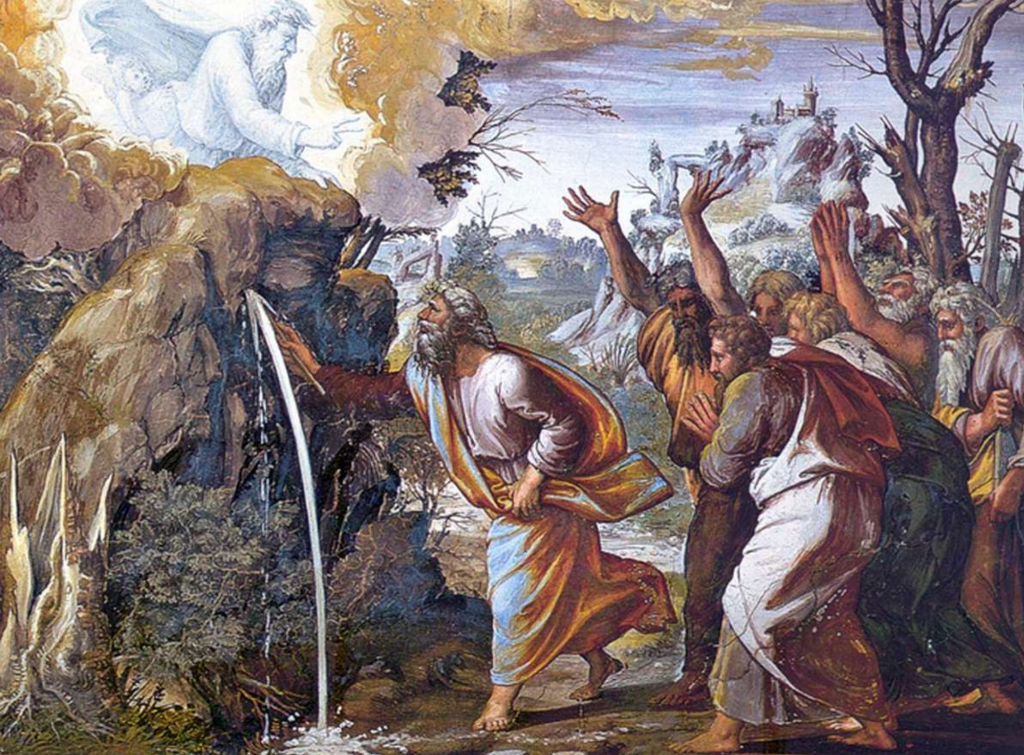
The Problem with Complaining (Exodus 15:22-27)

Then Moses led the people of Israel away from the Red Sea, and they moved out into the desert of Shur. They traveled in this desert for three days without finding any water. When they came to the oasis of Marah, the water was too bitter to drink. So they called the place Marah (which means “bitter”).

Then the people complained and turned against Moses. “What are we going to drink?” they demanded. So Moses cried out to the Lord for help, and the Lord showed him a piece of wood. Moses threw it into the water, and this made the water good to drink.

It was there at Marah that the Lord set before them the following decree as a standard to test their faithfulness to him. He said, “If you will listen carefully to the voice of the Lord your God and do what is right in his sight, obeying his commands and keeping all his decrees, then I will not make you suffer any of the diseases I sent on the Egyptians; for I am the Lord who heals you.”

After leaving Marah, the Israelites traveled on to the oasis of Elim, where they found twelve springs and seventy palm trees. They camped there beside the water. (New Living Translation)

I like children’s books. I suppose it’s because I’m still a kid at heart. It’s fun to read to my grandkids. One of the books I read to them is “Alexander and the Terrible, Horrible, No Good, Very Bad Day.” The book begins with Alexander recounting when he awoke one morning:

“I went to sleep with gum in my mouth and now there’s gum in my hair and when I got out of bed this morning, I tripped on the skateboard and by mistake I dropped my sweater in the sink while the water was running and I could tell it was going to be a terrible, horrible, no good, very bad day…. I think I’ll move to Australia.”

Alexander and the Terrible, Horrible, No Good, Very Bad Day, by Judith Viorst

For the remainder of the story, Alexander’s day was a mishap of messes. Nothing seemed to go his way, and no one appeared to notice or even to care.

One of the reasons the book has been read so many times by so many children (and obviously adults, like me) is because we can all relate to the feelings of having a day where nothing seems to go right. In the middle of it we just feel like being somewhere else, like Australia.

In such times, when life is topsy-turvy and upside-down, it is so amazingly easy to grumble and complain. The ancient Israelites were having an Alexander-like day. Unlike having gum in your hair, not having water to drink is a big deal, a vital problem. So, we might understand why there was so much grumbling going on among the people. I am sure they were anxious, nervous, and scared.

Yet, complaining, unlike our emotions, is a volitional response. We choose to grumble. The problem with gripes and complaints is that it sets a person down a dark path. Oh, the criticisms and grievances begin easily and are seemingly harmless, at first. They are, however, anything but innocuous.

A mere grumble under the breath did not stop with finally getting water to drink. If we look ahead in the story of God’s people in the exodus event, the moaning and complaining quickly returned the minute something did not go their way. Then, the people became so disillusioned with their circumstances that they began longing for the “good old days” back in Egypt when they had plenty to eat and drink, forgetting about their cruel bondage in slavery. (Exodus 16:1-3)

The psychological progression continued with beginning to blame their situation on God, as if he were some mean malevolent deity. From that point, it was inevitable that the people would disobey God and eventually succumb to the idolatry of the golden calf. (Exodus 32:1-8)

Despite the grand celebration of leaving Egypt and experiencing a miraculous deliverance through the Red Sea, the people quickly forgot because of their present circumstance of lacking water. It is only logical and makes sense that the mighty God who saved them with incredible acts of power would care for the people in a desert. Yet, for many, there was no faith to be found in a new situation they had not faced before.

Failure of faith begins neither with ignorance nor an egregious sin. It begins with grumbling and complaining. And if allowed to run amok, complaints will bear the fruit of discouragement, disobedience, and eventually a disavowal of God.

The author of the New Testament letter to the Hebrews reflected on the grumbling of their forebears and had this to say in response:

See to it, brothers and sisters, that none of you has a sinful, unbelieving heart that turns away from the living God. But encourage one another daily, as long as it is called “Today,” so that none of you may be hardened by sin’s deceitfulness. We have come to share in Christ, if indeed we hold our original conviction firmly to the very end. As has just been said:

“Today, if you hear his voice,
    do not harden your hearts
    as you did in the rebellion.” (Hebrews 3:12-15, NIV)

Encouragement is the insecticide which eliminates the worm of complaints. If left alone, we stew in our own bitterness over missed expectations. Grumbling bores its way into our soul and eats away at our faith. We need the continual encouragement of one another to remember our collective deliverance and express gratitude for our salvation.

May it be so to the glory of God.

We give you thanks, Lord God, because you give food and drink to all, heal all, create wonders in this world, forge wisdom within us, and give refuge beneath the shadow of your wings. From your wisdom grant us wisdom, from your love grant us love, from your understanding grant us understanding.

Feed us when we are hungry, give us strength when we are weak, raise us up when we are bent over, set us free when we are enslaved. Just as our spiritual ancestors were blessed – may you grant us the blessing of peace, strength, and gratitude. Amen.

Believing Hearts vs. Poisoned Minds (Acts 14:1-7)

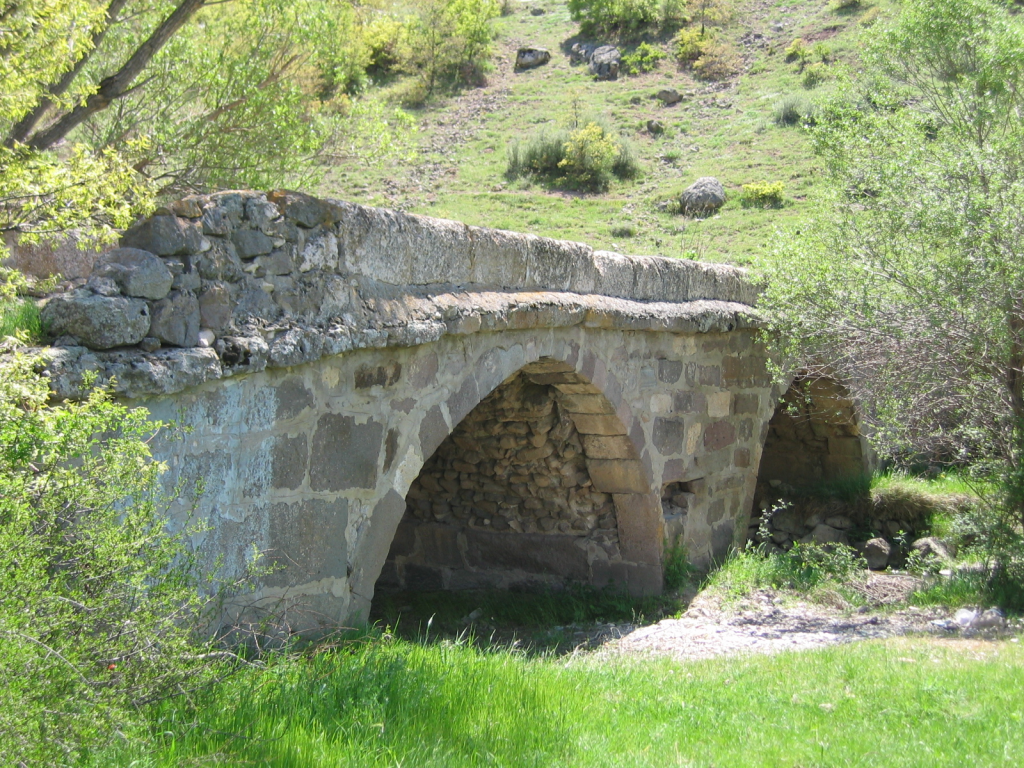
A Roman bridge between Iconium and Pisidian Antioch

The same thing occurred in Iconium, where Paul and Barnabas went into the Jewish synagogue and spoke in such a way that a great number of both Jews and Greeks became believers. But the unbelieving Jews stirred up the gentiles and poisoned their minds against the brothers. So they remained for a long time speaking boldly for the Lord, who testified to the word of his grace by granting signs and wonders to be done through them. 

But the residents of the city were divided: some sided with the Jews, and some with the apostles. And when an attempt was made by both gentiles and Jews, with their rulers, to mistreat them and to stone them, the apostles learned of it and fled to Lystra and Derbe, cities of Lycaonia, and to the surrounding region, and there they continued proclaiming the good news. (New Revised Standard Version)

The typical approach of the Apostles Paul and Barnabas was to enter a city and find the local Jewish synagogue. But their missionary efforts went well beyond attempting to reach fellow Jews; they also had the mind and heart to include non-Jewish persons, Gentiles, in the fledgling Church.

As a result of this apostolic ministry, a number of both Jews and Gentiles believed the message of God’s grace and became followers of Jesus. Thus, two ancient enemies came together to form one new society. Old animosities and prejudices came down. Jew and Gentile began worshiping together and embracing the words and ways of Jesus.

Yet, at the same time, there were also many Jews who refused to believe. Just as the new believers united together in faith, so the unbelievers banded together for a different purpose: to stir up the Gentiles by infecting their minds against this new union of people, centered around a common confession of Christ.

The unbelievers started a slander campaign against Paul and Barnabas, sowing mistrust and suspicion amongst the people in the street. But the sinful propaganda didn’t deter the apostles from spending considerable time in the city of Iconium and speaking confidently about the good news of Jesus.

What’s more, the message was confirmed by a demonstration of spiritual power. Paul and Barnabas were enabled by God to do many miraculous wonders in the city. This helped the gospel and the authority of the apostles to be established with the people.

The dynamic of belief and unbelief, cut right down the middle of the city. The people became divided and polarized. Some sided with the Apostles Paul and Barnabas, persuaded by their arguments and convinced by their actions; and others sided with the unbelieving Jews, having listened to their slanderous accusations and looking at the apostles as a threat to their existing society.

The climate in the city of Iconium became ripe for violence. Relations between believers and unbelievers deteriorated into planning harm against the new Christians. Even the city officials were becoming sympathizers with the planners to rid the city of the apostles once and for all. In other words, for Paul and Barnabas to remain in the city meant that they would likely get stoned and left for dead.

So, the apostles got out of Dodge and went to the cities of Lystra and Derbe. At least they could keep proclaiming the good news of grace to other people and avoid getting killed.

This story gets at a practical reality for many people of faith: How do people maintain their religious convictions and commitments in an environment that views them as harmful to society?

To be sure, not every person of faith faces this. But others around the world face it every day. And then there are perhaps the majority of the faithful, who sometimes find themselves in places and positions in which slander is rife and verbal violence abounds. What is a person of faith to do?

Not every situation is the same, so each circumstance will take some wisdom in handling it. Nevertheless, the following are some aspects to consider in dealing with the unbelief of others and the harmful effects it can bring:

  1. Persevere in your spiritual confidence. Paul and Barnabas did not cower in fear, but kept up their missionary efforts. The words of gossip and attitudes of hostility around them didn’t slow them down one bit. In fact, in other situations, the apostles who actually experienced harm, chose to view it as a privilege to suffer in the same sort of way Jesus did.
  2. Know when to walk away. Boldness doesn’t necessarily mean that one throws caution to the wind and simply keeps going, no matter the consequences. Paul and Barnabas knew when to leave the city and go somewhere else. They realized the shelf life of their ministry in Iconium was at an end. Neither one of them bemoaned the situation, but instead, looked ahead to the opportunity of gospel proclamation in other cities.
  3. Trust God in all things. Whenever we are slandered, or others actually make plans of harm against us, our initial desire may be to get them before they get us; or to fight back using the same tools of violence that were done against us. Paul and Barnabas did no such thing. Believers have spiritual tools of use that unbelievers don’t possess. So, use them. Pray for those who mistreat you. And let God handle the judgment end of things.

If Christians keep focusing on the words and ways of Jesus, they will consistently practice humility, not pride; confession of faith, not calling out in anger; meekness, not aggressiveness; righteousness, not wrongdoing; mercy, not judgment; purity, not dirty politics; and peacemaking, not war-mongering.

May it be so, to the glory of God. Amen.

Learning a Lesson from Balak and Balaam (Numbers 22:1-21)

Balaam and King Balak, by Maerten de Vos, 1585

Israel moved from there to the hills of Moab, where they camped across the Jordan River from the town of Jericho.

When King Balak of Moab and his people heard how many Israelites there were and what they had done to the Amorites, he and the Moabites were terrified and panicked. They said to the Midianite leaders, “That huge mob of Israelites will wipe out everything in sight, like a bull eating grass in a field.”

So King Balak sent a message to Balaam son of Beor, who lived among his relatives in the town of Pethor near the Euphrates River. It said:

I need your help. A large group of people has come here from Egypt and settled near my territory. They are too powerful for us to defeat, so would you come and place a curse on them? Maybe then we can run them off. I know that anyone you bless will be successful, but anyone you curse will fail.

The leaders of Moab and Midian left and took along money to pay Balaam. When they got to his house, they gave him Balak’s message.

“Spend the night here,” Balaam replied, “and tomorrow I will tell you the Lord’s answer.” So the officials stayed at his house.

During the night, God asked Balaam, “Who are these people at your house?”

“They are messengers from King Balak of Moab,” Balaam answered. “He sent them to ask me to go to Moab and put a curse on the people who have come there from Egypt. They have settled everywhere around him, and he wants to run them off.”

But God replied, “Don’t go with Balak’s messengers. I have blessed those people who have come from Egypt, so don’t curse them.”

The next morning, Balaam said to Balak’s officials, “Go on back home. The Lord says I cannot go with you.”

The officials left and told Balak that Balaam refused to come.

Then Balak sent a larger group of officials, who were even more important than the first ones. They went to Balaam and told him that Balak had said, “Balaam, if you come to Moab, I’ll pay you very well and do whatever you ask. Just come and place a curse on these people.”

Balaam answered, “Even if Balak offered me a palace full of silver or gold, I wouldn’t do anything to disobey the Lord my God. You are welcome to spend the night here, just as the others did. I will find out if the Lord has something else to say about this.”

That night, God said, “Balaam, I’ll let you go to Moab with Balak’s messengers, but do only what I say.”

So Balaam got up the next morning and saddled his donkey, then left with the Moabite officials. (Contemporary English Version)

 Art by Sefira Lightstone

Israel was at the cusp of finally entering the Promised Land. They had been delivered out of Egyptian slavery, wandered in the desert for forty years, and defeated all the tribes of the Transjordan in order to get to where they were going.

Fear had fallen on all the people surrounding Israel because of their success. The nation of Moab knew that Israel would not be defeated in battle; but maybe they could be defeated in a different way. So, they hired a professional seer to put a curse on Israel.

The seer, or diviner, Balaam, initially refused the offer, even though it was a lucrative one. But he finally acceded and went, with the caveat that he could only do what the Lord tells him to do.

Balak, the Moabite, desperately wanted Balaam to curse the Israelites. Balak essentially hired the most famous and effective diviner he could find. He fully expected all this to work in his favor, in order to give him an advantage over Israel.

Was Balaam a real prophet of God, or just a self-serving shaman? Although our text for today is essentially positive in its tone, subsequent generations look back on Balaam and understand him as in league with evil. (Numbers 31:8, 16; Joshua 13:22; Micah 6:5; Jude 11)

Although as biblical readers we might be somewhat flummoxed about what to really make of Balaam, he really serves as a mirror to the nature of humanity. For we are all people who are capable of both great evil and altruistic good, and everything in between. There is no such thing as a person who is all bad or all good; all of us are some sort of mix of the two.

Therefore, every one of us needs to be vigilant in how we shall then live – what choices we will make, what sort of goals we will establish, and what kind of people we will listen to and follow. If we seek to take some lessons from this story, perhaps we might do well to consider the motives of the main characters Balak and Balaam.

Balak was filled with dread and fear. Sickening fear and anxiety is most certainly one of the great emotional and spiritual hazards of our time. His debilitating fear was that he and his nation would be destroyed by Israel.

Yet, if you consider this, it is a groundless anxiety. Israel was all too willing to pass through on their way to the Promised Land without a fight. It was only when attacked that they fought back and destroyed other nations.

Balak wasted a bunch of wealth and worry on something that wasn’t even going to happen, unless he himself provoked it. It is likely that worry, fear, and anxiety, like Balak, is not serving you well; it’s keeping you under the tyranny of what might happen. And it is in such a state that we make poor decisions, such as consulting diviners to assuage us of the worry.

Balaam allowed himself to be manipulated into believing he could make his small fortune. After all, this nation of people needed him, and he perhaps vainly imagined he was doing the right thing and being above board.

But Yahweh is not like other gods. In reality there was no way Balaam was going to cajole God to get what he wanted. It may have worked that way in paganism, but wasn’t going to happen with the sovereign Lord of the universe. In the end, it was God who used Balaam for God’s own purpose – and not the other way around.

Some people want they want, and arrogantly assume that if they pray a lot and have their requests offered on many prayer chains, or that if they just use the right language and exhibit enough passion, that God will surely have to answer them and give them what they want. But Christian prayer is not like other prayer:

When you pray, don’t talk on and on as people do who don’t know God. They think God likes to hear long prayers. Don’t be like them. Your Father knows what you need even before you ask. (Matthew 6:7-8, CEV)

Everything comes down to trusting God and obeying his commands. When all is said and done, after all the fear and worry are spent, there is God, waiting for us to come and place faith in the divine law and promises.

Everything you were taught can be put into a few words:

Respect and obey God!
This is what life
    is all about.
God will judge
    everything we do,
even what is done in secret,
    whether good or bad. (Ecclesiastes 12:13-14, CEV) Amen.

Take Responsibility (Deuteronomy 3:23-29)

It was also at that same time that I begged the Lord: Please, Lord God! You have only begun to show your servant your greatness and your mighty hand. What god in heaven or on earth can act as you do or can perform your deeds and powerful acts? Please let me cross over the Jordan River so I can see the wonderful land that lies beyond it: those beautiful highlands, even the Lebanon region.

But the Lord was angry with me because of you! He wouldn’t listen to me. He said to me: That’s enough from you! Don’t ever ask me about this again! Go up to the top of Mount Pisgah. Look west, north, south, and east. Have a good look, but you will not cross the Jordan River. Instead, command Joshua, strengthen him, and encourage him because he’s the one who will cross the river before this people. He’s the one who will make sure they inherit the land you will see.

After that, we stayed in the valley across from Beth-peor. (Common English Bible)

I wonder if God ever feels like the parents of elementary aged children. “Please, please, puh-leeeze let me have it!” It’s a good thing God is spirit, because there may be some divine eye rolling happening with certain people’s requests.

When Moses pleaded God to allow him to cross the Jordan River into the Promised Land, the Lord forbade him to do so. The reason God gave is that Moses had to bear the brunt of the Lord’s anger on behalf of the community.

But you [Israel] had no faith in the Lord your God about this matter, even though he went ahead of you, scouting places where you should camp, in fire by night, so you could see the road you were taking, and in cloud during the daytime.

The Lord heard what you said. He was angry and he swore: Not even one of these people—this wicked generation!—will see the wonderful land that I promised to give to your ancestors… (The Lord was even angry with me [Moses] because of what you did. “You won’t enter the land either,” God said. “But Nun’s son Joshua, your assistant, will enter it. Strengthen him because he’s the one who will help Israel inherit the land.”) (Deuteronomy 1:32-38, CEB)

Not allowing Moses to enter the land may seem strange to us whose culture prizes individualism and self-reliance. But that was not the culture of ancient Israel. There was a common core belief in corporate responsibility. The leader acted as the representative of the people, and so, Moses was answerable for the community’s sins.

Fresco of Moses and water from the rock, by Raffaello Sanzio da Urbino (Raphael), 1519

Lest we still don’t like what’s going on here, elsewhere in scripture we get a perspective that it was also the lack of faith by Moses that caused him to lose privilege in entering the land:

Moses and Aaron gathered the assembly before the rock. He said to them, “Listen, you rebels! Should we produce water from the rock for you?” Then Moses raised his hand and struck the rock with his staff twice. Out flooded water so that the community and their animals could drink.

The Lord said to Moses and Aaron, “Because you didn’t trust me to show my holiness before the Israelites, you will not bring this assembly into the land that I am giving them.” These were the waters of Meribah, where the Israelites confronted the Lord with controversy and he showed his holiness to them. (Numbers 20:10-13, CEB)

The fact of the matter is that we are responsible for both our personal selves and the entire community of people we are a part of. Indeed, we truly are our brother’s and sister’s keeper.

It’s important that everyone considers what the Lord’s will is – not only personally – but for the common good of all the people. Perhaps this idea is captured best in the fictitious Star Trek adage of the alien Vulcans who would logically examine a decision and say, “The needs of the many outweigh the needs of the few (or the one).”

What’s more, believers in God are meant to consider what is pleasing to the Lord, and not only to one’s personal or communal pleasure. The Lord is God and we are not. Sovereignty belongs to God. Servanthood belongs to us; and our ultimate service is to the Lord.

The bottom line for me is believing that the Lord God is good, all the time, and truly has our best interests at mind and at heart. Since God did not allow Moses into the land, I reason that it was for a greater good that transcended the individual request of Moses to enter.

Maybe that’s a difficult perspective to find whenever we are in the middle of strong desires for something, but it is one that we must struggle to find. Since the Lord is high and holy above everyone and everything, God is able to see the big picture and every angle of a situation.

We, however, only see a very small slice of the total view. So, it only makes sound spiritual sense that we learn to entrust ourselves to the One who sees all and acts according to what is right, just, and good.

Gracious and generous God, Creator and Giver of all that is good, we thank you for our many blessings. We acknowledge that all that we have is from you. We offer you thanks and praise for the beauty of the earth, our work, our family, our loved ones, and all the gifts we have been given.

You are with us always. In each dark hour, you are here. In each bright hour, you are here. Blessed by your grace, may we show gratitude by sharing what we have been given. For by serving our brothers and sisters, we serve you.

We remain ever grateful for your constant love, the gift of your Son Jesus, and the presence of your Holy Spirit with us. Protect and guide us on our personal and collective journeys, as we seek to be your faithful stewards. Amen.