Psalm 4 – Rhythms of Trust

God, you are my righteousness, my Champion Defender.
    Answer me when I cry for help!
    Whenever I was in distress, you enlarged me.
    I’m being squeezed again—I need your kindness right away!
    Grant me your grace, hear my prayer, and set me free!
Listen to me, you elite among men:
    How long will you defame my honor
    and drag it down into shame?
    Will you ever stop insulting me?
    How long will you set your heart on shadows,
    chasing your lies and delusions?
May we never forget that Yahweh works wonders
    for every one of his devoted lovers.
    And this is how I know that he will answer my every prayer.
Tremble in awe before the Lord, and do not sin against him.
    Be still upon your bed and search your heart before him.
Bring to Yahweh the sacrifice of righteousness and put your trust in him.
Lord, prove them wrong when they say, “God can’t help you!”
    Let the light of your radiant face
    break through and shine upon us!

The intense pleasure you give me
    surpasses the gladness of harvest time,
    even more than when the harvesters
    gaze upon their ripened grain
    and when their new wine overflows.
Now, because of you, Lord, I will lie down in peace and sleep comes at once,
    for no matter what happens, I will live unafraid! (TPT)

This is a psalm of David. It is a heartfelt and confident plea for deliverance.

David had a track record with God. For most of his life, David had a spiritual and relational rhythm of looking to God, trusting God, and resting secure in God.

Small Faith

I’m not sure where the idea popped up amongst some Christians that faith and trust in God means everything in life is going to be hunky-dory and a bowl of cherries. That was not true of any godly character in the Bible. In fact, it seems the more integrity one has in Scripture, the more they faced trouble and suffering.

It is the pea-brained, small-hearted, and gutless who have the time and privilege of leveling criticism and defamation on the ones sincerely trying to make a difference in this world. On the one hand, it is unfortunate that the spiritually devoted must put up with the petulance of puny people. Yet, on the other hand, the faithful recognize God controls all things and uses anything and anyone to shape them as persons who have grown expansive spiritual faculties, enlarged hearts, and gut-feeling compassion. The wise truly learn from all things.

“Trust the Lord completely, and don’t depend on your own knowledge. With every step you take, think about what he wants, and he will help you go the right way.”

Proverbs 3:5-6, ERV

Big Faith

The godly have become so because they have learned over-and-over again to let God champion their cause and defend their personhood. The faithful reflexively cry out to the Lord with all their troubles. The devoted aren’t shy in boldly telling God exactly what they want and need. They find joy in their spirituality, and they let it support them in stressful times.

God has shown them steadfast love. And they are supremely secure in the settled conviction that God has their backs. They believe it so much that followers of God can lay their heads on their pillows at night and fall asleep – despite the reality there are those who would take their life, if given half the chance.

No Sleep

Insomnia happens for a lot of reasons. Many, like me, have sleep apnea and restless leg disorder, both diagnosed medical conditions. Others can’t get a good night’s rest because of poor sleep hygiene by not planning for adequate sleep, drinking too much caffeine during the day, inattention to a healthy diet, or a host of other habits. Some, like my dear wife, have issues of chronic pain which can make it difficult to sleep well.

And then there are yet others who suffer from racing thoughts, anxiety, and depression. The stress of their waking life is so significant that several hours of deep sleep seems only like some pipe dream. It’s impossible to sleep when the weight of the day is pressing on you. Finding a sense of calm before bed isn’t easy—especially when you can’t unplug from the demands of your day.

I am wondering if many of us will even allow ourselves to unplug and establish some quiet wind-down time. Reading a real book – not one on a backlit tablet device – or talking with a friend or family member are simple ways of easing our anxiety and letting rest come.

Sleep ZZzz

The psalmist, David, had a regular practice of meditating on Scripture, recalling the events of God, and expressing gratitude and praise for answered prayer. Each of us has a built-in spiritual rhythm just like we have a circadian rhythm. Always trying to buck those God-given rhythms will inevitably result in being “off,” at the least, and experiencing debilitating depression, at worst.

Yet, when we learn to move with the unforced rhythms of grace, there is a groove we slip into which serves us well. In other words, allowing ourselves to be human brings health.

David had neither delusions nor illusions about his enemies, friends, others, and himself. He didn’t try to be somebody he was not. Instead, David had firm and confident convictions about God and the place of prayer. A steady diet of David’s psalms teaches us to hold together both faith and doubt, confidence and confusion, perseverance and perplexity in ways which strengthens belief.

Christ be with you: Christ within you;
Christ before you: Christ behind you;
Christ on your right: Christ on your left;
Christ above you: Christ beneath you;
Christ around you: now and ever. Amen.

Mark 1:9-15 – Desert Spirituality

Welcome, friends! We begin the Christian season of Lent through recognizing that the desert is a very necessary part of resisting temptation and becoming strong in faith and patience. Click the videos below and let us together follow Jesus…

Mark 1:9-15, Pastor Tim
Advent Birmingham is a diverse group of musicians who lead worship services in song on Sundays at Cathedral Church of The Advent in Birmingham, Alabama. They also write and record modern hymns of their own and set ancient Christian hymns and songs to modern settings.

Sin is defeated. So, may we become the people we were always meant to be,
by the grace of God through Jesus Christ. Amen.

Job 6:1-13 – A Response to Suffering

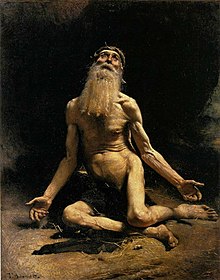
Job by French painter Léon Bonnat, 1880

Oh, that my grief was weighed,
    all of it were lifted in scales;
    for now it is heavier than the sands of the sea;
        therefore, my words are rash.
The Almighty’s arrows are in me;
    my spirit drinks their poison,
    and God’s terrors are arrayed against me.
Does a donkey bray over grass
    or an ox bellow over its fodder?
Is tasteless food eaten without salt,
    or does egg white have taste?
I refuse to touch them;
    they resemble food for the sick.

Oh, that what I’ve requested would come
        and God grant my hope;
    that God be willing to crush me,
    release his hand and cut me off.
I’d still take comfort,
    relieved even though in persistent pain;
        for I’ve not denied the words of the holy one.
What is my strength, that I should hope;
    my end, that my life should drag on?
Is my strength that of rocks,
    my flesh bronze?
I don’t have a helper for myself;
    success has been taken from me. (CEB)

The Old Testament character of Job is famous as the poster boy for suffering, grief, and sorrow. A divine and devilish drama was taking place behind the curtain of this world, of which Job had absolutely no clue about.  All he knew was that he lost everything – his family, his wealth, and his standing before others.  The only thing left was his own life – and he was in such physical pain and emotional agony that he was ready to die.

Yet, the greatest pain of all seems to be the silence of God. Job has no idea, nothing to grab ahold of no earthly sense of why he was going through such intense and terrible suffering. His cries, tears, pleas, and expressions of deep hurt seemingly go un-noticed. Job felt truly alone in his horrible pain of body and spirit.

“We must learn to regard people less in the light of what they do or omit to do, and more in the light of what they suffer.”

Dietrich Bonhoeffer

Job’s story is as old as time – probably having taken place 4,000 years ago. And here we are, all these millennia later, knowing the story of why Job suffered, as well as the end of the story. But Job himself never knew why he suffered, even when God spoke and restored his health and wealth.

It is so extremely easy and normal to ask the question, “Why!?”  When we are in the throes of emotional pain and our prayers seem to bounce off the ceiling, there is only trust left for us. We do what is unthinkable to others who have never known God – place our complete reliance and hope on the God for whom we know is not really sleeping or off on a vacation. We believe, even know, God is there. For whatever reasons which we might never know this side of heaven, God chooses to remain silent.

The genuineness of faith is not determined by giving the right answers to a theology questionnaire. Genuine faith is made strong through the trials, sufferings, pain, and lack of understanding in this life. We all suffer in some way. How we choose to respond to that suffering, either by cursing God and becoming bitter, or holding to God even tighter and becoming better, is totally up to you and me.

God of all creation, you see and survey all your creatures here on this earth. Sometimes I just do not understand what in the world you are doing or not doing. Yet today I choose to put my faith, hope, and love in you.  I may not know what the heck I am doing, but you always work to accomplish your good purposes, through Jesus Christ, my Savior, along with the Holy Spirit.  Amen.

Psalm 102:12-28 – God Hears

But you, O Lord, are enthroned forever;
    your name endures to all generations.
You will rise up and have compassion on Zion,
    for it is time to favor it;
    the appointed time has come.
For your servants hold its stones dear,
    and have pity on its dust.
The nations will fear the name of the Lord,
    and all the kings of the earth your glory.
For the Lord will build up Zion;
    he will appear in his glory.
He will regard the prayer of the destitute,
    and will not despise their prayer.

Let this be recorded for a generation to come,
    so that a people yet unborn may praise the Lord:
that he looked down from his holy height,
    from heaven the Lord looked at the earth,
to hear the groans of the prisoners,
    to set free those who were doomed to die;
so that the name of the Lord may be declared in Zion,
    and his praise in Jerusalem,
when peoples gather together,
    and kingdoms, to worship the Lord.

He has broken my strength in midcourse;
    he has shortened my days.
“O my God,” I say, “do not take me away
    at the midpoint of my life,
you whose years endure
    throughout all generations.”

Long ago you laid the foundation of the earth,
    and the heavens are the work of your hands.
They will perish, but you endure;
    they will all wear out like a garment.
You change them like clothing, and they pass away;
    but you are the same, and your years have no end.
The children of your servants shall live secure;
    their offspring shall be established in your presence. (NRSV)

When you are destitute and hurting, it is easy to feel alone, as if no one really understands. The healthy, the wealthy, and the powerful do not often take notice of the needy. Whether in chronic pain, constantly dealing with sickness, continually drowning in bills, laboring long hours in obscurity with little pay, or all of them at the same time, there is good news: God specializes in such situations.

Contrary to popular characterizations of the Old Testament, God is merciful, gracious, and kind. The dominant motif is not a God of wrath but a God of steadfast love – a God who makes and keeps promises to people. God’s wrath is reserved for those who have the power and privilege to care for others, but instead, fleeces them of what little they possess.

This was the situation for the psalmist. He had no idea why he was the victim – he just knew he needed God.  So, he turned to the Lord – trusting that God is good for his promises – knowing that God will be attentive to the great needs of his life.

It is interesting there is no wonderful or miraculous answer to the psalmist’s plea to God recorded for us. There is only pain, petition, trust, and hope.

Sometimes, maybe oftentimes, all we have is faith, hope, and love. Yet, and I am just throwing out a notion to consider, if we possess these three virtues, we are the ones who are healthy, rich, and strong.

The Lord’s eyes watch the righteous, and his ears listen to their cries for help.

psalm 34:15, ceb

God is attentive to your prayer. God hears you when you adopt this psalm for yourself and pray it with fervor and flavor. The lack of immediate Divine intervention does not necessarily mean God overlooks a person’s situation. It just means the Lord is planning something supremely spectacular for you. 

To pray in a time of trouble is to dwell in the presence of God. To be in the presence of God is to find an answer to prayer you might not have been looking for to begin with. God hears. God will respond… in the proper time.

O God Almighty, sovereign of all, and the One in whom is my hope: Help!  I pray to you alone.  I know you bend your ear to pay attention, so hear my prayer for mercy in the middle of my hardship.  You are always the same, even though everything and everyone else changes.  Be my rock in a time of trouble; in Jesus, through the enablement of the Holy Spirit.  Amen.