John 3:31-36 – Believe the Son

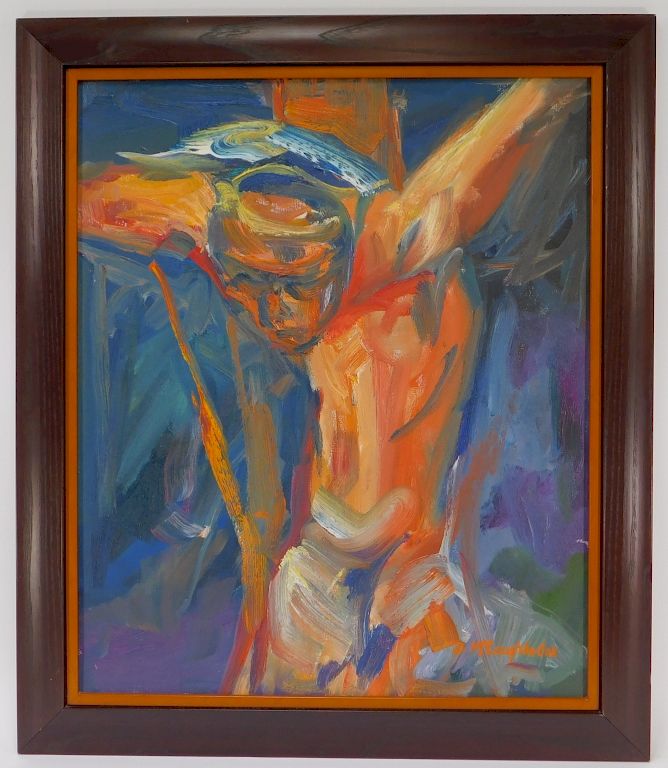
The Trinity by Alex Rapoport, 1994

God’s Son comes from heaven and is above all others. Everyone who comes from the earth belongs to the earth and speaks about earthly things. The one who comes from heaven is above all others. He speaks about what he has seen and heard, and yet no one believes him. But everyone who does believe him has shown that God is truthful. The Son was sent to speak God’s message, and he has been given the full power of God’s Spirit.

The Father loves the Son and has given him everything. Everyone who has faith in the Son has eternal life. But no one who rejects him will ever share in that life, and God will be angry with them forever. (Contemporary English Version)

When Jesus ascended to heaven, he left instructions to his disciples to pray and to witness (Acts 1:1-11). Jesus asks of us what he himself does or has already done. The life and ministry of Christ on this earth was marked continually with prayer and bearing witness. Just as Jesus bore witness to what he saw and heard as the Divine Word, so his followers are to do likewise. The evidence and the veracity of Christ’s witness is the giving of God’s Spirit – the One whom confirms this testimony to us.

I, personally, have found Jesus to be precisely whom he claims to be. I have come to accept his testimony as gracious, truthful, and life-giving. I have wholeheartedly embraced the New Testament Gospel accounts of his birth, life, teaching, death, resurrection, and ascension. This belief came neither quickly nor easily for me – it resulted from an honest straightforward reading of the Bible, along with the gracious wooing of the Holy Spirit.

It really isn’t my job to convince you of Jesus Christ’s authenticity and trustworthiness. That is the work of the Holy Spirit. Instead, it is my task to bear witness of the things I have seen and heard concerning Jesus. 

My life has been thoroughly turned upside-down because of Jesus. With Jesus, I have been invited into the life of God. By the wounds of Jesus, I have experienced healing of damaged emotions and recovery from spiritual hurts inflicted by others. Through union with Christ, I have grace and forgiveness of things I have done and left undone. With Brother Jesus as my friend and companion, I enjoy loving attention and am never dismissed by him.

The Trinity by Jyoti Sahi

For those who have not read the Gospel accounts and refuse Christ, then, for honesty’s sake, please have the integrity to give Jesus a hearing before you dismiss him with a slight of hand. It is one thing to genuinely no little about Jesus, and it is quite another thing to ignore him when you have knowledge about how to discover him.

For those of us who have read the New Testament Gospels and accept the testimony of Jesus, we come back again and again to his life-giving words and seek continually to follow him in his way of mercy, purity, and peace. We bear witness to how Jesus has changed our lives and offers a life worth living.

Everyone with faith in Jesus has a life-giving connection with God. Those who don’t, don’t. If you disagree with this, then contend with Jesus himself. Give him a hearing. Watch him in action. Observe how he deals with people. See if he lives up to his words. Then, bear witness to what you have seen and heard.

Christian faith is a complete trust in the person and work of Jesus Christ as Lord and Savior. Because God has been revealed as faithful through steadfast love, the Lord gifts people with faith to know the Divine.

Faith, a noun, is closely accompanied by it’s verb, believe. Together, as identical twin sisters, they let us know that both knowledge and action are needed. We need information in knowing what step to take, and an active commitment to actually take that step.

Others’ faith in Jesus led to a man’s healing of both body and soul:

And behold, some people brought to him a paralytic, lying on a bed. And when Jesus saw their faith, he said to the paralytic, “Take heart, my son; your sins are forgiven.” (Matthew 9:2, ESV)

The size of faith is irrelevant; even a smidge of Jesus has incredible power:

“I [Jesus] assure you that if you have faith the size of a mustard seed, you could say to this mountain, ‘Go from here to there,’ and it will go. There will be nothing that you can’t do.” (Matthew 17:20, CEV)

Human weakness and inability is no problem because of faith in Christ:

Everyone who believes has God’s approval through faith in Jesus Christ…. We conclude that a person has God’s approval by faith, not by his own efforts.

Romans 3:22, 28, GW

A person acts upon knowledge of Jesus with total trust in Christ’s finished work of deliverance from all which is evil:

It’s the word of faith that welcomes God to go to work and set things right for us. This is the core of our preaching. Say the welcoming word to God — “Jesus is my Master”— embracing, body and soul, God’s work of doing in us what he did in raising Jesus from the dead. That’s it. You’re not “doing” anything; you’re simply calling out to God, trusting him to do it for you. That’s salvation. With your whole being you embrace God setting things right, and then you say it, right out loud: “God has set everything right between him and me!” (Romans 10:9-12, MSG)

Faith is not an event; it is continual trust in the person and work of Christ for practical living and compassionate serving:

I have been crucified with Christ; and it is no longer I who live, but it is Christ who lives in me. And the life I now live in the flesh I live by faith in the Son of God, who loved me and gave himself for me. (Galatians 2:19b-20, NRSV)

Outward rituals only have their proper place as they help inform belief in order to engage in loving actions:

For in Christ Jesus, neither circumcision nor uncircumcision counts for anything, but only faith working through love. (Galatians 5:6, NAB)

You are saved by God’s grace because of your faith. This salvation is God’s gift. It’s not something you possessed. It’s not something you did that you can be proud of. Instead, we are God’s accomplishment, created in Christ Jesus to do good things. God planned for these good things to be the way that we live our lives. (Ephesians 2:8-10, CEB)

Understanding and experience go together like a hand in a glove:

I keep hearing about your faith in the Lord Jesus and your love for all of God’s people.  And I am praying that you will put into action the generosity that comes from your faith as you understand and experience all the good things we have in Christ. (Philemon 5-6, NLT)

Absolute certainty isn’t in the realm of Christian spirituality – there’s always more information one could obtain. Faith discerns, intuits, and knows God is there, and orders it’s steps accordingly with faithful activity:

And without faith it is impossible to please God, for whoever would approach him must believe that he exists and that he rewards those who seek him. (Hebrews 11:6, NRSV)

My brothers and sisters, if people say they have faith, but do nothing, their faith is worth nothing. Can faith like that save them?… Just as a person’s body that does not have a spirit is dead, so faith that does nothing is dead! (James 2:14, 26, NCV)

In the power of the Spirit and in union with Christ, I pray to you, the God and Father of all:

For empowerment by the Spirit, that I may be a faithful witness

For those who wait on You, that they may find renewal

For all people, that they may acknowledge the kingdom of the ascended Christ

For all who are struggling with broken relationships

I commend myself and all for whom I pray, to Your mercy and protection through Jesus Christ, my Lord and Savior. Amen.

Psalm 34:1-8 – Deliverance from Trouble

I will praise the Lord at all times.
    I will constantly speak his praises.
I will boast only in the Lord;
    let all who are helpless take heart.
Come, let us tell of the Lord’s greatness;
    let us exalt his name together.

I prayed to the Lord, and he answered me.
    He freed me from all my fears.
Those who look to him for help will be radiant with joy;
    no shadow of shame will darken their faces.
In my desperation I prayed, and the Lord listened;
    he saved me from all my troubles.
For the angel of the Lord is a guard;
    he surrounds and defends all who fear him.

Taste and see that the Lord is good.
    Oh, the joys of those who take refuge in him! (New Living Translation)

Gratitude and praise are more than a nice thing. They have the power to spiritually form us, emotionally buoy us, and mentally change our brain chemistry for the better – not to mention connecting us with divine help.

Today’s psalm is a song of thanksgiving. The psalmist intentionally recalls being delivered by G-d from trouble and hardship. And he invites us to experience G-d’s salvation, as well.

Desperate people who are between a rock and a hard place need divine help. The Lord is able to intervene in both small and large ways. David, the psalmist, crafted this psalm in a time when he had no resources available to him. He was alone with nothing but the Lord. And that was plenty. Even a little bit of G-d is enough to thoroughly rescue.

Take note of the verbs used to describe G-d’s activity in helping David: “answered” “freed” “listened” “saved” “surrounds” and “defends.” These multiple actions of the Lord were all activated through David’s initiative with one single verb of his own: “prayed.”

It is one thing to pray because of expectation or routine. It is altogether a different thing to pray out of desperation from the depths of your gut.

So, when David encourages us to taste and see that the Lord is good and to take refuge in G-d, he is calling us to pray – to know something of God’s promises, presence, provision, and power and to actively ask, seek, and knock for help.

David, the psalmist, really wants us to experience prayer. He desires us to cry out on behalf of ourselves, as well as lifting up others to G-d. Yet, truth be told, helping those with afflictions and sickness through prayer is something we don’t always handle well.

We might too quickly and reflexively dispense our homespun opinions and ideas, as if we are experts on another’s situation, rather than hurrying to G-d in prayer. In our pride, we believe that if folks will just follow our recommendations that all will be well.

And then there are the silly and even hurtful things we say to others in their distress, rather than interceding for them before G-d. We may toss out a flippant and simplistic statement like, “God will heal — just pray.” Then, we leave them to do that alone. And sometimes, even after prayer, medicine, and doing the right thing, change doesn’t happen, and nobody knows quite what to do.

We can also be guilty of reducing trouble to only the physical when the trouble might be emotional, mental, relational, or any combination thereof. These are the hurts and troubles plaguing us all, because we live in a broken world where everyone needs redemption.

Many times, we have no problem believing G-d will work on behalf of others. We trust the Lord for deliverance and the miraculous for them. Yet, when it comes to us, we harbor serious doubts of whether G-d will rescue us, or even wants to.

There are a lot of things we just don’t know. However, what we do know is that the God of David promises help in Psalm 34, and to redeem lives from desperate situations. And this is why David could boldly invite us to tell of the Lord’s greatness, and call us to praise G-d’s name together.

May the risen and ascended Christ, mightier than the hordes of hell, more glorious than the heavenly hosts, be with you in all your ways. 

May the cross of the Son of God protect you by day and by night, at morning and at evening, at all times and in all places. 

May Christ Jesus guard and deliver you from the snares of the devil, from the assaults of evil spirits, from the wrath of the wicked, from all base passions and from the fear of the known and unknown.

May the blessing of God almighty – Father, Son, and Spirit – be upon you and remain with you always. Amen. 

Hebrews 6:1-12 – Don’t Give Up

Therefore, let us move beyond the elementary teachings about Christ and be taken forward to maturity, not laying again the foundation of repentance from acts that lead to death, and of faith in God, instruction about cleansing rites, the laying on of hands, the resurrection of the dead, and eternal judgment. And God permitting, we will do so.

It is impossible for those who have once been enlightened, who have tasted the heavenly gift, who have shared in the Holy Spirit, who have tasted the goodness of the word of God and the powers of the coming age and who have fallen away, to be brought back to repentance. To their loss they are crucifying the Son of God all over again and subjecting him to public disgrace. Land that drinks in the rain often falling on it and that produces a crop useful to those for whom it is farmed receives the blessing of God. But land that produces thorns and thistles is worthless and is in danger of being cursed. In the end it will be burned.

Even though we speak like this, dear friends, we are convinced of better things in your case—the things that have to do with salvation. God is not unjust; he will not forget your work and the love you have shown him as you have helped his people and continue to help them. We want each of you to show this same diligence to the very end, so that what you hope for may be fully realized. We do not want you to become lazy, but to imitate those who through faith and patience inherit what has been promised. (New International Version)

Whenever things get tough and really hard, it is inevitable that there will be people who drop out. It happens in every arena of life, including the Christian life. Sometimes life becomes so overwhelming that we feel like we’re just not making a dent in any of our issues or responsibilities. It is tempting to simply give up and leave it all behind.

Today’s New Testament lesson addresses a group of people who were considering leaving the Christian faith. Some folks had already left, causing confusion with the people still around about how to think about this and what to do going forward.

Who is the author talking about?

He’s talking about those who made a profession of Christ. Are they actual Christians? This gets at the heart of what makes a Christian a Christian. And the answer is that a Christian exhibits both faith and obedience, both trust and perseverance. Real Christians profess the name of Christ with their mouths and demonstrate faith with their actions by obeying the words and ways of Jesus.

What are they in danger of?

Apostasy is a deliberate and intentional renouncing of faith with no intention of ever going back to Christ. An apostate is a person who once professed faith, then rescinded it. This is the author’s point for crafting his message to the struggling Christians. In their hardship, they were seriously toying with the notion of leaving Christianity altogether.

Why would they ever renounce their faith?

Because of hard circumstances, spiritual overwhelm, and grinding tiredness. Adverse situations never leave us the same. They either make us bitter or better, depending upon our response to them. If Christians believe that the Christian life should be an unending journey of victory and glory in this life, disappointment will settle in rather quickly. Missed expectations are typically the manure which fertilizes the field of apostasy.

How can they be restored?

The author of Hebrews makes it clear that they cannot – not because God never gives second chances to people but because the hardness of heart in the apostate is such that they have no intention or desire to live for Jesus. In fact, they now have a hatred of Christ and show contempt for him. We are not talking about flaky or fickle people. We are talking about folks who, with their full faculties intact, put as much energy into resisting, rejecting, and renouncing Christ as they can. This isn’t a momentary lapse in judgment. Rather, it is a calculated decision to hate all that is Christian, after having once loved it.

Where does this happen?

It happens in the heart. When Jesus told his parable of the soils, he was not talking about four different kinds of Christians. The point of Christ’s parable is that there is only one kind of Christian – the other three simply demonstrated they were not the genuine article to begin with. All four professed faith but only one proved it through growth, maturity, and harvest. (Matthew 13:1–23; Mark 4:1–20; Luke 8:4–15)

According to Jesus, there is either no response, a superficial response, a temporary response, or a genuine response. The person who does God’s will is the real deal.

Some people make a dichotomy between faith and obedience, as if they are separate things. Yet, in truth, they are a package deal and cannot be separated. The following all belong together and are not to have any division between them. It is a matter of “and,” not “or.”

Faith and works.

Past and future.

Grace and merit.

Event and process.

People fall away from their faith commitments when they are unable or unwilling to hold the “and’s” together. Whenever the rocks and thorns of life hit them and stick them in ways they don’t like, it is crucial to respond in a way which doesn’t compromise staying on a path of spiritual maturity.

So, where are you on the journey of faith? How do you handle missed expectations and grave disappointments? Are you okay? What do you need? Are there ways others can help?

There are other options besides giving up. Go ahead and explore them.

Grant, O God, that I may never lose the way through self-will, and so end up in the far countries of the soul; that I may never abandon the struggle, but endure to the end; that I may never drop out of the race, but ever press forward to the goal of my calling; that I may never choose cheap and passing things, and embrace the eternal; that I may never take the easy way, and so leave the right way; that I may never forget that sweat is the price of all things, and that without the cross, there cannot be the crown.

So, keep your people and strengthen us by your grace that no disobedience and no weakness and no failure may stop us from entering into the blessedness which awaits those who are faithful in all the changes and chances of life down even to the gates of death, through Jesus Christ our Lord. Amen

Psalm 22:1-15 – Responding to Trouble

My God, my God, why have you forsaken me?
    Why are you so far from helping me, from the words of my groaning?
O my God, I cry by day, but you do not answer;
    and by night but find no rest.

Yet you are holy,
    enthroned on the praises of Israel.
In you our ancestors trusted;
    they trusted, and you delivered them.
To you they cried, and were saved;
    in you they trusted, and were not put to shame.

But I am a worm, and not human;
    scorned by others, and despised by the people.
All who see me mock at me;
    they make mouths at me, they shake their heads;
“Commit your cause to the Lord; let him deliver—
    let him rescue the one in whom he delights!”

Yet it was you who took me from the womb;
    you kept me safe on my mother’s breast.
On you I was cast from my birth,
    and since my mother bore me you have been my God.
Do not be far from me,
    for trouble is near
    and there is no one to help.

Many bulls encircle me,
    strong bulls of Bashan surround me;
they open wide their mouths at me,
    like a ravening and roaring lion.

I am poured out like water,
    and all my bones are out of joint;
my heart is like wax;
    it is melted within my breast;
my mouth is dried up like a potsherd,
    and my tongue sticks to my jaws;
    you lay me in the dust of death. (New Revised Standard Version)

Christians readily recognize the beginning question of this psalm. Jesus asked it from the cross (Matthew 27:46). Today’s psalm is a heartfelt lament, an affirmation of trust, a call for help, and vow to praise.

Lament

Grieving and lamenting is neither selfish nor sinful. It is necessary. God did it. Job did it. Jesus did it. And the psalmist did it – repeatedly, I might add. So, we ought to do it. It’s biblical. Part of our hard-wiring as humanity is to lament our significant changes and losses in life.

Some folks believe it sacrilegious to challenge, complain, and/or yell at/to God. However, God is big enough to handle our contentions. There are times in life when God seems very distant and aloof, as if the Lord is not paying attention to our plight and pain.

Three of Job’s friends heard of all the trouble that had fallen on him. Each traveled from his own country—Eliphaz from Teman, Bildad from Shuhah, Zophar from Naamath—and went together to Job to keep him company and comfort him. When they first caught sight of him, they couldn’t believe what they saw—they hardly recognized him! They cried out in lament, ripped their robes, and dumped dirt on their heads as a sign of their grief. Then they sat with him on the ground. Seven days and nights they sat there without saying a word. They could see how rotten he felt, how deeply he was suffering. (Job 2:11-13, MSG)

Asking “why?” can come from a belligerent heart, or it can arise as a genuine heartfelt expression of hurt, anger, and wondering. One thing us humans need to become comfortable with is that it is okay to not be okay. Not everything needs to be fixed, even though we would like it to.

Yet, if we don’t understand what the heck is going on, and where God is in it all, pouring out a passionate cry is both legitimate and encouraged.

Affirmation of Trust

It helps when we have a track record of God working in the past. Even if that doesn’t include personal experience, we have an entire human history of God’s dealings with individuals and groups of people concerning deliverance, care, and help.

If we have been in the habit of affirming our faith in God through daily prayers and weekly worship, then trust comes more reflexively and organically.

Be merciful to me, O God,
    because I am under attack;
    my enemies persecute me all the time.
All day long my opponents attack me.
    There are so many who fight against me.
When I am afraid, O Lord Almighty,
    I put my trust in you.
I trust in God and am not afraid;
    I praise him for what he has promised.
    What can a mere human being do to me? (Psalm 56:1-4, GNT)

One of the reasons I like saying the ancient Creeds of the Church together with God’s people is that it affirms and deepens my existing faith. To know that millions of Christians throughout the past two-thousand years, as well as the believers around me today, openly confess and affirm their faith with these words, helps strengthen me for the hard times to come.

Call for Help

One of the best prayers we could ever pray is “Help!” For many people, asking for help is a humbling affair. It smacks of weakness, perhaps even neediness – as if it’s a sin to not always be strong or be dependent on another.

Scour both the Old and New Testaments of the Bible and you will not find weakness or dependence to be sin-worthy. It’s just the opposite. Delusions of independence and strength are signs of misplaced pride which believes we ought to be able to handle any situation. God wants us to ask for help when we need it.

The wicked are too proud to ask God for help. He does not fit into their plans. (Psalm 10:4, ERV)

Ask and it will be given to you; seek and you will find; knock and the door will be opened to you. (Matthew 7:7, NIV)

I will do whatever you ask for in my name, so that the Father’s glory will be shown through the Son. If you ask me for anything in my name, I will do it. (John 14:13-14, GNT)

If you need wisdom, ask our generous God, and he will give it to you. He will not rebuke you for asking. (James 1:5, NLT)

Vow to Praise

Whenever we go through difficult times and come out the other side, it is important to tell our story. The sharing of stories deepens our faith, as well as edifying others. And then, down the road, when another event upends our life, we can recall the faithfulness of God in the past.

Whom have I in heaven but you?
    And earth has nothing I desire besides you.
My flesh and my heart may fail,
    but God is the strength of my heart
    and my portion forever.

 Those who are far from you will perish;
    you destroy all who are unfaithful to you.
But as for me, it is good to be near God.
    I have made the Sovereign Lord my refuge;
    I will tell of all your deeds. (Psalm 73:25-28, NIV)

There will be pain and suffering. There will also be victory and glory. The ways in which we engage the seasons of hardship will determine the trajectory of our spiritual lives.

Times change. God is forever the same. May we tether ourselves to eternal mercy. Amen.