
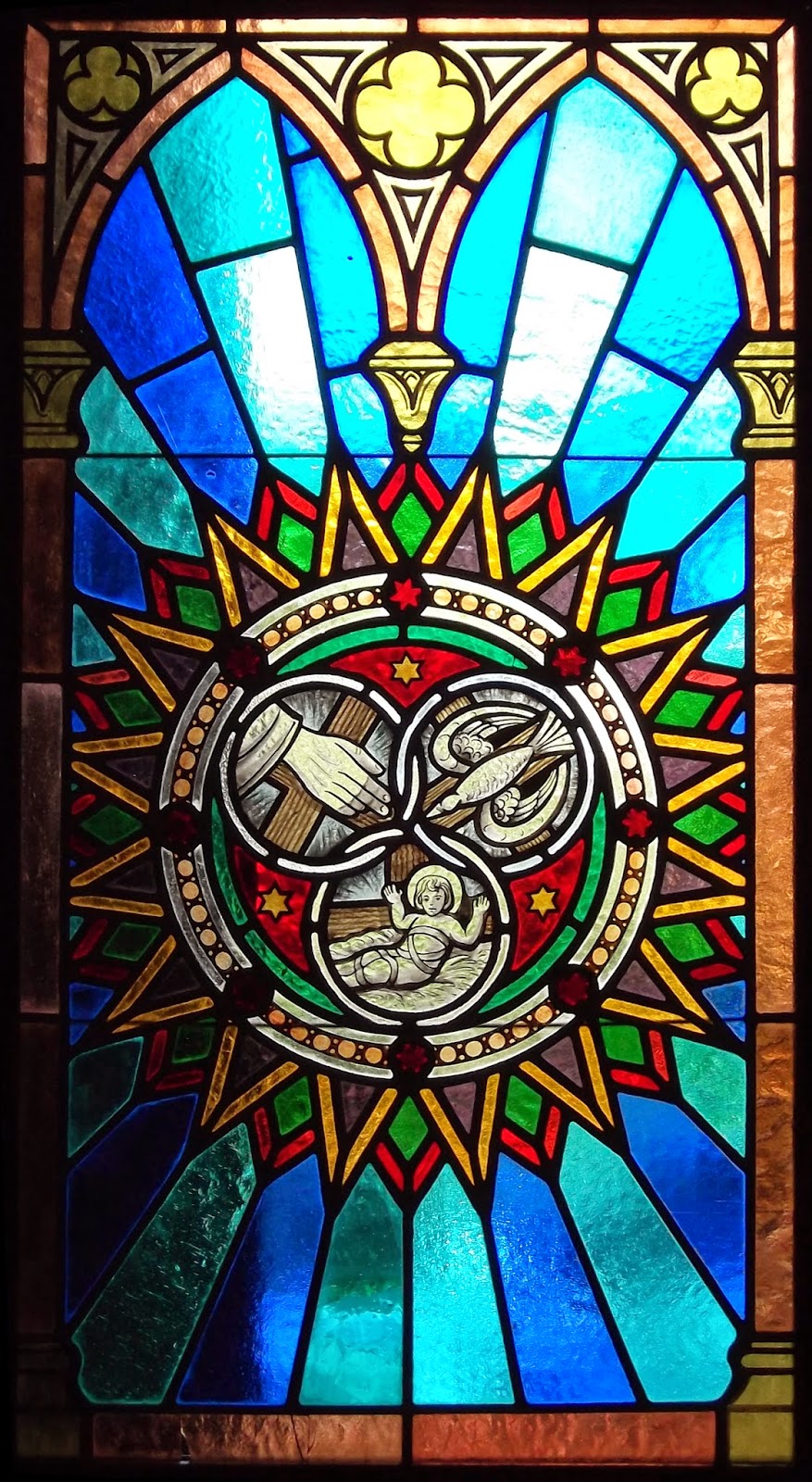
Trinity Sunday


At its heart, the Great Commission is a call and invitation by Jesus to participate in the life of the triune God through making disciples (Matthew 28:16-20).  The reason many Christians intentionally give focus to and celebrate the Trinity on a designated Sunday is because the God we worship exists as One God in three persons:  Father, Son, and Spirit.  This doctrine of the Trinity was articulated by early worshiping and serving Christians, who, under the stress and in the face of questions and challenges, took pains to say with clarity just who God is and why he is important.
 
            Christ’s Great Commission is still in force for us today.  What is more, the way to fulfill this command of Jesus is to participate in the life of the Trinitarian God.  Sometimes we need an outside perspective to understand our own situation and how we are to live into these important words of Jesus.  Missionary and author Nik Ripken (which is not his real name because he ministers in countries that are not open to the gospel and missionary activity) writes that he once met with a group of Chinese house church leaders and was marveling to them about the explosion of new converts and believers to Christ – many estimates discern at least 100 million Christians now in China.  What Nik Ripken heard from those leaders in response is not what he expected to hear.  This is what they said concerning his estimates of the numbers of Christians in China:  “Probably two-thirds of the people you mentioned regularly attend a house church.  Most of those people have been baptized.  Most of those people contribute financially to the work of a house church.  But we do not consider church members to be true followers of Jesus until they have led other people to Christ and until they have helped plant more house churches; only then do they truly know God.”
 
            I would suggest that one of the chief reasons the Chinese church has exploded in numbers is because they have taken up the mantle of Christ’s mission of making disciples to such a degree that leading others to Jesus and developing disciples into the life of the Trinity and forming churches is “normal.”  One of the obstacles for us as Western believers is that we look at what the Chinese are doing not as normal but as “radical.”  But what if what we consider as radical is really supposed to be the normal Christian life and experience of all believers in Jesus?  Please understand I do not make this point in order to guilt us, but rather to let our Chinese brothers and sisters lead us into godly sorrow that results in new life and inspire us in this wonderful privilege of making disciples.
 
            The Trinity is mentioned in the Great Commission because God himself is a missionary God.  The content of our discipleship and teaching is to be in orienting believers into the life of God as Trinity.  After Christ’s resurrection, the original disciples went to a specific mountain – maybe the mountain where Jesus began by teaching about righteousness with the Sermon on the Mount.  This would give the disciples a connection with understanding Christ’s authority.  They needed to grasp Christ’s authority because when they saw him some worshiped and some doubted.  The text does not tell us why some doubted.  I would suggest that based on the gospel accounts of the disciples having not figured-out that Jesus was bringing in a spiritual kingdom where people are transformed and follow Christ’s teachings, that they doubted what the real mission was all about and may have doubted their ability to engage in that mission even if they understood it.  Therefore, Jesus made the clear call and invitation that what he wants done (since he has the authority) is for the church is to be about the business of making disciples.
 
            The term “make disciples” is perhaps so overused to the point of losing its punch and meaning.  Here are some other faithful ways of understanding this verb to make disciples:  “spiritually form followers;” “develop interns in the faith;” “build committed believers in Jesus;” and “apprentice others in the ways of Jesus.”  The idea that Jesus is conveying here is one of investing deeply into mentoring-type relationships that will result in faithful Christians who will, in turn, invest in others.  The Apostle Paul would say later to his apprentice Timothy:  “The things you have heard me say in the presence of many witnesses entrust to reliable men who will also be qualified to teach others” (2 Timothy 2:2).  In other words, we need to be mentored in the faith and to then turn around and mentor others in the faith. 
 
            We reflect the image of our triune God when we take up the mantle of being, as the Nicene Creed puts it, one holy catholic and apostolic church.  That is, just as God is not three gods but one God, so the church is to be one; just as God is holy, we are to be holy in all we do; just as God gathers people from every nation, so the church is to gather all kinds of people for worship and discipleship; and, just as God is a missionary God who sends himself to reach the nations, so we are to be apostolic (which means those that are sent), not only gathered together but sent out to make disciples, to mentor others in the faith.
 
            We all long to see this world a better place and to see our culture and society come into greater conformity with Christian morality.  For that to happen, we can learn from our Chinese brothers and sisters that making disciples will need to be a normal every day attitude and action.  It is my sincere desire that every one of us who has been mentored, apprenticed, and oriented in the faith in such a way that has impacted our lives will put that same ministry into others.  We all need three levels of relationships:  a spiritual mentor; someone who is a fellow friend on the journey to fellowship with; and, another for whom we are calling and inviting to participate with us in the life of the triune God. 


The Father sent the Son to this earth.  While he was here he poured his life into some disciples.  Then, when he died, those disciples were filled with grief.  But they later understood that he had to die so that others who hungered could live.  “Take eat, this is my body given for you.”  What the Trinity means for us is that our missionary God has reached us and is using us to reach others.  Through the situations of our lives we learn the ways of Jesus.  We learn compassion.  We learn humility.  We learn how be at peace.  And we are made disciples, united to Christ and participating in the life of the Father, Son, and Spirit.  

Theology That Makes a Difference


May the grace of the Lord Jesus Christ, and the love of God, and the fellowship of the Holy Spirit be with you all (2 Corinthians 13:14).  Every Sunday I have the privilege of proclaiming this wonderful benediction at the end of the worship service.  As believers in Jesus Christ, we do not serve a generic God, but acknowledge that all three persons of the Trinity, Father, Son, and Spirit, exist together eternally.  This is important because our identity as Christians is wrapped up in God as the Trinity.  Our worship, our life together, and our mission are based in the understanding of the triune God.
 
In the Apostle Paul’s second epistle to the Corinthian church, his focus was on addressing the continuing problem of special interest groups creating divisions and factions within the church.  He wanted the congregation to know that such behavior is inconsistent with who God is.  Paul zeroed in on the fact that God in Christ has brought reconciliation not only between God and people, but between one another in the church.  So, Paul’s point in ending his epistle with this benediction was to promote reconciliation and unity within the church.  Grace, love, and fellowship are available to God’s people.  Just as there is unity and harmony within God himself, there is to be unity and harmony in the church.  Unity will be a practical reality only when the church receives grace, love, and fellowship and then chooses to give it to one another.
 
Our triune God wants us to not just know what these blessings are, but to experience them.  A Trinitarian understanding of God is not simply a doctrine to believe, but a powerful reality to be lived!  The virtues of grace, love, and fellowship are blessings to be received and blessings that are to be liberally thrown back out to people.  In this way God is glorified through his people.
 
God has created us in his image.  That image is the image of the Father, the Son, and the Holy Spirit.  The way our triune God relates within himself in perfect love and fellowship is to be reflected in our own human relationships with one another.
 
Here are some implications of the Trinity for our relationships in the church and the world:
  1. We will regard everyone in the church as an equal.  People are people, period.  When we start referring to them other than that name of “person” we distance ourselves from them, i.e. “someone should do something” is the ultimate act of misnaming and removal from being active in people’s lives.
  2. We will have concern for other churches besides our own local church or ministry.  We will share our resources and help each other accomplish the mission of God.  Grace, love, and fellowship ought to happen between churches and ministries who share the common theological doctrine of the Trinity.
  3. We will treat each family member as important, i.e. avoiding terms like “black sheep” or being so upset that one doesn’t talk for years with a family member.  The same goes for the family of God.  God in Christ has reconciled us with the Spirit, helping us to make it a reality in our human relationships so that we really have no excuse to hold a grudge.
  4. We will treat all human beings with respect, dignity, and value, rather than with suspicion or for what they can do for us.


The unselfish love of the members of the Trinity spills over into love for God’s creatures, and, so, this received love ought to overflow into the lives of others.  This is precisely how God is glorified.  This is to be what we celebrate, and what we practice.  This is theology that makes a difference.  Soli Deo Gloria!  

On Loving the Triune God


Each year on the Christian calendar there is a Sunday set aside to especially focus on and celebrate the Trinity.  This year Trinity Sunday is May 26.  While every Sunday is a celebration of our triune God, Trinity Sunday helps us to remember the mystery, power, and beauty of the Father, Son, and Spirit – three persons, one God.  Both our identity and mission are completely wrapped-up in who God is.  We are baptized into the name of all three persons of the Trinity.  Our worship together is an expression of the unity and common purpose of the church.
 
            Everything comes down to God, to the Father, Son, and Spirit.  The distinctive manner in which we are to live is to be an expression of the triune God who exists in perfect unity, harmony, love, and mission.  Whether it is in our families, our neighborhoods, our jobs, or our church, God wants to exercise his very personhood through us.
 
            The Scripture says that our triune God is love (1 John 4:16).  His nature and purpose is love itself.  The reason we are to love God with heart, soul, mind, and strength is that God himself is love.  As people created in the image and likeness of God, there is within us a deep desire to know and love God.  Yet, it is possible to lose touch with this primal instinct to love God.  We may be so familiar with hearing about God that we go about our days not really knowing Him, going through the motions of Christianity but doing it without love.  Like spiritual zombies we might walk about the earth, but are really dead to what is going on in God’s world.
 
            As Christians, our first love is Jesus.  We may live moral lives, operate with sound ethical principles on our jobs, and diligently serve family and church but miss the heart and soul of loving God.  Jesus himself said to the church at Ephesus whom had performed good deeds, that they had forsaken their first love (Revelation 2:4).  Paul put it this way to the church at Corinth:  “If I give all I possess to the poor and surrender my body to the flames, but have not love, I gain nothing” (1 Corinthians 13:3).
 
            We are able to love because the Father first loved us, sent his Son as an atoning sacrifice for our sins, and gave us His Spirit in order to display God’s love toward one another (1 John 4:10-13).  As we think about and take the time to meditate on the blessed Holy Trinity, His love takes root in our hearts and then overflows toward others.
 
            We know from the Lord Jesus that all of Scripture hangs on the dual command to love God and neighbor (Matthew 22:37-40).  This has been understood throughout church history as the Great Commandment.  We also know from our Lord Jesus that the supreme task of the church is to make disciples of all nations (Matthew 28:19).  This has been rightly discerned through Christian history as the Great Commission.  We are, then, to have a “Great Commitment” to the Great Commandment and the Great Commission.  Why?  Because our great triune God – Father, Son, and Spirit – exists as a community of love and desires that His love extend to every kind of person throughout all the earth.
 
            A crucial question for church leaders and committed believers is:  how do we, in God’s 21st century world, faithfully and obediently live into this calling we have been given by our Lord?  How do we effectively engage this primal quest of loving God, loving one another, and loving our neighbor? Let us all seek to discern fresh ways of being faithful to this fundamental calling.
 
            May the God who is and who is to come fill all our hearts with faith as we journey together on the way of love.