Psalm 104:1-9, 24, 35b – God Is Bigger Than Our Fears

Psalm 104:3 by J. Michael Orr

I praise you, Lord God,
    with all my heart.
You are glorious and majestic,
dressed in royal robes
    and surrounded by light.
You spread out the sky
    like a tent,
    and you built your home
    over the mighty ocean.
The clouds are your chariot
    with the wind as its wings.
The winds are your messengers,
    and flames of fire
    are your servants.

You built foundations
for the earth,
    and it
    will never be shaken.
You covered the earth
with the ocean
    that rose
    above the mountains.
Then your voice thundered!
And the water flowed
    down the mountains
    and through the valleys
    to the place you prepared.
Now you have set boundaries,
    so that the water will never
    flood the earth again….

Our Lord, by your wisdom
    you made so many things;
    the whole earth is covered
    with your living creatures….
With all my heart
I praise you, Lord!
    I praise you! (Contemporary English Version)

The world is a gift from God.

When God created the heavens and the earth, Adam and Eve, the first humans, were the apex of God’s creative activity. Their charge, as people created in the image of God, was to steward the earth. And that mandate is still in effect. We are to take good care of this creation we inhabit.

However, due to the fall of humanity, there has always been a bent toward exploiting the earth for our own purposes, rather than carefully maintaining it. Wherever we see abuse of both land and lives, behind it is the fear of not having enough and not being safe enough. Our anxiety gets the best of us.

It seems to me that creation care must begin with ourselves. The lack of self-care inevitably works itself out by neither caring for other creatures nor creation. We need to acknowledge our fears and address them. Then, place those fears in the shining light of our Creator’s glory.

My kids grew up in the ‘90s watching Veggie Tales. The tunes were catchy and full of some solid truth about God. One of their favorites was “God is Bigger.” Here is the chorus:

God is bigger than the boogie man.
He’s bigger than Godzilla or the monsters on TV.
Oh, God is bigger than the boogie man,
And he’s watching out for you and me.

Today’s Psalm expresses the bigness of God – clothed with splendor and majesty, covered with light as with a garment, stretching out the heavens like a tent. Indeed, God is big – bigger than anything and everything. The Lord is sovereign and supreme over all creation, and always does what is right, just, and fair. God sees all and watches over the earth.

Sometimes we get lost in our situations, problems, and screw-ups. We get stuck in our anxiety and fears. We view them as larger than life and can become so overwhelmed and burdened with our inabilities, weaknesses, and lack of handling things well, that we lose sight of the reality that God is bigger than it all. 

Instead of fear and anxiety ruling the day, we can allow sound theology to purge the worry and trouble from our minds and hearts. Using today’s psalm to pray and praise God is a foundational way of beginning to put into perspective the issues and problems of our lives.

Confident living, and mitigating our fears, cannot simply be mentally or emotionally stirred up. Confidence needs a foundation, a basis in truth and reality. The believer’s assurance comes from the firm ground of God’s character and competence. Trust is born when we have a vision of a Divine Being, large and filling the universe with grace and justice.

Tending to our physical, mental, emotional, and spiritual health begins with a sense of divine largeness. Initiative and assertiveness can be freely exercised when we are secure and non-anxious because of God’s immense presence.

Caring for creation, and enjoying our great big world, is the logical action of being peacefully connected to the Creator of it all. We are all bound together as creatures and creation. We’re all made up of the same stuff.

Everything in the universe, including creatures and creation, share 97% percent of the same kind of atoms.

The crucial elements for life on Earth – carbon, hydrogen, nitrogen, oxygen, phosphorus and sulfur – are all found in abundance across the stars of our galaxy.

Our differences make us unique. Our similarities connect us. And we are inextricably connected to every atom in this universe. Just as we carry the DNA of our ancestors within our biological bodies, so we are all holding the same elements of the physical creation.

The ultimate connection, from a Christian perspective, is that Jesus holds it all together – thus making him the supreme Connector.

The Son is the image of the invisible God,
        the one who is first over all creation,

Because all things were created by him:
        both in the heavens and on the earth,
        the things that are visible and the things that are invisible.
            Whether they are thrones or powers,
            or rulers or authorities,
        all things were created through him and for him.

He existed before all things,
        and all things are held together in him.

He is the head of the body, the church,
who is the beginning,
        the one who is firstborn from among the dead
        so that he might occupy the first place in everything. (Colossians 1:15-18, CEB)

Christ is our connection to all things, reconciling us to our fellow creatures, creation, and the Creator. All the bigness of God lives in Jesus. In the face of the Lord, all fears melt away.

Almighty God, you are mighty big! My problems are really small as I glimpse your sheer immensity. Lord God, you are very great! I bless your holy name. Praise the Lord! Hallelujah, Amen.

Job 7:1-21 – Why God?

Why is life so hard?
    Why do we suffer?
We are slaves in search of shade;
we are laborers longing
    for our wages.
God has made my days drag on
    and my nights miserable.
I pray for night to end,
but it stretches out
    while I toss and turn.
My parched skin is covered
    with worms, dirt, and sores,
and my days are running out
quicker than the thread
    of a fast-moving needle.

I beg you, God, don’t forget!
My life is just a breath,
    and trouble lies ahead.
I will vanish from sight,
and no one, including you,
    will ever see me again.
I will disappear in the grave
or vanish from sight
    like a passing cloud.
Never will I return home;
    soon I will be forgotten.

And so, I cry out to you
    in agony and distress.
Am I the sea or a sea monster?
    Is that why you imprison me?
I go to bed, hoping for rest,
but you torture me
    with terrible dreams.
I’d rather choke to death
    than live in this body.
Leave me alone and let me die;
    my life has no meaning.
What makes you so concerned
    about us humans?
Why do you test us
    from sunrise to sunset?
Won’t you look away
just long enough
    for me to swallow?
Why do you watch us so closely?
    What’s it to you, if I sin?
Why am I your target
    and such a heavy burden?
Why do you refuse to forgive?
Soon you won’t find me,
    because I’ll be dead. (Contemporary English Version)

Few people have ever suffered such agonizing loss as the Old Testament character of Job. He literally lost everything but his life. All his children were killed in one horrific event. He was so racked with physical pain and ill health that even his closest friends barely recognized him. 

Yet the most severe suffering of all came from the grinding silence of God about the whole affair. Job acutely experienced the spiritual pain of a seemingly distant God. He felt like God’s target, being pierced with sharp arrows, one after the other. It seemed to Job as if God was burdened with his very presence on the earth.

Indeed, when one is in the throes of grief, and there is no response from God, the suffering seems pathetically senseless. 

We are currently living in a world of pandemic. There is social and political unrest everywhere. Hurricanes and natural disasters wreak havoc. Religious persecution is on the rise. It may cause one to wonder where God is, in all this human suffering.

As families grieve the loss of home and property, as mothers lament the loss of sons and daughters, and as communities reel in shock over neighborhood violence, how can the loss of life and safety square with a God who is supposed to be sovereign over all creation?

And then there is the very real psychological suffering of mental illness, brain disorders, and unfeeling friends and family who fail to understand the biology and pathology around it – not to mention the extreme trauma of complicated grief.

“Does God understand? Is God even seeing any of this? Why doesn’t God seem to give a @#$!? Am I so odious to God that he’s left the room?” we might say, either out loud or in the deep hurt of our hearts.

It’s the silence that can hurt so badly. Groans, laments, and anguish seem to fly up and away with no easy answers and no immediate relief. 

Yet, God hears. God sees. And God knows. 

We, as readers, have a big picture perspective of Job’s life. We know the end of the story. We even know why Job suffered, even when he himself never knew. However, even with the understanding we have, there is still a large mystery to the ways and the silence of God.

It is a great temptation for many people to give neatly wrapped answers to life’s most difficult realities. But the book of Job does not allow for it. What we have is a man who never understood all that happened in his life yet held onto his integrity and his faith in the God he never fully understood. 

After all, if we understood all there is to understand about God, God would not be God at all.

Invisible God, you are not only unseen physically, but many times spiritually and emotionally unseen, as well.  Open the eyes of my heart so that I might catch but a glimpse of your working. Even though I am but a child and know so little, yet I trust in your steadfast love even in the most difficult experiences of life. Amen.

Job 4:1-21 – Where Is God?

Eliphaz and the other friends of Job, speaking down to him in his suffering, from a fresco in the Cathedral of the Annunciation in Moscow

Job, will you be annoyed if I speak?
    I can’t keep quiet any longer.
You have taught many people
    and given strength to feeble hands.
When someone stumbled, weak and tired,
    your words encouraged him to stand.
Now it’s your turn to be in trouble,
    and you are too stunned to face it.
You worshiped God, and your life was blameless;
    and so you should have confidence and hope.
Think back now. Name a single case
    where someone righteous met with disaster.
I have seen people plow fields of evil
    and plant wickedness like seed;
    now they harvest wickedness and evil.
Like a storm, God destroys them in his anger.
The wicked roar and growl like lions,
    but God silences them and breaks their teeth.
Like lions with nothing to kill and eat,
    they die, and all their children are scattered.

Once a message came quietly,
    so quietly I could hardly hear it.
Like a nightmare it disturbed my sleep.
    I trembled and shuddered;
    my whole body shook with fear.
A light breeze touched my face,
    and my skin crawled with fright.
I could see something standing there;
    I stared, but couldn’t tell what it was.
Then I heard a voice out of the silence:
“Can anyone be righteous in the sight of God
    or be pure before his Creator?
God does not trust his heavenly servants;
    he finds fault even with his angels.
Do you think he will trust a creature of clay,
    a thing of dust that can be crushed like a moth?
We may be alive in the morning,
    but die unnoticed before evening comes.
All that we have is taken away;
    we die, still lacking wisdom.” (Good News Translation)

The Christian spiritual classic, The Dark Night of the Soul, was written nearly five hundred years ago by St. John of the Cross. The gist of John’s observation is that God sometimes takes the Christian through dry times of hiding himself from the believer. 

The pain of wondering where God is and if he will even show up; experiencing unanswered prayer; enduring uncaring and misdirected comments from well-meaning people; all these and more are inevitably part of the Christian spiritual experience. 

The dark night of the soul is not to be confused with personal sinfulness. Its origin is not in self, but God. 

“Silence is God’s first language.”

St. John of the Cross

Whenever one knows with a settled confidence that personal integrity is intact, but trouble abounds, we need not immediately rush to the conclusion that something is wrong with us. It may be the Spirit of God thrusting us into a desert experience to test and approve our faith.

Job’s “friend” Eliphaz offered one of those tired age-old arguments that bad things only happen to bad people. He comes at Job with the inexperience and absurdity of making misguided assumptions. He rhetorically asks: Who that was innocent ever perished?  Where were the upright cut off? 

The conclusion of Eliphaz, therefore, was bound to be off the mark – believing secret sin must surely be the culprit behind Job’s awful misfortune. Certainly, Eliphaz thinks, Job cannot possibly go through such terrible suffering without having done something to anger God.

Times change; the basic nature of people, not so much. In today’s church and world, the same notions still endure. If I had a quarter for every time I heard crazy comments, like the following, I would be a rich man: 

“He’s poor because he is lazy and doesn’t want to work.”

“She keeps having chronic health issues. God is punishing her.”

“The pandemic is God’s judgment on us for not having the Ten Commandments in our courthouses.”

“If you just confess your sin and have faith, you’ll be healed.”

“They’re in big trouble. They obviously did something evil.”

On and on the wrong-headed statements continue, ad nauseum.

The Apostle Peter understood how to view trouble in a healthy way. He said we all suffer – both the good person and the wicked. It’s just a matter of whether we will suffer for doing good and the right thing, or suffer because of saying shallow, illogical, and stupid comments that offend God and hurt others. (1 Peter 3:17-18)

Even Christ suffered. And it wasn’t because of his own sin. It was because of ours. Jesus suffered once for sins, the righteous for the unrighteous, that he might bring us to God. 

Jesus suffered; so, the follower of Jesus will suffer. There is a big picture only God sees. Whenever we suffer, there is something going on behind the spiritual scene. We must allow God to do divine work, and then, trust that the Lord bends all human suffering for good and redemptive purposes.

“Where there is no love, pour love in, and you will draw love out.”

St. John of the Cross

So, let’s change the rhetoric. Instead of jumping to judgment, reflexively hop to grace with comments like these:

  • “He has poverty of spirit. He’s blessed and will inherit the kingdom of God.”
  • “She’s in chronic pain. God has allowed her the privilege of suffering in solidarity with her Lord.”
  • “We’re in a pandemic. Here’s a chance for us to live out of the Ten Commandments.”
  • “If we confess the world’s sins of pride, hate, and injustice, perhaps God’s mercy will deliver us.”
  • “We’re in a big pickle. No better time than now to grow in grace.”

Where is God? Beside you, quietly and confidently holding you up in your suffering.

Lord God, I entrust myself to you because you know what you are doing. Thank you for the trials of life which humbles my heart to pray. Do your work in me so that my faith is fortified for a lifetime of service in the church and the world, through Jesus Christ, my Lord. Amen.

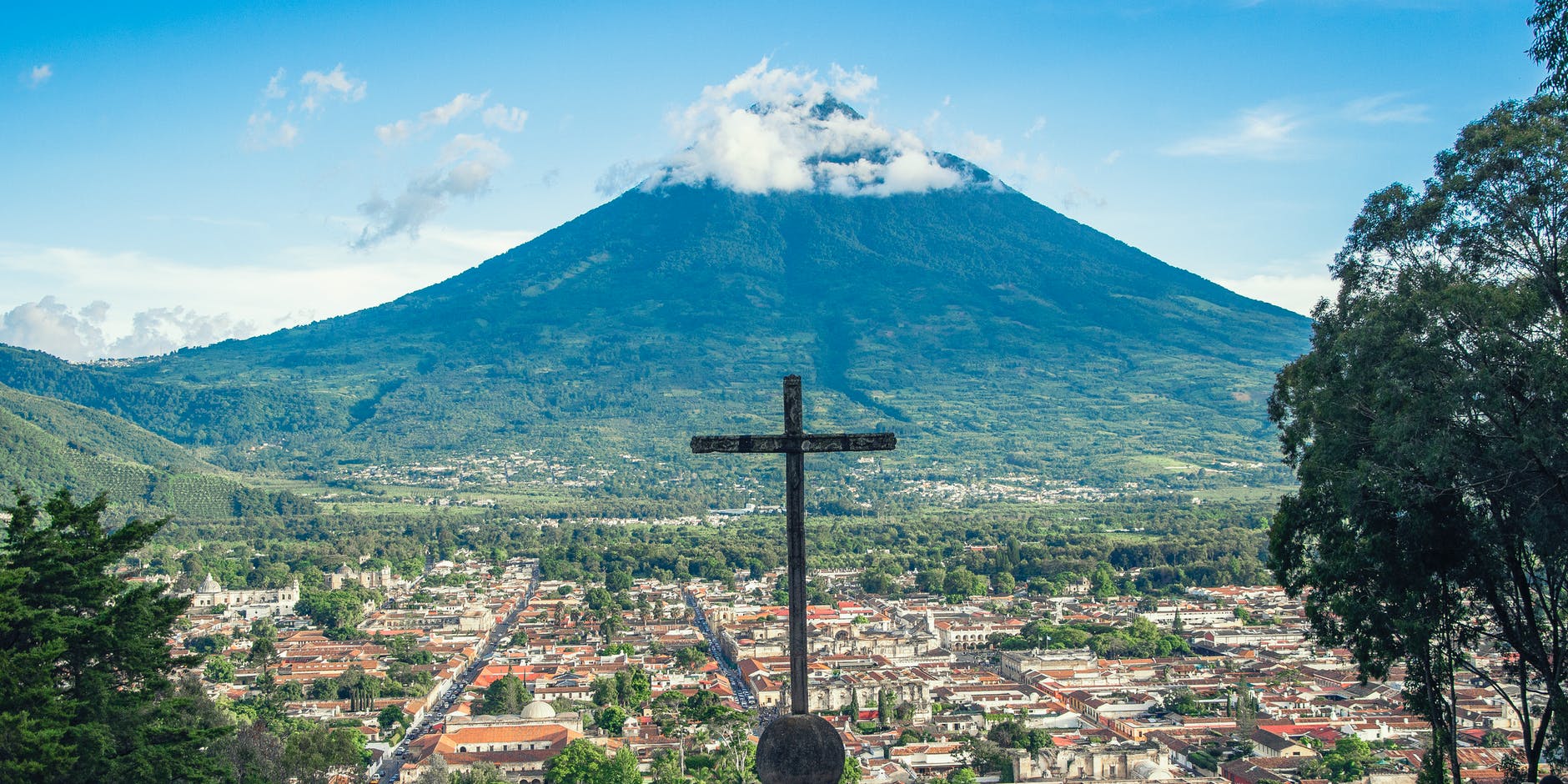
Psalm 125 – Mountain Theology

Photo by Saulo Zayas on Pexels.com

Everyone who trusts the Lord
    is like Mount Zion
    that cannot be shaken
    and will stand forever.
Just as Jerusalem is protected
    by mountains on every side,
the Lord protects his people
    by holding them in his arms
    now and forever.
He won’t let the wicked
rule his people
    or lead them to do wrong.
Let’s ask the Lord to be kind
to everyone
    who is good
    and completely obeys him.

When the Lord punishes
    the wicked,
he will punish everyone else
who lives a crooked life.
    Pray for peace in Israel! (Contemporary English Version)

Psalms 120-134 comprise a collection of short songs of ascent meant to guide Jewish pilgrims on their communal trek up to the city of Jerusalem, and ultimately to the temple mount. 

Ascending to the Light by Alex Levin

The rhythm of the pious ancient Israelites centered round particular festivals, seasons, and Sabbath. Taking the annual pilgrimage to the Holy City was an especially anticipated time of year. This yearly cycle brought both increased faith and needed spiritual stability to the people. It reminded them that, like the mountains themselves, God cannot be moved. God will always be there.

Robust understandings of God are good solid mountain theology. Mountains make up about one-fifth of the world’s landscape and 12% of the world’s population live on them. They are more than imposing and impressive statues of rock. About 80% of our planet’s fresh water originates in the mountains.

So, when the psalmist likens God to a mountain, it is a reference not only to protection and strength; it is also pointing us to the source of life. With God, every need is met and satisfied.

On a mountain, Noah settled, Moses was given the law, Jesus preached and died – and the beans from my morning coffee were grown. I have everything I need in the mountainous God of all.

The most fundamental truths about God is consistency and constancy in the divine nature. God is forever present with people. 

If God seems or feels aloof or unconcerned, it is not that the Lord is avoiding us or is distracted with other important matters of running the universe. It simply means God chooses to reveal divine character and the divine will whenever the appropriate time ensue, for our benefit.

A mountain looks like it never moves. Yet the slow but steady rains, the creeping of tectonic plates, and undiscernible changes within the earth shift mountain ranges over time. The Lord is most certainly responding to us, our movements and changes, in a way we cannot perceive with the naked eye.

Our responsibility in the entire affair is to engage in consistent rhythms of spirituality which place us in a position to receive grace when God decides to give it. If we are still, we can feel the movements of grace enveloping us with life.

Perhaps we need to become adept at being spiritual mountain goats, using our wide cloven hooves of faith to negotiate the immense crags and rocks of God. After all, we will spend an eternity getting to know God and never exhaust the exploration.

Therefore, we must not despair but anticipate meeting with God, just as the Israelites of old looked forward and upward to their annual worship at the top of the mountain. The truth is that God surrounds people, even when we do not always perceive it to be so. 

The sturdiness of God is able to handle and bear the weight of our heaviest burdens.

Throw all your anxiety onto him because he cares about you. (1 Peter 5:7, CEB)

If we will but look up, there is abiding help for the most vexing of problems.
I raise my eyes toward the mountains.
    Where will my help come from?
My help comes from the Lord,
    the maker of heaven and earth.
God won’t let your foot slip.
    Your protector won’t fall asleep on the job. (Psalm 121:1-3, CEB)

There is peace and settled rest when we call upon the God who surrounds us.

I call out to the Lord,
    and he answers me from his holy mountain.

I lie down and sleep;
    I wake again because the Lord sustains me. (Psalm 3:4-5, NIV)

It is through trust that we become mountains ourselves – strong in faith and giving life to those around us.

Ever-present God, there is no place where I can go where you are not.  Help me to so intuit your presence that it bolsters my faith and resilience for daily life in Jesus Christ.  Amen.