Luke 4:14-30 – Why Is Our Ministry Important?

Jesus Unrolls the Scroll in the Synagogue, by French artist James Tissot (1836-1902)

Jesus returned to Galilee in the power of the Spirit, and news about him spread through the whole countryside. He was teaching in their synagogues, and everyone praised him.

 He went to Nazareth, where he had been brought up, and on the Sabbath day he went into the synagogue, as was his custom. He stood up to read, and the scroll of the prophet Isaiah was handed to him. Unrolling it, he found the place where it is written:

 “The Spirit of the Lord is on me,
    because he has anointed me
    to proclaim good news to the poor.
He has sent me to proclaim freedom for the prisoners
    and recovery of sight for the blind,
to set the oppressed free,
     to proclaim the year of the Lord’s favor.”

Then he rolled up the scroll, gave it back to the attendant and sat down. The eyes of everyone in the synagogue were fastened on him. He began by saying to them, “Today this scripture is fulfilled in your hearing.”

All spoke well of him and were amazed at the gracious words that came from his lips. “Isn’t this Joseph’s son?” they asked.

Jesus said to them, “Surely you will quote this proverb to me: ‘Physician, heal yourself!’ And you will tell me, ‘Do here in your hometown what we have heard that you did in Capernaum.’”

“Truly I tell you,” he continued, “no prophet is accepted in his hometown. I assure you that there were many widows in Israel in Elijah’s time, when the sky was shut for three and a half years and there was a severe famine throughout the land. Yet Elijah was not sent to any of them, but to a widow in Zarephath in the region of Sidon. And there were many in Israel with leprosy in the time of Elisha the prophet, yet not one of them was cleansed—only Naaman the Syrian.”

All the people in the synagogue were furious when they heard this. They got up, drove him out of the town, and took him to the brow of the hill on which the town was built, in order to throw him off the cliff. But he walked right through the crowd and went on his way. (New International Version)
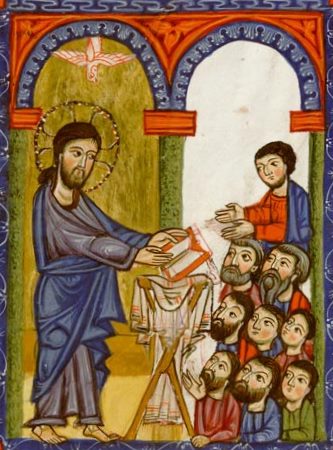
Jesus was the hometown boy of Nazareth, the rising star who was putting the small village on the map. He walked into the synagogue on the Sabbath with the people all watching with pride, their chests puffed with delight over one of their own making it to the big time. 

It just so happened that on that day the Old Testament reading was from the prophet Isaiah – a prophecy of grace and healing that fit the budding ministry of Jesus. Here was the hope of Israel. It was all bunnies and butterflies, until Jesus decided to say a few words to them all….

Jesus took the prophecy of Isaiah about proclaiming liberty to captives and the oppressed and then applied it, not to his fellow Jews who were present, but to, of all people, Gentiles! 

Jesus just had to open his mouth and point out that in the days of Elijah, the prophet was sent to a Gentile woman. In addition, Jesus let everyone know the prophet Elisha cleansed a Gentile. The gathered synagogue worshipers understood exactly what Jesus was doing – claiming to be the ultimate prophet, sent for those people. 

It was too much for the people gathered for worship. All hell broke loose as the “worshipers” became so angry and insolent that they drove Jesus out of town and tried to kill him. Jesus had that kind of effect throughout his earthly ministry by saying and doing the unexpected. 

The people of Nazareth seemed to have always interpreted the message of Isaiah and the prophets as being for themselves, not others. Whenever any believer or church loses sight of a biblical message and re-interprets it as being for only us, then we end up like the Nazarenes of old who did not recognize Jesus for who he really is and what he really came to do. 

Some believers and churches need a question asked of them: Are you ready to throw Jesus off a cliff?

Our faith is not merely individual; it is meant to impact the world. In the beginning the earth was created by God and it was good. Yet, it didn’t take long for things to go sideways. The fall of humanity into sin and disobedience brought death and decay to the world. Ever since, the human condition has been dominated by guilt, shame, indifference, violence, taking advantage of others, pride, and selfishness.

However, God did not leave the world to its own demise. The Lord began the process of reconciliation, culminating in the person and work of Jesus Christ. And now, Christians are a new society, the community of the redeemed, the church. As the people of God, we are called to do justice, love mercy, and walk humbly.

Jesus came to save us from our predicament, and to proclaim good news to the poor, freedom for prisoners, recovery of sight for the blind, and freedom for those oppressed by others. The kingdom of God is to extend over every square inch of this earth, every nation, every race and ethnicity, every institution and organization, and every individual. It all belongs to God’s rule and reign in Christ.

Jesus has made us, his disciples, ambassadors of reconciliation. Ever since the fall of humanity, God is reclaiming and redeeming, even now, all of creation back to himself. The Lord is seeking to bring people back into the harmony that existed in the Garden of Eden. Although this will only be fully realized when Christ returns, we presently now have the responsibility to be gracious agents of God’s kingdom, restoring all areas of this world and all people to their rightful place, at peace with God.

There is every reason to hope because a new world began emerging at the resurrection of Jesus Christ from death. As Christians, we accept struggle and hardship in this life and endure all things because, even though disease, destruction, and death claim so many lives, the love of God in Christ will never change nor die.

Because of the risen and ascended Christ, who is the light for all people everywhere, Christ’s disciples are able to respond to the great mass of human suffering with compassion.

This is important since compassion might not be our initial reaction to human suffering. Like the villagers in Christ’s hometown of Nazareth, we can chafe at the thought of compassionately reaching out to the poor, the prisoner, the blind, and the oppressed. We might either resist ministry to the “other” because we believe they caused their own poverty and adverse situation, or because we simply don’t believe we are wired for ministry to them.

If you knew me before I was a Christian, you might not recognize me. I didn’t love anybody. I had no compassion for anyone. It wasn’t until I experienced the love and compassion of Jesus Christ that my life turned upside-down. I began responding to human need with a deep concern. I sought to connect with all kinds of people. I wanted to make a difference in the world.

Back then I was (and to some degree still am) something of an agitator. Maybe that’s one reason I am so drawn to the compassion of Christ. For compassion is actually a radical form of criticism, declaring that our pains and our hurts are to be taken seriously, that they are not to be accepted as natural but abnormal and unacceptable for the human condition. It’s not supposed to be this way!

The compassion of Jesus needs to be understood as a totally subversive action against the kingdom of darkness, a bold and daring affront against all that keeps people locked into systems of oppression and poverty.

The world needs to experience the Church everywhere as a place and a people of good news – expressed in both word and deed – in which they are hospitably invited into the very life of God and experience the fullness of peace and joy in the Holy Spirit. In other words, we are not only in the personal transformation business, but we are also in the business of transforming society so that the common good of all persons is upheld.

As the church proclaims and seeks to establish the kingdom of God, it comes to see that all human need is important – whether it is spiritual, physical, mental, or emotional. We “do justice” by helping others experience the reality of God’s love in Christ and compassionately meet their holistic needs. We “love mercy” by showing hospitality and inviting folks very different from ourselves into our lives. We “walk humbly” with our God by emulating the compassionate ministry of Jesus to all people.

What is your “compassion quotient?” That is, how much compassion do you have in your life right now?

What are some tangible ways we can work on raising our level of compassion and demonstrating compassionate action to those around us and in our city?

It is questions like these that enable us to sync our lives with the heart of Jesus, who still desires to bring good news to the world.

Almighty God, you sent your Son Jesus Christ to reconcile the world to yourself: We praise and bless you for sending your people in the power of the Spirit to preach the Gospel to all nations. We thank you that in all parts of the earth a community of love has been gathered together by many prayers and labors, and that your people share in your mission of restoring all people to unity with yourself and one another in Christ; for the kingdom and the power and the glory are yours forever. Amen.

Overcoming the World

Everyone who believes that Jesus is the Christ is born of God, and everyone who loves the father loves his child as well. This is how we know that we love the children of God: by loving God and obeying his commands. In fact, this is love for God: to keep his commands. And his commands are not burdensome, for everyone born of God overcomes the world. This is the victory that has overcome the world, even our faith. Who is it that overcomes the world? Only the one who believes that Jesus is the Son of God. This is the one who came by water and blood—Jesus Christ. He did not come by water only, but by water and blood. And it is the Spirit who testifies because the Spirit is the truth. (1 John 5:1-6, NIV)

Faith, love, and obedience are tightly woven together to such an extent that to pull one of them out is to unravel the whole bunch. These three characteristics of the true Christian are vital and necessary to living the Christian life. They all must be present for the church to overcome the world.

The main verbs throughout the verses are the word “is.” And the verb tense is key. The verb clearly describes a past action of God which we as people need to receive. In other words, the grammar dictates that God has given us new birth.  We do not give ourselves spiritual birth any more than we can tell our mothers that it was us who gave birth to ourselves.

God saves us from sin and grants us forgiveness. This action is from God. We are recipients of God’s good grace toward us. There are three participles connected to this main verb:

  1. Believe
  2. Love
  3. Obey

A participle is a word which is connected to the verb’s action. So then, our actions are a result of God’s action toward us. To put it simply, a person born from God will believe, love, and obey. Just as a newborn baby first breathes, then learns to eat, sleeps, grows-up, learns to walk, and over time develops into an adult just like their mother and father, so the Christian who is born again from God exhibits faith, learns to love, and grows up developing the skills of obeying Jesus and following him, learning to walk in his ways, becoming just like him.

In the same way a child must learn and grow to have the necessary skills for facing the world in all its bigness, trials, and temptations, so the Christian must develop the abilities necessary to overcome the world. Those skills are faith, love, and obedience. Without them, we will be unable to deal with the world. But with them, we experience victory over the world.

The word, “overcome,” is a cognate word (related to) of “victory.”  That is, to overcome is to have firsthand exposure to the victory the Lord Jesus has achieved on the cross. Through being spiritually born again by God, we are set on a course requiring faith, love, and obedience to overcome the world. As we learn to apply these three spiritual characteristics to our lives, we experience practical victory over the world.

The term “world” are the patterns, systems, and operations of the world in direct contrast to how God operates. For example:

  • The world engages in revenge and payback when wronged, whereas the Christian learns to believe God as the Judge, loves the person who has offended them through prayer for their enemy, and obeys God through good works that seeks the welfare of the other. 
  • The world uses other people as either objects of their pleasure or to get ahead in life, whereas the Christian believes God will take care of their needs, will seek to love the other person instead of use them, and would rather obey God than be selfish. 
  • The world thinks nothing of lying, cheating, and stealing, if they can get away with it, whereas the Christian believes Jesus is the way, the truth, and the life, loves being a person of integrity, and obeys God even when it hurts.

This in no way means we avoid or belittle the world. In facing and overcoming the world, we need principled civility. Using faith, love, and obedience, we respect another’s viewpoint through growing in faith, expanding our hearts in love, and learning obedience through interaction with others for whom we disagree.

Where do we feel “the pull” in life from? Do we feel it from the world, or from God’s Word? We must learn how to deal with the worldly elements of our society in which we feel a pull and a tug to go along with it and want to give in to it. This requires a community of Christians engaging the world through faith, love, and obedience to overcome that pull.

Our call as Christians is not to just survive the world. If anyone could have had that kind of mentality, it was Helen Keller. Deaf, mute, and blind, she could have settled into just getting by and waiting for heaven. Yet, she accepted her situation, coped with it, and even transcended her limitations.  She did more than survive – she thrived. Helen Keller once said:

“The marvelous richness of human experience would lose something of rewarding joy if there were not limitations to overcome. The mountaintop would not be half so wonderful if there were no dark valleys to traverse.”

Helen Keller

We need faith in God, not ourselves. The Scripture says:

Trust in the Lord with all your heart,
    and do not rely on your own insight.
In all your ways acknowledge him,
    and he will make straight your paths. (Proverbs 3:5-6, NRSV)

We need to love God and others, and not the world. The Scripture says:

Don’t love the world’s ways. Don’t love the world’s goods. Love of the world squeezes out love for the Father. Practically everything that goes on in the world—wanting your own way, wanting everything for yourself, wanting to appear important—has nothing to do with the Father. It just isolates you from him. The world and all its wanting, wanting, wanting is on the way out—but whoever does what God wants is set for eternity. (1 John 2:15-17, MSG)

We need to obey the call of God, not the call of the world. Hear what Scripture says: 

The commandment that God has given us is: “Love God and love each other!” (1 John 4:21, CEV)

When faith, love, and obedience are working together as they were intended to, we will overcome the world and all its crud. We will keep ourselves from being polluted and stained by it.

Overcoming the world is a high calling from God. Faith means putting aside fear and taking the kind of risk God wants you to take. Love means putting aside hate and serving others, even when it hurts. Obedience means putting aside selfishness and choosing to do what is best for another person’s welfare. Being characterized by these three Christian virtues will have the effect of overcoming the world. It is not a burdensome or heavy way to live. It’s the way of Jesus.

Blessed Father, Son, and Holy Spirit, the God whom we serve: Sometimes our hearts and minds are flooded with fears. Sometimes we are paralyzed and overwhelmed and feel unable to go on. Yet today we hold onto the victory you have accomplished through the blood of Jesus Christ. You have told us not to fear, for you have overcome the world. So, we cling to you, believing your Word and your promises. In moments of crippling fear, we choose to hold your hand and believe; to love as we have been loved; and, to obey even in the most fearful places because we know that you have risen again.

Loving Lord Jesus, we surrender to you all that we are and hope to be. Holy Spirit, we invite you and all your ministry within us. Holy God of all, we offer you our heart, mind, body, soul, spirit, hopes, plans and dreams. We surrender to you our past, present and future problems, habits, character defects, attitudes, livelihood, resources, finances, medical coverage, occupation and all relationships. We give you our health, physical appearance, disabilities, family, marriage, children, grandchildren, and friendships.

We ask for your Lordship over every aspect of our lives. We surrender to you all our hurt, pain, worry, doubt, fear and anxiety, and ask you to wash us clean. We release everything into your compassionate care. Speak to us clearly, Lord. Open our ears to hear your voice. Open our hearts to commune with you more deeply. Open the doors that need to be opened and close the doors that need to be closed. Set our feet upon the straight and narrow road that leads to everlasting life. Amen.

Life by Death

Photo by Pixabay on Pexels.com

A lot of people don’t like change. That is likely an understatement. Change means adjusting to a different reality and adjusting is not something we prefer doing. Many folks would much rather keep things the way they are. Routine, consistency, predictable outcomes—these are things we rely on for a sense of safety and stability in our lives.

Even good change is difficult, if for no other reason than what it takes to get there. Becoming debt-free, getting in shape, or starting a new job are all good changes to make, but to making them can take a lot of determination and effort on our part. In many cases, to change something about ourselves, we must be willing to admit what we are doing is not working and try something different.

God’s love in Jesus Christ changes everything. The kind of change Jesus talked about and died for was not making a few alterations to our lives or re-arranging some of our schedule. For Jesus, change is neither about exerting more effort nor adding things to an already full to-do list.

The change Jesus embraces is a complete transformation from the inside-out. For that to happen, to have a new life, the old life must die. What’s more, Jesus does not want us half dead because then we are only spiritual zombies, not really living the life God intended for us. No, if there is to be a resurrection and new life, there must be a death (John 12:20-33). There are three ways people need to die to live the life that God desires….

1.We need to die to our plans.

Jesus had a crowd of people following him wherever he went. He was interesting and compelling, even magnetic. Christ taught like no other person before him and healed all kinds of people. In the first century, Jesus became the latest fad.  With his fame, there were people who looked to Jesus to further their own agenda and their plans about how things should go.

Earlier in chapter twelve of John’s Gospel, the Apostle recorded a contrast between two people: Mary and Judas. Mary is a picture of dying to her own plans of how things should go. Mary took some expensive perfume, the kind that could have set her up for some needed financial security and poured it all on Jesus’ feet. Then, she humbly wiped it on him with her hair. It is a picture of giving herself completely and wholly to Jesus, no matter the cost, with no strings attached and no other agenda other than total devotion.

Judas, on the other hand, piously objected to Mary’s act of worship. We might hear him rationally pushback on what Mary was doing, saying to his fellow disciple, “My friends, this is a lot of money – money that could be used for the poor instead of needlessly wasting it. A little perfume is fine, but to use the whole bottle is over the top – it isn’t fiscally responsible!” Judas had a secret agenda. He was not thinking of giving himself completely to Jesus, but of how he could use the cash for himself and his own purposes. 

Judas is the picture of a spiritual zombie – half dead, walking around saying all kinds of spiritual things, but only devoted to Jesus and God’s kingdom when it agreed with him. Judas had his own ideas of how the kingdom operation ought to go. When he became convinced Jesus was not going to operate according to his agenda and plans, Judas betrayed him.

I have been crucified with Christ and I no longer live, but Christ lives in me. The life I now live in the body, I live by faith in the Son of God, who loved me and gave himself for me.

galatians 2:20, niv

In John 12:20-22, we have some Greeks (Gentiles) who want to see Jesus. They are interested in him. Unlike Judas and Mary, we are not told why they wanted to meet with him. But the fact that Jesus does not jump on the chance to interact with them probably says something about their motives. 

It is the nature of many people to want to observe whatever big thing is going on. They want to be in the know and talk about the latest happenings. Whenever we see “the crowd” in the Gospels, it is typically a negative connotation, a statement of by-standers, just looking on. 

Much of Christ’s ministry was to teach, heal, cajole, and do whatever he could to press the crowd, the by-standers, into not just following him as a novelty. Jesus wanted them to really follow him by dying to themselves and adopting a new life in the kingdom of God.

When I was a senior in high school the Pope came to Iowa, of all places! Never had that happened. 350,000 people came to see him. It was on a Friday, and we got two days off from school, mainly because trying to get around those two days was nearly impossible. Literally, everything shut down for the event. There were so many people that John Paul II got dropped in on one of Jimmy Carter’s presidential helicopters. 

I lived exactly thirteen miles from where the Pope spoke and had mass with the Catholic faithful. Protestants and Jews flocked to see him, as well. No car was allowed within a five-mile radius of the Pope. People had to park miles away and get shuttled-in. I knew several people from my small town that walked the thirteen miles one way just to see John Paul II. It was exciting and incredible, and is still talked about today in Iowa, forty years later.

Not everyone there that day in Iowa was a faithful Christ follower. Most people do not remember much about what John Paul II said, other than affirming the work of farmers as a needed vocation. Jesus was not at all interested in being a king in the conventional sense. He did not seek popularity or work to consolidate power through sheer force of will or personality. Instead, he died. And he calls us to die, as well – to die to our plans and to our perceived need to be in the know and hob-nob with a celebrity.

2. We must die to self.

This was the message of Jesus. There is no wiggle room to it. There are no walking dead zombies. Jesus responded to the request of the Greeks to see him by not even dealing with it but going on about what people really need to do: die to self.

To make his message clear and understandable, Jesus used the illustration of a seed that must die before it bears fruit.  Seeds wait to germinate until three needs are met: proper amounts of water, warm temperature, and good soil. During its early stages of growth, the seedling relies upon the food supplies stored within the seed until it is large enough for its own leaves to begin making food through photosynthesis. The seedling’s roots push down into the soil to anchor the new plant and to absorb water and minerals from the soil. And its stem with new leaves pushes up toward the light.

This is exactly the kind of process Jesus said needs to happen with people in the kingdom of God. People must never settle for remaining as seeds because that is not what we are designed for. Jesus wants us to be transformed, to experience new life, and to bear righteous fruit. To follow Jesus means to die being a seed and growing into a fruit bearing plant with more seeds to have the whole process occur again.

Jesus said that the person who “hates” their life will gain eternal life. That is, the person who is willing to give up everything to follow Jesus will find true life in Christ. The one who serves Jesus will follow him. Hate is simply a biblical term that means we make the choice to avoid one path in favor of another.

When living in West Michigan, my family enjoyed summers on the beaches of Lake Michigan. My girls loved being there on hot summer days. The beaches are actual sand, not with any gravel or dirt. I would tell my girls to follow me and walk in my footprints. I told them that not only because it would be easier for them to walk, but so they would not stray from me.

Lent is a season designed for us to remember Jesus, to remember we belong to God, and to repent of anything that keeps us away from the Lord.  This brings us to the third way we need to die….

3. We are to die to the world.

Now is the time for judgment on the world. The prince of this world is driven out. The death of Jesus means we can now die to the world. “World” is not the people of this world, in the sense of John 3:16 that God loves the world. This is “world” as the unjust systems that operate within it. Christ achieved victory over this world. He died so that we no longer need to be locked into the oppressive ways of bondage and evil.

Do not love this world nor the things it offers you, for when you love the world, you do not have the love of the Father in you. For the world offers only a craving for physical pleasure, a craving for everything we see, and pride in our achievements and possessions. These are not from the Father, but are from this world. And this world is fading away, along with everything that people crave. But anyone who does what pleases God will live forever.

1 John 2:15-17, NLT

Jesus lived in a vastly different manner than people expected. He was quite counter-cultural. Christ rarely submitted to the usual way of doing things. Jesus did not operate like a worldly king. He did not teach like a worldly instructor. He died not only to redeem individuals but also to redeem entire systems and transform them into instruments of godliness. 

God cares about systemic evil, about ways of operating which keep people in bondage. Jesus cares about politics, economics, and social structures. He cares about governments and municipalities. The Lord cares about school systems and family systems and, yes, even church systems. Jesus died so that we can die to the world’s broken systems. God desires all our institutional ways of operation come under the lordship of Jesus Christ.

It will not do to only focus on private spirituality because Jesus wants to redeem the entire planet, systems included. Jesus is the Judge, and he is currently about the business by means of the Holy Spirit of making all things new. Eventually, the new creation will completely take over when Jesus returns. Now, in the present time, we have this crazy mixture of good and evil everywhere we go. Christians are to follow Jesus personally and privately, as well as corporately and publicly.

For example, the “factory system” is an actual phrase. The factory system is designed to mass produce products with the greatest efficiency possible. And it works. However, in the process, people become extensions of the machines they operate. With efficiency and production as the highest priorities, people can be replaced like cogs in the machine. 

Walk into many American factories and you will see sagging morale and deep animosities between workers and management because the system itself is inherently flawed. Simply implementing some safety protocols and giving a few raises are merely zombie tactics. The system still needs redemption.

When we take seriously the call to follow Christ, we see that the world and its systems are fundamentally broken and in need of redemption. Jesus has deposed the ruler of this world, Satan, through crucifixion and resurrection. We need to die to this world and to systemic evil.

Conclusion

We all become frustrated and discouraged at times, either with ourselves and/or with the world’s evil that exists around us, making our lives hard and even unbearable. Jesus knows how you feel. His soul was troubled with all the sin of the world. And he faced agony beyond anything we will ever know by allowing himself to die. The kind of death Jesus died was awful. It was that way because that is how horrible sin and sinful systems are.

Today Jesus is calling us to die – die to our plans of how we think things should go; die to ourselves by following in his footsteps; and die to participating in the sinful structures and systems of this evil world. We are to live differently. We are to live new lives – which means not simply tweaking some things but completely re-orienting our lives to serve the Lord.

Jesus is drawing us to himself. He is making himself known. Let us not treat Jesus as a novelty, but as the rightful Ruler of the universe by dying to our plans, ourselves, and the world.

The Greatest Ever

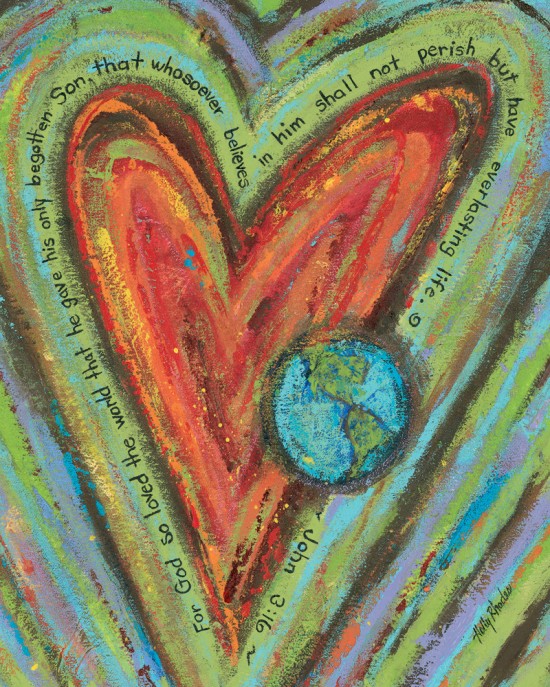
John 3:16 by Holly Rhodes

For God so loved the world that he gave his one and only Son, that whoever believes in him shall not perish but have eternal life. (John 3:16, NIV)

John 3:16 is a Bible verse so familiar as to be cliché. But when Jesus originally said these words, they were both tremendously freeing and incredibly scandalous. When something is familiar, we tend not to explore it any further. We need a closer look at the message of John 3:16 so we can not only see why some people embrace its light, but why others remain in darkness.

Perhaps another examination the gospel will dispel dullness and impel us toward praise, as well as to share its life-giving message not because we must, but because we want to. John 3:16 contains nine of the greatest spiritual realities we could ever experience.

1.“God” is the greatest subject ever.

The Bible contains lots of messages, promises, and commands. However, those are not the primary purpose for having the Holy Scriptures. The Bible has been given to us as a revelation of God to us so that we might know God. Every time the Scriptures are used, read, quoted, prayed, taught, learned, and heard – we know God a bit better. Anything short of knowing God falls short of the Bible’s intended purpose.

I constantly encourage a regular daily regimen of Bible-reading because it is the primary means of knowing God. Yes, we get to know God in creation and through experience, yet one of the best ways of experiencing God is through taking time for reading, meditating, memorizing, and praying of the Scriptures. Some of my most encouraging times are when I hear what people are learning about the Lord in God’s Word. With the Holy Spirit being our teacher, we discover more and more that God is the greatest subject we could ever learn about, talk about, and give our lives to.

2. “So” is the greatest extent ever.

There is a great wideness to God. God is a huge Being! Nothing is outside of God’s reach. So, when God decides to do something, nothing can stop it. We might be limited in our strength and abilities to accomplish things. But God’s extent is limitless. Knowing God means becoming familiar with an all-knowing and all-powerful Being. Prayer, then, becomes a response to God. God speaks to us through the Word, and we speak back with prayer so that the Word and prayer go like a hand in a glove. Our extent is temporary and small. Yet God takes our human prayers and uses them to accomplish divine purposes on this earth.

3. “Loved” is the greatest demonstration ever.

There is no greater demonstration of love than our triune God loving us with a sacrificial self-emptying love that saw our great need for deliverance and went to the greatest lengths possible to accomplish it. Our own love for God, each other, and the world is a direct result of God’s love for us.

This is how we know what love is: Jesus Christ laid down his life for us. And we ought to lay down our lives for our brothers and sisters…. This is how God showed his love among us: He sent his one and only Son into the world that we might live through him. This is love: not that we loved God, but that he loved us and sent his Son as an atoning sacrifice for our sins. Dear friends, since God so loved us, we also ought to love one another. (1 John 3:16; 4:9-11, NIV)

Where there is a lack of love there is an absence of God. Every human on planet earth needs the love of God in Christ. Without it we are lost. You are loved with sacrificial love. The greatest thing that can be said of you is that you are “loved.” Whatever has happened, is happening, and will happen that breaks you down, belittles you, hurts you, or causes you to feel like the north end of a southbound cow, is not what defines you. All may be going to hell around you, but nothing will change the unalterable reality that in Christ you are “loved!”

4. “The world” is the greatest object ever.

Up to this point you might not have sensed anything scandalous about this message of God’s grace and love. But this was the game-changing term for the original hearers of Christ’s words: God so loved the world. Many of Christ’s listeners could easily understand God loved the nation of Israel. But to say that God loved the world was going too far. It meant God loved Gentiles, specifically, Romans who occupied their land and oppressed them.

To capture the punch of this, it would be like Jesus showing up in our world today and saying that God so loved whomever we despise or hate. We often tend to assume that God hates who we hate. Right? Wrong. Yes, God hates evil and is opposed to all that destroys. Yet, God loves people for whom is placed the divine image within. For God to love the world is an incredible because there are so many unlovely people in the world.

Since God loves the world and demonstrated it in through Jesus, Christ’s Church is to reflect and embody this same love for the world. This has enormous implications for followers of Jesus. The Church is must embrace the same pejorative title as given its leader, Jesus: “Friend of Sinners.”  People come to know Jesus through the love given us in Christ. Since this is our title, Christian ministry then becomes not about my personal preferences but about what will most effectively love the world to Jesus.

5. “That he gave his one and only Son” is the greatest gift ever.


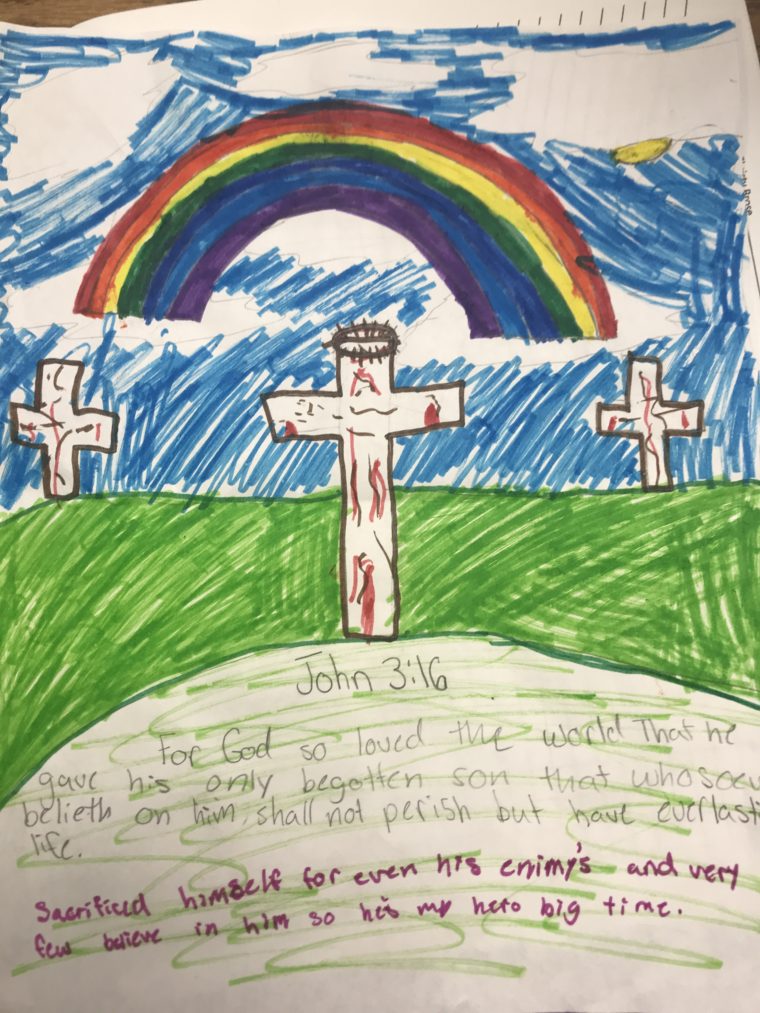
John 3:16 by an 11 year old

For God did not send his Son into the world to condemn the world, but to save the world through him. (John 3:17, NIV)

We do not get God’s leftovers or second-hand items. God gave the dearest, best, and most beloved gift he could ever give: his Son. Therefore, the greatest and dearest gift we can give to another person is Jesus. Sharing such a gift Jesus must come freely from the depths of divine love. Apart from love we are only a resounding gong or a clanging cymbal. If it takes cajoling and exhortation for us to give the gift of the gospel, then the problem lies in our hearts. It takes coming back to God’s Word and knowing the love of God in Christ through the Scriptures.

6. “That whoever” is the greatest opportunity ever.

If the greatest gift a person can receive is Jesus, then the best opportunity one could take advantage of is Jesus. We are all at differing places in our relationship with Jesus. Yet no matter the person, the opportunity for grace and love is more than anything you could hope or ask for. 

We are fortunate to have such a grace to know Jesus as Lord, Savior, teacher, healer, and friend. Those familiar with the name of Jesus all their lives but it has not gone much further than that, then the next point is vitally important….

7. “Believes in him” is the greatest commitment ever.

Jesus wants more than our acknowledgment of him; he wants us. Whenever I go home, my dog, Max Power, gets extremely excited. Honestly, I don’t really get excited about him. My typical response to him is, “Yes, Max, I acknowledge your existence.” I say it in hopes he will just kind of leave me alone and let me go about my business. But Max wants more. He wants my affection, my love, and my commitment. He wants a pet, a walk, food, and water.

God does not want to be treated like an annoying puppy. God wants our commitment. The Lord desires more than the tepid response, “I acknowledge your existence.”  The most common response I get from people when sharing the gift of Jesus is “Yes, I believe in Jesus.”  It is their way of saying they acknowledge his existence but are not much interested in giving their lives to him because they want to go about their business without God pestering them about anything. But God does demand something from us – our very souls. If we gain a view of God as gracious and loving, then we willingly desire an intimate commitment.

8. “Shall not perish” is the greatest rescue ever.

People perish not because God is unloving but because their theology is twisted – not to mention that we like our sin, and we don’t want to accommodate a holy God. The Titanic lost hundreds of people not for a lack of lifeboats. In fact, most of the lifeboats went into the water about three-fourths capacity. Many people simply did not believe they were perishing. They trusted in the ship’s reputation as being “unsinkable.” Jesus is our lifeboat.

9. “But have eternal life” is the greatest promise ever.

The promise begins now, not someday. Everlasting life means experiencing a life-saving and life-giving relationship with Jesus today.

Conclusion

If you ever had the feeling there is something more to life than what you are experiencing; if you ever wished you could start over; if you ever felt you cannot do this on your own; then, I have the greatest news ever. God has made a way to handle all your guilt, shame, and darkness. God loves you deeply in the person of Jesus Christ. There is new life in Jesus.