1 Samuel 31:1-13 – Warning Signs from a Tragic Life

The Philistines made war on Israel. The men of Israel were in full retreat from the Philistines, falling left and right, wounded on Mount Gilboa. The Philistines caught up with Saul and his sons. They killed Jonathan, Abinadab, and Malki-Shua, Saul’s sons.

The battle was hot and heavy around Saul. The archers got his range and wounded him badly. Saul said to his weapon bearer, “Draw your sword and put me out of my misery, lest these pagan pigs come and make a game out of killing me.”

But his weapon bearer wouldn’t do it. He was terrified. So, Saul took the sword himself and fell on it. When the weapon bearer saw that Saul was dead, he too fell on his sword and died with him. So, Saul, his three sons, and his weapon bearer—the men closest to him—died together that day.

When the Israelites in the valley opposite and those on the other side of the Jordan saw that their army was in full retreat and that Saul and his sons were dead, they left their cities and ran for their lives. The Philistines moved in and occupied the sites.

The next day, when the Philistines came to rob the dead, they found Saul and his three sons dead on Mount Gilboa. They cut off Saul’s head and stripped off his armor. Then they spread the good news all through Philistine country in the shrines of their idols and among the people. They displayed his armor in the shrine of the Ashtoreth. They nailed his corpse to the wall at Beth Shan.

The people of Jabesh Gilead heard what the Philistines had done to Saul. Their valiant men sprang into action. They traveled all night, took the corpses of Saul and his three sons from the wall at Beth Shan, and carried them back to Jabesh and burned off the flesh. They then buried the bones under the tamarisk tree in Jabesh and fasted in mourning for seven days. (The Message)

Life is a process. Rarely does anything happen instantly. Human growth, maturation, life, and death unfold over years. So, a major life issue is attending to what process are we given to – a process which allows for human thriving – or a process that causes a failure to thrive.

King Saul sadly gave himself to a downward spiral of jealousy, paranoia, and poor decisions. His end was tragic. Yet perhaps we might learn some lessons in the form of warnings. Let’s consider the life of Saul as a cautionary tale, heeding us to avoid his foibles and pitfalls.

Unfortunately, Saul made deliberate choices in his life which led to his ignominious death. In fact, Scripture makes it plain that Saul died because of unfaithfulness:

Saul died because he was unfaithful to the Lord; he did not keep the word of the Lord and even consulted a medium for guidance and did not inquire of the Lord. So, the Lord put him to death and turned the kingdom over to David son of Jesse. (1 Chronicles 10:13-14, NIV)

Premeditated, deliberate, conscious wrongdoing can only expect a predictable process of moral failure and divine judgment. Consider some observations from Saul’s life so that we will be kept from going down his path of destruction:

  • Saul made decisions which solely benefited himself, and not the entire community. He deliberately disobeyed orders from the prophet Samuel and tried to justify his behavior with a godly veneer (1 Samuel 13:1-14; 15:1-26). Later, King David engaged in some deliberate acts of sin and disobedience. Yet, David did not share Saul’s outcome because he humbled himself before God, admitted his guilt, and turned away from disobedience (2 Samuel 12:1-13). There always remains the opportunity to turn to God, as long as we are alive.
  • Saul never owned his bad decisions, and it led to his paranoia and warped thinking. Saul kept believing he was okay – and that everyone else was wrong or against him. If we ever get to the point of living with our sin as if it’s acceptable, then we need a prophet to come along and show us the error of our ways and beliefs. Saul had a prophet in his life: Samuel, who was one of the best. Yet, Saul often altered Samuel’s advice or dispensed with it altogether.
  • Saul’s wrongdoing did not always lead to immediate negative consequences. That is the typical nature of sin. It bites, but the pain isn’t felt until later. Saul was rejected by God as king. In reality, this rejection did not occur until Saul’s death. Whenever Saul made poor decisions, he felt gratification in the immediate moment. Later, however, he was tormented by an evil spirit (1 Samuel 16:14). Conversely, the righteous person understands the principle of delayed gratification.
  • It wasn’t just Saul who suffered because of his own jealousy and paranoia. Other people suffered, as well. David clearly suffered emotional and spiritual duress because of Saul’s jealousy. The priests and the people of Nob were mercilessly murdered because of Saul’s paranoia (1 Samuel 22:6-19). We must be quite careful to avoid being shortsighted about our decisions. Just because we might neither anticipate nor see any negative consequences to others doesn’t mean there aren’t any. Sin destroys, period, whether we know it, or not.
  • Saul’s identity and worth as a person was dependent on his title and position as king. So, when that position was threatened, Saul thought his very personhood was in grave danger. The truth is that our worth as humans is not tied to whether we have a lofty position, or a particular pedigree. Our dignity as people is forever tethered to bearing the divine image.

A healthy life process of decision-making which includes consulting wise voices and collaborating with people of integrity will surely result in good things, not bad. So, let us walk in the narrow path of wisdom, while continually forsaking the broad road that leads to destruction.

Gracious God, our sins are too heavy to carry, too real to hide, and too deep to undo. Forgive what our lips tremble to name, what our hearts can no longer bear, and what has become for us a consuming fire of judgment. Set us free from a past that we cannot change; open to us a future in which we can be changed; and grant us grace to grow more and more in your likeness and image, through Jesus Christ, the light of the world. Amen.

*Above: woodcut of King Saul’s death by George Wigland, 1860

Lamentations 3:22-33 – The Need for Lament

The steadfast love of the Lord never ceases,
    his mercies never come to an end;
they are new every morning;
    great is your faithfulness.
“The Lord is my portion,” says my soul,
    “therefore I will hope in him.”

The Lord is good to those who wait for him,
    to the soul that seeks him.
It is good that one should wait quietly
    for the salvation of the Lord.
It is good for one to bear
    the yoke in youth,
to sit alone in silence
    when the Lord has imposed it,
to put one’s mouth to the dust
    (there may yet be hope),
to give one’s cheek to the smiter,
    and be filled with insults.

For the Lord will not
    reject forever.
Although he causes grief, he will have compassion
    according to the abundance of his steadfast love;
for he does not willingly afflict
    or grieve anyone.
(New Revised Standard Version)

We all face situations, at points in our lives, which cause us to grieve. Grief can and does attach itself to any significant change or loss. Bereavement, divorce, surgery, losing a job, bankruptcy, and a host of adverse circumstances are all, understandably, events bringing grief to our lives. They are unwanted events we did not ask for. 

Grief can also attach itself to the positive changes of life, for example, moving to a new house in a new area, an empty nest, getting married, having children, or beginning a new job. These all produce grief, even if that loss and change were chosen, anticipated, or necessary.

The worst way to approach these grief-producing events is to ignore them, minimize them, say they are simply in the past, stuff the feelings down, and just move on. It’s actually unbiblical to take such an attitude because Scripture discerns that we need to lament our losses. We have with Lamentations an entire book of the Bible given to lamenting a grievous loss.

The prophet Jeremiah was called by God to pronounce judgment against Jerusalem. Not only was Jeremiah commissioned to proclaim a very unpopular message, but he was also given a promise that the people would not listen to him, and that Jerusalem would be destroyed with the people being sent into exile – only compounding Jeremiah’s sadness with complicated grief.

The prophecy of Jeremiah is a long extended message of a melancholy messenger preaching exactly what the Lord wanted him to preach. God’s words came true. The people did not turn from their empty worship and wayward lifestyles. And they persecuted Jeremiah for speaking words of judgment. The Babylonians came and tore down the walls of Jerusalem, decimated the city and the temple, and carried off the people into exile.

Jeremiah, in his grief over the ruined city of Jerusalem, wept and lamented the loss of his hometown and the temple. It was only after an extended lamentation that Jeremiah turned his attention toward the love of God, his compassions becoming new every morning, and the hope of a new existence without Jerusalem at the center of Jewish life.

The hope of love, compassion, and new life comes from first lamenting our losses. There are two popular phrases in our culture that need to be jettisoned altogether when speaking with people experiencing change or loss. These phrases, at the least, are not helpful; and, at worst, compound the anger and sadness:

  1. “Get over it!” can short circuit the grief process and puts grieving people in the awkward position of not seeing the power of lament through to its end of acceptance, resolution, and fresh hope. Far too many people in the world, and even the church, remain stuck in some stage or level of grief, unable to effectively move through their grief because others expect them to be joyful and triumphant when they really feel downright awful – not to mention now guilty on top of it for being sad.
  2. “You have to be strong!” is typically said to people who are in a state of weakness. They can’t be strong. We would never think of telling someone with broken bones to have the strength to walk or even drive anywhere without assistance. We understand they need to heal. Yet, we tell this to people with broken spirits, and then can’t understand why they don’t just bounce back from their emotional stupor. That’s because they can’t. Broken spirits, like broken bones, need time to heal.

Embracing lament is the pathway to knowing compassion and becoming a compassionate person, like Jesus. Wallpapering over our losses without lamenting them is at the root of many, if not most, of emotional problems today. 

Jerry Sittser, a Reformed pastor and professor, wrote an important book entitled, A Grace Disguised: How the Soul Grows Through Loss. Many years ago, he was driving his family’s minivan when a drunk driver crossed the road and hit them head on. In an instant he watched three generations of his family die in front of his eyes: his mother, his wife, and his daughter. Sittser writes:

“Catastrophic loss by definition precludes recovery.  It will transform us or destroy us, but it will never leave us the same….  I did not get over my loved ones loss; rather I absorbed the loss into my life until it became part of who I am. Sorrow took up permanent residence in my soul and enlarged it.”

Jerry Sittser

Nicholas Wolterstorff is a professor emeritus at Yale University. In his book, Lament for a Son, he talks about losing his twenty-five year old son to a mountain climbing accident. He has no explanations – just grief. At one point he expressed a profound insight: 

“Through the prism of my tears I have seen a suffering God. It is said of God that no one can behold his face and live. I always thought this meant that no one could see his splendor and live. But I have come to see that it more likely means that no one can see his sorrow and survive.”

Nicholas Wolsterstorff

We all accumulate many losses over the course of a lifetime. Many are small losses; some are devastating losses. The death of children, disability, sexual assault, abuse, cancer, infertility, suicide, and betrayal are all examples of crushing loss – losses that need to experience lament. 

All these changes are irreversible; we cannot return to how things once were. We must move through the grief by lamenting each loss. And as we lurch ahead, we cling to the words of Jeremiah that because of the Lord’s great love, we are not consumed and swallowed whole from grief, for his compassions never fail. They are new every morning. Great is God’s faithfulness.

So, how do we lament our losses in a healthy way?

  1. Jeremiah remembered his afflictions and his losses. We need to avoid superficial responses to significant events. We must own and feel the pain of the loss before we can begin to see new life.
  2. Jeremiah paid attention to faith, hope, and love. This can only be done if we are alert to the process of grieving. Elizabeth Kubler-Ross was the person who identified the famous five stages of grief: denial, anger, bargaining, depression, and resolution or acceptance. We rarely move neatly through each stage. The important thing is that we get to the place of seeing God’s committed love to us not just in spite of the suffering but because of it.
  3. Jeremiah did not minimize his pain and suffering. We must sit with our pain. Do not dismiss your loss by saying others have it worse, or that it’s nothing. Year after year, many Christians do not confront the losses of life, minimizing their failures and disappointments. The result is a profound inability to face pain. And it has led to shallow spirituality and an acute lack of compassion.
  4. Jeremiah prophesied about how Jesus grieved. His message predicted what Jesus faced in his passion. The prophet Isaiah described Messiah as a man of sorrows and acquainted with grief.  At the tomb of Lazarus, Jesus did not say “Come on everyone, stop all this crying” but wept with the people. When entering Jerusalem, Jesus did not say “too bad guys, I’m moving on without you” but lamented over the city desiring to gather them as a hen does her chicks. On the cross, Jesus did not say “Lighten up everyone; God is good; he will be victorious!” But instead said, “My God, my God, why have you forsaken me?” Hebrews 5:8 tells us that Jesus “learned obedience from what he suffered.”

Grieving is an indispensable part of a full-orbed spirituality and emotional health. Life does not always make sense. There is deep mystery to the ways of God. The Lord is doing patient and careful work inside of each one of us. While he is busy within our souls, we will likely feel lost and disconnected, not seeing the full tapestry of what he is creating. Weariness, loneliness, a sense that prayers are not being heard, and a feeling of helplessness are all common experiences of God’s resetting a broken spirit.

John Milton’s classic piece of literature, Paradise Lost, compares the evil of history to a compost pile – a mixture of decaying food, animal manure, dead leaves, and whatever else you put on it. Yet, if you cover the compost with dirt, after a long while it no longer smells. The soil becomes a rich natural fertilizer and is ideal for growing a garden. 

But you have to be willing to wait, in some cases, years. Milton’s point was that the worst events of history and the evil we experience are compost in God’s overall plan. Out of the greatest wrong ever done, the betrayal, crucifixion, and death of Jesus, came the greatest good – God transformed the stench of evil into good without diminishing the awfulness of that evil.

People who have truly lamented their losses are not hard to spot. They are:

  • More patient with others with an increased capacity to wait on God.
  • Kinder and more compassionate.
  • Lack pretense and are liberated from trying to impress others.
  • Comfortable with mystery, not having to be certain about every theological minutiae.
  • Humble, gentle, and meek. 
  • Able to see God not only in the glorious and victorious, but also in the mundane, banal, and lowly.
  • More at home with themselves and with God. 
  • Equipped to love others as Jesus did.

Maybe we are always running, working, and playing because we are constantly trying to keep grief from catching up to us. Slow down. Let it catch you. Let grief do its deep and powerful work within you.

*Above painting of Jeremiah, the weeping prophet, in the Sistine Chapel by Michelangelo (1475-1564)

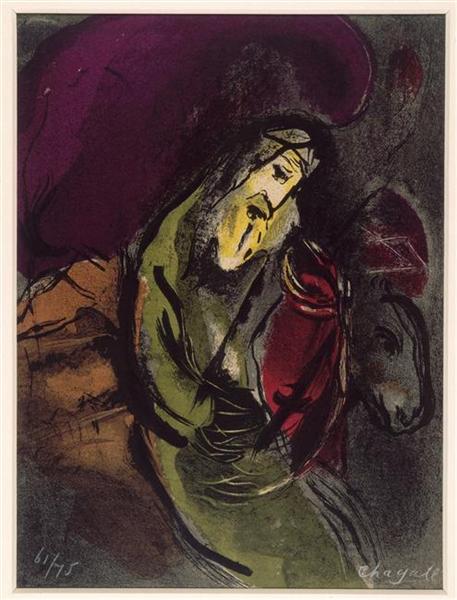
**Above painting of Jeremiah by Marc Chagall, 1956

Hebrews 11:4-7 – Let the Future Shape Your Present

By faith Abel brought God a better offering than Cain did. By faith he was commended as righteous when God spoke well of his offerings. And by faith Abel still speaks, even though he is dead.

By faith Enoch was taken from this life, so that he did not experience death: “He could not be found, because God had taken him away.” For before he was taken, he was commended as one who pleased God. And without faith it is impossible to please God because anyone who comes to him must believe that he exists and that he rewards those who earnestly seek him.

By faith Noah, when warned about things not yet seen, in holy fear built an ark to save his family. By his faith he condemned the world and became heir of the righteousness that is in keeping with faith. (New International Version)

Faith is important. It’s part of us. We are all people of faith – maybe not sharing the same faith – but it is faith, none-the-less.

Belief transcends time. Faith is rooted in the past, experienced in the present, and future-oriented. In Christianity, faith is historically moored to the redemptive events of Christ’s incarnation, life, death, resurrection, and ascension. This historic faith has continuing ramifications into the present time. And it is a faith which believes Christ is coming again to judge the living and the dead.

All of this means our salvation encompasses past, present, and future. So, it is appropriate and accurate to say the Christian has been saved, is being saved, and will be saved. Deliverance from sin, death, and hell was achieved on the cross. We are presently in the process of being delivered from our sinful nature and the effects of a fallen world. And we will be completely delivered at the end of the age when there will be no more disease, death, or grief-stricken crying.

The New Testament brings out all these dimensions of time. Whereas the Apostle Paul tended to continually look back to the past of God’s action in history, the author of Hebrews consistently looks ahead and brings out the future orientation of our faith.

And that is what the great Hall of Faith in chapter eleven of Hebrews is about – giving repeated examples of individuals who transcended their present hard circumstances through realizing what will be eventually coming. All of them acted particular ways in the present time because of what they believed would happen in the future. In other words, people of faith allow their belief in what is coming to shape how they live now in daily life.

Abel took the absolute best of his flock and made it an offering, with the intent of giving God an appropriate gift. Whereas his brother Cain cobbled together some of the leftovers from his vegetable harvest and gave them a nonchalant toss to God. Then, he got upset when God looked with disfavor on it.

Abel’s actions demonstrated the attitude of his heart. His belief and his practice worked together. And the gift he gave to God cost him his life, as Cain was inflamed with anger and killed his brother. Only by looking ahead and seeing that God’s reward is better than anything this world can offer, can we endure hardship.

Enoch focused on pleasing God through his three-hundred year life, knowing he would then enjoy an eternity with the Lord who provides good rewards. Enoch displayed his faith through obedience to God. He believed God existed and that God is good.

Noah, despite the jeering of his neighbors, took one-hundred years of his life to build a big ark, believing without a doubt that God’s judgment was coming. The daily grind of constructing an ark for such a long time was made possible because Noah was looking ahead. His present actions were shaped by his forward thinking faith.

In each individual’s life, their daily actions were a result of their unshakable belief in what was to come.

Faith enables us to persevere patiently through any kind of adversity. Knowing we have a better reward ahead; realizing our present trouble will not last forever; and believing Christ will eventually make all things right in this world which has so much wrong – forms the foundation of our faith in such a way as to buoy us so that we do not drown in a sea of injustice, microaggressions, unhealthy power dynamics, as well as plain old meanness and insensitivity from others.

So, when we face those times which tempt us to get lost or stuck in an ever-enclosing existential angst, take a pause, back up the truck, and see a more expansive big picture view of yourself, your situation, and others. You’ll be glad you did.

Christ be with me, Christ within me,

Christ behind me, Christ before me,

Christ beside me, Christ to win me,

Christ to comfort and restore me.

Christ beneath me, Christ above me,

Christ in quiet, Christ in danger,

Christ in hearts of all that love me,

Christ in mouth of friend and stranger.

Amen.

-Prayer of St. Patrick

Hebrews 2:5-9 – Christ is Qualified

It is not to angels that God has subjected the world to come, about which we are speaking. But there is a place where someone has testified:

“What is mankind that you are mindful of them,
    a son of man that you care for him?
You made them a little lower than the angels;
    you crowned them with glory and honor
    and put everything under their feet.”

In putting everything under them, God left nothing that is not subject to them. Yet at present we do not see everything subject to them. But we do see Jesus, who was made lower than the angels for a little while, now crowned with glory and honor because he suffered death, so that by the grace of God he might taste death for everyone. (New International Version)

Christ’s suffering qualified him to unite people.

By Christmas eve of 1914, World War I had come to the point of trench warfare. On one point along the miles of trenches, on one side were the allied troops of French and Scots, and on the other side, Germans. That night, a Frenchman began singing Silent Night. Eventually his comrades joined in. Much to their surprise, the Germans on the other side of the trench, recognizing the familiar tune, began singing the song in their native tongue, along with them. The Scots then joined in with their bagpipes.

After the song, heads began to stick out from the trenches. Both sides realized they had a common celebration in song. This led to white flags going up on both sides, and then the unthinkable happened. Both trenches, allied and axis powers, enemies of one another, left their holes in the ground and met in the middle, exchanging pictures, and communicating with each other. The evening was capped off with the Scottish chaplain leading all the men together in a celebration of communion. The 2005 movie, Joyeux Noel, recounts the actual events.

Whenever we come together, expressed for the Christian through the sacrament of communion, it puts our differences in their proper perspective – we all come together as one, not seeing each other as rich or poor, black or white, American or Asian, or anything else.

The events of that Christmas eve in 1914, however, did not have a happy ending. The two sides found that, once the holiday passed, they did not have the will to fight their new brothers. The top brass on each side were upset and sent the Germans to the Russian front (and certain death); and the Scottish chaplain was defrocked for his actions and sent home never to pastor again, letting us see in dramatic fashion that unity has a price.

The book of Hebrews was originally written (or preached) to encourage and exhort struggling Jewish Christians. The author pointed them squarely at Jesus. The people were in danger of forgetting what the pioneer and champion of their salvation had done for them.

What’s more, they were in danger of reneging on their commitment to Christ. So, the entire book is dedicated to demonstrating and reminding discouraged believers that Jesus Christ is superior to everything, both in heaven and on earth.  Because of that truth, Jesus is worthy of our eternal devotion and remembrance.

Jesus is qualified to be our Savior and Lord. Every day and each minute of our lives are an opportunity for a fresh commitment to Jesus.

The regular practice of Christian communion and consistent spiritual practices are meant to lead us into celebrating our Savior’s work. The worldwide communion of saints is celebrating with us in remembering and committing ourselves afresh to the lordship of Jesus Christ.

A great victory has been won, not just in the trenches of human wars, but on the cross of Christ. This singular death on our behalf qualified Jesus to be our Savior from sin, once and for all.

Christ’s suffering qualified him to be our Savior.

Jesus suffered an inglorious and ignominious death. Yet, paradoxically, glory came through suffering. Jesus did not only suffer at his crucifixion; he experienced the full range of human suffering throughout his life.  He knew what it was like to face adversity and hardship. It is Christ’s suffering that helps us make sense of our own suffering.

We can only truly be free from all that binds us by embracing that which makes us suffer. And because we live in a fallen world, we all personally suffer in some way. In addition, entire groups of people suffer – whether it is religious persecution, racial profiling, class warfare, or government oppression. This suffering is very real, damaging, and dehumanizing, resulting in terrible living conditions and even death.

Maybe because of this reality, some tend to minimize their own suffering. After all, what is a harshly worded e-mail, trying to lose a few extra pounds, or an unexpected car repair compared to families devastated by COVID-19? It is all suffering none-the-less.

It is good to keep our life situations in proper perspective; and we must be careful to not tell God what he should and shouldn’t care about in this world. If the only things that matter and qualify as hardship and difficulty is human trafficking, the terrors of war, or grinding poverty, then you will soon find yourself plastering a smile on your face and nodding over-enthusiastically whenever someone asks you how you are doing. Happy with-it Christians are insufferable, (pun intended).

We must find commonality and solidarity with Jesus in our own personal and corporate suffering. An admission of weakness, trouble, hardship, or suffering is neither a lack of faith nor the unpardonable sin. Identifying with the adversity of our brothers and sisters in Christ throughout the world can be transformed into suffering that has meaning and significance. Our temporary sufferings now will someday result in the glory of being with Christ forever.

Christ’s suffering qualified him to be our compassionate helper.

Through the death of Jesus on the cross we have victory over Satan and all his wicked spirits.

I have heard more than one motivational speaker say: “If you could do one thing in your life and not be able to fail, what would it be?” The truth is, because of Christ’s atoning sacrifice, we have victory and can live our lives in confidence and commitment to Jesus.

Temporary failures and failings are not the end of the story. We possess a union with Christ because of the cross. Jesus is our champion. He stands with us in our suffering and temptations. 

In solidarity with all who suffer, along with brothers and sisters who agonize throughout the world, we have the blessed opportunity of bringing our troubles to a gracious God – thus finding forgiveness and hope. 

May your burdens be lifted, and may you know Christ, and him crucified, died, buried, risen, ascended, and coming again. Jesus knows you because he tasted death for you – and for everyone.

Merciful Lord help me to remember in these troubled times the cross you carried for my sake so that I may better carry mine and help others do the same. Since you tasted death that I might taste life, I forever belong to you and offer up all that I am and all I hope to be to the glory of Jesus Christ through the power of the Holy Spirit. Amen.

**Above picture: Christ the Redeemer statue in Rio de Janeiro, Brazil