Whoever Believes (John 3:14-21)

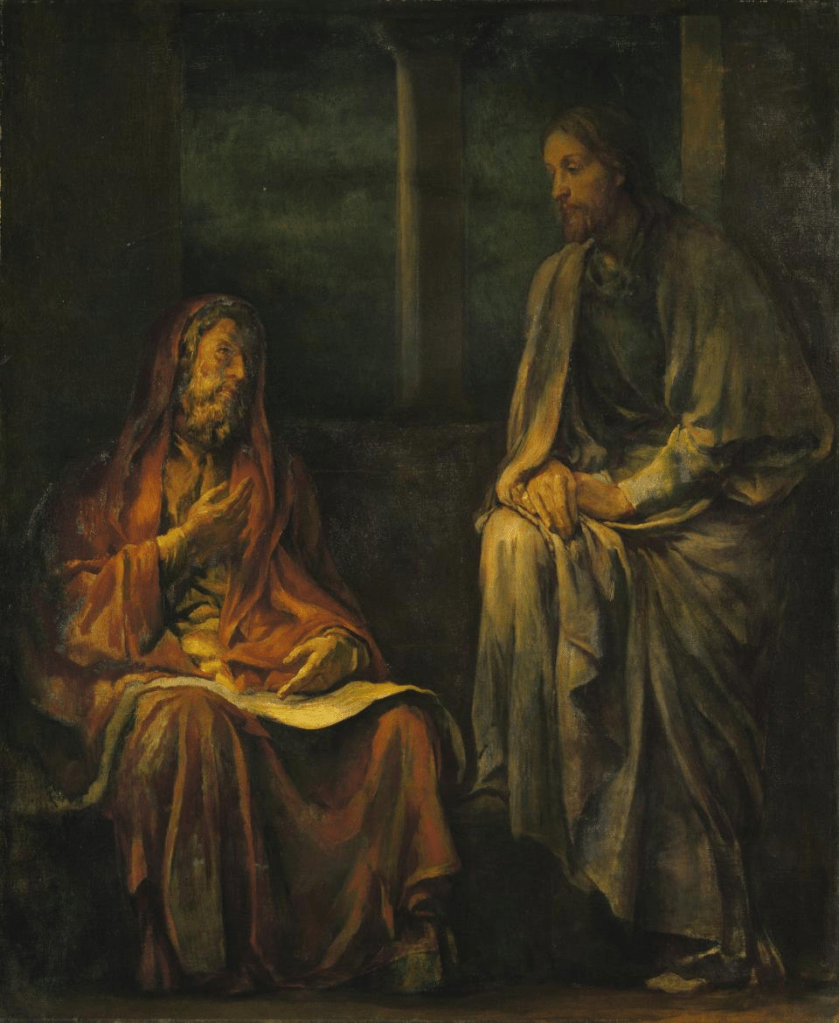
Interview Between Jesus and Nicodemus, by James Tissot (1836-1902)

Just as Moses lifted up the snake in the wilderness, so the Son of Man must be lifted up,that everyone who believes may have eternal life in him.”

For God so loved the world that he gave his one and only Son, that whoever believes in him shall not perish but have eternal life. For God did not send his Son into the world to condemn the world, but to save the world through him. Whoever believes in him is not condemned, but whoever does not believe stands condemned already because they have not believed in the name of God’s one and only Son. 

This is the verdict: Light has come into the world, but people loved darkness instead of light because their deeds were evil. Everyone who does evil hates the light, and will not come into the light for fear that their deeds will be exposed. But whoever lives by the truth comes into the light, so that it may be seen plainly that what they have done has been done in the sight of God. (New International Version)

For many, the truth about God’s purposes in Christ is confusing, even troubling. It was for Nicodemus. And even though there many today who simplify the exchange between Jesus and Nicodemus with a single Bible verse of John 3:16, taking a good look at the Gospel of John puts most of us with Nicodemus.

Nicodemus, a learned Jewish scholar, a Pharisee, found Christ’s words both confusing and troubling because it required him to let go of everything he understood – to let go and become like a newborn baby, receiving and discovering the world on new and different terms. In other words, Nicodemus had to unlearn some things before he could learn truth.

There are some things that are hard to grasp, not because they are so intellectually challenging, but because those things ask a lot of us, demanding our very lives. And so, we don’t so much want to understand; it would require a radical change.

But why would anyone not want to understand the good news that God so loved the world that gave the Son so that we may believe and have eternal life? Because we would then have to contend with the ways Jesus describes himself.

Jesus likened himself to the serpent that Moses lifted up in the desert (John 3:14; Numbers 21:4-9). In that story of Moses in the Old Testament book of Numbers, God sent poisonous snakes into the Israelite camp as punishment for the people’s incessant complaining against God.

Then, when the people repented, God told Moses to make a bronze snake, put it on a pole, and lift it up, so that anyone bitten by one of the poisonous snakes could see it and live. Jesus likened himself to the story. In the same way the bronze snake was lifted on a pole, Jesus explained that so must the Son of Man be lifted up, or exalted high above the people.

Visit of Nicodemus to Christ, by John La Farge, 1880

In the typical language of the Apostle John, using double meanings to a single concept, he meant to communicate that Jesus would be physically lifted onto the cross, above the people; and also that Jesus would be lifted up by God as the exalted One above all creation. (John 8:28; 12:32)

Just as the ancient Israelites were facing death because of their sin, and deliverance because of God’s action through Moses, so people everywhere in every age face the consequences of their sinful complaining; yet through the action of God through Christ’s crucifixion, resurrection and ascension, they can look up to the exalted and glorified Lord and receive deliverance from sin, death, and hell.

There is more to looking up at the lifted One than a mere incline of the head and eyes. In modern terms, we would refer to the sheer action of looking as an intellectual assent to faith. The Apostle John, however, means to have us believe, not simply acknowledge.

Jesus did not tell Nicodemus to simply acknowledge him as Savior, to accept him into the heart, and so, be saved. No, this was an encounter that left an intelligent man and an accomplished scholar scratching his head in bewilderment as he went back out into the darkness.

Today’s Gospel lesson is a story about how any one of us might reject the light offered to us because of the way it exposes what is dark within us. Therefore, to believe requires ultimate trust in another. It isn’t to acknowledge that Jesus was real and had an actual ministry on earth; it’s more than believing something happened in history in the ancient world of the first century.

To believe is to let our own lives be transformed by the Jesus we encounter in this story. And here is what that means:

  1. Realizing and becoming aware of the ways we are complicit in and benefit from having our loyalties elsewhere, other than Jesus. To believe demands us answering the question: Whom shall you serve?
  2. Placing our ultimate trust, allegiance, and loyalty in Jesus Christ. To believe begs the question: To whom will you commit all that you have, and all that you are?
  3. Forsaking all other competing loyalties and “gods,” including both secular and religious deities. To believe means a single-minded devotion, which asks of us all: To whom and to what will you forsake in order to embrace Jesus?
  4. Confronting inconvenient truths of our own personal values which clash with Christ’s ideals of righteousness. To believe presses us to answer the question: To whom and for what are you truly living for?
  5. Willing to die to self and to anything that would hinder knowing Jesus and him crucified, risen, ascended, and coming again. To believe forces us to ask ourselves: Am I willing to die for Jesus?

While there is nothing in this world worth killing for, there are things worth dying for. The lifting up of Jesus lets us know that the true life God has promised us is not the life that we can secure for ourselves through self-interest, caution, and theological debate.

Most merciful God,
we confess that we have sinned against you
in thought, word, and deed,
by what we have done,
and by what we have left undone.
We have not loved you with our whole heart;
we have not loved our neighbors as ourselves.
We are truly sorry and we humbly repent.
For the sake of your Son Jesus Christ,
have mercy on us and forgive us;
that we may delight in your will,
and walk in your ways,
to the glory of your Name. Amen.

Shining the Light On Our Fears (Mark 9:2-8)

Six days later Jesus took Peter, James, and John, and brought them to the top of a very high mountain where they were alone. He was transformed in front of them, and his clothes were amazingly bright, brighter than if they had been bleached white. Elijah and Moses appeared and were talking with Jesus. 

Peter reacted to all of this by saying to Jesus, “Rabbi, it’s good that we’re here. Let’s make three shrines—one for you, one for Moses, and one for Elijah.” He said this because he didn’t know how to respond, for the three of them were terrified.

Then a cloud overshadowed them, and a voice spoke from the cloud, “This is my Son, whom I dearly love. Listen to him!” Suddenly, looking around, they no longer saw anyone with them except Jesus. (Common English Bible)

The transfiguration of Christ was a glorious experience on the mountain for those closest to Jesus. Yet, we are told that Peter, James, and John – the inner circle of Christ’s disciples – were terribly frightened.

Peter, always the extrovert of the group, and forever their mouthpiece, nervously babbled-on without making any sense because he was so nervous and afraid.

Have you ever wondered why Jesus would take three of his disciples with him to experience such an incredible vision? Why did Jesus show these men something so otherworldly that they nearly soiled themselves? 

I will tell you why I think Jesus put his close disciples in such a glorious, yet frightening, position as this:

Because the only way to see Jesus as our only hope, we must face our fears, insecurities, and anxieties, squarely, without hiding from them.

Jesus did not relieve their anxiety. He let his disciples feel the full impact of their fear. The glory of Christ shone show brightly that Peter, James, and John could not hide from what was happening to them, and could not avoid what was in their minds and hearts. 

Only through shining the light on the shadowy place of our fears and insecurities will we ever be able to accept that we need a savior. And that savior is Jesus, the light of the world, the Lord over fear, anxiety, and discouragement.

The invitation which Christ extends to us is to move further into our fears, face those fears, and sit awhile with our fears, so that we can see how desperately we need the Savior Jesus. 

No one seeks a savior when they don’t even believe they need deliverance from anything. “I’m just fine, thank you very much!” says the independently self-sufficient person among us. To seek salvation, for such a person, is an intensely personal affair; they will look within, not without. It will take quite the desperate situation for them to consult someone who knows the ways of the soul.

But the one who sees what is truly inside of them, and is aware of their fear of connection; the scary prospect of confrontation; the anxiety of what will happen; or, the discouragement of failure; this is the one who is then able to hear the voice of God, and listen to Jesus give the answer to our most pressing life issues, worries, and concerns.

Jesus Christ wants to change us from the inside-out. He helps us by showing us not to avoid the fears which cause us to be beside ourselves, but instead, to face those fears and confront the anxieties within. 

The bright light of God’s presence enables us to see very clearly all that is within us. And Christ’s intimate relationship with us assures us that change is possible. Then, the Holy Spirit comes and empowers us for transformation, so that we may shine, along with Jesus, and let the light help others, as well.

You and I are never alone; we always have the glorious presence of Christ with us as we walk through dark valleys and ascend high mountains. 

It is the wonderful existence and omnipresence of God, in Christ, through the Spirit, which makes all the difference. We were created for connection with the divine, not for separation and loneliness in our fears.

Glorious Christ, you love me with a grace and mercy which always has my best interests in mind. Help me through my most pressing fears and failures so that I might see your glory, hear your voice, and know your constant presence. Amen.

Why Are We Here? (Matthew 9:2-13)

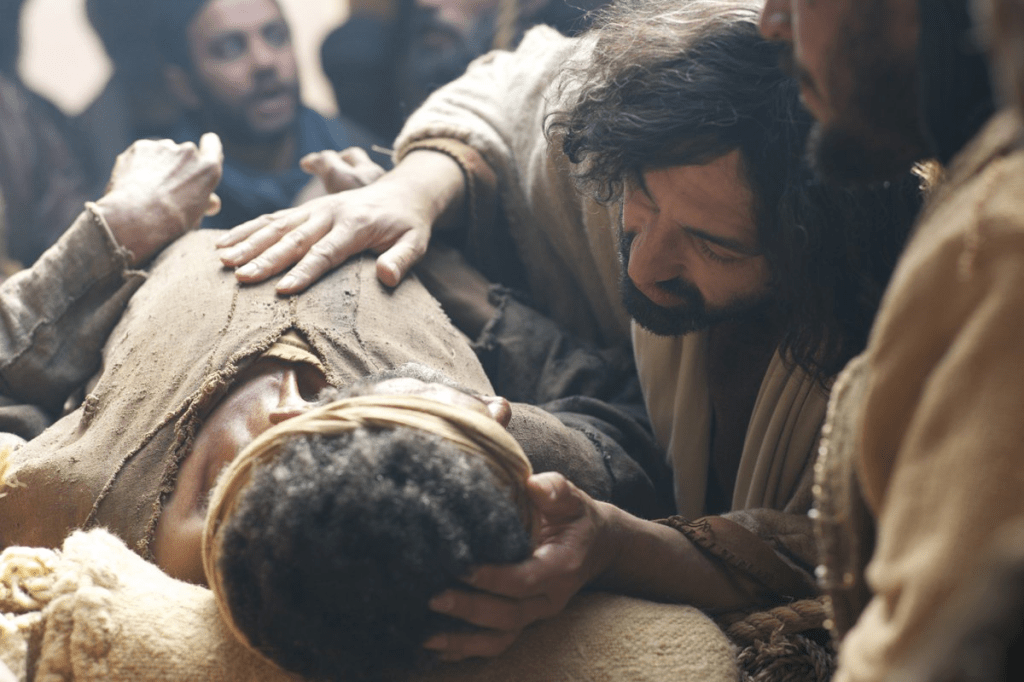
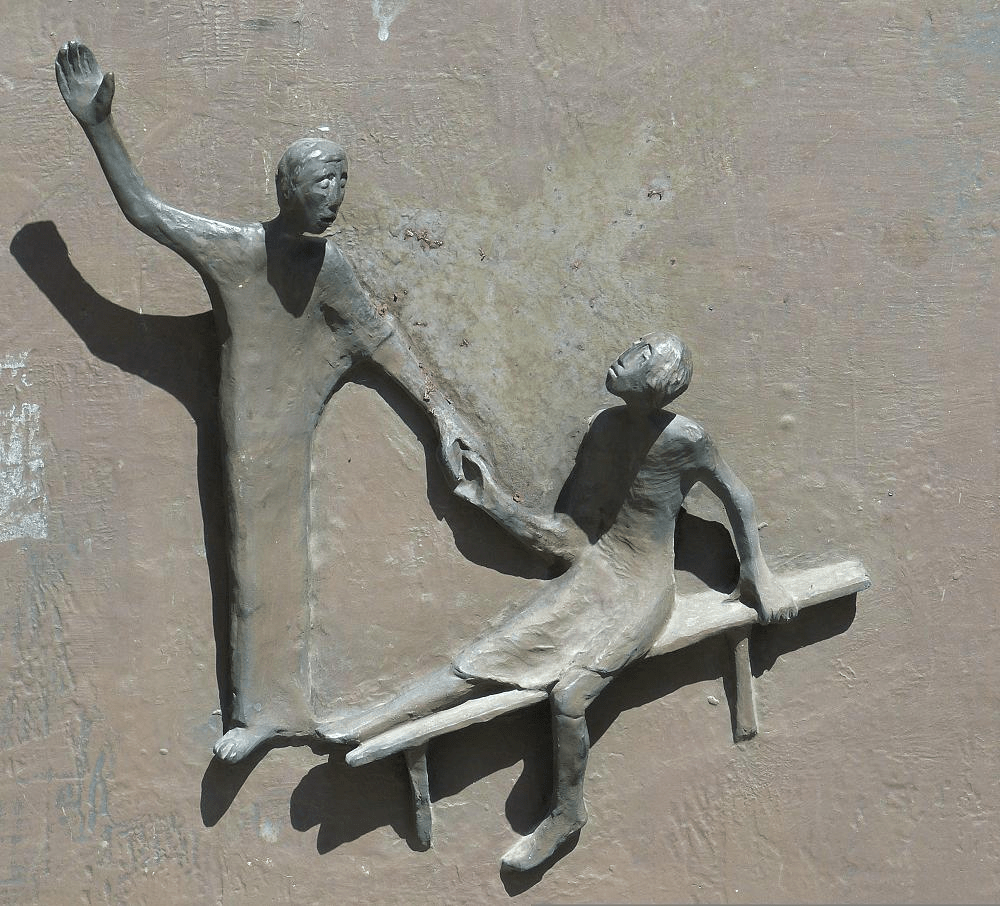
Jesus heals and forgives a paralyzed man

Some men brought to him a paralyzed man, lying on a mat. When Jesus saw their faith, he said to the man, “Take heart, son; your sins are forgiven.”

At this, some of the teachers of the law said to themselves, “This fellow is blaspheming!”

Knowing their thoughts, Jesus said, “Why do you entertain evil thoughts in your hearts? Which is easier: to say, ‘Your sins are forgiven,’ or to say, ‘Get up and walk’? But I want you to know that the Son of Man has authority on earth to forgive sins.” So he said to the paralyzed man, “Get up, take your mat and go home.” Then the man got up and went home. When the crowd saw this, they were filled with awe; and they praised God, who had given such authority to man.

As Jesus went on from there, he saw a man named Matthew sitting at the tax collector’s booth. “Follow me,” he told him, and Matthew got up and followed him.

While Jesus was having dinner at Matthew’s house, many tax collectors and sinners came and ate with him and his disciples. When the Pharisees saw this, they asked his disciples, “Why does your teacher eat with tax collectors and sinners?”

On hearing this, Jesus said, “It is not the healthy who need a doctor, but the sick. But go and learn what this means: ‘I desire mercy, not sacrifice.’ For I have not come to call the righteous, but sinners.” (New International Version)

“The church is a hospital for sinners, not a museum of saints.”

Abigail Van Buren (“Dear Abby”)

Why does the Church exist? Why did Jesus come to this earth? What are we supposed to be doing? Does Christianity make any difference in this world? Why are we here?

The Church is not on this earth solely for the benefit of Christians, any more than a hospital exists for the benefit of the doctors or insurance companies.

Rather, the Church is designed to extend the mission of Jesus through proclamation of good news with the restorative touch of grace. The Church is the community of the redeemed, gathered together for worship and encouragement, and then sent into the world to be the continuing presence of Jesus on this earth.

This mean that the Church’s calling is not to find others who can help them with their tithing and budget, or to keep the pews warm with fresh bottoms.

Some folks are not healthy. Some are sick physically, and others spiritually. Even more are emotionally brokenhearted. And then there are those who are sick-and-tired of being sick-and-tired.

Please know that Jesus came neither to condemn nor heap a pile of unrealistic expectations on us. Christ points us to the source of healing and transformation, and invites us to come to him. 

Conversely, there are many other people today who are healthy, spiritually alive, and have a good well-being. And they possess the opportunity to participate in ways that bring holistic healing to the world as Christians. The mission of Jesus is our mission, as well.

Jesus came to bring forgiveness and transformation. In today’s Gospel healing, it was a case where the person’s paralysis was both physical and spiritual. The paralytic found in Jesus healing of both body and soul.

The religious insiders observed the healing of the paralytic. Yet, they didn’t rejoice over it. Instead, they were hung up on Jesus claiming to be God. Although this may have been a hard truth to accept, Jesus labeled their response as evil – because of an inability to perceive the situation as a divine intervention. Since the religious insiders wrongly discerned who Jesus is, they wrongly interpreted the situation. 

It’s important to see Jesus as the Human One who extends compassion and forgiveness. If we fail to see this about Christ, we will get caught up in all kinds of silly matters concerning personal preferences and power plays, based in how we think things should go, rather than how God is shaking out things.

Jesus came to forgive our guilt and shame. Healing the body is good, but it’s not enough. Christ came to heal both the body and the spirit. At the heart of the human condition is spiritual brokenness, and Jesus wants to remove the obstacle of sin and create a new healthy society. This is a radical vision which seeks to encompass all persons – which means Jesus touched many people overlooked by others.

Jesus came to call the despised people of society, the “sinners.” He called Matthew, a tax collector. Tax collectors were hated. They were corrupt characters who extorted money from innocent people. And furthermore, Jesus had dinner with Matthew, along with all of his unsavory buddies. This kind of behavior by Jesus was deeply offensive to upstanding citizens.

However, Jesus did not back down, saying that it’s not the healthy who need a doctor, but the sick. And he backed up his social actions with Scripture by encouraging offended folks to meditate on what the biblical phrase, “I desire mercy, not sacrifice.” (Hosea 6:6)

It is possible to engage in outward rituals of worship, do all the right things, fulfill duty, yet still miss the heart of what God wants for humanity. Mercy is what God wants. Jesus knew this. So, Christ entangled himself with sinners to bring spiritual healing and restoration.

If we want to see God deliver people from their unhealthy situations, we must entangle ourselves with them, into complicated lives that are not pretty, with persons who have been tainted by sin. 

Lots of people are in awful predicaments. Christians, like their Lord, will need to get their hands dirty and their feet wet to extend Christ’s ministry of mercy and forgiveness.

The gospel was never intended to be proclaimed from afar, but up close and personal. The merciful mission of Jesus requires the following three activities:

  1. Intimacy with Jesus. Engaging in the spiritual disciplines of prayer, giving, fasting, reading, and meditating on Scripture. These practices help us to know Christ better and how to respond with mercy.
  2. Intimacy with fellow believers. We are hard-wired by God for community. Superficial relationships only provide superficial community. Christians need to help one another with spiritual growth, and to hold one another accountable for the mission of Christ.
  3. Intimacy with “sinners.” This world is filled with sick, needy, hurting, and lonely people who are locked in unhealthy patterns of living. They need a merciful change of life that comes from the merciful Jesus acting through merciful Christians. 

Mercy, not judgment, is at the heart of all change. For things to be different, we must be acquainted with mercy.

Most merciful God, we confess we have sinned against you in thought, word, deed, and neglect. We have not held fast to your commandments and have strayed from your teachings. We turn away from self-centered actions and pride. For the sake of your Son, Jesus, have mercy on us and forgive us so that we are released from all sinful obstacles. Empower us with your wisdom, revelation, and discernment so that we might be your merciful hands, feet, and words to one another and those who do not yet know you. Amen.

Follow Me (Mark 1:14-20)

Come Follow Me, by Jorge Cocco Santángelo 

Now after John was arrested, Jesus came to Galilee proclaiming the good news of God and saying, “The time is fulfilled, and the kingdom of God has come near; repent, and believe in the good news.”

As Jesus passed along the Sea of Galilee, he saw Simon and his brother Andrew casting a net into the sea, for they were fishers. And Jesus said to them, “Follow me, and I will make you fishers of people.” And immediately they left their nets and followed him. As he went a little farther, he saw James son of Zebedee and his brother John, who were in their boat mending the nets. Immediately he called them, and they left their father Zebedee in the boat with the hired men and followed him. (New Revised Standard Version)

For all the talk of leadership, developing leaders, and being a leader, there is precious little conversation these days about becoming a follower. Perhaps we have such a dearth of leadership for this very reason, because one can only become a good leader if they experientially know what being a follower is.

The Call of Jesus

The call of Jesus is to pursue him, and he will develop us. Follow Jesus, and he’ll show you how to fish for people. All of Christ’s original disciples listened to Jesus, dropped everything they were doing, and immediately followed him.

I am wondering what would make you drop literally everything you are presently doing to pursue an entirely new life. I am curious what would cause you to follow Jesus without any conditions attached whatsoever. 

I am impressed that Peter and Andrew immediately responded to Jesus. They didn’t question Jesus as to whether this was a short term project or a long term assignment he was calling them to. They did not seek a contract with Jesus or ask how he would impact their stock portfolio. 

The first disciples simply dropped everything and left with Jesus.

I suspect they followed Jesus for the same reason I originally decided to follow him – because Jesus is such a compelling person, so gracious, interesting, and loving, that it was really no decision at all. Everything else pales in comparison with Jesus.

Read all four Gospels and the book of Acts and you will find that believers in Jesus follow Jesus; and those who do not follow Jesus are not believers. Followers follow, and those who do not follow are not Christ’s followers.

Jesus still calls people. He calls us to follow him and he will make us fishers of humanity. Maybe you are concerned about this and say, “I have no idea how to fish for people.” The good news is that Jesus said he would make us fishers of people. Jesus is not looking for people with skills he can use; instead, he calls, then develops people into fishers.

Christ always forms people with the ability to follow his call. Jesus will train us; we only need to answer the call to follow. 

When I was five years old my Dad took the training wheels off my bike and told me to ride it. I told him I couldn’t. He told me to get on the bike and he would run beside me. I got on the bike and started to ride with him holding it. When I began to panic, approaching a tree, I started talking to my Dad. But he didn’t answer… because he wasn’t beside me. He dropped out from shagging me a long way back.

We are not called to follow Jesus based on our skills, but on the lack of them so that Jesus will do in us a work of total allegiance and loyalty to the kingdom of God. 

Jesus will make sure to develop the skills we need in order to do what he has called us to do. We only need to hear and answer the call of Jesus to follow. The following is a parable about the church and being fishers of people: 

“Now it came to pass that a group existed who called themselves fishermen. Week after week those who called themselves fishermen met in meetings and talked about their call to fish, the abundance of fish, and how they might go about fishing. They discussed the importance of fishing and that fishing is the task of every fisherman.  They listened to special speakers talk about fishing and they promoted fishing and looked at all the latest equipment for fishing. They built large buildings called ‘Fishing Headquarters’ so that they could tell as many people as possible about fishing. They organized boards of people to send out fishermen to other places. They offered teaching and classes on how to fish and the best and latest fishing methods. With much training a good many persons got their fishing licenses and became upstanding members of Fishing Headquarters. There was just one thing that they did not do: They didn’t fish. When one person dared to suggest that those who do not catch fish are really not fishermen, the group became angry and kicked that crazy person out their group.”

The Message of Jesus

Jesus said the kingdom of God is near, so repent and believe the good news. For Jesus, the word “kingdom” means God’s intentions and will for this world to come true. Jesus was saying that he is creating a new society – which meant Caesar was not Lord and that people’s loyalty was not ultimately to the Roman Empire. 

The kingdom of heaven, God’s dream society, will eventually spread across the entire earth so that the whole world is God’s sacred space, devoted to love, shaped by justice, living in peace, and abounding with wisdom.  Jesus encouraged us to pray consistent with this idea saying, “May your kingdom come and your will be done on earth as it is in heaven.” (Matthew 6:10)

If we find ourselves not really working toward Christ’s idea of kingdom, then we need to “repent and believe the good news” that God is working toward restoring all things to their original beauty and luster. The word “repent” means a change of mind which leads to a change of behavior. And “believe” means to put all your eggs in God’s kingdom basket.

None of this is a suggestion, but is rather a straightforward call to follow Jesus in his kingdom building enterprise on this earth. It would, therefore, be a travesty to simply think about the message for a while and follow Jesus if we feel like it, or get around to it.

Jesus wants to make fishers within family systems, workplaces, neighborhoods, and all the places within a typical sphere of living: This requires the following:

  1. Go where the fish are. Fishing would be easy if we could put a basket by the water and have the fish jump into them! But that is not how it works. Rather, it takes intentional activities that connect people together.
  2. Cast the nets. Peter and Andrew did more than take their boat out to the middle of the lake. To catch fish, they threw their nets into the water. Here is what I believe this means for us: We do what is fair and just to our neighbors. We extend compassion to them and are steadfast in our love, even when others are unlovely. And we do not take ourselves too seriously.
  3. Obey Jesus and walk with him. After Christ’s resurrection, Jesus came to some of the disciples, who had fished unsuccessfully all night. He told them to throw their nets on the other side of the boat – which seemed like nonsense, but they did it anyway. It resulted in a great catch (John 21:1-14). During the three years of Christ’s earthly ministry, the disciples did everything with him – they walked, talked, and ate with Jesus. And when he ascended to heaven, they acted on the Great Commission given to them by Jesus to make other disciples.

May God cleanse our lips and our lives so that we might proclaim the good news of Christ’s kingdom with glad and sincere hearts to the glory of Father, Son, and Spirit.

Eternal God, the refuge and help of all your children, we praise you for all you have given us, for all you have done for us, for all that you are to us. In our weakness, you are strength, in our darkness, you are light, in our sorrow, you are comfort and peace. We cannot number your blessings; we cannot declare your love: For all your blessings we bless you. May we live as in your presence, and love the things that you love, and serve you in our daily lives, through Jesus Christ our Lord. Amen.