Restoration (Jeremiah 30:1-11a)

This is the word that came to Jeremiah from the Lord: “This is what the Lord, the God of Israel, says: ‘Write in a book all the words I have spoken to you. The days are coming,’ declares the Lord, ‘when I will bring my people Israel and Judah back from captivity and restore them to the land I gave their ancestors to possess,’ says the Lord.”

These are the words the Lord spoke concerning Israel and Judah: 

“This is what the Lord says:

“‘Cries of fear are heard—
    terror, not peace.
Ask and see:
    Can a man bear children?
Then why do I see every strong man
    with his hands on his stomach like a woman in labor,
    every face turned deathly pale?
How awful that day will be!
    No other will be like it.
It will be a time of trouble for Jacob,
    but he will be saved out of it.

“‘In that day,’ declares the Lord Almighty,
    ‘I will break the yoke off their necks
and will tear off their bonds;
    no longer will foreigners enslave them.
Instead, they will serve the Lord their God
    and David their king,
    whom I will raise up for them.

“‘So do not be afraid, Jacob my servant;
    do not be dismayed, Israel,’
declares the Lord.
‘I will surely save you out of a distant place,
    your descendants from the land of their exile.
Jacob will again have peace and security,
    and no one will make him afraid.
I am with you and will save you,’
    declares the Lord.” (New International Version)

The cry of Jeremiah the prophet, by Slovakian artist, 1937

To be restored is a beautiful thing, namely because it presupposes that someone or a group of people were dilapidated and in need of healing. Restoration implies that something was lost, but now is found.

If you have lost things like finances, a home, a car, precious memorial items, a job; or relationships such as a marriage, a friendship, estrangement from family members; or your health to disease or disaster; or even lost your mind or your soul – you can completely understand the longing for restoration and wholeness.

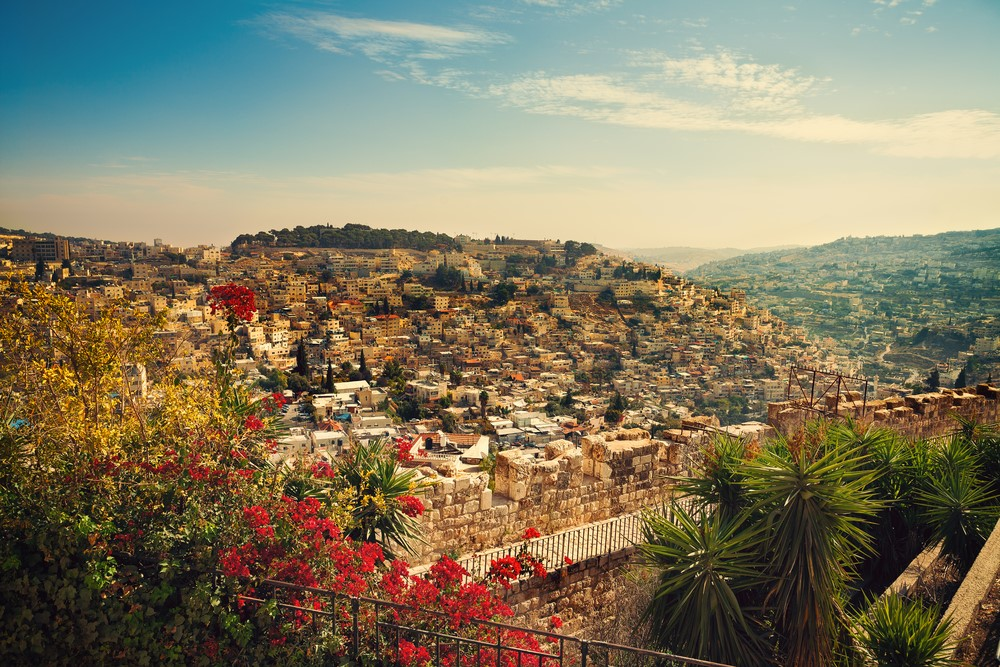
The Jews lost their homeland, their property, their temple, and their dignity to the invading Babylonians. Babylon took everything from Judea. The people became exiled in a strange land. Only some poor folk were left behind in a land that was ravaged.

This was the place that was once referred to as a land of milk and honey, a good home of abundance and blessing. But in the prophet Jeremiah’s day, it was becoming a thing of the past. Would the people ever recover what they had lost? Is restoration even a possibility? Could they learn to hope again?

Into a time of distress and despair, God spoke, and said that yes, it is possible; yes, restoration can and will happen. The people will not be in captivity forever.

Things can get so bad that you become physically sick, emotionally spent, mentally fearful, and spiritually disheartened – as if your life has been ripped from you without mercy and with malice. Yet, what is true of us today is not necessarily going to be true of us tomorrow.

Oppression is a terrible thing. To be constantly harassed by others or by chronic pain or by adverse situations is draining; it sucks the life out of us. Into these sorts of circumstances, God says to us, “I am with you, and I will save you.”

Perhaps tomorrow comes and nothing changes. The pain is still there. The mean-spirited people haven’t gone anywhere. The lost things are not found. And yet, there is something primal and universal which has always been here and shall never go away, no matter the circumstances: God is with us, and God loves us.

If we have the spiritual eyes to see, we will notice that God is alongside us, weeping with us. God knows a thing or two about the sort of suffering and pain that is unimaginable.

“Why does not God do something sooner, if God is so loving and powerful?” you may ask. If you are a parent, you have likely had a child ask you why you are doing something to them that feels awful. You know that emotion of feeling hurt alongside them. You also know that there is sometimes no way you can adequately explain to them what’s going on.

You commit yourself to being there, being present, and assuring the child that you aren’t going anywhere. So, when it comes to us, why is it so hard to understand that God is not a divine Santa or a cosmic Genie granting our every wish? If we want kids to understand, then perhaps we ought to first understand our own relationship as God’s children.

There will be times of trial and tribulation, even divine judgment. Yet there shall also be deliverance from evil, and salvation from sin, death, and hell. The yoke of oppression won’t last because there is the promise of restoration.

No matter how nasty, misguided, or sinful the political leadership and governmental system, none of those rulers or politicians have the last word – God does, not them. Grace has the final say, utilizing a restorative mercy which cannot be undone.

The days are coming when there will be a new future, based in the resolve of God to accomplish it. Fortunes shall be restored. Rehabilitation and renewal are ahead for the faithful. Healing will happen, whether it be in this life, or the next.

Things may seem impossibly hopeless now, but God can and will overrule the present evil machinations of oppressive rulers. Terror may be on every side, yet the Lord will break the bonds of oppression; God will burst the unjust practices. Indeed, God will save.

Therefore, we need not fear, for God is with us; and divine intervention is nearly here.

O God of heavenly powers, by your holy might, be present to us in your goodness and grace; banish all injustice and unrighteousness and restore your people in the strength of faith. Amen.

Rebuilding (Ezra 6:1-16)

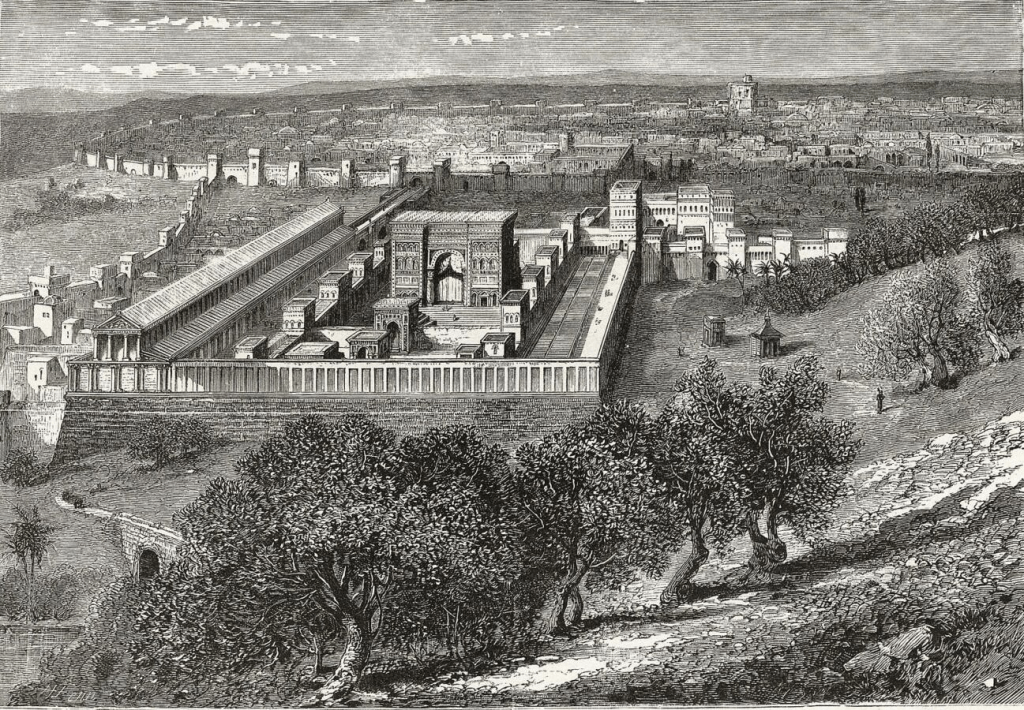
Rebuilding of the Temple, by Gustave Doré, 1866

Then King Darius made a decree, and they searched the archives where the documents were stored in Babylon. But a scroll was found in Ecbatana, the capital of the province of Media, on which was written the following:

A memorandum— In the first year of his rule, King Cyrus made a decree: Concerning God’s house in Jerusalem: Let the house at the place where they offered sacrifices be rebuilt and let its foundations be retained. Its height will be ninety feet and its width ninety feet, with three layers of dressed stones and one layer of timber. The cost will be paid from the royal treasury. In addition, the gold and silver equipment from God’s house, which Nebuchadnezzar took out of the temple in Jerusalem and brought to Babylon, is to be restored, that is, brought back to Jerusalem and put in their proper place in God’s house.

Now you, Tattenai, governor of the province Beyond the River, Shethar-bozenai, and you, their colleagues, the officials in the province Beyond the River, keep away! Leave the work on this house of God alone. Let the governor of the Jews and the elders of the Jews rebuild this house of God on its original site.

I also issue a decree about what you should do to help these elders of the Jews as they rebuild this house of God: The total cost is to be paid to these people, and without delay, from the royal revenue that is made up of the tribute of the province Beyond the River. And whatever is needed—young bulls, rams, or sheep for entirely burned offerings to the God of heaven, wheat, salt, wine, or oil, as requested by the priests in Jerusalem—let that be given to them day by day without fail so that they may offer pleasing sacrifices to the God of heaven and pray for the lives of the king and his sons.

I also decree that if anyone disobeys this edict, a beam is to be pulled out of the house of the guilty party, and the guilty party will then be impaled upon it. The house will be turned into a trash heap.

May the God who has established his name there overthrow any king or people who try to change this order or to destroy God’s house in Jerusalem. I, Darius, have decreed it; let it be done with all diligence.

Then Tattenai, the governor of the province Beyond the River, Shethar-bozenai, and their colleagues carried out the order of King Darius with all diligence. So the elders of the Jews built and prospered because of the prophesying of the prophet Haggai and Zechariah, Iddo’s son. They finished building by the command of Israel’s God and of Cyrus, Darius, and King Artaxerxes of Persia. This house was completed on the third day of the month of Adar, in the sixth year of the rule of King Darius.

Then the Israelites, the priests and the Levites, and the rest of the returned exiles joyfully celebrated the dedication of this house of God. (Common English Bible)

Throughout the time period of the Babylonian exile, the Jews waited impatiently for the day that Babylonian or Persian kings would allow them to return to their land and rebuild the Temple. When Cyrus was appointed king, their efforts were finally rewarded. Cyrus ordered that they be allowed to return to Israel and rebuild the Temple. He even promised to provide supplies for the project.

Under Persian rule, each subject people was allowed to live by its ancestral laws, which were enforced by the imperial government. Violations of the laws of the group to which one belonged constituted an offense against the state precisely because they led to instability. The maintenance of order in Judea, for example, would ensure the security of traveling to and from Egypt, and therefore the king required, in his own interest, that Jewish law be observed.

But down the road, when rebuilding efforts were questioned by the Persian governor of Judea, Tattenai, he and his associates wrote to King Darius about the legitimacy of the work. A search of the Persian records verified the Jewish claim and authority to rebuild the Temple.

What’s more, King Darius strongly affirmed support of restoration, including the use of tax revenues to help with funding the work. It was important enough for Darius to communicate that severe punishment would happen if anyone hindered rebuilding of the Temple.

The Temple was thus completed (in 516 B.C.E.) and it happened over a long period of time, under consistently adverse circumstances. The success of such a huge endeavor came through a combination of two different Persian kings who authorized the work and supported it fully; the prophets Haggai and Zechariah who encouraged it and provided spiritual support; and the Jewish leaders and workers who did the actual reconstruction and supported the effort with their blood, sweat, and tears.

In other words, a lot of stars in the universe needed to align for the Temple to actually be rebuilt. And it happened. Celebration of God’s sovereignty and divine help was then in order.

Awe and wonder are the basis of any good spirituality. Experiences that defy our imagination stick with us and bolster our faith for future mysteries and conundrums. I’m sure the Jews involved in rebuilding the Temple seriously wondered if it ever would materialize. Yet, it did.

While moments of awe come upon us, and cannot really be planned, there are yet some ways in which we can attune ourselves to experience awe in the everyday, such as:

  • Reading Holy Scripture, or inspiring biographies and novels
  • Attending church worship services and special events
  • Walking out in creation and spending time outside
  • Listening to music and going to live music performances
  • Visiting museums and community events
  • Engaging in spiritual disciplines and practicing them with others

We all go through times of rebuilding and needing to restore something which has been damaged or devastated. In your efforts, may you see the wonder of God’s movements in your life today, as you work and labor for a better tomorrow. Amen.

The Great Task of Restoration (Isaiah 49:5-15)

Before I was born, the Lord appointed me;
    he made me his servant to bring back his people,
    to bring back the scattered people of Israel.
The Lord gives me honor;
    he is the source of my strength.

The Lord said to me,

“I have a greater task for you, my servant.
    Not only will you restore to greatness
    the people of Israel who have survived,
but I will also make you a light to the nations—
    so that all the world may be saved.”

Israel’s holy God and savior says
    to the one who is deeply despised,
    who is hated by the nations
    and is the servant of rulers:
“Kings will see you released
    and will rise to show their respect;
princes also will see it,
    and they will bow low to honor you.”

This will happen because the Lord has chosen his servant;
the holy God of Israel keeps his promises.

The Lord says to his people,

“When the time comes to save you, I will show you favor
    and answer your cries for help.
I will guard and protect you
    and through you make a covenant with all peoples.
I will let you settle once again
    in your land that is now laid waste.
I will say to the prisoners, ‘Go free!’
    and to those who are in darkness,
    ‘Come out to the light!’
They will be like sheep that graze on the hills;
    they will never be hungry or thirsty.
Sun and desert heat will not hurt them,
    for they will be led by one who loves them.
    He will lead them to springs of water.

“I will make a highway across the mountains
    and prepare a road for my people to travel.
My people will come from far away,
    from the north and the west,
    and from Aswan in the south.”

Sing, heavens! Shout for joy, earth!
    Let the mountains burst into song!
The Lord will comfort his people;
    he will have pity on his suffering people.

But the people of Jerusalem said,

“The Lord has abandoned us!
    He has forgotten us.”

So the Lord answers,

“Can a woman forget her own baby
    and not love the child she bore?
Even if a mother should forget her child,
    I will never forget you. (Good News Translation)

What is the source of your strength?

Where do you go when you are weak?

To whom do you look, whenever you need support?

And what do you do whenever things go sideways, or somebody pulls the rug out from underneath you?

How do you handle circumstances that have gone awry?

What if you feel hurt, abandoned, misunderstood, neglected, disrespected, or discarded?

It makes sense to me that one would want to put trust in something or someone who is steady, unchanging, and (like God) eternal. Is anyone ever really restored if the restoration project is done with temporary or shoddy materials?

Restoration is a major theme in the prophetic books of the Old Testament. In today’s lesson, God speaks of bringing Israel back to her original calling and purpose. This would be accomplished through the nation of Israel and focused upon God’s Servant, the Lord’s Messiah. 

The scope and vision of what the Savior would do is enunciated by God: rescue people, lead them home, and show unending mercy. The Servant of the Lord is made a light for the nations so that God’s salvation may reach to the ends of the earth.

“Messiah” is more than a Jewish thing. The Christian tradition discerns Jesus as the Servant, the Savior of both Jews, and Gentiles – Christ is given to reach the entire planet.

The incarnation of Christ was meant for more than gathering Israel together, as if it were some sort of Bill Gaither Homecoming tour. Rather, Messiah’s place and power is so significant that it is to be shared with everyone in the world. Although Israel was to be a holy entity, and separate from the surrounding culture, their mandate had always been to be a light to the nations.

This has great import for Christ’s Church and every individual believer in Jesus. The church is much more than a country club which only caters to club functions and members. The church is a missional community with an outward focus, as well.

It has always been God’s vision to reach the nations. The Lord wants more than one group of people; God wants everyone. Along with caring for its own, the church is designed as a missionary enterprise which puts significant resources into shining the light of Christ to every nook and cranny of creation.

However, we are a wounded people, living in a culture whose first response to differing voices is to accuse, attack, and injure. Our hurts are carried by all of us collectively and personally, and it gives rise to bitterness, isolation, and resentment. When our hope runs dry, we become marked by cynicism, apathy, and escapism.

The vision of Isaiah gives us an alternative approach. Reflection on God’s mercy, salvation, and loving guidance leads to repentance. We freely turn from all of our unholy thoughts, words, and deeds. It leads to a restoration of our true calling as missionaries of faith, hope, and love to the broken world around us.

Restoration – divine restoration with rich everlasting spiritual resources – brings healing of the stresses and anxieties that plague our planet, and ourselves. 

Since God has a missionary heart, all of God’s people are missionaries to the world. It therefore behooves each believer to be taught, trained, and led into God’s restorative mission to the nations. 

Let us, then, build caring relationships and extend loving actions both to those within the church and toward those outside of Christian fellowship, so that God’s intentions are carried out. For we know that not one person on planet earth is forgotten by God.

Restoring God, you bring us back to close relation and fellowship so that we might extend your gracious purposes throughout the world. Revive us again, God, so that we can hear your call to the nations through our Savior, Jesus Christ. Amen.

Good News For Those In Need (Isaiah 61:1-4, 8-11)

The Spirit of the Sovereign Lord is on me,
    because the Lord has anointed me
    to proclaim good news to the poor.
He has sent me to bind up the brokenhearted,
    to proclaim freedom for the captives
    and release from darkness for the prisoners,
to proclaim the year of the Lord’s favor
    and the day of vengeance of our God,
to comfort all who mourn,
    and provide for those who grieve in Zion—
to bestow on them a crown of beauty
    instead of ashes,
the oil of joy
    instead of mourning,
and a garment of praise
    instead of a spirit of despair.
They will be called oaks of righteousness,
    a planting of the Lord
    for the display of his splendor.

They will rebuild the ancient ruins
    and restore the places long devastated;
they will renew the ruined cities
    that have been devastated for generations…

“For I, the Lord, love justice;
    I hate robbery and wrongdoing.
In my faithfulness I will reward my people
    and make an everlasting covenant with them.
Their descendants will be known among the nations
    and their offspring among the peoples.
All who see them will acknowledge
    that they are a people the Lord has blessed.”

I delight greatly in the Lord;
    my soul rejoices in my God.
For he has clothed me with garments of salvation
    and arrayed me in a robe of his righteousness,
as a bridegroom adorns his head like a priest,
    and as a bride adorns herself with her jewels.
For as the soil makes the sprout come up
    and a garden causes seeds to grow,
so the Sovereign Lord will make righteousness
    and praise spring up before all nations. (New International Version)

This section of Isaiah’s prophecy looks forward to a better day. After centuries of downward spiraling into disobedience, the people found themselves on hard times.

In the prophet’s day, God’s people and their lives needed to be rebuilt, restored, and renewed; they needed salvation and deliverance; and the good news of healing, freedom, and comfort. 

The proclamation of the year of the Lord’s favor is a reference to the Old Testament command to practice the year of Jubilee. The Jubilee was to occur every fiftieth year of Israel’s existence in the Promised Land. For forty-nine years there were individuals and families that would incur debt; indenture themselves into servitude in order to survive; perhaps land in a debtor’s prison; and, work hard in the fields that they once owned. 

The Jubilee Year, by Yoram Raanan

These were, indeed, hard times. But after the forty-nine years, on the fiftieth year, the debts were erased; slaves were freed; fields allowed to rest; and, the land restored back to its original owners.

God’s deliverance is not only spiritual, but also very tangible and real. Salvation is not just otherworldly, merely looking forward to the end of the age; there’s also the anticipation of transformation here and now.

The recipients of good news are those who are in bad circumstances. God turns toward the oppressed, the brokenhearted, the captives, the prisoners, those who mourn, and the faint of spirit. God really does have a special concern for the lowly and the weak. 

It’s significant to note that, Israel as a whole, found themselves in need – not because they were victims of adverse situations – but because they failed to obey the stipulations of their covenant with God. 

For example, we have no evidence that the Israelites actually even practiced the Jubilee. By the time fifty years came down the pike, after God gave them the Promised Land, they had slid so far down the spiritual drain that it was completely off their radar to practice a Jubilee. 

It seems no one had any intention of forgiving debts, freeing their indentured servants, giving back the land to original owners, and providing the land itself with a well-deserved Sabbath rest. 

To not practice the Jubilee was to rob people of their land and be unjust to them. Yet, God loves justice and hates robbery. God pays attention to those who are not getting their very real and tangible needs met. So, God speaks words of hope and deliverance for those in circumstances beyond their ability to cope with.

The first few verses of today’s Old Testament lesson are the words that Jesus turned to and read in the synagogue when he began his earthly ministry. Christ is the ultimate fulfillment of this promise to deliver and provide. He came to usher in a Jubilee celebration that would have no end.

It may be easy to overlook these verses, believing that they don’t pertain to us. Gentiles are under no obligation to practice a Jubilee. After all, many people are blessed, both material and spiritual. Furthermore, we can always identify persons who are in much more need than we are. 

And yet, it’s important to recognize that the maladies of our hearts are very real. There are specific conditions in our lives that leave us in bondage and in need of restoration, renewal, and revitalization, just like the Israelites of old. 

Therefore, we must not suppress those realities and those needs, but name the conditions which are packed away in a closet of our heart deep inside us, such as:

  • the love of things and money
  • severed relationships
  • old grudges
  • hidden addictions
  • domestic violence
  • denial of depression
  • secret affairs
  • fear and anxiety
  • anger and hatred
  • hoarding of resources and greed

Outward smiles and small talk conversations may hide the truth from others, but they do nothing to hide ourselves from a God for whom everything is laid bare.

The good news is not just for someone else who has “obvious” needs. The gospel must touch our lives and bring us freedom, so that we can pass on good news to the legion of social ills that make our world sick. 

There are people all around us who need spiritual and emotional, mental and material help. Yet we will not have eyes to see them, or hearts to help them, if we ourselves stuff our burdens so deep within that we are blind and unable to see others.

What’s more, on the other hand, we may too easily misread these verses in a manner it was never intended to be heard, as if we are more in need than we actually are: 

“The Lord’s Spirit of consumer choices is upon me, because the Lord has anointed me to preach good news to the middle-class. He has sent me to bind up the half-hearted, to proclaim more options for the limited, and release from Black Friday for the buyers, to proclaim the year of the Lord’s Cyber-Monday.” 

We may not be so crass as to say this out loud, but we might tend to misinterpret Bible passages, so as to avoid our own great poverty of heart.

And when we become expert at stuffing our emotions and our needs, we then fail to see the year of Jubilee. We may believe that other people, “those people,” need Isaiah’s words. However, we are also in need of the year of Jubilee. 

The truth for many is that they are either one paycheck, one prodigal kid, one mental health diagnosis, one serious illness, one drink, one affair, or one bad decision away from being one of “those people” – the people we typically identify as in need – the ones that bad things happen to – the ones we do not want to live next door to us.

We may not yet be vulnerable enough to admit our situation; and so, we keep practicing the denial of our spiritual poverty. Everyone is brokenhearted about something or someone, such as:

  • a wayward son or daughter
  • an unfulfilled dream
  • a lost relationship
  • a difficult illness or health diagnosis
  • a crisis situation

In addition, everybody is in bondage to something we would rather not admit; everyone needs renewal and restoration. 

What should we do? Where are we to turn?

Let’s turn from the things that have caused us to be in poverty and in prison, and delight in the Lord our God. Rejoice in the Lord.

God will make a sprout come up, and cause it to grow. 

God will rebuild our ruined souls. 

God will restore the places of our lives that have been devastated. 

God will even renew the places that have not seen renewal for generations. 

It begins with you and me allowing the justice of God to work within us, and not only for other people.

God cannot bring comfort to those who do not mourn; the Lord cannot turn grief into joy if there is no acknowledgment of a dire situation. To be an oak of righteousness, there must be a confession of despair and an allowance of the justice of God through Jesus Christ to work its way completely through us.

Let the Lord replace a head of grief with a crown of beauty. Let God place a garment of praise to replace the stinky clothes of grumbling. And, in this season of Advent, herald the coming of the Christ child as the hope of us all, to the glory of God. Amen.