His Resurrection Is Ours

The Resurrection, by Andrea Mantegna, c.1458 C.E.

The story of Christianity, the very heart and essence of the religion, is a tale of transformation from all the obstacles, impediments, and barriers which confine or cripple. The person and work of Jesus accomplished this. In his earthly ministry, Christ continually called people to transformative change into the reality of God’s gracious and benevolent realm.

“I have come to give the good life, a life that overflows with beauty and harmony.”

Jesus (John 10:10, First Nations Version)

Christ’s resurrection made possible our own transformative new life. This is both exciting and scary. Resurrection is frightening because it’s a call to live a life without any of the walls which have defined us and/or imprisoned us.

The massive stone covering the tomb of Jesus Christ was rolled away. He walked out of the grave by the power of resurrection. The cave of death was changed into the place of liberation.

That place is a powerful image of moving aside any and all obstacles to our own faith and freedom. The prison doors have been opened. Our self-contrived inner prisons, as well as the unjust shackles placed upon us, have dropped away.

As a result, those who have been exiled, excommunicated, and treated as expendable are visited by the luminous healing presence of God’s great liberating force: resurrection.

All of these words may either seem strange and/or compelling. If this is the case, it is a sad situation. Because it’s quite necessary that we become familiar with such language. Unfortunately, the gap between the world we are presently living in, and the world our hearts yearn to know, is quickly coming to an unsustainable place of high stress.

There is now a profound disconnect between the love deep inside us, and the way in which we are living our day-to-day lives on this earth. The issue has become so great as to warrant the need for resurrection.

And I am not simply addressing Christians. In his earthly ministry, Jesus was not only talking to his own Jewish people; he came for the whole world. Jesus is for everyone – whether we acknowledge him according to Christian dogma and doctrine, or not.

The evil gaslighting sort of person wants you to believe that you are alone, bereft of any help – that somehow you need to assert yourself aggressively into the dog-eat-dog world. Wickedness always looks to chaos and war as the path to gaining the life one wants.

But Jesus is the bridge to another kind of thinking, another sort of life. He is the guide to the greatest power which exists in the world: Love. And Love is why resurrection is a reality.

Although we suffer from systemic evil and all kinds of structural “ism’s” in this world, our shackles and chains have been largely forged by ourselves, through spiritual ignorance and misunderstandings of who we are and why we are here.

Resurrection opens us to new life. It provides identity, purpose, and passion to live the good life. Even though we live in this world below, our answers to living in the here-and-now are found in the world above.

All of us have experienced walking a dark path in life. But now it is high time to walk away from uncontrolled emotions and evil ways. There are plenty of lying spirits who intend on deceiving you and I for their own selfish purposes. Instead, we can refuse and resist such evil.

We can live in ways that represent the good, the right, and the just. We can experience living a resurrected life. Let us choose the pure path of the new person in Christ, the person you and I were created to be.

The telltale signs of the person living into resurrection are a deep feeling for the pain of others, kindness, humility of heart, a gentle spirit, and long-suffering patience with others. Such persons wear forgiveness like a well-worn pair of jeans.

This is the path of resurrection, the way of unity, peace, and harmony. And these qualities will always guide us and inform us in helpful and sacred ways.

Our current global decline comes from an accumulation of greed and sheer lovelessness. But the possibility of rebirth, of resurrection, rises from our deep universal yearning for the good and the true. It comes from our radical willingness to change and live a different counter-cultural life.

Resurrection does not occur because of lofty thoughts; it comes from a humble, and contrite heart which yearns for a better and more sacred existence.

Only until we find our present life on this world as intolerable with its injustice and persistent carelessness, will we see that we must put love where love is not.

The great lesson of resurrection is that Love makes all things right.

May resurrection move from being merely a theological concept, to a powerful reality that permeates and fills your life with meaning, power, and love. Amen.

A Prayer of Confession (Psalm 51:1-12)

Have mercy on me, God, according to your faithful love!
    Wipe away my wrongdoings according to your great compassion!
Wash me completely clean of my guilt;
    purify me from my sin!
Because I know my wrongdoings,
    my sin is always right in front of me.
I’ve sinned against you—you alone.
    I’ve committed evil in your sight.
That’s why you are justified when you render your verdict,
    completely correct when you issue your judgment.
Yes, I was born in guilt, in sin,
    from the moment my mother conceived me.
And yes, you want truth in the most hidden places;
    you teach me wisdom in the most secret space.

Purify me with hyssop and I will be clean;
    wash me and I will be whiter than snow.
Let me hear joy and celebration again;
    let the bones you crushed rejoice once more.
Hide your face from my sins;
    wipe away all my guilty deeds!
Create a clean heart for me, God;
    put a new, faithful spirit deep inside me!
Please don’t throw me out of your presence;
    please don’t take your holy spirit away from me.
Return the joy of your salvation to me
    and sustain me with a willing spirit. (Common English Bible)

Sin. The word is rarely used anymore in places outside of churches. And when it is used within the church, sometimes it is grossly misrepresented, as if humanity’s identity is sin.

Although everyone has sinned and fallen short of God’s glory, our inherent personhood is not sinful. Every human is made in the image and likeness of God. Sin is like a permanent putrid abscess which never seems to go away.

Sin is everywhere – in our hearts, in our world, in our institutions, and in our families. It is on television, the internet, social media, and moves in and out of smartphones. Sin, apparently, is even in our desserts (oh, the decadence of chocolate!). If it takes one to know one, we are all experts on being sinners.

From a biblical vantage point, sin is serious business. Sin involves both the things we do (1 John 3:4), as well as the things we leave undone (James 4:17). Sin is both the breaking of God’s commands, and the lack of conforming to the teachings of Jesus.

Christians throughout the ages have generally understood that the Ten Commandments (Exodus 20:1-17) and Christ’s law of love (Luke 10:27) constitute a brief summary of God’s holy and moral instruction for humanity.  This is all based in the character of God as both holy and loving. 

All sin, whether in actions or inactions, has at its root an attitude and activity of self-centeredness. It is a selfish bent of thinking, feeling, and acting. And, oh my, the consequences!

Sinful attitudes bring about an obsession with lust (1 John 8:34; Galatians 5:16); a broken relationship with God (Romans 3:23; Galatians 5:17); bondage to Satan (1 Timothy 3:6-7; 2 Timothy 2:26); death (Romans 6:23; 8:6); hardening of the heart (Hebrews 3:13); and deception (1 Corinthians 3:18; James 1:22, 26) just to a name a few.

Sin lurks in the shadows of the heart, drips from the tongue of the wicked, and lingers in the actions of the selfish and proud. Sin is not something to trifle with, dabble in, or even manage. No, sin, at its core, is a rebellion against God, a stiff-arm to the Lord that claims we know better than God about how to run our lives. 

People are guilty of transgressing basic morality, as well as failing to be ethically virtuous people on any on-going consistent basis. 

Well, that sounds like a total Debbie-Downer. Actually, it’s total depravity. Being depraved people does not mean we are never capable of doing good; it just means that sin has profoundly touched everything in our lives, without exception.

When we come to the realization that we are in dire straits, then it is high time we blurt out a prayer of confession along with David. The book of Psalms is the Christian’s prayer book, and there is no better prayer to pray when we come to the end of ourselves than the psalmist’s plea for mercy, based in the steadfast love and faithfulness of God.

The ironic paradox of all this is that experiencing true joy and comfort comes through knowing how great our sin is. 

We can live above sin by being set free from it by the grace of God in Jesus Christ. If a person is to be redeemed from sin, then a provision must be made. Sin has been dealt with once for all through the person and work of Jesus. Christ is our representative, taking our place with the punishment we deserved (Galatians 4:4-5; Ephesians 2:5-6; Colossians 2:9-15; Hebrews 2:17-18; 1 John 2:1).

Jesus Christ is our ultimate substitute (Romans 5:8) which resulted in: our redemption (Galatians 5:13); satisfying all justice (Romans 3:25); and reconciliation to God (Romans 5:10). Therefore, the person who believes in Jesus is forgiven of sin because Christ’s sacrifice is sufficient to deal with all the effects of sin. The Christian is complete in Christ (Colossians 2:10).

When it comes to offering a confession in prayer, neither the eloquence of the speech nor the sheer word structure itself is the proper basis for a prayer of confession; utterances of a broken and contrite heart, submitted to God, trusting solely in his grace to transform, are the only words appropriate for approaching God with our sin. 

Such prayers are not to be few and far between; they are to be a regular regimen, engaged on a daily basis. Just as we take pills each day for all that ails us, so we need to take in the mercy of God through prayers of confession that link us to the true healing power which brings spiritual health and life.

Create a clean heart for me, God; put a new, faithful spirit deep inside me! Please don’t throw me out of your presence; please don’t take your holy spirit away from me. Return the joy of your salvation to me and sustain me with a willing spirit. Amen.

Why Are We Here? (Matthew 9:2-13)

Jesus heals and forgives a paralyzed man

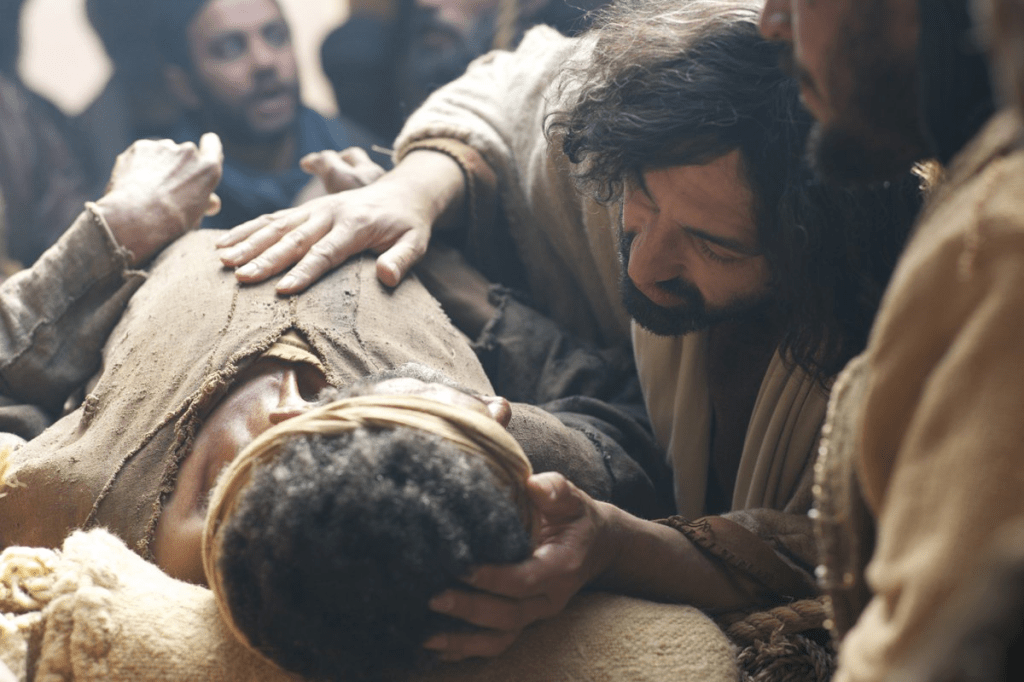
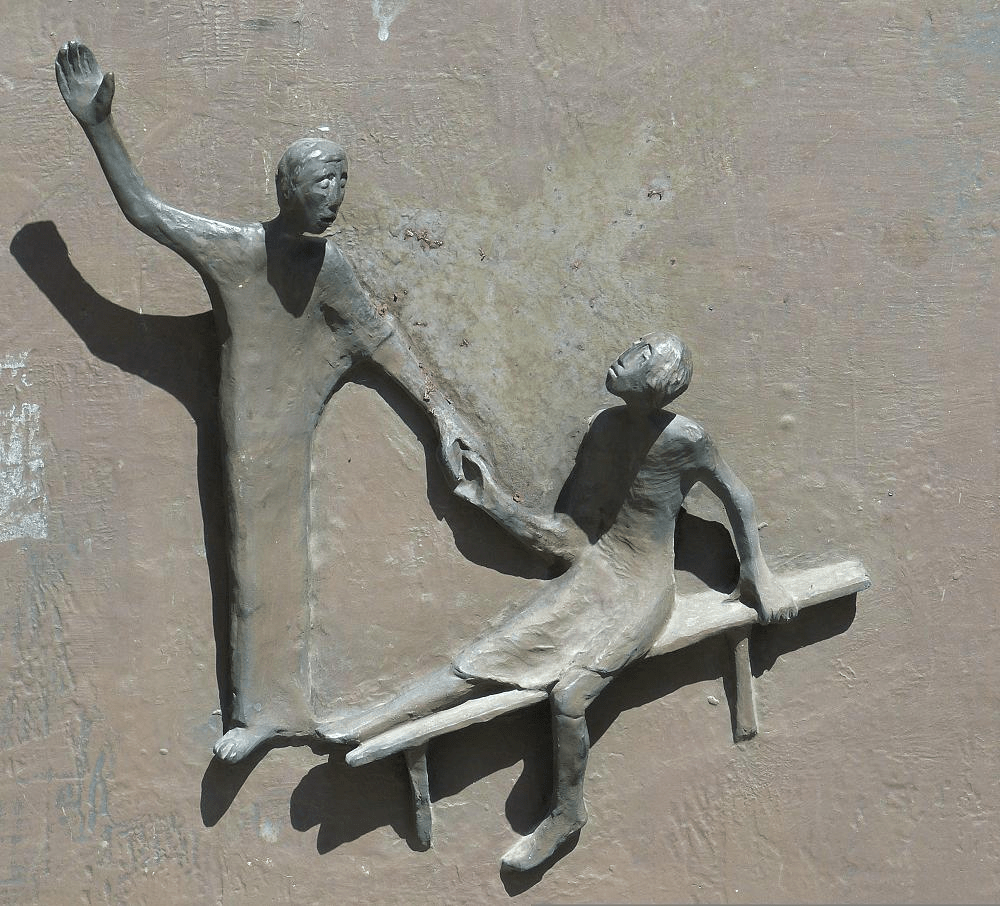
Some men brought to him a paralyzed man, lying on a mat. When Jesus saw their faith, he said to the man, “Take heart, son; your sins are forgiven.”

At this, some of the teachers of the law said to themselves, “This fellow is blaspheming!”

Knowing their thoughts, Jesus said, “Why do you entertain evil thoughts in your hearts? Which is easier: to say, ‘Your sins are forgiven,’ or to say, ‘Get up and walk’? But I want you to know that the Son of Man has authority on earth to forgive sins.” So he said to the paralyzed man, “Get up, take your mat and go home.” Then the man got up and went home. When the crowd saw this, they were filled with awe; and they praised God, who had given such authority to man.

As Jesus went on from there, he saw a man named Matthew sitting at the tax collector’s booth. “Follow me,” he told him, and Matthew got up and followed him.

While Jesus was having dinner at Matthew’s house, many tax collectors and sinners came and ate with him and his disciples. When the Pharisees saw this, they asked his disciples, “Why does your teacher eat with tax collectors and sinners?”

On hearing this, Jesus said, “It is not the healthy who need a doctor, but the sick. But go and learn what this means: ‘I desire mercy, not sacrifice.’ For I have not come to call the righteous, but sinners.” (New International Version)

“The church is a hospital for sinners, not a museum of saints.”

Abigail Van Buren (“Dear Abby”)

Why does the Church exist? Why did Jesus come to this earth? What are we supposed to be doing? Does Christianity make any difference in this world? Why are we here?

The Church is not on this earth solely for the benefit of Christians, any more than a hospital exists for the benefit of the doctors or insurance companies.

Rather, the Church is designed to extend the mission of Jesus through proclamation of good news with the restorative touch of grace. The Church is the community of the redeemed, gathered together for worship and encouragement, and then sent into the world to be the continuing presence of Jesus on this earth.

This mean that the Church’s calling is not to find others who can help them with their tithing and budget, or to keep the pews warm with fresh bottoms.

Some folks are not healthy. Some are sick physically, and others spiritually. Even more are emotionally brokenhearted. And then there are those who are sick-and-tired of being sick-and-tired.

Please know that Jesus came neither to condemn nor heap a pile of unrealistic expectations on us. Christ points us to the source of healing and transformation, and invites us to come to him. 

Conversely, there are many other people today who are healthy, spiritually alive, and have a good well-being. And they possess the opportunity to participate in ways that bring holistic healing to the world as Christians. The mission of Jesus is our mission, as well.

Jesus came to bring forgiveness and transformation. In today’s Gospel healing, it was a case where the person’s paralysis was both physical and spiritual. The paralytic found in Jesus healing of both body and soul.

The religious insiders observed the healing of the paralytic. Yet, they didn’t rejoice over it. Instead, they were hung up on Jesus claiming to be God. Although this may have been a hard truth to accept, Jesus labeled their response as evil – because of an inability to perceive the situation as a divine intervention. Since the religious insiders wrongly discerned who Jesus is, they wrongly interpreted the situation. 

It’s important to see Jesus as the Human One who extends compassion and forgiveness. If we fail to see this about Christ, we will get caught up in all kinds of silly matters concerning personal preferences and power plays, based in how we think things should go, rather than how God is shaking out things.

Jesus came to forgive our guilt and shame. Healing the body is good, but it’s not enough. Christ came to heal both the body and the spirit. At the heart of the human condition is spiritual brokenness, and Jesus wants to remove the obstacle of sin and create a new healthy society. This is a radical vision which seeks to encompass all persons – which means Jesus touched many people overlooked by others.

Jesus came to call the despised people of society, the “sinners.” He called Matthew, a tax collector. Tax collectors were hated. They were corrupt characters who extorted money from innocent people. And furthermore, Jesus had dinner with Matthew, along with all of his unsavory buddies. This kind of behavior by Jesus was deeply offensive to upstanding citizens.

However, Jesus did not back down, saying that it’s not the healthy who need a doctor, but the sick. And he backed up his social actions with Scripture by encouraging offended folks to meditate on what the biblical phrase, “I desire mercy, not sacrifice.” (Hosea 6:6)

It is possible to engage in outward rituals of worship, do all the right things, fulfill duty, yet still miss the heart of what God wants for humanity. Mercy is what God wants. Jesus knew this. So, Christ entangled himself with sinners to bring spiritual healing and restoration.

If we want to see God deliver people from their unhealthy situations, we must entangle ourselves with them, into complicated lives that are not pretty, with persons who have been tainted by sin. 

Lots of people are in awful predicaments. Christians, like their Lord, will need to get their hands dirty and their feet wet to extend Christ’s ministry of mercy and forgiveness.

The gospel was never intended to be proclaimed from afar, but up close and personal. The merciful mission of Jesus requires the following three activities:

  1. Intimacy with Jesus. Engaging in the spiritual disciplines of prayer, giving, fasting, reading, and meditating on Scripture. These practices help us to know Christ better and how to respond with mercy.
  2. Intimacy with fellow believers. We are hard-wired by God for community. Superficial relationships only provide superficial community. Christians need to help one another with spiritual growth, and to hold one another accountable for the mission of Christ.
  3. Intimacy with “sinners.” This world is filled with sick, needy, hurting, and lonely people who are locked in unhealthy patterns of living. They need a merciful change of life that comes from the merciful Jesus acting through merciful Christians. 

Mercy, not judgment, is at the heart of all change. For things to be different, we must be acquainted with mercy.

Most merciful God, we confess we have sinned against you in thought, word, deed, and neglect. We have not held fast to your commandments and have strayed from your teachings. We turn away from self-centered actions and pride. For the sake of your Son, Jesus, have mercy on us and forgive us so that we are released from all sinful obstacles. Empower us with your wisdom, revelation, and discernment so that we might be your merciful hands, feet, and words to one another and those who do not yet know you. Amen.

Confronting Spiritual and Emotional Pain (Psalm 79)

The Scream, by Edvard Munch, (1863-1944)

God! Barbarians have broken into your home,
    violated your holy temple,
    left Jerusalem a pile of rubble!
They’ve served up the corpses of your servants
    as carrion food for birds of prey,
Threw the bones of your holy people
    out to the wild animals to gnaw on.
They dumped out their blood
    like buckets of water.
All around Jerusalem, their bodies
    were left to rot, unburied.
We’re nothing but a joke to our neighbors,
    graffiti scrawled on the city walls.

How long do we have to put up with this, God?
    Do you have it in for us for good?
    Will your smoldering rage never cool down?
If you’re going to be angry, be angry
    with the pagans who care nothing about you,
    or your rival kingdoms who ignore you.
They’re the ones who ruined Jacob,
    who wrecked and looted the place where he lived.

Don’t blame us for the sins of our parents.
    Hurry up and help us; we’re at the end of our rope.
You’re famous for helping; God, give us a break.
    Your reputation is on the line.
Pull us out of this mess, forgive us our sins—
    do what you’re famous for doing!
Don’t let the heathen get by with their sneers:
    “Where’s your God? Is he out to lunch?”
Go public and show the godless world
    that they can’t kill your servants and get by with it.

Give groaning prisoners a hearing;
    pardon those on death row from their doom—you can do it!
Give our jeering neighbors what they’ve got coming to them;
    let their God-taunts boomerang and knock them flat.
Then we, your people, the ones you love and care for,
    will thank you over and over and over.
We’ll tell everyone we meet
    how wonderful you are, how praiseworthy you are! (The Message)

The temple was destroyed. The conquering army gloats over their victory. That’s the context of today’s psalm. It’s a prayer, an angry cry for God to step in and act on behalf of the humiliated people. The prayer is more than a simple plea for help; it’s a deeply passionate appeal, that says in 1960’s terms, “God, stick it to the man!”

In the face of evil, when there is destruction all around and violence everywhere, prayer does not become some sort of polite knock at the side door of God’s house. Instead, prayer is a pounding on the front door with a demand for God to do something about this terrible trouble.

For the psalmist, the incongruence between who God is and what has happened to God’s people is inconceivable and unacceptable. To profane God’s temple is to profane God; and to kill and maim God’s people is to flip the middle finger at God. The psalmist is beside himself and overwhelmed with emotion.

There is something very instructive here that we ought not miss. When we have been brutalized, victimized, and/or demoralized, we just want someone, especially the Lord we serve, to take notice and feel what we are feeling. Never underestimate the power of empathy and solidarity. To feel alone and bereft of help is an awful feeling.

Perhaps the psalmist’s prayer offends some sensibilities. I wonder, for those who find the language difficult, have ever had a daughter raped, or a house destroyed by fire, or seen a person killed without mercy in front of their own eyes. Methinks they have not. The feelings of helpless despair and sheer anger defy human words. These are not casual affronts; they are malicious destructions of property and people.

We need someone to affirm the raw ruthlessness of it all, to have some understanding of the impossible place we are in, with having to deal with such wanton cruelty. When our very support is ripped from our lives, the madness within is too much to bear. Who will rescue us from this body of death?

God is big enough to handle our rage and our hurt. The Lord is available and hears our desperate voice of prayer. Yet, God is not always going to directly and immediately answer on the terms we stipulate. God acts out of God’s own providence and justice, and not from our expectations. And that is a good thing, not a bad thing.

God sees. The Lord knows. And the Sovereign of the universe feels it all with us. The realization of this divine empathy enables us to recenter and reorient ourselves around faith, hope, and love. New life is never a gift in a vacuum; it comes out of agonizing struggle in having to reckon with the existence of evil.

So, when someone goes through a hellish experience, let us exercise our capacity to listen and witness the horrible spiritual pain of the person. Healing hurts: it is not a pleasant affair. So, hang in there and walk alongside another in their hour of need, even when their vitriol seems over the top to us. For only in telling our story to another will any of us find relief and renewed hope.

The biblical psalms permit us to use language appropriate to what has happened. They also allow us to move beyond the venom to the God who restores broken lives.

Lord Jesus Christ, by your patience in suffering you hallowed earthly pain and gave us the example of obedience to your Father’ will: Be near me in my time of weakness and pain; sustain me by your grace, that my strength and courage may not fail; heal me according to you will; and help me always to believe that what happens to me here is of little account if you hold me in eternal life.

My Lord and my God, as Jesus cried out on the cross, I cry out to you in pain, O God my Creator and Sustainer. Do not forsake me. Grant me relief from this suffering and preserve me in peace, through Jesus Christ my Savior, in the power of the Holy Spirit. Amen.