Luke 11:14-28 – Replace the Bad with the Good

Jesus was driving out a demon that was mute. When the demon left, the man who had been mute spoke, and the crowd was amazed. But some of them said, “By Beelzebub, the prince of demons, he is driving out demons.” Others tested him by asking for a sign from heaven.

Jesus knew their thoughts and said to them: “Any kingdom divided against itself will be ruined, and a house divided against itself will fall. If Satan is divided against himself, how can his kingdom stand? I say this because you claim that I drive out demons by Beelzebub. Now if I drive out demons by Beelzebub, by whom do your followers drive them out? So then, they will be your judges. But if I drive out demons by the finger of God, then the kingdom of God has come upon you.

“When a strong man, fully armed, guards his own house, his possessions are safe. But when someone stronger attacks and overpowers him, he takes away the armor in which the man trusted and divides up his plunder.

“Whoever is not with me is against me, and whoever does not gather with me scatters.

“When an impure spirit comes out of a person, it goes through arid places seeking rest and does not find it. Then it says, ‘I will return to the house I left.’ When it arrives, it finds the house swept clean and put in order. Then it goes and takes seven other spirits more wicked than itself, and they go in and live there. And the final condition of that person is worse than the first.”

As Jesus was saying these things, a woman in the crowd called out, “Blessed is the mother who gave you birth and nursed you.”

He replied, “Blessed rather are those who hear the word of God and obey it.” (New International Version)

You have likely heard the old adage that nature abhors a vacuum. That is, when a loss or change leaves a hole in something, that hole will quickly get filled with something else.

To stop doing one thing is only half of a necessary process. To start doing another thing is crucial.

In our Gospel lesson for today, Jesus tells a story about a demon-possessed man. He was delivered of his oppression. However, a problem arose because the man had no replacement for the demon. He simply did nothing after the demonic expulsion.

It didn’t take long for a group of demons, seemingly seeking such a situation as this man, and took full advantage of his vulnerability. In the end, the man was worse off than before – all because of the vacuum created without the hole being filled.

We are meant to hear God’s Word and obey. Both are necessary to the process of deliverance, growth, and spiritual development.

Whenever the process is only half-baked, we have double-minded people, divided in their loyalties between God and money/power or something else.

Getting rid of judgmental spirits is important but it’s only half the process. The other half is to intentionally make space for genuine inquiry, listening, and dialogue. Without the focus on helping one another through mutual discussion, a group of folks will inevitably degenerate into discouragement, even despair, as the demons of judgmentalism come back in full force.

Kicking hate to the curb only truly works if it is replaced with a spirit of love, concern, and compassion for one’s fellow human. An environment in which people feel free to share of themselves and their feelings is the result of deliberately seeking to do so. Simply policing hate in others eventually causes the demons of hate to establish themselves even deeper than before.

Attempting to eliminate a culture of secrecy and shame can only really come through courageous acts and words of creating a climate of openness which carefully and compassionately enables individuals to boldly name their shame and destroy the blood-sucking vampire feeding on them in the demonic shadows of night once-and-for-all.

A zombie apocalypse won’t happen, that is, unless the only thing we’re concerned about is getting rid of zombies. If our end game isn’t the thriving and flourishing of real live people, our planet will be overtaken with the living dead.

“We look forward to the time when the Power of Love will replace the Love of Power. Then will our world know the blessings of peace.”

William Gladstone

We live in a divided world, polarized chiefly around things we are against, rather than crafting a vision together of what we are for. It does little good to kick people out of power either through force or elections, only to have no collective and compelling cause to rally around and place our efforts.

I’m all in for the cause of living Christ’s Great Commission through making disciples, embodying the Great Commandment of loving God and neighbor, and taking up the Great Challenge to act justly, love mercy, and walk humbly. It is these activities which motivate me to put away hate, hubris, and half-baked ideas so that a healthy process of spiritual formation can happen.

If our lives are already filled with a good spirit, there will be no room for any bad spirit to enter. And if we’ve picked up one, let’s make sure to not only expel it but occupy the space with the grace and goodness which comes from knowing a good and gracious God.

Be intentional about replacing the bad with the good. If a hole is created, fill it with mercy.

O God, the source of all health: Fill my heart with faith in your love, that with calm expectancy I may make room for your power to possess me, and gracefully accept your healing; through Jesus Christ our Lord. Amen.

**Above engraving of Jesus healing a demon possessed man, by an Italian artist, 1591.

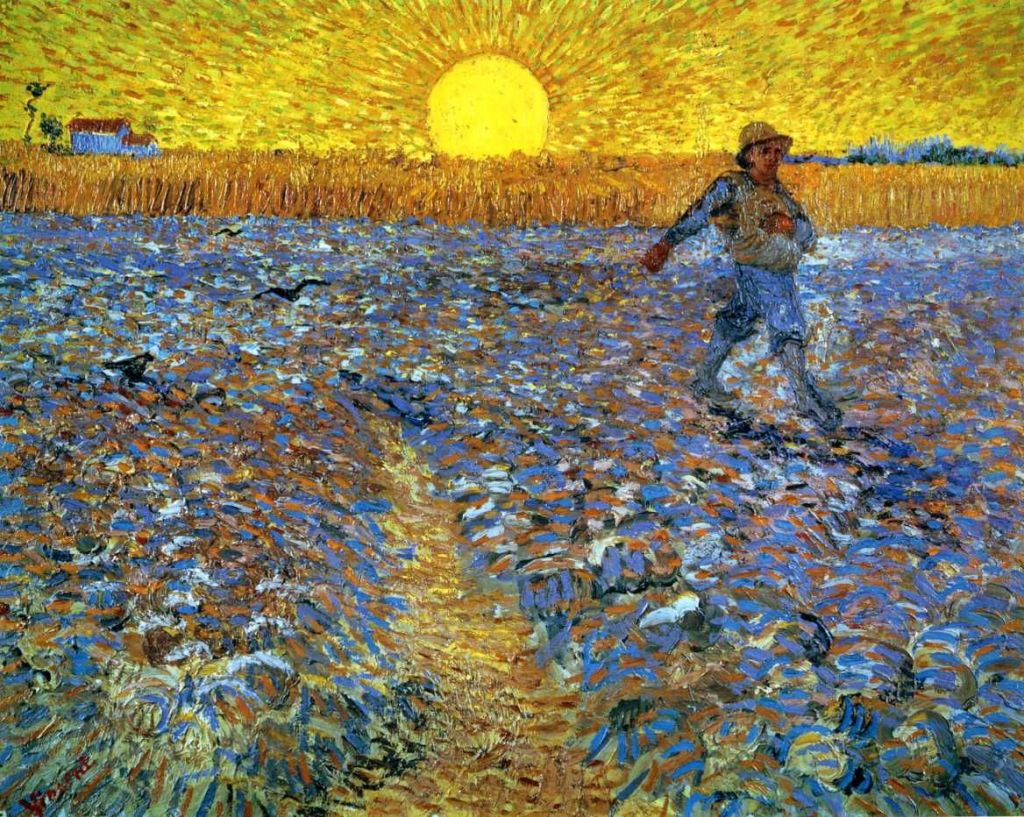
Luke 8:4-15 – Christ’s Parable of the Soils

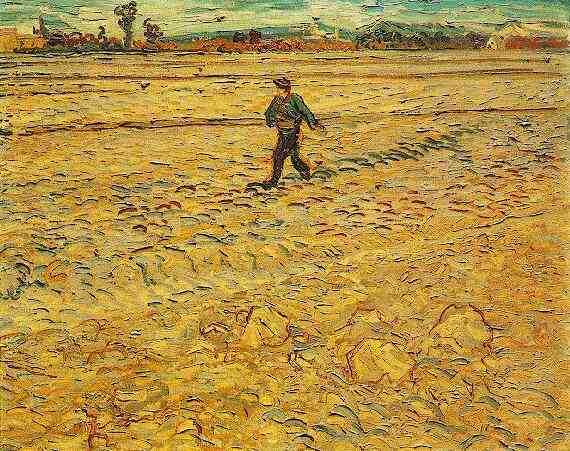
While a large crowd was gathering and people were coming to Jesus from town after town, he told this parable: “A farmer went out to sow his seed. As he was scattering the seed, some fell along the path; it was trampled on, and the birds ate it up. Some fell on rocky ground, and when it came up, the plants withered because they had no moisture. Other seed fell among thorns, which grew up with it and choked the plants. Still other seed fell on good soil. It came up and yielded a crop, a hundred times more than was sown.”

When he said this, he called out, “Whoever has ears to hear, let them hear.”

His disciples asked him what this parable meant. He said, “The knowledge of the secrets of the kingdom of God has been given to you, but to others I speak in parables, so that,

“‘though seeing, they may not see;
    though hearing, they may not understand.’

“This is the meaning of the parable: The seed is the word of God. Those along the path are the ones who hear, and then the devil comes and takes away the word from their hearts, so that they may not believe and be saved. Those on the rocky ground are the ones who receive the word with joy when they hear it, but they have no root. They believe for a while, but in the time of testing they fall away. The seed that fell among thorns stands for those who hear, but as they go on their way they are choked by life’s worries, riches and pleasures, and they do not mature. But the seed on good soil stands for those with a noble and good heart, who hear the word, retain it, and by persevering produce a crop. (New International Version)

The Parable

“Whoever has ears, let them hear,” said Jesus. Truly hearing Christ’s words and listening with focused attention is paramount to the Christian life. Our ears are the soil of our lives. Ears attentive and devoted to listening to Jesus are good soil; ears distracted, inattentive, and stopped up with ear wax are bad soil. Receptive listening to the Word of God brings a fruitful harvest of righteousness, peace, and joy in the Holy Spirit. Genuinely believing what we hear from Jesus is crucial. God’s Word falls on four different soils….

  1. The seed on the path. A path is for walking, which is why the seed never takes root. Here there is no listening. When we act without listening, our actions will be misguided. 
  2. The seed on rocky soil.  Here there is no deep listening. A lack of attentive hearing results in a shallow person who perhaps relies more on Christian clichés or on their personality or abilities instead of the sown Word.
  3. The seed on the thorny soil. Here there is significant listening. However, there is too much listening to a cacophony of voices and not enough singular listening to the sown Word. Listening to the wrong voices will cause an unfruitful life. So, we must be careful to whom we are listening.
  4. The seed on good soil. A devoted listening to the Word without distraction leads to a productive, fruitful believer.

“There is a difference between listening and waiting for your turn to speak.”

Simon Sinek

The Nature of Parables

A parable is a genre of biblical literature. Parables are as much about concealing truth as they are conveying truth. A person must give focused attention to the story to learn from it, much like a good novel conveys truth about the human condition without being preachy or outright saying the truth. Or it’s much akin to a good movie relying on character development and the power of story for its message, instead of being a straightforward documentary.

Jesus neither strong-arms people nor puts them in a full nelson to force them into God’s will. We will miss out on God’s working, if we are looking for a big dramatic hoo-ha of an event. That’s because it comes as an awareness within people and works its way out. For those not intent on changing, they will find Christ’s words confusing. They might “hear” Jesus, yet fail to really listen, since they have their own ideas about how God ought to operate.

Yet, grace is still present. The very fact that Jesus addressed the crowd of people demonstrates he cared enough to communicate. He could have said, “Hey, you guys, get lost, I’m just going to interact with people who really listen to me.” Instead of coming at the crowd and bursting through the front door, Jesus mercifully came to them through the side door so that they would be able to receive the message. 

Puking the good news of Jesus all over people without really listening is a bad idea. Neither is being worried about saying something offensive, so nothing is said at all. A better approach is asking permission to tell your story of what Jesus means to you, or what you are learning from God’s Word.

The Parable Interpreted

The focus is the experience of the seed in a variety of soils. Outside powers acting on the Word – devouring birds, rocks, the burning sun, choking thorn-bushes – demonstrate the Word is central and needs to be received well:

  1. The path is the inability to hear God’s Word because of hard-heartedness. The devil snatches it before any real understanding can take place.
  2. The rocky soil is hearing just enough to respond with joy. But the person drops out when hard circumstances occur. “I didn’t sign up for this!” is their cry. They needed to count the cost of discipleship before responding to the message. This is merely a professing Christian, nothing more.  Rather than listening and internalizing the Word, there is only positive affirmation without any action or practice. So, tomorrow the message is gone and forgotten. When difficulty comes, there are no supporting words to draw from, so the person fades away, unable to navigate life successfully.
  3. The thorny soil also hears and responds to the message. This person is also a professing Christian, nothing more. The issue here is that they also listen to voices of worry and wealth. In a sort of spiritual attention-deficit-disorder, there is no ability to filter all the voices calling out, and so, no growth.
  4. Listening with the intention of understanding and putting into practice the message heard is what brings about fruit. Receiving the Word through careful listening brings about spiritual growth. God brings the growth when we focus on the Word. And when a whole group does this, then it creates a greenhouse effect in which people cannot help but grow in the Lord.

Conclusion to the Parable

The simple reception of God’s Word leads to fruitfulness. The first soil did not receive the Word, though it listened. The second received it with joy but under pressure let it go. The third received it with only one hand because the other hand was busy. Only the fourth soil received the Word with both hands.

Blessed is the one who does not walk in step with the wicked or stand in the way that sinners take or sit in the company of mockers, but whose delight is in the law of the Lord, and who meditates on his law, day and night. That person is like a tree planted by streams of water, which yields its fruit in season and whose leaf does not wither—whatever they do prospers. (Psalm 1:1-3, NIV)

The old adage that we were created with two ears and one mouth, so that we will listen twice as much talk, is a truism. It’s hard to receive any words of encouragement, help, or reproof if you’re tongue is flapping in the wind.

Careful listening, attention to memory, and patient application are the pathways to realizing an abundant spiritual harvest of righteousness and peace.

*Above paintings, The Sower by Vincent Van Gogh, 1881 & 1888

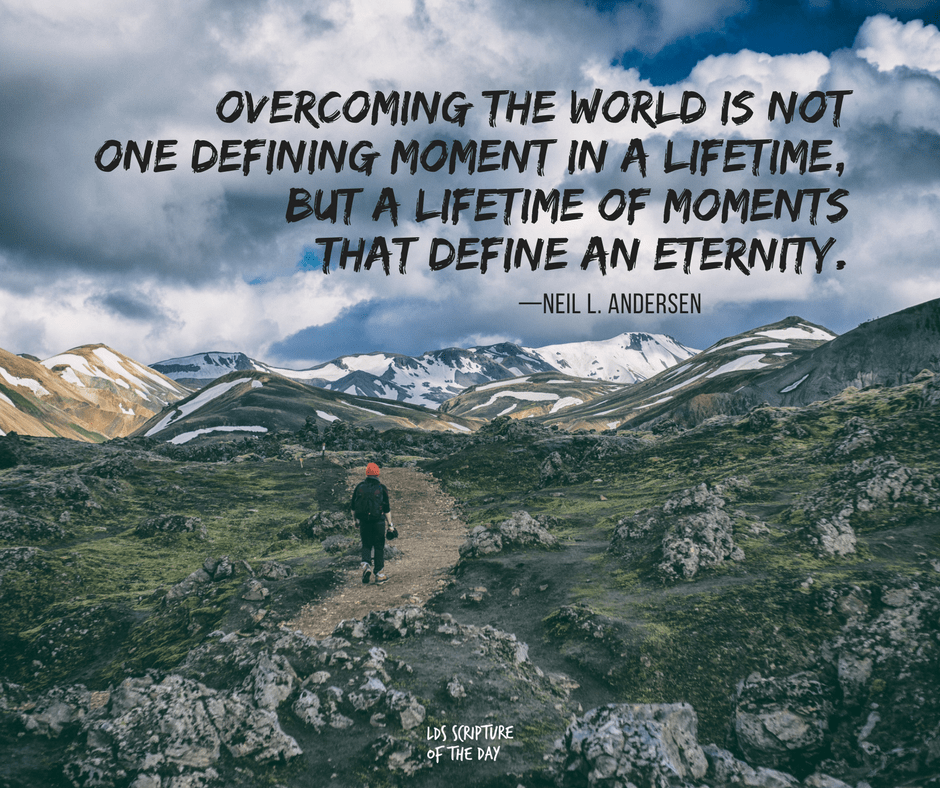
Overcoming the World

Everyone who believes that Jesus is the Christ is born of God, and everyone who loves the father loves his child as well. This is how we know that we love the children of God: by loving God and obeying his commands. In fact, this is love for God: to keep his commands. And his commands are not burdensome, for everyone born of God overcomes the world. This is the victory that has overcome the world, even our faith. Who is it that overcomes the world? Only the one who believes that Jesus is the Son of God. This is the one who came by water and blood—Jesus Christ. He did not come by water only, but by water and blood. And it is the Spirit who testifies because the Spirit is the truth. (1 John 5:1-6, NIV)

Faith, love, and obedience are tightly woven together to such an extent that to pull one of them out is to unravel the whole bunch. These three characteristics of the true Christian are vital and necessary to living the Christian life. They all must be present for the church to overcome the world.

The main verbs throughout the verses are the word “is.” And the verb tense is key. The verb clearly describes a past action of God which we as people need to receive. In other words, the grammar dictates that God has given us new birth.  We do not give ourselves spiritual birth any more than we can tell our mothers that it was us who gave birth to ourselves.

God saves us from sin and grants us forgiveness. This action is from God. We are recipients of God’s good grace toward us. There are three participles connected to this main verb:

  1. Believe
  2. Love
  3. Obey

A participle is a word which is connected to the verb’s action. So then, our actions are a result of God’s action toward us. To put it simply, a person born from God will believe, love, and obey. Just as a newborn baby first breathes, then learns to eat, sleeps, grows-up, learns to walk, and over time develops into an adult just like their mother and father, so the Christian who is born again from God exhibits faith, learns to love, and grows up developing the skills of obeying Jesus and following him, learning to walk in his ways, becoming just like him.

In the same way a child must learn and grow to have the necessary skills for facing the world in all its bigness, trials, and temptations, so the Christian must develop the abilities necessary to overcome the world. Those skills are faith, love, and obedience. Without them, we will be unable to deal with the world. But with them, we experience victory over the world.

The word, “overcome,” is a cognate word (related to) of “victory.”  That is, to overcome is to have firsthand exposure to the victory the Lord Jesus has achieved on the cross. Through being spiritually born again by God, we are set on a course requiring faith, love, and obedience to overcome the world. As we learn to apply these three spiritual characteristics to our lives, we experience practical victory over the world.

The term “world” are the patterns, systems, and operations of the world in direct contrast to how God operates. For example:

  • The world engages in revenge and payback when wronged, whereas the Christian learns to believe God as the Judge, loves the person who has offended them through prayer for their enemy, and obeys God through good works that seeks the welfare of the other. 
  • The world uses other people as either objects of their pleasure or to get ahead in life, whereas the Christian believes God will take care of their needs, will seek to love the other person instead of use them, and would rather obey God than be selfish. 
  • The world thinks nothing of lying, cheating, and stealing, if they can get away with it, whereas the Christian believes Jesus is the way, the truth, and the life, loves being a person of integrity, and obeys God even when it hurts.

This in no way means we avoid or belittle the world. In facing and overcoming the world, we need principled civility. Using faith, love, and obedience, we respect another’s viewpoint through growing in faith, expanding our hearts in love, and learning obedience through interaction with others for whom we disagree.

Where do we feel “the pull” in life from? Do we feel it from the world, or from God’s Word? We must learn how to deal with the worldly elements of our society in which we feel a pull and a tug to go along with it and want to give in to it. This requires a community of Christians engaging the world through faith, love, and obedience to overcome that pull.

Our call as Christians is not to just survive the world. If anyone could have had that kind of mentality, it was Helen Keller. Deaf, mute, and blind, she could have settled into just getting by and waiting for heaven. Yet, she accepted her situation, coped with it, and even transcended her limitations.  She did more than survive – she thrived. Helen Keller once said:

“The marvelous richness of human experience would lose something of rewarding joy if there were not limitations to overcome. The mountaintop would not be half so wonderful if there were no dark valleys to traverse.”

Helen Keller

We need faith in God, not ourselves. The Scripture says:

Trust in the Lord with all your heart,
    and do not rely on your own insight.
In all your ways acknowledge him,
    and he will make straight your paths. (Proverbs 3:5-6, NRSV)

We need to love God and others, and not the world. The Scripture says:

Don’t love the world’s ways. Don’t love the world’s goods. Love of the world squeezes out love for the Father. Practically everything that goes on in the world—wanting your own way, wanting everything for yourself, wanting to appear important—has nothing to do with the Father. It just isolates you from him. The world and all its wanting, wanting, wanting is on the way out—but whoever does what God wants is set for eternity. (1 John 2:15-17, MSG)

We need to obey the call of God, not the call of the world. Hear what Scripture says: 

The commandment that God has given us is: “Love God and love each other!” (1 John 4:21, CEV)

When faith, love, and obedience are working together as they were intended to, we will overcome the world and all its crud. We will keep ourselves from being polluted and stained by it.

Overcoming the world is a high calling from God. Faith means putting aside fear and taking the kind of risk God wants you to take. Love means putting aside hate and serving others, even when it hurts. Obedience means putting aside selfishness and choosing to do what is best for another person’s welfare. Being characterized by these three Christian virtues will have the effect of overcoming the world. It is not a burdensome or heavy way to live. It’s the way of Jesus.

Blessed Father, Son, and Holy Spirit, the God whom we serve: Sometimes our hearts and minds are flooded with fears. Sometimes we are paralyzed and overwhelmed and feel unable to go on. Yet today we hold onto the victory you have accomplished through the blood of Jesus Christ. You have told us not to fear, for you have overcome the world. So, we cling to you, believing your Word and your promises. In moments of crippling fear, we choose to hold your hand and believe; to love as we have been loved; and, to obey even in the most fearful places because we know that you have risen again.

Loving Lord Jesus, we surrender to you all that we are and hope to be. Holy Spirit, we invite you and all your ministry within us. Holy God of all, we offer you our heart, mind, body, soul, spirit, hopes, plans and dreams. We surrender to you our past, present and future problems, habits, character defects, attitudes, livelihood, resources, finances, medical coverage, occupation and all relationships. We give you our health, physical appearance, disabilities, family, marriage, children, grandchildren, and friendships.

We ask for your Lordship over every aspect of our lives. We surrender to you all our hurt, pain, worry, doubt, fear and anxiety, and ask you to wash us clean. We release everything into your compassionate care. Speak to us clearly, Lord. Open our ears to hear your voice. Open our hearts to commune with you more deeply. Open the doors that need to be opened and close the doors that need to be closed. Set our feet upon the straight and narrow road that leads to everlasting life. Amen.

Galatians 5:16-26 – Let the Spirit Guide You

“Be guided by the Spirit and you won’t carry out your selfish desires…. the fruit of the Spirit is love, joy, peace, patience, kindness, goodness, faithfulness, gentleness, and self-control. There is no law against things like this.  Those who belong to Christ Jesus have crucified the self with its passions and its desires.  If we live by the Spirit, let’s follow the Spirit.  Let’s not become arrogant, make each other angry, or be jealous of each other.” (Common English Bible)

I’m the youngest sibling in my family.  So, I know what it feels like to be a third wheel with things.  When I was a kid, it seemed as if everyone believed I was too young to do anything or engage any of the real fun stuff, like watching “Mannix,” “Sanford and Son,” or “Love American Style” past my bedtime. Although now, I understand why I couldn’t watch those shows, the fact remains, I was often a third wheel.

At times, we treat the Holy Spirit of God like some third wheel. We pray to Almighty God. We pray in Jesus’ blessed name. And what of the Holy Spirit? Seems the Spirit gets the short end of the stick, getting treated like a younger sibling in the Trinity family. In fact, I’ve been in some churches where it seems their understanding of the Trinity is Father, Son, and Holy Bible – the Spirit is nowhere to be found.

Truth is, we never quite know what the Spirit might do. Heck, we aren’t even sure what pronoun to use for the Holy Spirit. It? He? She? They?  Because the Spirit seems so mysterious and ethereal, because the Spirit is so unpredictable, we send he/she/it off to some metaphorical bedtime so that we can watch TV and do whatever we want. 

Or perhaps we really are diligent about the Christian life. We strive, work, and wrestle to live a good life. Yet, somehow, we far too often fall short and feel like a failure. Why is that?

Could be that we’ve looked at the Holy Spirit as the third wheel. We believe in the Spirit. We have faith the Spirit is there. Yet, we don’t have any idea how to relate. God is big and sovereign. And Jesus has a real body and blood. But the Spirit? Well, the Spirit’s out there, man – like, too cool for school, or like one of the characters on “The Mod Squad,” or something. 

How do you have a relationship with someone or something (many often refer to the Spirit as a “thing”)? How do we relate with a person (after all, the Spirit is fully a person) who is so crazy and seemingly other than you and me?

The Holy Spirit is the power source of the Christian life.  Without the Spirit, we can easily degenerate into all kinds of illicit thinking and behavior – including immorality, moral corruption, doing whatever feels good, idolatry, substance abuse, casting evil spells, hate, fighting, obsessive behaviors, violent anger, competitive opposition, conflict, selfishness, group rivalry, jealousy, drunkenness, or living for the party.

It is the Spirit who helps, comforts, provides strength, and enables us to replace old habits with new ones, and dead practices with solid spiritual action. The Christian virtues which flower and produce the fruit of love, joy, peace, patience, kindness, goodness, faithfulness, gentleness, and self-control occur through a close intimate relationship with the Holy Spirit. 

The Spirit helps us in our weakness when we pray and act.  The Christian enjoys such a close affectionate association with the Holy Spirit that it is as if we are a like a sacred temple with the person of the Spirit taking up residence within. 

By means of the Holy Spirit, God is always with us and continually, at this moment, working within us to make our redemption in Christ an actual real-live encounter. In other words, the Spirit gives us feet to walk among this world, armed with the implement of God’s love.

I’m going to make a simple observation about our New Testament lesson for today. All the spiritual virtues mentioned are the “fruit” of the Spirit, not “fruits.”  The nine ethics are a package deal.  When you have the Spirit and spiritual fruit, you possess all nine Christian values. 

If we look at the list and say something like, “Well, I’m pretty good at kindness and goodness, but I don’t have much peace or patience,” what that really means is that we are probably doing kindness and goodness from a different place than by means of the Holy Spirit. Because when the Spirit is manifested in us, we exhibit spiritual fruit. We cannot separate the nine spiritual virtues any more than we can separate the Trinity. They’re all one spiritual fruit, cultivated and produced within the inner person by the agency of God’s Spirit.

Maybe we need to consider the shadow side of our lives. It could be that, for example, we are far more driven by our anxiety about most things than about genuine altruism and love. The results of our actions and words might look the same, but the motivation might be far from truly altruistic. It simply will not last if our actions are generated from a place of worry – because it is not of the Spirit.

So, what to do about it?  We must mortify (put to death) the deeds of the sinful nature. You have been crucified with Christ and you no longer live but Christ lives in you by means of the Spirit He has given to us (Galatians 2:20).  If we have C-clamped our hearts so tight that the Spirit cannot get in, then it’s high time to loosen the grip and enable God to do some gracious and merciful work within us.  It’s the only way to experience genuine transformation of life.

The spiritual life can be scary. Letting go of control is hard for many people, including me. But the results are worth it. The Spirit is competent. The Holy Spirit might work in wild and crazy ways and might show up on “Saturday Night Live” where you least expect to discover her.

Jesus said that the work of God is to believe in the one he sent (John 6:29). The Spirit always points us to Christ, the one who has delivered us from the realm of sin and brought us forgiveness. This work of Christ enables the work of the Spirit, who now makes our deliverance a practical reality in daily life.

The Holy Spirit is not a third wheel, but the real deal. Whenever we open our hearts to the Spirit, we experience the wideness of God’s mercy. And when the Spirit is working inside of us, it makes the car chase scenes in “The Streets of San Francisco” look a lot less dramatic.

May the Spirit of the living God be with you now, and forever.  Amen.