Who Is Your Master?


There are many people in this world that carry with them an invisible backpack.  They lug it around everywhere they go.  It is a backpack of unacknowledged grief, of ignoring problems and difficulties.  The problem is that over time items are added on top of old ones. Hard feeling after hard feeling gets caked on top of unresolved issues.  When that happens, the backpack becomes our Master.  It begins to influence the way we talk, what we do, and don’t do.  It becomes sin because rather than Christ, the Spirit, and the Word informing and influencing what we say and do, the invisible backpack calls the shots.
 
            When the Scripture talks about not offering ourselves to wickedness but offering ourselves to God (Romans 6:12-23), it means that we must take off the backpack because it has become our Master.  We may have become so accustomed to it that we cannot imagine life without carrying it around.  But we are to take it off, unpack each and every item we have stuffed into it, and allow ourselves to face the pain and hurt and take up Christ’s easy backpack, his yoke (Matthew 11:28-30).  We are told that, since we are redeemed people, baptized into the death of Jesus Christ that we do not need to and ought not to carry a load of sin any longer (Romans 6:1-11).
 
            We were actually meant to have a Master and to carry a backpack – just not the backpack of unconfessed sin and unresolved problems, but the backpack of righteousness which listens to and follows the Master, Jesus Christ.  Who is your Master?  Jesus Christ, by his grace, took the backpack of sin that you were carrying and took it upon himself.  He took the crushing weight of our backpacks of sin for us.  Jesus took out the stinky gym socks of sin and the half-eaten sandwiches of bitterness within; they were then nailed with him to the cross.
 
            We must deliberately and intentionally take off that invisible backpack.  Perhaps, like me, you have known people who were moral and ethical and well-respected; and, you never would have guessed that they carried such an invisible heavy load on their backs.  The backpack as Master caused them to work themselves into the ground in order to keep ignoring the hurt, to keep everything completely clean and in control on the outside because on the inside it was emotional chaos.  What appears on the outside may not be true of the inside.  When we look at one another in the church, we cannot assume that just because everything looks good on the outside that the inside is just fine.  Our stronghold of secrecy and invisibility needs to be broken and pulled down in Jesus’ name!
 
            It is time to put off the backpack of sin and put on Christ’s righteousness.  It is time to say the following statement with some flavor to it:
Ø  “I will not carry you any longer, old Master, because I belong to God!”
 
The church must stop looking for either some dramatic deliverance or expecting others to change, and do the hard work of confession and offering/presenting ourselves to God:
Ø  “I will not carry a load of immorality any longer because I belong to God.”
Ø  “I will not carry an unresolved load of pain any longer so that I keep using my tongue to gossip and slander and backbite another, because my tongue is not my own.  My tongue belongs to God.”
Ø  “I will not be burdened by the clock and let it control my life, because my time is not my own.  My time belongs to God and I will steward it wisely.”
Ø  “I will not let the invisible backpack keep me in bed because my true Master desires me in prayer.  My waking hours belong to God.”
Ø  “I will not carry the troubles of my job with me by working myself into the ground, because my job belongs to God and my Master calls me to a Sabbath rest.”
Ø  “I will unload this backpack of pain and deal with it so I do not keep compulsively spending my money, because my money belongs to God.”
Ø  “The invisible backpack no longer has any power over me because I have unloaded it, grieved my hurts and losses, and have moved to taking on Christ’s backpack.  I belong to Jesus Christ!”
Show me a miserable Christian, and I will show you a Christian who is carrying the crushing weight of an invisible backpack that informs and influences every decision and each action.
 
            The church does not need an attitude adjustment or behavior modification; we need to do away with the backpack of sin completely because Christ has already taken care of it.  To put that backpack of sin on is to do something that Jesus died to take away.
 
            Who is your Master?  Are you a slave to the invisible backpack?  Or are you a slave to God and his righteousness?  If you find that you want to change but seem unable to, it might be because you have a kind of spiritual Stockholm syndrome where you identify more with your captor who is oppressing you than with freedom in Jesus Christ. 


            Today, take the backpack off.  Unpack it.  Deal with the pain and the hurts you have accumulated but have not lamented over.  There will be no spiritual growth and development apart from doing this.  You cannot have Christ as your Master unless you get rid of all competing masters in your life first.  What has the backpack every really done for you?  What benefit do you receive from lugging it around everywhere?  The wages of continually carrying the unconfessed load on your back is death – it will eventually catch up to you and you will die (Romans 6:23).  But the gift of God is life, freedom from sin and a life under the new management of Jesus Christ.  Take it off.  Unload the contents.  It may take a long time depending upon how long you have been carrying the weight.  But there will not be freedom apart from it.  You have been set free from all other Masters, and have become slaves to Christ.  Do the hard work of dealing with the contents of your backpack so that you may know freedom, that others will no longer feel the tyranny of your backpack, and so that you will enter the life that is truly life.

Hindrances to the Christian Life

 
           Within the church there are those persons who are committed, growing, and participating in the life of the congregation and exhibit spiritual sensitivity.  There are others, however, that are marginal in the church, seem stagnant in their faith, and do not readily express a fellowship with God.  And there are more who move in and out between vital relationship and indifferent service within the church.  There is no one-size-fits-all reason why this reality is so, but anyone who has been around the church very long knows that the congregants within are at differing places as to their spirituality.  It is possible, even with the best of intentions, for many believers in Jesus to be mistaken in some important area of belief and are living in error.  These erroneous beliefs almost always produce incorrect actions and become barriers to their Christian lives.  If we are to be successful in living the Christian life and be a vital part of the church’s life we must search out and destroy these hindrances.  God only delivers on the basis of truth.  Satan, on the other hand, keeps people in bondage through lies. 
 
            Consider twenty-five of these errors concerning the church and the Christian life that I have heard from people over the years as a pastor, preacher, and teacher.  I include these because they have been expressed several times from various people in different churches.  Buying into any one of the following of these mistaken beliefs inevitably brings spiritual slavery and hinders a believer from realizing the blessings of living for Christ and enjoying his church:
 
1.      God does not really care about me like he does others.
2.      There are “second rate” Christians.  God has not given himself equally to all believers.
3.      Only clergy are really called to ministry; the rest are not as obligated to either God or the church.
4.      Knowing the Bible is not necessary for everyone.  As long as the pastor knows Scripture, others can rely on his understanding.
5.      Prayer is for the spiritual, and not for everyone.  Moral action can take the place of prayer.
6.      I don’t need to learn because when I get to heaven the “egalitarian zap” by God will make me understand everything.
7.      Spiritual growth can happen apart from Scripture and the church.
8.      Religious feelings are reliable as confirmation of God’s will.
9.      Since I am saved, sanctified, and redeemed by the blood I can live however I want.
10.  The commandments of God are good advice, but not obligatory.
11.  Since I am a Christian, there is nothing I can do to displease God.
12.  I am under no obligation to grow spiritually; spiritual growth is optional.
13.  Faith is a feeling.
14.  I am saved by faith, but spiritually grow through effort.
15.  God will stop me if I am doing something wrong.
16.  I have tried the church thing and it doesn’t work for me; not everyone needs the church.
17.  Some sins are worse than others – physical sins are worse than spiritual sins.
18.  If someone in the church hurts me, I should hurt them back so they will know not to do it again.
19.  If I confess my sin to God I do not need to confess it to others.
20.  If I confess my sin to God I will be totally free from its consequences.
21.  Christianity works for some people, but not for everyone.
22.  As long as one is sincere, then everything is okay with God.
23.  If I cannot serve in the church giving 100% effort, then I should not serve at all.
24.  I put in my time serving the church; there is no need for me to serve anymore.
25.  A person can be right with God without believing in Jesus, if they are a good person.
 
What are some statements you would add to this list? 
What hindrances have you identified and overcome in your own Christian life? 
How would you respond to someone who believes any one of these errors? 
Do you have a plan for discipleship in your church to help people learn Scripture and grow in grace and truth?


Will you pray for your church and its leaders on a regular basis?

Healing at the Table

            We live in a broken world.  Broken families, broken relationships, and broken human systems all create fundamentally broken people.  Broken people bring all of their brokenness into the church.  Instead of wishing that people wouldn’t do that, I insist that it is a good thing.  It is a good thing because the church ought to be the one place where broken people can begin to make sense of their lives within the grace of Christian community.  That means that community is not always pretty and shiny but, well, messy.  And it isn’t just the “outsiders” who bring in their problems.  There are plenty of problems to go around in the folks who are “lifers” at your church.  Chronically neurotic parents raise kids full of false guilt; people who are never pleased seem to make everyone around them unhappy; unpredictable neighbors, bosses, and co-workers foster environments where others constantly walk on eggshells not quite knowing if they will get hugged or slugged.  In short, we all have some degree of damaged lives and emotions as both victims and perpetrators.


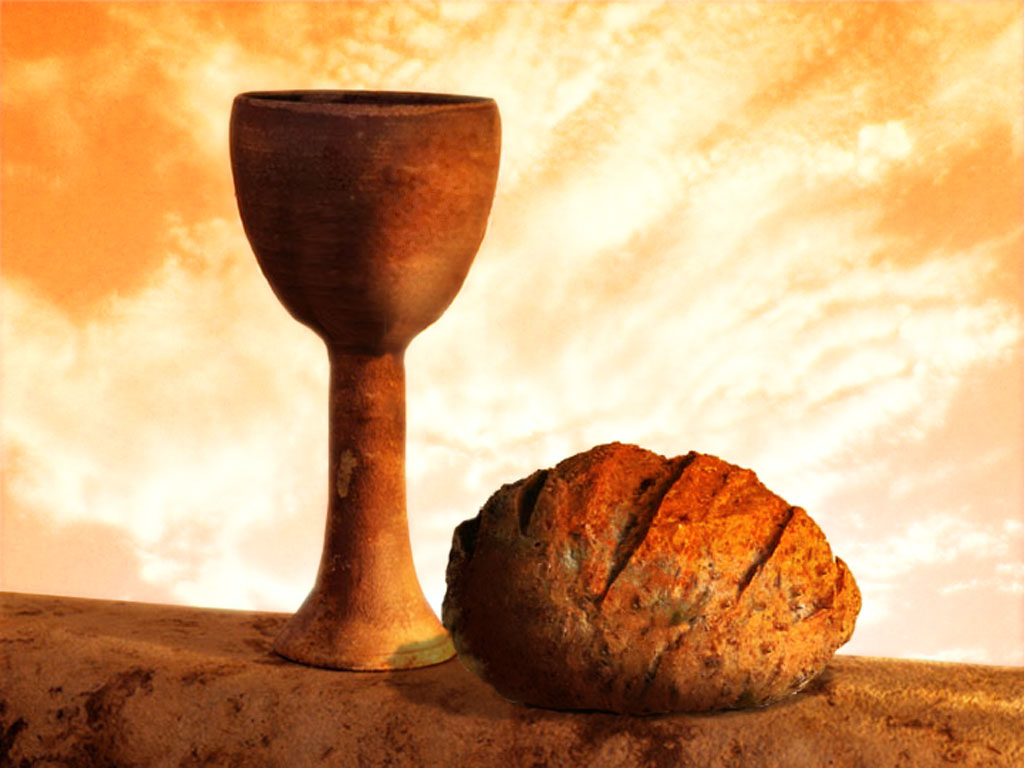
            The best place of healing for every person is at the Lord’s Table.  That’s right.  Communion is a sacrament, a sacred event, in which the worshiper can find more than just a reminder of Christ’s death – he or she can find the grace of healing from all the damage.  The Table brings one face to face with the cross of Jesus.  The past act of Christ’s crucifixion has settled the sin issue once for all.  To put it another way:  there is healing in Jesus Christ.
 
            In the cross God demonstrated his total identification with us in our own suffering.  Our healing is found in the spiritual reality that just as we may have been victims of another, so Christ was the ultimate victim who did not deserve the punishment he got from all the people with all their broken ways.  It was unjust.  But the good news is that God has justified the believer by sheer grace.  Jesus is our Wounded Healer.  On the cross God in Christ has absorbed the world’s brokenness and our painful feelings into his love.
 
            Therefore, we ought to come to the Table with joy and find both hope and healing.  The Lord’s Supper is not just some ritual to go about doing every so often in order to be obedient – Communion is a powerful means of grace that God uses to heal and nurture.  As we take and eat of the bread, and drink of the cup, from Christ’s broken body and shed blood we receive healing and wholeness for our own brokenness.  By faith we eat and drink to receive God’s forgiveness and love into both body and soul.
 
            If this chance at spiritual and emotional healing sounds too good to be true, you have grasped the meaning of grace.  If Communion can play such an important and significant place in the lives of people, maybe we all need to re-think the practice of only doing it occasionally or once a month.  I don’t know of any church board that would be okay with a pastor only preaching and praying once a month in a worship service, so why are we okay with Communion once a month?  We are okay with it because we don’t typically think of the Table as the place of healing and spiritual health.


            It is, I believe, high time we allow the sharing of the Table to not only inform us, but form us into the people that God wants us to be.  The Lord’s Supper brings us back to the centrality of God’s redemption through Jesus Christ, and to the means to which true healing comes:  the cross.  So, may the Table of Christ not only remind you of the cross, but change you, transform you, and reform you as you participate with God’s people in a ritual that brings life.

Distracted by Grace


          With summer, church ministries typically take a hiatus from their normal schedules.  Along with that reality, our own spirituality may suffer as we turn to other things like vacations or being around the kids all the time.  Summer distractions may overwhelm our good intentions toward walking with God, as if we have a condition of spiritual A.D.D.  We seem to… “squirrel!”… be easily distracted by the next thing that comes running along, and have a hard time focusing on what is important in life.

But before we get too perturbed with ourselves, think about the nature of our lives. Teenagers and twenty-somethings are learning to flex their independent muscles and are developing a whole new skill set of handling a budget, paying bills on their own, creating new social networks, adjusting to new schedules, and finding and holding a job.  Young families are constantly adjusting to the next crazy thing their pre-school kids are doing, trying to coordinate both parents working, all while attempting to keep both sets of grandparents happy.  Parents of teens probably aren’t even reading this article because they are driving kids from one end of the planet to the other (it seems), and wonder if they will ever catch up on the sleep they need.  And grandparents in our culture today are just as busy, but with the added irritation of constantly dealing with the next ache and pain.  It is easy in the daily demands of life to have Jesus squeezed to the margins.

Let me suggest that rather than feeling guilty for our spiritual lives because of all the distractions and seeming lack of discipline, that we shift our distractions by being distracted by grace.  When we sense our schedules are awry, our financial budgets won’t budge, and our work never seems to get done, that we use these situations to be distracted by the life, death, and resurrection of Christ.  When we are forever chasing the next shiny thing that comes along, and/or complain about our own schedules as if there are not enough minutes in the day to accomplish God’s will, let us be distracted with the forgiveness that is available to us through the cross.  After all, the Christian life is about having a realization of our sin, and of a renewal to our relationship with God.  Allow our distraction to point us to grace.

Most of life, frankly, is lived in the mundane. How we live for God day in and day out, through all the details and tedium, speaks volumes to those for whom we seek to minister to, whether it is our own children, fellow believers in the Church, or others who do not know God.   Establishing solid spiritual patterns of life can be hard.  But maybe a key for us is in allowing grace to distract us enough to connect us with accepting God’s forgiveness, instead of just running around like a chicken with its head cut off.  Allow grace to distract us toward thinking on these questions:

–Am I living in a consistent rhythm of life that reflects my most precious values?
–Have I learned to practice the presence of Christ in the mundane activities of life?
–Do I have healthy patterns of work, rest, and play that others can emulate?

In being distracted by grace, we may find that we have actually become engaged with God.