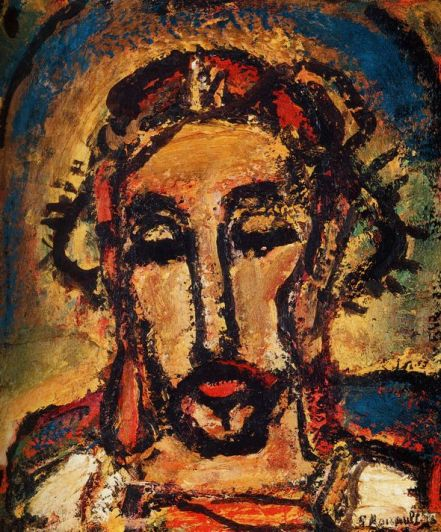
Get Low Enough To See (John 7:25-36)

At that point some of the people of Jerusalem began to ask, “Isn’t this the man they are trying to kill? Here he is, speaking publicly, and they are not saying a word to him. Have the authorities really concluded that he is the Messiah? But we know where this man is from; when the Messiah comes, no one will know where he is from.”

Then Jesus, still teaching in the temple courts, cried out, “Yes, you know me, and you know where I am from. I am not here on my own authority, but he who sent me is true. You do not know him, but I know him because I am from him and he sent me.”

At this they tried to seize him, but no one laid a hand on him, because his hour had not yet come. Still, many in the crowd believed in him. They said, “When the Messiah comes, will he perform more signs than this man?”

The Pharisees heard the crowd whispering such things about him. Then the chief priests and the Pharisees sent temple guards to arrest him.

Jesus said, “I am with you for only a short time, and then I am going to the one who sent me. You will look for me, but you will not find me; and where I am, you cannot come.”

The Jews said to one another, “Where does this man intend to go that we cannot find him? Will he go where our people live scattered among the Greeks, and teach the Greeks? What did he mean when he said, ‘You will look for me, but you will not find me,’ and ‘Where I am, you cannot come’?” (New International Version)

Once in a while, I pray something like this: “Lord, if I’m not seeing you when I ought to, or am not getting something you’re trying to show me, please use your divine baseball bat and whomp me upside the head!”

That’s because, far more often than I would like to admit, I miss seeing the Divine whenever God shows up. That’s true for all of us, as well. We tend to mistake experiencing God when the Lord comes and stands in front of us.

In the New Testament Gospels, some who followed Jesus ended up turning around and going back to their old life. Either the situations with Jesus got too dicey, or Christ’s teaching seemed too confusing. When that happens, it’s too easy to forget Jesus altogether, and never pay attention to him.

There are others who treated Jesus with contempt, simply because they didn’t recognize who he really is. One cannot have faith if they don’t know or acknowledge the object of faith. You cannot believe Jesus if you don’t believe he is from God.

And, of course, there are those who see Christ for who he is. Yet, some of them see Jesus as a threat and want to be rid of him. Others see him as a great healer and teacher, and follow Jesus in order to gain something from him.

However, there are others who see through spiritual eyes and gain the faith to believe and follow him.

All of us, in some way or another in our lives, have misread Jesus and mistaken him for the gardener or some other person.

Many of the Jews in Christ’s own lifetime rejected him because they believed him to be a common nondescript Jew. They knew his parents, and his family. Jesus was too familiar to be special, let alone the Son of God. Besides, everyone knows nothing good comes from the Hicksville that’s Nazareth, right?

The thing is: People miss seeing Jesus for who he is (sometimes including you and me) because we have particular expectations and requirements of our personal Jesus. In other words, it is awfully easy to make Jesus Christ into our own image of how he should be.

Having worked with college students for many years, I continually got a kick out of some of them who had precise requirements for a spouse, and certain expectations of how their potential kids were going to be someday.

It went well beyond having the same core cardinal values. Handsome and beautiful, smart but not too smart, assertive but not sassy, subservient but not a washrag, a 3-point Calvinist but not 5-point, willing to eat anything on the table except weird food that would embarrass, willing to live on a shoestring budget, funny but not quirky…. Actually, I could keep going; there’s a lot more. But you get the idea.

You may be curious as to my counsel to them. I typically said something along the lines of “I guess you’ll never get married, because marriage has nothing to do with any of that stuff. If you’re willing to have your eyes open and see a good person when they come along, and if you’re patient enough to develop a solid relationship built on grace, truth, and love, then you’ll likely find yourself a spouse you can be with for a lifetime.”

I remember one day on a college campus talking with a student after he asked me why he should ever be a Christian. I don’t think he expected my answer. I had already assessed that the guy was looking for a philosophical debate, so I went in a different direction. I said something like:

“I don’t think you should be a Christian. Jesus had people misunderstand him all the time. He was ridiculed and persecuted, tortured and killed. And he had the chutzpah to tell his followers that suffering would be a big part of being his disciple. Many of them followed him anyway. If you’re interested in why they did, we can talk. But if you just want to try and feel good by talking about Jesus, and avoid facing life’s pain and suffering, then I’m not wasting my time. So, what do you want to do?”

We will miss Jesus altogether if we are looking for a particular person. Whenever we get married to specific outcomes, then we’ll miss him for sure.

I wonder how many times Jesus showed up in your life this week, and you didn’t recognize him. In truth, Jesus is with us, by means of the Spirit, all the time. If you don’t see him, it’s not God’s fault, or anybody else’s.

Humility accesses spiritual sight. The religious leaders of Christ’s day were flummoxed and fuming all the time because of their arrogance, and their settled theological and biblical dogma. And so, they could not see who Jesus is, even though he was smack in front of them.

Yet, even though we may be spiritually blind and deaf, and finally see a glimpse and catch a sound of Jesus, that graciously means he is still there, beside you, never having given up on you.

Even a blurry and faint awareness realizes Jesus coming in the people we meet each day who encourage and bless us. Christ even comes and speaks through those we would not expect to hear a word from God.

Whenever we may wonder where Jesus is in our suffering and pain, he is there, sometimes even holding us and carrying us, despite our lack of awareness.

In reality, Jesus is in front of us, beside us, and holding us, all of the time. It’s just a matter of whether we know it, or not. Christ is in everything we experience. He is in both our sadness and joy, the noise and the silence, our work as well as worship, business and leisure, at night when we fall asleep and in the morning when we open our eyes.

So, if we are looking and longing for Christ, he has already come. Jesus came in the most humble forms possible. So, in order to see and experience him, we need to get low enough to see and hear him.

My Lord and my God, help me to see You in all of the ways You come to me today. Teach me not to despise any of the forms in which You come to me as being too common, humble, or ordinary. 

Wake me with Your presence in the morning and tuck me into bed when I sleep. Labor with me in my work today, and cause my leisure to lead to thanksgiving. 

Speak to me through the people You have ordained for me to meet today, and speak even through me, in spite of myself. 

For good and for ill, better and worse, in sickness and health, and in richness and poverty, reveal Yourself to me that I may receive whatever blessing You have chosen for me this day; through Jesus Christ Your Son, my Lord, who with You and the Holy Spirit are One God, now and forever. Amen.


Consider Wisdom (Proverbs 1:1-19)

By Peter Max, 2008

The proverbs of Solomon, son of David and king of Israel.

Here are proverbs that will help you recognize wisdom and good advice, and understand sayings with deep meaning. They can teach you how to live intelligently and how to be honest, just, and fair. They can make an inexperienced person clever and teach young people how to be resourceful. These proverbs can even add to the knowledge of the wise and give guidance to the educated, so that they can understand the hidden meanings of proverbs and the problems that the wise raise.

To have knowledge, you must first have reverence for the Lord. Stupid people have no respect for wisdom and refuse to learn.

My child, pay attention to what your father and mother tell you. Their teaching will improve your character as a handsome turban or a necklace improves your appearance.

My child, when sinners tempt you, don’t give in. Suppose they say, “Come on; let’s find someone to kill! Let’s attack some innocent people for the fun of it! They may be alive and well when we find them, but they’ll be dead when we’re through with them! We’ll find all kinds of riches and fill our houses with loot! Come and join us, and we’ll all share what we steal.”

My child, don’t go with people like that. Stay away from them. They can’t wait to do something bad. They’re always ready to kill. It does no good to spread a net when the bird you want to catch is watching, but people like that are setting a trap for themselves, a trap in which they will die. Robbery always claims the life of the robber—this is what happens to anyone who lives by violence. (Good News Translation)

“To educate a man in mind and not in morals is to educate a menace to society.”

Theodore Roosevelt

A proverb is a short pithy statement of experiential truth. Proverbs are meant to teach one how to live a good life. This sort of education requires a lifetime of learning. There is always wisdom to be gained.

In order to have true understanding and wisdom, there needs to be a balance of intellectual knowledge, affective feeling, and intuitive knowledge. Only possessing some of these elements makes one nothing more than a half-wit.

A commitment to virtue, morality, and ethics is a must in the acquisition of wisdom, and thus, a good life. Physical, mental, emotional, and spiritual maturity all take time. Marinading over a long period of time in the wisdom of biblical proverbs will prove to be a life saver. At the end of one’s life, they can look back with gratefulness and satisfaction, instead of sorrow and regret.

So, from the very outset of approaching the Book of Proverbs, the mindset and heart stance must not be one of popping a few proverbial pills in order to achieve a self-centered goal or gain an immediate solution.

Rather, proverbial wisdom demands daily immersion in its wise sayings. It requires implementation and experimentation every single day. There needs to be decisive action, coupled with contemplative reflection. Anything short of this truncates and stunts one’s growth.

There is yet one more necessary prerequisite toward the sagacious and good life. Without this, nothing is possible. But with this, all things are possible: Acknowledgment, awareness, and adoration of the Lord.

A fool is one who stubbornly refuses to take in the full range of epistemic knowledge. Being only book smart is to actually be stupid. To be only a walking heart of emotional intelligence is foolish. And to live only by gut instinct alone is to cut off yourself from wisdom’s teaching.

A wise life includes the head, the heart, and the gut – and to have them all aligned together as an integral whole. To live other than this is to live as a fool who believes they already have the answers and the key to knowledge and understanding.

Furthermore, this means that to take God and transcendent things off of the table, to begin with, is the most foolish decision a person can make. Conversely, to forsake the intellectual life and believe that all one needs is the spiritual, is to betray a woefully foolish approach to the good life.

There are also those who distance themselves from family, especially parents. On some level, this makes sense, if one had a childhood full of traumatic memories and difficult relationships.

However, learning to honor even these parents is to place oneself on the path of wisdom, and to learn what the good life truly entails. And this approach allows the person to see the good, and strain out the bad.

In other words, we discover that good and bad, wise and foolish, smart and stupid, exists within everyone and in every place. Wholesale jettisoning of persons and/or institutions gains us little to nothing.

This distancing from family and/or God is an attempt to assert some control, to effect one’s willpower upon life. But this will lead us away from the true path of wisdom.

That’s because wisdom is not something to be mastered. Wise sayings don’t exist to be collected, and their sagacity harnessed for one’s personal goals.

Yes, we are to avail ourselves of wisdom, yet perhaps not as we may believe or think. We do not capture wisdom, but are captured by it.

The importance of this mental, emotional, and spiritual stance must not be undervalued. We only learn wisdom by means of humility and reverence before powers greater than ourselves. Any vestige of pride in us shall cause wisdom to disappear and slip from our grasp.

Only until we both intellectually and experientially recognize that the essential operations of the universe are beyond us, shall anyone begin to trust and risk in a wisdom greater than our own.

“Without humility, all shall be lost.”

St. Teresa of Avila

Put another way, if we refuse to learn from God and from our parents, then we won’t.

Only by accepting this can anyone discern what to do and don’t do, say and don’t say, when faced with competing voices.

For there is continually a voice of foolishness, of wickedness, enticing us to get what we want quickly, selfishly, without any thought to the consequences or the effect upon others. A group of such voices becomes a gang who tries outdoing each other in competitive evil.

There is also a voice of wisdom, which admonishes us to avoid the fast, fun, and friendly gang of evil speech and behavior. The wise person discerns that what the wicked person does to another, comes back upon them.

The patient and powerful voice of wisdom communicates prudence in all things, that is, to do today what will lead to a better tomorrow.

So then, my friend, what is the thing – the decision, the action, the words – that you can and will do today which will help you accomplish a good, right, and just life for yourself (and others) for tomorrow?

Great God of all wisdom, help me to trust You and follow Your precepts in every twist and turn of my life. Grant me good understanding and guide my steps, so that Your will is done on earth, as it is always done in Your heaven. Amen.

The Wounded Healer (Psalm 18:1-6, 43-50)

By French painter Georges Rouault (1871-1958)

I love you, Lord;
    you are my strength.
The Lord is my rock, my fortress, and my savior;
    my God is my rock, in whom I find protection.
He is my shield, the power that saves me,
    and my place of safety.
I called on the Lord, who is worthy of praise,
    and he saved me from my enemies.

The ropes of death entangled me;
    floods of destruction swept over me.
The grave wrapped its ropes around me;
    death laid a trap in my path.
But in my distress I cried out to the Lord;
    yes, I prayed to my God for help.
He heard me from his sanctuary;
    my cry to him reached his ears…

You gave me victory over my accusers.
    You appointed me ruler over nations;
    people I don’t even know now serve me.
As soon as they hear of me, they submit;
    foreign nations cringe before me.
They all lose their courage
    and come trembling from their strongholds.

The Lord lives! Praise to my Rock!
    May the God of my salvation be exalted!
He is the God who pays back those who harm me;
    he subdues the nations under me
    and rescues me from my enemies.
You hold me safe beyond the reach of my enemies;
    you save me from violent opponents.
For this, O Lord, I will praise you among the nations;
    I will sing praises to your name.
You give great victories to your king;
    you show unfailing love to your anointed,
    to David and all his descendants forever. (New Living Translation)

King David, the psalmist, had no problem with publicly expressing his great feeling of love for God. His desire was to be thoroughly devoted to the Lord; and he confidently discerned God as the source of his strength.

What’s more, David freely recognized God as the One who brought him deliverance. David cried out in distress. In his despair and desperation, he looked to the Lord, and God responded.

This is in contrast to those who complain about God and consider the Lord as distant and uncaring – if existing at all. David’s experience was that of being heard by God. And he wanted everyone to know, so that the faithful may be encouraged.

David didn’t want people becoming discouraged because of the bitterness of others who accuse God of being unconcerned.

The psalmist was not just talking about some mundane request, like asking for parking spot close to the building. David was in a life-and-death situation, stressful beyond imagination. Things were not looking good for him.

It seemed that the insolent, who think God isn’t watching, believed they could act unjustly and do whatever they wanted. Sadly, their lust for power and control blinds them to the larger reality of an invisible God who sees, and who responds at just the right time.

David wanted people to remember and not to forget about the saving actions of God. Because by keeping in mind who God truly is, then we can have confident trust, and will live in a way that is right, just, and good.

“Our service will not be perceived as authentic unless it comes from a heart wounded by the suffering about which we speak.”

Henri Nouwen

A good, right, and just life is always the appropriate response to divine mercy and deliverance. We are saved from evil, so that we might live in the spiritual freedom of purity and peace. And David gave God some due praise, adoration, and thanksgiving for rescuing him from his enemies.

Since David went through all of the adversity, hardship, stress, and suffering of dealing with unjust people, he was in a position to be a wounded healer for us.

A wounded healer is not someone who endorses a victim mentality. Rather, this is a person who has been profoundly hurt – physically, mentally, emotionally, or spiritually – and comes through the experience with an ability to be present with others and help facilitate healing in those who suffer.

Surely he took up our pain
    and bore our suffering,
yet we considered him punished by God,
    stricken by him, and afflicted.
But he was pierced for our transgressions,
    he was crushed for our iniquities;
the punishment that brought us peace was on him,
    and by his wounds we are healed. (Isaiah 53:4-5, NIV)

We all suffer and face various hard circumstances. And we are all changed by the hurtful encounters. But we don’t all respond the same way to that adversity. The difficult experiences of pain lead us to become either bitter or better.

If we have a wounded healer in our life, there is a good chance that we will be able to move through the hardship and come to a place of gratitude for what the Lord has done for us and how God brought us deliverance.

“As followers of Jesus we can also allow our wounds to bring healing to others.”

Henri Nouwen

Deliverance may not end up looking like anything we anticipate. If we are stuck on particular outcomes and have a singular expectation, then we may very well miss the Rescuer when the ship of salvation shows up.

Yet, if we can remain open to and aware of God – as well as of what’s going on inside us – then we shall likely experience healing for our deep wounds of pain. And we will embrace the scars it leaves as a reminder of the Lord’s deliverance.

It could be that things don’t change, at least like we want. In such times, perhaps the greatest healing that can take place is to be healed from the need for healing.

The Lord shows unfailing commitment and steadfast love to the faithful, to those who seek God. We shall find the divine in all circumstances, that is, if we seek God with all our heart.

“You will seek me and find me when you seek me with all your heart.” (Jeremiah 29:13, NIV)

Pain cannot be taken away unless we enter into it. So, it only makes sense to me, that we have a guide like the psalmist to lead us, and a Savior like Jesus to rescue us.

“Wholeness is not achieved by cutting off a portion of one’s being, but by integration of the contraries.”

Carl Jung

May you be patient in suffering, as Christ was in his earthly pain.

May the Lord be near you in your time of weakness and wondering.

May God sustain you by divine grace, and grant you courage not to have a failure of faith.

May you know healing of both body and soul.

And may you always believe that what happens to you in this present life is of little account if you hold Christ in eternal life. Amen.

What Are You Searching For? (1 Samuel 9:15-27)

Now the day before Saul came, the Lord had revealed to Samuel: “Tomorrow about this time I will send to you a man from the land of Benjamin, and you shall anoint him to be ruler over my people Israel. He shall save my people from the hand of the Philistines, for I have seen the suffering of my people, because their outcry has come to me.” 

When Samuel saw Saul, the Lord told him, “Here is the man of whom I spoke to you. He it is who shall rule over my people.” Then Saul approached Samuel inside the gate and said, “Tell me, please, where is the house of the seer?” 

Samuel answered Saul, “I am the seer; go up before me to the shrine, for today you shall eat with me, and in the morning I will let you go and will tell you all that is on your mind. As for your donkeys that were lost three days ago, give no further thought to them, for they have been found. And on whom is all Israel’s desire fixed, if not on you and on all your ancestral house?” 

Saul answered, “I am only a Benjaminite, from the least of the tribes of Israel, and my family is the humblest of all the families of the tribe of Benjamin. Why then have you spoken to me in this way?”

Then Samuel took Saul and the young man and brought them into the hall and gave them a place at the head of those who had been invited, of whom there were about thirty. And Samuel said to the cook, “Bring the portion I gave you, the one I asked you to put aside.” The cook took up the upper thigh and set it before Saul. Samuel said, “See, what was reserved is set before you. Eat, for it was kept for you for this appointed time, so that you might eat with the guests.”

So Saul ate with Samuel that day. When they came down from the shrine into the town, a bed was spread for Saul on the roof, and he lay down to sleep. Then at the break of dawn Samuel called to Saul upon the roof, “Get up, so that I may send you on your way.” Saul got up, and both he and Samuel went out into the street.

As they were going down to the outskirts of the town, Samuel said to Saul, “Tell the young man to go on before us, and when he has passed on, stop here yourself for a while, that I may make known to you the word of God.” (New Revised Standard Version)

There are many times in our lives when we are on a quest for something that is lost. Saul was on a mission to find some lost donkeys. But, all along, there was a much larger quest taking place; God was on a quest to find a leader for Israel. Saul was wandering and looking for donkeys; he tried to find the “seer” (Samuel) in order to find the animals. He found, however, that he himself was the object of a bigger search.

I wonder how often we look and seek and turn over every rock in order to find something, only to discover that we had the thing all along. And if we were to look a bit deeper into ourselves, I believe we would find that we already have what we need.

We search for an answer, seek for a person who can lead us where we want to be, or go on a quest to find the something, or that someone, which will satisfy our longing for peace, normalcy, or at least, a smidge of relief. Yet, we just might be on the wrong search.

If spiritual guidance is what we want, then what, precisely, do we need? What exactly is it which requires help? We may end up looking like a jack ass, simply because we are searching for one.

In contrast to Saul’s blind searching, Samuel sits patiently and waits, knowing exactly who he’s watching for.

Even though Samuel, as the mouthpiece of God, had warned the people against asking for king, the people still demanded one. Yet, God was flexible and moved with the will of the people. And Samuel trusted the Lord and moved with God. None of this, however, negated the situation of the people’s misguided stubbornness.

The Lord takes our human decision-making, responsibility, and accountability seriously. So, we too, are to weigh our decisions carefully so that they are consistent with good purposes. And when things go sideways, we are to own up to our decisions and actions (or inactions).

Throughout the story, even though Saul looks impressive, he is continually clueless to everything going on. He isn’t aware that the donkeys have been found. He doesn’t know where to look for the seer, and that the seer is Samuel. He isn’t aware of why he is being invited to a feast. Saul was clueless that he was being chosen for a task.

To be unaware is to be driven by the forces within us which we do not recognize. Yet, conversely, to be aware is to have the conscious power of choices; we can choose one path over another because we have awareness of where those paths lead, as well as what is going on inside of us. In other words, we can make decisions wisely with awareness of self, others, and the world.

Saul had none of this awareness. And as his story unfolds throughout the rest of the book of 1 Samuel, we can observe how much he seems out of control and disconnected from himself, others, and the situations around him.

One of things which inevitably results from a lack of self-awareness, is impatience. The life of Saul, as we shall see, is marked by having ants-in-his-pants; he had a hard time waiting. The introduction we have of Saul in today’s story begins to clue us in on the fact that he actively searches for dumb animals, intimating that he himself may not be the brightest bulb in Israel.

Samuel, however, is self-aware, and thus, patient. He is able to wait, and does not give into any anxiety to do differently. Samuel’s quest for humility, wisdom, and knowledge of God helped him become aware and confident.

Which character do you most relate to, Samuel, or Saul? Why? In what ways might you gain a greater awareness of yourself, others in your life, and your circumstances? How might you develop a better awareness of the divine?

Most of all, what is it that you are truly searching for?

Blessed God, help me to see myself and my life through your unconditional love and acceptance of me so that your love and power can flow in and through me. Help me to remember that nothing can separate me from your love. Amen.