1 Samuel 31:1-13 – Warning Signs from a Tragic Life

The Philistines made war on Israel. The men of Israel were in full retreat from the Philistines, falling left and right, wounded on Mount Gilboa. The Philistines caught up with Saul and his sons. They killed Jonathan, Abinadab, and Malki-Shua, Saul’s sons.

The battle was hot and heavy around Saul. The archers got his range and wounded him badly. Saul said to his weapon bearer, “Draw your sword and put me out of my misery, lest these pagan pigs come and make a game out of killing me.”

But his weapon bearer wouldn’t do it. He was terrified. So, Saul took the sword himself and fell on it. When the weapon bearer saw that Saul was dead, he too fell on his sword and died with him. So, Saul, his three sons, and his weapon bearer—the men closest to him—died together that day.

When the Israelites in the valley opposite and those on the other side of the Jordan saw that their army was in full retreat and that Saul and his sons were dead, they left their cities and ran for their lives. The Philistines moved in and occupied the sites.

The next day, when the Philistines came to rob the dead, they found Saul and his three sons dead on Mount Gilboa. They cut off Saul’s head and stripped off his armor. Then they spread the good news all through Philistine country in the shrines of their idols and among the people. They displayed his armor in the shrine of the Ashtoreth. They nailed his corpse to the wall at Beth Shan.

The people of Jabesh Gilead heard what the Philistines had done to Saul. Their valiant men sprang into action. They traveled all night, took the corpses of Saul and his three sons from the wall at Beth Shan, and carried them back to Jabesh and burned off the flesh. They then buried the bones under the tamarisk tree in Jabesh and fasted in mourning for seven days. (The Message)

Life is a process. Rarely does anything happen instantly. Human growth, maturation, life, and death unfold over years. So, a major life issue is attending to what process are we given to – a process which allows for human thriving – or a process that causes a failure to thrive.

King Saul sadly gave himself to a downward spiral of jealousy, paranoia, and poor decisions. His end was tragic. Yet perhaps we might learn some lessons in the form of warnings. Let’s consider the life of Saul as a cautionary tale, heeding us to avoid his foibles and pitfalls.

Unfortunately, Saul made deliberate choices in his life which led to his ignominious death. In fact, Scripture makes it plain that Saul died because of unfaithfulness:

Saul died because he was unfaithful to the Lord; he did not keep the word of the Lord and even consulted a medium for guidance and did not inquire of the Lord. So, the Lord put him to death and turned the kingdom over to David son of Jesse. (1 Chronicles 10:13-14, NIV)

Premeditated, deliberate, conscious wrongdoing can only expect a predictable process of moral failure and divine judgment. Consider some observations from Saul’s life so that we will be kept from going down his path of destruction:

  • Saul made decisions which solely benefited himself, and not the entire community. He deliberately disobeyed orders from the prophet Samuel and tried to justify his behavior with a godly veneer (1 Samuel 13:1-14; 15:1-26). Later, King David engaged in some deliberate acts of sin and disobedience. Yet, David did not share Saul’s outcome because he humbled himself before God, admitted his guilt, and turned away from disobedience (2 Samuel 12:1-13). There always remains the opportunity to turn to God, as long as we are alive.
  • Saul never owned his bad decisions, and it led to his paranoia and warped thinking. Saul kept believing he was okay – and that everyone else was wrong or against him. If we ever get to the point of living with our sin as if it’s acceptable, then we need a prophet to come along and show us the error of our ways and beliefs. Saul had a prophet in his life: Samuel, who was one of the best. Yet, Saul often altered Samuel’s advice or dispensed with it altogether.
  • Saul’s wrongdoing did not always lead to immediate negative consequences. That is the typical nature of sin. It bites, but the pain isn’t felt until later. Saul was rejected by God as king. In reality, this rejection did not occur until Saul’s death. Whenever Saul made poor decisions, he felt gratification in the immediate moment. Later, however, he was tormented by an evil spirit (1 Samuel 16:14). Conversely, the righteous person understands the principle of delayed gratification.
  • It wasn’t just Saul who suffered because of his own jealousy and paranoia. Other people suffered, as well. David clearly suffered emotional and spiritual duress because of Saul’s jealousy. The priests and the people of Nob were mercilessly murdered because of Saul’s paranoia (1 Samuel 22:6-19). We must be quite careful to avoid being shortsighted about our decisions. Just because we might neither anticipate nor see any negative consequences to others doesn’t mean there aren’t any. Sin destroys, period, whether we know it, or not.
  • Saul’s identity and worth as a person was dependent on his title and position as king. So, when that position was threatened, Saul thought his very personhood was in grave danger. The truth is that our worth as humans is not tied to whether we have a lofty position, or a particular pedigree. Our dignity as people is forever tethered to bearing the divine image.

A healthy life process of decision-making which includes consulting wise voices and collaborating with people of integrity will surely result in good things, not bad. So, let us walk in the narrow path of wisdom, while continually forsaking the broad road that leads to destruction.

Gracious God, our sins are too heavy to carry, too real to hide, and too deep to undo. Forgive what our lips tremble to name, what our hearts can no longer bear, and what has become for us a consuming fire of judgment. Set us free from a past that we cannot change; open to us a future in which we can be changed; and grant us grace to grow more and more in your likeness and image, through Jesus Christ, the light of the world. Amen.

*Above: woodcut of King Saul’s death by George Wigland, 1860

Matthew 5:4 – Blessed are Those Who Mourn

“Blessed are those who mourn,
    for they will be comforted.” (NIV)

Throughout most of human history, there have been groups of people, typically women, who occupy a special role within their respective societies. Sometimes paid professionally, and many times not, these folks had an important function – so important was this vocation that a unique skill set was needed to support an entire community of people.

What is that role, that function? To be a mourner.

In Scotland and Ireland, they were referred to as “keeners.” Keening is mourning, and keeners were employed to help others grieve and lament the death of a loved one. Through their emotional wailing, family members could feel as though someone was putting a voice to their grief. It was also considered a way to honor the dead and share their accomplishments. 

The keen is a bygone practice, along with many of the funeral practices of other cultures. With the advent of modern institutional funeral homes, beginning in the nineteenth century, there has been more and more distance to the raw feeling and emotion of death. Keening was a tradition which included songs of lament, at least one of them being composed specifically for the occasion.

For millennia, cultures have recognized and affirmed the need for and importance of wailing and crying and deep grief to have its say.

Jesus believed mourning to be significant enough to include it, right off the bat, in his Sermon on the Mount. Authentic disciples of Jesus Christ mourn.

Mourning, in the Beatitudes, is the emotional response to spiritual bankruptcy. To be a spiritual mourner is to weep and wail over sin… loudly! It is to see that sin in all its foulness and degradation is terrible and destroys relationships. Because of this, we experience personal grief over both the world’s sin and ours.

The Christian disciple, the true follower of Jesus, knows death is coming, and must be faced. God is coming and will be known by all as either Savior or Judge. Sin is present all around us, even in us, and it is unspeakably ugly and black in the light of God’s holiness. Eternity is real, and every living human being is rushing toward it.

The alternatives of eternity are inexorably coming – life or death, forgiveness or condemnation, heaven or hell. These are all realities which will not go away. The person who lives in the light of them, and rightly assesses self and the world, cannot help but mourn.

They mourn for the sins of their nation and neighborhood. They mourn over the erosion of the very concept of truth. The keener mourns over the greed, the cynicism, and the lack of integrity all around. Indeed, the Christian mourner mourns that there are so few keeners expressing the biblical mandate to mourn.

I wonder if sin causes us to weep, even to wail. I am curious if the presence of sin in the world and within ourselves keeps us awake at night, or not.

If individuals can only locate sin out there somewhere and are never close enough to see lost souls entrenched in sin, needing a Savior, then they must come back to the first Beatitude of knowing their spiritual poverty and wrestle with putting pride in its place and fully embracing a humble spirit.

Those who do not mourn have a hard heart because mourners are sensitive to sin.

“But I’m not really a person who cries.” Perhaps you ought to explore why that is so. It could be that a thick callous has developed over the heart. The telltale signs of this are being comfortable with watching violence and having no problem with uttering violent speech.

Many Christians pray for revival; it will not occur apart from the way of the spiritual beggar who mourns over the violence, oppression, bigotry, arrogance, and injustice of the world. 

If there is to be any transformation of heart, it will come through seeing myself for who I am and seeing the sins of this world for what they are.  Without this, there is no hungering and thirsting for righteousness, no mercy, no purity, and no peace in the world or the church. 

Jesus told a parable to illustrate true righteousness versus self-righteousness, saying:

“Two men went up to the temple to pray, one a Pharisee and the other a tax collector. The Pharisee stood by himself and prayed: ‘God, I thank you that I am not like other people—robbers, evildoers, adulterers—or even like this tax collector. I fast twice a week and give a tenth of all I get.’

“But the tax collector stood at a distance. He would not even look up to heaven, but beat his breast and said, ‘God, have mercy on me, a sinner.’

“I tell you that this man, rather than the other, went home justified before God. For all those who exalt themselves will be humbled, and those who humble themselves will be exalted.” (Luke 18:10-14, NIV)

Jesus says the mourner, the keener, will be comforted; she will find the remedy to alleviate guilt and shame in her own life through Jesus, as well as the answer to the ills of the world, in Christ.

We do not need lots of money, a high position, a particular gender, or even be a faithful practicing religious person to be a mourner. Anyone can be one. And this is the door by which we enter the kingdom of God.

Almighty and most merciful Father, we have sinned and strayed from your ways like lost sheep…. We have left undone those things which we ought to have done; and we have done those things which we ought not to have done…. We acknowledge with great sorrow our great and many sins which we, from time to time, have committed by thought, word and deed, against your divine majesty…. O Lord, have mercy upon us.

Spare all who confess their faults and truly repent; according to your promises declared in Christ Jesus our Lord. We are cut to the heart and are sorry for our wrongs; remembering them now grieves us…. Forgive all our past wrongdoing; be merciful to us now in the present; and extend your kindness to us in the future, through Jesus Christ, your Son, our Lord, who with you and the Holy Spirit are one God, now and forever. Amen.

*Above painting by Hyatt Moore

2 Corinthians 7:2-16 – Genuine Sorrow Changes Us

Make room for us in your hearts. We have wronged no one, we have corrupted no one, we have exploited no one. I do not say this to condemn you; I have said before that you have such a place in our hearts that we would live or die with you. I have spoken to you with great frankness; I take great pride in you. I am greatly encouraged; in all our troubles my joy knows no bounds.

For when we came into Macedonia, we had no rest, but we were harassed at every turn—conflicts on the outside, fears within. But God, who comforts the downcast, comforted us by the coming of Titus, and not only by his coming but also by the comfort you had given him. He told us about your longing for me, your deep sorrow, your ardent concern for me, so that my joy was greater than ever.

Even if I caused you sorrow by my letter, I do not regret it. Though I did regret it—I see that my letter hurt you, but only for a little while— yet now I am happy, not because you were made sorry, but because your sorrow led you to repentance. For you became sorrowful as God intended and so were not harmed in any way by us. Godly sorrow brings repentance that leads to salvation and leaves no regret, but worldly sorrow brings death. See what this godly sorrow has produced in you: what earnestness, what eagerness to clear yourselves, what indignation, what alarm, what longing, what concern, what readiness to see justice done. At every point you have proved yourselves to be innocent in this matter. So even though I wrote to you, it was neither on account of the one who did the wrong nor on account of the injured party, but rather that before God you could see for yourselves how devoted to us you are. By all this we are encouraged.

In addition to our own encouragement, we were especially delighted to see how happy Titus was, because his spirit has been refreshed by all of you. I had boasted to him about you, and you have not embarrassed me. But just as everything we said to you was true, so our boasting about you to Titus has proved to be true as well. And his affection for you is all the greater when he remembers that you were all obedient, receiving him with fear and trembling. I am glad I can have complete confidence in you. (New International Version)

“The only vice that cannot be forgiven is hypocrisy because the repentance of a hypocrite is itself hypocrisy.”

William Hazlitt (1778-1830)

I’m in the soul business. Not in the Detroit Mo-town Aretha Franklin kind of soul business (although that would be very cool) but in the sense of leading human souls to God and building them up in Christ. Key to the Christian life’s soul is the term “repentance.”  To repent means to turn around, to stop going in one direction and start going in another one. It is repentance which makes all the difference in the direction of our souls.

Certainly, no one can really judge the heart of another. Yet, today’s New Testament lesson lets us in on how to truly measure the sincerity of a person’s repentance. 

Worldly sorrow or grief does not lead to repentance, but disconnection and death. People with worldly sorrow beat themselves up but never really change direction. Like Judas Iscariot of old, they just hang themselves instead of admitting guilt to Jesus. 

Godly sorrow, however, leads to repentance, a change of direction. And here is the evidence of the genuine change: 

  • Owning the problem.
  • Eagerness to make things right.
  • Indignation over what has been done or said.
  • Discernment that there is more pain in avoiding the problem than there is confronting it.
  • Desire and energy to do what is best for the person who was wronged.
  • Willingness to accept whatever consequences which might result from the offense.

Crying and weeping might be necessary. Yet the tears can also be a cheap form of avoiding true repentance. 

Whether there are tears, or not, there must be solid action that changes direction and seeks to rectify offenses, as much as it is within our control to do so. 

Deliverance from the power of guilt and shame comes through repentance. There are no shortcuts or easy routes to the soul’s orientation to practical godliness. 

There is nothing romantic about repentance. It is typically messy, usually ugly, and often painful. Yet, there must be suffering before there is glory. Attempting to remove true repentance from personal transformation only eviscerates the Christian life and leaves our souls vacuous and empty.

Instead, we carefully, tediously, and patiently go about the important work of repentance, with all its deep sorrow, regret, vulnerability, challenge, awkwardness, and courage.

Holy God, I confess to you the things which I have said and done, as well as those things I have left unsaid and undone. And, yet your mercy is from everlasting to everlasting. Open my eyes to the ways I have offended others and failed to build them up. Help me to step boldly into repentance and faith in Jesus Christ, through the power of the Holy Spirit.  Amen.

Psalm 119:113-128 – How to Change Our Spiritual Taste Buds

I hate anyone
whose loyalty is divided,
    but I love your Law.
You are my place of safety
and my shield.
    Your word is my only hope.

All of you worthless people,
    get away from me!
    I am determined to obey
    the commands of my God.

Be true to your word, Lord.
    Keep me alive and strong;
    don’t let me be ashamed
    because of my hope.
Keep me safe and secure,
    so that I will always
    respect your laws.
You reject all deceitful liars
    because they refuse
    your teachings.
As far as you are concerned,
all evil people are garbage,
    and so I follow your rules.
I tremble all over
when I think of you

    and the way you judge.

I did what was fair and right!
    Don’t hand me over to those
    who want to mistreat me.
Take good care of me,
    your servant,
    and don’t let me be harmed
    by those conceited people.
My eyes are weary from waiting
    to see you keep your promise
    to come and save me.
Show your love for me,
your servant,
    and teach me your laws.
I serve you,
so let me understand
    your teachings.
    Do something, Lord!
    They have broken your Law.
Your laws mean more to me
    than the finest gold.
I follow all of your commands,
    but I hate anyone
    who leads me astray.
(Contemporary English Version)

Some people try to avoid doing wrong and always try to do right. Others either bulldoze or sleepwalk through life, doing what they will, with impunity. Yet others try to steer clear of egregious sin, while indulging in so-called minor sins. 

Sin is messy business. No matter the form or the attempt at dealing with or without sin, the bottom line is that we all sin because we like it. We might not like the consequences of sin, but it tastes good while doing it.

That’s why we need a complete re-orienting of our hearts to hate every way contrary to God’s good commands. The psalmist proclaims and affirms that all God’s precepts are right, hating every false path which deviates from the true and good. 

If we sin because we like it, the way to avoid sin is learning to hate it – to loathe it so badly that it’s like a nasty stench in our nostrils. Hating sin comes from the acquired taste of loving God’s commandments. When we come around to cherish and desire God’s Word, then sin gradually becomes so odious that we want nothing to do with it.

The reason the psalmist could proclaim such an extended love song to the commands of God, is that he tasted how good they were. And it caused him to forsake every dubious way to human enjoyment. 

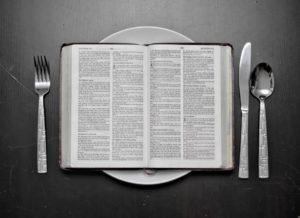
The reason I constantly encourage myself and others to read Scripture every single day, with a solid plan of spiritual rhythms, is that it really does have the power to change our taste buds. Sustained, consistent, daily eating of the psalms will teach us to want God and God’s ways – while forsaking the dark path of insolence and oppression.

The psalmist committed himself to avoiding worthless situations, as well as steering clear of harmful people with the propensity to doing wrong. These are fickle, double-minded people, divided in their loyalties. On one side of their mouth, they talk a good line about faith; and then talk out the other side of their mouth, spewing a bunch of worthless gobbledygook which, at the least, adds no value to anything, and, at worst, wrecks good plans and harms others.

If there are people in authority over us who don’t give a wit about our most cherished values, we will likely find ourselves tasked with doing things which rub against our understanding of God’s Word. In this state of moral distress, we are pushed, pulled, and tested in our single-minded devotion by the double-minded person to do what we are uncomfortable with.

In the stress and crucible of trouble, we need the courage to speak up, despite the fear of repercussions. And that strength will only be possible if we have a resilient spirit with the capacity to sustain our personal integrity in the face of our distress. That is, we need God and God’s Holy Word.

Scripture and fellow believers provide support because we need to care for one another as a community of redeemed persons who seek to live into the words of ways of almighty God.

It can be tricky business, wisely trying to discern between what we must accept and what we need to pushback against. Yet, with God, God’s Word, and God’s people, we possess all the resources required in living the spiritual life and navigating the sinful world we inhabit.

God Almighty, I pray that you will deal with me according to your steadfast love and teach me your statutes.  I am your servant; give me understanding so that I might know and live by your commands and forsake the evil of the world, through Jesus Christ my Lord, in the power of your Holy Spirit. Amen.