Spiritual Spring Cleaning (2 Chronicles 29:1-11, 16-19)

Hezekiah became king when he was twenty-five years old and was king in Jerusalem for twenty-nine years. His mother was Abijah daughter of Zechariah. In God’s opinion he was a good king; he kept to the standards of his ancestor David.

In the first month of the first year of his reign, Hezekiah, having first repaired the doors of The Temple of God, threw them open to the public. He assembled the priests and Levites in the court on the east side and said, “Levites, listen! Consecrate yourselves and consecrate The Temple of God—give this much-defiled place a good housecleaning.

Our ancestors went wrong and lived badly before God—they discarded him, turned away from this house where we meet with God, and walked off. They boarded up the doors, turned out the lights, and canceled all the acts of worship of the God of Israel in the holy Temple. And because of that, God’s anger flared up and he turned those people into a public exhibit of disaster, a moral history lesson—look and read! This is why our ancestors were killed, and this is why our wives and sons and daughters were taken prisoner and made slaves.

“I have decided to make a covenant with the God of Israel and turn history around so that God will no longer be angry with us. Children, don’t drag your feet in this! God has chosen you to take your place before him to serve in conducting and leading worship—this is your life work; make sure you do it and do it well….”

The priests started from the inside and worked out; they emptied the place of the accumulation of defiling junk—pagan rubbish that had no business in that holy place—and the Levites hauled it off to the Kidron Valley. They began the Temple cleaning on the first day of the first month and by the eighth day they had worked their way out to the porch—eight days it took them to clean and consecrate The Temple itself, and in eight more days they had finished with the entire Temple complex.

Then they reported to Hezekiah the king, “We have cleaned up the entire Temple of God, including the Altar of Whole-Burnt-Offering and the Table of the Bread of the Presence with their furnishings. We have also cleaned up and consecrated all the vessels which King Ahaz had gotten rid of during his misrule. Take a look; we have repaired them. They’re all there in front of the Altar of God.” (The Message)

Hezekiah Destroys the Idols, by Maerten de Vos, 1585

This is the time of year when many of us begin to plan for some Spring housecleaning. And it’s definitely needed! All the rooms of the house, along with the garage, are in need of going through all the contents contained in them, as well as a good old fashioned scrubbing down and thorough cleaning.

And that is really what the Christian season of Lent is intended for on the spiritual level of things. We seek to identify any and all hindrances to living the Christian life and get rid of them; spruce up the things we keep that are helpful to us; and do the hard work of scraping off all the encrusted barnacles on our hearts.

Hezekiah was a faithful king, having come from a long line of faithless ones. In the beginning of his reign, Hezekiah’s first act of royal business was to thoroughly cleanse the Temple. And did it ever need a serious cleaning!

The evil kings who reigned before him did not treat the Temple as a sacred space devoted specifically to the prayer and worship of the one true God, Yahweh. Instead, they defiled it by introducing all sorts of unhealthy practices from other gods. As a result, the holy implements used in the Temple, as well as the structure itself, fell into terrible neglect.

Therefore, Hezekiah assembled an impressive team of people, and tasked them with getting the Temple in shape again with a complete and thorough purification that would make any German house frau proud. Hezekiah sought to restore things so that the Temple could once again be used as it ought. 

The team of Levites meticulously took their time and worked diligently to consecrate the Temple and give it a good and sacred cleaning, tossing everything unholy into the Kidron Valley – the garbage dump.

Perhaps there is no better passage of Scripture than today’s Old Testament lesson, in order to embody what the season of Lent is really all about. We are to do the holy work of carefully consecrating our hearts, so that our lives are prepared and ready for the new life of Easter. 

This task of spiritual Spring cleaning and heart purification is hard and courageous work. Just as Hezekiah had the bravery to uphold the Temple’s true purpose through cleansing it, so we are to bravely enter the shadowy places of our hearts, bring out the sin within, and toss it in the metaphorical incinerator. It’s definitely not a pretty process, but a necessary one.

One of the greatest needs that many believers have today is the courage to be vulnerable, to expose and bring into the light our besetting sins, so that they can be carried away and tossed into the dump. 

Instead of spending inordinate amounts of energy and time trying to hide our true selves, it is much better to let the example of Hezekiah clear a path forward by confronting the darkness within.

Holy God, my life is a Temple of your Holy Spirit. I invite you to come in and do the sort of cleansing work that needs to be done so that my words and actions are thoroughly consecrated to you. Help me have the courage to go to the places within that frighten me, for the sake of Jesus, my Lord. Amen.

Keeping Sacred Space Sacred (John 2:13-22)

Christ Casting Out the Money Changers, by Peter Gorban

The Passover of the Jews was near, and Jesus went up to Jerusalem. In the temple he found people selling cattle, sheep, and doves and the money changers seated at their tables. Making a whip of cords, he drove all of them out of the temple, with the sheep and the cattle. He also poured out the coins of the money changers and overturned their tables. He told those who were selling the doves, “Take these things out of here! Stop making my Father’s house a marketplace!” His disciples remembered that it was written, “Zeal for your house will consume me.” 

The Jews then said to him, “What sign can you show us for doing this?” Jesus answered them, “Destroy this temple, and in three days I will raise it up.” The Jews then said, “This temple has been under construction for forty-six years, and will you raise it up in three days?” But he was speaking of the temple of his body. After he was raised from the dead, his disciples remembered that he had said this, and they believed the scripture and the word that Jesus had spoken. (New Revised Standard Version)

It doesn’t take a Bible scholar to figure out that Jesus was upset. He quite literally came to the Jerusalem temple, whipped everyone into shape, and cleaned house. 

Cleaning house is what the season of Lent is really all about. This is the time of year for Christians to take a good hard look at the state of their hearts; it’s about shining light on the shadowy dark places, so that we can turn from all that hinders our relationship to Christ, and allow the presence of God to fill us and give us new life.

In the other Gospel accounts we discern why Jesus was upset. Matthew, Mark, and Luke each mention Jesus saying that the temple is to be a house of prayer, but the ones buying and selling in the temple courts were making it a den of robbers. (Matthew 21:12-16; Mark 11:15-18; Luke 19:45-47)

Two things were happening which angered Jesus: 

  1. Business was taking place in the Court of the Gentiles, thus pushing non-Jews out of being able to worship God.
  2. Those providing the service of sacrificial animals were charging exorbitant prices and gouging those who were just trying to offer a sacrifice during Passover. 

Disrespect of Gentiles, along with plain old greed, hindered prayer and worship for everyone seeking God. John, however, did not mention those reasons. He simply communicated that Jesus was downright mad over his Father’s house being turned into a market.

Orthodox depiction of Christ driving out the money changers

Jesus quoted from Psalm 69 saying, “Zeal for your house will consume me.” That particular psalm is a lament. The psalmist was grieving over the state of religion; it had degenerated into mindless empty ritual.

For Jesus, although worship was happening, he lamented and grieved over the state of people’s hearts, because they were far from God. The evidence was that people cared more about the presence of other people and animals than they cared about the presence of God.

Jesus stood in the Old Testament prophetic tradition of getting down to the heart of the matter (e.g. Amos 4:4-5; Hosea 5:6, 6:6). From a New Testament perspective, it is impossible for the blood of bulls and goats to take away guilt and shame.

Therefore, there is no longer any temple because Jesus has come. The temple represented God’s presence on earth. But now the temple is Jesus, who is God with us, and God’s presence on earth. With the sending of the Holy Spirit, the presence of Jesus continues to be alongside the Church. Believers are God’s temple, the continuing presence of Jesus on this planet.

This creates a problem for many people. It’s the age old predicament of caring more about the presence of other things rather than the presence of God. Jesus was not speaking to pagan kings or Gentile sinners; he spoke to people in the temple courts who professed and worshiped the name of God – but they did not seek the presence of God with all their hearts. The Lord was not their primary allegiance.

Jesus wants people to desire the presence of God more than anything else in the whole world – and to not hinder others from doing so, as well. In every aspect of life, the heart must be in it. And the heart needs to be in the right place, at home, at work, at church, in the neighborhood, and in everyplace we go and everything we do and say.

The Cleansing of the Temple, by Ippolito Scarzella (1550-1620)

Many of the religious folk of Christ’s day lost their true sense of purpose as God’s people. They neither perceived nor focused on God’s presence, but cared more about animals and sacrifices and making money and keeping their social positions secure. 

Christ not only extends grace and mercy through healing the needy of society; he also turns his burning love for the Father on those who would treat the sacred with sacrilege. There is a time for gentleness and meekness, and there is a time for zeal and action, done with flavor!

Jesus had a zero-tolerance policy toward using the representation of God, the temple, as the means to make money. As people from all over the Middle East poured into Jerusalem for the Passover, savvy marketers set up their wares. 

Knowing that not everyone could bring animals for sacrifice, the money-changers were more than ready to take advantage of the situation by providing sheep and cattle at inflated prices. The temple looked more like a marketplace than a worship space, and Jesus would have none of it.

Christ the Lord was consumed with zeal for his Father’s house. Jesus single-handedly took on the businessmen and drove them out of the temple courts with a homemade whip. Whereas the people seemed to settle for the status quo of secular Passover protocol, Jesus restored worship to its rightful place in the life of God’s people.

Jesus still has zeal for proper worship. As he did in the temple all those centuries ago, Christ rearranges the furniture and upsets how things have become. Like an extreme makeover, the Lord overturns tables designed for selfish gain and re-establishes a connection between us and God. He upholds holiness and righteousness so that you and I will have a clean and clear path of relationship with the sovereign God of the universe.

Sacred space is important, both as a physical room or building as well as in our own spiritual hearts. That space becomes the meeting place between us and God. The Lord wants a meaningful dialogue with us, and he will guard that place of connection with great zeal.

Christ Jesus, the one who zealously loves, you have gone before me and cleared the way for me to enter God’s presence. Thank you for your movement toward me, and your careful guarding of our relationship. May my time on this earth be an offering of praise and thanksgiving to you. Amen.

Psalm 84 – Sacred Space

How lovely is your dwelling place,
    Lord of heavenly forces!
My very being longs, even yearns,
    for the Lord’s courtyards.
My heart and my body
    will rejoice out loud to the living God!

Yes, the sparrow too has found a home there;
    the swallow has found herself a nest
    where she can lay her young beside your altars,
    Lord of heavenly forces, my king, my God!
Those who live in your house are happy;
    they praise you constantly.

Those who put their strength in you are genuinely happy;
    pilgrimage is in their hearts.
As they pass through the Baca Valley,
    they make it a spring of water.
    Yes, the early rain covers it with blessings.
They go from strength to strength,
    until they see the supreme God in Zion.
Lord God of heavenly forces,
    hear my prayer;
    listen closely, Jacob’s God! Look at our shield, God;
    pay close attention to the face of your anointed one!

Better is a single day in your courtyards
    than a thousand days anywhere else!
I would prefer to stand outside the entrance of my God’s house
    than live comfortably in the tents of the wicked!
The Lord is a sun and shield;
    God is favor and glory.
The Lord gives—doesn’t withhold! —good things
    to those who walk with integrity.
Lord of heavenly forces,
    those who trust in you are genuinely happy! (Common English Bible)

I want to be where God is.

That works out quite well, since I believe God is everywhere, anyway.

Yet, there are those special sacred spaces for us, and holy places where we especially sense and perceive a connection with the divine.

That’s why the psalmist’s heart was set on the pilgrim’s way. He was longing for the chance to go to that sacred place of basking in spiritual grace.

I know the feeling. There are times when I begin itching to go to a particular place, a hermitage, which I try to get away to, at least once a year. In 2020, with the coronavirus raging, that didn’t happen. And now, this year, with so many current responsibilities, I’m not sure when it’s going to happen. Yet, happen it must.

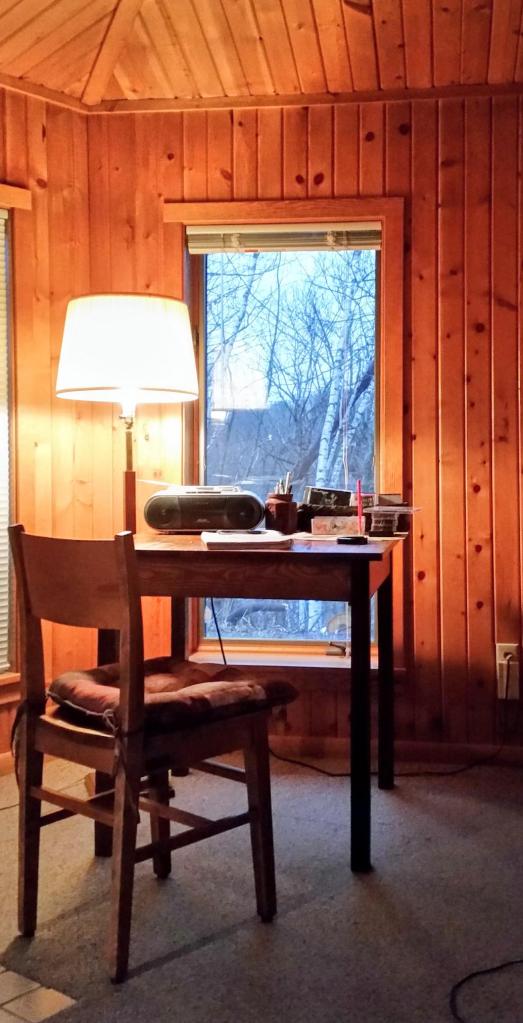
Even though we don’t always have the opportunity in traveling to a sacred site, having small spaces set aside just for divine connection can make a real difference. After all, we don’t need to walk a thousand miles to a grand cathedral in order to meet that deep spiritual need. It could be as simple as walking a few steps to a special chair, perhaps with small rituals of lighting a candle or incense, playing contemplative music, and/or having objects, such as a cross, which enables us to enter that connection with God.

“Your sacred space is where you can find yourself again and again.”

Joseph Campbell

Unhappiness can settle in rather quickly when we go for long stretches without a break, not properly attending to our spirit in special ways. Loneliness, and feeling as if no one understands, are normal responses when there is disconnection.

Unfortunately, we aren’t always aware of what’s happening within us. Then, all of a sudden, we wake up – as if having been in the lower deck of a boat – and discover we are in the middle of the sea, unable to see the land. The disconnection becomes palpable.

I strongly urge walking. It has more than physical benefits. The spirit also needs some movement to remain healthy and happy. Do a pilgrimage around your neighborhood of prayer walking, or purposely trying to notice things you’ve never seen before. If limited, do what you can. Even a stroll around the living room can have a therapeutic effect.

The point is to have a sense of God’s presence. For the psalmist, it was taking the journey to Jerusalem, ascending the temple mount, along with other worshipers, praying and singing along the way. It was about enjoying the process of getting to the temple, reveling in the experience of being in the temple, and descending the mount with a heartful of peaceful satisfaction – knowing that, deep down, everything is going to be okay because God is with me.

Just a single day in the sacred space is better than a thousand days elsewhere. I picture it something like enjoying those rare days when our girls and their families, with grandkids and dogs in tow, are with my wife and I for a meal. It doesn’t happen often. Yet, when it does, all the loud hubbub becomes sacred time. I take off my shoes because I realize I’m on holy ground.

Indeed, all of life is sacred and holy. And yet, those special times and places help us remember how sacred and holy life really is.

Just as good nutrition, hygiene, diet, and exercise are part of the continuum of care for the body, a personal sacred space for prayer, meditation and spiritual thought is part of the spiritual self-care that can enrich and support our practices of regular worship within a community of faith, as well as service to the world.

And we must never lose sight that the most sacred space we each have to maintain is our own heart, where the light and life of Christ resides. The fruit of the Spirit come from a humble life surrendered to God’s guidance and healing. That can happen as we visit sacred places and create sacred spaces in our lives.

Lord, let me dwell for a moment on your life-giving presence. I open my heart to you. I can tell you everything that troubles me. I know you care about all the concerns in my life. Teach me to live in the knowledge that you care for me today, will care for me tomorrow, and all the days of my life. Amen.

Numbers 10:11-36 – The Center of Worship

On the twentieth day of the second month of that same year, the cloud over the sacred tent moved on. So, the Israelites broke camp and left the Sinai Desert. And sometime later, the cloud stopped in the Paran Desert. This was the first time the Lord had told Moses to command the people of Israel to move on.

Judah and the tribes that camped alongside it marched out first, carrying their banner. Nahshon son of Amminadab was the leader of the Judah tribe, Nethanel son of Zuar was the leader of the Issachar tribe, and Eliab son of Helon was the leader of the Zebulun tribe.

The sacred tent had been taken down, and the Gershonites and the Merarites carried it, marching behind the Judah camp.

Reuben and the tribes that camped alongside it marched out second, carrying their banner. Elizur son of Shedeur was the leader of the Reuben tribe, Shelumiel son of Zurishaddai was the leader of the Simeon tribe, and Eliasaph son of Deuel was the leader of the Gad tribe.

Next were the Kohathites, carrying the objects for the sacred tent, which was to be set up before they arrived at the new camp.

Ephraim and the tribes that camped alongside it marched next, carrying their banner. Elishama son of Ammihud was the leader of the Ephraim tribe, Gamaliel son of Pedahzur was the leader of the Manasseh tribe,and Abidan son of Gideoni was the leader of the Benjamin tribe.

Dan and the tribes that camped alongside it were to protect the Israelites against an attack from behind, and so they marched last, carrying their banner. Ahiezer son of Ammishaddai was the leader of the tribe of Dan, Pagiel son of Ochran was the leader of the Asher tribe, and Ahira son of Enan was the leader of the Naphtali tribe.

This was the order in which the Israelites marched each time they moved their camp.

Hobab the Midianite, the father-in-law of Moses, was there. And Moses said to him, “We’re leaving for the place the Lord has promised us. He has said that all will go well for us. So come along, and we will make sure that all goes well for you.”

“No, I won’t go,” Hobab answered. “I’m returning home to be with my own people.”

“Please go with us!” Moses said. “You can be our guide because you know the places to camp in the desert. Besides that, if you go, we will give you a share of the good things the Lord gives us.”

The people of Israel began their journey from Mount Sinai. They traveled three days, and the Levites who carried the sacred chest led the way, so the Lord could show them where to camp. And the cloud always stayed with them.

Each day as the Israelites began their journey, Moses would pray, “Our Lord, defeat your enemies and make them run!” And when they stopped to set up camp, he would pray, “Our Lord, stay close to Israel’s thousands and thousands of people.” (Contemporary English Version)

“The most important feature of sacred space is found in what it is by definition: the place of God’s presence. The cosmic-temple idea recognizes that God is here and that all of this is his. It is this theology that becomes the basis for our respect of our world.”

John Walton

These verses from the book of Numbers might, at first glance, seem irrelevant to contemporary worshipers of God. The Old Testament book of Numbers matter-of-factly informs us of how the ancient Israelites set out in the desert by stages according to their respective tribes and how they proceeded when stopping their sojourns. Yet, if we take the time to engage in pilgrimage with the Israelites, we observe the heart of worship and life for God’s people.

The tabernacle, that is, the ark of the covenant with its accompanying tent and holy articles, was the primary symbol for Israel of God’s presence. As such, the tabernacle was at the actual center of Israelite life, both physically and spiritually. The tabernacle would leave first and be set up by the tribe of Levites before the other tribes came and encamped around it – completely encircling the tent housing the ark.

Observing this constant ancient ritual in the desert begs several questions for us today: 

Is God at the center of our life and worship? 

Or do we expect the Lord to come and bless our already camped-out thoughts, ideas, and practices? 

If God is truly at the center of all we do, what is the evidence this is so? 

Are we patient to wait for God’s leading to present itself? 

Or do we act and then seek God to give his stamp of approval over it? 

The wise believer will allow God to set the agenda and pace of our life journey, and not the other way around.

Sovereign God, you always lead in a way that is good, just, and right. Help me to slow down long enough to enter into the rest and connection with your will that I so desperately need through Jesus my Lord. Amen.

*Above painting: Israel Encamped Roundabout the Tabernacle in the Wilderness of Sinai
by John W. Kelchner (1866-1942)