Welcome, friends! On this Resurrection Day, we consider the impact of Christ rising from death. The Lord’s resurrection is not only a doctrine to believe; it is a powerful reality to live into. Click the videos below, and let us celebrate new life in Jesus Christ….
Colossians 3:1-4, Pastor Tim Ehrhardt
“Death has been swallowed up in victory.”
“Where, O death, is your victory? Where, O death, is your sting?”
The sting of death is sin, and the power of sin is the law. But thanks be to God! He gives us the victory through our Lord Jesus Christ. (1 Corinthians 15:54b-57, NIV)
Since then, you have been raised with Christ, set your hearts on things above, where Christ is, seated at the right hand of God. Set your minds on things above, not on earthly things. For you died, and your life is now hidden with Christ in God. When Christ, who is your life, appears, then you also will appear with him in glory. (Colossians 3:1-4, NIV)
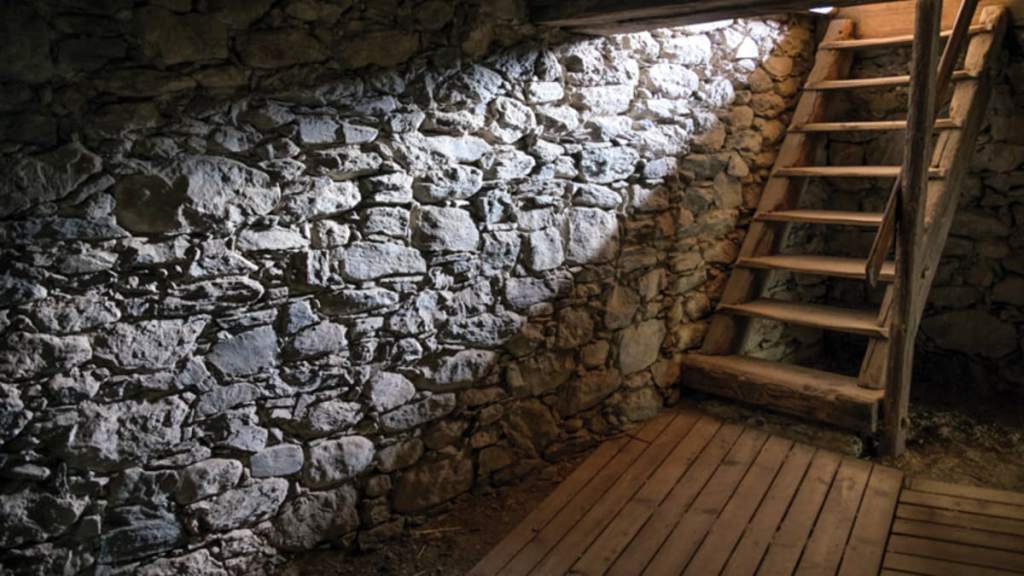
A century ago, the English novelist, G.K. Chesterton, observed that in the house of life, many people are content to live in the cellar. In fact, they assume the cellar is the only room in the house. Cellars and basements have certainly changed in the past one hundred years, yet Chesterton’s observation still holds true – that people often seem content to dwell in conditions far beneath what they could experience.
Maybe the basements of today provide a way to extend Chesterton’s metaphor. Rather than take the stairs and dwell in the house itself, we create spaces in the basement, game rooms and family rooms, to avoid dwelling in the main part of the house. We might even make the basement a shame lounge, complete with old purple shag carpeting, dimly lighted with a lava lamp, and stocked with cheap $2 a bottle wine. Its where we go when we are down on ourselves.
It’s hard to be joyful in the basement, especially when it’s a shame lounge, because it is a place where people hate themselves because of their failures, are disappointed with God for what has been allowed to happen in their lives, and blame others for their sadness.
The Apostle Paul wrote to the Colossian Church to lay a solid foundation of teaching on who Jesus Christ is and what he has done (chapters 1 & 2); and to give some solid encouragement and exhortation on what that theological foundation means for daily life (chapters 3 & 4).
The Colossian believers were to avoid getting sidetracked by false teachers telling them they belong in the basement of life, in the shame lounge, and that the only way up the stairs and out of the cellar is through a crazy, circuitous route of constant rule-keeping.
The truth Paul wanted the Colossians to grasp is that Jesus has made the stairway clear through his cross and resurrection. Those who believe in these redemptive events are full participants in the death and life of Jesus. Christ rising from death is not merely a doctrine to believe; it is a powerful reality to be lived! Christian doctrine always has the upward trajectory of changed lives. Paul gave three reasons why we must live upstairs instead of hanging around the shame lounge….
1. We must take the stairway out of the shame lounge and live upstairs because Christ’s resurrection makes it possible.
Paul made up a word that takes five words for us to communicate in English (συνηγέρθητε – “you have been raised with”). It is meant to communicate the truth that we have a vital connection and union with Jesus (co-raised with Christ). Jesus has so closely identified with us that it is as if we are his body.
The bond existing between Jesus and the believer is so intimate and so close that when Jesus was raised from death, we took part with him in that event. The incredible implication of this is that our life is to be the life of Christ. Our task, then, is to live up to who we are in Christ.
Paul exhorts us toward that end by telling us to set our hearts on things above. Today, on Easter Sunday, is the day to get our hearts out of the shame lounge and live upstairs with Jesus, who is seated at the right hand of God.
Empty Tomb by Anneli Anderson
Being seated at the right hand is a symbolic picture that the work of Jesus on the cross is finished. Therefore, the only work left to do is to believe, and to participate in the life of Christ. We do that by living upstairs with Jesus. Christ’s heart was set on giving us eternal salvation from sin and death, and he accomplished it.
Now, Jesus Christ has his heart set on seeing us experience freedom from the habits of shame and addictive practices which keep us from living upstairs with him. Jesus wants our hearts. Christ does not want us getting headaches from smoking nasty cheap cigars in the shame lounge any longer because his resurrection has made it possible to be with him in the clear bright sunshine of grace.
We are to set our minds on things above, not on earthly things. We must get our heads out of the cellar and get them upstairs with Jesus. If our heads are not in the main part of the house, shame thoughts will fill the void. The shame lounge becomes a prison because our thoughts do not rise above the bad circumstances we have experienced. You, however, have been raised with Christ. We can ascend the stairs of grace and enjoy life.
The believer in Jesus will follow him up the stairs and dwell with him in God’s house. The Christian will develop the life of the mind by being seeped in the living water of Jesus and not the cheap wine of shame. The follower of Jesus will take the stairs with a heart of prayer that talks to Jesus on a regular basis, instead of sitting in the shame lounge, mumbling speeches to oneself.
The person raised with Christ will take the stairs and serve the Lord with all their heart, mind, and strength because staying in the confining walls of the basement shame lounge prevents the believer from seeing the immense need of people in the neighborhood who are lost, sick, dying, hurting, hungry, depressed, and longing for someone to show them the stairway of grace out of the hopeless basement they are in.
So, take the stairs!
Take the stairs and leave the shame lounge behind with its anger, rage, malice, slander, and filthy language (Colossians 3:8).
Take the stairs as God’s chosen people who dwell in the upstairs grace by embracing the house rules of compassion, kindness, humility, gentleness, and patience, bearing with one another in love. (Colossians 3:12)
Take the stairs to forgiving whatever grievances we have against one another because the Lord has forgiven us. (Colossians 3:13)
Take the stairs to love, which binds every good virtue together. (Colossians 3:14)
Take the stairs into the large living room of peace, since as members of one body we were called to peace. (Colossians 3:15)
Take the stairs and let God’s house shape you as we enter the rooms of teaching and admonishing one another with all wisdom; singing psalms, hymns, and spiritual songs with gratitude in our hearts; and doing all things in the name of the Lord Jesus, giving thanks to God the Father through him for raising us up with him. (Colossians 3:16-17)
Take the stairs and live the resurrected life!
2. We must take the stairway out of the shame lounge and live upstairs because we possess new life in Christ.
We died, and our lives are now hidden with Christ in God. The shame lounge is now dead to us. We can ascend the stairs and live a new life. One of my friends in college was a party girl; she partied every chance she got. Then, she became a follower of Jesus. She received an invitation to a kegger and sent this response back: “I regret to inform you that I will be unable to attend your party because I have recently died.”
I have been crucified with Christ and I no longer live, but Christ lives in me. The life I now live in the body, I live by faith in the Son of God, who loved me and gave himself for me. (Galatians 2:20, NIV)
Since the shame lounge is dead to us, take the stairs and then burn them behind you so that you not go back there again. The basement may feel safe and familiar, but as a believer in Jesus, you and I now belong to God. Our security is firmly with Jesus upstairs, not downstairs. God has called and gathered us upstairs out of the shame lounge.
Don’t go back downstairs. If we don’t burn that old stairway we will eventually go back down into the basement. Then, someday, someone will find your lifeless corpse down there. Put to death, therefore, whatever belongs to the shame lounge: sexual immorality, impurity, lust, evil desires, and greed, which is idolatry. (Colossians 3:5)
3. We must take the stairway out of the shame lounge and live upstairs because of the future glory that awaits us.
Christ is coming again. When Jesus returns, the believer will share in God’s glory forever. Christ has not returned yet because he wants to live through us here on this earth for a while longer. Jesus desires to spread good news of grace and forgiveness through us. Jesus Christ wants others to have the chance to ascend the stairs and live a new life. He is patient, not wanting any to perish in the cellar, but for all to experience the resurrected life. The Apostle Paul himself struggled to put all his energy into living the resurrected life:
I want to know Christ—yes, to know the power of his resurrection and participation in his sufferings, becoming like him in his death, and so, somehow, attaining to the resurrection from the dead. Not that I have already obtained all this, or have already arrived at my goal, but I press on to take hold of that for which Christ Jesus took hold of me. Brothers and sisters, I do not consider myself yet to have taken hold of it. But one thing I do: Forgetting what is behind and straining toward what is ahead, I press on toward the goal to win the prize for which God has called me heavenward in Christ Jesus. (Philippians 3:10-14, NIV)
Move to another level. Leave the shame lounge basement behind. The first step up the stairway of grace is always a step of surrender so that our heart, mind, soul, time, possessions, and energy are revitalized to new ways of living.
Christ is risen! He is risen indeed! Alleluia!
Praise the God and Father of our Lord Jesus Christ.
John (349-407 C.E.) was Archbishop of Constantinople in the late fourth and early fifth centuries. His delivery of sermons must have been quite memorable and effective since John’s nickname was “the golden-tongued.” John Chrysostom preached through much of the Bible and about 600 of his sermons have survived to this day. The following message was proclaimed on Easter morning (c.400 C.E.) and is still read each year in many Eastern Orthodox and Roman Catholic churches.
Are there any who are devout lovers of God? Let them enjoy this beautiful bright festival!
Are there any who are grateful servants? Let them rejoice and enter into the joy of their Lord!
Are there any weary with fasting? Let them now receive their wages!
If any have toiled from the first hour, let them receive their due reward; If any have come after the third hour, let them with gratitude join in the Feast! And he that arrived after the sixth hour, let him not doubt; for he too shall sustain no loss. And if any delayed until the ninth hour, let them not hesitate; but let them come, too. And he who arrived only at the eleventh hour, let him not be afraid by reason of his delay. For the Lord is gracious and receives the last even as the first. He gives rest to the one that comes at the eleventh hour, as well as to the one that toiled from the first.
To this one He gives, and upon another He bestows. He accepts the works as He greets the endeavor. The deed He honors and the intention He commends. Let us all enter into the joy of the Lord!
First and last alike receive your reward; rich and poor, rejoice together! Sober and slothful, celebrate the day! You that have kept the fast, and you that have not, rejoice today for the Table is richly laden!
Feast royally on it, the calf is a fatted one. Let no one go away hungry. Partake, all, of the cup of faith. Enjoy all the riches of His goodness!
Let no one grieve at his poverty, for the universal kingdom has been revealed. Let no one mourn that he has fallen again and again; for forgiveness has risen from the grave. Let no one fear death, for the Death of our Savior has set us free. He has destroyed it by enduring it.
He destroyed Hades when He descended into it. He put it into an uproar even as it tasted of His flesh. Isaiah foretold this when he said, “You, O Hell, have been troubled by encountering Him below.”
Hell was in an uproar because it was done away with. It was in an uproar because it is mocked. It was in an uproar, for it is destroyed. It is in an uproar, for it is annihilated. It is in an uproar, for it is now made captive. Hell took a body, and discovered God. It took earth, and encountered Heaven. It took what it saw, and was overcome by what it did not see. O death, where is thy sting? O Hades, where is thy victory?
Christ is Risen, and you, o death, are annihilated! Christ is Risen, and the evil ones are cast down! Christ is Risen, and the angels rejoice! Christ is Risen, and life is liberated! Christ is Risen, and the tomb is emptied of its dead; for Christ having risen from the dead, is become the first-fruits of those who have fallen asleep.
Burt Ward as Robin and Adam West as Batman in the TV show that aired from 1966-1968
“Robin, there is something seriously sinister afoot. It seems the people of Gotham have lost their sense of the story of Christ’s life, death, and resurrection.”
“Holy Holy Week, Batman! It must be the work of that arch-villain the Joker who has turned the narrative of Jesus into a by-gone joke… or maybe the Riddler who has made the redemptive events of Jesus into a complicated riddle that no one can solve… or maybe that fiend, Cat Woman, has finally found the purr-fect way to foil attention to the Lord Jesus.”
“I fear, Boy Wonder, that you have stumbled upon who is behind the loss of Holy Week… they are all conspiring together not just to create a spin on the life and death of Jesus, but to form a new narrative that doesn’t even include Christ at all.”
“Those dastardly demons of disaster! Let’s go get them, Batman! How could they have done such an ugly underhanded umbrage as that!?”
“Let’s use the Bat computer to analyze the evidence found at the crime scene churches…. Look, Robin, it seems a feculent film of gross gas has rendered the believers prone to the noxious notion that the Christian observance of Holy Week is optional, as if the journey with Jesus to the cross doesn’t need special attention. They are attempting to rewrite it all so that Christians will pass through this week without even a thought about Jesus… until it’s too late. Then they will sweep in and make all of Christianity into something that’s merely an accessory to life, like a petty plastic purse.”
“Holy evisceration, Batman! They’re trying to do away with the Christian life and the story of Jesus altogether and replace it with their fiendish focus on the foul festering faith of fecund followers!”
“That’s right, Robin. It’s our job to stop them from following through with their platitudinous plot before it’s too late.”
“But how, Batman? Their vile villainy has already voiced a vacuous votum of veneered viciousness to any observance of the last week of Christ’s life on this earth.”
“Yes, Robin, but you are forgetting the one “v” word which has already spelled doom for our culprits of crime… “victory.”
“Holy resurrection, Batman! You’re right! All we need to do is voice the victory of Jesus and those bungling bandits of belief will get another “v” word: “vanquished!”
“Holy Week and all the major Christian seasons of the Church Year are meant to help us remember Jesus and follow Christ in our daily life. When strayed souls begin berating believers for observing obedience to Palm Sunday, Maundy Thursday, Good Friday, Holy (or Black) Saturday, and Easter Sunday then you can bet, Boy Wonder, that the gangsters’ gross gas of gullibility has fumigated their faith.”
“So, you’re saying, Batman, that the forgetting of faith festivals can be reversed through setting our sites on the contempt of the cross and the resplendence of the resurrection?”
“The cross is the mid-point of history, Robin, the very center of faithful followers. From it flows the flowering of all faith.”
“Holy forgiveness, Batman. I see it now. The sin issue has been taken care of once-for-all through the death of Jesus Christ. And his rising again has enabled us ignorant idiots of ignominy to live a new life of love through the words and ways of Christ.”
“And, don’t forget, Boy Wonder, that we get our faith focused through walking into those ways and words by highlighting holidays as eminently important to our crowded calendars.”
“Holy, holy, holy, is the Lord God Almighty, creator of heaven and earth; and, Jesus Christ his only Son, our Savior; who, with the Holy Spirit lives and reigns forever and ever!”











 Rev. Tim Ehrhardt