
Joel 2:1-2, 12-17 – Ash Wednesday

Blow the horn in Zion;
    give a shout on my holy mountain!
Let all the people of the land tremble,
    for the day of the Lord is coming.
It is near—
    a day of darkness and no light,
    a day of clouds and thick darkness!
Like blackness spread out upon the mountains,
    a great and powerful army comes,
        unlike any that has ever come before them,
        or will come after them in centuries ahead…

Yet even now, says the Lord,
    return to me with all your hearts,
        with fasting, with weeping, and with sorrow;
tear your hearts
        and not your clothing.
    Return to the Lord your God,
        for he is merciful and compassionate,
        very patient, full of faithful love,
            and ready to forgive.
Who knows whether he will have a change of heart
    and leave a blessing behind him,
    a grain offering and a drink offering
            for the Lord your God?
Blow the horn in Zion;
        demand a fast;
        request a special assembly.
Gather the people;
        prepare a holy meeting;
        assemble the elders;
        gather the children,
            even nursing infants.
Let the groom leave his room
        and the bride her chamber.
Between the porch and the altar
        let the priests, the Lord’s ministers, weep.
    Let them say, “Have mercy, Lord, on your people,
        and don’t make your inheritance a disgrace,
        an example of failure among the nations.
    Why should they say among the peoples,
        ‘Where is their God?’” (CEB)

Imagine you are out for a hike on a beautiful spring day and you come to a creek. You notice that someone has dumped trash into the stream—not a pretty sight. Judging by some of the empty soda cans, the trash has been there awhile. And there is an ugly film on top of the water. You do not want to leave the scene as you found it, because it would bother your conscience.

So, you stoop down and begin gathering the trash. It ends up taking several hours before you can begin to see a difference. It is amazing, you muse, on how much junk is there. You sit back, rest for a moment, and realize you will have to keep coming each day until the site is truly clean. But when you come back the next day, it is as if you did not even do any work at all.  In fact, there is more trash than the day before. It seems the garbage bred overnight. You think about the unlikelihood of someone coming to this very spot to dump their garbage just in the one measly day you were away.

Then, you realize that something smells fishy—so to speak. So, you begin to follow the creek upstream. Sure enough, there is a nasty garbage dump that has been there for years. The waste from it is emptying into the passing creek. Your cleaning job was only a small opening to a world of filth. You could try and clean every day. But if you really want your creek to be free of pollution, this means going directly to the source and dealing with the crud that is there.

Our hearts are the source from which our lives flow. Unfortunately, we spend great amounts of time, money, and energy—even in the church—doing trash removal “downstream.” But real transformation begins when we travel upstream to the source. Our real struggles and sins take place where no one sees them down deep in the heart.

Today is Ash Wednesday, the first day in the season of Lent. Ashes remind us that we live in a polluted world full of garbage. That pollution is fouling up our lives and we must respond to the mess with a humble return to God. Lent is a 40-day cleaning project on the inside of our hearts, instead of trying to keep up dealing with all the scum on the outside of our lives. 

Entrance to confronting the dump of garbage requires fasting, self-examination, prayer, and repentance. The Lord said through the ancient prophet Joel that it is not too late to return to God with our whole hearts. To do so requires grieving and lamenting our stinky sin and turning back around to a merciful God who does not like to be angry and punish people.

We find that at the end of the Lenten journey, Jesus is there. He swallows all the massive tonnage of the world’s garbage on the cross. The refuse is so rotten that it kills him, and there is only darkness. Then, three days later, Christ is risen, having shaken off the filthy stench of death. Jesus Christ is the ultimate fulfillment of the prophet’s words, the merciful one who has taken care of the filthy source of garbage once and for all.

May you find on this day and every day that the spiritual practices of prayer, fasting, and repentance put you in a place to receive Jesus. As you lean into the mess throughout the next six weeks of Lent, may you discover the cleansing and healing agent, Jesus Christ, the Savior who scrubs the heart clean of toxic waste.

Holy God, our lives are laid open before you: rescue us from the chaos of sin and through the death of your Son bring us healing and make us whole in Jesus Christ our Lord. Amen.

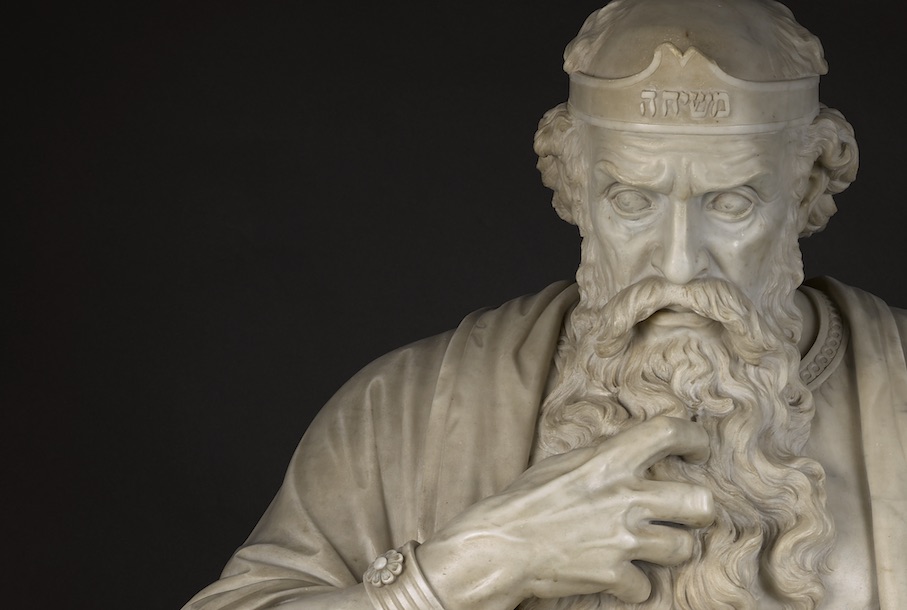
1 Samuel 15:10-31 – Rationalizing Disobedience

King Saul by William Wetmore Story (1819-1895) at the North Carolina Museum of Art

Then the word of the Lord came to Samuel: “I regret that I have made Saul king, because he has turned away from me and has not carried out my instructions.” Samuel was angry, and he cried out to the Lord all that night.

Early in the morning Samuel got up and went to meet Saul, but he was told, “Saul has gone to Carmel. There he has set up a monument in his own honor and has turned and gone on down to Gilgal.”

When Samuel reached him, Saul said, “The Lord bless you! I have carried out the Lord’s instructions.”

But Samuel said, “What then is this bleating of sheep in my ears? What is this lowing of cattle that I hear?”

Saul answered, “The soldiers brought them from the Amalekites; they spared the best of the sheep and cattle to sacrifice to the Lord your God, but we totally destroyed the rest. “Enough!” Samuel said to Saul. “Let me tell you what the Lord said to me last night.”

“Tell me,” Saul replied.

Samuel said, “Although you were once small in your own eyes, did you not become the head of the tribes of Israel? The Lord anointed you king over Israel. And he sent you on a mission, saying, ‘Go and completely destroy those wicked people, the Amalekites; wage war against them until you have wiped them out.’ Why did you not obey the Lord? Why did you pounce on the plunder and do evil in the eyes of the Lord?”

“But I did obey the Lord,” Saul said. “I went on the mission the Lord assigned me. I destroyed the Amalekites and brought back Agag their king. The soldiers took sheep and cattle from the plunder, the best of what was devoted to God, to sacrifice them to the Lord your God at Gilgal.”

But Samuel replied:

“Does the Lord delight in burnt offerings and sacrifices
    as much as in obeying the Lord?
To obey is better than sacrifice,
    and to heed is better than the fat of rams.
For rebellion is like the sin of divination,
    and arrogance like the evil of idolatry.
Because you have rejected the word of the Lord,
    he has rejected you as king.”

Then Saul said to Samuel, “I have sinned. I violated the Lord’s command and your instructions. I was afraid of the men and so I gave in to them. Now I beg you, forgive my sin and come back with me, so that I may worship the Lord.”

But Samuel said to him, “I will not go back with you. You have rejected the word of the Lord, and the Lord has rejected you as king over Israel!”

As Samuel turned to leave, Saul caught hold of the hem of his robe, and it tore. Samuel said to him, “The Lord has torn the kingdom of Israel from you today and has given it to one of your neighbors—to one better than you. He who is the Glory of Israel does not lie or change his mind; for he is not a human being, that he should change his mind.”

Saul replied, “I have sinned. But please honor me before the elders of my people and before Israel; come back with me, so that I may worship the Lord your God.” So, Samuel went back with Saul, and Saul worshiped the Lord. (NIV)

“You cannot compensate by sacrifice what you lose through disobedience.”

edwin louis cole

God had given Saul explicit instructions on how to handle a group of people called the Amalekites (the first nation to attack the Jewish people after the Exodus from Egypt, and viewed as the archetypal enemy of the Jews). Saul obeyed only some of the instructions, but not all of them. King Saul rationalized his behavior as worship. But God would have none of it. The Lord rejected Saul as king. God wants no monkey business when it comes to obedience.

Whenever I come across biblical characters like Saul, I find myself trying to distance from them. Yet, oftentimes, when I take the time to sit a bit with the Scriptures, I realize I can have some of the same propensities as their behavior. In today’s Old Testament lesson, I am like Saul whenever:

  • I say I will do something and then get busy and not do it. I sometimes rationalize my lack of follow through by explaining what good things I was doing with my time instead.
  • I justify a purchase of something I do not really need but want with the excuse that I put a lot of money in the offering plate for God.
  • I slander another person, even though it is forbidden by God, with the knucklehead notion that I am protecting and helping others from that person’s evil ways.
  • I keep quiet in the face of a bad situation when I should be speaking up. I dismiss the lack of engagement and involvement with needing to save my energy for people who want it….

I could have kept going with this little exercise, but I got too convicted to keep thinking about it anymore. So, before we get too uppity about saying we are not like Saul and would never be like him, perhaps we ought to sit with the story for a while, being mindful and aware of any unacknowledged disobedience.

Rationalization is the way of sinners.  Repentance is the path of saints.  Which road will you choose today?

Holy God, you expect obedience to clear instructions.  I am sorry for all those times I found creative ways to circumvent your teaching.  Help me not to avoid your good commands, but to own them with vigor and vitality through Jesus Christ my Lord in the power of your Holy Spirit.  Amen.

1 Samuel 2:21-26 – Sin and Sinners

God was most especially kind to Hannah. She had three more sons and two daughters! The boy Samuel stayed at the sanctuary and grew up with God.

By this time Eli was very old. He kept getting reports on how his sons were ripping off the people and sleeping with the women who helped-out at the sanctuary. Eli took them to task: “What’s going on here? Why are you doing these things? I hear story after story of your corrupt and evil carrying on. Oh, my sons, this is not right! These are terrible reports I’m getting, stories spreading right and left among God’s people! If you sin against another person, there’s help—God’s help. But if you sin against God, who is around to help?”

But they were far gone in disobedience and refused to listen to a thing their father said. So, God, who was fed up with them, decreed their death. But the boy Samuel was very much alive, growing up, blessed by God and popular with the people. (MSG)

God is not okay with sin. And that is a good thing. In a world full of systemic violence, oppression, injustice, as well as personal cruelty and callousness toward others, we depend upon the Lord’s inherent character of justice and righteousness.

“Sin” is quickly becoming an antiquated word in our culture. That is likely because far too many persons and groups have created extrabiblical lists of sins to avoid – and so many understandably do not want anything to do with it. Biblically, sin is described as wrong and unjust actions (1 John 3:4), as well as failing to do right and just actions (James 4:17). 

Sin is both the breaking of God’s commands, and the lack of conforming to the teachings of Jesus. Christians throughout the ages have generally understood that the Ten Commandments (Exodus 20:1-17) and Christ’s law of love (Luke 10:27) constitute a summary of God’s holy and moral instruction for humanity. This is all based in the character of God, as a holy and loving Being. Sin, then, may be defined as anything in a person which does not express, or is contrary to, the basic character of God.

All sin, whether through overt actions of injustice or a failure to get involved in righteous causes, is rooted in attitudes and activities of self-centeredness. Such sinful attitudes bring about an obsession with lust (1 John 8:34; Galatians 5:16); a broken relationship with God (Romans 3:23; Galatians 5:17); bondage to Satan (1 Timothy 3:6-7; 2 Timothy 2:26); death (Romans 6:23; 8:6); hardening of the heart (Hebrews 3:13); and deception (1 Corinthians 3:18; James 1:22, 26) just to a name a few. There is no upside to sin.

What all this means is that we are guilty of transgressing basic morality as well as failing to live up to being ethically virtuous people on any on-going consistent basis. “Well,” you might say, “that sounds like a total Debbie-Downer.” No, it is total depravity. Being depraved does not mean we are never capable of doing good; it just means that sin has profoundly touched everything in our lives, without exception.

The ironic paradox is that experiencing true joy and comfort comes through knowing how great our sin is. We can only live above sin if we are set free from it by the grace of God in Jesus Christ. If a person is to be redeemed from sin, then a provision must be made. In Christianity, sin has been dealt with once for all through the person and work of Jesus. Christ is our representative, taking our place with the punishment we deserved (Galatians 4:4-5; Ephesians 2:5-6; Colossians 2:9-15; Hebrews 2:17-18; 1 John 2:1).

Jesus Christ is our ultimate substitute (Romans 5:8); which resulted in our redemption (Galatians 5:13); which resulted in his sacrifice for sin satisfying all justice (Romans 3:25); which resulted in our reconciliation to God (Romans 5:10). So, the person who believes in Jesus is forgiven of sin because Christ’s sacrifice is sufficient to deal with all the effects of sin. The Christian is complete in Christ (Colossians 2:10).

The sin issue has been dealt with decisively and definitively in Christ. Thus, gratitude is the order of the day.  Christians ought to be the last people on earth who walk around looking like a bunch of sourpusses who were baptized in pickle juice. Instead, Christians ought to be the most thankful and gracious people around because they are forgiven people. A lack of joy and celebration betrays a lack of Christianity (Luke 15:25-32).

Sin certainly is awful. It destroys everything it touches and can leave terrible consequences in its wake. Sin, however, does not have the last word. Christ’s crucifixion and resurrection are the decisive blows to sin’s power. The skinny on sin is that it is terribly bad. But Jesus is extremely good and overcomes the worst that sin can dish out.

If only Eli’s sons would have listened to their father and embraced grace, yet their sin was so egregiously intolerant to the point that God had had enough of their shenanigans. The contrast between the Eli’s biological sons and his spiritual son, Samuel, were quite pronounced. Old Eli blessed Samuel and his parents but had to rebuke his own sons. Indeed, unchecked sin led to death, but the gift of favor is given to the penitent.

“Work hard for sin your whole life and your pension is death. But God’s gift is real life, eternal life, delivered by Jesus, our Master.”

romans 6:23, msg

Just as Samuel grew in stature and in favor with God and others, so a thousand-years later Luke the Evangelist uses this language to describe the growth of Jesus (Luke 2:40). We, too, can enjoy the grace of God whenever we forsake the heinous nature of sin and live into the way, the truth, and the life that the Lord has waiting for us.

Almighty God, Sovereign Lord of the universe, and Creator of humanity, we, your unfaithful children, are terribly sorry for our sins and the lives we have lived apart from your grace. We sincerely believe that only through the precious blood of our Lord Jesus Christ can we obtain your forgiveness. We confess we have committed serious offences against you in thought, word, and deed against our neighbors. In laziness, despair, and lust for power, we have provoked hatred, division and hurt within our communities. In greed, deceit, and indifference, we have caused serious damage and unnecessary conflict to our brothers and sisters. In selfishness, insensitivity, and bias we have encouraged and emboldened those who inflict hurt, pain, and sorrow
on our loved ones and families. In the name of religion, doctrine, and even of Christ himself we have wounded fellow believers. In stubbornness, pride, and arrogance, we have caused division and strife within your church.

Mercifully send your Holy Spirit and cleanse us from all unrighteousness, restore in us true faith in Christ, and help us to live in peace with our ourselves and our fellow humanity, through our Lord Jesus Christ, to the glory of your holy name. Amen.

Acts 22:2-16 – You Have a Story to Tell

The Journey of the Apostle Paul by Russian artist Romanov Vladimir, 2014

When the crowd heard Paul speak to them in Aramaic, they became even quieter. Then Paul said:

I am a Jew, born and raised in the city of Tarsus in Cilicia. I was a student of Gamaliel and was taught to follow every single law of our ancestors. In fact, I was just as eager to obey God as any of you are today.

I made trouble for everyone who followed the Lord’s Way, and I even had some of them killed. I had others arrested and put in jail. I did not care if they were men or women. The high priest and all the council members can tell you that this is true. They even gave me letters to the Jewish leaders in Damascus, so that I could arrest people there and bring them to Jerusalem to be punished.

One day about noon I was getting close to Damascus, when a bright light from heaven suddenly flashed around me. I fell to the ground and heard a voice asking, “Saul, Saul, why are you so cruel to me?”

“Who are you?” I answered.

The Lord replied, “I am Jesus from Nazareth! I am the one you are so cruel to.” The men who were traveling with me saw the light but did not hear the voice.

I asked, “Lord, what do you want me to do?”

Then he told me, “Get up and go to Damascus. When you get there, you will be told what to do.” The light had been so bright that I could not see. And the other men had to lead me by the hand to Damascus.

In that city there was a man named Ananias, who faithfully obeyed the Law of Moses and was well liked by all the Jewish people living there. He came to me and said, “Saul, my friend, you can now see again!”

At once I could see. Then Ananias told me, “The God that our ancestors worshiped has chosen you to know what he wants done. He has chosen you to see the One Who Obeys God and to hear his voice. You must tell everyone what you have seen and heard. What are you waiting for? Get up! Be baptized and wash away your sins by praying to the Lord.” (CEV)

You have a story to tell. We all do. Your story is as special, powerful, and unique as anybody’s. Every person’s story is interesting, compelling, and needs to be told.

In today’s New Testament lesson, the Apostle Paul, considered the greatest follower of Christ of all time, tells his story. Paul was a Jew, an upwardly mobile mover-and-shaker within his world. He despised Christians and saw them as an aberration to the true worship of God. 

But Paul had an unexpected life-changing encounter with Jesus. It slammed him upside the head like a divine baseball bat. Whereas Paul really believed he was serving God by persecuting Christians, now he came face-to-face with the true reality that he was doing just the opposite – persecuting God!

As a result, Paul did a complete turn-around and experienced a powerful new life. He became a faithful Christian and took the good news of Jesus Christ to the known world. Paul knew something of forgiveness and never got over the grace shown to him.

This chapter of Holy Scripture is a good template for you to tell your own story. As you read Paul’s story, notice that he talked of life before being a Christian; the circumstances that happened for him to believe in Jesus Christ; and, explained what his life after becoming a Christian was all about.

A good, profitable, and healthy practice is to sit down and jot some thoughts down about your life before Christ, how you came to Christ, and what your life after becoming a Christian is like. Let your life-changing Christian event shape the story – whether it was like Paul’s, or a baptism, a church service experience, a family crisis, or whatever it was – the act of writing will help you make sense of your unique and special narrative.

Just as important, tell your story to others. There are people in your sphere of influence that need to hear what God has done in your life. They are in your life by God’s gracious design. You have a story to tell.  Let it out, my friend.

God of new life and new beginnings, I give you thanks for the person you have made me, where you have placed me, and the people you have surrounded me with. Help me learn to soak in your steadfast love and mercies each day. Let me imitate Christ’s humility and practice sacrificial love today, considering others before myself so as to bring you glory. Let me be someone who brings the fragrant aroma of Christ to those who do not yet know you. Let me not limit what you may do through me because of unbelief or fear. Thank you, Jesus, that you even promised that I may do greater works than you because your Holy Spirit lives in me. Trusting in your grace and not my abilities, I will tell my God story to all you send my way to listen. Amen.