
Rebuilding (Ezra 6:1-16)

Rebuilding of the Temple, by Gustave Doré, 1866

Then King Darius made a decree, and they searched the archives where the documents were stored in Babylon. But a scroll was found in Ecbatana, the capital of the province of Media, on which was written the following:

A memorandum— In the first year of his rule, King Cyrus made a decree: Concerning God’s house in Jerusalem: Let the house at the place where they offered sacrifices be rebuilt and let its foundations be retained. Its height will be ninety feet and its width ninety feet, with three layers of dressed stones and one layer of timber. The cost will be paid from the royal treasury. In addition, the gold and silver equipment from God’s house, which Nebuchadnezzar took out of the temple in Jerusalem and brought to Babylon, is to be restored, that is, brought back to Jerusalem and put in their proper place in God’s house.

Now you, Tattenai, governor of the province Beyond the River, Shethar-bozenai, and you, their colleagues, the officials in the province Beyond the River, keep away! Leave the work on this house of God alone. Let the governor of the Jews and the elders of the Jews rebuild this house of God on its original site.

I also issue a decree about what you should do to help these elders of the Jews as they rebuild this house of God: The total cost is to be paid to these people, and without delay, from the royal revenue that is made up of the tribute of the province Beyond the River. And whatever is needed—young bulls, rams, or sheep for entirely burned offerings to the God of heaven, wheat, salt, wine, or oil, as requested by the priests in Jerusalem—let that be given to them day by day without fail so that they may offer pleasing sacrifices to the God of heaven and pray for the lives of the king and his sons.

I also decree that if anyone disobeys this edict, a beam is to be pulled out of the house of the guilty party, and the guilty party will then be impaled upon it. The house will be turned into a trash heap.

May the God who has established his name there overthrow any king or people who try to change this order or to destroy God’s house in Jerusalem. I, Darius, have decreed it; let it be done with all diligence.

Then Tattenai, the governor of the province Beyond the River, Shethar-bozenai, and their colleagues carried out the order of King Darius with all diligence. So the elders of the Jews built and prospered because of the prophesying of the prophet Haggai and Zechariah, Iddo’s son. They finished building by the command of Israel’s God and of Cyrus, Darius, and King Artaxerxes of Persia. This house was completed on the third day of the month of Adar, in the sixth year of the rule of King Darius.

Then the Israelites, the priests and the Levites, and the rest of the returned exiles joyfully celebrated the dedication of this house of God. (Common English Bible)
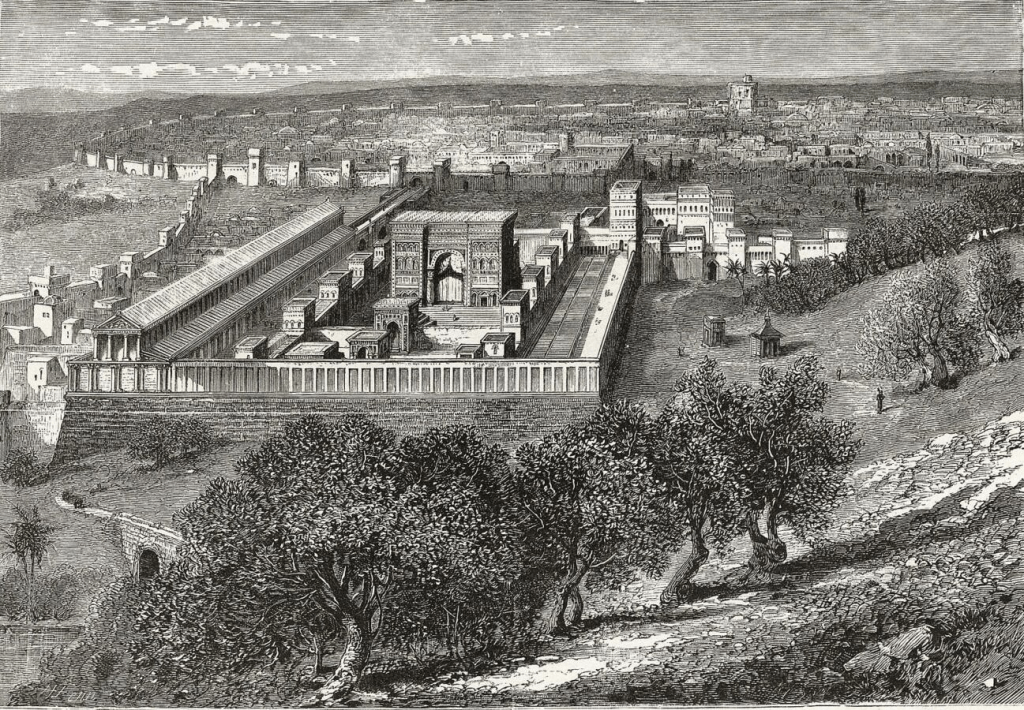
Throughout the time period of the Babylonian exile, the Jews waited impatiently for the day that Babylonian or Persian kings would allow them to return to their land and rebuild the Temple. When Cyrus was appointed king, their efforts were finally rewarded. Cyrus ordered that they be allowed to return to Israel and rebuild the Temple. He even promised to provide supplies for the project.

Under Persian rule, each subject people was allowed to live by its ancestral laws, which were enforced by the imperial government. Violations of the laws of the group to which one belonged constituted an offense against the state precisely because they led to instability. The maintenance of order in Judea, for example, would ensure the security of traveling to and from Egypt, and therefore the king required, in his own interest, that Jewish law be observed.

But down the road, when rebuilding efforts were questioned by the Persian governor of Judea, Tattenai, he and his associates wrote to King Darius about the legitimacy of the work. A search of the Persian records verified the Jewish claim and authority to rebuild the Temple.

What’s more, King Darius strongly affirmed support of restoration, including the use of tax revenues to help with funding the work. It was important enough for Darius to communicate that severe punishment would happen if anyone hindered rebuilding of the Temple.

The Temple was thus completed (in 516 B.C.E.) and it happened over a long period of time, under consistently adverse circumstances. The success of such a huge endeavor came through a combination of two different Persian kings who authorized the work and supported it fully; the prophets Haggai and Zechariah who encouraged it and provided spiritual support; and the Jewish leaders and workers who did the actual reconstruction and supported the effort with their blood, sweat, and tears.

In other words, a lot of stars in the universe needed to align for the Temple to actually be rebuilt. And it happened. Celebration of God’s sovereignty and divine help was then in order.

Awe and wonder are the basis of any good spirituality. Experiences that defy our imagination stick with us and bolster our faith for future mysteries and conundrums. I’m sure the Jews involved in rebuilding the Temple seriously wondered if it ever would materialize. Yet, it did.

While moments of awe come upon us, and cannot really be planned, there are yet some ways in which we can attune ourselves to experience awe in the everyday, such as:

  • Reading Holy Scripture, or inspiring biographies and novels
  • Attending church worship services and special events
  • Walking out in creation and spending time outside
  • Listening to music and going to live music performances
  • Visiting museums and community events
  • Engaging in spiritual disciplines and practicing them with others

We all go through times of rebuilding and needing to restore something which has been damaged or devastated. In your efforts, may you see the wonder of God’s movements in your life today, as you work and labor for a better tomorrow. Amen.


Good News For Those In Need (Isaiah 61:1-4, 8-11)

The Spirit of the Sovereign Lord is on me,
    because the Lord has anointed me
    to proclaim good news to the poor.
He has sent me to bind up the brokenhearted,
    to proclaim freedom for the captives
    and release from darkness for the prisoners,
to proclaim the year of the Lord’s favor
    and the day of vengeance of our God,
to comfort all who mourn,
    and provide for those who grieve in Zion—
to bestow on them a crown of beauty
    instead of ashes,
the oil of joy
    instead of mourning,
and a garment of praise
    instead of a spirit of despair.
They will be called oaks of righteousness,
    a planting of the Lord
    for the display of his splendor.

They will rebuild the ancient ruins
    and restore the places long devastated;
they will renew the ruined cities
    that have been devastated for generations…

“For I, the Lord, love justice;
    I hate robbery and wrongdoing.
In my faithfulness I will reward my people
    and make an everlasting covenant with them.
Their descendants will be known among the nations
    and their offspring among the peoples.
All who see them will acknowledge
    that they are a people the Lord has blessed.”

I delight greatly in the Lord;
    my soul rejoices in my God.
For he has clothed me with garments of salvation
    and arrayed me in a robe of his righteousness,
as a bridegroom adorns his head like a priest,
    and as a bride adorns herself with her jewels.
For as the soil makes the sprout come up
    and a garden causes seeds to grow,
so the Sovereign Lord will make righteousness
    and praise spring up before all nations. (New International Version)

This section of Isaiah’s prophecy looks forward to a better day. After centuries of downward spiraling into disobedience, the people found themselves on hard times.

In the prophet’s day, God’s people and their lives needed to be rebuilt, restored, and renewed; they needed salvation and deliverance; and the good news of healing, freedom, and comfort. 

The proclamation of the year of the Lord’s favor is a reference to the Old Testament command to practice the year of Jubilee. The Jubilee was to occur every fiftieth year of Israel’s existence in the Promised Land. For forty-nine years there were individuals and families that would incur debt; indenture themselves into servitude in order to survive; perhaps land in a debtor’s prison; and, work hard in the fields that they once owned. 

The Jubilee Year, by Yoram Raanan

These were, indeed, hard times. But after the forty-nine years, on the fiftieth year, the debts were erased; slaves were freed; fields allowed to rest; and, the land restored back to its original owners.

God’s deliverance is not only spiritual, but also very tangible and real. Salvation is not just otherworldly, merely looking forward to the end of the age; there’s also the anticipation of transformation here and now.

The recipients of good news are those who are in bad circumstances. God turns toward the oppressed, the brokenhearted, the captives, the prisoners, those who mourn, and the faint of spirit. God really does have a special concern for the lowly and the weak. 

It’s significant to note that, Israel as a whole, found themselves in need – not because they were victims of adverse situations – but because they failed to obey the stipulations of their covenant with God. 

For example, we have no evidence that the Israelites actually even practiced the Jubilee. By the time fifty years came down the pike, after God gave them the Promised Land, they had slid so far down the spiritual drain that it was completely off their radar to practice a Jubilee. 

It seems no one had any intention of forgiving debts, freeing their indentured servants, giving back the land to original owners, and providing the land itself with a well-deserved Sabbath rest. 

To not practice the Jubilee was to rob people of their land and be unjust to them. Yet, God loves justice and hates robbery. God pays attention to those who are not getting their very real and tangible needs met. So, God speaks words of hope and deliverance for those in circumstances beyond their ability to cope with.

The first few verses of today’s Old Testament lesson are the words that Jesus turned to and read in the synagogue when he began his earthly ministry. Christ is the ultimate fulfillment of this promise to deliver and provide. He came to usher in a Jubilee celebration that would have no end.

It may be easy to overlook these verses, believing that they don’t pertain to us. Gentiles are under no obligation to practice a Jubilee. After all, many people are blessed, both material and spiritual. Furthermore, we can always identify persons who are in much more need than we are. 

And yet, it’s important to recognize that the maladies of our hearts are very real. There are specific conditions in our lives that leave us in bondage and in need of restoration, renewal, and revitalization, just like the Israelites of old. 

Therefore, we must not suppress those realities and those needs, but name the conditions which are packed away in a closet of our heart deep inside us, such as:

  • the love of things and money
  • severed relationships
  • old grudges
  • hidden addictions
  • domestic violence
  • denial of depression
  • secret affairs
  • fear and anxiety
  • anger and hatred
  • hoarding of resources and greed

Outward smiles and small talk conversations may hide the truth from others, but they do nothing to hide ourselves from a God for whom everything is laid bare.

The good news is not just for someone else who has “obvious” needs. The gospel must touch our lives and bring us freedom, so that we can pass on good news to the legion of social ills that make our world sick. 

There are people all around us who need spiritual and emotional, mental and material help. Yet we will not have eyes to see them, or hearts to help them, if we ourselves stuff our burdens so deep within that we are blind and unable to see others.

What’s more, on the other hand, we may too easily misread these verses in a manner it was never intended to be heard, as if we are more in need than we actually are: 

“The Lord’s Spirit of consumer choices is upon me, because the Lord has anointed me to preach good news to the middle-class. He has sent me to bind up the half-hearted, to proclaim more options for the limited, and release from Black Friday for the buyers, to proclaim the year of the Lord’s Cyber-Monday.” 

We may not be so crass as to say this out loud, but we might tend to misinterpret Bible passages, so as to avoid our own great poverty of heart.

And when we become expert at stuffing our emotions and our needs, we then fail to see the year of Jubilee. We may believe that other people, “those people,” need Isaiah’s words. However, we are also in need of the year of Jubilee. 

The truth for many is that they are either one paycheck, one prodigal kid, one mental health diagnosis, one serious illness, one drink, one affair, or one bad decision away from being one of “those people” – the people we typically identify as in need – the ones that bad things happen to – the ones we do not want to live next door to us.

We may not yet be vulnerable enough to admit our situation; and so, we keep practicing the denial of our spiritual poverty. Everyone is brokenhearted about something or someone, such as:

  • a wayward son or daughter
  • an unfulfilled dream
  • a lost relationship
  • a difficult illness or health diagnosis
  • a crisis situation

In addition, everybody is in bondage to something we would rather not admit; everyone needs renewal and restoration. 

What should we do? Where are we to turn?

Let’s turn from the things that have caused us to be in poverty and in prison, and delight in the Lord our God. Rejoice in the Lord.

God will make a sprout come up, and cause it to grow. 

God will rebuild our ruined souls. 

God will restore the places of our lives that have been devastated. 

God will even renew the places that have not seen renewal for generations. 

It begins with you and me allowing the justice of God to work within us, and not only for other people.

God cannot bring comfort to those who do not mourn; the Lord cannot turn grief into joy if there is no acknowledgment of a dire situation. To be an oak of righteousness, there must be a confession of despair and an allowance of the justice of God through Jesus Christ to work its way completely through us.

Let the Lord replace a head of grief with a crown of beauty. Let God place a garment of praise to replace the stinky clothes of grumbling. And, in this season of Advent, herald the coming of the Christ child as the hope of us all, to the glory of God. Amen.

A Great Restoration (Psalm 126)

When the Lord restored the fortunes of Zion,
    we were like those who dream.
Then our mouth was filled with laughter
    and our tongue with shouts of joy;
then it was said among the nations,
    “The Lord has done great things for them.”
The Lord has done great things for us,
    and we rejoiced.

Restore our fortunes, O Lord,
    like the watercourses in the Negeb.
May those who sow in tears
    reap with shouts of joy.
Those who go out weeping,
    bearing the seed for sowing,
shall come home with shouts of joy,
    carrying their sheaves. (New Revised Standard Version)

I personally think that God is amazing. The Lord not only brings restoration and wholeness to people; God also reverses people’s fortunes so that what was lost is found again. Indeed, reversal has a prominent place in today’s psalm, inviting us to recognize that God does more than compensate persons in a loss, but also brings about a complete reversal of reality.

God is the expert at restoring people’s fortunes. For a nation who was overrun by the Babylonians, sent into exile, and then had the ability to return from that exile back to Jerusalem, it very much indeed, felt like a grand restoration. The effect it had on the people was profound. The psalmist describes it like this:

It’s like waking from a dream and realizing that it’s reality.

It’s like the best party – full of celebration, singing, and laughter – that anyone has ever experienced.

It’s like being a real live miracle.

Being invaded, attacked, violated, taken away from your home and traumatized – and then living in oppression and having forced suppression in living your life the way you believe you ought to, is an awfully sad and discouraging way to exist.

But then, fortunes are restored. The grieving and lamenting give way to laughter and joy. That feeling of a 500 pound weight on your shoulders is lifted; you now feel light as a feather. And it isn’t only a personal reversal of tangible resources; it’s also a psychological turn around.

The nations frequently mock and ridicule God’s people. They look at the suffering, as if God has abandoned them – or wonder even if there is a God, at all. The thinking of other nations, is that Israel’s God is nothing but a local god who is impotent outside of Judah. Besides, he probably doesn’t care about a bunch of losers anyway, they reason.

Don’t give the other nations a reason to say,
    “Where is their God? Can’t he help them?”
Let us see you punish those people.
    Punish them for killing your servants. (Psalm 79:10, ERV)

But the God of the Bible is no limited territorial being; the Lord is sovereign over all the earth. And this God is able to effect a radical reversal of body, mind, and spirit – even to those other nations. The disrespectful mouths that once mocked are reversed to giving praise to Israel’s God and acknowledging that the Lord has done great things for the people.

This God has both the will and the ability to intervene and effect real change that completely reverses a person’s and even a nation’s life. Once someone has experienced what God can do, they forever know that God can do it again.

One of the things which personally motivates me is that the Lord has changed my life and my fortunes on many occasions – and even used me to help effect a reversal in other people’s lives, as well. So, no matter how bad things get (and sometimes they get awfully darned bad!) I have confidence and trust that a good, merciful, and loving God sees it all, knows it all, and has the power to do something about it. I may have to wait for a while – maybe even an agonizingly long time – yet I am convinced that the same God who restored the fortunes of Israel can reverse my situation, too.

And the change is so wonderfully dramatic, that it’s like a wadi in the desert, a life-giving river that emerges in the bone dry desert, bringing new growth and sustaining animal life, after the rains finally come and reverse the landscape and the environment completely.

We are, however, reminded that a great reversal and a complete restoration does not happen immediately. When the farmer plants in the Spring, it will be months before there is a harvest of crops. It takes time for the seed to germinate, break the soil, and grow into a mature plant, ready for the harvester.

Get-rich schemes rarely work in life, and never really happen in the spiritual life. Renewal, restoration, and a reversal of fortunes is not an instantaneous event, but rather a process that develops and eventually happens. A lot of blood, sweat, and tears go into any meaningful and sustainable process of change. Yet, where there is weeping, the end will be shouts of celebration and joy.

Believers can live expectantly, and fully convinced, that their suffering will eventually give way to glory. Grief and tears will not have the last word; God’s restorative and reversing grace will.

Many of you long for restoration – either for yourselves or for others you love and care about – because you recognize there needs to be a great reversal of fortunes. Advent is the season for waiting, the time for anticipation, knowing that deliverance will come in the form of a baby. And our waiting shall not be in vain.

O Lord our God, accept the fervent prayers of your people; in the multitude of your mercies look with compassion upon us and all who turn to you for help; for you are gracious, O lover of souls, and to you we give glory, Father, Son, and Holy Spirit, now and forever. Amen.

Becoming Holy (Isaiah 4:2-6)

And that’s when God’s Branch will sprout green and lush. The produce of the country will give Israel’s survivors something to be proud of again. Oh, they’ll hold their heads high! Everyone left behind in Zion, all the discards and rejects in Jerusalem, will be reclassified as “holy”—alive and therefore precious. God will give Zion’s women a good bath. He’ll scrub the bloodstained city of its violence and brutality, purge the place with a firestorm of judgment.

Then God will bring back the ancient pillar of cloud by day and the pillar of fire by night and mark Mount Zion and everyone in it with his glorious presence, his immense, protective presence, shade from the burning sun and shelter from the driving rain. (The Message)

One of the characteristics of Holy Scripture I deeply appreciate are the wonderful prose sections letting us, the readers and listeners, know that our longings for better days will come. There is a day coming when all of our good imaginings of the future shall be realized; and our present circumstances of hatred, discord, jealousy, and envy of one another shall be a thing of the past.

Unfortunately, we will likely (and biblically!) have to see some devastating and violent loss, and experience some terrible and awful destruction of both body and soul. All of the Old Testament prophets spoke messages of both judgment and grace, suffering and glory. Although hammered with ruin, biblical readers are given glimpses of hope to see the possibility of life beyond all of the carnage.

In other words, there will indeed be restoration and renewal. All shall not be lost forever. Death does not have the last word; resurrection does. It will happen because God has a determined resolve to find resilient ways of restoring the divine/human relationship back to its original and intended peaceful good.

It takes faith to have hope, and hope to have faith, and love to win the day forever. If God can create ex nihilo, out of nothing, then the Lord can reform and renew that which already exists, even though it may be in an awfully deformed state.

The ones who remain, the survivors, are the remnant of true believers, the people who hold onto faith and patience in the face of adversity, hardship, and difficulty. These are the dreamers, the seers, the prophets who foresaw both the need for divine judgment, and equally understood the promise of divine restoration.

The earth will once again be blessed. A rainbow of promise shall rise to remind us all that the storms which ravaged us have passed, never to return again.

But let us also clearly understand that it is because of human stubbornness, of hard-hearted people failing to love mercy and show steadfast love, that got us in this pickle of judgment to begin with. There comes a point when the repeated refusal to change, and use the gifts God has given us, leads to our shelf life on this earth coming to a moldy ruin. To be thrown into the divine incinerator is something brought on by us, not God.

Evil is like a cancer which must be purged from our existence so that we can be clean and healthy. The commands of God are not meant to keep people under a heavy divine thumb, but rather to help people live well in this world in a good healthy way. Living a holy life means that we participate in productive spiritual practices that strengthen faith and support the spirit.

People become “unclean” when they take a different path which is inconsistent with how we were designed by our Creator to live. It would be a bit like believing we can ignore all traffic laws and drive how we want, and then are surprised when we are nearly killed in an accident. Sadly, the unclean perish in their self-preoccupations, with God’s generosity completely off of their spiritual radar.

Yet, no matter where we’ve come from or what we have done, there is always the possibility of rehabilitation, of renewing our relationship to God, experiencing the divine presence, and receiving divine grace.

Getting in sync with the healthy spiritual forces of this universe is like having the ancient provision and protection of God’s pillar of cloud by day and fire by night – reassuring us that we are not alone and belong securely in the merciful arms of a loving Lord.

In Christianity, a holy life and a clean heart results from the person and work of Jesus Christ. God got down to it, taking the judgment we deserved and giving us grace. All of the temporary ritual cleanings merely pointed forward to the once for all scrubbing of the cross.

The blood of goats and bulls and the ashes of a heifer sprinkled on those who are ceremonially unclean sanctify them so that they are outwardly clean. How much more, then, will the blood of Christ, who through the eternal Spirit offered himself unblemished to God, cleanse our consciences from acts that lead to death, so that we may serve the living God!…

 and since we have a great priest over the house of God, let us draw near to God with a sincere heart and with the full assurance that faith brings, having our hearts sprinkled to cleanse us from a guilty conscience and having our bodies washed with pure water. Let us hold unswervingly to the hope we profess, for he who promised is faithful. (Hebrews 9:12-14, 10:21-23, NIV)

May you experience the blessing of becoming clean, and know the blessing of being holy and pure in all your relationships and activities. Amen.