You Have Inherent Worth (Genesis 2:4b-7)

Elohim Creating Adam, by William Blake, 1795

In the day that the Lord God made the earth and the heavens, when no plant of the field was yet in the earth and no vegetation of the field had yet sprung up—for the Lord God had not caused it to rain upon the earth, and there was no one to till the ground, but a stream would rise from the earth and water the whole face of the ground—then the Lord God formed man from the dust of the ground and breathed into his nostrils the breath of life, and the man became a living being. (New Revised Standard Version)

The word “Genesis” comes from the Septuagint, an ancient Greek translation of the Old Testament, and means “origin.” The first book of the Bible does indeed have to do with origins. And in the early chapters, Genesis addresses the origins of the earth and all it’s life and systems, including humans.

Genesis 1 is a poetic account of those origins. Genesis 2-3 provide a complementary narrative account of creation and the beginning of the world. These three chapters together affirm the inherent goodness of all creation, as well as how complex it all truly is.

God is the Creator of the earth and humanity. The original man, Adam, is a name transliterated from the Hebrew adamah, which means ‘ground’ or ‘dirt/dust.’ This relationship between Adam and the literal dirt of the planet is the basis for humanity’s special relationship with the land and taking good care of it as a proper steward of the earth. In the beginning, working the actual ground was set up as a blessing.

We are living creatures, having been given breath (Hebrew nephesh). Along with all the living breathing animals on this earth, we share a basic creaturehood and are thus connected with each other. In addition, only people are formed in God’s likeness and enjoy a special relationship with the Lord in being God’s image-bearers. (Genesis 1:27)

God created you and me as good. The Lord has made provision for us to glorify God, and to be successful in doing the Lord’s will. People who are ineffective in living out their spiritual lives are persons who do not know the truth about themselves. 

Both truth and error are powerful. If people are misguided about who they are, then they become like empty wells with no water to draw from. Many of our problems, failures, and shortcomings are largely due to a misunderstanding of our basic personhood. 

A profound result of this misunderstanding is a lack of self-worth. Whenever we are in error about who we really are, we have automatically limited ourselves to what we can do in our lives. Comparing ourselves to others is not helpful; nor is trying to simply gin-up good feelings about ourselves. 
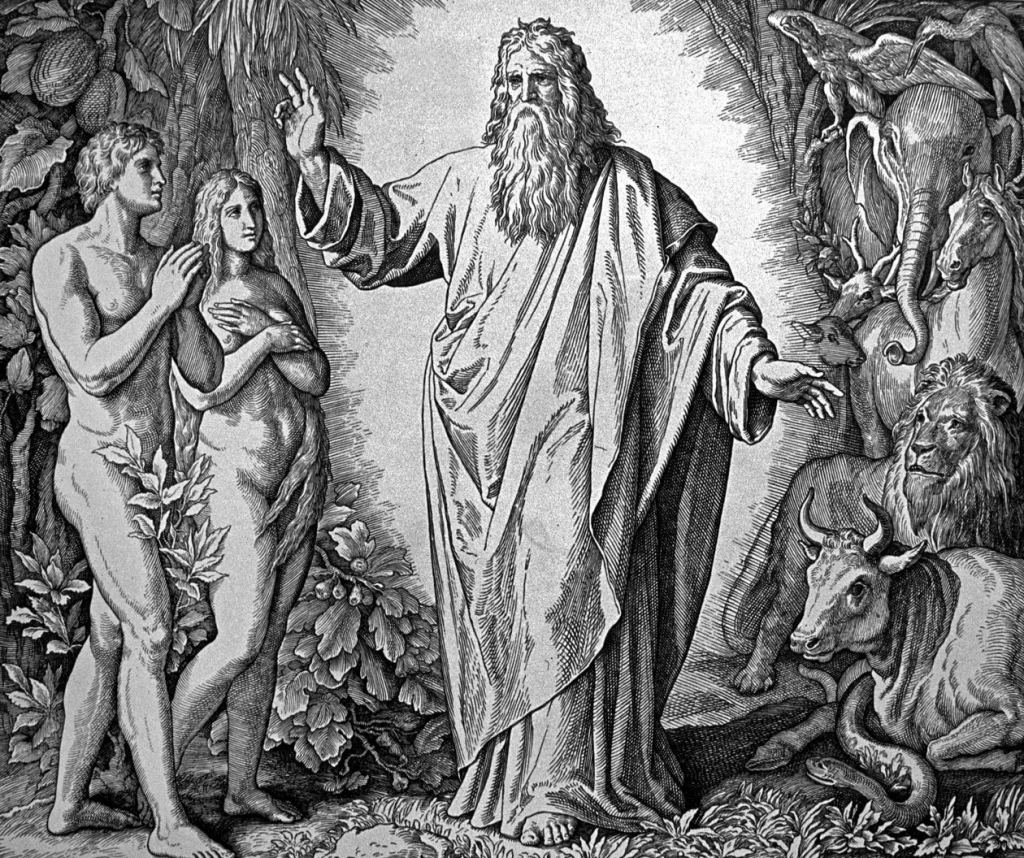
God Creates Adam and Eve, by Julius Schnorr von Carolsfeld (1794-1872)

Only by accepting who we truly and really are, can we actually be helped, and discover human fulfillment in this life. Let us consider that it is vitally important what the Holy Scriptures say about us; and also equally significant to respond in faith to the recognition of our great worth on this earth.

An important bedrock truth we must understand is that people been created in the image and likeness of God (Genesis 1:16-17). We can only begin to understand ourselves if we begin with creation. Since God is a Person of infinite perfection and goodness, to be created in God’s image means we are persons of great potential and value.

To be a person means that we are self-conscious and can make decisions. We also have inherent rights to know, to be heard, to feel, to have an opinion, to be honored, to develop potential, to assume responsibility, and to enjoy life and all creation. In other words, God treats us as persons; therefore, we may not treat ourselves any less than that.

People were created to know God, to understand spiritual truth, and to perform spiritual functions. 

Because we are created by God, we are sacred individuals. We commit a profound shortcoming when we do not develop our potential and live as though life and fulfillment were graciously given by God for our good. 

Accepting erroneous thoughts about ourselves (and we all have) leads us to misinterpret our circumstances, relationships and opportunities. Without even realizing it, we bring confusion and failure into many, if not all, areas of our life.

One of the clearest evidences that we may not know, accept, and practice the biblical truth of our self-worth, is seen in our response to Holy Scripture. Too often we observe altruistic people and say, “I can’t be like that!” Or we read scriptural promises and commands and say, “I can’t do that!” Living with that kind of unbelief and error in our lives results in discouragement and/or criticism of others who seem to be successful in their spiritual lives.

Here is the truth about you:

You are loved by God (John 15:9; 17:23). This means that God recognizes us as persons, gives us our rightful place in the divine life, and will do right by us. God has our back. Therefore, let us accept this truth.

You are called to live in fellowship with God (1 Corinthians 1:9). No greater honor could be bestowed on us than the invitation to interact with the Living God. As we do, the door is open, so that God can minister to us and lead us into the knowledge and practice of the divine will.

You have been given divine revelation (Hebrews 1:1-3). Having the Bible available to us (in our own language!) is one of the greatest possessions we could ever receive. There is nothing more powerful than the truth about God and divine desires for our daily life. Therefore, let us pay attention to divine revelation and obey it, since God has so graciously given it to us.

You are the object of divine redemption (Romans 5:8-9). The great evidence of our human worth is the reality that Jesus Christ has secured our redemption from guilt, shame to himself. Jesus, the Son of God, loved us and gave himself for us. (Galatians 2:20)

You are the temple of the Holy Spirit (1 Corinthians 6:19-20). The actual physical temple of the Old Testament was filled with the glory of God. Today, through Christ’s redeeming love on the cross, every believer in Jesus is God’s temple. Therefore, God wants to work in us and through us for the Lord’s glory and honor.

The conclusion to the matter is that the way to know our true self-worth is to accept what Holy Scripture says about us; and then respond by faith and love to its loving and redeeming message. 

According to the book of Genesis, you are no accident. You are a person of infinite worth to God. So live into this wonderful truth.

Soli Deo Gloria

Leave a Supportive Spiritual Legacy (Deuteronomy 11:18-21)

 “So commit yourselves wholeheartedly to these words of mine. Tie them to your hands and wear them on your forehead as reminders. Teach them to your children. Talk about them when you are at home and when you are on the road, when you are going to bed and when you are getting up. Write them on the doorposts of your house and on your gates, so that as long as the sky remains above the earth, you and your children may flourish in the land the Lord swore to give your ancestors.” (New Living Translation)

The biblical book of Deuteronomy is a farewell address by Moses to the Israelites.

Moses was about to die. The Israelites were about to enter the Promised Land.

So, Moses restated God’s law and called the people to remember all that God had done. He exhorted the people to communicate the law and their heritage to the next generations.

If God’s words and God’s ways are continually observed, then the people would prosper in God’s Promised Land.

The overarching call and command of Moses to the people is to love God with everything they have and everything they are.

God’s people are to have a dedicated commitment of mind, body, emotions, and spirit to the law of God. Each ability and gift, and all that makes a person a person, is to have its clear direction and orientation toward loving God through obeying God’s commands.

The love of God is meant to become a habit in the normal daily rhythms of life. How do we do that? Impress God’s commands by talking about them in every sort of context: home and family; neighborhood and workplace; morning and evening. People are even to write out God’s commands and have them in front of us all the time. 

Indeed, the entire day is an opportunity to love God by talking about God’s words. Discussing God’s words and commands doesn’t need to be forced or awkward. Yet, it is something which needs some intention and purpose to it.

Most people like talking about things which are important to them. If someone is really into classic cars, he does not have to try and force a conversation about it because it just comes out of him. Because they go to car shows, maybe own a classic car that they are continually tinkering with, and read up on car magazines, a discussion about the subject is quite natural to them.

So, the best way to live into God’s law is to spend time with God through regular Bible reading, focused and earnest prayer, conversing with others, and taking advantage of opportunities to learn and know about God. For the Christian, talking about Jesus is meant to be organic, springing from a heart which loves God and observes God’s law.

When it comes to family, an expert theologian or biblical scholar is not needed; there just needs to be a willingness and a curiosity to ask questions.

Back when raising my girls, most of our conversations at the table centered around one question I would ask. We discussed it, talked about it, and mulled it over. Sometimes it was a deep theological question. At other times, it was a practical question. My wife and I often had others share a meal with us, so I usually asked our guests to tell their God story or participate with us in the question. If they were not Christian, I would ask them what they thought about Jesus and faith, and why.

God loves it when we have conversation in the home around biblical teaching. God also loves it when we have discussions in public. Some Orthodox Jewish persons still to this day wear a “phylactery” on their foreheads – a small box with little Scripture passages inside of it – testifying to their value of the written Word.

I’m not sure that’s what Moses had in mind when he talked about binding God’s commands on the forehead and tying them as symbols on the hands. Much of the Hebrew language is metaphorical, speaking about concrete things as a way of communicating something intangible. So, I wonder if the big idea here is simply to be open about faith and love for God and the law.

Although I don’t believe we have to take today’s verses quite so literally, there is, however, something to be said for keeping Holy Scripture continually in front of us, in order to remember divine commands and promises.

It’s good to write some Bible verses and place them on your bathroom mirror, the dash of your car, in your pants pocket, or anywhere you will see them on a regular basis. It’s a practical way of remembering to observe all that God has commanded.

Physical reminders of significant spiritual events can help us keep the words of God in our lives. When the Israelites experienced God in some significant way, they built an altar. For example, when they approached the Jordan River to enter the land, God caused the water to stop flowing so that they could cross over. Here is what happen next: 

Joshua erected a monument, using the twelve stones that they had taken from the Jordan. And then he told the People of Israel, “In the days to come, when your children ask their fathers, ‘What are these stones doing here?’ tell your children this: ‘Israel crossed over this Jordan on dry ground.’

“Yes, God, your God, dried up the Jordan’s waters for you until you had crossed, just as God, your God, did at the Red Sea, which had dried up before us until we had crossed. This was so that everybody on earth would recognize how strong God’s rescuing hand is and so that you would hold God in solemn reverence always.” (Joshua 4:20-24, MSG)

Passing the spiritual baton and leaving a heritage for future generations is a sacred trust. One of the best ways for that to happen is within the home, talking about God and Scripture as a daily routine, as well as freely conversing about spirituality in public.

There are several ways churches can impress Scripture to younger generations: 

  1. Train them to lead. Adults do not have to do everything in the church. Every generation can be empowered to engage in ministries on a regular basis. Everyone needs a mentor to do anything well – which means taking others with us along the journey of ministry so they can both shadow and participate.
  2. Empathize with young people and young families. That means avoiding criticism. It’s easy for older generations to be critical about another generation’s lack of involvement; or how they live their lives. They don’t need our criticism, but our help. Empathy means that we recognize others are trying to do the best they can in a crazy world. And it’s a world quite different from the one I grew up in. This is a very competitive world, requiring more energy and drive than previous generations. Being a student today is not like being a student when I was a kid.  Being a young parent is not the same today as it once was. Today’s family structure is completely changed; what we think of as a traditional family only makes up 7% of the American population. The stance to take on this is not to criticize, but to encourage and help.
  3. Take the message of Jesus seriously.  Discussion, conversation, questions, and mutual sharing are the ways Jesus developed his followers; and it’s a way we can reach younger generations. Dialogue goes a lot further than simply telling others what they should believe and do.
  4. Adopt a young person, or a young family. If you consider yourself part of an older generation, consider taking a younger person or family under your wing, who is not related to you. Invite them to a meal, read these verses, and discuss them together. Commit to praying for them daily for a set period.
  5. Look for ways to support children, teens, and young families. Prioritizing younger generations means they don’t have to do everything our way. Rather, it means we will listen to what they need in loving God and building into their own families.
  6. Be great neighbors. Discuss, teach, empower, and develop young people – without criticism – into good neighbors who engage their local community by addressing issues with great love and lots of compassion.

There are many more ways to engage. The idea here is that we think about how to embody the teaching we have in Deuteronomy by passing on God’s love and God’s words. So, where will you start?…

Recover the Relational Commands (1 Timothy 6:13-16)

In the sight of God, who gives life to everything, and of Christ Jesus, who while testifying before Pontius Pilate made the good confession, I charge you to keep this command without spot or blame until the appearing of our Lord Jesus Christ, which God will bring about in his own time—God, the blessed and only Ruler, the King of kings and Lord of lords, who alone is immortal and who lives in unapproachable light, whom no one has seen or can see. To him be honor and might forever. Amen. (New International Version)

Jesus is Lord, and Ceasar is not. The Apostle Paul’s letter to Timothy, in some ways, could be summed up in this way.

As Timothy ministered to the fledgling church in Ephesus, he was to continually keep his eyes on Jesus and take his cues for ministry on the apostolic teaching handed down to him. Timothy was not to get caught up in the fear of living in an Empire that commanded fealty to Ceasar as the supreme being over all.

Timothy was to flee all that is contrary to the sound doctrine of Christian faith. He was instead to pursue righteousness, godliness, faith, love, endurance and gentleness. Paul encouraged and exhorted Timothy to fight the good fight of the faith; and take hold of the eternal life to which he was called. Timothy was to live into his confession of Christ and his call from God.

Embrace Jesus as Lord, and quit trusting in Ceasar as Lord.

Although we see nothing subversive about today’s New Testament lesson, it very much was when Paul originally wrote it. The Apostle was essentially saying that, as Timothy goes about pastoring the church at Ephesus within the Roman Empire, he must always uphold the sovereignty and lordship of Jesus Christ as supreme – which, if seen by Roman authorities, would be taken as a subversive action against the state.

The Empire cares about submission to the state, and would see Jesus as Lord as Timothy and Paul teaching people to submit to a different ruler than Ceasar. And they would be right because neither Paul nor Timothy had any intention of engaging in the cult of Ceasar.

Contrary to the Roman imperial gods, and Ceasar himself, Paul lifted up the God who gives life to everything. It is this God – embodied in the Lord Jesus Christ – whom Timothy is encouraged to maintain a steadfast and consistent commitment to. And, what’s more, this commitment is to be carried out without any spot or blame.

Timothy had no need to bully people or shame others into accepting and holding onto the gospel. The means and the methods of how we embrace our charge from God matters a lot. By persevering in faith, holiness, and humility, Timothy would preserve himself and be of benefit to his listeners.

Believers are to keep up this spiritual commitment until Christ returns. It is always open season on gospel proclamation and Christian growth and maturity – lived with a gracious spirit.

By looking to Jesus, followers of Christ can maintain their witness. Times of discouragement are bound to come. And in those difficult seasons of life, we are not to change or switch our allegiance to the political powers. As important as government is, politicians are not saviors; and a particular system of government is not going to deliver us from our greatest oppressions.

The Apostle Paul described Jesus as the King of kings and Lord of lords, the blessed and only Ruler. Christ is  sovereign over all earthly powers.

Furthermore, God alone is immortal and lives in unapproachable light. God is pure light, and in the Lord there is no darkness. God’s glory is bright and blinding; therefore, no one can see God. To this God deserves honor and might forever.

The mighty and holy God will fulfill all divine promises. Paul was looking to reinforce some courage in Timothy by reminding him of the sort of God they both serve.

In our current and contemporary world, it’s easy to become discouraged. Injustice abounds. Hardness of heart is everywhere. An inability to truly see one another is rife. And people look everywhere and to anyone who appears successful. They want to know the secret in how to survive and thrive on this earth, in their workplaces, and in their homes.

But it’s no secret. The hard work of relationships is what it takes – both human and divine. There is no replacement or surrogate work to the labor of investing yourself into others lives. There’s no substitute for a relationship with God which involves prayer and basic Scripture reading, worship and spiritual disciplines; and face to face relations with actual real people – getting to know them, their joys, their fears, and what motivates them.

Until we recover things such as spiritual mentoring, spiritual practices, group prayer, congregational worship, and create the time for relationships, we shall continue to struggle with a fundamentally broken world and all of its dysfunctional relationships.

No matter the organization, the neighborhood, the family, or the church, we need real people to do honest real work. Whenever a manager, a block captain, a parent, or a pastor allows themselves to be vulnerable and authentic – and lives on the same level as those they serve – then no one is looking for a secret sauce to success.

The Christian’s path of life is always to involve humility, gentleness, mercy, purity, and peacemaking, in doing the work of right relations with the people around them. This is the way of Christ.

Trying to discover a process or a system – apart from the muck of relationships – will fail, every time. This is the way of Ceasar.

Paul took the time and invested the effort into his relationship with Christ. Then, he put himself in a position to mentor others in the faith. Furthermore, he encouraged people like Timothy to do the same. Apart from this work, there is no Christianity.

Believers in Jesus are here today because of Paul and Timothy and the body of teaching and work they passed on to others who, in turn, did the same.

You then, my son, be strong in the grace that is in Christ Jesus. And the things you have heard me say in the presence of many witnesses entrust to reliable people who will also be qualified to teach others. (2 Timothy 2:2, NIV)

It’s time to roll up your sleeves and fulfill the calling you have received, the calling of righteousness (right relationships) with both God and others – because Jesus is Lord, and Ceasar is not.

Eternal Father, you gave to your incarnate Son the holy name of Jesus to be the sign of our salvation: Plant in every heart, we pray, the love of him who is the Savior of the world, our Lord Jesus Christ; who lives and reigns with you and the Holy Spirit, one God, in glory everlasting. Amen.

Remain In Me (John 15:1-8)

The Vine and the Branches, by Irene Thomas

I am the true vine and my Father is the gardener. He cuts off every branch in me that bears no fruit, while every branch that does bear fruit he prunes so that it will be even more fruitful. You are already clean because of the word I have spoken to you. Remain in me, as I remain in you. No branch can bear fruit by itself; it must remain in the vine. Neither can you bear fruit unless you remain in me.

I am the vine; you are the branches. If you remain in me and I in you, you will bear much fruit; apart from me you can do nothing. If you do not remain in me, you are like a branch that is thrown away and withers; such branches are picked up, thrown into the fire and burned. If you remain in me and my words remain in you, ask whatever you wish, and it will be done for you. This is to my Father’s glory, that you bear much fruit, showing yourselves to be my disciples. (New International Version)

In the New International Version of the Bible, the word “remain” is repeated 8 times in 8 verses. The original Greek word translated as “remain” is μένω (pronounced “men-oh”). It means to linger in the present moment; to be mindful to ourselves and our situations; to stay connected.

Remaining with Jesus means we that have continual unbroken connection of unity and fellowship with him.

In order to have a connection, there must be two ends to connect. The Jesus connection is always there. We are the other connection. And, frankly, we can be flaky – pulling away and coming close – which is why Jesus gave a repeated invitation to keep the connection.

Some other translations of John 15:4 may help to fill out an understanding of this invitation to remain in Christ (emphasis mine):

Stay joined to me, and I will stay joined to you. Just as a branch cannot produce fruit unless it stays joined to the vine, you cannot produce fruit unless you stay joined to me. (CEV)

Live in me, and I will live in you. A branch cannot produce any fruit by itself. It must stay attached to the vine. In the same way, you cannot produce fruit unless you live in me. (GW)

Abide in Me, and I in you. As the branch cannot bear fruit of itself, unless it abides in the vine, neither can you, unless you abide in Me. (NKJV)

Stay connected to me, and I will stay connected to you! A branch cannot produce fruit on its own but only if it has a vital connection to the vine. In the same way, there’s no way you can produce fruit at all, unless you have a meaningful connection with me. (my own translation)

The task of every Christian is to remain connected to Jesus. So, the question is: How do we keep the connection without breaking it? How can we be fruitful?

Focus on the Relationship

Christianity, at its core, is a living relationship with Jesus. Yes, doctrine is important; and it’s necessary to know the basic tenets of Christian faith. Yet, any knowledge we gain about Christianity is to be channeled into developing the relationship.

By Helian Cornwell

Bible trivia is only as good as the understanding we apply to build the relationship. Knowledge makes us proud of ourselves, while love makes us helpful to others. Knowledge makes us feel important, yet love strengthens the Church. Knowledge puffs up but love builds up. (1 Corinthians 8:1)

Christ’s redemption – his incarnation, holy life, death, resurrection, and ascension – are meant to restore the severed relationship with humanity. Only knowing doctrinal truth is not the same as using the doctrines to connect with God in a loving relationship.

It takes planning, dedication, time, and effort to grow and maintain our relationship with Jesus Christ. If we fail to use our time and energy on that relationship, then the leaves on the branch begin to wither.

Scripture, silence, solitude, community, prayer, giving, and fasting have always been at the center of Christian practices designed to put us in a position to hear and receive from God.

Relate Well to the Other Branches

The Church is a living growing community. Christ and the Church have a vital union with each other. I used to live in a place where there was a tree that had grown up next to an old fence post. The tree grew tall and engulfed the post to the degree that now you can only see part of the fence post.

To remove the post, you would have to remove the tree; the two have become one. Not only are we connected to the trunk, but we’re also connected to each other. We are all part of the same vine; we aren’t separate vines. So, we all need to do our part in the vine’s system.

Keep Close to the Vine

My grandmother had a grapevine in her backyard when I was a kid. I have firsthand understanding that the sweetest, juiciest, biggest, and best tasting grapes are found in the middle, securely next to the vine’s stem.

The sour grapes are found at the end of the branches. Show me a sourpuss Christian, and I’ll show you a Christian who is not close to Christ. Show me a sweet Christian and I’ll show you a believer who daily works at their close connection with Jesus.

Pruning is Necessary

Healthy vines need pruning, at least once a year; ideally, twice a year, in the Spring before budding, and in Autumn, after the harvest. Without pruning, the vine’s ability to produce good and abundant grapes is compromised. The grapevine’s branches need to be kept short because the nutrients are concentrated in and near the vine stem.

Pruning hurts. From the perspective of us branches, pruning feels like judgment. But it isn’t. Even though pruning is painful, it makes us healthier and tastier.

It’s better to do a few things well, rather than try and do a lot of things for which there is limited time and energy. So, do some spiritual pruning twice a year!

Know Why You are Connected

Yes, Christians have a connection with Jesus so that we are saved from sin, death, and hell. And, yes, we are connected to experience abundant life. Yet, the goal of that connection is to produce succulent fruit.

If there are no grapes on the vine, the vine is useless. Grapevines exist to produce grapes. Christians and Churches exist for the life of the world, to produce the fruit of righteousness consistent with our Christ-connected union: love, joy, peace, patience, kindness, goodness, faithfulness, gentleness, and self-control. (Galatians 5:22-23)

The Church is not an end in itself, but exists for the life of the world. Using other metaphors, Jesus said:

“You are the salt of the earth. But if the salt loses its saltiness, how can it be made salty again? It is no longer good for anything, except to be thrown out and trampled underfoot.

“You are the light of the world. A town built on a hill cannot be hidden. Neither do people light a lamp and put it under a bowl. Instead, they put it on its stand, and it gives light to everyone in the house. In the same way, let your light shine before others, that they may see your good deeds and glorify your Father in heaven.” (Matthew 5:13-16, NIV)

Pray

If we live in union with Christ – with the words and ways of Jesus powerfully within us—then ask for anything, and it will be done. Prayer is both an event that anyone can do, as well as a spiritual practice that needs growth and development.

The words of Jesus are the nutrients for our spiritual life. When those words find a home within us, there is a divine/human conversation. Christ promises that if we just ask, we’ll receive.

As the relationship with Christ grows, we learn to be thoughtful about our asking. Flippantly or selfishly asking for things disrespects the connection we enjoy with God. Claiming or demanding answers to prayer demeans the relationship. We can also dishonor God by simply not asking, at all.

Prayer is the delivery system for receiving our nutrients; and is also the means of delivering fruitful blessing so that the world might live. Jesus modeled a prayer for us that is grounded in connection and unity with the Father:

I am not praying just for these followers. I am also praying for everyone else who will have faith because of what my followers will say about me. I want all of them to be one with each other, just as I am one with you and you are one with me. I also want them to be one with us. Then the people of this world will believe that you sent me.

I have honored my followers in the same way that you honored me, in order that they may be one with each other, just as we are one. I am one with them, and you are one with me, so that they may become completely one. Then this world’s people will know that you sent me. They will know that you love my followers as much as you love me.

Father, I want everyone you have given me to be with me, wherever I am. Then they will see the glory that you have given me, because you loved me before the world was created. Good Father, the people of this world don’t know you. But I know you, and my followers know that you sent me. I told them what you are like, and I will tell them even more. Then the love that you have for me will become part of them, and I will be one with them. (John 17:20-26, CEV)

We must live and pray consistent with who we are, and what our mission is. The Church is to be one as God is One. Christians are to pray for unity because the triune God is always united. Believers everywhere need to remain in Christ through a vital connection of loving God and loving their neighbors. Amen.